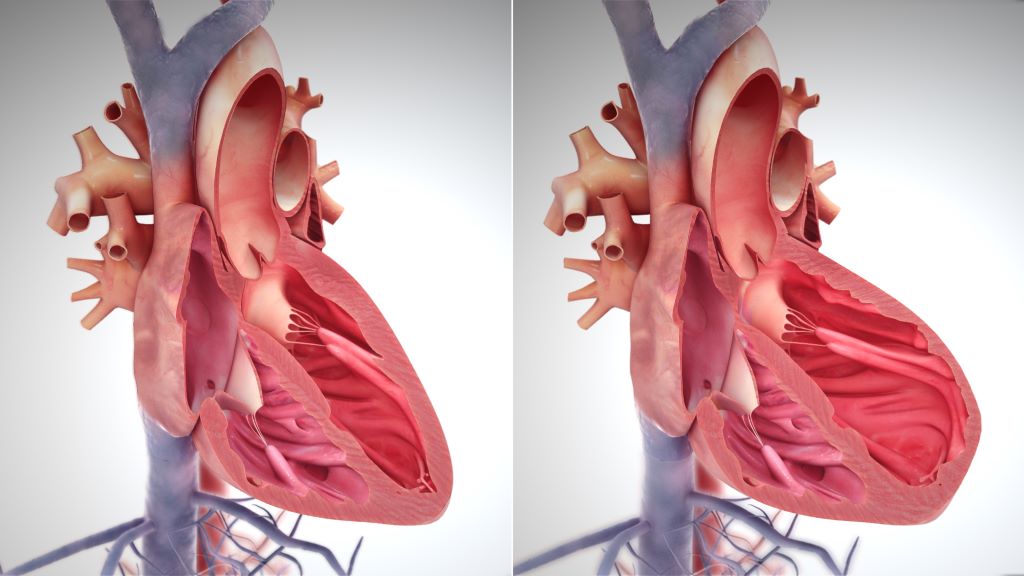
Right side heart failure. Credit: Scientific Animations CC4.0
An early clinical study shows that a new oral drug is safe and well-tolerated in patients with chronic heart failure. The study, led by researchers at Karolinska Institutet, has been published in the scientific journal The Lancet.
Heart failure with reduced pumping capacity means that the heart struggles to pump blood effectively around the body. Despite current treatments, many patients’ condition worsens over time, and existing drugs that strengthen the heart’s contractions can cause serious side effects, such as heart rhythm disturbances and changes in blood pressure.
In the study, researchers investigated a new drug, AC01, which targets the body’s ghrelin receptor. Ghrelin is a hormone that influences metabolism and growth hormone release, and its receptor is also found in heart muscle. AC01 is intended to strengthen the heart’s pumping ability through a different biological mechanism from traditional heart‑stimulating drugs, thereby reducing the risk of side effects.
The study was a randomised, placebo‑controlled phase 1b/2a trial involving 58 patients with stable, chronic heart failure with reduced pumping capacity. Participants received different doses of AC01 or placebo for either seven or 28 days. The main aim was to assess safety and tolerability.
The drug was well tolerated
The results show that the drug was well tolerated. No serious side effects linked to AC01 were reported. The researchers also found no signs of harmful effects on heart rhythm or blood pressure. Exploratory analyses additionally indicated signs of improved heart function, such as increased stroke volume and cardiac output.
“This is an early study with a limited number of patients, but the results suggest that AC01 can be administered safely to people with heart failure. The findings now justify further studies to investigate whether the signals of improved heart function that we have observed can lead to clinical benefit in larger and longer studies,” says Lars Lund, first author and professor at the Department of Medicine, Solna, Karolinska Institutet, and senior consultant cardiologist at Karolinska University Hospital.
Over the last three decades, differences in unhealthy cholesterol levels and blood pressure between older adults with obesity and those with a normal Body Mass Index (BMI) have narrowed or disappeared in several high-income countries, suggests a study published in The Lancet. The authors propose that this trend is due to the greater, and possibly more intensive, use of cholesterol-lowering medication (such as statins) and blood pressure medication in people aged over 40 living with obesity in high-income countries.
Obesity is known to increase blood pressure and unhealthy cholesterol levels, which can impact cardiovascular health and increase the risk of heart attack, heart failure, and stroke. However, prior to this study, there was little information on blood pressure and cholesterol levels, and how they have changed, for people with obesity compared with people with normal BMI.
Author Prof Majid Ezzati, from the School of Public Health at Imperial College London (UK), says: “Our study suggests that, in high-income countries, taking medication to lower blood pressure and cholesterol has helped middle-age and older adults lower their cardiovascular risk to levels that are similar to people with normal BMI.”
He continues, “At a time that weight-loss medications are becoming more widely used, our results give a picture of the cardiovascular health of people likely to be prescribed them, which allows the healthcare system to understand how blood pressure and cholesterol treatments benefit the population alongside weight-loss medications.”
The study analysed data on blood pressure and cholesterol in people with obesity, overweight, and normal BMI from 110 health datasets including almost one million participants from 1990 to 2024 in seven high-income countries: England, the USA, Japan, South Korea, Taiwan, Thailand and Finland.
Converging cardiovascular risk markers
The study finds that in the 1990s adults with obesity generally had higher blood pressure and high-density lipoprotein (non-HDL) cholesterol levels [1] than people with a normal BMI.
Since 1990, in the majority of the seven countries studied including England and the USA, blood pressure and unhealthy cholesterol fell more steeply among middle-aged and older adults (40–79 years old) with obesity and overweight than among those with normal BMI, narrowing the gap over time. The exceptions were Taiwan and Thailand, which did not see this convergence as universally as other countries.
The findings were most striking in older adults (60–79 years old). In England and the USA, older adults with obesity, and especially with severe obesity, had similar or even lower blood pressure and unhealthy cholesterol levels at the end of the study period than older adults with normal BMI.
Heart medication likely driving the convergence
Over the past three decades, people with obesity were more likely to be prescribed cholesterol-lowering medication (such as a statin) and blood pressure medication than those with a normal BMI.
This gap was especially pronounced in older adults. For example, in England and the USA, around 70–72% of older men with severe obesity (BMI ≥35) were taking cholesterol-lowering medication by the early 2020s, compared with 40–48% of older men with a normal BMI.
Author Lakshya Jain, from the School of Public Health at Imperial College London (UK), says “This latest analysis suggests that the observed convergence in cholesterol and blood pressure levels between people aged over 40 with obesity and those with a normal BMI is largely due to statins and other widely accessible medications to reduce cardiovascular risk. That is a significant public health success story, and one we should not lose sight of as new weight-loss medications enter the picture.”
Cardiovascular risks remain for younger adults with obesity
In younger adults (under 40 years old), the study findings suggest little or no narrowing of the gap in blood pressure or cholesterol between those with obesity and those with a normal BMI. The data also suggests that use of cholesterol-lowering and blood pressure medication is low for this age group, adding further evidence that medication is the driver of the gap reduction in older adults.
Author Ysé d’Ailhaud de Brisis, from the School of Public Health at Imperial College London (UK), says “While good news for older adults with obesity, our results suggest that cardiovascular health risks remain higher for adults under 40 than for their counterparts with a normal BMI. Early lifestyle interventions, screening and, when appropriate, medication in this younger group should be considered to prevent long-term cardiovascular complications linked to obesity.”
The researchers note some limitations of the study, including that their analysis was limited to seven countries which were all high-income, therefore the finding may not be applicable elsewhere, especially for low- and middle-income countries where the use of unhealthy cholesterol and blood pressure lowering medicines is likely to be lower. Additionally, it was not possible to look at the impact of different medication doses, which require data on prescriptions.
Writing in a linked Comment, Dr Yuan Lu, Yale School of Medicine (USA), who was not involved in the study, says, “This study reframes obesity-related cardiovascular risk as reflecting not only excess adiposity, but also treatment access, health-system engagement, and timing of intervention. Convergence of risk factors should not be equated with elimination of obesity-related risk. Although treatment of high blood pressure and cholesterol might mitigate part of the cardiovascular harm associated with obesity, the persistent burden among younger adults and the broader multisystem consequences of obesity highlight the need for integrated prevention strategies that move beyond isolated risk factor treatment.”
Exercise is important for your heart and cardiovascular health. But for years, research has suggested that very fit people – particularly young men – have a higher risk of developing atrial fibrillation (an irregular heartbeat) later in life than less athletic people do.
But our new large-scale study of more than one million young Swedish men challenges this long-held concern about fitness and heart health. The study shows that atrial fibrillation risk in very fit people is smaller than previously thought. And, importantly, the benefits of being fit – such as having lower rates of other cardiovascular diseases, such as stroke and heart attack – clearly outweigh the potential downsides.
To conduct our study, we analysed data from over one million Swedish men. Each of these men had completed a military conscription test between 1972 and 1995 when they were around 18 years old. During conscription, fitness was estimated using a maximal ergometer bicycle test.
We followed the participants using national health registries until 2023. Information was collected on diagnoses in specialised outpatient and inpatient care, as well as information on cause of death where relevant.
Nearly half a million of these men were siblings, allowing the team to compare brothers with different fitness levels. This method also helped control for shared genetics and upbringing to better understand risk.
In the population-wide analysis, where all men were compared based on their fitness levels, the fittest men did show a higher risk of atrial fibrillation until age 40. After 45, however, the benefits – fewer other heart problems – started to outweigh the risk.
But the sibling analysis told a different story. When comparing brothers, the link between high fitness and atrial fibrillation weakened significantly. The net positive effect of fitness on overall heart and cardiovascular health, although also weakening in the sibling analysis, was still evident from the start.
These benefits grew larger as the men aged. Across five decades of follow-up – from the age of 18 until the age of 65 – the benefits of being highly fit outweighed the overall risk of developing atrial fibrillation at all ages.
An advantage of our study is that we were able to compare siblings. Photo by Andrea Piacquadio on Pexels
While the higher risk of atrial fibrillation in the fittest men weakened in the sibling analysis, an elevated risk did remain. However, this risk was small overall. The potential risk of developing atrial fibrillation was also far outweighed by the positive benefits that being fit had on reducing risk of other cardiovascular diseases.
There was also some evidence that the increased risk of atrial fibrillation seemed to be driven by typically milder forms of atrial fibrillation.
Cardiovascular benefits of fitness
These findings suggest that earlier studies may have overestimated the risk of developing atrial fibrillation if you’re very fit because they couldn’t fully account for shared familial factors – such as genes and shared environmental factors – that may influence both fitness and heart health.
Because our study was able to account for these shared factors, we were able to show that we should potentially tone down the message that being very fit or engaging in endurance exercise poses a big risk to heart health. The risk of atrial fibrillation isn’t zero, but the benefits to heart health more generally are far greater.
Our results have also been confirmed in previous studies. However, our research builds upon this prior evidence by incorporating the sibling comparisons in the analyses, showing that the atrial fibrillation risk becomes weaker.
Our study also performed a more detailed examination of risk over time by following up with participants over a longer period of time, while also considering the benefits of high fitness. As such, our research has performed a more direct comparison of benefits and harms throughout life.
Overall, our research illustrates just how beneficial physical fitness is for overall cardiovascular health. Although very fit people do have a slightly higher risk of developing atrial fibrillation compared to people who are less fit, this risk of far lower than previously thought.
Plus, we show that the overall net benefits of fitness on cardiovascular health more broadly far outweigh any potential risk.
A new gene therapy appears to be safe in patients diagnosed with Friedreich ataxia cardiomyopathy, a progressive and fatal inherited cardiac disease, according to a phase 1 clinical trial led by Weill Cornell Medicine researchers. The treatment may also reduce heart damage, although further investigation is needed.
The results, published June 17 in JAMA Cardiology, indicated that an intravenous infusion of a healthy frataxin (FXN) gene was generally well tolerated and shows early signs of efficacy. These include a decrease in heart wall thickness – enlarged walls are a sign of cardiomyopathy – and reduced levels of troponin I, a marker of heart damage.
“This is a fatal disease, but this is a potential therapy, and our goal is FDA-approval,” said Dr Ronald G. Crystal, the study’s lead author, professor and chair of the Department of Genetic Medicine at Weill Cornell Medicine and a pulmonologist at NewYork-Presbyterian/Weill Cornell Medical Center.
What is Friedreich Ataxia?
Friedreich ataxia is caused by variants in the FXN gene, leading to decreased levels of the FXN protein, which is essential for energy production in cells. “The two most energy consuming organs in the body are your brain and the heart, so the disease is primarily a brain and heart disease,” Dr Crystal said.
It is an autosomal recessive hereditary disorder, meaning a person must inherit a faulty copy of the FXN gene from both parents. As many as one in 50 000 people in the United States are diagnosed with the disease, according to some reports.
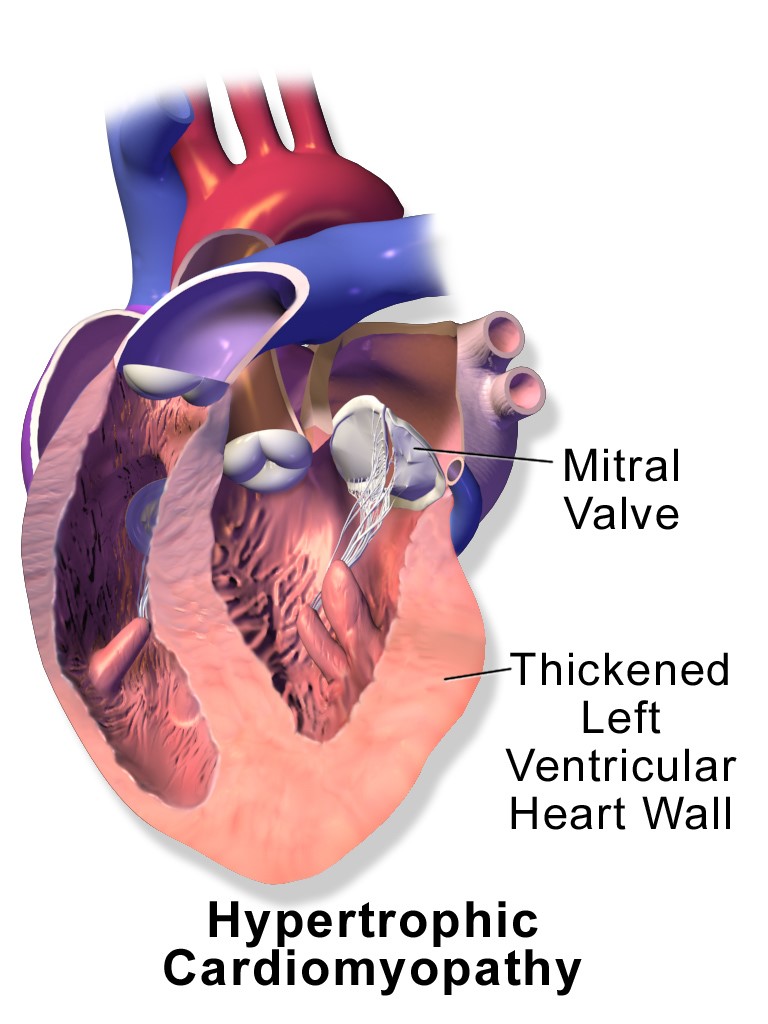
Nervous system symptoms typically begin in childhood and include problems with balance, walking and speaking. While neurologic disease is devastating for maintaining quality of life, most people with Friedreich ataxia develop heart disease, which is the cause of death in up to 65 percent of patients, according to reported estimates. Decreased FXN protein levels in the heart mean the heart cells don’t have the energy to beat normally. The muscle cells grow and the heart walls thicken, a condition known as hypertrophic cardiomyopathy, which can cause dangerous irregular heartbeats and heart failure.
Based on promising preclinical research, Dr Crystal and his colleagues studied the safety and efficacy of the FXN gene therapy in 17 patients with Friedreich ataxia cardiomyopathy.
“We put the healthy FXN gene in a virus, called adeno-associated virus, which is given intravenously and likes to travel to the heart,” he said.
The researchers pooled data from two independent studies: nine patients were from a Weill Cornell Medicine study, funded by National Heart Lung Blood Institute, and eight were treated in a study by Lexeo Therapeutics, a clinical stage genetic medicine company founded by Dr Crystal. Weill Cornell Medicine Enterprise Innovation, which aims to accelerate the translation of scientific discoveries into patient impact, played a crucial role in launching Lexeo in 2020 and later licensed to it additional technology to further support the clinical trial.
In both studies, the patients received a one-hour infusion of the gene therapy and were evaluated from six to 36 months. Three different doses were tested among three groups of patients.
Overall, the drug was safe, causing four serious adverse events, which were all resolved. Three of these were possibly related to prednisone, an immunosuppression drug that patients took so their bodies did not attack the gene therapy.
In the Lexeo study, researchers took biopsies of the heart before therapy and three months after therapy and found that frataxin protein levels increased in cardiac tissue in all eight patients. Researchers also found that the left ventricular mass index, which is an MRI measurement of heart wall thickness, decreased, demonstrating that the treatment was therapeutic for cardiomyopathy.
Levels of troponin I, a structural protein of the heart that is released into the circulation when the heart is damaged, also decreased. Troponin I levels are typically high in patients with Friedreich ataxia cardiomyopathy.
Using the modified Friedreich Ataxia Rating Scale (mFARS), which assesses balance, coordination, speech, and limb function in patients, the researchers found that some neurological components of the disease stabilised. “But we’re unsure whether this was related to the gene therapy reaching the skeletal muscle or the brain,” Dr Crystal said. “That remains to be seen.”
Because most of the patients evaluated in this study had early cardiomyopathy, the researchers also hope to study the gene therapy in people who have a wider range of heart disease severity.
Specifically tied to significantly lower risks of cardiovascular and neurological disease deaths Effects amplified by aerobic exercise, but no further risk reduction above 120 minutes
Clocking up 90 to 120 weekly minutes of strength (resistance) training may be the sweet spot for lowering the risk of death, suggests a 30 year study, published online in the British Journal of Sports Medicine.
The effects were amplified by the addition of aerobic exercise, but no further benefit was apparent above 120 minutes a week of strength training – an amount that was specifically associated with, respectively, 19% and 27% lower risks of dying from cardiovascular and neurological diseases.
The benefits of aerobic physical activity on lowering the risk of death are well known, but less clear is the role of muscle strengthening exercise in reducing the risks of death from all and specific causes, solely or jointly with aerobic exercise, say the researchers.
Participants were quizzed every 2 years on the amount of time they spent on strength training and aerobic exercise every week for up to 30 years. Aerobic exercise included brisk walking, running, jogging, swimming, cycling, tennis, squash, strenuous outdoor work and stair climbing, while strength training included exercises using weights or body weight, such as press ups, squats, and lunges.
The average age of participants at study entry was 54. Those who clocked up more strength training tended to be younger, weigh less, have a healthier lifestyle, and do more aerobic exercise than those who did no strength training.
Three quarters (74%) of participants did more than the recommended 150 minutes/week of moderate intensity aerobic exercise, measured as 7.5 MET hours over the long term. METs express the amount of calories expended per minute of physical activity, relative to calories expended at rest. And nearly half (46%) of participants did some strength training.
During the 30 year monitoring period, 35,798 study participants died. A higher weekly long term level of strength training was associated with a lower risk of death.
After adjusting for potentially influential factors, 90–119 minutes/week of strength training was associated with a 13% lower risk of death from any cause, with no further benefit observed above 120 minutes/week.
And 90-119 weekly minutes of strength training was specifically associated with a 19% lower risk of dying from cardiovascular disease, and a 27% lower risk of dying from neurological disease.
A reduced risk of cancer was seen only at lower levels: 1–29 mins/week (21% lower) and 30–59 mins/week (18% lower).
Compared with those participants with fewer than 7.5 MET hours/week of aerobic exercise and no strength training, those doing 1–59 and 60–119 mins/week of strength training alone had a 7–11% lower risk of death.
Aerobic activity alone at any level above 7.5 MET hours/week was associated with a 26–43% lower risk of death.
And the lowest risk was observed among those with both high aerobic activity and strength training levels every week: 45% lower risk for 30-44 MET hours/week of aerobic exercise plus 60–119 mins/week of strength training, and 53%-58% lower risks among those with 45+ MET hours/week of aerobic activity, irrespective of strength training level.
This is an observational study, and as such, no firm conclusions can be drawn about cause and effect. And the researchers acknowledge various limitations to their study.
These include the self reported nature of the data; the exclusion of strength training activities, such as calisthenics and Pilates; no information on the duration of each exercise session or the intensity of strength training, any or all of which might have influenced the findings.
Nevertheless they conclude: “Our findings on different dose-response relationships between long-term resistance training with all-cause and cause-specific mortality suggest that different amounts of resistance training may be needed to optimise benefits across outcomes.
“The observed pattern that adding resistance training further reduced mortality risk across all levels of aerobic activity up to 45 MET hours/week supports current recommendations encouraging both types of activity to maximise mortality benefits.”
Representative cine-CMR four-chamber image demonstrating severe tricuspid regurgitation. Courtesy of Dr Robert Zhang
A new cardiac magnetic resonance imaging-based measurement may improve how physicians assess a common heart valve condition, according to a study led by Weill Cornell Medicine and NewYork-Presbyterian investigators. The findings support the broader use and further study of the new metric known as effective right ventricular ejection fraction (eRVEF).
In the study, published in JACC: Cardiovascular Imaging, the researchers analysed deidentified clinical and cardiac imaging data, on nearly 800 patients who had the heart valve condition called tricuspid regurgitation. They found that eRVEF predicted mortality risk better than traditional risk markers for the disorder.
“Our goal in tricuspid regurgitation is to detect disease progression and intervene before irreversible heart dysfunction develops,” said study corresponding and co-senior author Dr. Jiwon Kim, associate professor of medicine in the Division of Cardiology and director of the Cardiovascular Imaging Program at Weill Cornell Medicine and a cardiologist at NewYork-Presbyterian/Weill Cornell Medical Center. “We believe this new measurement could help cardiologists identify high-risk patients earlier and make more informed treatment decisions.”
The tricuspid valve regulates the flow between the heart’s right atrium, which receives low-oxygen blood from major veins, and the right ventricle, which pumps this blood via the pulmonary artery into the lungs. When the tricuspid becomes dysfunctional, much of the blood pumped by the right ventricle flows back into the right atrium instead of going into the lungs. This loss of efficiency can lead to progressive right-sided heart failure.
“This investigation highlights the expanding role of cardiac MRI in the assessment of patients with valvular heart disease,” said co-senior author Dr Dipan Shah, professor of cardiology at Houston Methodist Research Institute and a professor of medicine at Weill Cornell Medicine. “Its unique ability to precisely quantify valvular heart lesions and the associated cardiac remodeling in both the left and right heart makes it an indispensable tool for comprehensive clinical evaluation.”
Conventional RVEF, a basic measure of the right ventricle’s pumping efficiency, is an estimate of right ventricular volume when filled and when fully compressed during pumping. But this measure cannot distinguish between normal blood outflow to the lungs and abnormal backflow to the right atrium. Thus, in patients with tricuspid regurgitation, RVEF may seem normal until the resulting heart dysfunction is relatively advanced.
“The tricuspid valve was once considered the ‘forgotten valve,’ managed primarily with medical therapy and occasionally treated surgically,” said study co-first author Dr Robert Zhang, an assistant professor of medicine at Weill Cornell Medicine and a cardiologist at NewYork-Presbyterian/Weill Cornell Medical Center. “Now we have less-invasive, catheter-based treatment options, which is incredibly exciting. But with that comes a new challenge: identifying the patients who are most likely to benefit and determining the right timing for intervention.”
Dr. Pablo Villar-Calle, an instructor of medicine at Weill Cornell, is the other co-first author on the paper.
The new measure, eRVEF, is derived from a more direct, magnetic resonance imaging-based estimate of blood flow from the right ventricle to the lungs. In principle, it enables a more accurate assessment of right ventricle function and the degree of tricuspid regurgitation.
The study covered an initial cohort of 453 patients from NewYork-Presbyterian/Weill Cornell Medical Center, plus 316 patients in two independent validation cohorts, 239 from Houston Methodist DeBakey Heart and Vascular Center and 77 from Duke University Medical Center. All patients had at least a moderate degree of tricuspid regurgitation.
The researchers showed firstly that eRVEF is a useful measure in its own right. In all cohorts, patients with impaired eRVEF, defined as less than 25% of right ventricle-filled volume, had strikingly greater risks of adverse outcomes during several years of follow-up, including worse tricuspid regurgitation and mortality, compared with patients who didn’t meet the impaired-eRVEF threshold.
The team also compared eRVEF with RVEF, showing that adding eRVEF to a prediction model that already included RVEF significantly improved mortality prediction, whereas adding RVEF to a model that already included eRVEF did not.
The results suggest that in the context of at least moderate tricuspid regurgitation, eRVEF is better than RVEF for assessing right-side heart function.
The team now hopes to show with forward-looking studies that using eRVEF to select patients for tricuspid valve treatments can improve outcomes.
“We are also interested in understanding how useful eRVEF may be as a marker of treatment response and whether it can serve as a meaningful endpoint for assessing the success of therapeutic interventions,” Dr. Zhang said.
Doctors should consider treating high cholesterol much earlier and more aggressively than they have in the past, according to a new perspective by Weill Cornell Medicine, New York-Presbyterian and Yale School of Medicine investigators. The updated 2026 cholesterol management guidelines from the American College of Cardiology and the American Heart Association encourage doctors to identify risk earlier and intervene before heart attacks and strokes happen. Heart disease remains the leading cause of death in the United States.
The perspective, published May 19 in the Journal of the American College of Cardiology, highlights the role and potential for primary care clinicians to implement the guidelines, while also acknowledging the challenges they may face.
“Primary care clinicians are really the backbone of patient care, especially when it comes to cardiovascular prevention. Due to our longitudinal relationships with patients we are uniquely positioned to reinforce healthy behaviours related to diet, exercise, sleep and smoking,” said Dr Madeline R. Sterling, associate professor of medicine at Weill Cornell and an internist at NewYork-Presbyterian/Weill Cornell Medical Center, and lead author of the perspective. Dr Sterling also served as the Inaugural Chair of the Primary Care Science Committee at the American Heart Association. “Primary care clinicians can screen patients earlier, assess lifetime cardiovascular risk and consider additional risk factors to enhance their management of dyslipidaemia.”
Dr. Erica S. Spatz, associate professor of cardiology and epidemiology at Yale School of Medicine, also co-authored the perspective.
In the past, treatment decisions often focused on whether someone was likely to have a heart attack or stroke within the next 10 years. However, even younger adults with moderately elevated cholesterol may benefit from earlier intervention if they carry other hidden risks, the authors said.
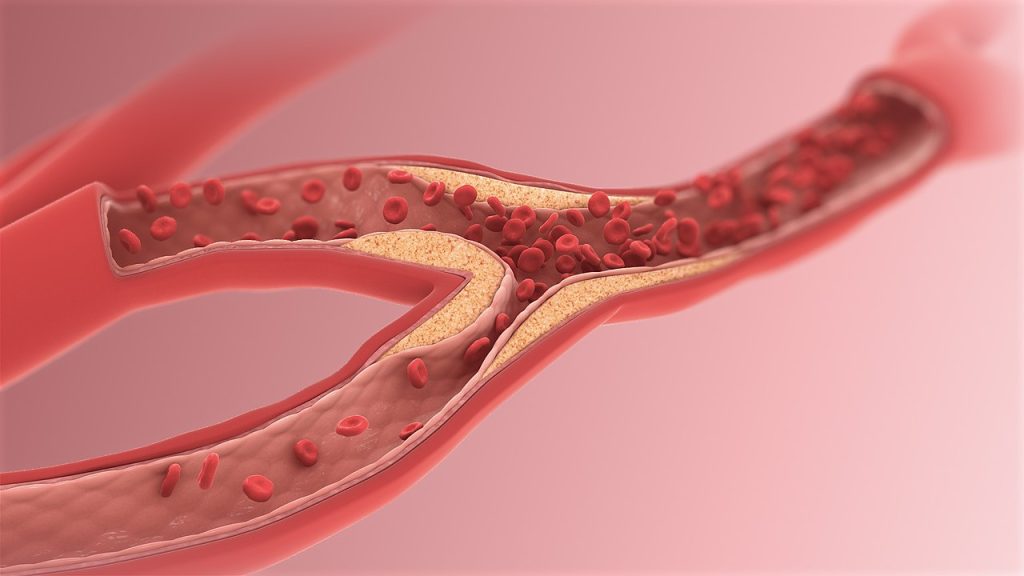
To better identify those risks, the new guidelines recommend that doctors look beyond standard cholesterol tests and use newer tools including measuring lipoprotein(a), or Lp(a), a genetically inherited cholesterol-related particle linked to heart disease, as well as coronary artery calcium (CAC) scans that can detect silent plaque buildup in the heart’s arteries.
Overall, the guidelines recommend a more aggressive approach to lipid management, including a focus on the cumulative damage cholesterol can cause over a lifetime. This may include starting a statin medication earlier along with lifestyle changes.
But implementing these recommendations may be challenging in practice, Dr Sterling said
Primary care clinicians often must address competing medical concerns during office visits, which tend to be short. Explaining lifetime cardiovascular risk, advanced cholesterol testing and preventive medications can require detailed conversations that need to occur over time and in concert with cardiologists and other specialists.
Experts also worry that without careful implementation, these advances could widen existing health disparities. Some advanced tests and newer cholesterol-lowering medications may not be covered by insurance or readily available in all communities.
Drs Sterling and Spatz say successful adoption will likely require better insurance coverage, improved electronic health record tools, patient education efforts, and stronger collaboration between primary care clinicians and specialists, including research and implementation efforts.
The guidelines also promote team-based care, where nurses, pharmacists and specialists help patients manage medications and reach cholesterol targets.
Ultimately, a multi-pronged approach will be necessary for the guideline recommendations to be consistently translated into practice, Dr Sterling said.
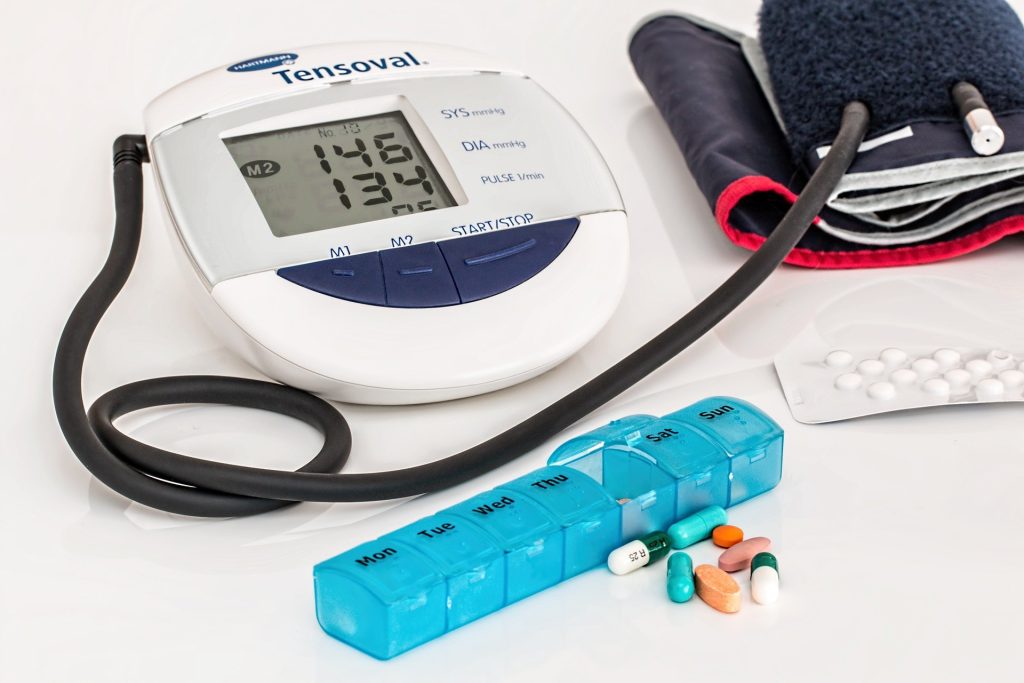
Getting patients to adhere to antihypertensive drugs is a major obstacle in controlling hypertension and cardiovascular risk. To find out which drugs or combinations of drugs have the best adherence rates, researchers conducted a comprehensive network meta-analysis of the five primary classes of blood pressure-lowering medications. The research, published in JAMA Network, examined short-term tolerability and side-effect profiles in data from over 700 clinical trials, and identifies significant variations in treatment discontinuation rates across different drug categories and combinations.
The most well-tolerated options were angiotensin II receptor blockers (ARBs), both alone and paired with calcium channel blockers – often showing fewer withdrawals than placebos. While most therapies successfully reduced headaches, they simultaneously increased instances of dizziness and hypotension-related symptoms. These findings suggest that specific combination therapies may offer better patient outcomes and superior symptomatic improvement compared to traditional single-drug treatments. Ultimately, the study provides a robust framework for clinicians to better manage patient-reported adverse events during the initial months of hypertension care.
Daily doses of peppermint oil have been proved to lower blood pressures for patients with mildly high readings, new research has found.
A team of University of Lancashire academics discovered a daily intake of 100 microlitres of peppermint oil, taken twice a day over 20 days, lowered the systolic blood pressure by an average of 8.5mmHg.
The findings have been published in PLOS One Journal and prove there could be a simple, inexpensive, and well‑tolerated way to help treat people with slightly raised blood pressure.
Lead author Dr Jonnie Sinclair, Reader in Sport and Health Sciences, said: “High blood pressure is one of the biggest causes of heart disease and death worldwide, and it costs a huge amount of money to treat. Although medicines are commonly used to treat it, it’s not always clear how well they work in the long-term, and they can cause unwanted side effects.”
Peppermint oil is low in calories and price so it’s proved to be a very simple and cost-effective solution to potentially treat millions of people around the world.
– Lead author Dr Jonnie Sinclair, Reader in Sport and Health Sciences
Peppermint contains substances like menthol and flavonoids and in the study, 40 18 to 65-years-olds were randomly split into two groups. One group in the pre‑hypertension and stage 1 hypertension phases took a small daily dose of oil and saw the improvement while the other took a peppermint‑flavoured placebo that did not contain the active oil and saw no real change.
Researchers measured the change in systolic blood pressure, but they also looked at body measurements, blood results, diastolic blood pressure (the bottom number in a blood pressure reading), heart rate, mental wellbeing and sleep quality.
Dr Sinclair added: “Our findings were very positive and they have significant clinical implications, especially given arterial hypertension is the most common preventable risk factor for cardiometabolic disease and the greatest single risk factor for global mortality.
“Peppermint oil is low in calories and price so it’s proved to be a very simple and cost-effective solution to potentially treat millions of people around the world.”
Every day, thousands of people worldwide suffer a heart attack, often leading to lasting damage to the heart muscle. New research from the University of Oslo suggests that targeting inflammation in the body helps protect the heart and improve recovery after a heart attack.
“In a small country like Norway alone, we see around 11 000 heart attacks every year,” says postdoctoral fellow Camilla Huse at the Research Institute for Internal Medicine, at University of Oslo and Oslo University Hospital. “Forty heart attacks every day is a lot.”
Fortunately, modern treatments are so effective that most patients survive a heart attack.
Inflammation damages the heart
However, a heart attack triggers a strong inflammatory reaction in the body. While this inflammation is part of the body’s natural response, it also causes damage to the heart muscle during a heart attack.
Such injury can lead to poorer health, a reduced quality of life and fewer working years for those affected. It also increases the risk of developing new heart diseases later in life.
So, how can we protect the heart during a heart attack?
Can anti-inflammatory medication improve heart attack treatment?
For some time, the researchers at the University of Oslo and Oslo University Hospital have been studying a medicine that blocks the effect of a substance that stimulates inflammation, a substance called IL-6. Previously, they have shown that administering this medicine in addition to established treatment for heart attacks has promising results: the patients suffered less damage to their hearts.
“This could be a new way of treating patients,” senior researcher Tuva Børresdatter Dahl says, and continues:
“To move forward with treatment, we need to understand what happens in the body when we block inflammation. Which processes inside the cells are affected by the medicine being tested? Which are not? And how does this relate to damage to the heart and to the improved recovery of the patient?”
How to investigate the effect of the treatment
The researchers conducted a study in which they examined the immune cells of 200 patients with STEMI. STEMI is a type of heart attack where the risk of serious complications is high.
The patients were randomly divided into two groups. Half of them received the anti-inflammatory medication, blocking the IL-6 signal, while the other half received a placebo, i.e. a treatment without any active ingredient.
The researchers then monitored how the treatment affected the immune cells in the blood. They also measured how much of the heart muscle was damaged.
Monocytes at the front line of our immune system
The researchers found that the treatment affects a type of immune cell called monocytes, which play an important role in all forms of inflammation.
“The monocytes are right at the front line of our immune system. They are among the first immune cells to arrive to the heart when a heart attack occurs,” Huse says.
Shortly after a heart attack, a strong inflammatory mobilisation occurs in the body, and monocytes flow to the heart muscle.
“The monocytes help to repair and clean up after a heart attack. But they can often get a little too eager. Thus, they also contribute to worsening the damage to the heart muscle after the heart attack,” she explains.
Reduced inflammation linked to better heart attack recovery
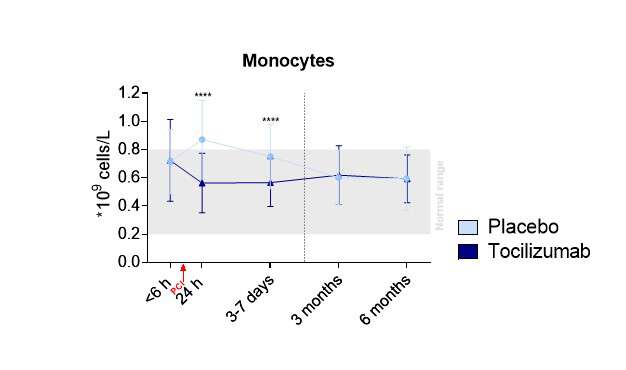
The study showed that the patients who received the anti-inflammatory medication had fewer monocytes in their blood shortly after the heart attack.
Normally, having high levels of these immune cells soon after a heart attack are linked to more heart damage and worse outcomes for the patients. Lower levels, on the other hand, are associated with less damage to the heart and better healing.
The researchers also found that the medicine made the cells in the heart muscle more resistant to damage, so that more heart cells survived the heart attack.
The study showed that patients who received the anti-inflammatory drug (dark blue) had fewer monocytes in their blood shortly after the heart attack. Illustration from the researchers.
Changing immune cell behaviour to protective
As a result of the treatment, the way the monocytes behave was also changed.
“The function of the monocytes changed, from being more harmful to becoming more protective. The “good” functions of the immune cells were strengthened,” Huse says.
“We believe that those functions are the reason why patients suffer less damage after the heart attack. The heart is helped towards recovery,” she adds.
The study also showed another important effect: mechanisms that normally draw inflammatory cells into the damaged area were prevented in the patients who received the medicine.
What could this mean for heart attack patients in the future?
The research provides new insight into how inflammation affects the heart during a heart attack, and how this treatment can protect the heart from damage following STEMI.
This creates an opportunity for anti-inflammatory drugs to become part of a standard treatment for heart attacks and give patients a better life afterwards.
“The study shows that monocytes play an important role in the development of heart attacks. We believe that affecting these cells, which the blocking of IL-6 does, is beneficial. It could be a new and important additional treatment for these patients,” Dahl points out.
Why mechanism-focused research matters
The researcher believes that more such in-depth studies are needed when new medicines are tested.
“They provide a better understanding of the mechanisms behind illness and how the medicine affects the body. It doesn’t just tell us whether a treatment has worked, but also why or why not.
“Such knowledge can make new treatment options possible. This type of research should therefore be prioritised in future clinical studies,” Dahl says.
Reference
Huse C, Murphy SL, Yang K, Balzer NR, Stokke MK, Anstensrud AK, et al. The effects of interleukin-6-receptor inhibition on monocytes in STEMI: a substudy of the ASSAIL-MI trial. EBioMedicine. 2025. doi:10.1016/j.ebiom. 2025.105960
By Julie Nybakk Kvaal, Institute of Clinical Medicine