Researchers from Flinders University have found that flushing toilets can release aerosols and bioaerosols into the surrounding air, with some studies detecting particles at heights corresponding to the breathing zone of adults.
The new study, published in Science of the Total Environment, systematically reviewed research into aerosol and bioaerosol that is generated during toilet flushing, and examined the factors that influence how much aerosol is produced and how it disperses.
Lead author Lira Adiyani, a PhD student at Flinders University, says the findings highlight the potential for exposure to disease-causing microbes contained in toilet-generated aerosols.
“Toilet flushing creates turbulence that can release aerosols into the surrounding air. Some studies detected these aerosols at adult breathing height, indicating a potential pathway for inhalation exposure,” says Ms Adiyani.
“The microbes can originate both from contamination of the toilet bowl during use, or from the water used for flushing. The more microbes present in the toilet, the more bioaerosols may be released. Therefore, larger flush volumes generally produce more aerosols.”
The review analysed 22 studies of toilet-generated aerosols, including studies using microorganisms or surrogate organisms seeded into toilet water as well as studies conducted under normal, unseeded conditions.
The researchers found that aerosol concentrations varied considerably between studies, depending on experimental conditions, toilet characteristics and sampling methods.
Among experiments where microorganisms were deliberately introduced into toilet water, higher microbial concentrations in the water were associated with higher concentrations detected in aerosols. Higher aerosol concentrations were also commonly reported closer to the toilet, particularly around seat height.
Together, these findings suggest that maintaining good toilet hygiene, including regular cleaning of the toilet and surrounding surfaces, and handwashing after use may help minimise microbial contamination and potential exposure to microbial disease.
Flush volume was also identified as an important factor influencing aerosol generation, suggesting that choosing toilets designed with lower flush volumes, or using the lower-volume option on dual-flush toilets where appropriate, may help minimise aerosol production.
Aerosols were also reported to remain suspended in the air for at least 20 seconds after flushing. Although ventilation and lid position were not significantly associated with aerosol concentrations in the review, they may still influence how aerosols disperse within the bathroom.
Adequate ventilation may help disperse and remove suspended airborne particles, while evidence from individual studies suggests that closing the lid can alter the direction of aerosol dispersion, with aerosols escaping through gaps between the lid and toilet bowl rather than travelling directly upwards.
“Based on the available evidence, I would recommend closing the toilet lid before flushing, where a lid is available, as a precautionary measure to minimise potential inhalation exposure – while recognising that it does not completely prevent aerosols from escaping,” says Ms Adiyani.
Research co-author Professor Harriet Whiley, from Flinders University’s College of Science and Engineering, says the findings identify important research gaps and priorities for future investigation.
“Further research is needed to develop design and engineering interventions that reduce toilet-generated bioaerosols, particularly in high-risk settings such as hospitals,” says Professor Whiley.
Adequate bathroom ventilation and closing the toilet lid before flushing may be simple precautionary measures to help minimise potential exposure. However, further research is needed to determine how effectively these measures reduce aerosol dispersion and inhalation exposure.
Government officials in Russia have not confirmed that the woman died from pneumonic plague, but several media reports suggest she died after an accident involving a broken vial containing a live sample of plague, a deadly bacterial infection. Now, a rumoured 200 people are suspected to be under quarantine.
Rospotrebnadzor, the official Russian infectious disease agency, said, “No micro-organisms associated with the employee’s professional duties were detected in samples taken from the patient.”
But over the weekend, media in Russia and elsewhere in Europe started to stoke concerns over a lab leak incident or fears that the woman worked in a bioterrorism unit. They suspected that the Russian government was covering up something that posed a serious risk to global health.
Case does not cause ‘undue concern’
Michael Osterholm, PhD, MPH, director of the University of Minnesota’s Center for Infectious Disease Research and Policy (CIDRAP), which publishes CIDRAP News, said that if the woman did die from pneumonic plague, it would be possible to contain, and close contacts and fellow lab workers would be given prophylactic (preventive) antibiotics.
This case does not cause undue concern.
“This case does not cause undue concern,” Osterholm said. “We would like more information, of course.”
Osterholm explained that if this incident happened in a friendly nation, people would not be so quick to jump to allegations of bioterrorism. But information from Russia, China, or North Korea often lacks transparency. Osterholm also said that, despite the attention-grabbing headlines, plague infections occur every year around the world.
The bacterium Yersinia pestis is linked to three main types of plague. The first, bubonic plague, is the one associated with the Black Death and the Middle Ages. It’s spread through flea bites and attacks the lymph nodes. Septicaemic plague is also spread through flea bites and occurs when the bacteria enter the bloodstream.
Pneumonic plague attacks the lungs and is the deadliest of the three main plague types. It’s also the most dangerous in terms of biosecurity, because it can be transmitted from person to person via respiratory droplets. It is considered extremely contagious and has a short incubation period (time from exposure to first symptoms) of roughly 24 hours.
The United States tracks five to seven cases of bubonic plague each year, most often in the Southwest. Though plague kills 30% to 60% of people without treatment, all three strains are very sensitive to modern antibiotics.
Around 12% of the world’s total cancer cases in 2024 were likely caused by an infection, according to new research from the World Health Organization (WHO).
The study, published today in The Lancet Oncology, analysed the frequency and causes of different cancers, specifically examining the role of infections.
It linked 2.3 million new cancer cases to an infection. Most were caused by just five pathogens: Helicobacter pylori (4%), human papillomavirus, or HPV (4%), hepatitis B (2%), Epstein-Barr virus (1%) and hepatitis C (under 1%). These infections can cause more than 20 different types of cancer, including stomach, liver, blood and cervical cancers.
So, how can an infection cause cancer? And does this mean these cancers are preventable?
Did we already know about this link?
Some of the study authors have been researching this field for around thirty years. Their previous work investigated cancer cases caused by infections in 1990, 2002, 2008, 2012, and 2018. The proportion of cancer cases caused by infections may appear to have dropped during those years (from a high of 18% in 2002), but the authors stress these comparisons cannot really be made confidently, as the sources and quality of the data have changed over time.
In fact, the latest study wasn’t trying to compare between the years. Instead, it aims to highlight where controlling and preventing infections can help to reduce cancer rates.To make sense of this, it helps to know how infection is linked to cancer. Extensive research has dissected the molecular mechanisms behind this link, and we now know there are various ways infections can cause cancer.
How can a virus cause cancer?
A virus can (directly or indirectly) change the genes of the cell it infects (the host cell), making that cell more likely to grow out of control and eventually become a cancer.There are three main ways viruses can do this.
The first is by turning off the ability of a cell to destroy itself (for example, by inactivating the TP53 protein) or to stop dividing (for example, by inactivating the RB protein). A healthy cell would normally try to do these things if infected by a virus. The second way a virus can cause cancer is by inserting its own DNA into the host cell’s DNA, which can accidentally disrupt genes that control cell death or division (like those above). The third way is when the virus itself carries a gene that causes cancer (an oncogene). In many cases, the virus has picked up these by accident from another organism. The link between viruses and cancer is actually foundational to modern cancer science, and has helped scientists uncover the direct link between genetics and cancer we now take for granted.
What about bacteria and parasites?
It’s not just viruses that cause cancer. Infections from bacteria or parasites – such as Helicobacter pylori (best known for causing stomach ulcers), or Opisthorchis viverrini (a liver fluke, a type of parasitic worm) – can also lead to cancer. However, these work more indirectly than viruses. Long-term (chronic) infection by these types of organisms can cause significant stress to different tissues. Inflammation, normally a part of the body’s immune response, can then become overactive, damaging the tissues further. These stresses can result in cancer-causing DNA damage in cells, or lead to mistakes during cell division as the body tries to rapidly produce new cells to repair tissue damage. In both cases, the cells acquire genetic mutations that put them on the road towards becoming cancer.
Many cancers are preventable
Of course, there may be other mechanisms linking infections and cancer that we don’t know about but, overall, the connection between infections and cancer is indisputable. Critically, what this tells us – and what this new study into the rates of cancers caused by infections reinforces – is that many cancers are preventable.
In Australia, one of the best examples of preventing cancers caused by infections is the human papillomavirus (HPV) vaccine. This vaccine protects against certain strains of HPV strongly associated with cervical cancer, and is available to adolescents in Australia. Since the program began in 2007, HPV infections dropped by 90% among people eligible to receive the vaccine. Because of its success, Australia could be on track to eliminate cervical cancer by 2035. However, vaccination rates among 15-year-olds have fallen from 85.7% in 2020 to 79.5% in 2024, which is concerning. As is the case for all vaccines, a high proportion of the population need to be vaccinated to also protect those who, for health reasons, cannot be vaccinated. For HPV, the WHO and Australian target is to vaccinate 90% of 15-year-old girls by 2030.
Sadly, the new study also highlights that around 75% of cancers caused by infections were found in low- and middle-income countries.Treating infections that can lead to cancer – such as HIV, H. pylori, and hepatitis B and C – is one way to reduce cancer rates. Preventative measures also play a major role, including vaccinations, condoms and disease screening. However, the availability of these programs in poorer countries can be limited, and so access continues to be a major equity issue in combating cancer.
The authors would like to acknowledge the contribution of Amali Cooray from the Olivia Newton-John Cancer Research Institute to this article.
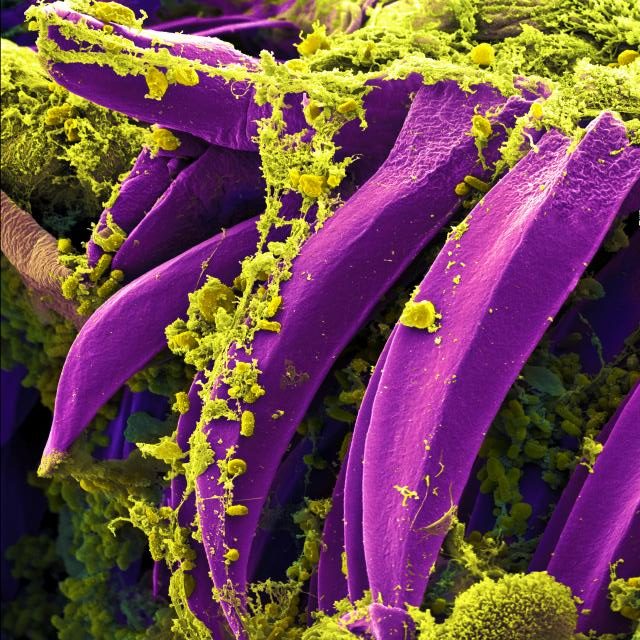
Antibiotic resistance is supercharging dangerous gut bacteria to withstand even hospital-grade disinfectants intended to kill them.
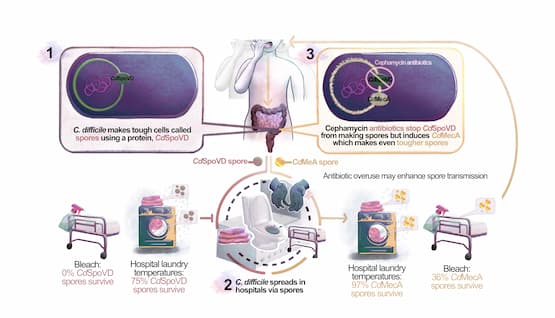
New research from Monash University, published in Nature Communications, reveals the bacteria Clostridioides difficile has picked up a key gene that gives its dormant spores a free pass against antibiotics and cleaning products.
Its spores act like plant seeds, waiting patiently to activate and spread in the right environment, like the human gut.
This is particularly dangerous given this bacterium is commonly found in hospitals and causes diarrhea that can be deadly for already unwell patients.
“Antibiotics are helping bacteria evolve in ways we hadn’t anticipated,” Professor Lyras said.
“Our new research shows just how sophisticated their evolution is, with the potential to have disastrous impacts on humans.
“They are not only better at building tolerance to drugs we develop, but making new versions of themselves that can survive better in particular environments, like surfaces where cleaning products are commonly applied.”
Antimicrobial resistance occurs when bacteria stop responding to antibiotics leading to infections that can be hard or impossible to treat.
The World Health Organization lists this phenomenon as a major global health threat and estimates that it contributes to millions of deaths every year.
This new research, the first to uncover a link between antibiotic resistance and bacterial spores, shows that when Clostridioides difficile picks up this antibiotic resistance gene, the antibiotic block no longer works.
Instead, the bacteria is able to make even tougher spores that can survive hospital grade cleaning products and high laundry temperatures.
The antibiotic resistance gene produces a protein that replaces a key spore-building protein, allowing the bacteria to keep making spores.
First author Dr Yogitha Srikhanta, a Post-Doctoral Research Fellow at Monash Biomedicine Discovery Institute, said targeting the spores could be the key to unlocking a solution.
“Spore survival matters because spores are the main way these pathogens spread between people and through hospitals, homes, and the environment,” Dr Srikhanta said.
“A resistance gene that changes how spores are built could make infections harder to control and help resistant strains spread more easily.
“We are now investigating ways to deal with this new type of antibiotic resistance.”
Cryptococcal meningitis is a serious fungal infection causing inflammation of the lining of the brain. (Photo: Pixabay)
By Elri Voigt for Spotlight
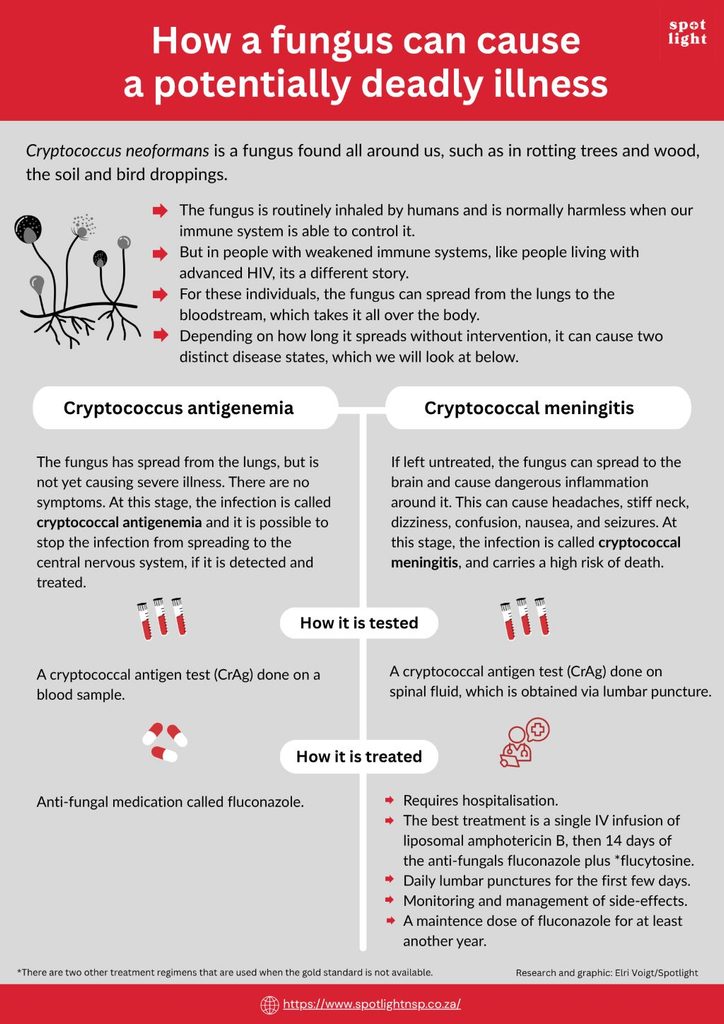
One of the top killers of people living with HIV in South Africa is a fungal infection. In this Spotlight special briefing, we unpack what we know about this dangerous disease called cryptococcal meningitis, why it remains so deadly, and what we can do about it.
Someone who is diagnosed with HIV today could live a relatively healthy and normal life. That is providing that they are consistently taking the antiretroviral treatment that successfully suppresses the virus in their bodies.
Roughly four out of every five people living with HIV in South Africa are on treatment. The remaining one in five, or 20%, represents around 1.6 million people who could potentially get very ill from a virus that is attacking their immune system, leaving them at risk of complications and opportunistic infections.
The best-known HIV-related opportunistic infection is tuberculosis, comfortably the top killer of people with HIV in South Africa. The second top killer of people with HIV, at least according to most estimates, originates from the environment around us. Around 19% of HIV-related deaths were attributed to this illness in a 2022 modelling study. Despite the many lives this illness has claimed, it has lurked chronically under the radar, much more so than TB, which itself has been somewhat in the shadows.
A fungus that is all around us
“Cryptococcal meningitis is a serious fungal infection causing inflammation of the lining of the brain (meninges),” explains Dr Richard Lessells. He is an infectious diseases clinical researcher at the KwaZulu-Natal Research Innovation and Sequencing Platform (KRISP) at the University of KwaZulu-Natal (UKZN).
Cryptococcal meningitis is caused by one of two fungi – Cryptococcus neoformans or Cryptococcus gattii. The former is responsible for most infections in people. The fungus is found all around us, particularly in rotting trees and wood, the soil and bird droppings. The tiny fungal spores are routinely inhaled by humans.
In most people, the immune system takes care of the spores and eventually controls it, explains Lessells. The fungus only starts causing problems when the immune system is weakened and not able to contain it. When that happens, the fungus spreads to the bloodstream, from where it can spread all over the body. While it can cause disease in other places, like in the lungs or on the skin, the most common place the fungus heads to is the brain and its lining. This lining, which consists of three membrane layers that cover and protect the brain and spinal cord, is called the meninges.
Classic symptoms of cryptococcal meningitis include headache, stiff neck, light sensitivity, fever, confusion, and nausea and vomiting. The symptoms can eventually be debilitating, with one patient quoted in literature saying that a previous gunshot wound hurt less than his headache. The inflammation in the meninges causes a dangerous build-up of pressure in the skull – called raised intracranial pressure – which explains the severity of the headaches.
Two disease states
When the fungus spreads from the lungs to the rest of the body, it doesn’t immediately cause inflammation in the brain or lead to severe illness. At this early stage, it is possible to stop the infection from spreading to the central nervous system, if it is detected and treated.
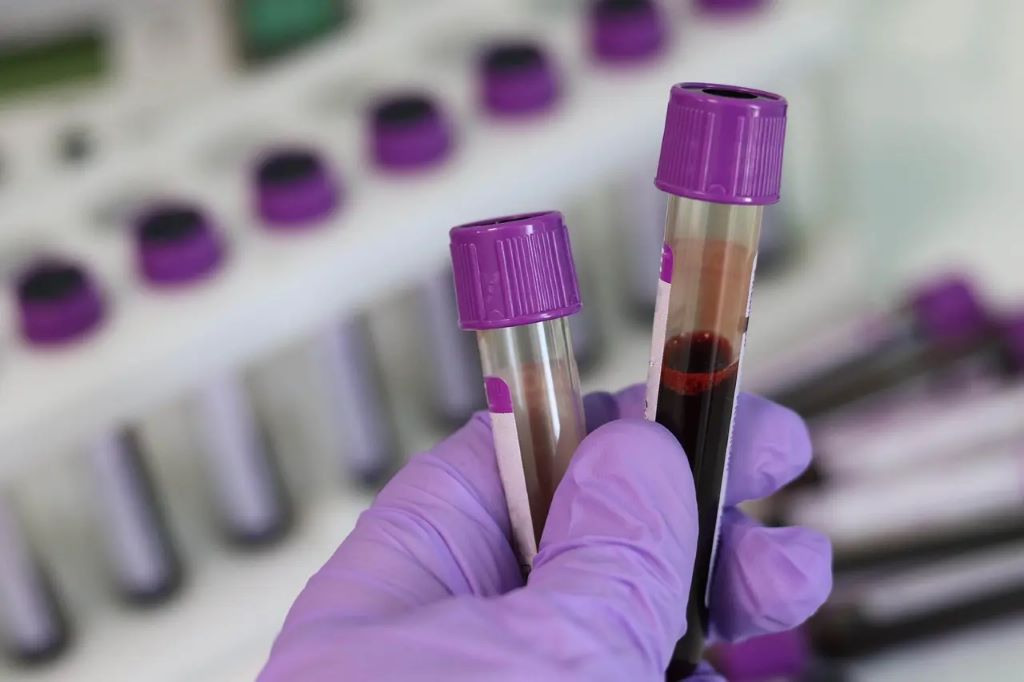
The key is a blood test, explains Professor Graeme Meintjes, an infectious diseases specialist based at the University of Cape Town and Clinical Professor of Infectious Diseases at Queen Mary University of London. The test, called a cryptococcal antigen test (CrAg), looks for a complex sugar molecule found in the cell wall of the fungus. When the test detects the sugar molecule in the blood, that person has what is called cryptococcus antigenemia – meaning the antigen is present in the body.
“They would then be treated pre-emptively with antifungal medication, essentially to prevent them from progressing from the antigenemia to the meningitis,” Meintjes says. Fluconazole, the drug used for this early treatment, is cheap, widely available, and works well.
If someone is not treated in time, the fungus spreads to the central nervous system – specifically the brain – and causes dangerous inflammation in the lining of the brain. When it gets to this stage, the infection is called cryptococcal meningitis. It is diagnosed by doing a CrAG test on spinal fluid obtained through a lumbar puncture, explains Lessells.
The key difference between the two disease states is that symptoms only manifest once cryptococcus antigenaemia has progressed to cryptococcal meningitis.
Someone who has cryptococcal meningitis needs to be admitted to hospital. This is because the drugs used to treat it will only start helping to control the dangerous inflammation after a few days. In the meantime, the build-up of intracranial pressure needs to be reduced through daily lumbar punctures during the first few days in hospital, says Lessells. The drugs themselves can also cause some dangerous side effects that need to be monitored closely and managed.
“Cryptococcal meningitis is associated with very high early mortality. GERMS-SA surveillance in South Africa has shown in-hospital mortality in routine care to be between 30-40% for the past 20 years,” points out Lessells. GERMS-SA is a national, population-based laboratory surveillance programme led by the National Institute for Communicable Diseases (NICD). It monitors bacterial, fungal, and parasitic infections across South Africa through a network of laboratories and sentinel hospital sites.
Screening the right people
Since waiting for cryptococcal meningitis symptoms to appear is a losing strategy, the focus has been on proactively identifying and offering CrAg screening to people at high risk of the condition.
In South Africa, says Lessells, cryptococcal meningitis most commonly affects people living with HIV, especially those with advanced HIV disease. This is a state where the virus is not under control in the body and the number of important immune cells called CD4 cells are dangerously low, at less than 200 cells/mm3. CD4 cells are a type of white blood cell important for a well-functioning immune system. A CD4 count above 500 is generally considered to be healthy.
But cryptococcal meningitis can also affect organ transplant recipients, people undergoing cancer treatment or those taking steroids. “Very occasionally, it can affect people with no apparent immunocompromising condition,” adds Lessells.
Either way, people with advanced HIV are the most obvious group to target with screening efforts. In 2025, there were about 7.8 million people living with HIV in South Africa, according to estimates from Thembisa, the leading mathematical model of HIV in the country. Of those, roughly 530 000 had advanced HIV, with a CD4 count of less than 200. This group of around half-a-million people are at highest risk of cryptococcal meningitis.
The National HIV treatment guidelines recommend that people living with HIV should be offered CrAg screening if they present with a blood test showing a CD4 count of less than 200. But the catch is that often people with advanced HIV disease are not accessing healthcare services or only accessing services once they are already very ill. In 2025, around 42 000 of the adults living with HIV who started taking treatment that year had a CD4 count of less than 200, according to Thembisa. This is over 20% of the total number of people who started taking treatment that year.
“Cryptococcal meningitis is essentially a marker for the gaps in our HIV programme,” says Liliwe Shuping, an epidemiologist at the NICD.
“If a patient gets cryptococcal meningitis, it usually means they fell through the cracks of the healthcare system; either they were never tested for HIV, they were lost to follow-up, or their treatment failed without being caught,” she says.
She describes cryptococcal meningitis as “almost exclusively a disease of advanced HIV, untreated HIV, or failed HIV care”.
There are thus two layers to the problem: First, too many people with HIV are not in care and end up developing advanced HIV, and second, even when people are visiting health facilities, they are not always screened in time.
“At the primary healthcare level, there are still challenges with implementation of the CrAg screening programme,” says Lessells. The laboratory component works well, but then he says there are the usual problems of a healthcare worker seeing the result, acting on the result, being able to contact the patient to recall them to the facility, and then referral to a higher level of care for lumbar puncture.
Unfortunately, people do fall through the cracks. Similarly, he suggests there are sometimes avoidable delays at hospital level when it comes to doing lumbar puncture. For example, some doctors might wait for a CT scan of the brain, which is not always necessary and can lead to delays.
At least some of these challenges should be reduced with the latest National HIV treatment guidelines, which address these issues with more information and clarified referral pathways, Lessells says. For example, the guidelines include a chapter on managing advanced HIV, among others covering how to screen for, diagnose and manage cryptococcal meningitis. It also spells out the requirement for automatic CrAg testing for people with CD4 counts below 200.
The big picture – what the data tells us
Some good news from the GERMS-SA report is that there has been a decline of about 11% in reported cryptococcal meningitis cases from 2023 to 2024. There has also been a drop in cryptococcal meningitis incidence over the last six years, says Shuping.
The annual number of recorded cases dropped from about 6 000 in 2018 to 4 000 in 2023, decreasing by about one third overall, says Shuping. This is based on the Public Health Bulletin study on data from 2018 to 2023. The authors caution that the decline in cases could be due to the potential impact of strengthening public health interventions or may reflect an under-detection of cases. Either way, these numbers reflect only confirmed cases. Modelling suggests real cryptococcal meningitis incidence may be several times what is being reported.
Shuping cautions that despite the reduction in reported cases, cryptococcal meningitis is still killing many people living with HIV.
The in-hospital mortality rate for cryptococcal meningitis “has not meaningfully improved,” she points out. Despite treating fewer cases over time, she says that a patient who develops cryptococcal meningitis today has roughly the same high risk of dying in hospital as they did six years ago.
In general, Meintjes explains that brain infections have a high mortality. Even with the best treatment options and under clinical trial settings, around a quarter of patients die despite treatment.
Quality of care matters. Lessells says that while drug treatment generally receives the most attention, it is only one component of the clinical management of cryptococcal meningitis. Monitoring and reducing intracranial pressure and preventing and monitoring side effects from the drugs are vital. In a setting where resources are stretched thin, healthcare workers are overwhelmed and facilities don’t always follow the best practises, he says quality of care can fall, contributing to “stubbornly high mortality rates”.
High mortality despite new drug
Given the serious side effects associated with some medicines used to treat cryptococcal meningitis, there was great optimism in 2022 when an old anti-fungal medicine called flucytosine was approved for use in the country to the treat the illness.
This followed the AMBITION trial, where researchers found that combining flucytosine with two other powerful drugs (liposomal amphotericin B – an IV infusion and fluconazole – an oral medication) improved patient treatment. Meintjes explains that the combination of the three drugs was not “better” than the previous regimen as there were similar mortality rates between the two arms, but it was safer and had far fewer side effects.
Meintjes says that today the first choice for the treatment of cryptococcal meningitis is a single infusion of liposomal amphotericin B, then 14 days of fluconazole plus flucytosine.
The second choice, that has similar mortality outcomes to the first but has more side effects, is seven days of another form of amphotericin B plus flucytosine and fluconazole.
The third-choice regimen is 14 days of amphotericin B plus fluconazole. Meintjes says that the outcomes for this regimen are not as good as with the first two.
After the initial treatment, regardless of which regimen was used, patients then have to take a maintenance dose of fluconazole for at least another year to completely eradicate the fungus. If the fungus is not entirely gone from the body, it can cause disease again in the future. Patients living with HIV also need to be started on antiretroviral therapy around four weeks after the meningitis diagnosis, which helps prevent a relapse.
Best drugs not always in stock
One reason the approval of flucytosine, and the improved treatment regimens it enables together with liposomal amphotericin B, hasn’t yet resulted in better outcomes is that patients simply aren’t always getting the drugs.
“[O]ften we’re in a situation where we have to use the third choice because neither liposomal amphotericin B nor flucytosine are available and that’s associated with worse outcomes,” says Meintjes.
Jessica Burry, a pharmacist and technical officer working on advanced HIV with Unitaid, concurs. “I think what it comes down to is if you don’t have access to liposomal amphotericin B and flucytosine, then you don’t have the gold standard of treatment…and it’s shown quite clearly that mortality rates are much higher in those groups [that don’t have access to these drugs],” she says.
There are several reasons why a drug might not be in stock at the clinic or hospital where it is needed. Often in South Africa, medicines have been in stock in central depots, but not available at all health facilities. A further challenge with medicines for cryptococcal meningitis is that the volumes are comparatively low, and pharmacies may thus be reluctant to hold onto too much stock for fear it might expire.
While such distribution problems have no doubt played a role in limiting access to cryptococcal meningitis medicines, sourcing a reliable supply from manufacturers appears to have been a greater stumbling block in recent years. In this regard, public health imperatives are up against some tough economic realities.
Lessells says that, because flucytosine is an anti-fungal mainly used to treat cryptococcal meningitis, there isn’t much demand for the drug across the world, since many countries very rarely deal with the illness. This, he says, ties into the systemic problem with global drug supplies for rare diseases or rare conditions, where you’ve got a small number of manufacturers and problems in the manufacturing process that then lead to global supply chain problems.
How such dynamics have played out with flucytosine and liposomal amphotericin B is worth a closer look. As often is the case with such questions of medicines access, the picture gets fuzzier before it becomes clearer.
Flucytosine shortages
“During 2026, the availability of flucytosine has been constrained, requiring available stock to be carefully managed and distributed to facilities based on clinical need,” Foster Mohale, spokesperson for the National Department of Health tells Spotlight. He says that there was a global supply problem and that the stockouts were not due to procurement issues at the department. A shortage of flucytosine has also affected several other countries.
Flucytosine is on the Essential Medicines List (EML), which is a list of medicines that are considered vital for the health of the country, like antiretrovirals or insulin. The health department undertakes to supply medicines on the EML to the public health sector, normally via tenders.
Two pharmaceutical companies, Viatris and Macleods, have registered flucytosine with the South African Health Products Regulatory Authority (SAHPRA) for use in South Africa.
Flucytosine was previously procured by the state in terms of a tender awarded to Viatris in 2023. According to Mohale, uptake from provincial health departments was poor, and in July 2024 some expired stock had to be written off. A few months later, the department issued a notice to confirm there was stock and that healthcare facilities should place orders based on their needs.
A new tender was advertised in 2025, but according to Mohale, no “responsive bids” were received. The health department then approached Viatris to supply flucytosine via a Request for Quotation (RFQ). The RFQ process is when the state obtains a quotation on a price when an essential medicine is not available from a contracted tenderer, either because no tender was awarded or the product is out of stock, explains UKZN pharmaceutical sciences expert Dr Andy Gray. This form of procurement, he says, is not unusual.
Viatris initially accepted the RFQ but then informed the department in March 2026 that it was “unable to supply due to manufacturing and global supply constraints”. Macleods was then approached by the health department and is now supplying the drug in terms of a new RFQ. The plan is to issue a new tender when it makes sense to do so. (You can read the health department’s full response here).
Price fluctuations
There have also been challenges with access to another important cryptococcal meningitis medicine. Historically, many low-and-middle income countries have struggled to access liposomal amphotericin B because of the price, says Burry.
Gilead Sciences, the pharmaceutical company that owned the patent for liposomal amphotericin B (which it acquired when purchasing a company called NeXstar Pharmaceuticals) had made it available at an access price for some low-and-middle income countries starting in 2018. It has also taken steps to make the drug more widely available to treat another infection called leishmaniasis through a long-standing partnership with the World Health Organization (WHO).
Initially, it appeared that South Africa was exempt from this access price due to an exclusive distributor agreement Gilead had with some companies. In South Africa, the distributor was Key Oncologics, which at the time had priced the drug for sale in the private healthcare sector at just under $200 a vial (about R2 880 at the time) – a price the health department could not afford when Spotlight first reported on the issue in 2022.
When asked about access to the drug and this agreement, both Gilead and Key Oncologics provided short statements which you can read here and here.
Key Oncologics then did end up supplying the health department with the drug in 2023, through the Gilead Access Programme, explains Mohale, when it was contracted to supply an estimated 5 860 vials at around R600 per vial over two years. That R600 price tag was used to support the inclusion of the drug on the EML and Adult Hospital Level Standard guidelines. There were initially some supply issues as demand for the drug increased, but Mohale says that was resolved when production and supply volumes were adjusted.
Under the current three-year tender, Key Oncologics is contracted to supply an estimated 166 056 vials at R1 167.48 per vial. Although, Mohale adds that following engagements with Gilead and Key Oncologics, the price has been reduced to R1 035 per vial. This is still substantially higher than the previous price of R600. Mohale says the department’s understanding is that South Africa is no longer eligible for the lower access price since a generic alternative has been registered in the country. (You can read the health department’s full response here.)
How outcomes can be improved
As we’ve seen in this Spotlight special briefing, South Africa has made substantial progress against cryptococcal meningitis, but the fungal infection nevertheless continues to cause suffering and death. The reasons for the disease’s continued toll on people living with HIV are varied and complex, but three issues stand out.
First, there is the fact that far too many people living with HIV in South Africa are not on antiretroviral treatment and are thus at increased risk of developing cryptococcal meningitis. As with our HIV response more generally, the priority here must simply be to help more people with HIV to start and stay on antiretroviral treatment. Special attention needs to be paid to finding and supporting the subset of people who don’t go to the clinic or the hospital until they are very ill.
Second, we need to get better at diagnosing infection early, ideally before the development of full-on cryptococcal meningitis. Automatic CrAg testing for people with low CD4 counts is the right move – it needs to be backed up with a push for greater healthcare worker awareness to respond quickly to a positive test.
And third, there is the question of having the best treatments available where they are needed. There was much optimism a few years ago over the introduction of new safer treatments with fewer side effects, but issues with drug supply has dampened the mood considerably since then. The good news, for now at least, is that the national supply of the most important medicines seems to have stabilised. As we know from experience, however, having the medicines in the country does not always mean they are available in the right health facilities when needed.
Ultimately, in all three of these areas much will depend on how well our public healthcare system is, or is not, functioning. As Lessells puts it: “We have the right approach to prevention, diagnosis and management of cryptococcal meningitis. Our guidelines are informed by the best evidence (including clinical trial evidence generated in Africa by African research teams). It’s really about broader health systems strengthening so that we can realise the benefits of this.”
*Reviewed by Professor Graeme Meintjes and Dr Richard Lessells. Spotlight takes full responsibility for any errors.
The Democratic Republic of Congo’s fight against Ebola has reached a tipping point. It can accelerate what it has been doing to bring the latest outbreak under control, or risk allowing it to persist as the worst Ebola epidemic ever recorded.
As at 1 September 2026, more than 6186 confirmed cases and 3007 deaths have been reported since May 2026 when it was first declared. It is the deadliest Ebola outbreak in the history of the DRC. The outbreak is being driven by the Bundibugyo strain of the virus that causes Ebola disease. There is currently no licensed vaccine or specific treatment for Bundibugyo.
The outbreak is thought to have originated in the high-mobility mining area of Mongbwalu in Ituri, north-east DRC, in late April 2026, before spreading through interconnected communities and healthcare networks to Rwampara and Bunia – health zones in the Ituri province – and subsequently Uganda.
The response to the outbreak has been nationally led by the government of the DRC, with Africa Centres for Disease Control, the World Health Organization and other partners supporting the expansion of surveillance, laboratory capacity, treatment centres, infection prevention and control, vaccination, logistics, community engagement and safe and dignified burials.
Significant progress has been achieved, including interruption of transmission in Uganda through decisive national leadership and close collaboration with communities.
However, in the DRC, insecurity, population mobility, delayed detection, gaps in financing and supplies, and insufficient community ownership have continued to sustain transmission.
The response is therefore not yet sufficient to interrupt transmission in the DRC. This underscores the need to bring surveillance, testing, treatment, vaccination and community engagement closer to the village level.
As public health experts with expertise in Ebola who have been at the forefront of containing the latest outbreak in DRC, it is our view that more is required.
What’s required is informed by the four factors that have made this epidemic difficult to control:
the DRC’s difficult geographical and humanitarian environment
highly mobile populations
low trust and poor community engagement
the incomplete scientific arsenal against the Bundibugyo virus.
The four factors
First, this is an outbreak occurring in an exceptionally difficult environment. The affected areas are vast, remote and, in many places, insecure. Short journeys can take a day or more on bad roads, particularly during the rainy season (which is now).
Second, populations are highly mobile. Mining communities, motorcycle transport, displacement and cross-border movement connect villages and health zones that are difficult to monitor. The outbreak has been concentrated in several interconnected areas, particularly in Ituri, about 2,886km from Kinshasa, the DRC capital. Bunia, the main urban hub in Ituri, is connected to surrounding transmission areas. Movement of people is important in the response.
Third, trust and community engagement remain challenges. When people are afraid, when health facilities have closed after health workers have died, or when families have experienced Ebola without seeing an effective response, they may delay or avoid getting help. This directly affects surveillance. Current investigations by our team suggest that a substantial proportion of cases are being identified outside established contact lists. The response therefore cannot depend only on traditional contact tracing.
Fourth, unlike Ebola caused by the Zaire species, the Bundibugyo virus has no licensed vaccine or specific treatment. Clinical research is therefore part of the response itself.
The DRC has launched Ebola vaccination in Kisangani. The first injections were administered to health workers and other frontline responders. More than 50 000 doses have been received. The International Coordinating Group on Vaccine Provision has approved 70 000 doses of Ervebo for use in the country. Around 20 000 doses will be used in a clinical trial to assess its effectiveness against the Bundibugyo strain.
The response thus far
It is important to recognise how much has been achieved in only three months – between 15 May and 15 August 2026.
More than 20 Ebola treatment and isolation facilities have been established or supported. At the height of the crisis in late May 2026, treatment capacity was overwhelmed, with bed occupancy exceeding 200%. In late August, occupancy had fallen to around 66%.
Laboratory capacity has expanded dramatically, with 22 laboratories operating across the five affected provinces. Before there was only one in Kinshasa with the capacity to detect Bundibugyo. This has helped reduce turnaround time between sample collection and result, from over a week to just hours.
Safe and dignified burials have also improved substantially, with the vast majority now taking place within 24 hours.
These improvements matter. They are signs that the response can change the trajectory of an epidemic when resources, coordination and technical capacity come together.
There are also encouraging epidemiological signals. The effective reproduction number has fallen substantially from the very high levels (Rt 4.0) observed in May. The average number of people that each patient infects has fallen from four to just over one.
The scale of resources mobilised for the outbreak is substantial, with approximately US$1.72 billion in pledges, including US$118.5 million committed by African countries. Around US$867 million (about half of the pledges) has reportedly been released.
The continental response plan launched on 27 June 2026 by Africa CDC and WHO was designed around a simple principle: one plan, one budget, one team, one monitoring and evaluation framework, with communities at the centre.
What’s required
The next phase must centre on the villages. Local representatives, health workers and leaders should become active partners in surveillance, early detection, referral, risk communication and community protection.
Digital tools can support this, but technology must serve the community rather than replace it.
Commercial motorcycle riders, who connect communities across enormous distances, must be engaged as partners in the response rather than being treated simply as a risk.
Vaccination must be brought closer to communities. Research must be done where the epidemic is occurring. Clinical trials of vaccines and therapeutics must proceed with urgency and scientific rigour.
Rebuilding trust
Essential health services must continue alongside Ebola control.
The same applies to the reopening of schools. This must happen with infection-prevention measures, including training teachers, providing hygiene facilities, developing clear referral mechanisms, and adapting communication about the epidemic for school children and families.
Humanitarian and Ebola responses must also be integrated. A community facing insecurity, displacement and disease cannot be expected to navigate separate systems for each crisis.
Finally, Ebola doesn’t respect borders. The collaboration between the DRC and Uganda shows what regional solidarity can look like. It’s about joint surveillance, moving diagnostic capacity closer to border communities, sharing information and coordinated action. The DRC-Uganda lessons must be extended to South Sudan, the Republic of Congo and other neighbouring countries as agreed in Bangui, Central African Republic, in mid August.
This illustration depicts a 3D computer-generated image of a group of Gram-positive, Streptococcus pneumoniae bacteria. The artistic recreation was based upon scanning electron microscopic (SEM) imagery. Credit: CDC on Unsplash
Exposure to a mild or symptom-free strain of Streptococcus pyogenes (Strep A) can trigger the body’s immune response and naturally build protection, potentially solving a nearly 100-year-old mystery of immunity.
New Griffith University research, with the help of clinical scientists from the Murdoch Children’s Research Institute (MCRI), investigated how immunity developed over time as infection rates declined with age, suggesting progressive immune protection.
Strep A is a common bug which can cause painful tonsillitis and school sores in young children and teenagers.
If untreated, it can lead to rheumatic fever, rheumatic heart disease and kidney disease, conditions for which First Nations peoples in Australia suffer some of the highest reported rates in the world.
It is estimated 10-20% of children across Australia develop Strep A tonsillitis each year, with some getting the disease multiple times and requiring surgical removal of the tonsils.
By adulthood, most people have developed immunity to Strep A even though most will have only had a few bouts of tonsillitis in their life.
Senior author Associate Professor Manisha Pandey from Griffith’s Institute for Biomedicine and Glycomics said: “How this might happen has never been adequately explained as there are more than 250 distinct strains of Strep A, and immunity to one strain does not provide protection against the others.”
“To address this question, the team investigated the development of immunity using samples collected through a controlled human infection study conducted by MCRI researchers who administered a dose of Strep A which was high enough to cause tonsillitis in most, but not all.
“All participants were treated with antibiotics, regardless.
“Surprisingly, antibodies from the asymptomatic participants not only bound strongly to the exposed strain of bacteria but were able to kill the Strep A germ in a murine model of tonsillitis.”
The findings demonstrated both symptomatic and asymptomatic participants developed robust immune responses to the Strep A strain they were exposed to.
Dr Ailin Lepletier, said it had been known for many years that multiple strains of Strep A were circulating in the community and up to 30% of people had Strep A in their throats without getting sick.
“But we didn’t know this may be providing immunity to these strains, causing silent infections so that by adulthood, we have accumulated antibodies to fight most strains,” she said.
“While a person may not feel sick, their body can still learn how to fight the bacteria and remember it from childhood into adulthood.”
Professor Michael Good AO, said this mechanism of natural immunity may also apply to other common infections.
“While highly intriguing for Strep A, it is unlikely to provide a strategy for a vaccine as it would be necessary to vaccinate against each of the 250 strains,” he said.
Dr Anna Calkin, National Manager of Research at the Heart Foundation, said the findings came from research made possible through approximately $2.79 million in Heart Foundation funding.
“The findings highlight the importance of investing in research that addresses conditions disproportionately affecting First Nations peoples,” Dr Calkin said.
“By improving our understanding of how natural immunity to Strep A develops, this work may contribute to future efforts to prevent rheumatic heart disease and close longstanding health gaps.”
The research team included Griffith University Professor Daniel Kolarich, plus MCRI researchers Associate Professor Joshua Osowicki and Professor Andrew Streer.
The paper ‘Subclinical exposure to Streptococcus pyogenes drives the development of long-lived homologous immunity’ has been published in Nature Communications.
You go to hospital for treatment and to get better. But sometimes, you get something much less welcome: an infection.
Pneumonia, an infection of the lungs, is one of the most common and deadly infections people develop in hospital. Around 50000 patients contract pneumonia in Australian hospitals every year. Around 1900 of them die from it.
It’s rarely monitored and rarely reported. And to date, few studies have looked at how it can be prevented.
But our new trial, published today in The Lancet Infectious Diseases, shows a surprisingly simple action can make a major difference: brushing patients’ teeth.
We found this can reduce the chance of getting this type of pneumonia, called non-ventilator hospital-acquired pneumonia, by 60%.
What is this type of pneumonia?
Non-ventilator hospital-acquired pneumonia occurs in patients who aren’t on a ventilator, usually outside of intensive care settings.
Patients are infected when bacteria from the mouth or throat are breathed into the lungs.
We studied 8,870 patients across three Australian hospitals to see whether improving oral care – which included tooth-brushing – could reduce this type of pneumonia.
Usually, when patients go to hospital, they don’t pack a toothbrush – especially in emergencies.
The intervention in our study was deliberately simple. We:
gave patients in hospital a toothbrush and toothpaste in a bag when they were admitted
educated patients and hospital staff about the importance of tooth-brushing. The toothbrush also had a written prompt on it – “Brush away pneumonia”
assisted patients who needed help with tooth-brushing
audited how oral care was being delivered and gave feedback to hospital wards.
We introduced the intervention into one ward at a time over 12 months at each hospital. This gradual roll-out is known as a stepped-wedge cluster randomised trial. It can test new health interventions when it’s too difficult to randomise individuals without revealing who is receiving the intervention and who isn’t.
We found that this relatively simple intervention increased the proportion of people who cleaned their teeth from 16% to 62%.
This increasing oral care led to a 60% reduction in the risk of acquiring pneumonia, from the equivalent of eight infections per month on a typical ward of 30 patients, to less than four infections per month.
This is the largest trial of its kind and the first completed across multiple hospitals.
Why does brushing teeth help?
The mouth is home to billions of bacteria. Oral hygiene often deteriorates when people are unwell, sedated, immobile, or taking certain medications.
When this happens, bacteria build up on the teeth, gums and tongue. If these bacteria are breathed in – even in tiny amounts – they can cause pneumonia.
Yet in busy hospitals, oral care is often overlooked. Patients may not know just how important oral care is. Staff are often busy with competing priorities and oral care can be de-prioritised. There is also a general lack of understanding about the importance of oral care.
Patients can help protect themselves
One of the most important messages from our research is patients aren’t powerless. While health-care staff such as nurses play a crucial role, patients who are able to brush their own teeth can meaningfully reduce their own risk.
If you or a loved one is admitted to hospital, you can:
bring your own toothbrush and toothpaste
brush your teeth twice a day if you’re able
ask staff for help if you can’t
remind staff if oral care has been missed.
These small actions can reduce the risk of a serious, life-threatening infection.
What happens next?
Pneumonia is costly – in lives, hospital days and the financial cost of care. But because non-ventilator hospital-acquired pneumonia isn’t routinely reported, it’s often invisible.
Our research challenges the assumption that hospital-acquired pneumonia is an unavoidable complication when you go to hospital.
It also highlights the need for hospitals to monitor non-ventilator hospital-acquired infections, in the same way they monitor falls, pressure injuries and other preventable harms.
Finally, our study strengthens the case for including oral care in national infection-prevention guidelines and nursing practice.
Oral care isn’t glamorous, expensive or technologically advanced – but it works. Sometimes, the simplest interventions are the most powerful.
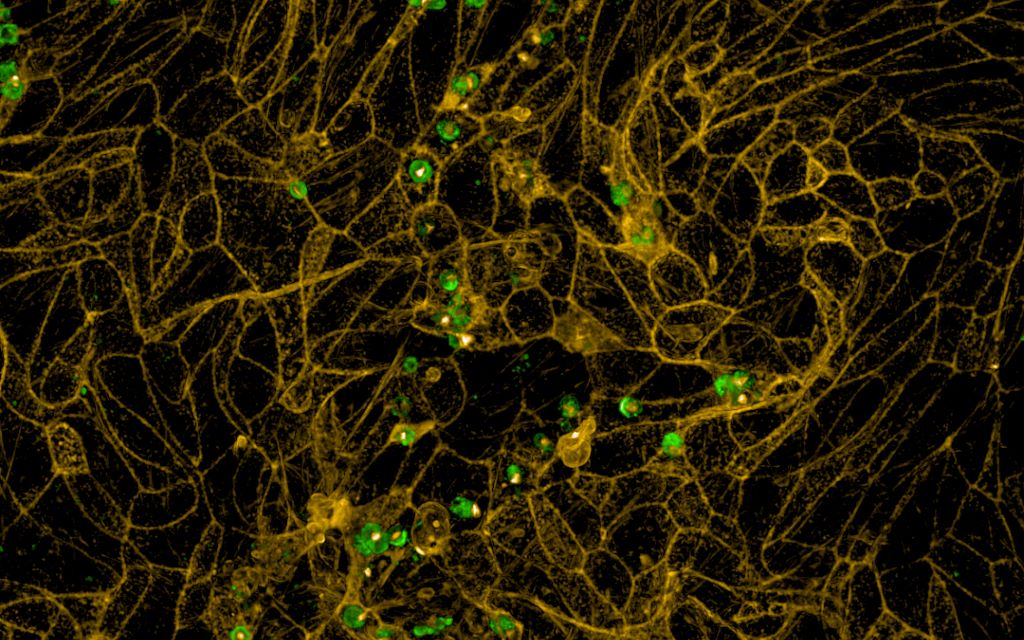
The Cryptosporidium parasite lives within cells that line the human intestine, but how does this pathogen find, recognise and then successfully invade these cells without triggering immunity? An international collaboration aims to find out.
Parasites have lived on and within humans throughout history, co-evolving along with us to adjust to new climates and challenges. In some cases, this relationship has left significant genetic imprints. For example, the prevalence of sickle-cell disease in humans has been driven by selective pressure from the malaria parasite.
Cell biologist Adam Sateriale and his team at the Crick study a close relative of the malaria parasite, known as Cryptosporidium, which infects the intestinal tract of a wide range of animals, including humans. Most human infections are mild and asymptomatic, but Cryptosporidiumcan be deadly within immunocompromised people or very young children.
“Certain species of the Cryptosporidium parasite are adapted to specifically invade and then live within the human intestinal lining, or epithelium,” Adam explains. “We’re interested to find out how the parasite recognises, and then successfully invades, these cells within the epithelium.”
Cryptosporidium and the malaria parasite, known as Plasmodium, diverged from one another nearly 500 million years ago, yet many of their features are conserved. Two organelles (or cellular compartments) can be found within both parasites: micronemes, which contain proteins that help parasites move, and rhoptries, which contain proteins that help parasites invade cells.
Micronemes of the malaria parasite are important vaccination targets, as proteins from these organelles are displayed on the surface of the parasite and are critical for infection. While Cryptosporidium has these invasion organelles, very little is known about their function and how they diverge from those of the malaria parasite.
A recently awarded Wellcome Discovery grant has allowed Adam’s team to join forces with Gavin Wright’s team at the University of York and Amandine Guérin’s team at the University of Geneva to tackle these questions. Together, they will examine the function of micronemes and rhoptries and explore how Cryptosporidium specifically recognises and invades intestinal epithelial cells. To do that, they will harness the power of genetic editing.
“We’re going to use CRISPR gene editing to switch off, one by one, all the genes that code for the proteins in Cryptosporidium’s micronemes and rhoptries,” says Adam. “If the parasites can’t complete their normal functions without a particular protein, we’ll know that it’s a critical part of Cryptosporidium’s offensive strategy.”
Working together over the next five years, this multidisciplinary team are each bringing unique expertise: Adam’s team have developed CRISPR screening technology for the parasite, Amandine’s team work on Cryptosporidium invasion in detail and Gavin’s team specialise in identifying and studying cell surface protein interactions.
“Although there are many species of the Cryptosporidium parasite, some can only infect very specific hosts,” says Adam. “For instance, there are human species that can only invade and replicate within humans, suggesting a specific lock and key mechanism between the parasite and host. If we can find the essential parasite proteins that engage and unlock human cells for infection, we can then study these interactions and learn how to block them.”
He’s also excited about the impact this work could have, adding, “Ultimately this will lay the foundation for new treatments and preventions for children living in endemic areas.”
The Bundibugyo ebolavirus outbreak is currently affecting 27 health zones in the Democratic Republic of the Congo and one district in Uganda. A cumulative total of 681 confirmed cases and 126 deaths among confirmed cases have been reported across the Democratic Republic of the Congo and Uganda, representing a case fatality ratio of 18.5%.
The Democratic Republic of the Congo remains the main focus of the outbreak, with 662 confirmed cases and 124 deaths reported to date. Ituri Province continues to account for the majority of reported cases. In the last 24 hours, 29 new confirmed cases and five deaths among confirmed cases were reported in Ituri Province. Seven additional confirmed cases from North Kivu were also reported as part of a backlog from 8 June.
Uganda has reported 19 confirmed cases and two deaths to date. No new confirmed cases, deaths, suspected cases or recoveries were reported in Uganda in the last 24 hours. Uganda has now reported no new confirmed cases or deaths for five consecutive days.
Across both countries, 25 recoveries have been reported, and 6,525 contacts have been listed for follow-up. Thirty-four healthcare workers have been infected, including 29 in the Democratic Republic of the Congo and five in Uganda.The outbreak is currently affecting 27 health zones in the Democratic Republic of the Congo and one district in Uganda.
Africa CDC continues to work closely with national authorities and partners to support surveillance, contact tracing, case management, infection prevention and control, risk communication and cross-border coordination.
Africa CDC and WHO continue to advise against unnecessary restrictions on travel and trade. Public health measures should remain evidence-based and aligned with the International Health Regulations.
Africa CDC urges communities in affected and at-risk areas to remain vigilant, follow guidance from health authorities, report symptoms early and cooperate with trained response teams.
Further updates will be shared as the situation evolves.
Distributed by APO Group on behalf of Africa Centres for Disease Control and World Health Organization