Day: July 3, 2026

BP and Cholesterol in Over-40s with Obesity Are Trending to Normal Levels
Credit: Pixabay CC0

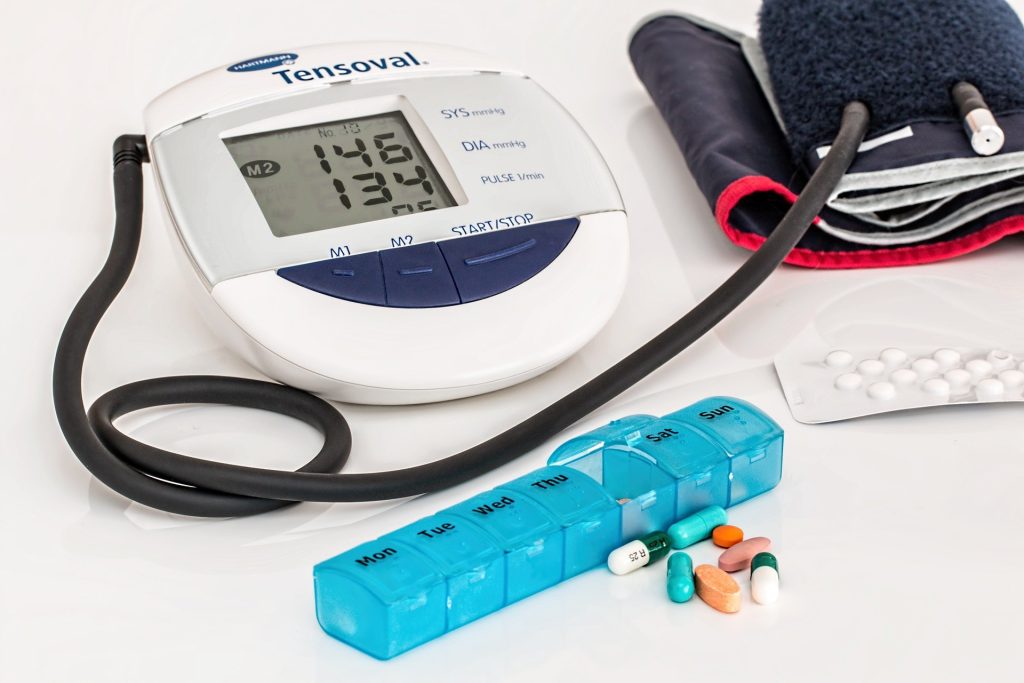
Over the last three decades, differences in unhealthy cholesterol levels and blood pressure between older adults with obesity and those with a normal Body Mass Index (BMI) have narrowed or disappeared in several high-income countries, suggests a study published in The Lancet. The authors propose that this trend is due to the greater, and possibly more intensive, use of cholesterol-lowering medication (such as statins) and blood pressure medication in people aged over 40 living with obesity in high-income countries. 

Obesity is known to increase blood pressure and unhealthy cholesterol levels, which can impact cardiovascular health and increase the risk of heart attack, heart failure, and stroke. However, prior to this study, there was little information on blood pressure and cholesterol levels, and how they have changed, for people with obesity compared with people with normal BMI.

Author Prof Majid Ezzati, from the School of Public Health at Imperial College London (UK), says: “Our study suggests that, in high-income countries, taking medication to lower blood pressure and cholesterol has helped middle-age and older adults lower their cardiovascular risk to levels that are similar to people with normal BMI.”

He continues, “At a time that weight-loss medications are becoming more widely used, our results give a picture of the cardiovascular health of people likely to be prescribed them, which allows the healthcare system to understand how blood pressure and cholesterol treatments benefit the population alongside weight-loss medications.”

The study analysed data on blood pressure and cholesterol in people with obesity, overweight, and normal BMI from 110 health datasets including almost one million participants from 1990 to 2024 in seven high-income countries: England, the USA, Japan, South Korea, Taiwan, Thailand and Finland. 

Converging cardiovascular risk markers

The study finds that in the 1990s adults with obesity generally had higher blood pressure and high-density lipoprotein (non-HDL) cholesterol levels [1] than people with a normal BMI.
 
Since 1990, in the majority of the seven countries studied including England and the USA, blood pressure and unhealthy cholesterol fell more steeply among middle-aged and older adults (40–79 years old) with obesity and overweight than among those with normal BMI, narrowing the gap over time. The exceptions were Taiwan and Thailand, which did not see this convergence as universally as other countries.
 
The findings were most striking in older adults (60–79 years old). In England and the USA, older adults with obesity, and especially with severe obesity, had similar or even lower blood pressure and unhealthy cholesterol levels at the end of the study period than older adults with normal BMI.

Heart medication likely driving the convergence

Over the past three decades, people with obesity were more likely to be prescribed cholesterol-lowering medication (such as a statin) and blood pressure medication than those with a normal BMI. 
 
This gap was especially pronounced in older adults. For example, in England and the USA, around 70–72% of older men with severe obesity (BMI ≥35) were taking cholesterol-lowering medication by the early 2020s, compared with 40–48% of older men with a normal BMI.
 
Author Lakshya Jain, from the School of Public Health at Imperial College London (UK), says “This latest analysis suggests that the observed convergence in cholesterol and blood pressure levels between people aged over 40 with obesity and those with a normal BMI is largely due to statins and other widely accessible medications to reduce cardiovascular risk. That is a significant public health success story, and one we should not lose sight of as new weight-loss medications enter the picture.” 

Cardiovascular risks remain for younger adults with obesity

In younger adults (under 40 years old), the study findings suggest little or no narrowing of the gap in blood pressure or cholesterol between those with obesity and those with a normal BMI. The data also suggests that use of cholesterol-lowering and blood pressure medication is low for this age group, adding further evidence that medication is the driver of the gap reduction in older adults. 

Author Ysé d’Ailhaud de Brisis, from the School of Public Health at Imperial College London (UK), says “While good news for older adults with obesity, our results suggest that cardiovascular health risks remain higher for adults under 40 than for their counterparts with a normal BMI. Early lifestyle interventions, screening and, when appropriate, medication in this younger group should be considered to prevent long-term cardiovascular complications linked to obesity.”

The researchers note some limitations of the study, including that their analysis was limited to seven countries which were all high-income, therefore the finding may not be applicable elsewhere, especially for low- and middle-income countries where the use of unhealthy cholesterol and blood pressure lowering medicines is likely to be lower. Additionally, it was not possible to look at the impact of different medication doses, which require data on prescriptions. 

Writing in a linked Comment, Dr Yuan Lu, Yale School of Medicine (USA), who was not involved in the study, says, “This study reframes obesity-related cardiovascular risk as reflecting not only excess adiposity, but also treatment access, health-system engagement, and timing of intervention. Convergence of risk factors should not be equated with elimination of obesity-related risk. Although treatment of high blood pressure and cholesterol might mitigate part of the cardiovascular harm associated with obesity, the persistent burden among younger adults and the broader multisystem consequences of obesity highlight the need for integrated prevention strategies that move beyond isolated risk factor treatment.”

Source: EurekAlert!

Intermittent Fasting Maintains Long-term Weight Loss, Regardless of Meal Timing

Photo by Ayako S

A team of scientists from the University of Granada (UGR), the Granada Institute for Biomedical Research (ibs.GRANADA), the Public University of Navarra, and the Biomedical Research Networking Center (CIBER) has demonstrated that limiting food intake to an eight-hour window helps maintain weight loss 12 months after the end of the intervention in overweight or obese adults.

The research has revealed that intermittent fasting – specifically the method popularly known as 16:8, in which participants fast for 16 hours and are allowed to eat during the remaining eight hours – is an effective strategy for maintaining weight loss in the medium term. The study shows that these benefits persist one year later, regardless of whether the eight-hour eating window occurs early in the day (between 9 a.m. and 5 p.m., known as early fasting) or later (between 1 p.m. and 9 p.m., known as late fasting), compared to people who maintain their usual eating routine for 12 hours or more.

The results show that both the early-fasting and late-fasting groups managed to maintain significantly greater weight loss after 12 months. Furthermore, the early-fasting group maintained a greater reduction in fat mass. According to the researchers, these findings suggest that this type of nutritional intervention is not only feasible and effective in the short term but now also demonstrates sustainable effects over time.

Body Composition Assessment One Year Later

The study, recently published in Clinical Nutrition, involved 99 adults – half of whom were women – who were overweight or obese. During the first 12 weeks, participants were divided into four groups, all of which followed a Mediterranean diet education program: a control group that maintained its usual eating window (12 hours or longer), an early fasting group (an 8-hour window beginning before 10:00 a.m.), a late fasting group (an 8-hour window beginning after 1:00 p.m.), and a self-selected group where participants chose their own 8-hour eating window.

Changes in weight, fat mass, and fat-free mass were measured before and after the 12-week intervention, as well as one year after the study ended. This study is part of a larger project whose main results have been published in the prestigious journal *Nature Medicine*, where it was observed that participants who practiced TRE, regardless of their eating schedule, lost an average of 3–4 kilos more than the group that received only nutritional recommendations.

Dr. Alba Camacho Cardeñosa, a researcher at the University Joint Institute for Sport and Health (iMUDS) at the University of Granada (UGR) and a postdoctoral fellow at ibs.GRANADA in the Endocrinology and Nutrition Department at San Cecilio University Clinical Hospital, is the study’s first author. She explains that “to date, although we knew that intermittent fasting promotes modest weight loss in the short term, it was unclear whether its effects were sustained over time. By evaluating the participants 12 months after the intervention ended, we demonstrated that the changes in body weight persist.” In addition, the researchers highlight that “a very positive finding is that one in three people decided to continue practicing intermittent fasting on their own during that year of follow-up, suggesting that it is a relatively easy habit to integrate into daily life.”

A Flexible Strategy Against Obesity

The researchers emphasise that an intervention involving just 12 weeks of intermittent fasting may represent an effective medium-term strategy for weight control in overweight or obese adults. Since both early- and late-day fasting regimens have been shown to be effective, the findings offer valuable flexibility for patients to choose the schedule that best suits their lifestyle, thereby improving adherence and success in obesity treatment.

Source: University of Granada 

Brushing Your Teeth in Hospital Could Reduce the Chance of Catching Pneumonia

Photo by Stephen Andrews on Unsplash

Brett Mitchell, University of Newcastle; Allen Cheng, Monash University; Nicole White, Queensland University of Technology; Peta Ellen Tehan, Monash University, and Philip Russo, Monash University

You go to hospital for treatment and to get better. But sometimes, you get something much less welcome: an infection.

Pneumonia, an infection of the lungs, is one of the most common and deadly infections people develop in hospital. Around 50 000 patients contract pneumonia in Australian hospitals every year. Around 1900 of them die from it.

It’s rarely monitored and rarely reported. And to date, few studies have looked at how it can be prevented.

But our new trial, published today in The Lancet Infectious Diseases, shows a surprisingly simple action can make a major difference: brushing patients’ teeth.

We found this can reduce the chance of getting this type of pneumonia, called non-ventilator hospital-acquired pneumonia, by 60%.

What is this type of pneumonia?

Non-ventilator hospital-acquired pneumonia occurs in patients who aren’t on a ventilator, usually outside of intensive care settings.

Patients are infected when bacteria from the mouth or throat are breathed into the lungs.

Patients who develop this type of pneumonia stay in hospital between ten and 48 days longer, and are around eight times more likely to die during their admission.

A simple intervention made a big difference

We studied 8,870 patients across three Australian hospitals to see whether improving oral care – which included tooth-brushing – could reduce this type of pneumonia.

Usually, when patients go to hospital, they don’t pack a toothbrush – especially in emergencies.

In busy hospital wards, oral care isn’t always given the attention it needs, nor are oral care products always readily available. Patients don’t always get reminders to brush their teeth and many patients need help with their oral care.

The intervention in our study was deliberately simple. We:

  • gave patients in hospital a toothbrush and toothpaste in a bag when they were admitted
  • educated patients and hospital staff about the importance of tooth-brushing. The toothbrush also had a written prompt on it – “Brush away pneumonia”
  • assisted patients who needed help with tooth-brushing
  • audited how oral care was being delivered and gave feedback to hospital wards.

We introduced the intervention into one ward at a time over 12 months at each hospital. This gradual roll-out is known as a stepped-wedge cluster randomised trial. It can test new health interventions when it’s too difficult to randomise individuals without revealing who is receiving the intervention and who isn’t.

We found that this relatively simple intervention increased the proportion of people who cleaned their teeth from 16% to 62%.

This increasing oral care led to a 60% reduction in the risk of acquiring pneumonia, from the equivalent of eight infections per month on a typical ward of 30 patients, to less than four infections per month.

This is the largest trial of its kind and the first completed across multiple hospitals.

Why does brushing teeth help?

The mouth is home to billions of bacteria. Oral hygiene often deteriorates when people are unwell, sedated, immobile, or taking certain medications.

When this happens, bacteria build up on the teeth, gums and tongue. If these bacteria are breathed in – even in tiny amounts – they can cause pneumonia.

Daily tooth-brushing reduces this bacteria. It’s a simple mechanical action with a powerful protective effect.

Yet in busy hospitals, oral care is often overlooked. Patients may not know just how important oral care is. Staff are often busy with competing priorities and oral care can be de-prioritised. There is also a general lack of understanding about the importance of oral care.

Patients can help protect themselves

One of the most important messages from our research is patients aren’t powerless. While health-care staff such as nurses play a crucial role, patients who are able to brush their own teeth can meaningfully reduce their own risk.

If you or a loved one is admitted to hospital, you can:

  • bring your own toothbrush and toothpaste
  • brush your teeth twice a day if you’re able
  • ask staff for help if you can’t
  • remind staff if oral care has been missed.

These small actions can reduce the risk of a serious, life-threatening infection.

What happens next?

Pneumonia is costly – in lives, hospital days and the financial cost of care. But because non-ventilator hospital-acquired pneumonia isn’t routinely reported, it’s often invisible.

Our research challenges the assumption that hospital-acquired pneumonia is an unavoidable complication when you go to hospital.

It also highlights the need for hospitals to monitor non-ventilator hospital-acquired infections, in the same way they monitor falls, pressure injuries and other preventable harms.

Finally, our study strengthens the case for including oral care in national infection-prevention guidelines and nursing practice.

Oral care isn’t glamorous, expensive or technologically advanced – but it works. Sometimes, the simplest interventions are the most powerful.

Brett Mitchell, Professor of Nursing and Health Services Research, University of Newcastle; Allen Cheng, Professor of Infectious Diseases, Monash University; Nicole White, Associate Professor of Statistics, Queensland University of Technology; Peta Ellen Tehan, Senior Lecturer, Monas University, Monash University, and Philip Russo, Professor, Director of Research, Nursing and Midwifery, Monash University

This article is republished from The Conversation under a Creative Commons license. Read the original article.

Neural Stimulation and Exoskeletons Improve Hand Function in Neurological Injuries

Study demonstrates the potential of personalised assistive technologies for people with impaired hand function

Researchers at the Medical University of Vienna, in collaboration with ETH Zurich, the Technical University of Munich and Medical Faculty Belgrade, have developed a wearable neurorobotic system that combines electrical neurostimulation with hand exoskeletons. In a clinical trial involving 14 patients with hand impairments caused by neurological injury, the technology supported finger mobility, tactile perception and grip control. The results demonstrate the potential of personalised assistive systems for people living with the consequences of spinal cord or brain injury. The study has recently been published in the journal Science Advances.

Hand movements and the sense of touch are essential for everyday activities such as grasping, eating, dressing or personal hygiene. However, after damage to the central nervous system, motor and sensory impairments of the hand often persist. Conventional rehabilitation can achieve improvements, but does not always lead to sufficient restoration of hand function. There is therefore a great need for assistive technologies suitable for everyday use.

A research team led by study director Stanisa Raspopovic from the Center for Medical Physics and Biomedical Engineering at MedUni Vienna has developed the “SensoExo” system for assisting people with hand sensorimotor impairements. It combines a wearable hand exoskeleton with a custom-fitted neurostimulation sleeve. The sleeve stimulates specific nerves and muscles in the forearm through the skin. Sensors on the fingers detect touch and gripping forces and translate this information into electrical stimulation, providing users with tactile feedback. In addition, functional electrical stimulation can assist users open and close their fingers more easily.

“Our aim was not only to provide mechanical support for movement, but also to restore their sense of touch,” says Stanisa Raspopovic. “The interplay of strength, movement and the sense of touch is crucial, particularly when gripping. Without feedback on how firmly an object is being held, hand function remains significantly limited in everyday life.”

Individualised support depending on the impairment

The system was tested on 14 patients with neurological hand impairments. All study participants exhibited sensory deficits and therefore received tactile feedback via transcutaneous electrical nerve stimulation. In seven individuals with particularly severe motor impairments, functional electrical muscle stimulation was also used to support hand opening and grip strength.

The study compared three conditions: no support, support from an exoskeleton alone, and the combined use of an exoskeleton and neurostimulation. Eight of the 14 participants also completed functional grasping and releasing tasks with bulky and fragile objects. This investigation revealed that the combination of exoskeleton and neurostimulation provided additional benefits compared to an exoskeleton alone. In patients with severe motor impairment, SensoExo improved finger mobility to a greater extent than the exoskeleton alone. The artificially mediated tactile feedback also increased the areas of the hand where touch sensations could be perceived.

“The results show that motor assistance and sensory feedback must be considered together,” explains lead author Andrea Cimolato from the Center for Medical Physics and Biomedical Engineering at MedUni Vienna. “The system can be adapted depending on the individual’s impairment profile. People with more severe motor impairments benefited particularly from additional motor support, while those with pronounced sensory loss used the sensory feedback to grasp fragile objects more precisely.”

Improved grasping of everyday objects

In the functional tests, participants using SensoExo achieved the highest success rates when grasping and carrying objects. With bulky objects, muscle stimulation supported grip strength. With fragile objects, sensory feedback helped to avoid applying too much pressure.

“The technology is currently a prototype and not a fully developed medical device for everyday use,” emphasises Raspopovic. “However, the study provides early clinical evidence that non-invasive neurostimulation combined with wearable robotics can form a realistic basis for future personalised assistance systems.”

Source: Medical University of Vienna

Epstein–Barr Virus Influences Rare Brain Lymphomas

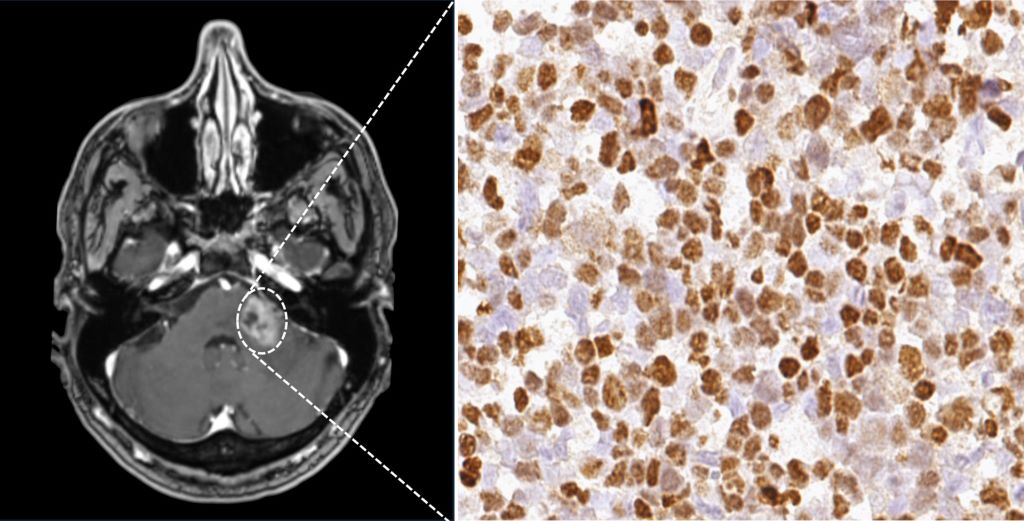
Primary CNS lymphomas in immunocompromised patients are among the rarest and at the same time most aggressive cancers – yet evidence-based recommendations for diagnosis and treatment have been lacking. An international research team led by Heidelberg Faculty of Medicine at Heidelberg University and the German Cancer Research Center has now identified characteristic imaging features of these tumours and developed a prognostic model to better assess disease outcomes. The researchers found that tumours positive for Epstein-Barr virus were associated with particularly poor prognosis. The findings, published in the journal Blood, may help guide future diagnostic and treatment strategies.

Primary CNS lymphoma is a rare cancer that arises from malignant white blood cells. Affected individuals develop tumours in the brain and, more rarely in the spinal cord, the eyes, or within the cerebrospinal fluid. These lymphomas can occur in people with weakened immune systems, for example after organ transplantation, in autoimmune diseases, or in association with HIV infection. This subtype, known as immunodeficiency-associated primary CNS lymphoma (ID-PCNSL) affects approximately 50 people per year in Germany. Researchers at the Heidelberg Faculty of Medicine at Heidelberg University had already shown in earlier work that ID-PCNSL is not simply a variant of classical CNS lymphoma, but a distinct disease entity characterised by specific genetic alterations.

A recent study by the International Primary CNS Lymphoma Collaborative Group – an international network dedicated to the study of CNS lymphomas – has now provided further insights into the diagnosis and treatment of ID-PCNSL. Including data from 308 patients treated at 23 hospitals across seven countries, the study is the largest conducted to date on this rare cancer. The researchers analysed clinical findings, magnetic resonance imaging scans, and tumour tissue samples. Scientists from the Heidelberg Faculty of Medicine at Heidelberg University and the German Cancer Research Center (DKFZ) played a leading role in the study.

Epstein-Barr Virus influences imaging and prognosis

Epstein-Barr virus (EBV) is known to play a central role in this cancer and was detected in 79.2 percent of the tumours examined. “Our analyses show that EBV-positive tumours often follow a more aggressive course and are associated with an unfavourable prognosis,” says first author Dr Leon Kaulen. He conducts research at the Heidelberg Faculty of Medicine at Heidelberg University and at the DKFZ and is a physician at the Department of Neurology at Heidelberg University Hospital (UKHD). EBV-positive tumours also showed characteristic imaging features including different patterns of contrast enhancement compared with EBV-negative tumours.

The researchers developed a prognostic model based on three factors that can help to better predict the course of ID-PCNSL and patient survival more accurately. The three identified factors are the detection of EBV in tumour tissue, age, and the patient’s performance status. Depending on the combination of these three factors, disease courses differed markedly among the patients studied. If only one of the three risk factors was present, the median survival was 135 months. With two risk factors, it decreased to 29 months. If all three factors were present, median survival was reduced to three months. “The prognostic model, with its clear stratification, represents a major advance. It will enable us to assess patients much more precisely in the future and to tailor therapies more effectively to the individual clinical situation,” says senior author Professor Wolfgang Wick, Heidelberg Faculty of Medicine at Heidelberg University, Chair of the Department of Neurology at UKHD, and Head of the Clinical Cooperation Unit Neurooncology at DKFZ and UKHD.

Considering immunodeficiency and cancer together

So far, no standardised therapy has been established for patients with immunodeficiency-associated primary CNS lymphoma. “Our research provides important insights into which approaches may be associated with more favourable outcomes,” says Dr Leon Kaulen. Patients whose immune system could at least partially be reconstituted – for example through adjustment of immunosuppressive medication or effective treatment of HIV infection – and who additionally received combination chemotherapy with rituximab and methotrexate typically (85 percent) responded well to treatment. In a substantial proportion of patients, the disease also remained stable in the long term and became undetectable.“ Our data suggest that the interplay between the tumour and the weakened immune system plays a central role,” says Dr Kaulen. “Both aspects should therefore be addressed together in treatment.”

“With the current study, a robust evidence base for this rare disease is now available for the first time,” summarises Professor Wick. “This represents an important step toward precision medicine even in rare diseases. Relevant research in rare tumour entities can often only be carried out in large international consortia. International scientific collaboration therefore deserves particular attention.”

Source: Heidelberg University