Category: General Interest

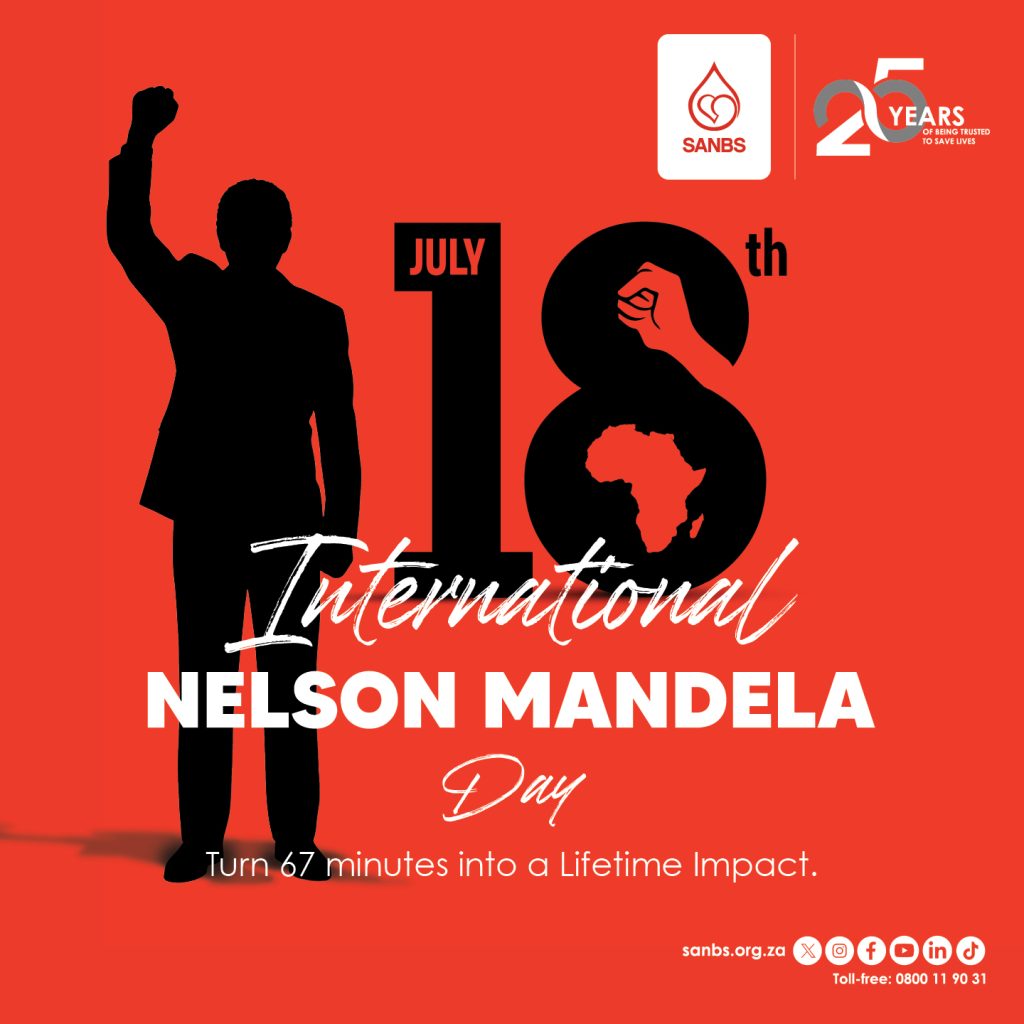
SANBS Launches “Be The Lifeline” Campaign to Honour 25 Years of Saving Lives Through Blood Donation this World Blood Donor Day

Johannesburg, 1 June 2026 – As the world prepares to commemorate World Blood Donor Day on 14 June, the South African National Blood Service (SANBS) is honouring the thousands of South Africans whose selfless blood donations continue to save lives every day.

Recognising June as a globally significant month for blood donor awareness, SANBS is proud to launch its bold new campaign, “Be The Lifeline – Give Blood. Give A Tomorrow.” The campaign forms part of this year’s World Blood Donor Day observance. It marks a dual milestone: celebrating 25 years of SANBS as a trusted lifeline for the nation, while paying tribute to the ordinary South Africans who have become extraordinary lifelines for patients and families across the country.

For SANBS, the campaign is a powerful reminder that behind every unit of blood donated is a future still unfolding.

From mothers safely holding their newborn babies for the first time, to accident victims receiving urgent emergency care, cancer patients continuing treatment, and children overcoming life-threatening illnesses, blood donors are the unseen force helping to protect countless tomorrows.

A tomorrow where a young adult learns to drive and experiences independence for the first time.

A tomorrow where a small business owner opens the doors to their first coffee shop.

A tomorrow where a child nervously walks into their first day of school.

Each moment made possible because someone chose to give blood.

According to SANBS CEO, Ravi Reddy, World Blood Donor Day serves as a powerful reminder of the impact of every donation.

“For 25 years, South Africans have consistently shown extraordinary generosity through blood donation. Every donor who walks through our doors becomes part of someone else’s tomorrow,” says Reddy. SANBS Reputation and Communication Manager, Sifiso Khoza, echoed this sentiment, highlighting the life-saving power of a single donation.

“World Blood Donor Day reminds us that behind every successful transfusion is a donor who chose to help someone they may never meet,” says Khoza. “Blood donation is one of the most powerful acts of humanity because a single donation can save multiple lives.”

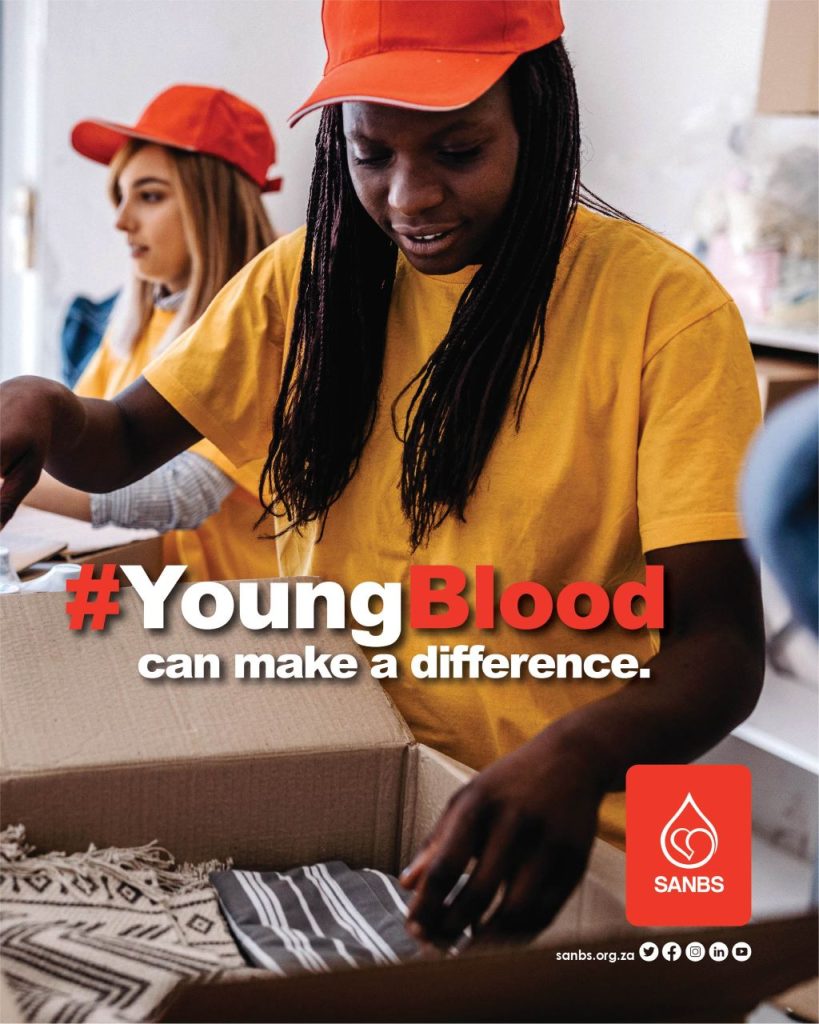
This year’s campaign places a strong emphasis on trust, gratitude and recognition, honouring long-standing donors who have supported SANBS over the years, while encouraging more South Africans – particularly younger generations – to become regular blood donors.

Through the “Be The Lifeline” campaign, SANBS will spotlight real stories of donors, recipients, and healthcare workers whose lives have been transformed through blood donation, reinforcing the deeply human impact behind every unit collected.

Reddy says the organisation’s 25-year milestone extends beyond reflection, serving as a tribute to the millions of South Africans who have contributed to sustaining a reliable national blood supply. “We are deeply grateful to every donor who continues to choose compassion, kindness, and community through blood donation. Their contributions have helped SANBS remain a trusted lifeline for South Africans for the past 25 years,” he says.

As part of World Blood Donor Day, SANBS is calling on all eligible South Africans to join this life-saving legacy by donating blood and helping secure millions of tomorrows for patients in need.

“Blood cannot be manufactured. It can only come from people willing to give a part of themselves to save another life,” adds Khoza. “This World Blood Donor Day, we encourage South Africans to continue being the lifeline that so many patients depend on every day.”

One Mother Beat Blood Cancer Against the Odds. Thousands of Others Are Still Searching for Their Chance.

As a professional photographer and mother of two young children, Claire had always been busy, but the long hours and constant fatigue felt like an occupational hazard. She never imagined that exhaustion could signal something far more serious than a demanding schedule.

Then, in January 2024, it happened: Claire blacked out at her desk while editing videos. It was her body’s final, unmistakable warning. What followed was a hospital stay, a bone marrow biopsy, and a diagnosis that would change her life forever. Claire had been diagnosed with blood cancer, specifically Myelodysplastic Syndrome (MDS), a serious bone marrow condition that, without treatment, can be fatal.

She was just 30 years old. And she was far from alone. Blood cancer remains one of the top five causes of cancer death in South Africa. Despite being potentially curable, countless patients never find their matching donor in time. Claire was determined not to become another statistic.

A Road Full of Obstacles

Claire’s path to diagnosis was not straightforward. Doctors initially attributed her worsening symptoms to iron deficiency, leaving her untreated as her condition quietly progressed. By the time MDS was correctly identified, the only viable path forward was a stem cell transplant.

While awaiting a donor match, Claire endured bi-weekly injections to keep her body stable, a gruelling holding pattern as her family and medical team searched for hope. That hope came through DKMS Africa, which successfully identified a fully matched, unrelated donor for Claire.

The first transplant, using cells from that 100% unrelated matched donor, was performed with great hope. Unfortunately, it was not successful.

Claire’s medical team was not deterred. Turning to family, they proceeded with a haplo-identical transplant, a “half-match” procedure using stem cells donated by Claire’s brother. This second transplant was successful.

Why Every Match Still Matters

Claire’s outcome is cause for deep gratitude and genuine celebration. But her journey also carries an urgent message that must not be lost in the relief of her survival.

Haplo-identical transplants, where stem cells are donated by a family member who is only a partial genetic match rather than a full one, can offer a path forward when a fully matched donor cannot be found. However, this option is not available or ideal for everyone. Not all patients have a suitable family donor, and even when they do, the procedure carries greater medical complexity and risk than a fully matched stem cell transplant.

For most patients, a 100% match from an unrelated donor remains the gold standard: the safest and most effective option. Yet only around 30% of patients find a compatible donor within their own family, meaning the remaining 70% depend entirely on a stranger’s decision to join the registry. The more people who register as potential donors, the greater the chance that every patient in need will find their match.

The critical shortage of registered donors, particularly from diverse ethnic backgrounds, means that for many, the search ends without a match. Despite blood cancer being potentially curable, countless patients never find their matching donor in time.

Every name added to the registry is a potential lifeline for someone, somewhere, waiting for their match.

A Family Restored

Today, Claire is recovering. Her children have their mother. Her family, who stood beside her through diagnosis, uncertainty, and two transplants, now share in a renewed sense of hope and possibility.

Her story does not end with survival. It continues with a plea to every person who has considered registering as a stem cell donor and hasn’t yet done so. “Help save others like me. We need more people to register as potential stem cell donors. Your registration could mean the difference between life and death.”

Mercy Ships Supports National Response Following Cyclone Gezani in Madagascar

Cyclone Gezani caused extensive damage across the region, displacing thousands and severely affecting homes, public infrastructure, and healthcare facilities

Following the devastating cyclone that struck Madagascar’s east coast, Mercy Ships (www.MercyShips.org) has joined with national disaster response efforts in Toamasina (Tamatave) through the provision of essential relief supplies, in coordination with the government’s disaster management authorities.

Cyclone Gezani caused extensive damage across the region, displacing thousands and severely affecting homes, public infrastructure, and healthcare facilities.“In moments like these, partnerships and solidarity matter most,” said Nicholas Ahadjie, Country Director of Mercy Ships in Madagascar. “We are committed to supporting the national response and ensuring that assistance reaches communities where the needs are greatest.”

As part of its own immediate response, Mercy Ships has delivered 537 bags of rice, 1000 roofing sheets, and 1000 ready-to-eat meals. These supplies arrived in Toamasina and were officially handed over to the government’s Designated Disaster Response Coordination Body for distribution to affected communities.

The roofing materials will enable families, schools, and community health facilities to begin urgent repairs. The rice will be distributed to households impacted by the storm that still have functional cooking facilities, while ready-to-eat meals will provide immediate support to individuals and displaced families.Although the Mercy Ships hospital vessel Africa Mercy®, is currently undergoing scheduled maintenance in South Africa, preparations are underway for her return to Madagascar. Sometime this May, she is expected to resume surgical services and medical training programs in collaboration with the Ministry of Health.

“Our presence in Madagascar is on-going,” added Nicholas Ahadjie. “While the ship is in maintenance, our engagement with partners continues. We stand with the Malagasy people today and remain dedicated to strengthening healthcare capacity for the future.

”For several years, Mercy Ships has partnered with Madagascar to provide free specialised surgeries, professional medical training, and infrastructure support. The recent disaster will not stop the organisation’s ongoing support for the Malagasy people as it continues to help reinforce their national health systems.Distributed by APO Group on behalf of Mercy Ships.

ABOUT MERCY SHIPS:

Mercy Ships operates hospital ships that deliver free surgeries and other healthcare services to those with little access to safe medical care. An international faith-based organisation, Mercy Ships has focused entirely on partnering with African nations for the past three decades. Working with in-country partners, Mercy Ships also provides training to local healthcare professionals and supports the construction of in-country medical infrastructure to leave a lasting impact.  Each year, more than 2500 volunteer professionals from over 60 countries serve on board the world’s two largest non-governmental hospital ships, the Africa Mercy® and the Global Mercy™. Professionals such as surgeons, dentists, nurses, health trainers, cooks, and engineers dedicate their time and skills to accelerate access to safe surgical and anaesthetic care. Mercy Ships was founded in 1978 and has offices in 16 countries as well as an Africa Service Center in Dakar, Senegal. For more information, visit www.MercyShips.org and follow @MercyShips on social media. 

‘What’s Your Epic?’ Gathers Momentum as Amputee Riders Prepare for the 2026 Cape Epic

Movement is a Right, not a Privilege

Since launching late last year, Össur South Africa’s ‘What’s Your Epic?’ campaign has gained strong traction, with six amputee athletes now deep into training for the 2026 Cape Epic (15–22 March). As preparations intensify, the campaign continues to rally South Africans around a powerful belief: that access to mobility is fundamental to dignity, independence, and opportunity.

Three amputee teams will line up at one of the world’s most demanding mountain biking events, not only to test their physical limits, but to raise awareness and funds for three South African non-profit organisations restoring mobility and independence to people living with limb loss or disability: Jumping Kids, Rejuvenate SA, and Zimele.

Over the past few weeks, the riders have been balancing rigorous training schedules with advocacy, fundraising, and community engagement, using the build-up to the Cape Epic to shine a spotlight on the everyday barriers faced by thousands of South Africans who lack access to basic mobility solutions.

“Since launching ‘What’s Your Epic?’, the response has been incredibly encouraging,” says Blignaut Knoetze, Managing Director of Össur South Africa. “What’s been most powerful is seeing how this campaign has resonated beyond sport. It’s sparked conversations about access, inclusion, and what mobility truly means in people’s lives.”

For the six riders, the road to the Cape Epic is as much mental as it is physical. Long training rides, strength work, and recovery sessions are all undertaken with a deeper purpose in mind.

“Training for the Cape Epic is intense, but every ride reminds me why this matters,” says Rentia Retief, artist and amputee athlete. “With the right prosthetic and support, I’ve been able to reclaim the life I knew before losing my leg. Through this campaign, we’re trying to help make that same freedom possible for others.”

Mhlengi Gwala, international para-triathlete and African champion, adds, “This race is about more than endurance. It’s about representation and showing what’s possible when people are given the tools and support to move forward.”

Representing the third team, Brian Style, a passionate cyclist who rebuilt his life through mountain biking, says, “Preparing for the Cape Epic is both challenging and incredibly rewarding. Being part of this campaign gives real meaning to the training, knowing that every kilometre ridden helps create opportunities for others to regain their independence and confidence.”

Funds raised through the campaign will support:

  • Jumping Kids, which provides prosthetic limbs, education access, and sport opportunities to children with limb loss.
  • Rejuvenate SA, which supplies mobility aids to adults who cannot afford them, restoring dignity and independence.
  • Zimele, which supports adults with physical disabilities to regain independence, reintegrate into society, and build economic self-sufficiency.

Together, these organisations are changing lives every day, from helping a child take their first steps to enabling adults to return to work and participate fully in their communities.

“The riders may be the face of the campaign, but the real heroes are the organisations working on the ground,” says Knoetze. “Our role is to amplify their impact and encourage South Africans to get involved in any way they can.”

As race day draws closer, Össur South Africa is calling on individuals, corporates, and communities to support the campaign through donations, fundraising initiatives, partnerships, or simply by sharing the message.

“‘What’s Your Epic?’ asks a simple but powerful question,” says Knoetze. “How can each of us help remove barriers and create access? When we support mobility, we support inclusion, opportunity, and futures.”

Donate, fundraise, or get involved as an individual or company. Your support can help someone stand, walk, work, play, or believe in possibility again.

Donations: Össur Donations, ABSA Bank, Account number: 4123 215 542, Branch code: 632005, Reference: Company name and contact number. For more information or Section 18A certificates, please contact Amelda Potgieter at apotgieter@ossur.com.

This is more than a race. It’s a movement.
What’s your Epic?

Rare Disease Day 2026 Puts Equity for Patients in the Spotlight

Photo by Cottonbro on Pexels

Rare diseases each affect relatively small numbers of people, but collectively they impact more than 300 million individuals worldwide across over 7000 known conditions, with 70% of these starting in childhood.1 For many patients and families, the reality is often long diagnostic journeys, uncertainty and ongoing challenges in accessing treatment and support.

This year’s global Rare Disease Day theme: “More Than You Can Imagine,” highlights the often unseen challenges faced by rare disease communities and the need for more equitable healthcare systems for people living with rare conditions worldwide.

Ahead of Rare Disease Day 2026, observed globally on 28 February, Sanofi South Africa is reaffirming its commitment to improving outcomes for people living with rare diseases through ongoing research, collaboration to improve access to treatment, and engagement in policy and advocacy discussions that support patients and caregivers.

According to Monique Nel, Medical Adviser for Rare Diseases at Sanofi South Africa, rare diseases demand a long-term mindset. “Patient populations may be small, but that makes every data point even more valuable. Building evidence takes time, yet each insight brings us closer to understanding these conditions and the unique needs of patients – enabling us to deliver better care.”

Research remains essential in rare diseases, where evidence is often limited and every patient experience matters. Global disease registries, such as the Global Gaucher Registry, allow clinicians and researchers to collect real-world data that deepens understanding of how conditions present across different regions and healthcare settings. Participation from South African patients helps ensure local experiences are reflected in global research.

“For me, equity starts with representation,” says Nel. “Patients are not the same everywhere. Genetics, environment, and healthcare systems all shape how a disease presents and progresses. If our research doesn’t reflect the diversity of the populations we serve, we risk missing a critical part of the picture.”

From scientific progress to real-world access

Innovation can transform outcomes for people living with rare diseases, but scientific progress only matters if patients can actually reach and stay on treatment.

Rare disease therapies are often complex and highly specialised, which means access depends on collaboration across clinicians, funders, policymakers and industry. The focus is increasingly on sustainable solutions that support affordability, continuity of care and long-term patient support.

“Access isn’t only about availability,” says Nel. “It’s also about what happens after treatment starts – whether patients can continue therapy, feel supported, and navigate their care with confidence.”

Strengthening policy and advocacy

Policy and legislative frameworks play an important role in shaping diagnosis, treatment pathways and long-term patient support. Ongoing engagement between stakeholders is essential to strengthen South Africa’s rare disease landscape and ensure decisions reflect real patient needs.

Patient voices are becoming increasingly important in policy and reimbursement discussions, offering insights that clinical data alone cannot provide.

“Patients and caregivers become experts through their own lived experiences,” says Nel. “Listening to their voices is what enables us to design better systems and ultimately deliver better care.”

“When we say rare diseases impact lives more than you can imagine, we’re talking about the invisible barriers patients face before they ever receive care,” says Nel. “Healthcare systems matter because they determine how quickly families find answers, how care is funded, and whether patients are truly included.”

She notes that South Africa’s constitutional commitment to healthcare, together with opportunities created through National Health Insurance, presents an important moment to strengthen support for rare disease communities.

South Africa’s support for the May 2025 rare diseases resolution at the World Health Assembly followed advocacy by Rare Diseases South Africa, which engaged the Department of Health and Health Minister Aaron Motsoaledi, calling for rare diseases to be recognised as a national health priority.

“Progress comes from sustained advocacy, partnership and action. Strong policy needs partners who understand that acting for patients means helping build systems that work for them,” says Nel.

Working with patient communities

As part of Rare Disease Day 2026, Sanofi South Africa is once again partnering with Rare Diseases South Africa (RDSA) to raise awareness around rare disease equity and amplify the lived experiences of patients and families. The collaboration focuses on education, awareness and encouraging meaningful dialogue around patient needs.

“Healthcare is a constitutional right in South Africa,” says Kelly du Plessis, CEO & Founder of Rare Diseases South Africa. “The opportunity now is to ensure rare disease patients are fully included in that promise. Equity means policies that don’t simply acknowledge rare diseases but actively prioritise them.”

RDSA remains an independent patient advocacy organisation, while the partnership supports awareness initiatives and responsible collaboration that strengthens patient-centred advocacy.

“We remain committed to working for patients, but we’ve learned to do that more effectively by collaborating with patient societies,” says Nel. “That partnership approach is essential. Equity means ensuring every patient is heard, every voice contributes, and every partnership has the opportunity to drive better care.”

The partnership with RDSA aims to:

  • Increase understanding of rare diseases and their impact
  • Support patient-centred advocacy and awareness
  • Encourage informed dialogue across healthcare stakeholders
  • Highlight the importance of equity in research, access and policy

Both organisations agree that meaningful progress in rare diseases depends on collective action across patients, healthcare professionals, policymakers and industry partners.

Reference:
1. World Health Organization (WHO). Rare diseases: a global health priority for equity and inclusion. Seventy-eighth World Health Assembly, Draft Resolution A78/51, Fifth report of Committee A, 24 May 2025. Available from: https://apps.who.int/gb/ebwha/pdf_files/WHA78/A78_51-en.pdf

SA Medical News Roundup 20th February

Photo by Hush Naidoo Jade Photography on Unsplash

This week saw the launch of a new, far-reaching court case against NHI, protest action planned over GEMS premium increases, Gauteng doctors’ complaints over MRI machine purchases, and a new tuberculosis dashboard.

Another NHI Court Case

Yet another court case has been initiated against NHI, this time from AfriForum. Unlike previous court cases which took aim at various parts of the NHI legislation, Afriforum describes theirs as launching a “comprehensive attack” on the NHI Act. This includes summons being served on President Cyril Ramaphosa and Health Minister Aaron Motsoaledi, among others.

According to court documents, Afriforum “foresees material factual disputes” and expects there to be cross-examination and experts. The organisation cited constitutional violations, while the Department of Health contends that NHI has been through the legislation process and cannot be altered. Experts have warned that continuing legal action will bog down NHI, kicking its decades-long implementation even further down the road. Read the full story in BusinessTech.

Public Sector Unions to Protest over GEMS Increases

This weekend, public sector unions are set to take to the streets in protests over the 9.8% increase in Government Employee Medical Scheme (GEMS) premiums. This increase is far above the 3.3% increase recommended by the Council for Medical Schemes (CMS), and above the private sector increases, which range from 4.7% for Genesis to a weighted average of 8.8% for Bonitas, according to Moonstone. All of this comes in the wake of 2025’s unprecedented 10.1% average increase, with a 13.4% increase for GEMS. The nationwide protests are set to culminate in a march to GEMS’ offices next week Thursday. SABC News has more on the protests.

Gauteng Doctors Criticise Choice of MRI Machine

Doctors at Charlotte Maxeke Academic Hospital have questioned a Gauteng Health Department decision to override their choice of a Philips MRI machine. The scanner is part of a R304-million rollout of eight scanners across Gauteng public hospitals. The original choice of a Philips machine is about R10 million cheaper than the Chinese alternative, and the doctors said that it was technically superior. and the head of the hospital’s supply chain management committee warned that the change could increase costs, downtime, and clinical risk. The dispute comes amid mounting diagnostic backlogs at Gauteng hospitals, including some 2600 cancer patients at Charlotte Maxeke. GroundUp covers the story, which has also been republished on QuickNews.

New Tuberculosis Dashboard

Spotlight has launched a new tuberculosis dashboard and graph generator. Based on the latest Thembisa model data, it is the counterpart to the HIV Dashboard which was launched in November last year. Users can look backward and forward in time on a range of TB parameters, with future modelling currently out to 2030. Check out Spotlight’s tuberculosis dashboard here.

SAHPRA Fast-Tracks Access to Critical Foot and Mouth Disease Vaccines to Protect SA’s Livestock

Photo by Gabriela Cheloni

The South African Health Products Regulatory Authority (SAHPRA) confirms that it has granted Section 21 authorisation for the importation of the Dollvet Foot and Mouth Disease (FMD) vaccine with conditions and is currently assessing an additional application for the same vaccine.

Foot and Mouth Disease is a highly contagious viral disease affecting cloven-hoofed animals such as cattle, pigs, sheep, and goats. It causes fever and painful blister-like sores in the mouth, on the teats, and between the hooves. While many animals recover, outbreaks can result in severe production losses, high mortality in young animals, and significant economic consequences for the agricultural sector.

Speaking on the authorisation, Dr Boitumelo Semete-Makokotlela, Chief Executive Officer of SAHPRA, said:

“The health of our livestock is critical to South Africa’s food security, economic stability, and the livelihoods of our farmers. By granting Section 21 authorisation for the importation of FMD vaccines, SAHPRA is ensuring that veterinarians and farmers have timely access to safe, effective, and scientifically approved tools to protect animals against this highly contagious and devastating disease”.

Section 21 of the Medicines and Related Substances Act provides a mechanism for the controlled importation of medicines and vaccines not yet registered in South Africa, under strict regulatory oversight. This pathway enables SAHPRA to respond rapidly to urgent public and animal health outbreaks while maintaining rigorous standards of quality, safety, and efficacy. Authorisations granted under this provision are temporary and subject to ongoing review.

All imported vaccines undergo strict regulatory controls and quality assurance processes. Distribution will be coordinated by the Department of Agriculture: Animal Health, which is responsible for implementing national disease control measures.

FMD spreads rapidly through direct contact with infected animals, contaminated equipment, vehicles, clothing, feed, and even via wildlife carriers. Outbreaks can lead to movement restrictions, quarantines, trade limitations, and increased compliance costs for farmers. Loss of South Africa’s FMD-free status can trigger immediate export bans on livestock and related products, affecting foreign revenue losses and market stability.

The Department of Agriculture has emphasised that FMD is a controlled disease and that vaccination must take place only within officially approved programmes. Unregulated vaccination may mask infections, weaken surveillance systems, and delay the country’s ability to regain its FMD-free status under international standards set by the World Organisation for Animal Health (WOAH).

“Our collaboration with SAHPRA reflects the importance of partnerships in safeguarding animal health. The South Africans farming community can be assured that every vaccine authorised for use in the country undergoes careful evaluation  for safety, efficacy, especially against locally circulating strains and quality and we are optimistic that the disease will be contained” said Dr Bothle Modisane, Chief Director for Animal Health at the National Department of Agriculture.

SAHPRA remains committed to transparency and will continue to update stakeholders on developments related to veterinary vaccine import authorisations for FMD control.

Source: SAHPRA

Discovery Abandons R170 Million Clawback over Medicines Reimbursement Glitch

Photo by Scott Graham on Unsplash

Discovery Health has recently abandoned its efforts to reclaim roughly R170 million from 16 507 members following a widespread administrative error in processing medical claims. This happened after the successful intervention of the advocacy group MediCheck, which argued that the affected members were being unfairly penalised for a technical glitch which they had nothing to do with.

The glitch, which happened last year, resulted in over-reimbursement of certain medicine costs that occurred throughout 2025. Several specific technical and procedural issues were involved which caused the problem to grow undetected for nearly a year, as detailed by Moonstone.

The main error was that certain claims were incorrectly reimbursed at 100% of the Discovery Health Rate, regardless of the specific benefit limits that should have applied to those categories, when they should have been reimbursed at a lower rate.

Because these claims were incorrectly reimbursed at higher rates, they were inaccurately accumulated towards members’ benefit thresholds. This caused members who had Above-Threshold Benefit (ATB) as part of their plan to reach it prematurely. Upon reaching the ATB, subsequent medical claims were funded by the scheme. Normally, these claims would have been covered by the members’ medical savings accounts or out-of-pocket contributions.

Delayed detection allowed the problem to grow. The error was particularly difficult to identify because it was a “second-order impact”. The systemic failure only became apparent late in the year when members began reaching the ATB and the financial discrepancies were finally flagged.

This snowballing error eventually affected some 16 507 members on specific Executive, Comprehensive, and Priority plans. While Discovery Health initially sought to recover these funds, ranging from thousands of rand to as much as R80 000 per member, the Council for Medical Schemes stepped in to exert pressure amid widespread media coverage of the situation. Discovery gave in and committed to refunding any recovered funds and absorbing the total financial loss itself – estimated between R130 million and R170 million.

Hyundai Automotive South Africa Reaffirms Disability Inclusion and Mobility for All

Photo by Ivan S

Hyundai Automotive South Africa reaffirmed its commitment towards embedding disability inclusion into its operations, through continuous  disability-related employee training, improving dealership layouts and vehicle modifications. 

The aim is to foster a culture that recognises disability as part of human diversity rather than a limitation.  “Mobility is not just about getting from one point to another, rather, about access and dignity,” said Stanley Anderson, CEO of Hyundai Automotive South Africa. 

“Our commitment is to ensure our vehicles and dealerships are adequately prepared to support the needs of all customers, including those with disabilities.  More importantly, we want to empower our customer-facing employees with deeper understanding of disability, dismantle misconceptions.  By so doing, we will ensure that customers with disabilities feel welcomed, respected and supported when visiting any Hyundai dealership.”

It has also implemented a range of practical measures to ensure its dealerships are physically accessible and welcoming to persons with disabilities.  This includes improving dealership layouts for ease of movement, ensuring wheelchair-friendly access points. 

The company works closely with a range of specialised suppliers who modify some of its vehicles to suit the mobility needs of persons with disabilities.  “These partnerships ensure that more South Africans can access safe, reliable and custom-adapted mobility solutions suited to their lifestyles and independence,” stated Christine Masinga, Human Resources Director at Hyundai Automotive South Africa.

The national disability prevalence rate in South Africa is estimated at around 7.5%.  Despite national government targets for 2% representation of persons with disabilities in workplaces, recent reports indicate that they comprise less than 1% of the total employees across both government and private companies.

According to the Department of Employment and Labour, eight out of ten disabled persons are unemployed nationally, which is significantly higher than the general unemployment rate.

Össur South Africa Launches 2026 ‘What’s Your Epic?’ Campaign

Movement is a Right, not a Privilege

Inspiring South Africa to Support Mobility, Inclusion and the Power of Possibility

Össur South Africa‘s Team 1: Rentia Retief & Travis Warwick-Oliver

Össur South Africa is proud to announce the launch of the 2026 ‘What’s Your Epic?’ campaign, an initiative that champions one simple truth: everyone deserves the freedom to move. As the world turns its attention to the Cape Epic from 15 – 22 March 2026, Össur is once again harnessing this global stage to drive awareness, spark action, and rally support for mobility access across South Africa.

Following the success of last year’s inaugural campaign, Össur South Africa has entered three amputee teams into the 2026 Cape Epic, one of the world’s most iconic and demanding mountain biking events. These six remarkable riders embody grit, courage, and the unbreakable belief that mobility transforms lives. Their mission is bigger than the race: to unlock meaningful support and funding for three exceptional non-profit organisations: Jumping Kids, Zimele and Rejuvenate SA.

“Movement is a fundamental right, not a privilege reserved for the few,” says Blignaut Knoetze, Managing Director of Össur South Africa. “Whether you’re an elite athlete, a child receiving their first prosthetic or an adult rebuilding independence; mobility unlocks dignity, participation, and potential. ‘What’s Your Epic?’ is our call to South Africa to stand with us in supporting organisations who make this freedom possible.”

The 2026 campaign aims to raise funds and awareness for four organisations driving mobility access and inclusion:

  • Jumping Kids: Providing quality prostheses, education access, and sport opportunities to children living with limb loss, giving them the tools to build confident, successful futures.
  • Rejuvenate SA: Founded on the belief that movement is a basic human right, Rejuvenate SA supplies mobility aids to those who cannot afford them, restoring dignity and independence.
  • Zimele: Meaning “independence” in Xhosa, Zimele supports adults with physical disabilities to regain control over their lives, reintegrate into society and build economic self-sufficiency.

Together, these six athletes across three teams are redefining what’s possible.

  • Team 1: Rentia Retief & Travis Warwick-Oliver

Rentia (33, Somerset West), an artist and amputee athlete, who survived a cycling accident in 2023. Her journey is a testament to courage and the belief that mobility is a right every person deserves. Partnering with her is Travis (32, Durban), founder of Rejuvenate SA, adaptive athlete, and two-time UTMB finisher who has transformed his own amputation into a mission to help others move freely and live without limitations.

  • Team 2: Mhlengi Gwala & Kean Dry

Mhlengi (34, Durban), an international para-triathlete and multiple African champion who continues to defy all odds after a 2018 attack that led to the amputation of his right leg. Riding alongside him is Kean (30, Cape Town), a dedicated endurance athlete and community motivator whose story of resilience inspires thousands to believe that adversity does not define possibility.

  • Team 3: Brian Style & Rudi Joubert

Brian (40, Springs), a passionate cyclist who has rebuilt his life through mountain biking, uses sport as a platform for giving back. He rides with Rudi (42, Secunda), a determined amputee athlete known for his positivity, teamwork, and commitment to raising funds for mobility solutions.

“These riders are not just racing, they are raising their voices for those who cannot and shining a spotlight on organisations that restore dignity, independence, and hope,” says Knoetze. Össur South Africa is inviting the public, corporates, partners, and communities to be part of this extraordinary movement. Whether through donations, corporate partnerships, fundraising initiatives, or simply sharing the message, every contribution helps someone stand, walk, run, play, work, or dream again.

“‘What’s Your Epic?’ is about pushing boundaries; not just on the bike, but in society,” adds Knoetze. “When we support mobility, we support access. We support inclusion. We support futures. We are asking South Africa to back our riders, our NPOs, and the belief that everyone deserves the freedom to move.”

Donate, fundraise, or get involved as an individual and/ or company. Your support can help someone take their first step, return to work, join a sport, or believe in possibility again.
Össur Donations, ABSA Bank, Account number: 4123 215 542, Branch code: 632005
Reference: company name and contact number

Please contact Amelda Potgieter (apotgieter@ossur.com) for more information and/ or Section 18A certificates.

This is more than a race. It’s a movement. What’s your Epic?