UP-led International Team Looks to Nature to Outsmart Antibiotic Resistance
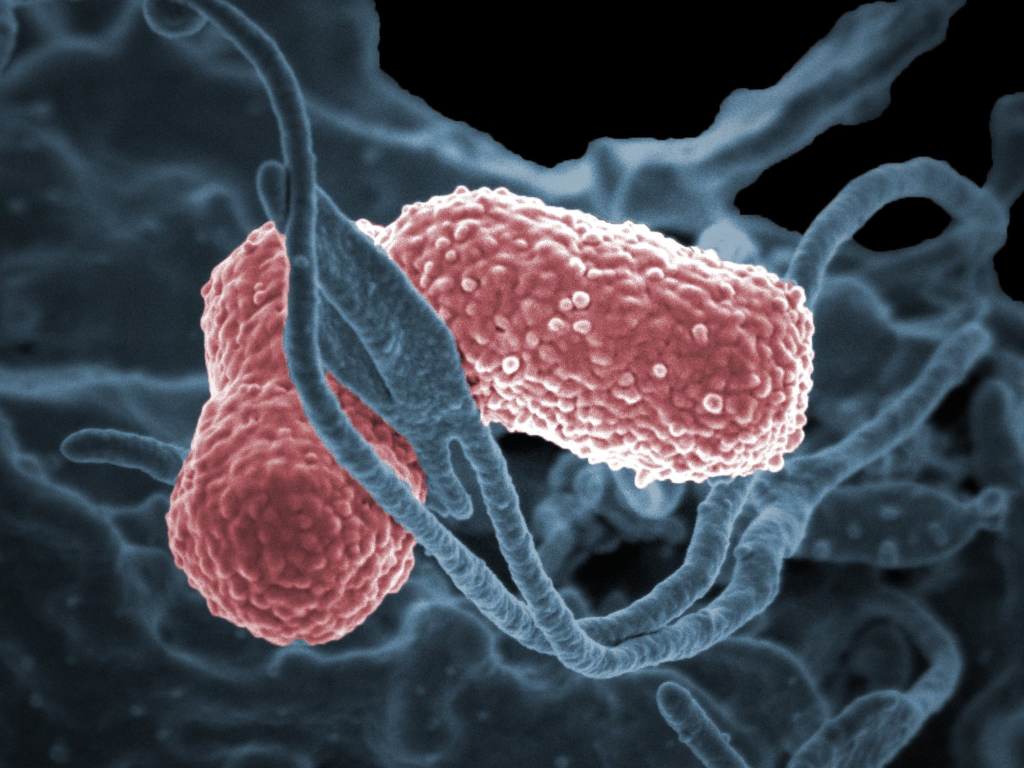
What if part of the answer to antibiotic resistance has been growing in plants, fungi and microorganisms all along? Scientists say hundreds of thousands of natural compounds remain largely unexplored as researchers race to protect some of the world’s most important antibiotics.
An international team of scientists led by the University of Pretoria (UP) is calling for a renewed search of the natural world for molecules that could disarm antibiotic-resistant bacteria and potentially make existing medicines effective again.
Researchers from UP, the University of Oxford in the UK, the National University of Lesotho, Kwame Nkrumah University of Science and Technology in Ghana, and the University of North Texas Health Science Center in the US collaborated on a major review of beta-lactam (β-lactam) antibiotics and the bacterial enzymes that destroy them.
Published in Natural Product Reports, the paper highlights a largely untapped opportunity. More than 400 000 naturally occurring compounds have been catalogued, yet only a small fraction has been investigated for their ability to inhibit β-lactamases, enzymes that can render important antibiotics ineffective.
“Antibiotic resistance is often presented as a search for the next completely new antibiotic, but there is another important possibility: protecting the medicines we already have,” said Professor Vinesh Maharaj, Director of UP’s Biodiscovery Centre, Acting Dean of the Faculty of Natural and Agricultural Sciences, and co-author of the paper. “Nature has already provided some of the compounds that have transformed infectious-disease treatment. We should not underestimate what remains to be discovered in the enormous chemical diversity of plants and microorganisms.”
The stakes are high. β-lactam antibiotics, including penicillins, cephalosporins and carbapenems, account for an estimated 60% to 65% of the antibiotic market. But bacteria have evolved increasingly sophisticated defences against them.
Among the most important are β-lactamases. These enzymes effectively break open the part of the antibiotic that allows it to work. More than 2 000 unique β-lactamases have been identified, including enzymes capable of undermining some of medicine’s last-line antibiotics.
The review cites estimates that bacterial antimicrobial resistance (AMR) directly caused approximately 1.14 million deaths in 2021. South Asia and sub-Saharan Africa together accounted for around 47% of global fatalities associated with bacterial AMR, while AMR is projected to cause about 8.2 million deaths annually by 2050 if current trends continue.
For co-author Dr Phanankosi Moyo, a biochemist and natural-product drug discovery scientist in UP’s Department of Plant and Soil Sciences, this makes the search particularly important for Africa.
“Sub-Saharan Africa carries a disproportionate burden of antimicrobial resistance, so this is not an abstract future problem for our region,” Dr Moyo said. “We need new antibiotics, but we also need smarter ways of extending the life of the antibiotics we have. Natural products give us an extraordinary starting library of chemical structures, and modern science now gives us far better tools to find the useful ones.”
Making existing antibiotics work again
There is already a powerful precedent.
Clavulanic acid, one of medicine’s best-known resistance blockers, is itself a natural product. Originally isolated from the bacterium Streptomyces clavuligerus, it has little antibacterial activity of its own. Instead, it blocks certain β-lactamases and protects an antibiotic from destruction.
Combined with amoxicillin, it became the widely used antibiotic treatment amoxicillin-clavulanic acid, a combination commonly marketed under the brand name Augmentin®. Its success demonstrated an important principle: scientists do not always have to replace an antibiotic. Sometimes they can disable the bacteria’s defence and allow the existing drug to work again.
The international team reviewed how scientists are trying to apply that principle to newer and more difficult forms of resistance.
Among the toughest targets are metallo-β-lactamases such as NDM, VIM and IMP. These enzymes use zinc to break down antibiotics and are resistant to the inhibitors used against many other β-lactamases.
Yet the natural world is producing intriguing leads. In one study examined in the review, a natural-product-derived compound called CS-23 inhibited NDM-1 and reduced the amount of the antibiotic meropenem needed to stop an NDM-1-producing strain of E. coli by 32-fold, restoring its effectiveness in the experimental system.
The review also highlights carnosic acid as the first reported natural product to inhibit NDM-1 through an allosteric mechanism. Instead of targeting the enzyme where it usually performs its chemical reaction, the compound acts elsewhere on it, offering researchers another possible route for disabling bacterial resistance.
Searching nature with new tools
The researchers argue that scientists now need to widen the search beyond familiar sources. Potential hunting grounds include Streptomyces and other microorganisms, fungi, plants, marine organisms and even lichens.
They can also search far more efficiently than previous generations. Modern approaches including metabolomics, structural biology, medicinal chemistry, computational screening, biocatalysis and synthetic biology can help identify promising molecules, understand how they work and modify them into better drug candidates.
“The next important β-lactamase inhibitor may not arrive as a ready-made medicine,” Prof Maharaj said. “Nature may give us the starting structure, and then chemistry, microbiology, structural biology and computational science can help us turn that starting point into something clinically useful.”
The international collaboration brings together expertise in natural-product chemistry, microbiology, phytomedicine, biochemistry and antibiotic-resistance research across Africa, the UK and the US.
There are still significant hurdles. A compound that works in a laboratory may struggle to enter bacterial cells, be unstable, lack sufficient selectivity or prove difficult to manufacture at scale. The researchers say promising natural compounds therefore need to be developed alongside medicinal chemistry and other modern drug-discovery approaches.
Finding broad-spectrum inhibitors capable of blocking several classes of β-lactamases at once is a particularly ambitious long-term goal.
“We have been in this race with bacteria since the first antibiotics were introduced,” Dr Moyo said. “The difference today is that we understand resistance at a molecular level and have technologies earlier generations could not have imagined.”
Much of the chemical diversity of plants and microorganisms has yet to be explored. This research shows that nature not only offers a simple cure for antibiotic resistance, but that it may still contain valuable starting points for protecting some of the medicines on which modern healthcare depends.
Harnessing artificial intelligence and metabolomics for discovery
Researchers at UP’s Biodiscovery Centre are working with collaborators to combine artificial intelligence, metabolomics and experimental screening to systematically sift through the centre’s in-house repository of approximately 11 000 plant samples in search of novel β-lactamase inhibitors.
By integrating computational prioritisation with chemical profiling and biological testing, the team aims to narrow this vast natural-product resource to the most promising candidates and accelerate the discovery of compounds that can overcome bacterial resistance mechanisms and help restore the effectiveness of existing β-lactam antibiotics.
Can nature help outsmart antibiotic resistance?
- 400 000 naturally occurring compounds have been catalogued
- 60% to 65% of the antibiotic market
- 2 000 unique β-lactamases
- 1.14 million deaths in 2021 due to AMR
- 47% of global fatalities associated with bacterial AMR occur in South Asia and sub-Saharan Africa
- 8.2 million deaths annually by 2050 if current trends continue