A growing body of research has shown that autoimmunity influences certain psychiatric disorders. A new study by Nemani et al., currently in preprint, has shown that schizophrenia is strongly associated with an elevated level of autoantibodies that target the central nervous system. Using Rapid Extracellular Antigen Profiling (REAP) to screen 352 patients against 971 controls, the researchers found that schizophrenia is marked by an increased autoantibody burden that tracks with disease severity and duration, nearly doubling in the most chronic cases.
These immune responses are present near the start of the illness and tend to increase as the disease progresses, particularly targeting neuronal ion channels and synaptic proteins. Notably, certain autoantibodies appear to compromise the blood–brain barrier, which may further expose the brain to peripheral immune attacks.
The study also discovered that patients with a higher autoantibody burden respond less effectively to standard antipsychotic treatments like risperidone. However, clinical trials showed that these antibody levels significantly declined during successful treatment courses. These findings suggest that humoral autoimmunity is a core component of the disorder, potentially offering new pathways for immune-based therapies.
A landmark international clinical trial, led in the UK by University College London researchers, has identified the optimal antibiotics for staph blood infection, a breakthrough that is set to reshape treatment for the life-threatening condition.
The SNAP trial found that a little used antibiotic, cefazolin, is as effective as and safer than the current UK standard therapy, flucloxacillin, for treating life-threatening staph blood infections. More than half of staph blood infections lead to sepsis and 15% to 25% of those who get these infections die within three months.
The researchers also found that a commonly used antibiotic, penicillin, can be used when the staph is treatable with this in the laboratory. And that similarly this is probably as effective as flucloxacillin, and safer.
The findings from the SNAP trial, published in the New England Journal of Medicine(NEJM) and The Lancet, challenge the long-held assumption that flucloxacillin should remain the default treatment and provide important new evidence to guide treatment strategy.
Staph (Staphylococcus aureus) is a leading cause of deadly blood infection, associated with over 1 million deaths worldwide each year. While effective antibiotic treatments exist, there has been no clear agreement about which antibiotic leads to the best outcomes for patients.
The NEJM results – Comparing cefazolin and flucloxacillin
In the trial published in the NEJM, researchers compared antibiotics used to treat meticillin-susceptible Staphylococcus aureus (MSSA) infections (i.e. blood infections that are not resistant to the meticillin antibiotic). It found cefazolin is at least as good as flucloxacillin for helping people to survive this infection, and associated with fewer side effects and a lower risk of kidney injury. It compared cefazolin and flucloxacillin in 1341 adults with staph blood infections across eight countries taking part in this part of the trial.
In patients who received cefazolin there were fewer cases of changes in how the kidneys are working (as measured by blood tests). Such kidney changes can cause long-term health problems and occurred in fewer of those given cefazolin compared to those given flucloxacillin.
The Lancet results – Comparing benzylpenicillin and flucloxacillin
In the paper published in The Lancet, the trial evaluated whether penicillin could be used to treat penicillin-susceptible Staphylococcus aureus (PSSA) infections where laboratory testing confirmed the susceptibility to penicillin.
This trial compared penicillin and flucloxacillin in 281 adults with staph blood infections. Penicillin was found to be likely to be at least as good for helping people to live with this infection as flucloxacillin.
In patients who received penicillin there were similarly fewer cases of changes in how the kidneys are working (as measured by blood tests). These occurred in 11% of those given penicillin compared to 22% of those given flucloxacillin. Mortality was also 14% in the penicillin group compared with 22% in the flucloxacillin group.
Professor Anna Goodman, UK lead of the SNAP trial at the UCL Innovative Clinical Trials, said: “This trial fills a major research gap. Our results strongly support cefazolin as the new first treatment for most adults with these infections. They also show a role for penicillin in some cases. It’s been helpful to deliver it in collaboration with researchers around the world and patients who have been affected by the condition, who we found via the UK Sepsis Trust.
“The results represent huge progress in the management of this disease with the first change in our approach to antibiotics in decades. Not only are cefazolin and penicillin as effective as flucloxacillin at treating penicillin- and meticillin-susceptible staph blood infection, but they also lead to significantly fewer abnormal blood tests.”
Staph infections are caused by bacteria called Staphylococcus aureus. They most often affect the skin and cause relatively minor problems. However, if the bacteria enter the bloodstream or other parts of the body, they can cause serious infections such as blood poisoning, blood infection or sepsis.
These more serious infections can affect anyone, but individuals at higher risk include people with catheters in their veins (as happens when people receive renal replacement therapy also called haemodialysis) or implanted devices (such as pacemakers), and people with diabetes. Those living with cancer and on immune suppressing medication, those who cannot get out of bed, and those who inject drugs are also more vulnerable to these infections.
The Royal Melbourne Hospital’s Professor Steven Tong, an infectious diseases physician at the Doherty Institute in Australia and global co-lead investigator of the SNAP Trial, said the results provide clear evidence that cefazolin should be considered the first-line option to treat MSSA blood infections.
“In the treatment of MSSA blood infections, there is an 89% probability that cefazolin is associated with lower mortality,” said Professor Tong.
“Patients treated with cefazolin fare better, with fewer deaths within 90 days (15% compared to 17% for those who received flucloxacillin). Cefazolin was also associated with fewer cases of acute kidney injury, at 14%, compared to 20% with flucloxacillin.
“The results are sufficiently compelling that I immediately made the switch in my own clinical practice.”
A shift away from flucloxacillin
Researchers said these results mark a turning point in the treatment of MSSA and PSSA blood infections, signalling a shift in clinical practice.
Penicillin was once widely used to treat Staphylococcus aureus, but antibiotic resistance of staph led clinicians to adopt flucloxacillin as the standard treatment for MSSA and PSSA blood infections. The findings support moving away from flucloxacillin as the default treatment for MSSA and PSSA blood infections, given safer alternatives are available.
The new results mark the first major finding from the ongoing SNAP trial, which aims to improve treatment for Staphylococcus aureus infections around the world. These parts of the trial took place in Australia, Canada, Israel, the Netherlands, New Zealand, Singapore, South Africa and the UK – each supported by regional funders working together to form one global network.
Global leadership was provided by the University of Melbourne trial team led by Professor Steven Tong and Professor Josh Davis.
So far, over 6000 participants have been enrolled in over 150 sites in those countries stated, and more recently in Germany and Sweden, Germany, Japan, Malaysia, and the United States. The trial will continue testing new approaches to improve outcomes for patients facing this serious infection.
Translating the findings
Researchers say the next challenge will be translating the findings into routine clinical practice.
While cefazolin availability may need to increase in some countries, researchers say implementation will ultimately depend on hospitals, laboratories and guideline groups incorporating the findings into clinical care.
Professor Goodman said: “Sepsis and staph blood infections are devastating for those affected and those who care for them. We are grateful to all those who took part and supported these two trials which will change practice. The platform trial continues as we ask further important questions in this area.”
When 12-year-old Eugene underwent a highly specialised facial reanimation procedure earlier this year, the surgery represented something profoundly human, the possibility of smiling for the first time.
Born with Moebius syndrome, a rare neurological condition that affects facial movement and expression, Eugene had spent his life unable to smile, blink properly or express emotion through facial movement. And while his story is emotionally powerful, it also shines a light on a far broader healthcare reality, the growing importance of highly specialised reconstructive surgery in restoring not only appearance but movement, function, dignity and quality of life.
At Wits Donald Gordon Medical Centre (WDGMC), reconstructive microsurgery is helping redefine what is possible for patients facing some of the most complex medical challenges, from congenital conditions and cancer to severe trauma and tissue loss.
Often misunderstood as a field focused primarily on cosmetic procedures, reconstructive microsurgery sits at the intersection of surgical precision, innovation and long-term patient rehabilitation. These procedures frequently involve transplanting tissue, muscle and nerves from one part of the body to another and reconnecting blood vessels, often measuring less than two millimetres in diameter, under microscopic magnification.
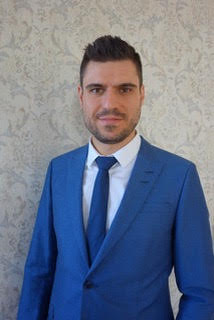
Leading this work at WDGMC is Dr Dimitri Liakos, a plastic and reconstructive surgeon with fellowship training in reconstructive microsurgery and super microsurgery.
Dr Dimitri Liakos, a plastic and reconstructive surgeon with fellowship training in reconstructive microsurgery and super microsurgery.
“These procedures are not simply about appearance,” says Dr Liakos. “They are about restoring function, movement and ultimately helping patients regain parts of their lives that were lost or that they were born without.” In Eugene’s case, surgeons transferred functioning muscle together with its blood and nerve supply into the face, reconnecting these delicate structures under a microscope so movement could gradually return over time.
Eugene’s procedure was facilitated through the support of the Smile Foundation, which works to improve access to reconstructive surgery for children requiring specialised care.
“We are deeply grateful to Wits Donald Gordon Medical Centre and Dr Dimitri Liakos for their dedication in supporting Eugene on his journey,” says Tarri Parfitt, CEO of Smile Foundation. “It is truly remarkable to open a world-class facility to this family and provide care at the highest level of expertise. Facial reanimation surgery is profoundly life-changing. For Eugene, it represents the possibility of expression, connection and a future he may never have imagined before. For Smile, it was also an invaluable opportunity for other surgeons to learn from such a rare and complex case, turning one surgery into the potential to help many more children like Eugene. We highly value the opportunity to work alongside Wits Donald Gordon Medical Centre on cases such as this and look forward to helping many more children together.”
While these procedures are performed in highly specialised centres globally, access to this level of care remains limited in South Africa due to the advanced infrastructure, multidisciplinary expertise and years of specialised training required to perform them successfully.
For WDGMC, however, the ability to perform these surgeries forms part of a broader commitment to advancing highly specialised care within South Africa’s healthcare system while simultaneously strengthening academic medicine and specialist training.
As an academic hospital affiliated with the University of the Witwatersrand, WDGMC has become an important training environment for complex reconstructive microsurgery in South Africa. The hospital recently established the country’s first reconstructive microsurgery fellowship programme for qualified plastic surgeons, helping expand the number of specialists capable of performing these highly technical procedures.
“We have a responsibility not only to perform these surgeries, but to transfer the skill,” says Dr Liakos. “If we do not train future microsurgeons, access to this level of specialised care will remain limited.”
According to Dr Liakos, successful reconstructive microsurgery depends not only on surgical expertise but on building the right multidisciplinary environment around patients.
“To do these cases successfully, you need a dedicated team and an environment that functions seamlessly,” he explains. “Microsurgery is never a one-person effort. It is the nursing staff, anaesthetists, theatre teams and systems around you that make these outcomes possible.”
For surgeons working in the field, the impact of reconstructive microsurgery extends far beyond the operating theatre.
“These surgeries can take 10 or 12 hours. They are physically and emotionally demanding,” says Dr Liakos. “But when you step back and realise that what you are doing may change the course of a person’s life forever, it gives meaning to every moment spent in theatre.”
As WDGMC continues to build on its reconstructive microsurgery programme and the country’s first fellowship of its kind, the hospital is helping shape a future in which South African patients can access world-class reconstructive care close to home and in which the specialists capable of providing that care are trained locally.
Emotional eating increased when women were taking hormone-containing birth control pills compared to the hormone-free pills taken at the end of each monthly cycle
Photo by Reproductive Health Supplies Coalition on Unsplash
Birth control pills are safe and effective for millions of women, but researchers are still working to understand how the hormones they contain may influence eating behaviour.
A new study in JAMA Network Open followed 422 women who were already using combined oral contraceptives, tracking their eating patterns daily for 49 consecutive days. The goal: to examine whether binge-related eating changes depending on whether women are taking hormone-containing pills or hormone-free pills within the same cycle.
In a typical birth control pack, women take about three weeks of “active” pills that contain hormones, followed by about a week of “inactive” pills that contain no hormones.
“Because we tracked the same women day to day, we could see how eating changed with hormone exposure,” said Dr. Shaunna Clark, a co-author and associate professor of psychiatry and behavioral sciences at Texas A&M University’s Naresh K. Vashisht College of Medicine.
How birth control hormones may increase binge-eating risk
The study used a within-person design, meaning each participant served as her own comparison. Researchers measured emotional eating (overeating in response to negative emotions) while tracking whether each day corresponded to an active or inactive pill.
They found a consistent pattern:
Emotional eating was significantly higher during active pill days than during inactive pill days.
This pattern appeared:
across two full pill cycles
in the full sample of 422 women
and in a subset of women with diagnosed binge eating
Clark says the findings held even after accounting for negative mood, suggesting the change was not fully explained by emotional distress.
“That tells us the hormones themselves may be playing a role, rather than those changes being driven by mood or other factors,” she said.
Why birth control may increase binge-eating risk for some women, but not others
The analysis focused on average changes across the group, but the study emphasizes that not all women experience these shifts in the same way.
“Participants ranged in age from late adolescence to young adulthood and were all using the same type of pill, monophasic combined oral contraceptives, which provide a consistent dose of hormones during active pill days,” said Clark, part of the research team led by Dr Kelly Klump at Michigan State University.
Because the study examined within-person changes, it shows that eating behavior can shift alongside hormone exposure, even if the magnitude of that shift differs between individuals.
“These findings show a pattern at the group level,” she said, “but individual responses can vary.”
Birth control pills linked to binge eating, but not mood or body image
The study does not establish that birth control pills cause binge eating. Instead, it identifies a specific association between hormone exposure and increased emotional eating within individuals.
Importantly, researchers also tested other outcomes:
Weight preoccupation did not change across pill type
Mood changes in response to pill type were smaller and less consistent than the changes in eating
Clark says that suggests the effect is relatively specific to binge-related eating behaviour, rather than a general shift in mood or body image concerns.
How this study changes what we know about birth control and binge eating
Previous research has shown that binge‑related eating tends to increase after ovulation, when both oestrogen and progesterone are elevated.
This study extends that work by showing that synthetic hormones in birth control pills are linked to similar patterns.
By comparing hormone-containing and hormone-free days within the same individuals, the study provides some of the clearest evidence to date that binge-related eating increases during periods of hormone exposure in the birth control cycle.
“Findings like these can help us better understand how different hormone exposures affect eating behaviour,” Clark said. “Over time, that could help clinicians and patients make more informed decisions about care.”
###
By Lesley Henton, Texas A&M University Division of Marketing and Communications
Errors and irrelevant details mean physicians may spend more time editing AI-drafted responses than it would take to write them, a large study of an online patient portal shows
Photo by National Cancer Institute on Unsplash
Artificial intelligence is spreading rapidly in health care, with the goal of streamlining critical but onerous clerical tasks such as note-taking and charting so that physicians and nurses can devote more time to patients. But even when AI can free up doctors to correspond with patients, it may fall short in helping them do it by introducing errors and extraneous details into their messages, according to a new Dartmouth study presented at the 2026 Annual Meeting of the Association for Computational Linguistics and published in the conference proceedings.
The result is that physicians may spend more time editing responses than it would’ve taken to write them, the researchers report.
“We find that AIcan sound like a doctor but not think like one,” says Sarah Preum, an assistant professor of computer science and the study’s co-corresponding author with Parker Seegmiller, a graduate researcher in Preum’s PersistLab at Dartmouth.
The researchers conducted the first large-scale study of an online patient portal that uses AI to draft responses from physicians to patients. The team developed a tool that compares AI-generated replies to a dataset of real responses they developed with health care professionals from Dartmouth Health.
They then analysed 146 000 conversations between 10 105 patients and their primary care physicians at the large rural health system, with data anonymised.
The researchers also used their tool to evaluate physician responses drafted by Claude, Gemini, and ChatGPT, as well as the three smaller commercial platforms, Llama, Aloe, and Qwen.
“We find that AI can sound like a doctor but not think like one.”
Sarah Preum, corresponding author and assistant professor of computer science
The team reports that AI-generated answers frequently misalign with what clinicians would actually write. This includes automated responses that are too long, don’t ask follow-up questions, and use irrelevant or inaccurate medical details.
“There are smaller studies that say, ‘Oh, AI is amazing,’ but we realised there is a gap in the existing literature of a large-scale evaluation of this technology,” Preum says. “We didn’t just want to measure a platform’s accuracy, but whether it actually helps with the workload, which in this case is measured by how much editing the physician is doing.”
For example, the portal’s AI suggested telling a 32-year-old woman who is taking an acid reflux drug and was concerned about constant nausea that the medication might take some adjustment in diet. A physician replaced that by asking if there’s any chance she was pregnant.
Even little changes can add up over hundreds or thousands of messages, Preum says. “You don’t want to integrate large language models into the workflow and just shift the bottleneck so that doctors are devoting their cognitive energy to playing AI janitor and fixing mistakes,” Preum says. “But if we’re not careful, that’s a likely outcome.”
The researchers show, however, that adapting AI to how individual physicians communicate can improve accuracy by 33% and reduce editing by 26%.
“If message generation is really efficient and high quality, if it asks the right things, then it really has potential to improve efficiency,” says co-author Tim Burdick, an associate professor of community and family medicine in Dartmouth’s Geisel School of Medicine and a family medicine physician at Dartmouth Health.
“I don’t foresee a time when the portal can respond to a patient without a clinician editing it first. But as we make the models better, we’ll be able to address portal messages much more quickly and with less mental energy,” Burdick says.
The study shows that there are such things as “good” AI responses and provides a framework for implementing them into patient-physician portals, Preum says. These platforms are increasingly common among large health care systems and often customized, she says.
“That took us a long time to figure out, but if you’re trying to measure how effective this technology is, you need to define what a good response is,” she says. “We can only improve what we can measure and objectively evaluate.”
The researchers created a technique called TADPOLE (Thematic Agentic Direct Preference Optimization for Learning Enhancement) that trains AI platforms using the hybrid model they constructed from physician- and AI-generated responses.
They plugged TADPOLE into the six commercial LLMs and found that drafted responses better matched physicians’ standards for precision and information quality. “That could save a busy clinician an hour or two of work a day,” Burdick says.
Doctors and nurses today are inundated with messages from patients and caregivers who can write them online anytime, he says. An ongoing project between Burdick and the Preum Lab called PortalPal aims to streamline patient portals using AI, including by automating some steps in following up with patients to get more information.
“We’re still nowhere near the point of having clinicians removed from the workflow.”
Tim Burdick, co-author and associate professor of community and family medicine
Physicians who Burdick works with say that AI-generated drafts save about 25% of their time on shorter messages. “It’s easier to make small edits to an LLM-generated message than it is to write it from scratch,” he says. But longer drafts can include information that is not correct or accurate.
“If you have to edit 75% of the message, you may be spending more time and energy on making changes than if you were to just write it from scratch,” Burdick says. “I would guess we need to get to where the physician is editing less than 30% of the content before it has substantial benefit.”
One advantage of AI’s verbosity is that it tends to be more empathetic and thorough than physicians crunched for time, the researchers find. For example, AI is more likely to tell a patient experiencing an upset stomach that it’s sorry to hear they’re feeling nauseated.
This means AI could be used to help “nudge” doctors to show more understanding and care for the patient’s situation, or answer patient’s questions more effectively so that patients feel more heard, Preum says. The team produced sample responses such as showing empathy by praising patients for following a treatment plan (“You’ve been doing a great job with your tapering.”) or planning for changes in symptoms (“If you’re feeling dizzy, please call triage.”).
The researchers also find that 65% of all the portal messages they studied came from people over 55, with patients over 65 generating 24% of all messages. These figures suggest that patient portals in general should be designed to accommodate older people, Preum says.
Future work will study how much actual time doctors spend editing automated drafts. The team also plans to evaluate their training model TADPOLE from the user perspective, studying if and how it lightens a physician’s workload, and how doctors and patients rate its performance.
“This is one of the first studies that uses real patient portal messages to establish a generative AI model. In that regard, it’s innovative and shows us that this is not a simple task,” Burdick says. “We’re still nowhere near the point of having clinicians removed from the workflow.”