

What the Dead Can Teach the Living – UP Professor Explores the Wider Impact of Forensic Pathology
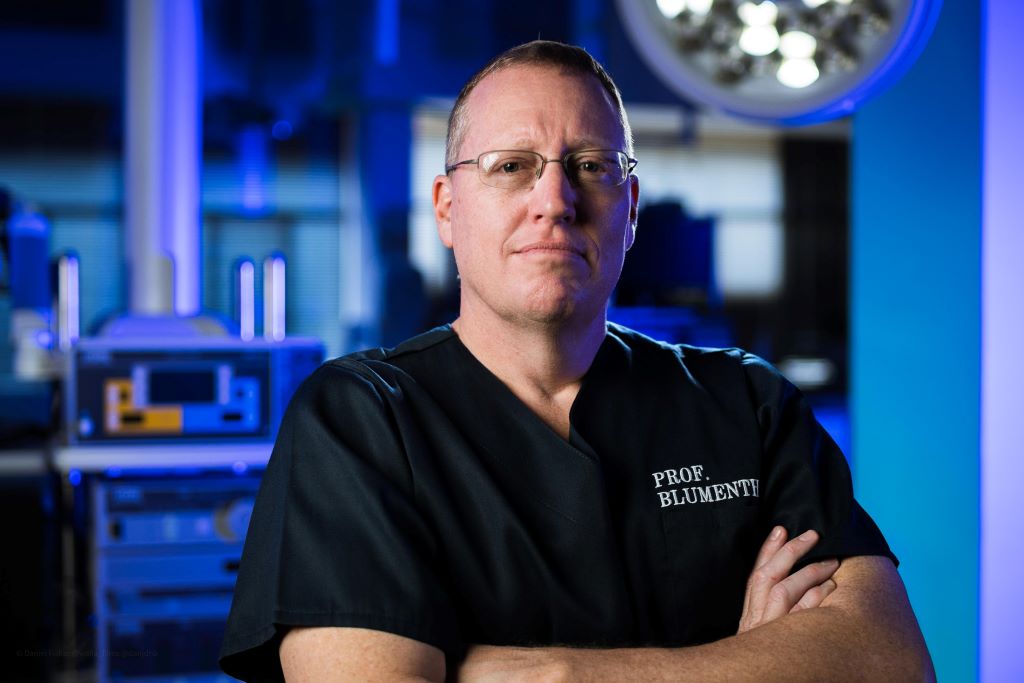
Every day, forensic pathologists are called upon to answer one of society’s most difficult questions: how did this person die?
For Professor Ryan Blumenthal, a senior forensic pathologist in the University of Pretoria’s (UP) Department of Forensic Medicine, that question has always led to another: What can this death teach us about protecting the living?
Reflecting on three decades of forensic practice, Prof Blumenthal’s inaugural professorial address explored how forensic pathology extends beyond determining the cause of death. As this address, titled ‘The Dead Teach the Living: Advancing Forensic Pathology for Justice, Prevention, and Public Health’, took place during National Science Month in July, Prof Blumenthal highlighted the vital role that science plays in advancing justice, protecting public health and improving society.
Drawing on his career as a forensic pathologist, researcher, educator, science communicator and lifelong student driven by an insatiable curiosity, his address examined how lessons learnt during autopsies have influenced courts, healthcare, public policy and scientific understanding. Prof Blumenthal explained that forensic pathology is a discipline that strengthens justice, informs public health, guides prevention strategies and generates evidence that can help prevent future deaths.
“Our work lies at the intersection of medicine, science, law, and public engagement, driven by a simple belief: the dead have much to teach the living,” he said. “Whether investigating deaths, advancing forensic pathology, researching lightning injuries, teaching students or communicating science to the public, our mission has always been to pursue the truth, serve justice and leave the profession stronger than we found it.”
Prof Blumenthal is recognised internationally for his contributions to forensic pathology. He has published extensively on electrocution, lightning injuries, suicide and the pathology of trauma, contributed chapters to nine international textbooks, and is an NRF C2-rated scientist.
His work has also reached audiences well beyond academia through bestselling books, documentaries and public engagement initiatives that have helped make forensic science more accessible. His book Autopsy – Life in the trenches with a forensic pathologist from Africa (Jonathan Ball Publishers), launched in August 2020, became a non-fiction bestseller in South Africa. It has since been translated into Afrikaans and Russian. His latest book, Trace (Tafelberg Publishers), was launched in April 2026 and explores real forensic case studies, demonstrating how autopsies can help create a better world by advancing science, justice and public health.
Research with impact beyond the courtroom
While forensic pathology is often associated with criminal investigations, Prof Blumenthal’s research highlights its much broader contribution to society. He argues that forensic pathologists could also be regarded as public health pathologists, as autopsies do more than determine the cause of death; they identify preventable risks, guide public health measures, improve safety and help prevent future deaths.
One of his research focus areas is suicide; he has studied forensic data from Pretoria to examine how suicide patterns have changed over 30 years.
A study of 1,820 possible and probable suicide cases in Pretoria between 2015 and 2021 found that the year after the start of the COVID-19 pandemic, recorded the highest number of suicides during the study period. Suicide cases increased from 9.74% to 13.32% of all medico-legal admissions. The study identified important shifts in demographic patterns and methods of suicide, providing evidence to inform mental health policy and suicide prevention strategies in South Africa.
Another area of Prof Blumenthal’s internationally recognised expertise is lightning and electrical injuries. His research has advanced the understanding of the pathology and epidemiology of lightning injuries, explained how lightning causes injury and death, identified patterns unique to South Africa, and informed practical guidance for forensic practitioners, clinicians and emergency responders.
“I have devoted my career to understanding one of the deadliest forces of nature – lightning – transforming this phenomenon into forensic knowledge. It really is science in service of society.”
His work has also helped establish the fields of lightning medicine (keraunomedicine) and lightning pathology (keraunopathology) as recognised interdisciplinary areas of research spanning forensic science, engineering, clinical medicine and disaster medicine.
His research has also advanced the field of electropathology through studies of electrocution, strengthening forensic investigations by improving approaches to death scene investigations and autopsies involving electrical fatalities. By integrating the study of natural and man-made electrical injuries, his work has helped shape international reference texts used by forensic practitioners around the world.
During his address, Prof Blumenthal also highlighted research into toxicology, exploring how forensic investigations help interpret deaths involving substances such as methanol, fentanyl and ethanol.
He also spoke about his research into weapons and how forensic pathology helps explain the effects of different weapons on the human body. “Our research into weapons reminds us that the distinction between lethal and nonlethal is often misleading. From full-metal jacket mild steel core ammunition with its unpredictable wounding potential to so-called less-than-lethal weapons that can still prove fatal, our work as forensic pathologists reveals the gap between design intent and biological reality,” he said.
The future of forensic pathology
Prof Blumenthal described how advances in forensic radiology, molecular autopsy, toxicology, artificial intelligence, robotics and digital innovation are creating new opportunities to improve the accuracy, efficiency and safety of forensic investigations. He emphasised that these technological advances must be accompanied by stronger, more streamlined forensic systems, effective leadership, sound policy development and sustained investment if they are to benefit countries facing high burdens of trauma and violence.
He also highlighted the growing role of technology in forensic pathology. One example is the use of agile quadruped robots to assist with forensic death scene investigations in hazardous environments. His recent interdisciplinary research showed how these robots could help investigators safely document scenes and collect evidence while reducing risks to personnel, offering a glimpse into the future of forensic practice.
Prof Blumenthal concluded by outlining a vision for a more modern, resilient and technologically enabled forensic pathology service that delivers better justice, strengthens public health and serves all South Africans.
Watch Prof Blumenthal’s inaugural address here.
Provided by University of Pretoria
