

Tag: 20/7/26

What Price a Human Kidney?
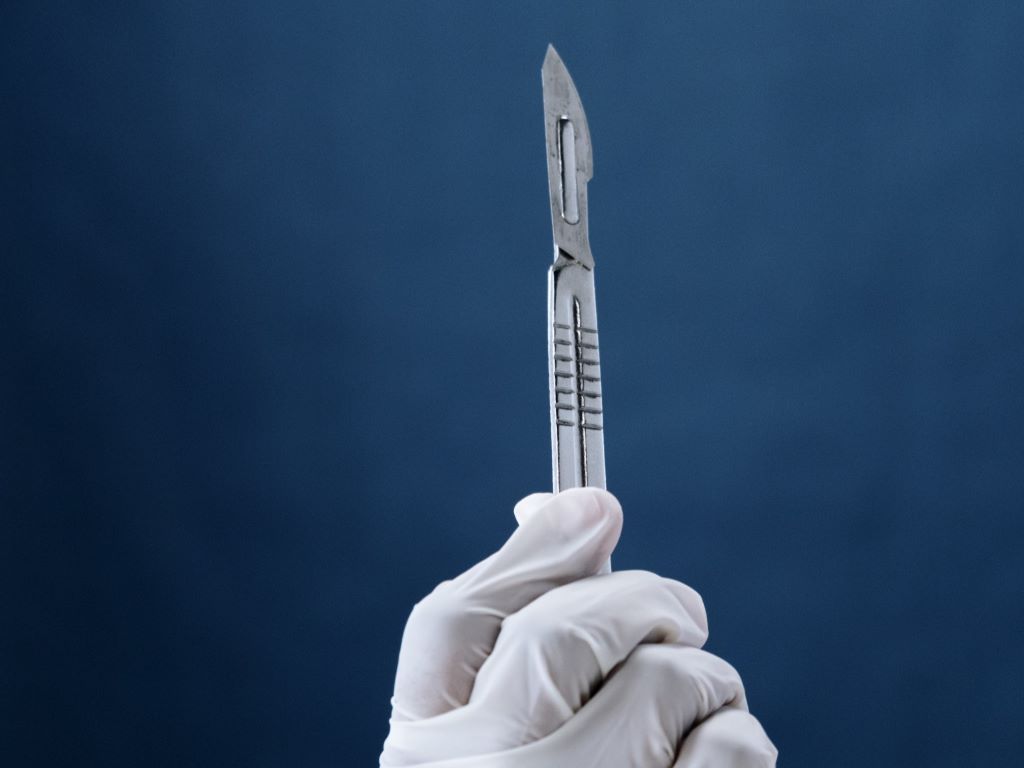
Photo by cottonbro studio

Human kidneys sell for up to £150 000 on the black market, but donors receive as little as £1000. Dr Saradamoyee Chatterjee exposes the criminal syndicates exploiting the desperate on both sides of the illegal organ trade, and asks how we can stop them.

Slums are a goldmine for organ traders. The brokers exploit people who are trapped in poverty and debt, and lure them into selling their kidneys.

Dr Saradamoyee Chatterjee

How much does a human kidney cost on the black market? It depends on who you are in the transaction.

Buyers can pay between £60 000 and £150 000. But donors only receive between £1000 and £7500, if they are lucky.

Where does the rest of the money go? The lion’s share goes to the organ brokers: criminal organisations who act as middlemen between donors and buyers.

These syndicates are sophisticated, exploitative, and international.

“One racket, operating from Israel, brought together Brazilian donors with American buyers, with the transplant taking place in South Africa.” So says Dr Saradamoyee Chatterjee, Bye-Fellow and Director of Studies in Land Economy at Lucy Cavendish College.

Chatterjee unpicks the illegal trade of human organs. She gives voice to the desperate players trapped inside its transactions, and suggests ways to stamp it out.

The organ bazaars

Beginning in the 1950s, science radically improved the success rate of human organ transplantation. Researchers found ways to suppress the immune response of the recipient, so that new organs are not rejected. Transplants now have a high degree of success between strangers, provided that donors and recipients match in blood and tissue type.

Kidneys are by far the most commonly transplanted organ, but transplants of heart, lungs, liver lobes and corneas are also possible.

In countries like India, Pakistan and the Philippines, these advancements initially led to completely unregulated human organ markets. Whichever country had the fewest regulations attracted international patients.

“In the 1980s, these countries were like an organ bazaar,” Chatterjee says. “Patients from the Middle East, UK and USA flocked to get their transplants done.”

Since the 1990s, most countries have brought in prohibitions on the organ trade. The famous Istanbul Declaration took a stand against transplant tourism, and the World Health Organization called for a global prohibition on cell, tissue or organ purchases.

Currently, only Iran has a legalised system for paying donors for their organs. Everywhere else relies on legal means, like organ donor lists, or illegal ones, which are still rampant in some countries. The persistence of organ trafficking reflects the desperation on all sides of the transaction.

The need for healthy organs is ever-increasing. Modern ‘lifestyle’ diseases such as diabetes and hypertension lead to kidney failure. Among the 2 current treatments – dialysis and organ transplantation – the latter significantly enhances the quality of life. Many people wait decades on donor lists and will do anything for a healthy organ.

Among slum-dwellers and asylum seekers, there is both a supply of valuable organs and the desperation required to part with them.

Here is where the middlemen come in, servicing an unsavoury gap in the market.

The sellers

Chatterjee travelled to Mumbai, Delhi, Chennai and Kolkata to seek out people with first-hand knowledge of the organ trade. In these cities she found a network of medical professionals, transplant coordinators, buyers and donors willing to share their views.

“Slums are a goldmine for organ traders,” Chatterjee says. “The brokers exploit people who are trapped in poverty and debt, and lure them into selling their kidneys.”

Many people are in need of a lump sum to escape dire circumstances – the organ traders supposedly offer that.

Once a broker gets a kidney, the sellers seldom receive the promised compensation and the vital post-operative care. Even the nominal fee would not provide any relief from poverty.

“One woman I spoke to was a cleaner for weddings,” recalls Chatterjee. “She sold her kidney to save the life of her husband. He’d fallen into debt after buying a tuktuk via a money lender, and couldn’t afford the interest payments. In the end, she only received half the offered price for her kidney.

“She was left weakened, deeply disappointed, and regretful of the whole organ-selling experience.”

In matching sellers with buyers, the syndicates respond to pleas for organ transplants on social media.

To dodge India’s prohibitions, the syndicates exploit loopholes in the law, including the forging of fake backstories. They generate false documents and testimonies to convince doctors and clinicians that 2 strangers know each other.

The transplant can then take place as if it were happening legally – as an agreement between friends or family, without money changing hands. These tactics make it difficult for doctors to detect potential exploitation.

The buyers

Organ trades are a bad deal for buyers too. Both the buying patients Chatterjee interviewed died shortly after their operations.

“In one case, the broker took payment before providing a mis-matched donor,” Chatterjee says. “In the second case, a female doctor saw that her new husband’s kidneys were failing. She placed an advertisement in the local newspaper, and a broker responded. But on the day of the planned transplant, the donor ran away.”

Operating with no regulation, the middlemen don’t uphold medical standards. They often don’t screen donors for existing conditions, exposing recipients to blood diseases like HIV or hepatitis.

The proliferation of lifestyle diseases in massive populations means that the organ trade isn’t only for the super rich: buyers only need to be rich relative to the poverty-stricken sellers.

Both of the buyers Chatterjee spoke to came from the middle class. They were compelled to borrow money from their relatives to pay the broker.

How can we make things better?

Meaningfully reducing the illegal trade of human organs requires action on many fronts.

Reducing the gap in supply means encouraging more legal donations. Other countries have focused on deceased donations, where people donate their organs after death. In Spain, everyone is an organ donor by default, meaning they have the world’s highest deceased donors rate (49 per million people; by comparison, India has only 0.77).

India claims to be tackling the black market with increased regulations and harsher sentences for perpetrators. Information campaigns targeting potential sellers should warn people about the dangerous middlemen. Further exposure of the black market by researchers like Chatterjee and Dr Sean Columb may also prevent people from being dragged into it.

On the demand side, societies need to properly fund their citizens’ healthcare. More successful countries focus on the prevention of lifestyle diseases that are leading causes of renal failure.

Encouraging people into healthier lifestyles – with fewer carbohydrates and more exercise – would decrease the prevalence of conditions like diabetes. Better screening programmes would also encourage patients to adjust before their condition deteriorates, reducing the demand for new organs.

“Organ traffickers exploit the vulnerabilities of both the donors and buyers,” says Chatterjee. To wipe out the middlemen, we need to make people on all sides of organ transplantation less vulnerable and more resilient.

Republished from University of Cambridge under a Creative Commons licence.

Read the original article.

University of Pretoria Research Explores How Africa’s Medicinal Plants Could Improve Healthcare

Profs Senkubuge, Nyakudya, Schlemmer and Joubert

The University of Pretoria (UP) is advancing research that could reshape how non-communicable diseases such as metabolic syndrome are prevented and managed in Africa. The Department of Physiology’s Professor Trevor Nyakudya has called for scientifically validated phytomedicine to become an integral part of future healthcare.

Phytomedicine is the scientific study of plant-derived compounds as therapeutic agents that support health and treat disease. According to the International Diabetes Federation, metabolic syndrome is a cluster of cooccurring metabolic abnormalities that, together, dramatically increase the risk of type 2 diabetes, cardiovascular disease and obesity, thus affecting the body’s ability to regulate and use energy effectively.

Delivering his inaugural professorial lecture, ‘Phytomedicine and Metabolic Health: Towards Integrative Solutions for a Global Crisis’, Prof Nyakudya presented more than a decade of pre-clinical medical research demonstrating how plant-derived bioactive phytochemicals and phytomedical plant extracts can complement existing conventional medicine in addressing metabolic syndrome, especially type 2 diabetes and related noncommunicable diseases.

His research comes at a time when the burden of metabolic disease is rising rapidly worldwide, particularly across Africa, where healthcare systems face significant resource constraints.“The plants of this continent, studied with the rigour of modern biomedical science, have something urgent and important to offer in the face of one of the defining health challenges of our time,” Prof Nyakudya said.

According to figures cited during his lecture, diabetes currently affects 589 million adults globally, with that number projected to increase to 853 million by 2050.Although conventional medicines remain essential, Prof Nyakudya argued that their effectiveness is often constrained in African settings by affordability, accessibility, long-term adherence and dependence on imported pharmaceuticals.“My argument is more specific: conventional pharmacotherapy, as currently deployed in African contexts, is structurally insufficient,” he said.

Over the course of his career, Prof Nyakudya has built one of South Africa’s leading research programmes in phytomedicine and metabolic health. His body of work spans 60 research-linked outputs and has established a coherent scientific framework linking indigenous medicinal plants with modern biomedical research. Working with collaborators and postgraduate students across South African universities and international research institutions, his laboratory has combined physiological techniques, molecular biology, histology and biochemistry to uncover how plant-derived compounds influence metabolic health at the molecular, cellular and organ levels.

Rather than validating traditional medicine through anecdotal evidence, his research applies rigorous scientific methods to establish the mechanisms by which phytochemicals regulate metabolism, inflammation and glucose control. This mechanistic approach positions phytomedicine firmly within evidence-based biomedical science and creates opportunities for translating indigenous knowledge into future therapeutic interventions.

A cornerstone of his research has focused on several naturally occurring bioactive phytochemicals found in numerous indigenous plant species. Through preclinical studies, his team demonstrated that administering some of these compounds during early critical periods of developmental plasticity could produce lasting protection against metabolic dysfunction later in life by reprogramming key metabolic pathways.

“The implication is profound: plant compounds administered in early life can reprogram metabolic vulnerability, shifting the therapeutic frame from lifelong adult pharmacotherapy to targeted prophylactic early-life intervention,” Prof Nyakudya said.

His research has identified critical molecular pathways through which phytochemicals influence glucose uptake, inflammation and energy metabolism, generating the mechanistic evidence required for future clinical translation. “Phytomedicine, done with mechanistic rigour, is not alternative medicine. It is integrative pharmacology. It engages the same molecular pathways as metformin. It applies the same scientific standards as conventional drug development. The difference is the source – and that difference is an advantage, not a limitation.”

Beyond metabolic disease, Prof Nyakudya is expanding his research into cancer biology and bone metabolism, investigating how plant-derived compounds may simultaneously address multiple chronic diseases through shared biological pathways.

Dis-Chem Opens First On-site Staff Clinic as Employers Rethink Workplace Healthcare

New facility at head office and distribution centre brings primary healthcare directly to employees, marking a shift from wellness awareness to healthcare access

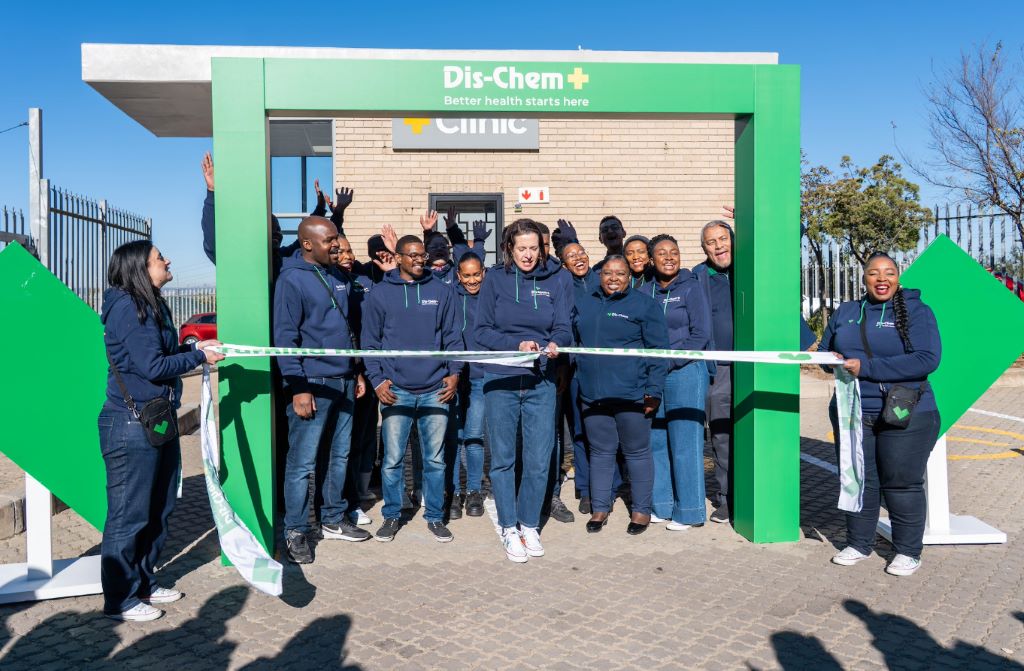
Dis-Chem has opened its first dedicated employee clinic, located at its head office and distribution centre in Midrand, giving employees direct access to primary healthcare services without leaving the workplace. The clinic was launched during Corporate Wellness Week and forms part of a planned rollout to additional distribution centres across the country.

Modelled on the Health Hub ‘store of the future’ recently launched at Melrose Arch which makes healthcare delivery the core offering, the facility offers a full suite of clinical services including routine consultations, maternal healthcare, immunisations and vaccinations, with escalation to a doctor where needed.

The launch reflects a broader shift in how South African employers approach workplace wellness. According to Nomfundo Vilakazi, Dis-Chem’s Director of People and Culture, corporate wellness has traditionally centred on annual screenings, wellness days and fitness initiatives, programmes that raise awareness but do little to remove the practical barriers that prevent people from seeking care.

“For many working South Africans, routine check-ups are postponed and early warning signs ignored, not because health isn’t valued, but because accessing care isn’t always convenient. The experience we create for our people directly influences the experience our people create for our customers,” says Vilakazi.

 “If we want customers to experience care, expertise and seamless service, our employees, as our priority customers, must experience those same principles inside our organisation. If we expect our people to champion health, we must first make it possible for them to prioritise their own.”

The clinic launch coincides with another milestone for the company: the formal definition of its Employer Value Proposition (EVP), which reinforces our Holistic Healthcare pillar that distinguishes Dis-Chem as an employer of choice. The employee clinic, servicing over 2500 head office and distribution centre employees, is positioned as a tangible, living expression of that strategic EVP commitment rather than a standalone corporate benefit.

Lizeth Kruger, Clinic Executive at Dis-Chem, notes that research consistently shows that when employees can consult a healthcare professional without taking time off work or travelling long distances, they are more likely to seek preventative care, manage chronic conditions and address concerns before they become serious – benefits that extend to families and communities well beyond the workplace.

“This is not about treating illness,” adds Kruger. “Creating an environment where our people, customers and communities can thrive begins by caring for those who make that mission possible every day. When we invest in the health of our people, everyone benefits.”

The model also incorporates innovative virtual healthcare solutions. Where appropriate, and when the clinic nurse has managed the patient within the full scope of her practice, patients can be seamlessly connected to a doctor via a video medical consultation. This approach enhances access to comprehensive, holistic care by combining the on-site expertise of the nurse with the support and guidance of a medical practitioner, ensuring patients receive the right care at the right time.

Employees not based at the head office or distribution centre will continue to access care through Dis-Chem’s existing clinic network, ensuring healthcare remains within reach across the business. The company plans to extend the employee clinic model to additional distribution centres within the next year.