Tag: scientific awards

From AI to Health Innovation – South Africa’s Top Science Awards #ChooseUP Researchers
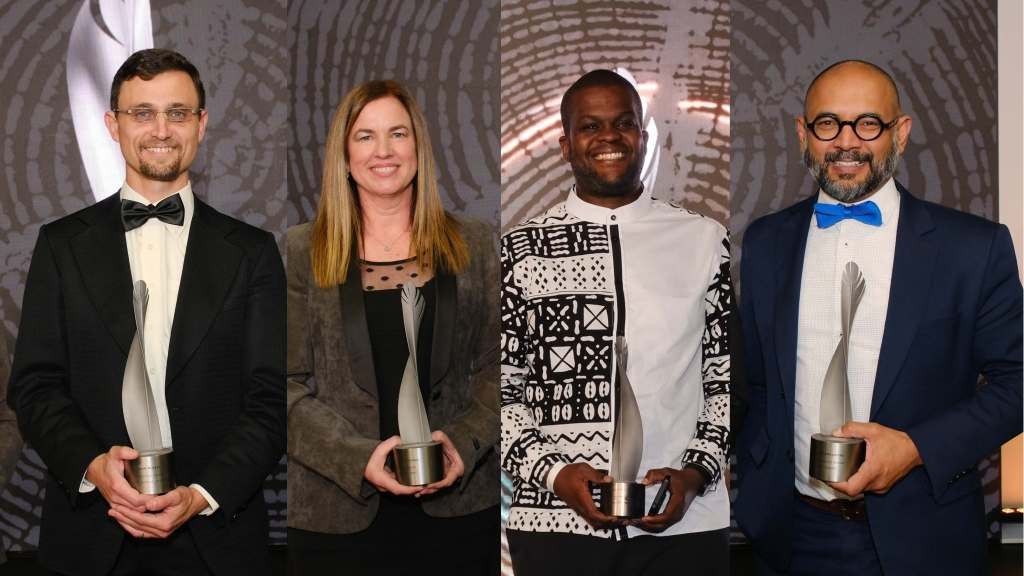
UP’s NSTF-South32 awards winners: Prof Tjaart Krüger, Prof Patricia Forbes, Prof Vukosi Marivate, Prof Llewellyn Padayachy

Four University of Pretoria (UP) staff members came out tops at the 2025/2026 National Science and Technology Forum (NSTF)-South32 Awards, South Africa’s premier science and innovation awards. Commonly known as the “Science Oscars”, the awards recognise exceptional contributions by individuals, teams, partnerships and organisations across a range of categories within South Africa’s science, engineering and technology sectors.

The 28th annual NSTF-South32 Awards gala event was held on 16 July 2026 simultaneously in Cape Town and Johannesburg, with a live broadcast online. This year’s awards were themed ‘Healthy Ageing’ – in line with the United Nations Decade of Healthy Ageing (2021 to 2030), a global collaboration to recognise the contribution of science, engineering and technology in improving the health and well-being of older people.

“This recognition speaks to the strength and breadth of the University of Pretoria’s research and innovation, and to our commitment to excellence across disciplines,” said Professor Sunil Maharaj, Vice-Principal: Research, Innovation and Postgraduate Education at UP. “The achievements of our researchers reflect the ambitions of our ThriveUP 2038 strategy, demonstrating how research and innovation can generate knowledge, develop solutions and create meaningful societal impact.”

This year’s recipients from UP are:

  • Prof Vukosi Marivate, Director of the African Institute for Data Science and Artificial Intelligence and ABSA-UP Chair in Data Science, together with the TextAugment team and the Vuk’uzenzele Multilingual Corpus project, won the inaugural NSTF-SADiLaR Research Software: Human Language Technologies Award. This category recognises the development of open-source tools that help address data scarcity in under-resourced African languages, supporting advances in artificial intelligence and linguistic equity.

    Prof Marivate and the TextAugment team’s work to develop open-source language technologies for under-resourced African languages speaks to the strategy’s ‘Digital Futures and Inclusive AI’ research theme, which focuses on building trustworthy artificial intelligence (AI), strengthening data infrastructures and advancing digital inclusion.
  • Prof Patricia Forbes of UP’s Department of Chemistry and editor-in-chief of the American Chemical Society’s (ACS) journal ACS Earth and Space Chemistry won the NSTF-Water Research Commission Award. She was recognised for developing analytical methods for detecting trace environmental pollutants and addressing long-standing monitoring challenges.

    Prof Forbes’ pioneering work in detecting trace environmental pollutants aligns with the ‘Climate, Land, Water and Sustainability Transitions’ theme by supporting improved environmental monitoring and the sustainable management of natural resources.
  • In the health sciences, Prof Llewellyn Padayachy, Head of Neurosurgery and Director of UP’s Brain Tumour and Translational Neuroscience Centre (BTC@UP), won the NSTF-SAMRC Clinician-Scientist Award for developing point-of-care diagnostic tools for the early detection of brain tumours.
    Prof Padayachy’s development of non-invasive diagnostic tools for the early detection of brain tumours speaks to the ‘Planetary and One Health Horizons’ research theme, which advances precision health, health system innovation and improved health outcomes.
  • Prof Tjaart Krüger of UP’s Department of Physics was a joint winner of the TW Kambule-NSTF Researcher Award, along with Prof Musa Manzi, Director of the Seismic Research Centre at the University of the Witwatersrand. Prof Krüger was recognised for developing ultra-sensitive single-molecule instruments that help reveal how nature converts sunlight into energy, with potential applications for cleaner, more efficient energy technologies.

    Prof Krüger’s work on ultra-sensitive instruments that deepen our understanding of how nature converts sunlight into energy contributes to the scientific foundations needed for cleaner, more efficient energy technologies, reinforcing the University’s commitment to research that supports sustainable futures.

In addition to staff members, first-year student Christene Beukes, who is studying applied plant and soil sciences within UP’s Faculty of Natural and Agricultural Sciences, was among the 22 students selected for the NSTF Brilliants Programme. The programme recognises top first-year students in the science, medicine and engineering fields from each of South Africa’s nine provinces. Beukes is also a recipient of the Vice-Chancellor’s Distinguished Merit Award.

The UP researchers who were nominated as finalists for the 2025/2026 NSTF-South32 Awards are:

  • Prof Brenda Wingfield – Department of Science, Technology and Innovation-National Research Foundation SARChI Chairholder: Fungal Genomics in UP’s Department of Biochemistry, Genetics and Microbiology and the Forestry and Agricultural Biotechnology Institute – was a finalist in the Lifetime Award category for her contributions to understanding the genetics and genomics of fungal plant pathogens and for her role in educating and mentoring generations of researchers.
  • Prof Hendrik Brink of the Department of Chemical Engineering received recognition in two categories. He was a finalist in both the Engineering Research Capacity Development Award and the NSTF-TIA Green Economy Award for building South Africa’s engineering research capacity through postgraduate training focused on scalable water treatment solutions.
  • Prof Rebecca Garland of the Department of Geography, Geoinformatics and Meteorology was acknowledged in the NSTF-TIA Green Economy Award category for research that strengthens the evidence base for air quality management in South Africa through an integrated approach.
  • The Department of Animal Science, led by Prof Carina Visser, was a finalist for the NSTF-Agricultural Research Council Award. The department was recognised for its interdisciplinary research on low-emissions sustainable livestock production, the genetic improvement of local breeds for adaptation, and the delivery of safe, welfare-friendly animal protein.
  • Shakira Hoosain, campaign strategist and senior copywriter, and editor of UP science platform Research Matters and RE.SEARCH magazine was a finalist in the Communication Award category. She was recognised for developing a multimedia science communication platform that translates academic research into accessible public knowledge through storytelling, media engagement and digital content.

“Every one of these accolades represents years of rigorous dedication,” Prof Maharaj said. “While we celebrate the individual achievements, they also reflect the collective effort of colleagues, students and partners across the University. We congratulate all our winners and finalists for the well-deserved recognition.”
Vaccinologists Keith Klugman and Shabir Madhi awarded Sabin’s Prestigious Gold Medal

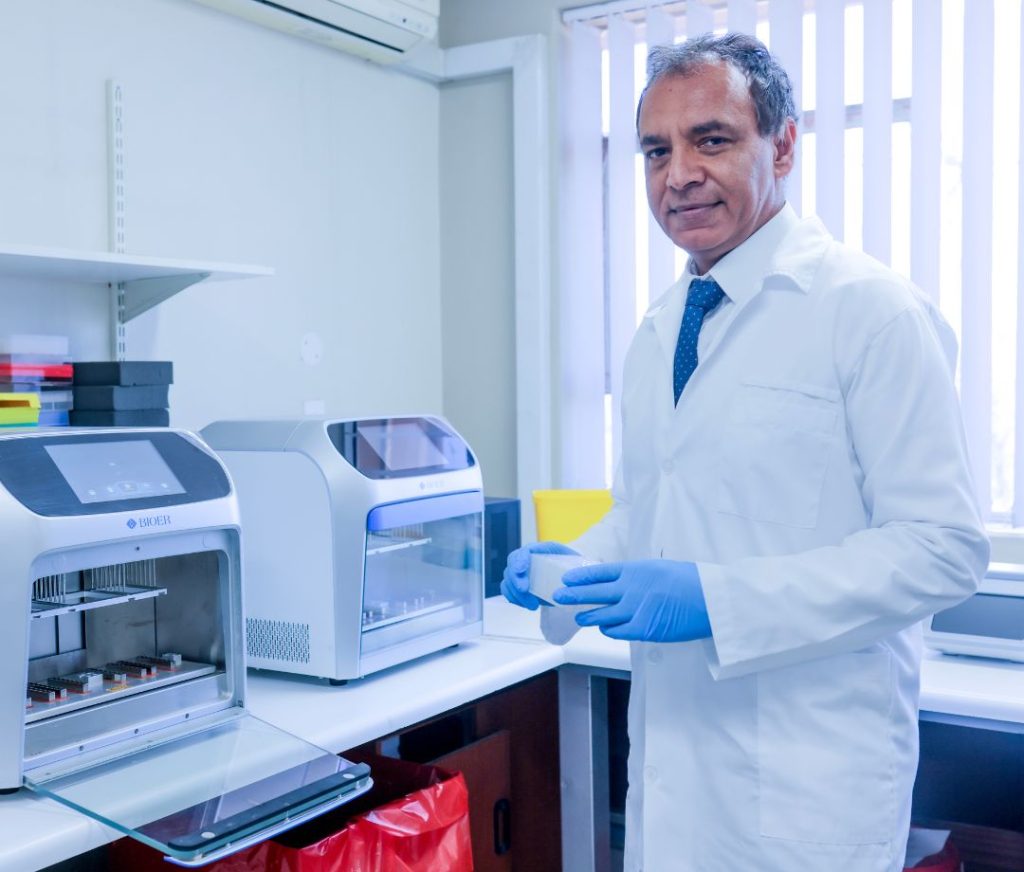
Professor Shabir Madhi of Wits University. Photo: supplied.

The Sabin Vaccine Institute presented the Albert B. Sabin Gold Medal to physician-researchers Keith Klugman and Shabir Madhi.

Nicole Basta, an associate professor at Canada’s McGill University and Canada Research Chair in Infectious Disease Prevention, received Sabin’s 2024 Rising Star Award.

The awards were made on 18 April 2024 at a ceremony in the National Academy of Sciences building in Washington D.C.

Formidable Wits alumni are world leaders in vaccinology

Klugman and Madhi received the Sabin Gold Medal, one of the highest recognitions for vaccinologists globally, for their seminal combined contributions to the development of vaccines against pneumonia and diarrhoeal disease – major causes of death in children in low- and middle-income countries (LMICs).

Klugman is a Wits University alumnus who received an honorary doctorate from his alma mater in 2023.

Madhi, also a Wits alumnus, is currently Professor of Vaccinology and Dean of the Faculty of Health Sciences at  Wits University.

The Gold Medal is Sabin’s highest scientific honour. It has been given annually for more than three decades to a distinguished member of the global health community who has made exceptional contributions to vaccinology or a complementary field. 

Klugman first met his then-graduate student Madhi at Wits University, where Klugman established, and Madhi expanded, a now globally renowned infectious diseases research institute. Apart from pneumonia, their work focused on maternal and children’s vaccines including influenza, respiratory syncytial virus (RSV), typhoid, and Group B streptococcus (GBS).

The evidence produced by these two awardees has and continues to inform the World Health Organization’s recommendations for vaccines. Klugman and Madhi’s research has helped pave the way for the introduction of lifesaving vaccines in public immunization programs – including the pneumococcal conjugate vaccine where their findings were pivotal in influencing vaccination policy in many low- and middle-income countries (LMICs).

Klugman’s efforts help prevent babies from dying of pneumonia

Fuelled by an early interest in science as a child in South Africa – in part due to a physician father – Klugman holds both a medical as well as a science doctorate degree from Wits University and was the first student in the school’s history to obtain them simultaneously.

He began his research career nearly five decades ago investigating the typhoid vaccine and has since distinguished himself as a formidable infectious diseases’ scientist.

Klugman is widely known for his work on pneumonia, which still kills a child under five every 43 seconds, many in the world’s poorest countries.

As the director of the pneumonia programme at the Seattle-based Bill & Melinda Gates Foundation, Klugman orchestrates strategic initiatives aimed at reducing deaths from pneumonia, RSV, neonatal sepsis, and meningitis.

He has authored hundreds of publications that have been cited over 50 000 times to date and has been elected to the National Academy of Medicine in the United States. He is also a professor emeritus of global health at Atlanta’s Emory University.

His scientific achievements aside, Klugman has long championed the need for the world’s poorest children to have equitable access to vaccines. While in South Africa he joined in Wits University’s struggle to allow access to the institution for all students.

“It is absolutely wonderful to be receiving this award, especially together with Shabir,” he says. “When I look down the list of previous awardees, I recognize the great majority of them, and it is extraordinary to now be numbered among them.”

Past award recipients include leaders of vaccinology and vaccine advocacy such as Drs. Barney Graham, Carol Baker, Bill Foege, Anne Gershon, Stanley Plotkin, and Kathrin Jansen.

Madhi’s research informed WHO recommendations on universal rotavirus vaccination

With a career spanning more than 25 years, Madhi, also from South Africa, is a trained paediatrician whose research continues to be instrumental in prioritising the rollout of vital vaccines and guiding global public health policies. At Wits University, he led clinical trials focused on respiratory and meningeal pathogens, including vaccines targeted at pregnant women and their unborn babies.

Madhi led the first study showing that a rotavirus vaccine could significantly prevent severe diarrhoea during the first year of life in African infants. That research served as a key piece of evidence for the WHO’s recommendation of universal rotavirus vaccination. In addition, he also led the first two COVID-19 vaccine trials in Africa, and a number of COVID-19 epidemiology studies which led to the first evidence suggesting that infection-induced immunity and vaccinations played a role in reducing severity of disease.

In addition to serving as Professor of Vaccinology and Dean of Health Sciences at Wits University, Madhi heads South Africa’s widely respected South African Medical Research Council (SAMRC) Vaccines and Infectious Diseases Analytics Research Unit (Wits VIDA). He is also the co-founder and co-Director of the African Leadership Initiative for Vaccinology Expertise (ALIVE).

He has co-authored hundreds of publications which have been cited over 59 000 times. Madhi is a recipient of numerous lifetime achievement awards in South Africa, as well being bestowed an Honorary Commander of the Order of the British Empire (CBE) from the British Government for his services to science and public health in a global pandemic.

“It is really humbling for me to be acknowledged for my contributions in the field of vaccinology along with those who have received the Gold Medal award,” says Madhi. “It makes me realise that the work my team and I have done is acknowledged by my peers as being of substance. Most significantly, we contributed to protecting lives in those settings where a majority of death and suffering occurs, and that is in LMICs.”

Amy Finan, Sabin’s chief executive officer, says, “I am honoured to award the Sabin Gold Medal to Dr Klugman and D. Madhi for their extraordinary work on vaccines that have saved lives in communities most in need of these interventions. Their pneumonia research has been particularly transformative in shaping our understanding of the disease and strengthening global health strategies to protect children from this vaccine-preventable disease.”

Source: Wits University

Axial Spondyloarthritis Association of South Africa wins Excellence Award at EULAR PARE Assembly 2022

Maranda Van Dam, Chairperson of ASASA (left) accepting award, with Souzi Makri President of PARE (middle) and Nikos Sleeks, ELEANA Greece (right)

Maranda van Dam, Chairman of the Axial Spondyloarthritis Association of South Africa (ASASA) won an award of excellence at the EULAR PARE (People with Arthritis/Rheumatism across Europe) Congress 2022, for work performed by ASASA around axial spondyloarthritis (AxSpA) in South Africa. The PARE congress took place from 20 – 22 October 2022, in Brussels, and included a Representation Committee consisting of members of the PARE, of which van Dam is an associate.

The award was based on strides made by ASASA towards improving the quality of life of people living with AxSpa, as well as training done to build awareness in the medical fraternity around AxSpA in the country. With 36 posters entered into the awards by organisations across the globe, ASASA came out tops.

When asked about the award, van Dam said, “This was a real honour to represent South Africa at PARE. 2022 is also the first year that an African country was invited to attend PARE. Winning this award sheds light on our country and our unique problems. The delay to diagnosis of 10.8 years is just unacceptable. The access to the correct medication in both the private and public sector is also not sufficient for a debilitating, progressive disease that can lead to disability if left untreated.”

ASASA estimates that there are approximately 160 000 people suffering from the AxSpA in South Africa, with many of these sufferers undiagnosed. ASASA has made significant strides this year in the training of over 100 General Practitioners and over 250 optometrists around AxSpA diagnosis and the effects it can have on other parts of the body, like the eyes. In addition, ASASA, along with other partners, assisted in gathering data from South African respondents in the first ever live patient survey, called the International Map of Axial Spondyloarthritis (IMAS) survey, which is run by the Axial Spondyloarthritis International Federation that surveys people diagnosed with AxSpA and assesses the impact and burden that AxSpA has on the lives of patients, from their perspective.

Van Dam concluded, “There is still a lot we can do in South Africa and ASASA is busy growing its team of volunteers to help to build awareness around AxSpA in the country. We aim to continue to build support structures for patients in the country, as well as continually working with the medical fraternity, assisting with early diagnosis and access to treatment.”

Prof Shabir Madhi Honoured at NSTF’s ‘Science Oscars’

Credit: NSTF

Leading vaccinologist Professor Shabir Madhi received the Lifetime Award from South Africa’s prestigious ‘Science Oscars’ held by the National Science and Technology Foundation. He received the honour for his leadership in research on vaccines against life-threatening diseases in Africa and globally, and he has been at the cutting edge of research in this area since 1997.

As well as being the Dean of the Faculty of Health Sciences and Professor of Vaccinology at Wits, Prof Madhi is also the director of the South African Medical Research Council (SAMRC) Vaccine and Infectious Diseases Analytics Research Unit (Wits-VIDA); and is co-director of African Leadership in Vaccinology Expertise, Wits. During the COVID pandemic he became one of the most-cited expert by the media as the public looked to the healthcare sector for advice and guidance during this crisis.

A number of awards also went to those in the field of healthcare or who contributed to healthcare, an area especially marked by SA’s response to the COVID pandemic.

CEO of SA Health Products Regulatory Authority (SAHPRA), Dr Boitumelo Semete-Makokotlela, received the Management Award for successfully leading the authorisation of a number of COVID diagnostic tests, vaccines and therapies during the COVID.

The Network for Genomics Surveillance (NGS-SA) in SA received the Data for Research award for NGS-SA, which generated of genomic surveillance data of SARS-CoV-2 aimed at informing SA’s public health response to this virus. It was represnted by its co-founders, Dr Jinal Bhiman, Scientific Lead for Global Immunology and Immune Sequencing for Epidemic Response South Africa (GIISER-SA); and Professor Tulio de Oliveira, SU.

Other recipients in the field of healthcare included Dr Wynand Goosen, who received an Emerging Researcher aware for leadership of research in SA on the surveillance of zoonotic TB in domestic cattle and wild animals as potential infection sources in susceptible people in rural areas.

SAMRC Honours Medical Scientists

Credit: South African Medical Research Council

On Thursday, March the 10th, the South African Medical Research Council (SAMRC) honoured a selection of leading SA medical scientists and researchers at its 8th SAMRC Scientific Merit Awards at a hybrid event.

This year’s Presidential Award, which is awarded to scientists who have made exceptional lifelong contributions to medical research and public health, was bestowed upon Professor Koleka Mlisana, the country’s first black microbiologist. With over 40 years’ experience in health sciences, Prof Mlisana is the current executive manager of academic affairs, research, and quality assurance at the National Health Laboratory Service (NHLS) and Co-Chair of the COVID-19 Ministerial Advisory Committee (MAC). In the 1990s, she was one of the scientists investigating the unknowns of HIV. Her research focused on understanding the body’s response to acute HIV infection.

The Platinum Medal, for South Africans who have made seminal scientific contributions and who have also made an impact on health, especially for those living in developing countries, was awarded to Professor Andre Pascal Kengne. As a physician and an internationally renowned non-communicable diseases epidemiologist, his work focuses on cardiovascular disease, diabetes, and chronic kidney disease. He is the current Director of the SAMRC’s Non-Communicable Diseases Research Unit and holds conjoint appointments as Professor of Medicine at the University of Cape Town, as well as Extraordinary Professor of Global Health at Stellenbosch University.

In the Gold Medal category, which is for researchers who have made substantial and influential contributions that have impacted on health especially in the developing world, the awardees are Professors Tulio de Oliveira, Ntobeko Ntusi, Ambroise Wonkam and Grant Theron.

Silver Medals are conferred to emerging and upcoming scientists and those committed to capacity development. This year, the medal recipients are Professors Diane Gray, Marlo Moller, Rabia Johnson, and Dr Nasheeta Peer.

SAMRC President and CEO, Prof Glenda Gray said that scientific research remains fundamental for reducing the nation’s burden of disease and preventing mortality. “The knowledge produced by these exceptional scientists will carry our country’s legacy of science forward and continue to improve the lives of citizens as it is evident with COVID-19.” Their work shows the country’s ingenuity, she added, noting that “it was scientists in South Africa who first discovered and sounded the alarm on Omicron, which rapidly became the dominant variant of concern.”

Source: South African Medical Research Council (SAMRC)