

Tag: women in healthcare

Nearly 70% of the Global Health Workforce Are Women – But Health Worker Shortage Remains
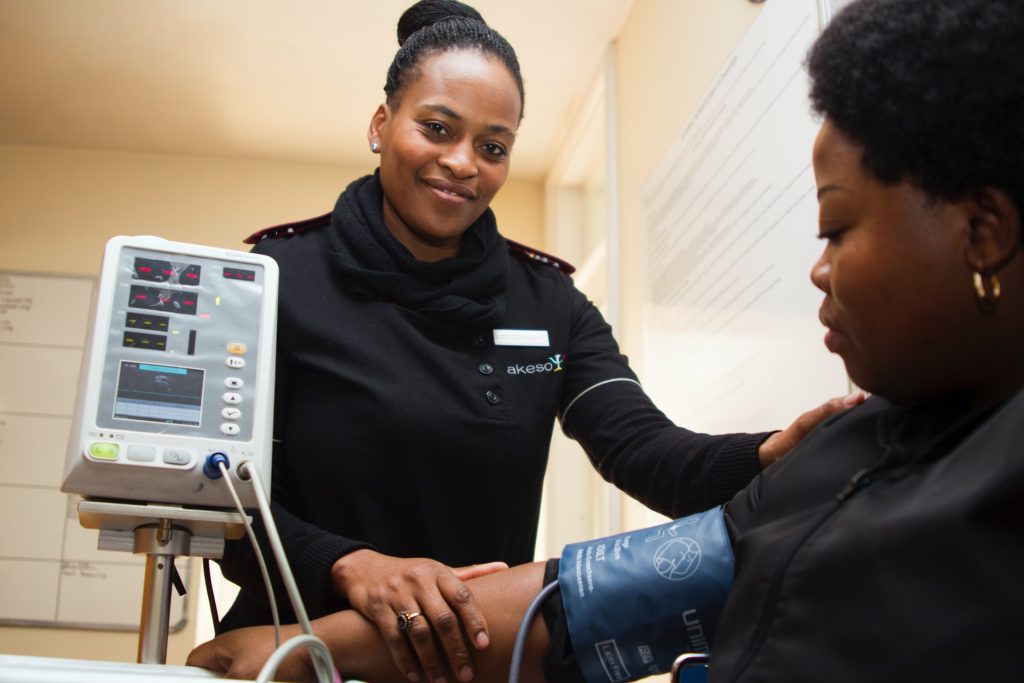
Photo by Hush Naidoo on Unsplash

Women have driven the expansion of the global health workforce over the past three decades, yet substantial workforce shortages remain, according to a new study published in The Lancet Public Health. Researchers estimate that an additional 34.4 million doctors, nurses, midwives, dentists, and pharmacists are needed worldwide to achieve moderate levels of universal health coverage, where people can access essential health services without financial hardship. 

The study found that the global health workforce nearly tripled between 1990 and 2023, growing from 40.9 million to 122.1 million workers. Women accounted for 71.4% of this growth and represented 68.9% of all health workers in 2023. Despite this progress, substantial shortages persist across many regions, particularly South Asia and sub-Saharan Africa, where health systems continue to face some of the world’s lowest workforce densities. 

Based on Global Burden of Disease (GBD) 2023 estimates, this study provides the first global, sex-disaggregated estimates of 20 health worker cadres, or groups of specially trained health personnel such as doctors, nurses, midwives, pharmacists, dentists, and community health workers, across 204 countries and territories from 1990 to 2023, including the first global estimates of community health workers. It also offers the most comprehensive assessment of the global health workforce to date.  

Women have driven global health workforce growth but remain underrepresented in many higher-paid professions. 

Between 1990 and 2023, the global health workforce expanded by more than 81 million workers, including 18.9 million nurses and 8.7 million doctors. Most regions saw substantial growth over this period, although the pace of expansion varied across countries and health professions. 

In 2023, the global health workforce included 122.1 million health workers, including 33.2 million nurses, 15.1 million doctors, 7.6 million community health workers, 6.8 million pharmacists and pharmaceutical assistants, and 6.1 million dentists and dental assistants. Women represented nearly seven in ten health workers worldwide, comprising 80.7% of nurses, 96.0% of midwives, and 89.5% of community health workers, while less than half of doctors were women. Similar patterns were observed across dentistry and pharmacy, where women were more likely to work as assistants than as dentists or pharmacists.  

“Women have transformed the global health workforce over the past three decades, but they continue to be concentrated in professions that generally offer lower pay and fewer opportunities for leadership,” said Megan Knight, lead author of the study and researcher at the Institute for Health Metrics and Evaluation (IHME). “Building stronger health systems will require not only expanding the workforce, but also creating equitable opportunities for career advancement, leadership, and safe, supportive working environments.”

Millions of health workers will be needed to achieve universal health coverage. 

Despite substantial workforce growth, researchers estimate the world would need an additional 34.4 million health workers to achieve a score of 80 out of 100 on the GBD universal health coverage effective coverage index, a benchmark representing moderate levels of universal health coverage. This includes shortages of 23.9 million nurses and midwives, 7.1 million doctors, 1.8 million dentists, and 1.6 million pharmacists. 

Workforce shortages were greatest in South Asia, which would require an additional 2.6 million doctors and 10 million nurses and midwives to reach moderate universal health coverage. Sub-Saharan Africa also faced severe shortages across major health professions, with nursing density of 14.5 per 10 000 population compared with 121.8 per 10 000 in high-income countries. At the country level, nurse density was as low as 3.2 per 10,000 in Chad and 3.3 in Madagascar, compared with 171.7 per 10 000 in Belgium and 161.4 in the United States. 

“Health workers are the foundation of every health system,” said Dr Annie Haakenstad, senior author of the study and Assistant Professor of Health Metrics Sciences at IHME. “Although the global workforce has expanded dramatically, millions more doctors, nurses, midwives, dentists, and pharmacists will be needed to ensure people everywhere can access essential health services. These findings provide countries with minimum thresholds for planning the workforce needed to strengthen health systems and move toward universal health coverage.” 

Meeting global health goals will require sustained investments in the health workforce. 

The study estimates that achieving moderate universal health coverage is associated with minimum workforce densities of 23.8 doctors and 64.5 nurses and midwives per 10 000 people, along with 5.2 dentists and 5.6 pharmacists per 10 000. These minimum benchmarks can help countries identify workforce gaps and plan the investments needed to meet future health needs. 

The estimates also provide a measure of progress toward Sustainable Development Goal (SDG) target 3.c.1, which calls for substantially increasing the recruitment, development, training, and retention of the health workforce, as well as SDG target 3.8 on achieving universal health coverage.  

Closing global workforce gaps will require sustained investments in health worker education, recruitment, retention, and working conditions. Gender-responsive policies, including leadership development, workplace protections, paid parental leave, and flexible work arrangements, can also help support the predominantly female health workforce. Building a well-supported health workforce will be essential to expanding access to care and ensuring health systems are equipped to meet future health challenges.

Source: Institute for Health Metrics and Evaluation

The Women Helping Shape South Africa’s Health System

(L-R, top-bottom) Gale Shanabangu, Prathna Sookoo, Amrita Raniga, Monyebodi Ngoepe, Dr Biancha Mentoor, Melanie Da Costa

Women’s Month offers an opportunity to reflect not only on how far South Africa has come, but also on the people whose decisions continue to shape its future. In health, effective leadership has never been more important. The sector is navigating policy reform, changing patient needs, rapid technological advances and increasing pressure to deliver quality, sustainable care. Meeting these challenges requires sound governance, diverse perspectives and informed decision making.

At the Hospital Association of South Africa (HASA), we are proud that many of the individuals guiding our work are women whose experience spans legal, health policy, clinical and nursing. Our Chairperson, Gale Shabangu, leads a Board committed to supporting a private hospital sector that remains a trusted partner in strengthening South Africa’s health system.

Alongside her, women chair several of HASA’s key subcommittees, bringing specialist insight to the Association’s work. Alongside her role on the Board, Prathna Sookoo chairs HASA’s Legal subcommittee, helping guide the Association’s work on legal and regulatory matters. 

Amrita Raniga chairs the Research and Health Policy subcommittee, bringing deep expertise in health policy to HASA’s engagement on key sector issues. Dr Melanie Stander leads the Clinical Quality subcommittee, providing important clinical leadership on matters relating to healthcare quality and patient outcomes improvement.

As Chair of the Nursing subcommittee, Monyebodi Ngoepe contributes extensive nursing experience, ensuring that the perspectives of the profession remain integral to HASA’s work and priorities.

They are joined by other accomplished women whose contributions extend beyond HASA. Dr Biancha Mentoor continues to influence health policy through participation on a number of key structures, while former HASA Board Chair Melanie Da Costa appointment as Netcare’s incoming Chief Executive Officer reflects the depth of talent across the sector.

This is not simply about representation. Better decisions are made when different disciplines, experiences and perspectives come together around the same table. That diversity of thought informs policy and ultimately contributes to better outcomes for patients.

As South Africa continues to navigate a changing healthcare landscape, collaboration and capable leadership will remain essential. The women serving across HASA’s governance structures exemplify these qualities through their commitment, judgement and service. This Women’s Month, we proudly recognise these leaders and the many other women across the healthcare sector whose service, expertise and dedication continue to strengthen South Africa’s health system and improve the lives of the patients and communities it serves.

Shattering Ceilings: How Women are Revolutionising Healthcare in SA

Nokuzola Mtshiya

In South Africa’s ever-evolving healthcare landscape, women are not just participants—they are pioneers, breaking barriers and driving transformative change. With women making up approximately 51.1% of South Africa’s population and over 50% of the African continent’s population of more than 1.4 billion people, their contributions are integral to the region’s progress. In the healthcare sector, women form the backbone of the workforce, representing a significant majority in roles ranging from frontline patient care to high-level decision-making.

writes Ms Nokuzola Mtshiya, Head: Stakeholder Relations and Business Development, Board of Healthcare Funders

The Board of Healthcare Funders (BHF) celebrates the incredible women who are leading the charge, advocating for equity, fostering innovation, and ensuring inclusivity at every level of the system. As trailblazers, they are not only providing essential frontline care but are also shaping strategies that will influence the future of healthcare in South Africa and beyond. This moment calls for even more women to step into leadership roles, to amplify their impact and continue to reshape the future of healthcare across the continent. Among the many remarkable women making a difference, we celebrate a few who are setting the standard for excellence and progress in the sector.

Professor Deborah Glencross: Revolutionising HIV diagnostic immunology

Professor Deborah Glencross’s journey from childhood, which was marked by frequent hospital visits, to becoming a leading expert in haematology and molecular medicine. is nothing short of extraordinary. Initially aspiring to be a paediatrician, her path changed due to health challenges. This shift led her to a groundbreaking career at the National Health Laboratory Service, where she has made a significant impact in the field of HIV care.

Prof Glencross’s development of the PanLeucogated (PLG) CD4 assay has been pivotal in improving the quality and affordability of CD4 testing, a crucial aspect of HIV care. Her innovation has saved South Africa approximately R12 billion, reflecting her ability to drive significant advancements despite resource limitations. This achievement underscores the potential for local insights and creativity to lead to profound healthcare improvements.

Throughout her career, Prof Glencross has been deeply involved in flow cytometry technology, which contributed to her pioneering work in HIV diagnostics. Her success is also attributed to the mentorship she received from influential figures such as Prof Barry Mendelow and Prof Ruben Sher. Their support helped shape her research focus and contributed to her international recognition.

Prof Glencross’s career highlights the importance of persistence and effective management of both professional and personal responsibilities. She advises young women in healthcare to seek support and let go of guilt, emphasising the need for better support systems such as on-site childcare and flexible work hours. Her vision for the future includes driving impactful solutions through local knowledge and creativity rather than relying solely on large grants. 

This driven and caring healthcare professional’s legacy is testimony to the significant impact that dedicated individuals can have on transforming healthcare and improving lives.

Dr Gloria Tshukudu: Innovator in plastic and reconstructive surgery

Dr Gloria Tshukudu’s career in healthcare is a powerful example of dedication and resilience. From a young age, influenced by her mother’s career as a nurse, Dr Tshukudu knew she wanted to be a doctor. Despite facing numerous challenges, including struggles with specialisation and balancing professional demands with personal responsibilities, she remained steadfast in her commitment to medicine.

Dr Tshukudu has achieved notable milestones in her career, including becoming the first South African woman to qualify as a plastic surgeon in 2013, pioneering research on chemical peels for ethnic skin and making significant advancements in plastic surgery. Her contributions have not only advanced her field but have also helped address issues related to gender dynamics and representation within healthcare.

Navigating the complex interplay between work, family responsibilities and societal expectations has been a significant part of Dr Tshukudu’s career. She has advocated for improved support systems, including better maternity leave and access to childcare, to enhance the working conditions for women in healthcare. Her leadership style emphasises empathy, support, and perseverance, reflecting her belief in fostering an inclusive and supportive environment.

Dr Tshukudu’s efforts have significantly increased the representation of women and marginalised groups in healthcare. Through mentoring and supporting younger professionals, she has contributed to the evolution of the healthcare sector, ensuring that future generations benefit from the advancements and opportunities she has championed.

Melanie Da Costa: A visionary in healthcare strategy and policy

Melanie Da Costa is a trailblazer in healthcare strategy and policy. She combines her expertise as a Chartered Financial Analyst (CFA) and a Master of Commerce (MCom) to make a profound impact on the healthcare sector. Her career began in the investment world, where she distinguished herself as a healthcare investment analyst and fund manager. Notably, she served as the Head of Equity Research for HSBC’s South African office, showcasing her deep understanding of financial dynamics and strategic insight.

In May 2006, Da Costa transitioned to Netcare, where she has been instrumental in the organisation’s strategic evolution. Her role in founding the Health Policy Unit has been crucial in shaping national health policy. Her responsibilities at Netcare include overseeing health policy, funder contracting and strategic initiatives, with a focus on international opportunities until 2018.

Da Costa’s influence extends beyond South Africa. She has played a key role in global healthcare policy discussions, leading Netcare’s participation in the South African Competition Commission Healthcare Market Inquiry and serving as the Board lead in the UK’s Competition Markets Authority Healthcare Inquiry. Her strategic acumen was further demonstrated during her tenure on the Board of BMI Healthcare in the United Kingdom, where she contributed until the group’s change of control in 2018.

Currently serving as the Managing Director of Netcare Akeso, Da Costa continues to drive strategic growth and innovation. Her leadership during the government-led pandemic response, including the vaccine rollout, was recognised with a Lifetime Achievement Award in 2022 from the Hospital Association of South Africa (HASA), honouring her contributions to health policy and unwavering commitment to improving healthcare systems. 

Dr Keo Tabane: Shaping the future of oncology care

Dr Keo Tabane’s journey into oncology bears witness to her unwavering commitment to service and excellence. Raised by an Anglican priest, her formative years instilled in her a profound sense of purpose, steering her toward a career where she could make a meaningful impact.

After completing her undergraduate training in 1999, Dr Tabane embarked on her medical career with an internship at Kalafong Hospital, followed by community service in Makopane. 

A defining moment in Dr Tabane’s career came early on during her internship when she faced prejudices as a young black woman. Instead of being deterred, she used this challenge as fuel for her drive, leading to her success and subsequent invitation to return as a specialist.

Her dedication and expertise earned her the prestigious Charlotte MacLeachy Award for medical excellence in 2019. By 2002, she returned to Johannesburg, becoming a specialist in internal medicine and later a pioneering force in medical oncology.

Dr Tabane attributes much of her success to the mentorship of Dr Daniel Vorobyov, whose guidance profoundly influenced her patient-centred approach. Balancing the demands of a high-stakes career with personal life has not been without its challenges. She views work-life integration as a dynamic dance rather than a static balance, blending her professional and personal spheres to enhance both.

Her advice to aspiring women in healthcare emphasises the importance of self-care and respecting personal boundaries. Dr Tabane envisions her legacy as one defined by a focus on patient-centred care, advocating for initiatives to tackle burnout and promote value-based care that keeps pace with medical innovation. Her vision for the future of healthcare is one where progress and patient welfare are intertwined, ensuring that every advancement serves to enhance the quality of care.

These women exemplify leadership and innovation in South Africa’s healthcare sector, making significant contributions that drive progress and equity. From advancing diagnostics and pioneering new treatments to shaping policy and driving strategic growth, their diverse achievements highlight the transformative power of women in healthcare. 

Their dedication and impact ensure that adequate healthcare reaches every corner of the nation, inspiring future generations to continue their legacy of excellence and service.