Day: May 12, 2026

From Hospital Wards to Clinic Ownership, SA Nurses Are Becoming Their Own Bosses

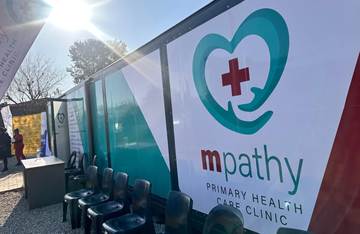
“Mpathy Clinics are nurse-led, low-fee primary healthcare facilities with a vision of transitioning from nurse-led to nurse-owned clinics, creating opportunities for nurses to own and operate clinics in their own communities,” said Rhiza Ventures managing director Linda Dunkley.
For decades, nurses were the backbone of South Africa’s healthcare system, present in every ward, every emergency and every recovery room, but rarely in positions of ownership and leadership.

Now, as South Africa marks International Nurses Day on May 12 under the global theme “Empowered Nurses Save Lives”, a growing network of township clinics is transforming nurses from employees into entrepreneurs while helping to ease pressure on overcrowded public healthcare facilities.

Affordable Healthcare and Building Local Economies

In communities where patients often endure long queues at public clinics or cannot afford private healthcare, nurse-led Mpathy Clinics are emerging as an accessible and affordable alternative rooted in empowerment, dignity and community-based care.

The model, driven by NPO Rhiza Babuyile, currently operates 11 clinics in township areas including Umlazi, Naledi, Gugulethu, Tembisa and Diepsloot. Beyond expanding primary healthcare access, the initiative is creating something rarely seen in South Africa’s nursing

“South Africa’s public sector serves roughly 80% of the population, yet clinics routinely face long queues, staff shortages and medicine stockouts. Most primary healthcare services fall within the legal scope of a Professional Nurse and policies like NIMART (Nurse Initiated Management of Antiretroviral Treatment) – leaning on nurses is the only way to scale primary healthcare capacity at a cost the country can afford,” says Rhiza Ventures, Managing Director Linda Dunkley.

For Mpathy, this means helping the Department of Health extend healthcare services into underserved communities while aligning with the Ideal Clinic Realisation programme and supporting the long-term National Health Insurance (NHI) rollout, where accredited primary healthcare facilities serve as the first point of entry.

“Nurse-led PHC clinics like Mpathy are where early detection is possible, response rates are highest, and the cost to both the patient and the public system is lowest,” said Dunkley.

Dunkley added that the clinics were designed to complement, rather than compete with, the public healthcare system. “Mpathy is positioned explicitly as an extension of the Department of Health rather than a parallel system,” she said.

The clinics also contribute to local economic development, not only creating jobs for administrators and community health workers, but   enabling non-nursing entrepreneurs to own clinics and employ qualified nurses, broadening community-based healthcare investment and expanding access to care.

This month alone, a new Mpathy Clinic will open in Orange Farm on 21 May, led by nursepreneur Sister Mbalenhle, and on 19 May an entrepreneur will be inducted into the model in  Zithobeni, Bronkhorstspruit.

‘It’s My Answered Prayer’ — A Nurse Returns Home as Nursepreneur

For professional nurse and nursepreneur Sindiswa Nhlabathi, the model has become deeply personal.  Nhlabathi will this week open the  Mpathy Clinic in Naledi, Orange Farm on 14 May, serving the same community where she was born and raised.

“I was born at Zola, right across from where the Naledi clinic is based. I grew up in a family where no one was formally employed but they were ‘business people’,” she said. Her mother and grandmother sold cakes and goods to support the family. “It wasn’t easy as there was no money for university,” she said.

Before nursing, she worked at a government hospital as a personal assistant manager. Until a friend changed everything. “One day my friend came to me with nursing application forms and persuaded me to apply. I refused telling her that ‘you know I don’t like nursing’ but she insisted. I was accepted and the minute I was exposed to clinical experiments I knew I was born for this.”

After years in public healthcare, including at Zola Clinic, Nhlabathi resigned from her permanent post and was later offered the opportunity to run the Naledi clinic. “When I was studying it never crossed my mind that one day I might own a clinic. It’s my answered prayer. I feel empowered and I don’t even have the words to articulate my heart but one thing I know is that I intend to take this opportunity and make the best out of it,” says Nhlabathi.

At the clinic, children can receive treatment for under R200, while adult consultations with medication cost up to R350.

“Our clinic is private but very affordable,” Nhlabathi adds that “Our community relies on social grants and low incomes, while public clinics remain overwhelmed. Mpathy Clinics are a bridge between private and public healthcare and our priority is to build trusted relationships with the community.”

Visit https://mpathyclinic.co.za/ to find out more.

NHI Constitutional Court Arguments Hinge on Public Participation

Photo by Wesley Tingey on Unsplash

The Constitutional Court’s hearing over National Health Insurance (NHI) concluded on 7 May. The Board of Healthcare Funders (BHF) and the Western Cape Provincial Government made a combined application challenging the NHI Act on public participation grounds.

The Court is now deliberating; on such complex constitutional matters, it can be weeks to months before a judgment is made. The implementation of NHI remains suspended, following February’s High Court order – President Cyril Ramaphosa and the Minister of Health have formally undertaken not to proclaim or implement any part of the act until the Constitutional Court’s ruling. Other legal challenges are now paused.

What were the arguments?

The hearings focused on one key question: whether Parliament’s process met the constitutional threshold for public participation (primarily under Sections 59 and 72 of the Constitution). Section 59 mandates proactive, reasonable, and meaningful public engagement for the country’s participatory democracy. Formalities alone do not satisfy it – rather, the test is contextual reasonableness aimed at genuine influence. Constitutional Court challenges for national legislation are the main means by which Section 59 is enforced.

The BHF argued that hundreds of thousands of written submissions were effectively ignored; critical information was not provided; and whether, without such information, the test for rational law-making was met.

The Western Cape (led by Premier Alan Winde) focused primarily on deficiencies in the NCOP and provincial stages of the process, arguing that these violated constitutional public-participation requirements and undermined provincial roles. For example, the NCOP process was compressed into only eight weeks, key inputs were ignored, and provincial roles were undermined.

Parliament contended that the process was far more than a “tick-box” exercise, presenting the NHI to the public as a radical, transformative process and that details would only emerge as the project proceeded. [Nevertheless, even a simple calculation would show an NHI budget of R200bn, requiring crippling taxation.] They also argued that accommodations were made, such as extending written comment deadlines. They also argued that changes were made to the Bill, and that engagement does not mean that the legislature agrees, but rather is informed.

Judges raised questions about the integrity and practicality of the public health system in the context of NHI, but the core legal issue remained procedural compliance as opposed to the policy merits.

Is there precedent?

This would not be the first time the Constitutional Court has set aside Acts. In 2006, in a case brought by Doctors for Life, the Choice on Termination of Pregnancy Amendment Act and Traditional Health Practitioners Act were invalidated as Parliament had failed to comply with its section 72(1)(a) constitutional obligation to facilitate public involvement before passing.

Further cases reinforced that inadequate information, rushed timelines, and a lack of consultation over major changes would result in a breach. Parliament, however, argues that Doctors for Life shows that the requirement for participatory democracy has been met.

All parties now await the Court’s decision, which could either uphold the Act, declare it partially or wholly invalid, or remit aspects back to Parliament for correction.

Could an Asthma Medication Also Protect Against MASH?

Credit: Pixabay CC0

Join our podcast as we unpack a study exploring the potential of the asthma medication formoterol as a novel treatment for Metabolic Dysfunction-Associated Steatohepatitis (MASH), a severe liver condition often linked to diabetes.

The researchers used experiments involving high-fat diet mice and human liver cell cultures to show that this beta 2 adrenergic receptor agonist effectively reduces liver fat accumulation. It does so by stimulating mitochondrial biogenesis and enhancing metabolic efficiency. In addition, a massive retrospective analysis of nearly 60 000 patients revealed that those using long-acting versions of these drugs experienced significantly lower rates of liver complications and reduced mortality.

Honouring the Nurses that Give Their Heart into Saving Lives

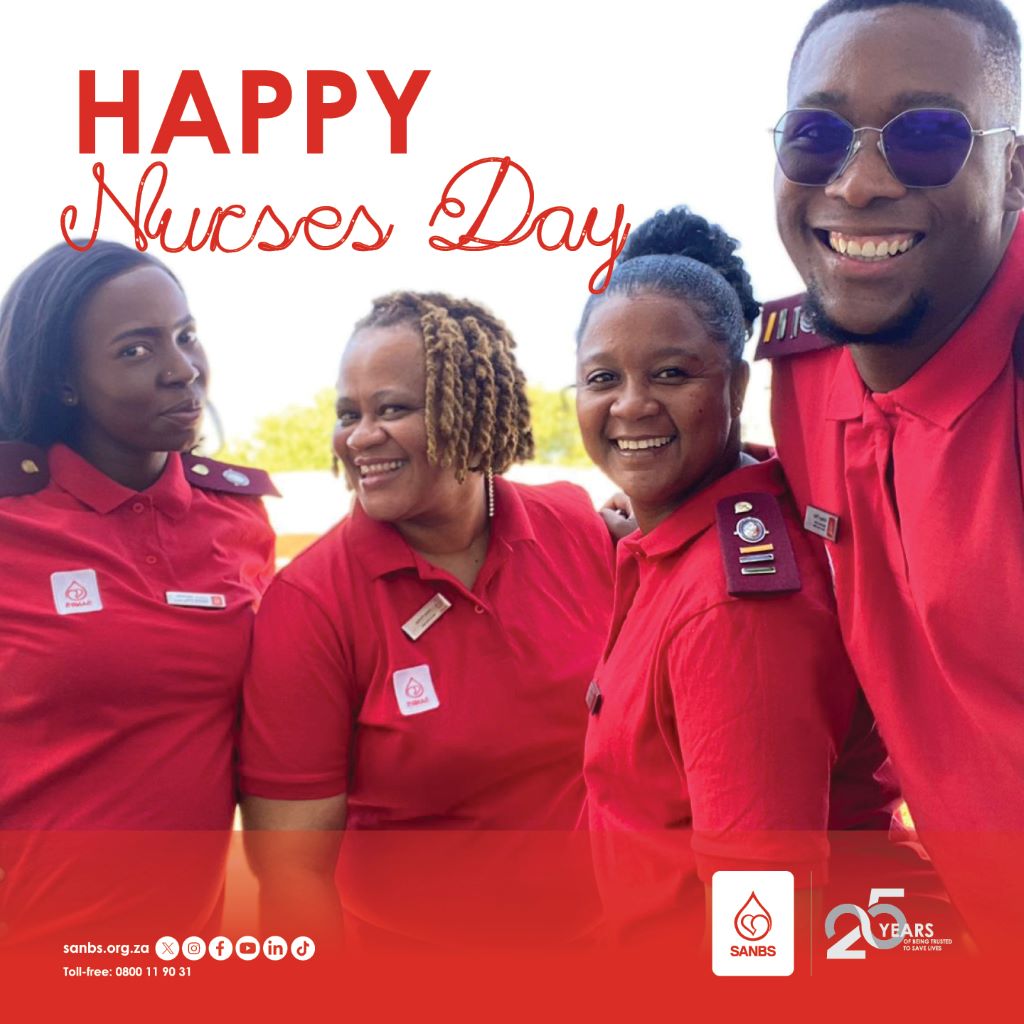
Every day, across South Africa, nurses stand at the frontline of saving lives. They are the steady hands in moments of uncertainty, the compassionate voices during times of fear, and the dedicated professionals who work tirelessly to ensure that patients receive the care they need when it matters most.

As the world commemorates International Nurses Day 2026 under the theme “Our Nurses. Our Future. Empowered Nurses Save Lives,” the South African National Blood Service pays tribute to the remarkable nurses whose compassion, strength, and dedication continue to save lives every single day.

Behind every successful blood donation is a nurse who chose to care.

A nurse who arrives before sunrise. A nurse who comforts anxious donors with a smile. A nurse who stands for hours ensuring every unit of blood collected is safe enough to save a mother, a child, a trauma victim, or a cancer patient. These are the quiet acts of heroism that often go unseen, yet they change lives every day.

At SANBS, nurses are more than healthcare professionals. They are the heartbeat of the organisation’s lifesaving mission. They carry the emotional weight of the work with grace and continue to show up with compassion even on the hardest days.

Nurses carry the human side of healthcare. They give comfort in moments of fear and hope in moments of uncertainty. At SANBS, we see their sacrifices, their long hours, and the care they pour into every donor and patient. Today we honour them not only for what they do, but for who they are.” said Monique Schreiner, Senior Manager: Donor Relations.

Every drop of blood collected carries the fingerprints of a nurse who cared enough to make sure someone else gets another chance at life.

Whether working at donor centres, mobile clinics, community blood drives, or behind the scenes ensuring quality and safety, SANBS nurses continue to serve with unwavering commitment. Their work demands patience, emotional strength, skill, and empathy. Yet despite the pressure and responsibility they carry, they continue to give so much of themselves to others.

There is something deeply powerful about the work our nurses do. They stand beside people in vulnerable moments and remind them that humanity still exists through kindness and care. SANBS is proud to walk alongside these incredible professionals who continue to keep the spirit of service alive,” said Monique Schreiner, Senior Manager: Donor Relations.

International Nurses Day is a moment to pause and recognise the people who dedicate their lives to caring for others, often placing the needs of patients and donors before their own. It is a reminder that healthcare is not only built through medicine and technology, but through compassion, patience, and human connection.

This year’s theme speaks directly to the future of healthcare. Empowered nurses strengthen healthcare systems, uplift communities, and save lives. Their wellbeing and support matter because when nurses are valued, entire communities benefit.

For SANBS, celebrating nurses is deeply personal. These are the individuals who hold hands during difficult moments, calm fears with gentle words, and continue to give their all so that others may live.

To every nurse who continues to wear their uniform with pride, compassion, and courage, thank you.

Thank you for the sacrifices no one sees.
Thank you for the comfort you give so freely.
Thank you for keeping hope alive.
And thank you for helping keep the blood of life flowing across South Africa.

Stay connected with SANBS on social media:

  • X (@theSANBS) 
  • Facebook (@SANBS) 
  • Instagram (@thesanbs) 
  • TikTok (@thesanbs) 

Health Organisations Lend Support in Hantavirus Cruise Ship Outbreak

Photo by Taha Yasir Yöney

Remaining passengers from the cruise ship MV Hondius, where an outbreak of hantavirus occurred, have now been evacuated after docking in Tenerife. So far, only three fatalities are reported, although the number of known infected cases has risen. Health organisations around the world are extending their support.

In a media briefing, Dr Tedros Adhanom Ghebreyesus, WHO Director-General said that eight cases have been reported so far, including three deaths. Five of the 8 cases have been confirmed as hantavirus.

According to the World Health Organization, the hantavirus in this case is the Andes virus, which is the only one capable of human transmission, albeit in an extremely limited fashion. Prolonged and close contact is required, as would happen on board a cruise ship.

Describing the situation, Dr Tedros said, “While this is a serious incident, WHO assesses the public health risk as low.” He noted that given the incubation period, “it’s possible that more cases may be reported.” Among medical support offerd, the WHO has distributed test kits from Argentina to five countries to support testing.

The US Centers for Disease Control has dispatched a medical team to the Canary Islands.

Prior to this incident, the most serious outbreak of Andes hantavirus was in Epuyén, Argentina, in late 2018 to early 2019 with 34 confirmed cases and 11 deaths (case fatality rate ~32%). Previously, very little was known about the Andes strain, explained Dr Gustavo Palacios, a microbiologist at Mount Sinai in New York, speaking to CNN.

“There is very limited experience handling this virus,” said Palacios, who had helped to trace how the virus spread. The study of the outbreak was published in 2020 in the New England Journal of Medicine.

“Probably we are having less than – I don’t know, I’m giving you a number, just for a ballpark number – 300 cases in history” of human to human transmission of Andes virus and about 3000 Andes cases overall, Palacios said.

Based on research into the Epuyén outbreak, Palacios said there seems to be only a roughly day-long window for transmission of the Andes virus of about a day, when patients first develop a fever.

Index case identified

The patients likely picked up the virus while they were on shore, before boarding the ship. The New York Post reports that Dutch ornithologist, Leo Schilperoord, was patient zero for the hantavirus outbreak. Along with his wife Maria Schilperoord, he visited a landfill outside of the city of Ushuaia to seek out a rare bird – birdwatchers frequent the landfill due to the number of birds flocking there. Argentinian authorities believe that it was there that he came in contact with long-tailed pygmy rats, inhaling particles of its faeces, which carries the Andes strain.

After boarding the ship with 112 others – including many other birdwatchers and scientists – he fell ill with diarrhoea and abdominal pain on April 6 and dying five days later. His wife was flying back with his body but collapsed when connecting in Johannesburg, and died in hospital the next day. Meanwhile, the UK man who was in intensive care in a Johannesburg hospital is now making a recovery.