Day: June 2, 2026

Hepatologist Hails Results of Groundbreaking Hepatitis B Treatment Trial

Hepatitis C virus. The hepatitis B virus has significant differences compared to the C virus, including differences in the protein envelope and DNA versus hep C’s RNA genome. Credit: Scientific Animations CC4.0

In an editorial published in the New England Journal of Medicine, University of Michigan Health hepatologist Anna S. Lok, MD, hails newly announced results of the B-Well clinical trials as “a major step toward a functional cure for hepatitis B virus infection.”

The results, published concurrently in NEJM, report that 20% and 19% of patients in two duplicate clinical trials achieved a functional cure for their chronic hepatitis B infections following 24 weeks of bepirovirsen (versus 0% of the placebo groups).

The lead and corresponding author of the trial results is Jinlin Hou, M.D., Chairman and Professor of the Hepatology Unit and Department of Infectious Diseases, Southern Medical University in Guangzhou, China.

The University of Michigan Health did not participate in these clinical trials.

The most common treatment for chronic hepatitis B infection, nucleoside or nucleotide analogue (NA) therapy, can successfully suppress hepatitis B virus replication – reducing the risk of cirrhosis and cancer – but is rarely curative, and most patients will relapse if treatment is discontinued before hepatitis B surface antigen loss.

In 2016, Lok led the first meeting among the US Food and Drug Administration, European Medicine Agency, American Association for the Study of Liver Diseases, European Association for the Study of the Liver, and experts in academia and industry to discuss definition and paths towards a cure for hepatitis B.

This group of experts recommended that functional cure of hepatitis B should be defined as undetectable hepatitis B surface antigen and hepatitis B virus DNA at least 24 weeks after completing a finite course of treatment. During the past 10 years, many clinical trials testing different combinations of antiviral and immunomodulatory agents have been evaluated but only one phase 3 trial has been completed so far.  

In these latest phase 3 clinical trials, 24% of the patients taking bepirovirsen were able to discontinue NA therapy, compared to zero patients in the placebo groups, and none of the patients who discontinued NA therapy including a few who failed to achieve functional cure had clinical relapse.

Although these trials were conducted in highly selected patients and the results may not be generalizable to other patients with chronic hepatitis B — and side effects were more common among the patients who received bepirovirsen — they are encouraging and represent a major step towards a cure for hepatitis B. Lok hopes the results of these trials will encourage testing of other combinations that are safe and can lead to higher rates of functional cure in broader patient populations.

A renowned researcher into the natural history and treatment of hepatitis B, Lok co-authored every edition of the American Association for the Study of the Liver Diseases Guidelines on hepatitis B since 2001 and the first World Health Organization guideline on the condition in 2015.

Earlier this month, she was the senior author on a review of the current state of global hepatitis B virus prevention and treatment, published in JAMA.

Source: EurekAlert!

Naloxone Use During Cardiac Arrest Linked to Improved Survival

Study shows benefits to drug often used for opioid overdose reversal

Photo by Mikhail Nilov

A new study by emergency medicine researchers at UC Davis Health set out to assess the effects of naloxone administration by first responders treating patients with out-of-hospital cardiac arrest (OA-OHCA).

The study, published in Jama Open Network, found naloxone administration during resuscitation by emergency medical service (EMS) personnel was associated with improved outcomes in patients with suspected OA-OHCA.

“This study provides important real-world evidence that naloxone may offer benefit even after cardiac arrest has occurred.”

David Dillon, study author

What the data shows

For this retrospective cohort study (looking back at existing patient records), researchers collected data from the California Resuscitation Outcomes Consortium between 2021 and 2022. In total, 3811 patients with suspected OHCA were treated by EMS.

Researchers found that people who received naloxone, a medication better known for reversing opioid overdoses, had higher rates of survival from the time they were treated by EMS to the time they were discharged from the hospital. The patients also benefitted from return of spontaneous circulation (ROSC) and favourable neurological outcomes compared to those who did not receive the drug.

The key findings included:

  • Survival to hospital discharge was higher among those receiving naloxone (8.1%) compared to those who did not (4.4%). 
  • Naloxone use was associated with a 2.8% absolute increase in survival, after accounting for patient and clinical factors. 
  • People treated with naloxone had improved neurologic outcomes (+3.2%) and ROSC (+3.3%).
  • Benefits were even greater among those with EMS-suspected drug-related cardiac arrest, with survival improvements approaching 8–9%.

The study also found that the association between naloxone and improved outcomes was weakened in certain situations – particularly among patients who required epinephrine during resuscitation. This suggests that timing, patient condition or resuscitation complexity may influence effectiveness.

Addressing a critical gap

Opioid overdose deaths in the United States have surged over the past two decades, contributing to a growing number of cardiac arrests outside the hospital. While naloxone is widely used to reverse opioid overdoses, its role during cardiac arrest has remained unclear and is identified by the American Heart Association as a key evidence gap.

“This study provides important real-world evidence that naloxone may offer benefit even after cardiac arrest has occurred,” said David Dillon, assistant professor of emergency medicine at UC Davis Health and one of the study’s authors. “While these findings are promising, randomised controlled trials are needed to determine whether naloxone directly improves survival in opioid-associated cardiac arrest.”

By Liam Connolly

Source: UC Davis Health

Vaccine and Immunotherapy Combo Halves Melanoma Recurrence

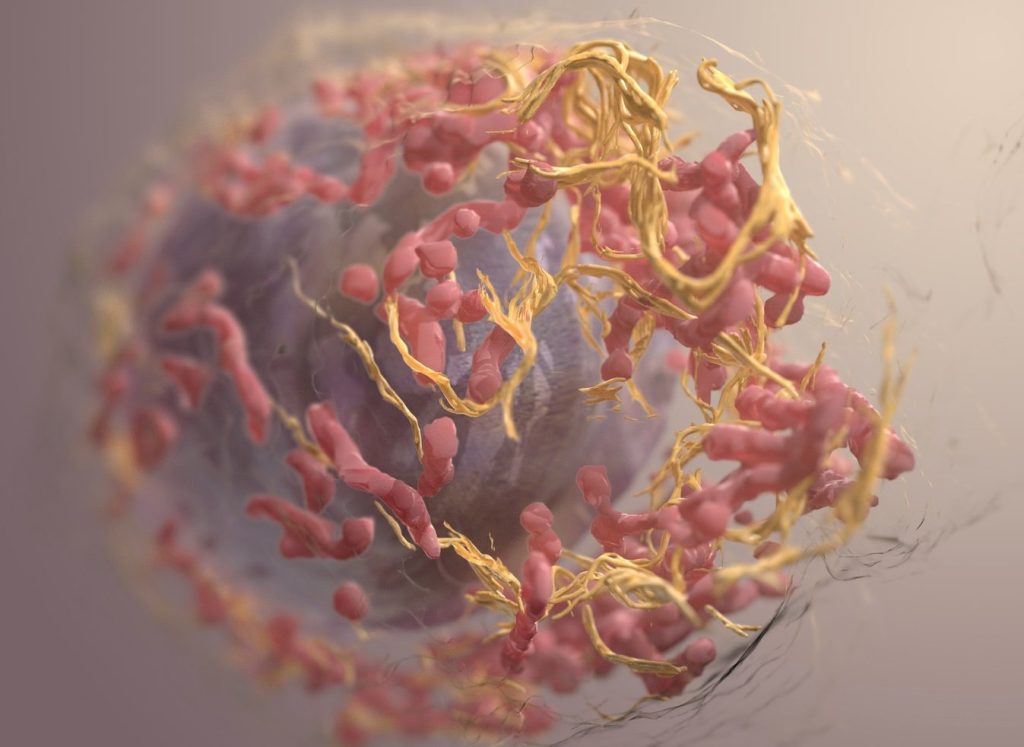
3D structure of a melanoma cell derived by ion abrasion scanning electron microscopy. Credit: Sriram Subramaniam/ National Cancer Institute

The combination of a vaccine and a drug, which both harness the immune system to attack cancer cells, has proven successful in cutting the risk of skin cancer recurrence by 49% , a new study shows. This reduction, which was calculated five years after patients had their tumours surgically removed, remains unchanged.

Led by researchers at NYU Langone Health and its Perlmutter Cancer Center, the study tested the vaccine, called intismeran, in combination with the mainstay immunotherapy pembrolizumab (Keytruda) in 107 patients who had been randomly chosen after melanoma surgery to determine whether the combination therapy prevented their cancer from recurring. Intismeran is a personalized immunotherapy strategy that is developed with information from a patient’s individual tumour. These results were compared with those from a randomly selected group of 50 melanoma patients who had only received pembrolizumab postoperatively, a current standard of care.

Results of the phase 2b trial, known formally as KEYNOTE-942, are being presented at the 2026 annual meeting of the American Society of Clinical Oncology on June 1 in Chicago and simultaneously published in the society’s Journal of Clinical Oncology.

After five years of follow-up, 68.8% of patients who took the combination therapy remained cancer-free, while 49.1% of the patients in the pembrolizumab-alone group had no signs of cancer. This means that adding intismeran to pembrolizumab reduced the risk for recurrence or death by 49%. The combination therapy also reduced the risk of distant metastasis by 59%. Overall survival, meaning no death from cancer or any other cause, was 92.2%for the vaccine with immunotherapy group, while for the immunotherapy-alone group it was 71.3%.

“Our study offers strong evidence to melanoma patients that intismeran vaccine therapy, when used in combination with immunotherapy, can demonstrably reduce their risk of having their cancer return and improve clinical outcomes,” said study senior investigator Janice Mehnert, MD, a professor in the Department of Medicine at NYU Grossman School of Medicine.

“Our findings also serve as encouragement to cancer researchers globally that mRNA vaccines like intismeran could work well in combination with immunotherapy for other cancers whose high rates of mutations have proven difficult to target,” said Dr Mehnert, who also serves as director of the melanoma medical oncology program and associate director of clinical research at Perlmutter Cancer Center.

The study results highlight the role of T cells, which are capable of attacking viruses as well as cancers. To spare normal cells, the immune system uses checkpoint molecules on T cell surfaces to “turn off” their attack against viruses when they clear the infection. The body may recognide tumours as abnormal, but cancer cells hijack checkpoints to turn off and evade immune responses. Immunotherapies like pembrolizumab seek to block checkpoints, specifically the PD-1 protein receptor, making cancer cells more “visible” and vulnerable again to immune cells.

Immunotherapies, including PD-1 inhibitors like pembrolizumab, have become the mainstay for treating melanoma, although they do not work for all patients, because melanoma cells, known for their ability to evade the immune system, can become resistant to immunotherapy. For this reason, researchers have looked at adding vaccines.

The vaccine intismeran is based on messenger RNA, a chemical cousin of DNA that provides cells with instructions for making proteins. Intismeran and other mRNA cancer vaccines are meant to teach the immune system to recognize cancer cells as different from normal cells. In designing a vaccine against melanoma, researchers attempted to trigger an immune response to specific abnormal proteins, called neoantigens, made by cancer cells.

Because the study volunteers all had their tumours removed, researchers were able to analyse their cells for 34 neoantigens that were specific to each melanoma and create a personalised vaccine for each patient. As a result, T cells specific to the neoantigen proteins encoded by the mRNA were produced. Those T cells could then attack any melanoma cells trying to grow or spread.

Dr. Mehnert said that a phase 3, multicenter trial is already underway to determine if intismeran helps as a first-line therapy in combination with pembrolizumab for melanoma. Already, the vaccine is being tested to see if it also works to prevent recurrence of lung and other cancers.

For the KEYNOTE-942 trial, patients were enrolled at cancer centers in Australia and the United States from 2019 to 2021. All were men and women who had had surgery to remove their melanoma tumors. Seven patients in each treatment group died during follow-up, most from cancer. Side effects were considered manageable and included fatigue, pain at injection sites, and chills.

Source: NYU Langone Health

Common Food Preservatives Linked to Hypertension and Heart Disease

Photo by Erik Mclean

Eating foods that contain common preservative food additives may increase the risks of high blood pressure and cardiovascular disease, according to research published in the European Heart Journal.

The research was led by Dr Mathilde Touvier, a research director at INSERM (the French National Institute for Health and Medical Research), and Anaïs Hasenböhler, PhD student, both from the Nutritional Epidemiology Research Team at the Université Sorbonne Paris Nord and Université Paris Cité, France.

Ms Hasenböhler said: “Food preservatives are used in hundreds of thousands of industrially processed foods. Experimental studies suggest that some preservative food additives may be harmful to cardiovascular health, but we have not had enough evidence on the impact of these ingredients in humans. As far as we know, this is the first study of its kind to investigate the links between a wide range of preservatives and cardiovascular health.”

The research is part of a larger study, called NutriNet-Santé, and included 112 395 volunteers from across France. Every six months, the volunteers told researchers everything they ate and drank over a period of three days.

Researchers carried out detailed analyses of the ingredients of all the food and drink, including any preservatives. They also tracked the volunteers’ health for an average of seven to eight years to see if they developed high blood pressure or any cardiovascular disease.

Researchers found that 99.5% of the volunteers had consumed at least one food preservative within the first two years of taking part.

Overall, they found that people who ate the largest amounts of ‘non-antioxidant’ preservatives had a 29% higher risk of hypertension, compared to those who ate the least, and a 16% higher risk of cardiovascular disease, including heart attack, stroke and angina. People who ate the most antioxidant preservatives had a 22% higher risk of hypertension. Non-antioxidant preservatives are designed to stop harmful microbes, such as mould and bacteria, from growing, whereas antioxidant preservatives are designed to stop oxidation, which means the food will not turn brown or become rancid.

Researchers also looked at 17 of the most commonly eaten preservatives and found that eight of these were specifically linked to high blood pressure. These were: potassium sorbate (E202), potassium metabisulphite (E224), sodium nitrite (E250), ascorbic acid (E300), sodium ascorbate (E301), sodium erythorbate (E316), citric acid (E330) and extracts of rosemary (E392). Ascorbic acid (E300) was also specifically linked to cardiovascular disease.

Dr Touvier added: “This study has some limitations inherent to its observational design. However, the findings are based on highly detailed data, and we have taken account of other factors that can increase or lower the risk of cardiovascular disease. Experimental research in the literature consistently suggested that preservatives may cause oxidative stress in the body or affect the way the pancreas works.

These results suggest we need a re-evaluation of the risks and benefits of these food additives by the authorities in charge, such as the EFSA in Europe and the FDA in the USA, for better consumer protection. In the meantime, these findings support existing recommendations to favour non-processed and minimally processed foods, and avoid unnecessary additives. Doctors and other healthcare professionals play a key role in explaining these recommendations to the public.”

The researchers are now looking at how food additives and ultra-processed foods may affect signs of inflammation, oxidative stress, metabolic profile in the blood and the composition of the gut microbiota. This may help them to understand why additives may increase the risks of disease.

Source: European Society of Cardiology