Government officials in Russia have not confirmed that the woman died from pneumonic plague, but several media reports suggest she died after an accident involving a broken vial containing a live sample of plague, a deadly bacterial infection. Now, a rumoured 200 people are suspected to be under quarantine.
Rospotrebnadzor, the official Russian infectious disease agency, said, “No micro-organisms associated with the employee’s professional duties were detected in samples taken from the patient.”
But over the weekend, media in Russia and elsewhere in Europe started to stoke concerns over a lab leak incident or fears that the woman worked in a bioterrorism unit. They suspected that the Russian government was covering up something that posed a serious risk to global health.
Case does not cause ‘undue concern’
Michael Osterholm, PhD, MPH, director of the University of Minnesota’s Center for Infectious Disease Research and Policy (CIDRAP), which publishes CIDRAP News, said that if the woman did die from pneumonic plague, it would be possible to contain, and close contacts and fellow lab workers would be given prophylactic (preventive) antibiotics.
This case does not cause undue concern.
“This case does not cause undue concern,” Osterholm said. “We would like more information, of course.”
Osterholm explained that if this incident happened in a friendly nation, people would not be so quick to jump to allegations of bioterrorism. But information from Russia, China, or North Korea often lacks transparency. Osterholm also said that, despite the attention-grabbing headlines, plague infections occur every year around the world.
The bacterium Yersinia pestis is linked to three main types of plague. The first, bubonic plague, is the one associated with the Black Death and the Middle Ages. It’s spread through flea bites and attacks the lymph nodes. Septicaemic plague is also spread through flea bites and occurs when the bacteria enter the bloodstream.
Pneumonic plague attacks the lungs and is the deadliest of the three main plague types. It’s also the most dangerous in terms of biosecurity, because it can be transmitted from person to person via respiratory droplets. It is considered extremely contagious and has a short incubation period (time from exposure to first symptoms) of roughly 24 hours.
The United States tracks five to seven cases of bubonic plague each year, most often in the Southwest. Though plague kills 30% to 60% of people without treatment, all three strains are very sensitive to modern antibiotics.
In our research in the British Library’s medieval collections, we have identified a previously unnoticed document that provides fresh insights into the survivors of the outbreak of plague known as the Black Death (1346–53).
The document – a scrap of parchment inserted into an account of the Ramsey Abbey manor of Warboys in Huntingdonshire – records how much time peasants were absent from work when struck down by the plague. It also reveals the names of those who survived and how long their employers believed recovery could take.
In our recent paper with Barney Sloane we shed new light on a group of 22 tenants who probably contracted plague, languished on their sickbeds for several weeks, and then recovered.
As one of the deadliest pandemics in recorded history, it has been estimated that between a third and two-thirds of the population of medieval Europe died during the Black Death.
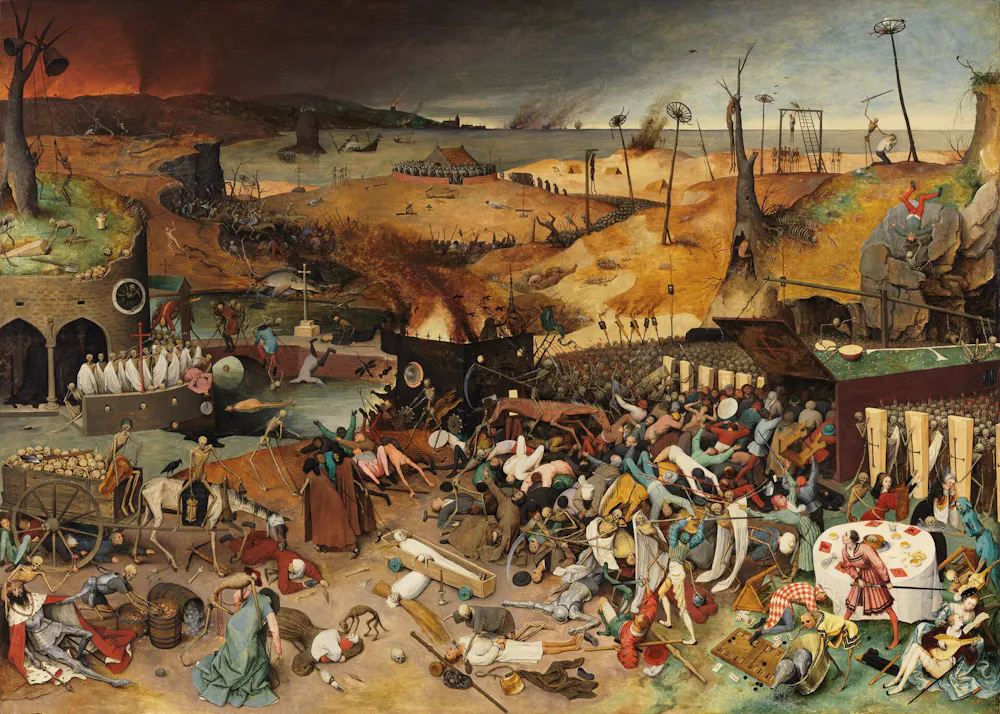
The Triumph of Death by Pieter Bruegel the Elder (1562) shows the social upheaval that followed the plague. Museo del Prado
Given the sheer scale, many historians have focused on discovering details about those who died. Yet this has left the histories of those who contracted plague and recovered largely untold.
Despite the deadliness of the disease, it was possible to recover from plague, and medieval chroniclers mention the possibility – however unlikely – of survival. For example, Geoffrey le Baker, a clerk of Swinbrook in Oxfordshire, wrote in the following decade that he thought recovery depended on people’s symptoms:
People who one day had been full of happiness, on the next were found dead. Some were tormented by boils which broke out suddenly in various parts of the body, and were so hard and dry that when they were lanced hardly any liquid flowed out. Many of these people escaped, by lancing the boils or by long suffering. Other victims had little black pustules scattered over the skin of the whole body. Of these people very few, indeed hardly any, recovered life and health.
But who recovered? Why did so many succumb to the disease when others survived? And just how long was this “long suffering”? Unfortunately, there is remarkably little documentary evidence because most medieval sources record information about mortality rather than ill health.
Unique list of plague survivors
A unique inclusion in the account of the manor of Warboys details a group of people who fell ill between the end of April and the start of August 1349. The monks of Ramsey Abbey wrote a list of their tenants who had fallen sufficiently sick that they could not work on the lord’s lands and detailed the length of time that they were absent.
People were clearly affected differently by their experience of plague.
The quickest recovery was that of Henry Broun who missed just a single week of work. By contrast, John Derworth and Agnes Mold had much more protracted illnesses and were both absent for nine weeks.
The average length of illness was between three and four weeks, with three-quarters of people returning to work in under a month. The speed of their recoveries is all the more surprising given that they were entitled to up to a year and a day of sick leave from work.
This list of survivors includes a preponderance of tenants who occupied larger holdings on the manor. It has long been debated by historians and archaeologists whether the plague killed indiscriminately, with no regard to status, sex or age, or whether the poor and elderly were more vulnerable.
The survival of so many wealthier tenants could indicate that their higher living standards enabled them to recover more readily than their poorer neighbours, perhaps because they were able to stave off secondary infections and complications. We should not read any significance into the fact that 19 out of the 22 people were men: this reflects the gender bias of manorial landholding rather than any sex-selectivity of plague.
Although 22 people may not seem like many, in a regular year during the 1340s, only two or three absences were recorded during the summer months. It, therefore, represents a tenfold increase in regular illnesses on the manor. Put another way, these sick tenants were absent for 91 weeks’ worth of labour services during just a 13-week period.
Our understanding of the impact of the Black Death has been influenced by the appalling scale of death. Yet it is only when we add those who fell ill and recovered back into the picture that we can truly understand the seismic shock the pandemic had on society. The dead, dying and sick must have considerably outnumbered the living in villages and cities across Europe.
The consequences of this can be seen in medieval accounts and chronicles, one of which records that “there was so great a shortage of servants and labourers that there was no one who knew what needed to be done”. As a result of this combination of high mortality, unprecedented illness and abysmal weather, the two harvests of 1349 and 1350 have been described as the worst experienced in medieval England, worse even than those that caused the great famine of 1315-17.
This archival discovery allows us to write the history of sickness and recovery back into the Black Death, demonstrating that recovery was possible even during one of the worst pandemics in recorded history.
This new evidence reveals the remarkable resilience of medieval peasants. Many of them lay languishing on their sickbeds, exhibiting buboes (the painful, swollen and inflamed lymph nodes on the groin and neck that were typical of the Black Death), vomiting blood and wracked by fevers and not only survived but returned to work in just a few short weeks.
Catalan Atlas, 1375. Credit: Bibliothèque Nationale de France, via Wikimedia Commons
Clues contained in tree rings have identified mid-14th-century volcanic activity as the first domino to fall in a sequence that led to the devastation of the Black Death in Europe.
Researchers from the University of Cambridge and the Leibniz Institute for the History and Culture of Eastern Europe (GWZO) in Leipzig have used a combination of climate data and documentary evidence to paint the most complete picture to date of the ‘perfect storm’ that led to the deaths of tens of millions of people, as well as profound demographic, economic, political, cultural and religious change.
Their evidence suggests that a volcanic eruption – or cluster of eruptions – around 1345 caused annual temperatures to drop for consecutive years due to the haze from volcanic ash and gases, which in turn caused crops to fail across the Mediterranean region. To avoid riots or starvation, Italian city-states used their connections to trade with grain producers around the Black Sea.
This climate-driven change in long-distance trade routes helped avoid famine, but in addition to life-saving food, the ships were carrying the deadly bacterium that ultimately caused the Black Death, enabling the first and deadliest wave of the second plague pandemic to gain a foothold in Europe.
This is the first time that it has been possible to obtain high-quality natural and historical proxy data to draw a direct line between climate, agriculture, trade and the origins of the Black Death. The results are reported in the journal Communications Earth & Environment.
The Black Death was one of the largest disasters in human history. Between 1347 and 1353, it killed millions of people across Europe. In some parts of the continent, the mortality rate was close to 60%.
While it is accepted that the disease was caused by the bacterium Yersinia pestis, which originated from wild rodent populations in central Asia and reached Europe via the Black Sea region, it’s still unclear why the Black Death started precisely when it did, where it did, why it was so deadly, and how it spread so quickly.
“This is something I’ve wanted to understand for a long time,” said Professor Ulf Büntgen from Cambridge’s Department of Geography. “What were the drivers of the onset and transmission of the Black Death, and how unusual were they? Why did it happen at this exact time and place in European history? It’s such an interesting question, but it’s one no one can answer alone.”
Büntgen, whose research group uses information stored in tree rings to reconstruct past climate variability, worked with Dr Martin Bauch, a historian of medieval climate and epidemiology from the Leibniz Institute for the History and Culture of Eastern Europe, on the study.
“We looked into the period before the Black Death with regard to food security systems and recurring famines, which was important to put the situation after 1345 in context,” said Bauch. “We wanted to look at the climate, environmental and economic factors together, so we could more fully understand what triggered the onset of the second plague pandemic in Europe.”
Together, they combined high-resolution climate data and written documentary evidence with conceptual reinterpretations of the connections between humans and climate to show that a volcanic eruption – or series of eruptions – around 1345 was likely the first step in a sequence that ultimately led to the Black Death.
The researchers were able to approximate this eruption through information contained in tree rings from the Spanish Pyrenees, where consecutive ‘Blue Rings’ point to unusually cold and wet summers in 1345, 1346 and 1347 across much of southern Europe. While a single cold year is not uncommon, consecutive cold summers are highly unusual. Documentary evidence from the same period notes unusual cloudiness and dark lunar eclipses, which also suggest volcanic activity.
This volcanically forced climatic downturn led to poor harvests, crop failure and famine. However, the Italian maritime republics of Venice, Genoa and Pisa were able to import grain from the Mongols of the Golden Horde around the Sea of Azov in 1347.
“For more than a century, these powerful Italian city-states had established long-distance trade routes across the Mediterranean and the Black Sea, allowing them to activate a highly efficient system to prevent starvation,” said Bauch. “But ultimately, these would inadvertently lead to a far bigger catastrophe.”
The ships that carried grain from the Black Sea most likely also carried fleas infected with Yersinia pestis, as previous research has already pointed out. But why grain was so urgently needed by the Italians has now become much clearer. It is still unknown exactly where this deadly bacterium originated, but ancient DNA has suggested there may have been a natural reservoir in wild gerbils somewhere in central Asia.
Once the plague-infected fleas arrived in 14th-century Mediterranean ports on grain ships, they became a vector for disease transmission, enabling the bacterium to jump from mammalian hosts – mostly rodents, but potentially including domesticated animals – to humans. It rapidly spread across Europe, devastating the population.
“In so many European towns and cities, you can find some evidence of the Black Death, almost 800 years later,” said Büntgen. “Here in Cambridge, for instance, Corpus Christi College was founded by townspeople after the plague devastated the local community. There are similar examples across much of the continent.”
“And yet, we could also demonstrate that many Italian cities, even large ones like Milan and Rome, were most probably not affected by the Black Death, apparently because they did not need to import grain after 1345,” said Bauch. “The climate-famine-grain connection has potential for explaining other plague waves.”
The researchers say the ‘perfect storm’ of climate, agricultural, societal and economic factors after 1345 that led to the Black Death can also be considered an early example of the consequences of globalisation.
“Although the coincidence of factors that contributed to the Black Death seems rare, the probability of zoonotic diseases emerging under climate change and translating into pandemics is likely to increase in a globalised world,” said Büntgen. “This is especially relevant given our recent experiences with Covid-19.”
The researchers say that resilience to future pandemics requires a holistic approach to address a wide spectrum of health threats. Modern risk assessments should incorporate knowledge from historical examples of the interactions between climate, disease and society.
The research was supported in part by the European Research Council, the Czech Science Foundation and the Volkswagen Foundation.
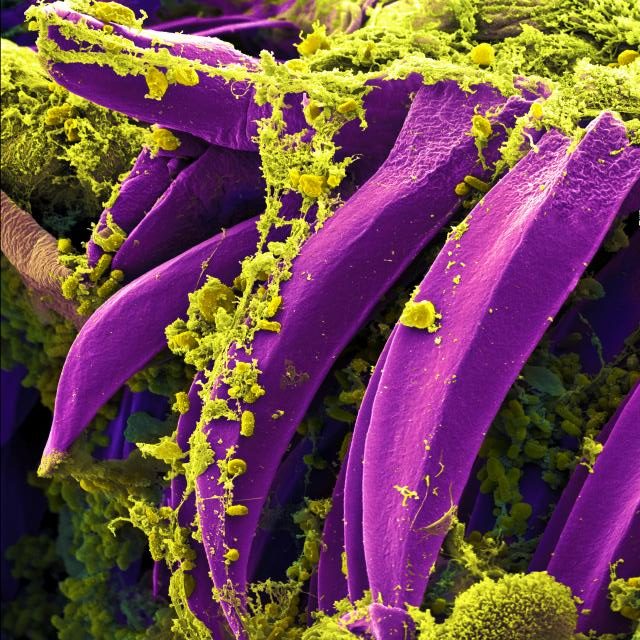
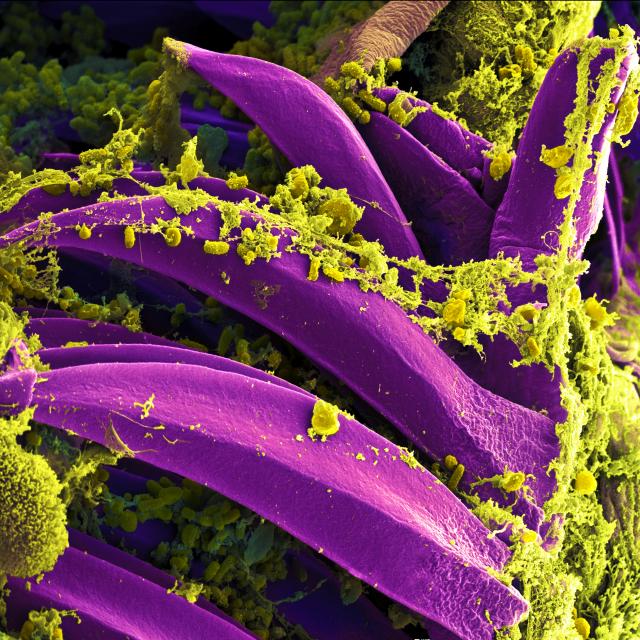
Scanning electron micrograph of Yersinia pestis, which causes bubonic plague, on proventricular spines of a Xenopsylla cheopis flea. Credit: NIAID
Researchers from the UK and Madagascar, in collaboration with Madagascar’s health services and national plague programme, have conducted the world’s first rigorous clinical trial of treatments for bubonic plague.
The IMASOY trial provides the first robust evidence of the efficacy and safety of two treatment regimens. They also found that a ten-day course of an oral antibiotic (ciprofloxacin) is a highly effective and safe alternative to existing treatment with injectable antibiotic requiring hospitalisation.
Plague has scourged humanity for millennia. Though cases have been declining, it remains a high-threat pathogen of pandemic potential, due to its widespread animal reservoir and potential for being weaponised via deliberate release. Most continents see sporadic cases of bubonic plague every year, with Madagascar reporting approximately 80% of global cases. Bubonic plague is a life-threatening disease with mortality ranging from 15-25%.
The results from the trial, published in the New England Journal of Medicine, are the outcome of a hugely ambitious clinical trial conducted over the last five years in rural Madagascar.
With many cases occurring in remote villages and with outbreaks being unpredictable, the team deployed dozens of research assistants, and trained over 230 local doctors and nurses and 1300 village health workers. The trial was embedded within Madagascar’s national health service and was conducted with the support of the Ministry of Public Health.
Several treatment options are included in the current international and national guidelines, but none of them have been rigorously tested in humans. Regulatory approval has been based solely on data from animal studies and human safety data.
Researchers designed the IMASOY trial to test two treatments for plague. Patients were randomly allocated to receive either a ten-day oral regimen of ciprofloxacin (an antibiotic tablet which can be taken at home), or a regimen requiring three days’ injectable gentamicin followed by seven days’ ciprofloxacin, (with the intravenous (IV) therapy requiring patients to be hospitalised).
450 patients with clinically suspected bubonic plague were enrolled between 2020-2024 at 47 sites in 11 districts in Madagascar and treated with either regimen. Of these, 222 plague infections were confirmed by laboratory testing.
Key findings: • Both regimens were found to be highly effective and safe, with overall treatment success rates of about 90% and an overall mortality rate of about 4%. • A ten-day ciprofloxacin regimen has many advantages over a regimen requiring three days of injectable antibiotics. It alleviates bed space (particularly in health centres with minimal bed availability for the surrounding villages), reduces healthcare worker workload, and is much cheaper – costing about one-tenth of the current treatment regimen, depending on the route of administration.
With funding from Wellcome and the UK Foreign, Commonwealth, and Development Office, researchers from the University of Oxford, Institut Pasteur de Madagascar, Centre Hospitalier Universitaire Joseph Raseta Befelatanana, Centre d’Infectiologie Charles Mérieux, London School of Hygiene and Tropical Medicine, along with Madagascar’s health services and national plague programme, collaborated through the International Severe Acute Respiratory and emerging Infection Consortium (ISARIC) to fill this gap in knowledge.
Piero Olliaro, Professor at the Pandemic Science Institute, University of Oxford and senior author of the study said: ‘Despite its deadly history, we’ve had little clinical evidence on treating bubonic plague – until now. Thanks to the patients and healthcare workers in the trial, we now have real-world proof of effective, safe treatment. Ongoing data analysis will deepen our understanding of the disease, including risk factors, symptoms, and diagnostics.’
Mihaja Raberahona, physician at CHU Joseph Raseta Befelatanana and researcher at the Centre d’Infectiologie Charles Mérieux Madagascar said: ‘In Madagascar, where plague cases occur in remote rural locations with limited healthcare infrastructure, taking a straightforward oral antibiotic is vastly preferable to a treatment requiring injections. It alleviates healthcare worker workload and is also much cheaper – costing about one-tenth of the current treatment regimen.’
Rindra Vatosoa Randremanana, Medical epidemiologist at Institut Pasteur de Madagascar said: ‘The trial was a massive operational undertaking. Many patients were in remote villages and the unpredictable nature of the outbreaks made the research very challenging. Recruiting the 450 patients, of whom about half were confirmed with bubonic plague, took five plague transmission seasons and an army of research assistants, doctors and community health workers. We are hugely grateful to everyone who took part.’
The impact of this study is far-reaching. As a result of the trial, the researchers will be working with national and international bodies like the World Health Organization (WHO) to provide the evidence that may be required to update clinical guidelines, thereby translating the results into practice and saving lives.
In a new JAMA Dermatology study, scientists at King’s found that changes in two parts of the genome work together to influence alopecia risk.
Frontal fibrosing alopecia (FFA) is a highly distressing dermatological disorder which is associated with inflammation, scarring and irreversible hair loss. The disease affects an increasing number of patients worldwide and is caused by genetic and environmental factors.
The study authors conducted a meta-analysis of four cohorts of women with FFA across the UK and Europe. When looking into a cluster of immune genes known as the major histocompatibility complex, which help immune systems recognise foreign substances, they identified specific genetic differences that interact with ERAP1 and increase the risk of developing FFA.
This gene-gene interaction is a rare phenomenon in human genetics, known as “epistasis”. This means that the risk associated with one gene is modified by another gene. Different versions of the two genes involved in this interaction have been observed in some other autoimmune diseases, including psoriasis and ankylosing spondylitis.
Previous research has identified that genetic variants in the ERAP1 and ERAP2 genes were associated with survival of the Black Death, a bubonic plague which swept through Europe in the mid-1300s. Such genetic variants, which are associated with protection from infection, may also make people more prone to certain immune conditions. This new study demonstrates that this is the case for FFA.
“Our study is the largest ever genome-wide association study into frontal fibrosing alopecia (FFA), an inflammatory and scarring condition affecting almost exclusively women,” said Dr Christos Tziotzios, Senior Lecturer of the St John’s Institute of Dermatology at King’s and Consultant Dermatologist at Guy’s and St Thomas’ NHS Foundation Trust
He added: “Since the disease was described in 1994, the number of people affected has increased dramatically. Our newest finding sheds more light into the autoimmune basis of the condition and provides direction for further research into drug development.”
As well as improving our understanding of the genetic factors that drive FFA, the authors hope that these findings can be applied to predict risk of its development while paving the way for new treatments.
The team of scientists are now investigating the prospect of predictive genetic test for FFA risk, while exploring the potential of targeting ERAP1 with highly specific drugs as a new way of treating this condition.
Study could challenge widespread view that fleas, rats are the only contributors to outbreaks
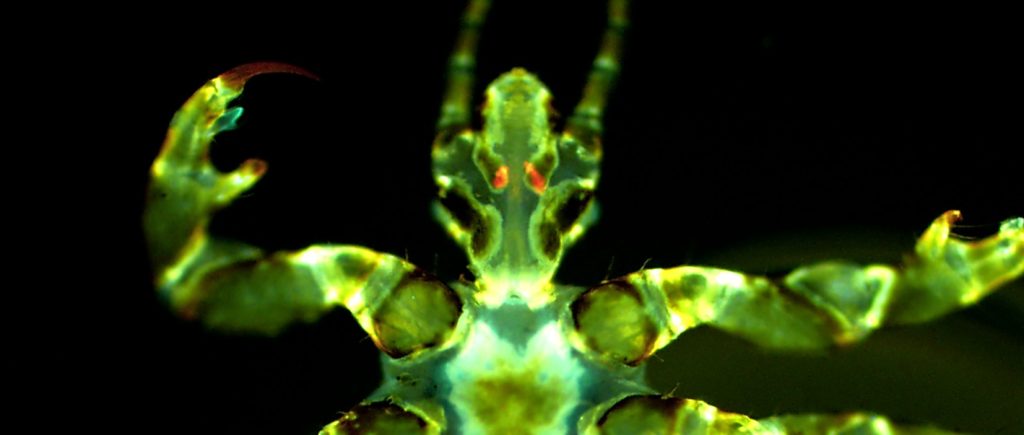
Fluorescent image of a human body louse with Yersinia pestis infection (orange/red) in the Pawlowsky glands. Image Credit:David M. Bland (CC0)
A new laboratory study suggests that human body lice are more efficient at transmitting Yersinia pestis, the bacterium that causes plague, than previously thought, supporting the possibility that they may have contributed to past pandemics. David Bland and colleagues at the United States’ National Institute of Allergy and Infectious Diseases present these findings in the open-access journal PLOS Biology on May 21st.
Y. pestis has been the culprit behind numerous pandemics, including the Black Death of the Middle Ages that killed millions of people in Europe. It naturally cycles between rodents and fleas, and fleas sometimes infect humans through bites; thus, fleas and rats are thought to be the primary drivers of plague pandemics. Body lice – which feed on human blood – can also carry Y. pestis, but are widely considered to be too inefficient at spreading it to contribute substantially to outbreaks. However, the few studies that have addressed lice transmission efficiency have disagreed considerably.
To help clarify the potential role of body lice in plague transmission, Bland and colleagues conducted a series of laboratory experiments in which body lice fed on blood samples containing Y. pestis. These experiments involved the use of membrane feeders, which simulate warm human skin, enabling scientists to study transmission potential in a laboratory setting.
They found that the body lice became infected with Y. pestis and were capable of routinely transmitting it after feeding on blood containing levels of the pathogen similar to those found in actual human plague cases.
They also found that Y. pestis can infect a pair of salivary glands found in body lice known as the Pawlowsky glands, and lice with infected Pawlowsky glands transmitted the pathogen more consistently than lice whose infection was limited to their digestive tract. It is thought that Pawlowsky glands secrete lubricant onto the lice’s mouthparts, leading the researchers to hypothesise that, in infected lice, such secretions may contaminate mouthparts with Y. pestis, which may then spread to humans when bitten.
These findings suggest that body lice may be more efficient spreaders of Y. pestis than previously thought, and they could have played a role in past plague outbreaks.
The authors add, “We have found that human body lice are better at transmitting Yersinia pestis than once appreciated and achieve this in more than one way. We describe a new bite-based mechanism in which a set of accessory salivary glands unique to lice, termed the Pawlowsky glands, become infected with Y. pestis and secrete lubricant containing plague bacilli onto the insect’s mouthparts prior to blood feeding.”
Scanning electron micrograph of Yersinia pestis, which causes bubonic plague, on proventricular spines of a Xenopsylla cheopis flea.
Credit: National Institute of Allergy and Infectious Diseases/NIH
Analysing a recent outbreak of plague in Madagascar, a team of researchers uncovered evidence of human transmission of antimicrobial-resistant plague.
While COVID dominates the global awareness of infectious diseases, others are still out there, such as Yersinia pestis, which causes plague. Even though plague has been largely eradicated in the developed world, hundreds of people globally contract it each year.
When a human is infected with bubonic plague from a flea bite and it goes untreated, the infection can progress, spread to the lungs and resulting in pneumonic plague. Pneumonic plague is usually lethal if not treated quickly, and infected patients can transmit the disease to others via respiratory droplets. A team of scientists from Northern Arizona University’s Pathogen and Microbiome Institute, led by professor Dave Wagner, recently published their findings from a remarkable study involving antimicrobial resistant (AMR) plague.
Plague is considered to be a reemerging and neglected disease, particularly in the East African island country of Madagascar, which reports the majority of annual global cases. There is no vaccine for it, so preventing mortality from plague requires rapid diagnosis followed by antibiotic treatment. In Madagascar, the antibiotic streptomycin is usually the first-line treatment for plague. The researchers isolated a streptomycin-resistant AMR strain of Y. pestis from a pneumonic plague outbreak that occurred there in 2013, involving 22 cases, including three fatalities. The study was recently published in Clinical Infectious Diseases.
“By characterising the outbreak using epidemiology, clinical diagnostics and DNA-fingerprinting approaches,” Prof Wagner said, “we determined—for the first time—that AMR strains of Y. pestis can be transmitted person-to-person. The AMR strain from this outbreak is resistant to streptomycin due to a spontaneous point mutation, but is still susceptible to many other antibiotics, including co-trimoxazole. Luckily, the 19 cases that were treated all received co-trimoxazole in addition to streptomycin, and all of them survived.
“The point mutation, which also is the source of streptomycin resistance in other bacterial species, has occurred independently in Y. pestis at least three times and appears to have no negative effect on the AMR strain, suggesting that it could potentially persist in nature via the natural rodent-flea transmission cycle. However, AMR Y. pestis strains are exceedingly rare and the mutation has not been observed again in Madagascar since this outbreak.”
Mediaeval plague victims in the UK were mostly buried with care and attention, according to a new study from Cambridge University.
In the mid-14th century, Europe was devastated by the Black Death which killed between 40 and 60 per cent of the population. For centuries afterward, waves of plague would continue to strike the region.
Due to the rapid onset of death in the absence of antibiotic treatment (less than a week for bubonic plague and under 48h for pneumonic plague), the disease leaves no visible evidence on the skeleton, so until now archaeologists have been unable to identify individuals who died of plague unless they were buried in mass graves.
Although it has been long believed that most plague victims in fact received an individual burial, this has been impossible to confirm until now.
By studying DNA extracted from the teeth of individuals who died at this time, researchers from the Wellcome Trust-funded After the Plague project, based at the Department of Archaeology, University of Cambridge, have identified the presence of Yersinia Pestis, the bacterial pathogen that causes plague. The study is available to read online in the European Journal of Archaeology.
These include people who received normal individual burials at a parish cemetery and friary in Cambridge and in the nearby village of Clopton.
Lead author Craig Cessford of the University of Cambridge explained: “These individual burials show that even during plague outbreaks individual people were being buried with considerable care and attention. This is shown particularly at the friary where at least three such individuals were buried within the chapter house. The Cambridge Archaeological Unit conducted excavations on this site on behalf of the University in 2016-2017.”
The individual at the parish of All Saints by the Castle in Cambridge was also buried with care; this stand in contrast to the apocalyptic language used to describe the abandonment of this church in 1365 when it was reported that the church was partly in ruins and ‘the bones of dead bodies are exposed to beasts’.”
The study also shows that some plague victims in Cambridge did, as expected, receive mass burials.
Yersinia Pestis was also identified in several parishioners from St Bene’t’s, who were found buried together in a large trench in the churchyard excavated by the Cambridge Archaeological Unit on behalf of Corpus Christi College.
Soon afterwards, this part of the churchyard was transferred to Corpus Christi College, which was founded by the St Bene’t’s parish guild to commemorate the dead including the victims of the Black Death. For centuries, the members of the College would walk over the mass burial every day on the way to the parish church.
Cessford concluded, “Our work demonstrates that it is now possible to identify individuals who died from plague and received individual burials. This greatly improves our understanding of the plague and shows that even in incredibly traumatic times during past pandemics people tried very hard to bury the deceased with as much care as possible.”
Journal information: “Beyond Plague Pits: Using Genetics to Identify Responses to Plague in Medieval Cambridgeshire” – Craig Cessford, Christiana L. Scheib, Meriam Guellil, Marcel Keller, Craig Alexander, Sarah A. Inskip and John E. Robb. European Journal of Archaeology, https://doi.org/10.1017/eaa.2021.19








.jpg)

