

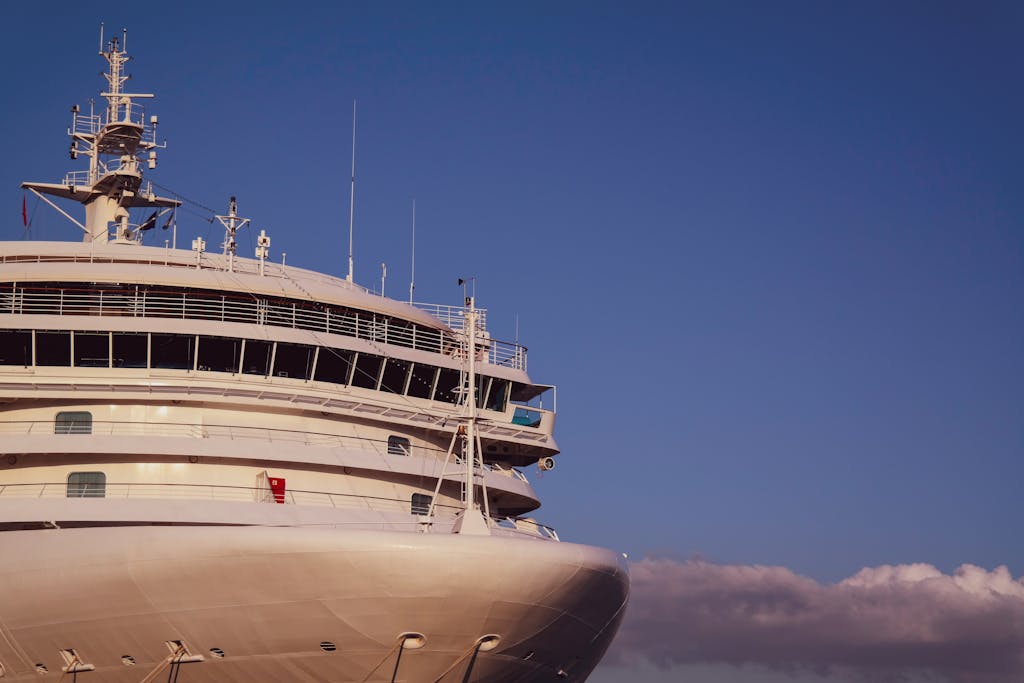
Remaining passengers from the cruise ship MV Hondius, where an outbreak of hantavirus occurred, have now been evacuated after docking in Tenerife. So far, only three fatalities are reported, although the number of known infected cases has risen. Health organisations around the world are extending their support.
In a media briefing, Dr Tedros Adhanom Ghebreyesus, WHO Director-General said that eight cases have been reported so far, including three deaths. Five of the 8 cases have been confirmed as hantavirus.
According to the World Health Organization, the hantavirus in this case is the Andes virus, which is the only one capable of human transmission, albeit in an extremely limited fashion. Prolonged and close contact is required, as would happen on board a cruise ship.
Describing the situation, Dr Tedros said, “While this is a serious incident, WHO assesses the public health risk as low.” He noted that given the incubation period, “it’s possible that more cases may be reported.” Among medical support offerd, the WHO has distributed test kits from Argentina to five countries to support testing.
The US Centers for Disease Control has dispatched a medical team to the Canary Islands.
Prior to this incident, the most serious outbreak of Andes hantavirus was in Epuyén, Argentina, in late 2018 to early 2019 with 34 confirmed cases and 11 deaths (case fatality rate ~32%). Previously, very little was known about the Andes strain, explained Dr Gustavo Palacios, a microbiologist at Mount Sinai in New York, speaking to CNN.
“There is very limited experience handling this virus,” said Palacios, who had helped to trace how the virus spread. The study of the outbreak was published in 2020 in the New England Journal of Medicine.
“Probably we are having less than – I don’t know, I’m giving you a number, just for a ballpark number – 300 cases in history” of human to human transmission of Andes virus and about 3000 Andes cases overall, Palacios said.
Based on research into the Epuyén outbreak, Palacios said there seems to be only a roughly day-long window for transmission of the Andes virus of about a day, when patients first develop a fever.
Index case identified
The patients likely picked up the virus while they were on shore, before boarding the ship. The New York Post reports that Dutch ornithologist, Leo Schilperoord, was patient zero for the hantavirus outbreak. Along with his wife Maria Schilperoord, he visited a landfill outside of the city of Ushuaia to seek out a rare bird – birdwatchers frequent the landfill due to the number of birds flocking there. Argentinian authorities believe that it was there that he came in contact with long-tailed pygmy rats, inhaling particles of its faeces, which carries the Andes strain.
After boarding the ship with 112 others – including many other birdwatchers and scientists – he fell ill with diarrhoea and abdominal pain on April 6 and dying five days later. His wife was flying back with his body but collapsed when connecting in Johannesburg, and died in hospital the next day. Meanwhile, the UK man who was in intensive care in a Johannesburg hospital is now making a recovery.
