Tag: pandemic preparedness

Africa CDC and WHO Launch Joint Continental Ebola Response Plan

The plan complements national response plans launched by the Governments of the Democratic Republic of the Congo and Uganda
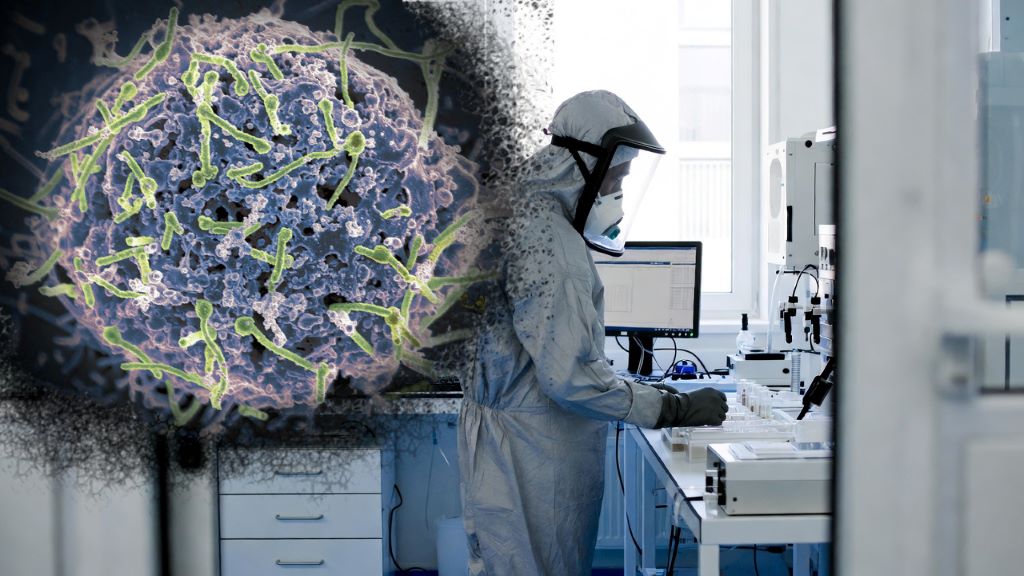
The Africa Centres for Disease Control and Prevention (Africa CDC) (www.AfricaCDC.org) and the World Health Organization (WHO) today launched a joint continental preparedness and response plan on the ongoing Ebola outbreak caused by the Bundibugyo virus. The plan aims to raise US$ 518 million to support African countries together with partners to prepare for, rapidly detect and respond to the outbreak.

The six-month plan, covering June to November 2026, brings together governments, partners and communities under a unified ‘One Response’ approach to strengthen outbreak response measures, including emergency coordination, disease surveillance, laboratory testing, infection prevention and control, clinical care, community engagement, research, logistics and support for essential health services.

The plan complements national response plans launched by the Governments of the Democratic Republic of the Congo and Uganda.

“Ebola moves fast. Africa must move faster. This joint plan gives the continent a clear path to act with speed and unity: to save lives, support the affected countries and protect neighbouring communities, said Africa CDC Director-General Dr Jean Kaseya. “With Member States, WHO and partners, Africa CDC is turning commitment into action and resources into response for the communities at risk.”

WHO Director-General Dr Tedros Adhanom Ghebreyesus said: “The only way to beat this outbreak is through close partnership, working together under the leadership of the affected countries in one coordinated effort, guided by a simple principle: one plan, one budget, one team.”

He added: “Containing Ebola depends on political commitment, sustained financing, and the trust and engagement of communities. This plan places communities at the centre, because without their participation, contact tracing falters, safe care is delayed, and transmission continues.”

The plan also focuses on protecting vulnerable populations, strengthening cross-border collaboration, and supporting countries to respond quickly to new cases. At a time when there are no licensed vaccines or therapeutics specifically approved for the Bundibugyo species of Ebola, the plan aims to strengthen health systems to ensure resilience even as countries respond to acute health emergencies.

Implementation of preparedness and response activities is already underway across affected and at-risk countries. Furthermore, in 10 priority countries critical measures are being strengthened to enhance public health emergency preparedness and ensure early detection and swift response

.The plan emphasizes the need to maintain support for other ongoing health emergencies, including mpox, cholera and measles, to prevent disruptions to critical response efforts and safeguard progress towards stronger, more resilient health systems.

This coordinated effort comes as response operations accelerate in the Democratic Republic of the Congo, where authorities, with support from Africa CDC, WHO and partners, are ramping up efforts to curb the spread of the virus and end the outbreak.

Africa CDC and WHO urge Member States to strengthen screening and public health measures at points of entry and enhance cross-border coordination and solidarity to support a timely, effective and evidence-based response to the outbreak.

Through the joint preparedness and response plan, the continent is mobilising its collective expertise and resources to reinforce response measures, acting as one to control the outbreak and protect communities across the region. Its successful implementation will require strong political commitment, sustained investment and close collaboration among governments, health workers, communities and partners.

Drawing on lessons learned from previous Ebola outbreaks and recent public health emergencies, the plan also provides a pathway to broadly strengthen Africa’s capacity to prevent, detect and respond to future health threats while protecting lives and livelihoods.

DOWNLOAD | JOINT CONTINENTAL EBOLA RESPONSE PLAN: https://apo-opa.co/49KMxG2

Why Africa – and the World – Remain Dangerously Unprepared for the Next Pandemic

Oyewale Tomori, Nigerian Academy of Science

As the news spread about the outbreak of Ebola in mid-May 2026, the World Health Organization (WHO) released a report about pandemics. The title was: A World on the Edge: Priorities for a Pandemic-Resilient Future.

The document was prepared by the WHO’s Global Preparedness Monitoring Board. It sets out why the world isn’t better prepared for pandemics a decade after Ebola exposed dangerous gaps. And six years after COVID-19 turned those gaps into a global catastrophe.

It adds that investment in pandemic preparedness has not kept pace with the rising risk of pandemics.

The Global Preparedness Monitoring Board is an independent monitoring and accountability body established in 2018 by the WHO and the World Bank. The aim was to strengthen preparedness for global health crises. It is composed of political leaders, agency principals and world-class experts. Its task is to provide assessments of global progress in building and sustaining the capacity to prevent, detect and respond to health emergencies.

The report was released during another Ebola epidemic. This time starting in the Democratic Republic of Congo. On 17 May the WHO declared the outbreak a public health emergency of international concern. This means that it is a risk to many countries through international spread and hence requires global coordinated efforts.

As a virologist and former global health administrator, I believe the monitoring board’s diagnosis and recommendations are vitally important for managing pandemics.

My first observation about the report is that its recommendations remain largely unimplemented by many countries. This is particularly true in Africa, where pandemics thrive and disease epidemics rage and ravage.

Africa needs to specially build trust in its own ability to prepare for and prevent disease outbreaks, and control them when they do occur.

To achieve this, and in line with the recommendations, Africa must sustain:

  • independent pandemic risk monitoring
  • health workforce capability and retention
  • equitable access to countermeasures such as vaccines
  • financing
  • political attention.

Independent pandemic risk monitoring

Using local resources and financing, African countries must own the solution to health through establishing data systems that uphold health sovereignty.

They must also ensure that data derived from surveillance, research and pathogen processing are securely managed and accountable to African institutions rather than foreign entities. Recent agreements with the US have brought this issue to the fore. Some were asking African countries to sign away their health data or prodigally release their precious pathogens in a barter exchange for donor funding.

But health data are an invaluable asset for public health, clinical management and research. They help countries identify diseases and develop vaccines and treatments.

What African countries should be doing instead is mobilising locally sourced counterpart funds. These should be used to create the local environment to support and enhance the capacity of indigenous scientists and researchers to develop innovations from national/natural pathogens for global benefits.

Two African health institutions should be at the centre of these endeavours: the WHO-Africa Region and the Africa Centers for Disease Control, an agency of the African Union. They must not compete, but collaborate and spearhead these efforts through centralised disease control and tracking scorecards.

Health workers

Fostering the well-being of health workforce results in growth, higher productivity, national pride and loyalty.

It also helps in long-term retention of health workers.

African countries need to prioritise capacity retention over capacity building. They must build and sustain a conducive work environment which involves physical workspace and psychological safety.

Availability of adequate resources is needed to function effectively and productively. This includes materials, laboratory facilities, supplies, reagents and consumables for a trained African health workforce and researchers.

Under such enabling conditions, the health workforce can focus on relevant and local health issues and find appropriate solutions to them.

Equitable access to countermeasures

Africa must not compromise on the ratification of international health pacts that guarantee fair technology transfer, intellectual property waivers, and robust regional manufacturing.

Countries must equally expand local production of laboratory diagnostic kits, vaccines and medical supplies as well as non-medical products. Such include gloves, personal protective equipment and masks.

This will reduce reliance on external donation and supply chains in and out of global crises.

Sustainable financing

The greater challenge for many African countries is the waste of available resources and spending on misplaced priorities.

To address this, governments must commit to sustained domestic investment in healthcare. At the same time they must use blended financing (involving both the public and private sectors) to close remaining gaps. Initiatives such as the African Epidemic Fund offer a practical model for building financial reserves for rapid, locally led responses. The fund, launched in 2025, is designed to mobilise funding to support preparedness and response efforts to combat public health threats on the continent. The African Epidemic Fund, though relatively new, must operate at the highest level of accountability. It must provide regular updates on contributions, projects supported and their impact on disease preparedness, prevention and control in Africa.

Sustained political attention

African leaders must keep pandemic preparedness high on the political agenda to ensure continuous resource allocation and accountability. The advocacy for preparedness must go beyond political campaign slogans. It must be driven by regional bodies like the African Union. Countries must then translate commitments into tangible national policies.

There can be no recess or holiday from pandemic preparedness.

African political leaders and elites, at the continental, national and sub-national levels, have crucial roles to play in achieving trusted community engagement and involvement for successful and reliable pandemic preparedness. Above all, there must be active community engagement and involvement.

Oyewale Tomori, Fellow, Nigerian Academy of Science

This article is republished from The Conversation under a Creative Commons license. Read the original article.

A Universal Coronavirus Vaccine could Save Millions of Lives in a Future Pandemic

Photo by Mika Baumeister on Unsplash

What if in the years prior to the COVID pandemic, scientists had developed a universal coronavirus vaccine, one that targets parts common to coronaviruses, offering some protection against all strains? Would it have been of help during the pandemic?

A new study suggests if such a vaccine were available at the start of the pandemic, it could have saved millions of lives, prevented suffering, and saved billions of dollars in direct medical and other costs until the strain-specific (ie, SARS-CoV-2) vaccine went through the entire development, testing, and emergency use authorisation process that lasted 10 months.

In this study, published in The Lancet’s eClinicalMedicine, researchers show that having a universal vaccine at the start of the pandemic would have had substantial health and economic benefits under almost all scenarios tested.

In order to determine the value of investing in developing and stockpiling a universal coronavirus vaccine, the team developed a computational model that simulated the entire US population, the introduction and spread of a novel coronavirus like SARS-CoV-2 in 2020 and the resulting health (eg, infections, hospitalisations) and economic (eg, direct medical costs, productivity losses) outcomes.

The experiments simulated what would happen if a universal coronavirus vaccine was available at the start of the COVID pandemic.

Vaccinating with a universal coronavirus vaccine as a standalone intervention (e.g., no face mask use or social distancing) was cost-saving even when its efficacy was as low as 10% and only 10% of the U.S. population received the vaccine.

For example, when a universal coronavirus vaccine has 10% efficacy, vaccinating a quarter of the U.S. population within two months of the start of the pandemic averts an average of 14.6 million infections and saves over $27 billion in direct medical costs.

Such low vaccine coverage at the start of the pandemic could occur if a vaccine were only made available to certain high-risk subpopulations (eg, 65 years and older, the immunocompromised, frontline workers), similar to the approach when mRNA vaccines became available in December 2020.

“COVID-19 was the third major and serious coronavirus epidemic or pandemic following SARS in 2002 and MERS in 2012, thus, we should anticipate a fourth coronavirus outbreak within the next decade or so,” says Peter J. Hotez, MD, PhD, dean of Baylor’s National School of Tropical Medicine and co-director of the Texas Children’s Hospital Center for Vaccine Development.

“A universal vaccine is cost-effective and cost-saving and a priority for advancement.”

A universal coronavirus vaccine was also shown to be highly cost-effective even if a more specific and more efficacious vaccine came to market.

For example, the study shows if it takes four months or longer for a strain-specific vaccine to reach the market, using a universal vaccine was still cost cost-saving.

In a scenario where a strain-specific vaccine has 90% efficacy but is unavailable for two months after the start of the pandemic, the results from the model show that vaccinating only 10% of the population with a universal vaccine that has 10% efficacy at the start of the pandemic can save over $2 billion in societal costs (eg, direct medical costs and productivity losses from absenteeism). Given the time required to develop a strain-specific vaccine during a pandemic to match circulating strains of the virus, this highlights the importance of having a universal vaccine readily available as a stopgap.

“Our study shows the importance of giving as many people as possible in a population at least some degree of immune protection as soon as possible,” explains Bruce Y. Lee, MD, MBA, executive director of PHICOR and professor at CUNY SPH.

“Having a universal vaccine developed, stockpiled, and ready to go in the event of a pandemic could be a game-changer even if a more specific vaccine could be developed three to four months later.”

Generally, results from the model found that a universal vaccine would end up saving money if the cost to get a person vaccinated (eg, cost of the vaccine itself, distribution, administration, storage, research, and development) is as high as $10 390 from a societal perspective.

Source: CUNY Graduate School of Public Health and Health Policy

Searching for Broad-spectrum Antiviral Agents for the Next Pandemic

Photo by National Cancer Institute on Unsplash

A new study has identified potential broad-spectrum antiviral agents that can target multiple families of RNA viruses with pandemic potential. The study, published in Cell Reports Medicine, tested an array of innate immune agonists that work by targeting pathogen recognition receptors, and found several agents that showed promise, including one that exhibited potent antiviral activity against members of RNA viral families.

The authors say recent epidemics as well as global climate change and the continuously evolving nature of the RNA genome indicate that arboviruses, viruses spread by arthropods such as mosquitoes, are prime candidates for the next pandemic after COVID. These include Chikungunya virus (CHIKV), Dengue virus, West Nile virus and Zika virus. The researchers write: “Given their already-demonstrated epidemic potential, finding effective broad-spectrum treatments against these viruses is of the utmost importance as they become potential agents for pandemics.”

Led by Gustavo Garcia Jr. in the UCLA Department of Molecular and Medical Pharmacology, researchers found that several antivirals inhibited these arboviruses to varying degrees. “The most potent and broad-spectrum antiviral agents identified in the study were cyclic dinucleotide (CDN) STING agonists, which also hold promise in triggering an immune defence against cancer,” said senior author Vaithi Arumugaswami, Associate Professor in the UCLA Department of Molecular and Medical Pharmacology.

“A robust host antiviral response induced by a single dose treatment of STING agonist cAIMP is effective in preventing and mitigating the debilitating viral arthritis caused by Chikungunya virus in a mouse model. This is a very promising treatment modality as Chikungunya virus-affected individuals suffer from viral arthritis years and decades from the initial infection,” Arumugaswami added.

“At molecular level, CHIKV contributes to robust transcriptional (and chemical) imbalances in infected skin cells (fibroblasts) compared to West Nile Virus and ZIKA Virus, reflecting a possible difference in the viral-mediated injury (disease pathogenesis) mechanisms by viruses belonging to different families despite all being mosquito-borne viruses,” said senior author Arunachalam Ramaiah, Senior Scientist in the City of Milwaukee Health Department.

“The study of transcriptional changes in host cells reveals that cAIMP treatment rescues (reverses) cells from the harmful effect of CHIKV-induced dysregulation of cell repair, immune, and metabolic pathways,” Ramaiah added.

The study concludes that the STING agonists exhibited broad-spectrum antiviral activity against both arthropod-borne- and respiratory viruses, including treaded SARS-CoV-2 and Enterovirus D68 in cell culture models.

Garcia notes, “The next step is to develop these broad-spectrum antivirals in combination with other existing antivirals and be made readily available in the event of future respiratory and arboviral disease outbreaks.”

Source: University of California – Los Angeles Health Sciences