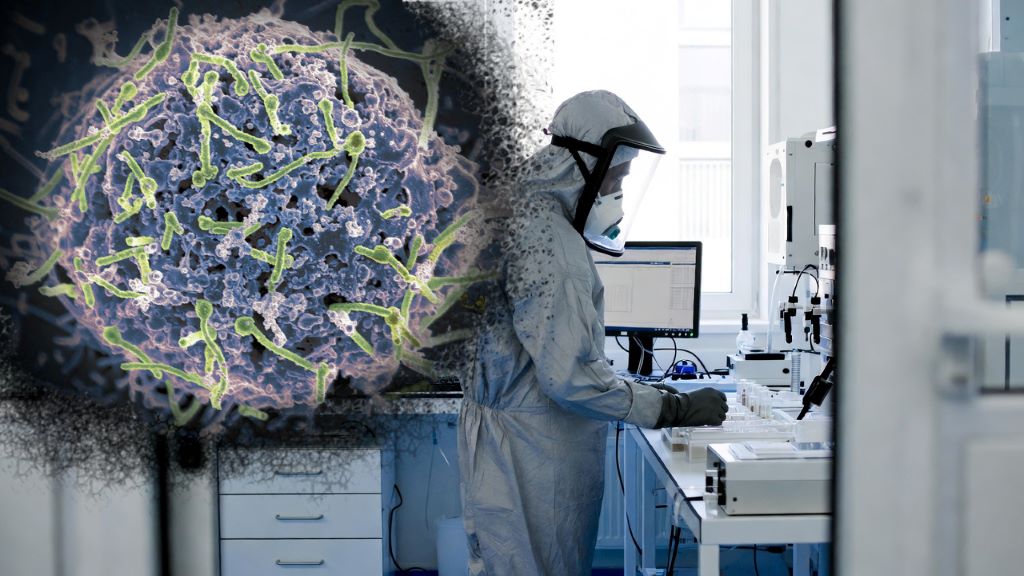
The Bundibugyo ebolavirus outbreak is currently affecting 27 health zones in the Democratic Republic of the Congo and one district in Uganda. A cumulative total of 681 confirmed cases and 126 deaths among confirmed cases have been reported across the Democratic Republic of the Congo and Uganda, representing a case fatality ratio of 18.5%.
The Democratic Republic of the Congo remains the main focus of the outbreak, with 662 confirmed cases and 124 deaths reported to date. Ituri Province continues to account for the majority of reported cases. In the last 24 hours, 29 new confirmed cases and five deaths among confirmed cases were reported in Ituri Province. Seven additional confirmed cases from North Kivu were also reported as part of a backlog from 8 June.
Uganda has reported 19 confirmed cases and two deaths to date. No new confirmed cases, deaths, suspected cases or recoveries were reported in Uganda in the last 24 hours. Uganda has now reported no new confirmed cases or deaths for five consecutive days.
Across both countries, 25 recoveries have been reported, and 6,525 contacts have been listed for follow-up. Thirty-four healthcare workers have been infected, including 29 in the Democratic Republic of the Congo and five in Uganda.The outbreak is currently affecting 27 health zones in the Democratic Republic of the Congo and one district in Uganda.
Africa CDC continues to work closely with national authorities and partners to support surveillance, contact tracing, case management, infection prevention and control, risk communication and cross-border coordination.
Africa CDC and WHO continue to advise against unnecessary restrictions on travel and trade. Public health measures should remain evidence-based and aligned with the International Health Regulations.
Africa CDC urges communities in affected and at-risk areas to remain vigilant, follow guidance from health authorities, report symptoms early and cooperate with trained response teams.
Further updates will be shared as the situation evolves.
Distributed by APO Group on behalf of Africa Centres for Disease Control and World Health Organization
The plan complements national response plans launched by the Governments of the Democratic Republic of the Congo and Uganda
The Africa Centres for Disease Control and Prevention (Africa CDC) (www.AfricaCDC.org) and the World Health Organization (WHO) today launched a joint continental preparedness and response plan on the ongoing Ebola outbreak caused by the Bundibugyo virus. The plan aims to raise US$ 518 million to support African countries together with partners to prepare for, rapidly detect and respond to the outbreak.
The six-month plan, covering June to November 2026, brings together governments, partners and communities under a unified ‘One Response’ approach to strengthen outbreak response measures, including emergency coordination, disease surveillance, laboratory testing, infection prevention and control, clinical care, community engagement, research, logistics and support for essential health services.
The plan complements national response plans launched by the Governments of the Democratic Republic of the Congo and Uganda.
“Ebola moves fast. Africa must move faster. This joint plan gives the continent a clear path to act with speed and unity: to save lives, support the affected countries and protect neighbouring communities, said Africa CDC Director-General Dr Jean Kaseya. “With Member States, WHO and partners, Africa CDC is turning commitment into action and resources into response for the communities at risk.”
WHO Director-General Dr Tedros Adhanom Ghebreyesus said: “The only way to beat this outbreak is through close partnership, working together under the leadership of the affected countries in one coordinated effort, guided by a simple principle: one plan, one budget, one team.”
He added: “Containing Ebola depends on political commitment, sustained financing, and the trust and engagement of communities. This plan places communities at the centre, because without their participation, contact tracing falters, safe care is delayed, and transmission continues.”
The plan also focuses on protecting vulnerable populations, strengthening cross-border collaboration, and supporting countries to respond quickly to new cases. At a time when there are no licensed vaccines or therapeutics specifically approved for the Bundibugyo species of Ebola, the plan aims to strengthen health systems to ensure resilience even as countries respond to acute health emergencies.
Implementation of preparedness and response activities is already underway across affected and at-risk countries. Furthermore, in 10 priority countries critical measures are being strengthened to enhance public health emergency preparedness and ensure early detection and swift response
.The plan emphasizes the need to maintain support for other ongoing health emergencies, including mpox, cholera and measles, to prevent disruptions to critical response efforts and safeguard progress towards stronger, more resilient health systems.
This coordinated effort comes as response operations accelerate in the Democratic Republic of the Congo, where authorities, with support from Africa CDC, WHO and partners, are ramping up efforts to curb the spread of the virus and end the outbreak.
Africa CDC and WHO urge Member States to strengthen screening and public health measures at points of entry and enhance cross-border coordination and solidarity to support a timely, effective and evidence-based response to the outbreak.
Through the joint preparedness and response plan, the continent is mobilising its collective expertise and resources to reinforce response measures, acting as one to control the outbreak and protect communities across the region. Its successful implementation will require strong political commitment, sustained investment and close collaboration among governments, health workers, communities and partners.
Drawing on lessons learned from previous Ebola outbreaks and recent public health emergencies, the plan also provides a pathway to broadly strengthen Africa’s capacity to prevent, detect and respond to future health threats while protecting lives and livelihoods.
Africa CDC and the WHO are working jointly to strengthen coordination by activating an Incident Management Support Team (IMST), building on the successful model used during the mpox and cholera responses
Ebola on a cell. Credit: NIH/NIAID
The Africa Centres for Disease Control and Prevention (Africa CDC), acting on the recommendations of its Emergency Consultative Group (ECG), has officially declared the ongoing Bundibugyo ebolavirus disease outbreak affecting the Democratic Republic of the Congo (DRC) and Uganda a Public Health Emergency of Continental Security (PHECS).
This declaration, under Article 3, Paragraph F of the Africa CDC Statute, empowers the organisation to lead and coordinate responses to significant public health emergencies across the continent. The statute mandates Africa CDC to “coordinate and support Member States in health emergency responses, particularly those declared a PHECS or Public Health Emergency of International Concern (PHEIC), as well as health promotion and disease prevention through health systems strengthening.”
The declaration follows extensive consultations at political, strategic and technical levels, including consultations with H.E. Mahmoud Ali Youssouf, the African Union Commission chairperson; H.E. Cyril Ramaphosa, President of South Africa and the African Union Champion for Pandemic Preparedness, Prevention and Response (PPPR); and consultations with Member States affected or at risk. This declaration was built on recommendations from the ECG, chaired by Professor Salim Abdool Karim, which reviewed the evolving epidemiological situation, regional risks, response capacities, and the implications of the confirmed Bundibugyo ebolavirus strain.
As of May 18, 2026, about 395 suspected cases and 106 associated deaths have been reported in the DRC (mainly in the Mongwalu, Rwampara, and Bunia Health Zones) and in Kampala, Uganda, where two cases and one death have been reported so far.
Africa CDC is deeply concerned about the high risk of regional spread due to intense cross-border population movement, mining-related mobility, insecurity in affected areas, weak infection prevention and control measures, community deaths occurring outside formal healthcare systems, and the proximity of affected areas to Rwanda and South Sudan.
H.E. Dr Jean Kaseya, Director General of Africa CDC, emphasised the urgency of coordinated continental action: “Today, we declare this PHECS to mobilise our institutions, our collective will, and our resources to act swiftly and decisively. The confirmation of the Bundibugyo ebolavirus in interconnected countries reminds us once again that Africa’s health security is indivisible. We must act early, act together, and act based on science.”
Dr Kaseya highlighted that the declaration would strengthen regional coordination, facilitate rapid mobilisation of financial and technical resources, reinforce surveillance and laboratory systems, support the deployment of emergency responders, and accelerate preparedness activities in neighbouring countries considered at heightened risk of transmission.
He further stressed the importance of an Africa-led and partner-supported response: “This outbreak is occurring in one of the most complex operational environments on the continent, marked by insecurity, population mobility, fragile health systems, and limited medical countermeasures for the Bundibugyo ebolavirus disease. We call upon our Member States and international partners to stand together with Africa CDC, the World Health Organization (WHO), UNICEF and the affected countries to prevent further spread and protect our populations.”
Africa CDC and the WHO are working jointly to strengthen coordination by activating an Incident Management Support Team (IMST), building on the successful model used during the mpox and cholera responses under the “4 Ones” principle: one team, one plan, one budget, and one monitoring framework.
Africa CDC has already deployed multidisciplinary experts, including specialists in epidemiology, infection prevention and control, laboratory systems, risk communication, logistics and emergency coordination, and has internally mobilised US$2 million to support the continental response.
The declaration also comes amid growing concerns about the limited availability of validated vaccines and therapeutics for the Bundibugyo ebolavirus disease. Africa CDC is therefore working closely with various partners to assess available medical countermeasures and accelerate operational research and evidence generation efforts to inform outbreak response strategies.
Professor Karim, chair of the ECG, noted: “The ECG carefully reviewed the epidemiological evidence, regional risk profile, and operational realities surrounding this outbreak. The interconnected nature of transmission between DRC and Uganda, combined with the challenges posed by insecurity and cross-border movement, requires urgent coordinated continental action.”
Ebola is a severe and often fatal illness transmitted through direct contact with bodily fluids of infected persons, contaminated materials, or deceased individuals infected with the virus. Early detection, rapid isolation and care, contact tracing, infection prevention and control, community engagement, and safe and dignified burials remain essential to interrupt transmission.
Africa CDC will continue to provide regular updates as additional epidemiological, laboratory, and sequencing information becomes available.
Mycobacterium tuberculosis drug susceptibility test. Photo by CDC on Unsplash
A University of Virginia-led team of researchers has made a discovery that may change sepsis treatment for patients in Africa.
Over the course of five years, the researchers studied patients with HIV-related sepsis in eastern Africa, discovering that the most common cause of sepsis was tuberculosis and that treating it immediately, even before a tuberculosis diagnosis was made, significantly improved survival rates.
Sepsis, or critical illness due to infection, is the leading global cause of death, responsible for an estimated one-fifth of deaths worldwide.
“We designed a trial with colleagues in Tanzania and Uganda to look specifically at people living with HIV, who suffer higher rates of sepsis and are more likely to die when they contract it,” said Dr Scott Heysell, director of the UVA Center for Global Health Equity and the co-lead investigator of the study. “Over half of the people enrolled in this trial were ultimately found to have tuberculosis and, if they immediately received tuberculosis treatment, they were significantly more likely to survive.”
Funded by a grant from the National Institutes of Health, the research, dubbed the “ATLAS study,” was done by a team of nearly 30 doctors, nurses, pharmacists, study coordinators and statisticians, including leading HIV and tuberculosis physician-scientists, Dr Stellah Mpagama from Kibong’oto Infectious Diseases Hospital in Tanzania, and Dr Conrad Muzoora, from the Mbarara University of Science and Technology in Uganda.
“The trial is the culmination of almost 20 years of collaborative work with colleagues in Uganda and Tanzania to better understand, diagnose and manage sepsis,” said co-lead investigator Dr Christopher Moore, professor of medicine and global health equity at the UVA School of Medicine. “The results of ATLAS have broad and significant implications for the treatment of sepsis in Africa, an all too common and deadly illness, which sadly is likely to become even more common with the advent of global public health funding cuts.”
It is often difficult to diagnose tuberculosis, so the team had to use newer and more exhaustive testing, according to Heysell.
“It is a tragedy to be on the front lines and witness the excessive mortality and morbidity from sepsis and tuberculosis, particularly among people with HIV,” said Dr Tania Thomas, a contributing researcher and associate professor of infectious diseases and international health at UVA. “These are treatable conditions, but time is rarely on our side. Until we have more accurate rapid diagnostic tests for tuberculosis, we are pleased to demonstrate that the strategy of immediate tuberculosis treatment can improve survival.”
The team has received additional NIH funding this year to continue its work through a new trial at four hospitals in Tanzania and Uganda to test whether the use of hydrocortisone to reduce inflammation and improve blood pressure, and/or an immediate treatment for tuberculosis and other bacterial pathogens, will improve 28-day mortality from HIV-related sepsis.
“In programmatic settings, tuberculosis treatment was mostly the same as for people without HIV, even though their health needs are more complex,” said Dr Mpagama. “Many of these patients have multiple infections at the same time, which makes their care more challenging.”
The research is part of UVA’s Center for Global Health Equity’s effort to establish meaningful, two-sided research partnerships in Eastern Africa, according to Heysell, who is working to increase educational and research opportunities outside of the US for UVA students. This includes coordinating clinical electives for medical students and other health science students in hospitals and clinics abroad.
To that end, emergency medicine professor Dr Amita Sudhir has been promoted to inaugural director for global health training within the center. Her goal will be to increase abroad opportunities for medical students within existing partnering organisations.
South Africa, March 6, 2025 –The Africa Centres for Disease Control and Prevention (Africa CDC) and Illumina (NASDAQ: ILMN), a global leader in sequencing technology, strengthen their collaboration to advance the Africa Pathogen Genomics Initiative (Africa PGI).
The renewed commitment builds on existing efforts over the last 4 years to address COVID-19 and other infectious disease outbreaks, as well as tackle emerging public health threats and endemic diseases like tuberculosis, malaria, and cholera.
Together, both organisations are focused on broadening access to next-generation sequencing (NGS) tools and expertise and enhancing public health surveillance and laboratory networks across Africa.
“Africa CDC is pleased to continue its collaboration with Illumina and other partners to enhance Africa’s capacity to detect and respond to emerging health threats. Genomics is transforming disease surveillance, and this collaboration will help integrate next-generation sequencing into routine public health systems. Our goal remains clear – by the end of 2025, all 55 National Public Health Institutes (NPHIs) will have operational NGS capacity to better protect Africa’s health.” said H.E. Dr. Jean Kaseya, Director-General, Africa CDC.
Since the inception of this collaboration in March 2021, Illumina has provided significant contributions, including next-generation sequencing (NGS) platforms, reagents, and training support. As a part of this association, additional sequencing instruments and reagents will be provided to around 25 countries.
“At Illumina, we are driven by the power of genomics to positively impact the world and are deeply committed to improving global health. By expanding access to cutting-edge sequencing technologies, we are helping to create a future where every country can rapidly detect and respond to health threats. Our association with Africa CDC brings us closer to a world where genomics is integrated into routine public health surveillance – enabling faster, more effective responses to disease outbreaks and ultimately saving lives.” said Belinda Ngongo, Director Global Health, Illumina.
Launched in October 2020, Africa PGI is a flagship initiative of Africa CDC designed to enhance public health surveillance systems across the continent. The program focuses on integrating pathogen genomics and bioinformatics into routine public health efforts, allowing for rapid responses to infectious disease threats, enhanced control and prevention, and the development of more effective diagnostics, treatments, and vaccines. This work will further Africa PGI’s vision of building a resilient, integrated, proactive, and sustainable molecular diagnostic, genomic surveillance, and epidemiology ecosystem across Africa.