Finalised data published in the New England Journal of Medicine, has confirmed the stunning results of a trial in which a twice-yearly dose of lenacapavir completely prevented HIV infection in a group of adolescent girls and women in South Africa and Uganda.
A major challenge with HIV prophylaxis with cisgender women is adherence and persistence with daily oral regimens. The twice-yearly subcutaneous injection of lenacapavir helps to circumvent these problems by offering extended protection.
Based on the initial results announced by Gilead Sciences on the 20th of June, the PURPOSE 1 phase 3 clinical trial met its key efficacy endpoints of superiority of twice-yearly lenacapavir to once-daily oral (emtricitabine 200mg and tenofovir disoproxil fumarate 300mg; F/TDF) and background HIV incidence. Given the strength of these results, the blinded phase of the trial was halted and open-label lenacapavir was offered to all participants.
The double-blind, randomised, controlled trial recruited 5338 participants who were initially HIV-negative. They were randomised 2:2:1 ratio to receive subcutaneous lenacapavir every 26 weeks, daily oral emtricitabine–tenofovir alafenamide (F/TAF), or daily oral F/TDF (active control); all participants also received the alternate subcutaneous or oral placebo. They compared the efficacy of lenacapavir and F/TAF with F/TDF against the estimated background incidence of HIV infection.
Among the 2134 participants in the lenacapavir group, there were 0 infections (0 per 100 person-years). Meanwhile in the F/TAF group, there were 39 infections among 2136 participants (2.02 per 100 person-years) and 16 infections among the F/TDF group’s 1068 participants (1.69 per 100 person-years).
HIV incidence with lenacapavir was significantly lower than background HIV incidence and than HIV incidence with F/TDF. HIV incidence with F/TAF did not differ significantly from background HIV incidence, and no evidence of a meaningful difference in HIV incidence was observed between F/TAF and F/TDF.
The researchers did note that adherence to F/TAF and F/TDF was low. While no safety concerns were found, injection-site reactions were more common in the lenacapavir group (68.8%) than in the placebo injection group (F/TAF and F/TDF combined) (34.9%); 4 participants in the lenacapavir group (0.2%) discontinued the trial regimen owing to injection-site reactions.
Although South Africa has the largest number of people living with HIV worldwide, strides have been made in controlling the epidemic, especially in the reduction of HIV incidence, testing, and treatment. Researchers from the South African Medical Research Council (SAMRC) and University of KwaZulu-Natal (UKZN) are inching closer to finding the answer to the natural control of HIV infection, leading to improved health outcomes and quality of life amongst South Africans.
According to the latest survey by the Human Sciences Research Council, in 2022, there were approximately 7.8 million people afflicted with HIV in South Africa, the highest absolute number of people living with HIV globally. Yet despite having the largest genetic diversity in the world, African human genome sequences represent the lowest of all the human genomes that have been sequenced worldwide. There is a dire need to leverage genomics to back up and scale targeted intervention programs to put more people living with HIV on effective treatment.
Of particular interest in the global investigations into HIV is “elite controllers” (ECs), a rare group of HIV‐1‐positive individuals whose immune systems can seemingly suppress the infection from developing without taking antiretrovirals (ARVs). For every 200 people living with HIV, around one may be an elite controller (0.5%). In South Africa, with its high rate of HIV infection, the prevalence of ECs also appears to be higher. By “unmasking” the secrets of ECs through research, clues can be revealed, and new therapies potentially developed to benefit broader groups of people living with the disease.
In order to identify the polymorphism and mutations within individuals of African descent, and understand how they are associated with HIV disease progression, Dr Veron Ramsuran, Associate Professor at UKZN, and Prof Thumbi Ndung’u, Director for Basic & Translational Science at the Africa Health Research Institute, joined hands with SAMRC, MGI and local South African clinics in 2019 to take their 20+ years of work in EC research to the next level using whole genome sequencing (WGS).
“The HIV Host Genome project was started at the same time as we launched SAMRC’s African Genomics Centre in Cape Town with the support from MGI,” said project co-investigator Rizwana Mia, also co-founder of the SAMRC Genomics Centre and Senior Program Manager in Precision Medicine at SAMRC. “The partnership saw MGI putting down a high-throughput sequencing workflow and assisted us with the specialised scaled infrastructure design in our lab. This was at a time when there was no real infrastructure for large-scale next generation sequencing in Africa.”
“More importantly, by moving our laboratory workflow to scale, we are hoping to develop genomic research to address this quadruple burden of disease that South Africa faces,” explained Mia. “Our project looks at a unique cohort of patients that have the ability to control the HIV virus to ascertain how disease progresses and the host-directed mechanisms for innate immune control. In addition, we included family sets to help us better understand the relationship between pediatric non-progressors and their parents who are also HIV positive, to uncover and genetic differences that may contribute to host immune control of HIV.”
“We’ve identified new genes and polymorphism that are playing a role with HIV disease through new data generated from Whole Genome Sequencing,” said Dr Veron Ramsuran, principal investigator of the HIV Host Genome project. “Traditionally, there is a list of mutations or genes that are known to associate with HIV, yet they are largely based on studies on Caucasian populations. Our HIV research is adding to the general pool of knowledge pertaining to individuals of African descendent, which will thereby inform new treatment and new vaccine opportunities.”
“What’s important is also understanding how drugs interact with the individual,” added Ramsuran. “We’ve found in the past that certain polymorphism is associated with drug metabolism in genes. Building on this understanding of drugs in combination with the genetics of the individual, we can develop prediction tools to inform clinicians on drug type or dosage depending on the presence of the polymorphism to facilitate a more rapid metabolism of the drug.”
Encouragingly, investigations into Africa’s diseases will continue beyond this point. The HIV Host Genome project has laid the groundwork for the ambitious National 110K Human Genome Project. This large-scale population study will involve 110 000 participants from the South African population, aiming to understand more about of their genomic diversity, address various health challenges, and pave the way for personalized medicine in the country. Furthermore, the data collected will be incorporated into a national population database, enhancing research outcomes and deepening disease understanding for Africa.
Given South Africa’s diverse population, limited human genomics data and significant healthcare burden from diseases such as HIV, understanding pathogenesis and inherent mutations is important for implementing targeted treatments and public health programs. With its lower sequencing cost, high quality data, and efficient all-in-one workflows, MGI’s equipment play an instrumental role , will continue to drive progress in studying rare HIV phenotypes, which holds great promise in advancing the development of targeted interventions and cures– not only for HIV – but many other diseases.
“Looking at the genetic variation and its impact on HIV is a gamechanger, because it will shed light on some of the best immune responses that can be generated against the HIV virus,” stated Prof Thumbi Ndung’u, principal investigator of several of the project’s cohort studies. “And actually, this knowledge will be widely applicable and could have an impact on other diseases – infectious and non-infectious – as well as their drug interventions. It will make sure that Africans, just like everybody else, are at the centre of drug and vaccine development.”
Photo by Miguel Á. Padriñán: https://www.pexels.com/photo/syringe-and-pills-on-blue-background-3936368/
By Nthusang Lefafa
Despite some improvement over the past three years, the North West province continues to experience medicine shortages, according to a survey by a community clinic monitoring initiative. We unpack the latest findings and ask why shortages persist in the province.
Some people in need of HIV or tuberculosis (TB) medicines were sent home empty handed after visiting clinics in the North West. This is according to the latest survey of public healthcare services in the province published by community-led clinic monitoring group Ritshidze. The survey data was collected in April and May this year.
Of the roughly 490 000 people living with HIV in North West, around 380 000 (77%) are on antiretroviral treatment, according to figures from Thembisa, the leading mathematical model of HIV in South Africa. Antiretroviral treatment is recommended for everyone living with the virus.
According to Ritshidze, besides HIV and TB medicines, other commonly reported stockouts at clinic-level include pain medicines (such as Paracetamol and Ibuprofen), cardiac medicines (such as Aspirin), contraceptives, dry stock (gauze, bandages, needles), maternal health medicines, psychiatric medicines, and different vaccines.
Out of the 72 facilities surveyed in the province, medicine stockouts lasting one to three months were reported at 20 and stockouts lasting three to six months were reported at six.
‘Failed to comply’
The North West health department, according to Ritshidze, has failed to comply with national guidelines recommending that people living with HIV should be provided with a three or more month supply of antiretrovirals at a time. They found that 71% of people surveyed in 2024 received antiretroviral refills of three to six months – in each of the previous three years this number was below 30%. There was large differences between districts, with 97% of people surveyed in Bojanala district reporting getting a 3 month supply of ARVs — compared to 37% in Dr Kenneth Kaunda.
Giving people longer antiretroviral refills like this means people do not have to visit health facilities as often to collect their medicines.
Various factors influence giving more people longer antiretroviral refills, Tebogo Lekgethwane, Director of Media and Communications in the province’s health department, told Spotlight.
A crucial factor, he said, is that patients must have a good track record of collecting their medication as well as a history of a documented undetectable viral load. “There’s therefore a criteria for multi-month supply which includes the fact that patients should have been on treatment for six months, they are compliant and clinically stable,” said Lekgethwane.
No “crisis” of medicine shortages
While the year-on-year comparisons should not be overinterpreted – Ritshidze themselves advise caution – the numbers nevertheless provide some indication that when it comes to medicines stockouts things are trending in the right direction. The total number of stockouts in the province reported to Ritshidze plunged from 895 in 2021 to 148 in 2024 – over the same period stockouts of HIV medicines went from 115 to 19 and stockouts of TB medicines from 28 to 7.
Lekgethwane was at pains to point out that Ritshidze’s findings do not necessarily represent the actual picture of the entire province. He said that the department believes that the Ritshidze report is subjective and relies on isolated incidents. These incidents, Lekgethwane said, are often quickly addressed.
“The current provincial medicine availability report shows that medicine availability has stabilised above 80%. As at the end of June 2024, ARV stock was at 89.5%, Expanded Programme on Immunisation and Contraceptives remained above 90%, TB treatment at 79%, Oncology treatment at 81.7% and Diabetes Mellitus at 85.8%. Therefore the province does not have a crisis of medicine shortages,” he said.
Asked what exactly these percentages mean, Lekgethwane said that it indicates the actual medicines stock available in the province in relation to what is required.
A pharmacy expert consulted by Spotlight further explained that the percentage indicates the percentage of medicines on a list or in a class that is available in the province.
The way these numbers are tracked is somewhat tricky. Firstly, if a clinic is supposed to have 10 different HIV medicines in stock, but they only have 8 in stock, then its HIV medicines availability would be at 80% (having a single pack of a medicine counts as having it in stock). When many facilities are considered together, as with an entire province like North West, the key indicator looks at what percentage of those facilities have medicines availability above 90%. We thus understand the figures shared by Lekgethwane to mean that 89.5% of facilities, depots and so on in the province have HIV medicines availability above 90%.
Catching up with payments
Past medicine shortages in the province were partly attributed to companies ceasing delivery of medicine due to non-payment of invoices. While the North West health department was under National Department of Health administration in 2020, the offices at the Mmabatho Medical Depot was raided. The search uncovered a number of unpaid invoices worth millions, some dating back to 2014. One unpaid invoice was for more than R16 million.
Bolstered by a Pharmaceutical Intervention Team to address medicine shortages, Lekgethwane said the department’s payments system is now in top shape.
“Payment of suppliers has remained a priority and the finance unit has assisted the team by making good progress on payments of supplier accounts. The unit continues to investigate and intervene when suppliers indicate their account status to the pharmacies.
“This has led to an increased number of deliveries from suppliers to the depot and increased direct deliveries to pharmacies from contracted companies as well as deliveries of main orders, allocation of orders and emergency orders from the depot to the pharmacies,” he said.
“The Department can confidently confirm that the financial management of pharmaceuticals has been improved resulting in 97% of 2024/2025 accruals being paid and remaining with only two accounts that are on hold. The two accounts that are on hold will only be paid once their compliance requirements are sorted,” said Lekgethwane.
He said that the intervention team has the capacity to assess and intervene, in among others, pharmaceutical supply chain issues, system effectiveness, distribution and delivery processes, storage capacity, human resource capacity and safety issues.
Lekgethwane said the team’s first priority was to assess the Mmabatho Medical Depot before moving onto pharmacies in hospitals and clinics across the province.
Getting medicines to rural areas
While Ritshidze also raised concern around transportation for the delivery of medicines, the department said transportation has never been a challenge.
“There are contracted service providers who deliver to the Mmabatho Medical Depot and the depot delivers to hospitals. Clinics receive their medicine from their referral hospital,” said Lekgethwane.
“However, the department is currently implementing the bulk pharmacies for districts to bring medicines closer to facilities”, he added. A bulk pharmacy is a medicine storage facility which serves as a medical depot. It is situated in the districts and helps with bringing medicines closer to rural areas so that medicines do not have to be transported from major towns.
In this regard, Lekgethwane said the Dr Kenneth District Bulk Pharmacy was recently opened and soon the General De la Rey Bulk Pharmacy will open.
He said the department is confident that the use of these bulk pharmacies will improve medicine storage and distribution capacity.
Shortage of pharmacists and pharmacy assistants
The Ritshidze report found that only 9% of surveyed facilities had a pharmacist and only 18% had a pharmacist assistant. Government regulations state that either pharmacists or pharmacy assistants should be responsible for stock receiving orders and updating the stock visibility system. However, Ritshidze found that enrolled nurses, enrolled nurse assistants, facility managers, and even cleaners acted in that capacity at some clinics.
The province has a 6% vacancy rate for pharmacists while 342 are currently employed, according to the 2024/2025 health department annual performance plan tabled in the North West Provincial Legislature earlier this month. The plan states that the department’s organisational structure makes provision for 10 pharmacists to be appointed in the province for every 100 000 uninsured individuals.
The DA’s Hendriette van Huyssteen says there is a challenge of pharmacists and pharmacy assistants where there are clusters of less than 10 000 uninsured individuals (where one pharmacist would be allocated for 10 000 uninsured individuals) and the clinics servicing them are far removed from one another.
“With the NHI [National Health Insurance] being signed into law, the number of pharmacists will become only a greater challenge. The cost per pharmacist employee stands at R765 000.00 per annum. It is unclear as to where the funding would come from for the remuneration of the additional pharmacists needed under the NHI, as even the NHI Act is unclear in this regard,” she said.
Notwithstanding the issue of budget constraints, the training of more pharmaceutical staff is integral to having fully functional health systems, said Professor Andrew Robinson. He is a deputy dean in the Faculty of Health Sciences at North West University (NWU). He was previously a deputy director general in the North West health department.
“To improve the pharmaceutical skills in the province, the NWU must ensure it aligns its pharmacy training to address the skill needs of the provincial health department to ensure equitable health service delivery to all, which is necessary for successful implementation of the NHI,” he said.
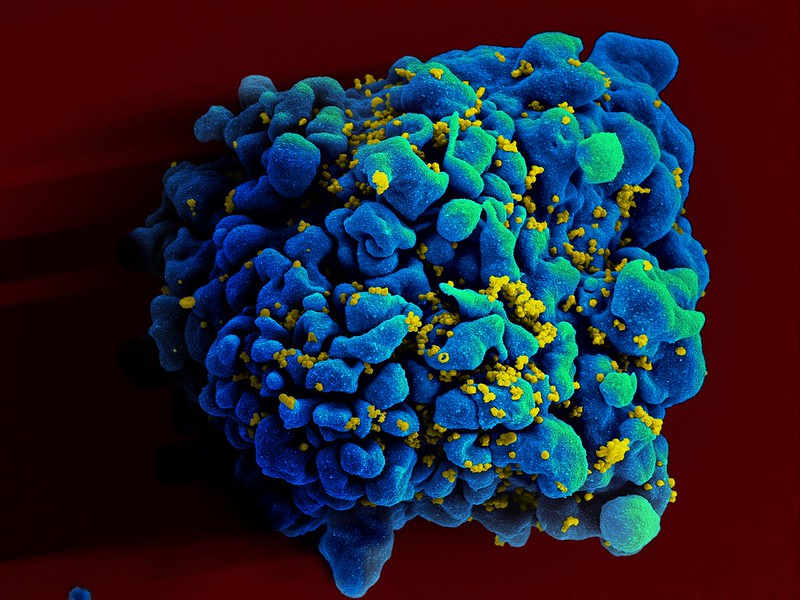
Colourised scanning electron micrograph of HIV (yellow) infecting a human T9 cell (blue). Credit: NIH
An experimental drug originally developed to treat cancer may help clear HIV from infected cells in the brain, according to a new study published in the journal Brain. For the first time, researchers at Tulane University found that a cancer drug significantly reduced levels of SIV, the nonhuman primate equivalent of HIV, in the brain by targeting and depleting certain immune cells that harbour the virus.
This discovery marks a significant step toward eliminating HIV from hard-to-reach reservoirs where the virus evades otherwise effective treatment.
“This research is an important step in tackling brain-related issues caused by HIV, which still affect people even when they are on effective HIV medication,” said lead study author Woong-Ki Kim, PhD, associate director for research at Tulane National Primate Research Center. “By specifically targeting the infected cells in the brain, we may be able to clear the virus from these hidden areas, which has been a major challenge in HIV treatment.”
Antiretroviral therapy (ART) is an essential component of successful HIV treatment, but the virus persists in “viral reservoirs” in the brain, liver, and lymph nodes, where it remains out of reach of ART.
The brain has been a particularly challenging area for treatment due to the blood-brain barrier preventing treatments from reaching the virus. In addition, macrophages are extremely long-lived, making them difficult to eradicate once they become infected.
Infection of macrophages is thought to contribute to neurocognitive dysfunction, experienced by nearly half of those living with HIV. Eradicating the virus from the brain is critical for comprehensive HIV treatment and could significantly improve the quality of life for those with HIV-related neurocognitive problems.
Researchers focused on macrophages, a type of white blood cell that harbours HIV in the brain. By using a small molecule inhibitor to block a receptor that increases in HIV-infected macrophages, the team successfully reduced the viral load in the brain. This approach essentially cleared the virus from brain tissue, providing a potential new treatment avenue for HIV.
The small molecule inhibitor used, BLZ945, has previously been studied for therapeutic use in amyotrophic lateral sclerosis (ALS) and brain cancer, but never before in the context of clearing HIV from the brain.
The study, which took place at the Tulane National Primate Research Center, utilised three groups to model human HIV infection and treatment: an untreated control group, and two groups treated with either a low or high dose of the small molecule inhibitor for 30 days. The high-dose treatment lead to a notable reduction in cells expressing HIV receptor sites, as well as a 95-99% decrease in viral DNA loads in the brain .
In addition to reducing viral loads, the treatment did not significantly impact microglia, the brain’s resident immune cells, which are essential for maintaining a healthy neuroimmune environment. It also did not show signs of liver toxicity at the doses tested.
The next step for the research team is to test this therapy in conjunction with ART to assess its efficacy in a combined treatment approach. This could pave the way for more comprehensive strategies to eradicate HIV from the body entirely.
One of the biggest stories in HIV in the last year was that a class of medicines called statins could help reduce cardiovascular disease in people living with the virus. In response, treatment guidelines in the United States were quickly updated, but the picture is more complicated in South Africa. Spotlight’s Elri Voigt explores why the case for widespread use of statins by people living with HIV is less compelling in South Africa than in some other countries.
People living with HIV, provided they are stable on antiretroviral therapy, are affected by the same diseases as those who don’t have HIV, including cardiovascular disease, says Professor Mpiko Ntsekhe, head of Cardiology at Groote Schuur Hospital in Cape Town.
The key difference, he says, is that although both groups of people get the same spectrum of diseases, people living with HIV get those diseases more frequently and earlier. One way to think about this, he explains, is to imagine twins who are identical in every way except one is living with HIV. The twin living with HIV is more likely to get cardiovascular disease than the other twin.
And these differences can be substantial. Current evidence shows that people living with HIV have a twofold increased risk of developing cardiovascular disease compared to people not living with HIV, says Professor Hans Strijdom. He is the Head of the Division of Medical Physiology and Deputy Director of the Centre for Cardio-Metabolic Research in Africa (CARMA) at Stellenbosch University. The cardiovascular risk attributable to HIV, Strijdom adds, is now believed to be equivalent to that posed by traditional risk factors such as smoking. This prompted an editorial in 2018 in one of the top cardiovascular journals, Circulation, advocating for HIV to be recognised as a major cardiovascular risk factor.
He explains that people living with HIV who are stable on treatment are living longer, making them susceptible to the normal risk posed by older age. They also have “modifiable risk factors, in other words lifestyle risk factors”, like a higher smoking and alcohol use incidence, as well as increasing rates of being overweight and obesity. Strijdom says that living with HIV, even when someone is stable on treatment, causes low-grade inflammation, which over time increases a person’s risk for cardiovascular disease. “That all in combination are the current theories [of] why we think that they have a bigger risk of cardiovascular disease,” he says.
Important study findings
Arguably, the biggest news from last year’s International AIDS Society (IAS) Conference in Australia was findings from a study on heart disease in people living with HIV. The trial, called REPRIEVE, showed that a class of cholesterol-busting drugs called statins can prevent a lot of cardiovascular disease events in people living with HIV whose cardiovascular disease (CVD) risk score meets a certain threshold. Spotlight previously reported on these findings, which showed that compared to placebo, daily treatment with 4mg oral pitavastatin – a specific statin – led to a 35% reduction in major adverse cardiovascular events (MACE) in people living with HIV classified to be at risk of cardiovascular disease.
When the findings were presented at the IAS conference, the study’s principal investigator, Dr Steven Grinspoon, said that while the researchers still have to assess more of the data collected to get a clearer picture of things, like the mechanisms driving cardiovascular disease across regions and conduct additional sub-group analyses, the study has already shown that using pitavastatin can save lives.
These sub-group analyses were discussed in greater detail at the Conference on Retroviruses and Opportunistic Infections (CROI) held in Denver in March this year. For the most part, the use of pitavastatin in the manner prescribed by REPRIEVE was considered a huge success, and the United States has since changed its guidelines to include the use of statins in the primary prevention of atherosclerotic cardiovascular disease.
Why it is different in South Africa
However, for low-and-middle-income countries like South Africa, the case for pitavastatin might not be as clear-cut. In fact, a panel discussion at CROI was dedicated to exploring the implications of the REPRIEVE findings for such countries.
Ntsekhe, who was a speaker on the CROI panel, tells Spotlight that data from REPRIEVE’s sub-group analyses reveal there was a striking difference in event rates – which in the case of the study are MACE in those who were getting the placebo – by country income status. He explains that as predicted in high-income countries, the event rates were high, while in low-and-middle income countries – particularly in Sub-Saharan Africa – event rates were very low.
He says one of the reasons for the difference in event rates was that the screening tool used in REPRIEVE worked well to identify those people living with HIV who might benefit from pitavastatin in high-income countries like the United States, but it did not work well in Sub-Saharan Africa.
This means using pitavastatin as part of a primary prevention strategy is a much more effective intervention in high-income countries than in low-and-middle income countries like in Sub-Saharan Africa because the cardiovascular disease profile is so different.
Ntsekhe explains the term cardiovascular disease itself is broad and all-encompassing and there are many forms, including valve disease, heart muscle disease, and vascular disease. The dominant form of cardiovascular disease in the high-income countries (which he refers to as the Global North) is known as atherosclerotic cardiovascular disease, which is characterised by a build-up of fatty deposits and plaque in the arteries.
In Sub-Saharan Africa though, Ntsekhe says “atherosclerotic cardiovascular disease is but one of many forms of cardiovascular disease”, taking the fourth or fifth place in the ranking of types of major heart disease.
Research conducted in high-income countries don’t always take differences in disease burden into account, according to Ntsekhe. This means that interventions researched in high-income countries and shown to be effective in that context won’t necessarily work as well in low-and-middle income countries like South Africa.
Strijdom concurs that while results from REPRIEVE in the global context were a game-changer, the findings are not easily transferable to South Africa’s context because pitavastatin is mainly aimed at reducing “bad cholesterol” and coronary artery disease (also called atherosclerosis).
‘Taking money away’
During the panel discussion at CROI, Ntsekhe asked whether Sub-Saharan Africa could justify taking money away from other health programmes that work in order to invest in pitavastatin.
“I said basically what should be a priority for us is a) finding tools that can better identify those at risk and b) continuing to focus on what our local data suggests are the priority areas,” Ntsekhe says.
“If your entire prevention strategy is aimed at atherosclerotic cardiovascular disease, but it isn’t the dominant cause of disease [in your country], you’re going to be treating a whole host of people to try and tackle this thing that affects very few in a sense,” he says.
“It was not anything about REPRIEVE, it was a wonderful study, the hypothesis was tested, and it was shown to be correct, the intervention we know works,” Ntsekhe says. “It really then comes down to regional areas to think very carefully about how best they’re going to get their biggest bang for their buck,” he says. “We have to carefully consider the local context, local burden, we have set local health priorities, and weigh benefit and cost before we adopt new interventions or recommendations.”
SA’s cardiovascular disease burden
While Strijdom says we don’t have great data, he points to a large systematic review and meta-analysis published in 2018 in Circulation, which estimates that around 15% of the total cardiovascular disease burden in South Africa is attributable to HIV. “It’s probably higher than that. I would say that probably about one in five people with heart disease have heart disease because of HIV in South Africa,” he says, adding “that figure is probably only going to increase”.
Because of this, he says, there is a need for proper and clear primary healthcare guidelines specifically aimed at managing cardiovascular disease in people living with HIV, which we don’t currently have.
Strijdom says what we have at the moment since the rollout of the 2019 National ART Clinical Guidelines is very basic guidelines. This involves screening someone who has just been diagnosed with HIV by taking their blood pressure, and testing urine for glucose and proteins, and an assessment of their general cardiovascular disease risk by taking their medical and family history. These guidelines, according to Strijdom, only make provision for routine screening at baseline, but screening guidelines at follow-up visits are insufficient.
“I am, however, aware of the fact that there is progress especially from the integrated chronic disease management model which is currently being piloted in South Africa – and hopefully with that will come much more definitive and universal guidelines,” he says. “The bottom line is that South Africa, in its public health [sector] especially, really very quickly needs to come up with very clear and more comprehensive guidelines to actively manage cardiovascular disease risk in people with HIV.”
Need for annual screening
Strijdom suggest that to improve screening for cardiovascular disease risk in people living with HIV, there needs to be annual screening of people’s weight, their measure of body fat based on height and weight, waist circumference, blood pressure, cholesterol and triglyceride levels as well as testing urine samples for kidney function. There also needs to be a thorough family and medical history conducted for each patient.
“It’s not really a very expensive or very exhaustive list of stuff that you have to do. Unless of course they have specific symptoms and signs that leads you in a specific direction that you then have to perhaps do an ECG [a test used to evaluate the functioning of the heart] or cardiac imaging but that is usually determined by what you get from their history and clinical examination,” he says.
Ntsekhe says public health strategies to combat the growing burden of non-communicable diseases (NCDs), including cardiovascular disease, in South Africa must be strengthened. These include screening and prevention tools like checking a patient’s blood pressure and blood glucose, advising against smoking and alcohol as well as promoting health lifestyle choices like exercise and weight loss. These interventions should be offered to everyone, regardless of whether they are living with HIV or not, he says.
“The thing about NCDs and cardiovascular disease, for the most part, they are diseases of lifestyle and behaviour. So, when you talk prevention, it’s not always about drug prevention,” he says. “It’s more about intensification of those [interventions] that are already in the public domain, are very effective, and cost very little. Many of the public health and primary healthcare guidelines do advise local ministries, local health authorities on what should be happening.”
In terms of public education, Stritjdom says people need to be aware that there is something like high blood pressure. “If people are aware they will come to the clinic and will say please measure my blood pressure,” he says.
“Our health system is understandably focused on infectious diseases, but if we are not careful, we will then be totally unprepared to tackle the epidemic that will have replaced it. Namely, cancer, heart disease, stroke, obesity, diabetes, and it will totally overwhelm our public healthcare system,” he says.
In addition to shedding light on what people actually die of, autopsies can also play an important role in helping us to better understand disease. Tiyese Jeranji unpacks tuberculosis-related autopsy research in the Western Cape and delves into some of the fascinating complexities of this branch of TB research.
Figuring out how many people in South Africa die every year of tuberculosis (TB) is not straight-forward. On the one hand, Stats SA’s frequent mortality reports put the number at under 30 000, on the other hand, the World Health Organization (WHO) estimates that it is over 50 000.
While this may at first glance seem like a large discrepancy, there is a simple explanation. The Stats SA figures are based on what is written on death notifications, and these notifications very often do not tell the full story of what a person died of. The WHO estimate, is derived using mathematical modelling that triangulates estimates based on several data sources.
Looking at the numbers from studies that determine the cause of death (or what people actually died of) is one of the ways we know that relying on death notifications result in an undercount of TB deaths. Such autopsy studies have consistently found that many people had undiagnosed TB at the time of death and that the undiagnosed TB was often the actual cause of death.
One review study published in the journal AIDS concluded that “in resource-limited settings, TB accounts for approximately 40% of facility-based HIV/AIDS-related adult deaths” and that “almost half of this disease remains undiagnosed at the time of death”. According to WHO figures, of the estimated 280 000 people who fell ill with TB in South Africa in 2022, over 65 000 were not diagnosed.
Importance of autopsy research
Dr Muhammad Osman, Academic Portfolio Lead and Senior Lecturer: Public Health at the University of Greenwich, tells Spotlight that it is important to do TB autopsy studies because it enables us to identify TB that was not diagnosed during life – and this helps us understand the true burden of the disease.
Osman says identifying TB at autopsies has significant benefits. He says by overlaying health seeking behaviour (how people visit clinics), we can identify missed opportunities for TB screening and design interventions to improve screening for TB. “We could trace family contacts of the deceased and offer TB screening and prevention. This is not taking place at present,” he says.
Osman and his colleagues published a paper in the International Journal of Infectious diseases in 2021 looking at TB in people with sudden unexpected death (SUD) in Cape Town. They found that active TB was identified at post-mortems in 6.2% of the 770 cases they studied. More strikingly, in around 92% of those cases the TB had not been diagnosed while the person was alive.
Osman says that these days there is an increasing awareness of undiagnosed and untreated TB. He points out that new interventions to improve TB testing and diagnosis have been implemented such as targeted universal testing — an approach by which people who do not have any TB symptoms, but who are considered to be at high risk of TB, are routinely offered TB tests.
He says these days healthcare worker risk is considered more carefully and he stresses the importance of protecting forensic and pathology teams. (Forensics focuses on determining the cause and manner of death while pathology is the study and diagnosis of disease through examination of tissue, cells, autopsies, and so on.)
Closing the gaps
Osman says their study also identified a gap between the pathology services and access to routine health service records. “We thought that this is an essential gap to close – the forensic/pathology services need access to routine health service. For a limited number of these deaths we were able to match their records to the public health clinic and hospital records – and many of them had contact with the health services in the six months before death,” he says.
“If forensic pathologists are given full access to the health records, they would know the timing of previous TB and the treatment outcomes of those episodes. The lung changes seen with TB are different in the case of active TB and healed/recovered TB. There are well documented macroscopic (what’s is seen by the examination) and microscopic (seen through histology and microbiology) findings,” says Osman.
A complex disease
The study of TB is complicated by the fact that TB can occur at several stages on a continuum and can impact several different parts of the body.
Professor Threnesan Naidoo, research pathologist at the African Health Research Institute (AHRI), tells Spotlight that when people think of TB, they usually think of the person who’s been coughing for a few months, loss of weight, loss of appetite, having night sweats, and maybe coughing up some blood. “But there’s a journey to that point and then generally beyond that point, and clinically, there’s a continuum of the disease. We refer to it as latent disease, subclinical, active and then healed TB,” he says. It is an area in which things are changing fast – a paper published in the Lancet medical journal last week proposed dividing TB into five stages.
Naidoo says autopsies provide an opportunity to study TB at different stages (latent, subclinical, active, healed) especially when someone with TB dies of another cause. He says they can encounter people at any stage along the TB continuum because at any point someone could be shot, stabbed, or involved in a motor vehicle accident. “You (pathologist) have a unique opportunity to study the effect of TB on cells and tissue physically under a microscope and not through imaging (x-ray),” Naidoo says.
Autopsies also presents the opportunity to look at TB disease not only in the lung, but also the brain, thyroid gland, kidney or urinary system since TB has the capacity to spread everywhere, explains Naidoo.
“Autopsy gives you the opportunity to study TB everywhere,” he says. “Clinically (when someone is alive), you don’t go about investigating the entire body. Neither is it practical nor feasible or safe. But [with an] autopsy you’re examining the entire body anyway. We study TB in totality,” he says.
How it is done
The standard manner of doing an autopsy involves a thorough examination of the body. Naidoo explains that the process starts with an external examination to document injuries, marks, and other physical characteristics that are visible. The internal examination involves dissecting organs, tissues, and body cavities to identify any abnormalities or signs of disease. Samples may be taken for further analysis, such as toxicology tests, histological examination, or TB research.
Any findings from the samples, Naidoo notes, must be interpreted taking into account changes that occur in a dead body. “[In] the living, you know, it’s a living person and they’re able to do things and you’re able to see things on imaging (X-Ray), but in the dead you have to account for the fact that the person has now demised and certain changes occur after death.”
Autopsy study at UCT
An ongoing study at the University of Cape Town is exploring the role of lymph nodes in the spread or containment of TB disease by looking at tissue of the deceased.
Much TB research so far have been done on animals and not on humans, points out Dr Virginie Rozot, research officer at the South African TB Vaccine Initiative (SATVI) and co-principal investigator of the UCT study. “We have great non-human primate and great mice studies that try to underline the mechanism of the disease progression. However, animal models are not a true reflection of what happens in humans.
“For the longest time in these human studies, most studies have been done in the blood and what is happening in the blood has been taken to correlate with what is happening in the lung.”
In short, autopsies allow researchers to look directly at lung, brain and other tissue in a way that simply isn’t feasible in living people.
“So the only way you can actually access tissues is to do post mortem studies. Post mortem studies have been happening since the beginning of last century. And they were like fantastic studies, but the tools were not the same as we have today. I think that should come back to the front of the scene of research because then you can ask all the questions we’ve been trying to answer on what is happening in the tissue by looking into the blood,” she says. “Autopsy allows us to study the exact part we want to study not just the blood.”
Collecting samples
In collaboration with the Western Cape Forensic Pathology Service, UCT has created a postmortem sample collection platform to help with TB research. By leveraging the Inquest Act of 1959, which states that people that die of unnatural causes must undergo a medico-legal investigation to determine the cause of death, Rozot and her team come in to conduct a post-mortem to get their samples. They aim to do the post-mortem in less than 24 hours after death.
Since starting this study about eight months ago, they have done 125 autopsies , with a consent rate of 64%. “I think our consent rate is incredible. We are still putting together our findings to determine how many cases of TB we have found so far by looking at autopsies,” says Rozot.
Representative samples
Dr Laura Taylor, forensic pathologist at the Western Cape Forensic Pathology Services, says the bodies that they look at, in line with the Inquest Act relating to unnatural deaths, are representative of people in South Africa. “However, they are not exactly representative of the entire South African population because there are certain socio economic groups that are more likely to die of unnatural deaths due to increased prevalence of trauma and violence in their communities,” she says.
Because there is no central database, Taylor couldn’t say how many cases of TB they find among the deceased. “[T]here are autopsy records or reports which are written for each case, but there is no central database for TB specifically detected [through] autopsy,” she says.
Forensic autopsy and other diseases
Rozot and Naidoo share the view that, if done well, TB autopsy studies can help shed light on other diseases.
The value of this information is that people dying with or from TB will also have any of the other conditions such as hypertension, HIV, and diabetes, Naidoo says.
“You can work out all those variables… [people] don’t just come with diabetes, the diabetes changes the face of TB, HIV changes the face of TB and TB changes the face of those diseases as well. So, the complexity of it becomes something that we need to pay attention to, and look at all the common variables, like the association of TB and HIV is a big one. So studies might look at HIV infection and how it may affect TB and vice versa. Same with diabetes, hypertension, any of the other non-communicable diseases as well,” he concludes.
Condom distribution in South Africa has dropped dramatically over the last five years, finds a Spotlight analysis of data recently published in the Health System Trust’s District Health Barometer.
The South African government distributed 45% fewer male condoms in 2022 than it did in 2018. The total number of male condoms distributed dropped by over 300 million from 728 million in the financial year from March 2018 to February 2019 to 403 million in 2022/2023. Female condom supply also declined over this period, but not as sharply.
The full extent of the actual decline in condom supply across the country over the past five years has not previously been reported. The Democratic Alliance, though, did raise the alarm bells about condom supply challenges in Gauteng in April 2023.
Provincial departments of health have pin-pointed the time required for certification of condoms by the South African Bureau of Standards (SABS) following the start of a new condoms tender in 2022 as a key driver of the decline, yet Health System Trust’s District Health Barometer (DHB) data shows that condom distribution figures have in fact steadily declined over the past five years. Similarly, while COVID-19-related supply chain interruptions were a contributing factor to supply shortages at the height of the pandemic, the decline in government supplied condoms started before the pandemic and continued after COVID-19 supply chain disruptions were resolved (as shown in the below graph).
The large decline in condom distribution in South Africa is alarming in the context of the country’s ongoing fight against HIV. While other biomedical interventions are now available to protect against HIV (such as HIV prevention pills), condoms should remain a cornerstone of countries’ HIV prevention strategies according to the World Health Organization.
Research conducted by the University of Witwatersrand’s Health Economics and Epidemiology Research Office (HE2RO) has found that condoms are not only the most cost-effective intervention available to government to combat HIV, but that provision of condoms is in fact cost saving for the country’s health system.
Where did condom distribution fall the most in 2022?
According to the DHB data, all provinces except for the Free State saw a decline in condom distribution in 2022/2023 compared with 2018/19 levels (as shown in the below graph).
The Eastern Cape distributed 65% fewer condoms in 2022/23 than it did in 2018/19, Gauteng and the Northern Cape distributed around 60% fewer, Limpopo 52% fewer, and the Western Cape around 46% fewer. With a reduction of around 19% over the five years, the decrease was much less pronounced in KwaZulu-Natal than in South Africa’s other provinces with large populations.
Male condoms distributed by province
Province
2018/19
2019/20
2020/21
2021/22
2022/23
Eastern Cape
73 672 416
78 817 157
51 122 509
45 839 588
25 490 700
Free State
50 756 150
53 246 000
52 248 000
55 352 800
52 469 700
Gauteng
172 953 486
135 857 486
146 303 254
129 075 303
69 220 678
KwaZulu-Natal
111 028 599
108 503 920
96 529 200
106 967 000
89 664 600
Limpopo
82 563 322
67 818 200
53 325 900
52 862 900
38 910 442
Mpumalanga
67 150 600
51 749 400
38 316 000
31 364 066
35 627 000
Northern Cape
13 934 960
12 959 400
10 825 929
9 518 000
5 194 000
North West
50 820 283
55 579 921
39 841 971
42 361 097
30 810 803
Western Cape
103 322 800
82 055 960
53 632 226
72 031 600
55 420 700
*This table shows a breakdown of male condoms distributed by province, according to data from the Health Systems Trust’s District Health Barometer.
What caused the decline in condom supply?
Condoms are tendered nationally by the National Department of Health for a three-year period. Condoms procured by government must be tested and certified by the SABS before distribution.
Neither the National Department of Health, nor the Gauteng Department of Health responded to questions from Spotlight about the reasons for the decline in condom distribution. However, Gauteng’s Department of Health has previously pinpointed SABS certification processes as the culprit for condom supply shortages in the province. According to an April 2023 media statement by the Gauteng Department of Health, suppliers that received tenders to supply condoms to the public sector were unable to supply condoms to the province while awaiting SABS certification in 2022 – resulting in low condom stock in the province.
Spokesperson for the Eastern Cape Health Department, Sizwe Kupelo, told Spotlight in response to questions for this article that in 2022/23 “for most of the year there were no condoms to distribute”.
Kupelo said that the decline in condom distribution in the Eastern Cape was due to a combination of lags in supply availability while condom suppliers were awaiting SABS certification and challenges in delivering condoms to distribution sites in the province.
“2022/23 was the end of the condom supply contract and the period to award a new contract effective from 1st April 2022. This transition experienced a delay in availing the condoms due the SABS quality assurance process that could be finalised only around September 2022,” said Kupelo, adding that the province started to receive condoms from October of the same year.
“The second reason were related to suppliers who were not finding it easy to deliver to Eastern Cape areas due to the high cost of transportation to the identified 26 delivery distribution sites across the province. Suppliers are all based in Gauteng,” said Kupelo. This matter he said was now resolved.
Kupelo added that condom supply in the province is now improving. He said that the province had reached 96.7% of its target to distribute 17 million condoms in quarter 3 of 2023/24 (quarter 3 of 2023/24 is September to November 2023).
The SABS’ response
Lungelo Ntobongwana, acting CEO of the SABS, told Spotlight that all condoms that are distributed nationally by the Department of Health are tested at the SABS condom laboratory in Groenkloof, Pretoria. “The laboratory is an accredited and dedicated laboratory for the testing of condoms,” he said.
“Downtime or challenges to operations as a result of unplanned disruptions have been experienced on rare occasions and the SABS has incorporated contingency plans to ensure that the testing processes and deliverables would not be negatively impacted.
“The value chain, from the production of condoms to the distribution and usage of condoms, requires the intervention of various role players. When there is a shortage of condoms, it could be due to several reasons and chinks in the value chain. The SABS can categorically state that there are currently no challenges in its laboratory or deliverables regarding the testing of samples,” said Ntobongwana.
Did clinics run out of condoms in 2022/23?
The National Department of Health insisted in April 2023 that while Gauteng was facing low stocks of condoms, there were no serious condom shortages in the country.
Surveys conducted by community-lead clinic monitoring group Ritshidze also show that condoms remained available in most facilities – but not all – throughout the year, but also indicate a pattern of rationing by health care workers and clinics. In some cases, they say condoms are only available in public clinics on request, and key populations often face stigma and discrimination when seeking to access condoms and lubricant.
Surveys conducted by Ritshidze in 2022, found that only 55% of sex workers could get enough condoms at public facilities. Ritshidze recommends that “condoms and lubricants should be available at all facilities and can easily be placed in the toilets or other areas of the clinic where people could take them without the fear of being seen and judged by others, or being told to put some back”.
Anele Yawa, General Secretary of the Treatment Action Campaign (a member of Ritshidze), told Spotlight that the organisation faced challenges in accessing adequate condoms for its community outreach efforts. He said when TAC undertakes community outreach efforts, its members request condoms from public health facilities for distribution in communities but are sometimes told that there are not enough condoms for this.
Yawa added that people seeking condoms from public clinics are often told they can only take a limited number of condoms because of stock availability and that in some clinics “the condom box is empty, there are no condoms”.
Has the decline in condom availability impacted condom usage?
There are some concerning indicators that condom usage in the country is declining, which may in part be related to the drastic decline in condom supply.
The Human Science Research Council (HSRC), which conducts regular surveys of HIV knowledge and sexual behaviour in South Africa, recently released early data from its 2022 survey. The survey showed that teenagers and young adults between 15 and 24 years old reported lower rates of condom use at last sex than in previous survey years. The data presented did not pin-point a cause for the decline – apart from supply constraints, other factors like a decrease in people’s perceived risk of contracting and dying of HIV may also play a role.
The HSRC will release its full survey results in April 2024, which are expected to provide more insight into why condom use at last sex declined among 15- to 24-year-olds in 2022.
Another concerning indicator of declining condom usage is the reported rise in sexually transmitted infections (STIs) in Gauteng. Spotlight reported in February that the worried resurgence in reported cases of STIs in Gauteng in 2023 is a wake-up call that control and management strategies are not keeping pace with the growing disease burden in South Africa’s most populous province.
In response to the increase in STIs, Gauteng’s Health MEC Nomantu Nkomo-Ralehoko recommended expanded, consistent condom use – noting a number of factors including non-use of condoms, inconsistent use of condoms, and the forgoing of condoms by people using Pre-Exposure Prophylaxis (PrEP) as contributors to the rise in STIs. PrEP refers to antiretrovirals taken to prevent HIV infection.
Dismissing the conclusion of a causal relationship between a higher number of people being initiated on PrEP and the higher recorded number of STIs, Professor Linda-Gail Bekker, director of the Desmond Tutu Health Foundation, told Spotlight that there is no evidence to back up the claim that PrEP is leading to lower rates of condom usage. She added that the increase in STI diagnoses may be attributed to increased rates of testing, which has increased in the PrEP era.
“The notion that sexually transmitted infections have suddenly increased in the era of PrEP does not have evidence to support this,” said Bekker, adding “we have no strong evidence to suggest that people are having more condomless sex than before”.
“The value of condoms as a measure against sexually transmitted infections as well as unwanted pregnancy is not disputed and condoms remain the corner stone of the HIV response” said Bekker. “However, we know that for many people, and particularly young women and young men who have sex with men, the choice to use male condoms is not always a given and negotiating condom use may not be easy and can be dangerous,” she said.
Photo by Miguel Á. Padriñán: https://www.pexels.com/photo/syringe-and-pills-on-blue-background-3936368/
Over the last four years South Africa has taken large strides in making HIV prevention pills available at public sector clinics, but uptake has not been as good as some may have hoped. Thabo Molelekwa asks several experts why this might be.
HIV prevention pills, also referred to as oral pre-exposure prophylaxis (PrEP), contain a combination of two antiretroviral medicines. They are highly effective at preventing HIV infection when taken as prescribed by someone not living with HIV.
But while the pills are now available through most public sector clinics in the country, not as many people are using them as one might have expected. According to the most recent estimates from Thembisa, the leading mathematical model of HIV in South Africa, only around 4% of sexually active adolescent girls and young women used PrEP in 2022. This is a substantial improvement on 0.6% in 2020, but given that the rate of new HIV infections in adolescent girls and young women has remained stubbornly high, one may have expected this number to be higher by now.
“So the rates of uptake are definitely increasing in South Africa, but not to the point that we would hope. There’s still definitely a gap between people who would benefit from being on PrEP or alternative HIV prevention methods and those who are actually accessing the biomedical daily oral prevention,” says Cheryl Hendrickson, a Senior Researcher at the Health Economics and Epidemiology Research Office (HE²RO) at the University of the Witwatersrand.
Ongoing stigma
One explanation for uptake not being better is the ongoing impact of HIV-related stigma. A recent study conducted among young people in Gauteng found that stigma and a lack of confidentiality continue to impede PrEP adoption. The researchers identified several barriers for PrEP-naive participants, including limited knowledge, negative staff attitudes, and misconceptions about side effects. Structural factors like healthcare provider bias and a lack of culturally sensitive interventions were also found to hinder PrEP uptake. The research was conducted by HE²RO – Hendrickson was a co-author.
“Participants were worrying about their families or friends thinking they were taking ARVs,” says Constance Mongwenyana-Makhutle, a research associate and co-author of the study.
Professor Linda-Gail Bekker, CEO of the Desmond Tutu HIV Centre, also emphasises the persistent role of stigma. “People don’t want to be associated with HIV, HIV risk or any misconception that they may be living with HIV and on antiretroviral therapy,” she tells Spotlight.
The perception around PrEP, says Dr Fareed Abdullah, Director of AIDS and TB Research at the South African Medical Research Council, is similar to that of contraception. “Basically, a young person would consider it an admission that they are sexually active and consider themselves to be at risk of HIV; thereby inviting judgement and stigma from others, especially healthcare workers,” he says.
Not enough awareness?
Closely related to the issue of stigma is awareness. Here COVID-19 may have played a role. As the provision of PrEP through public sector clinics gained momentum in 2020, many potential PrEP users would have stayed away from clinics due to pandemic-related restrictions and fear of contracting SARS-CoV-2. The pandemic also meant that any plans to build awareness of PrEP would have had a hard time finding purchase, at least in 2020 and 2021.
Reflecting on past HIV awareness campaigns, Bekker stresses the need for increased public demand creation for PrEP
“I think we have not had enough public demand creation- if you think of the campaigns for getting people to take up COVID vaccines….then we really haven’t done enough in this regard. It is a new concept- a pill a day to prevent HIV ……and so people need to have the idea socialised and normalised so that there is also a reduction in stigma,” she says.
What happens at the clinic
Another barrier to PrEP uptake is likely that while PrEP is being made available through public sector clinics, not everyone feels welcome at, or like to visit, their local clinic.
Bekker says youth complain that government clinics are often a barrier for them to access PrEP. “Their hours, their long queues, their discrimination and sometimes the prejudicial attitudes drive young people away,” she says.
Bekker argues that some of these barriers would be removed if HIV prevention measures was taken outside of health facilities and into community spaces.
“PrEP for young people in the public sector is free. If they want to use private pharmacies though, they would need to pay currently. I think more can be done to make PrEP and other sexual and reproductive health services more readily available so that young people, in a way, have no excuses not to make sure they are using them … colleges, universities and even secondary schools could also reach more young people. If we want to reduce STIs and unintended pregnancies in our adolescents, we are going to have to be sure there are very few barriers to these contraceptive and prophylactic services,” says Bekker.
Hendrickson points out that there are several projects around the country that are looking at alternative service delivery methods. “There’s a project that’s looking at prep delivery in pharmacies. Currently, they are providing oral prep, and hopefully soon, they will provide injectable prep within several pharmacies in Gauteng and the Western Cape,” she says. According to her, the pharmacy model appeals especially to men.
Healthcare worker attitudes and training
Related to the issue of visiting public healthcare facilities to access PrEP, healthcare worker attitudes and training has also been flagged as a concern.
Bekker says some health care professionals are not trained to deal with young people in their diversity. “Adolescents are a very distinct population – they can be offended, they value their privacy, and they can make health choices and decisions but need supportive, empathic and tailored information that they can use,” she says.
Abdullah makes a similar point. If some health care workers are properly trained, can identify people at high-risk and understand the efficacy of the intervention, then the vast majority would follow and offer the service in a professional manner, he says.
Ritshidze, a community-based healthcare monitoring group, say they have observed an increase in the number of healthcare facilities where staff say they prioritise offering PrEP to members of key populations such as young women and adolescent girls or men who have sex with men. Of 394 clinic staff surveyed earlier this year, 97% said they prioritise young women and adolescent girls.
But when Ritshidze asked users of healthcare facilities whether they’ve been offered PrEP, the numbers were much lower. “Compared to data collected in 2022, our 2023 data report a lower percentage of people saying they have been offered PrEP for most population groups,” Ritshidze say in a recent report. Complaints about negative staff attitudes have been a running theme in Ritshidze’s reports on public sector healthcare facilities over the last three years.
Actual and perceived risk
Abdullah suggests another barrier to PrEP uptake. There is a perception that HIV is no longer an urgent priority and that the risk of infection is low. This, he says, has led to lower public awareness of the importance of behaviour change and the need for young people at risk to protect themselves.
Recent data from a Human Sciences Research Council survey and the District Health Barometer indicate that condom use is declining in South Africa. While the reasons for the decline are not clear, one theory is that it is driven by the perceived risk of HIV infection having reduced over time.
Will more choice help?
Currently only oral PrEP is routinely available in the public sector, but PrEP in the form of a two-monthly injection and a monthly vaginal ring have been approved by the South African Health Products Regulatory Authority and is being offered to people taking part in pilot projects. It is likely that the prevention injection will become much more widely available once its price drops sufficiently – which is anticipated to happen once generic manufacturers enter the market in around three years’ time. Products that combine PrEP and a contraceptive into a single pill or injection are also under development.
Mitchell Warren, director of Avac, a global HIV advocacy organisation, is optimistic about people being offered a choice between the three types of PrEP. While condoms were widely available in public clinics in the 1990s, Warren says he noted the desire of people to buy condoms from spaza shops, shebeens, or pharmacies. This didn’t replace clinic supplies, he clarifies, but it did bring into sharper focus the importance of providing choice to people.
“But even with three different PrEP options, what we clearly have known for many years now is that PrEP is not only about the products, PrEP is really a programme, helping people identify not just their personal risk, but their desires, what they want and need out of relationships,” he says.
Government perspective
Foster Mohale, spokesperson for the National Department of Health, says the department is aware of reports of youth experiencing problems accessing PrEP at healthcare facilities.
Mohale maintains that healthcare workers are sufficiently trained to provide comprehensive HIV prevention services to all groups of people. He says that clinicians, counsellors, health promotors and peer educators have access to online training platforms. “These training modules are availed offline on flash drives to facilitate access to facilities and health care providers that do not have easy access to wifi or data to access the online version of the training materials,” he says.
Photo by Miguel Á. Padriñán: https://www.pexels.com/photo/syringe-and-pills-on-blue-background-3936368/
A company headquartered in Johannesburg will start making flexible silicone rings to protect women from HIV. The move signals a strong vote of confidence in an African firm to supply the ring at adequate scale and affordable prices, and a crucial step to making the continent self-reliant, reports Catherine Tomlinson.
A South African company has secured the rights to manufacture a vaginal ring used to prevent HIV infection. The ring, which is inserted and removed by the user, provides protection for a month, after which it has to be replaced with a new ring. The ring contains an antiretroviral drug called dapivirine.
While studies show that the dapivirine vaginal ring is less effective at preventing HIV than HIV prevention pills and injections, it has benefits over other tools that have led the World Health Organization (WHO) to recommend its inclusion in the package of sexual health services available to women.
One advantage of the ring over HIV prevention pills is that it can be used discreetly by women, allowing users to use the ring without having to negotiate or discuss its use and purpose with their sexual partners. This is particularly important in the context of South Africa where women face high rates of gender-based violence, which erodes their autonomy over their bodies and sexual and reproductive health.
“We need to give women more control over their health and bodies and access to a range of safe and effective options, including the dapivirine ring, to choose from so they can decide to use what works best for them at different times of their lives,” wrote several prominent women African activists in 2022.
Limited access
While the WHO recommended that the ring is offered to women, its current price is a barrier to broad use and rollout in South Africa. The only dapivirine vaginal ring approved by the South African Health Products Regulatory Authority that is currently available in the country is called the DapiRing.
The DapiRing is manufactured by a Swedish company, Sever Pharma Solutions, under a licence from the Population Council (formerly the International Partnership for Microbicides). It can be bought in South Africa’s private sector for R320, excluding dispensing fees.
The DapiRing is not available in South Africa’s public sector outside of study and pilot sites, as the National Essential Medicines List Committee, the body that determines which health technologies should be available in the country’s public health facilities, determined that the product is unaffordable at its current price. They estimate that the product will become affordable for South Africa’s public sector at a threshold price of R52 per ring.
Local company to boost access
The Population Council, the entity that owns the intellectual property on the dapivirine vaginal ring, selected South African pharmaceutical company Kiara Health to manufacture and supply the ring across Africa.
Kiara Health’s CEO, Dr Skhumbuzo Ngozwana, told Spotlight that while it is not yet known what the price of the Kiara manufactured ring will be, it is expected to be lower than the current price of the Swedish-manufactured DapiRing.
Licensc to manufacture
The council told Spotlight that the initial focus of the licence and partnership will be to develop manufacturing capacity at Kiara Health to supply the dapivirine vaginal ring across Africa. In the long term it is hoped that Kiara will be able to serve markets outside of Africa where there is a need for the ring.
The Population Council’s selection of an African-based manufacturing partner is notable as holders of intellectual property protections on HIV health technologies have typically sought out companies in Asia, and India in particular, as manufacturing partners.
Professor Linda-Gail Bekker, CEO of the Desmond Tutu HIV Foundation, told Spotlight: “If the “COVID-19 pandemic taught us anything, it is the value of being self-reliant as a region – being able to manufacture the vaginal ring is a step closer to Southern African self-reliance.”
Ngozwana said that Kiara Health appreciates that the Population Council have bucked the trend by not going to the East. “[A]ll these new technologies tend to go to the East, but instead they’ve partnered with an African company”.
Dapivirine vaginal ring. Credit: Columbia University Mailman School of Public Health
He added that future technology transfers to other manufacturers in Africa may be pursued if there is a need.
Exclusive supply licence
The Council told Spotlight that it intends to pursue an exclusive supply licence with Kiara Health for the sole supply of the dapivirine ring in Africa. The pursuit of an exclusive supply licence is a strong vote of confidence by the Population Council in the ability of Kiara Health to supply the ring at adequate scale and affordable prices.
Since Kiara Health’s exclusivity is for the supply of the ring, if there is a need, the company will be able to supply a dapivirine vaginal ring that is made by the Population Council’s Swedish manufacturing partner, Sever Pharma Solutions, that is already widely authorised for use in countries in Africa.
This would also guard against supply shortfalls that sometimes occur when only one manufacturer supplies a market, doctor Brid Devlin, the Population Council’s chief scientific officer, told Spotlight. “We would have two registered manufacturers right out the gate to guard against any shortfalls and have the opportunity to continue the supply as the demand grows.”
Why Kiara Health was chosen
Devlin added that the Population Council did not have a formal bid process through which Kiara Health was selected as the manufacturing partner for the ring, but rather that Kiara Health was selected following years of engagement with the company.
“We had a team that went to Kiara last year to see this site and it was a really impressive operation, both in terms of the staff but also the entire manufacturing operation,” she said.
Ngozwana told Spotlight that Kiara Health has existing manufacturing facilities in Johannesburg where capacity to produce the ring will be established.
Kiara Health’s manufacturing facilities already hold the quality assurance certifications (cGMP certification) required to manufacture medicines and have adequate space in Johannesburg to establish and scale manufacturing capacity for the ring, Ngozwana told Spotlight.
What is needed to manufacture the ring locally?
Critical steps include technology transfer, securing financing, procuring and importing manufacturing equipment, developing validation batches, and seeking regulatory approvals.
At this stage, there are still unknowns regarding the extent of data and testing that will be required to gain regulatory approval of Kiara Health’s dapivirine vaginal ring. To aid regulatory authorisation, Ngozwana and Devlin noted that Kiara Health would use the same manufacturing technology and inputs, including active pharmaceutical ingredients (API) used by Sever Pharma Solutions. This will require Kiara Health to import manufacturing equipment and API from Europe.
However, in the long term, Ngozwana said that Kiara Health would hope to increasingly procure manufacturing inputs, including potentially dapivirine API from the Pretoria-based API manufacturer CPT Pharma. (Spotlight previously reported on CPT Pharma’s work on API production here).
Ngozwana and Devlin told Spotlight that the anticipated time-limiting factors for establishing manufacturing capacity are securing financing and procuring and importing manufacturing equipment.
Funding has long been a challenge for African-based pharmaceutical companies since it has historically been scarce and only available on unfavourable terms. However, Ngozwana told Spotlight that Kiara Health is already engaging potential funders for support and exploring different financing sources, including grants and debt instruments.
Ngozwana and Devlin noted that technology transfer, which is a process for transferring manufacturing skills and knowledge, has already begun.
Can this license boost further domestic manufacturing capacity?
While vaginal rings are a relatively new type of health technology, they have multiple potential applications. A vaginal ring to prevent pregnancy has been available since the early 2000s and work is underway to develop a ring that is effective in combating both HIV and pregnancy. A dapivirine ring that reduces one’s risk of contracting HIV for three months – as opposed to one month – is also under development.
Kiara Health will seek to position itself to manufacture other vaginal rings entering the market, Ngozwana said. He added that in the long term, the company hoped that the partnership with the Population Council will be broadened to allow for local manufacturing of other sexual and reproductive health technologies in their product portfolio.
Taking antiretrovirals to prevent HIV infection is available in the form of pills, vaginal rings, and injections. (File photo: Nasief Manie/Spotlight)
A new HIV prevention injection is now available to a select number of people in South Africa. That a single shot provides two months of protection is one of the injection’s major selling points. In this story, Elri Voigt unpacks how much of the jab is available, who is choosing to get it and what other anti-HIV drugs are being rolled out.
By Elri Voigt for Spotlight
Earlier this month, a young person in Cape Town became one of the first people in the country to receive a new HIV prevention injection outside of a clinical trial. The injection contains a long-acting formulation of the antiretroviral drug cabotegravir (CAB-LA for short). It provides two months of protection against HIV infection per shot.
“We were excited and nervous at the same time because (we) didn’t know how this person is going to react to an injection,” said Pakama Mapukata, a nurse and study coordinator. She added that the first person who received the CAB-LA injection responded well and told her that the injection was less painful than an sexually transmitted infection (STI) injection they had to receive in the past.
While the injection is not readily available for most members of the public just yet, a select number of people in the country will be able to access it via several implementation studies, also called pilot projects. One of these pilots is a study called FAST PrEP, conducted by the Desmond Tutu Health Foundation (DTHF) in Cape Town. Technically, access to the injection is limited to a FAST PrEP sub study called Prepare to Choose.
Taking antiretrovirals to prevent HIV infection is referred to as pre-exposure prophylaxis (PrEP). PrEP is available in the form of pills, vaginal rings, and injections.
According to Elzette Rousseau, a social behavioural scientist and the lead co-investigator in the implementation team for FAST PrEP, on the first day it was offered, five people opted to get the CAB-LA shot. “The first two, at least, that came through was a young MSM [men who have sex with men] and one was a young woman, which is definitely exciting because that is the population that we would want to come to our services which will benefit most from it,” she said. As of 21 February, 19 injections in total had been administered.
‘Real-world experience’
Professor Linda-Gail Bekker, Chief Executive Officer of the DTHF and Principal Investigator of the study, explained that once CAB-LA demonstrated efficacy in phase three clinical trials, it was decided to first do some implementation science studies in the country, alongside the other new PrEP option which is the dapivirine vaginal ring (DPV-VR), before rolling it out in the public sector.
Both the CAB-LA injection and the dapivirine ring have been approved by the South African Health Products Regulatory Authority (SAHPRA). Prevention pills, also called oral PrEP, were approved several years earlier and are already widely available in the public sector and at pharmacies.
She explained the idea is that these implementation studies can help transition the product from the clinical trial setting to a real-world rollout in the public sector. Essentially the pilots would serve as a way of introducing the injectable and the ring on a smaller scale and lessons learnt from the pilots could be used to inform the future, larger rollout of these products. It also helps pick up any potential issues or safety concerns that may not have been seen in the clinical trials.
She added that pilot projects also help inform what the demand for a product like CAB-LA and the DPV-VR will be, which can help with advocacy efforts and give the manufacturers and companies who create generic products an idea of whether it’s worth investing in these products.
“There really are limited pilots going on in the country to date,” Bekker said. The pilots that are offering CAB-LA in addition to the DTHF are being conducted by Ezintsha and Africa Health Research Institute (AHRI), as well as the Wits Reproductive Health and HIV Institute (Wits RHI). Spotlight reported on this in-depth last year.
CAB-LA delays
Bekker told Spotlight the volumes of CAB-LA available in the country remain constrained for now.
While SAHPRA approved the injection in late 2022, limited supply and the product’s high price has limited uptake around the world. A recent HIV investment case for South Africa found the injection not to be cost-effective at the current price compared to PrEP in the form of pills. For now, the only supplier of CAB-LA is the pharmaceutical company ViiV Healthcare. Generic products are anticipated to enter the market in three to four years.
Despite SAHPRA approval for the product, the pilot projects have experienced delays in getting CAB-LA to their participants. As Spotlight reported last year, the National Department of Health stated that there were challenges getting the CAB-LA injections donated for the implementation studies into the country as the packaging did not meet South African regulatory requirements.
Bekker said that an alternative is to import CAB-LA through a phase 3b study (in this case the Prepare to Choose study), approved by SAHPRA’s Clinical Trial committee. Writing up protocols and having the study approved by an ethics committee and SAHPRA took some time, and once it was approved, CAB-LA still needed to be imported and ViiV Healthcare had to ramp up manufacturing to meet demand.
Bekker told Spotlight that to date, CAB-LA has not yet been purchased by the National Department of Health for distribution to the public, and the only other way to get CAB-LA into the country will be through a donation by the United States President’s Emergency Plan for AIDS Relief (PEPFAR).
“PEPFAR has been able to import the product into Zambia and Malawi…as the first two PEPFAR countries to get it as a PEPFAR donated public rollout and we hope South Africa is in that queue further down the line,” she said.
The Prepare to Choose Study
At the moment, Prepare to Choose can only offer CAB-LA to a few hundred people. Bekker said that ideally, they would have wanted to offer all their FAST PrEP clients a three-way choice of either the vaginal ring, oral PrEP pills or CAB-LA. But for now, CAB-LA is only being offered within Prepare to Choose, which is a single-nested sub study within FAST PrEP.
Mapukata, who was present during the first CAB-LA injection in the implementation study, said it will be interesting to see what participants choose now that they have an additional PrEP option. “People have been waiting for injection for the longest time, so we are seeing lots of excitement from the participant side,” she said.
Rousseau told Spotlight that Prepare to Choose currently has enough CAB-LA doses for 900 participants over an 18-month period.
She said they have thus far observed that “people are still choosing what [PrEP option] suits them” when offering existing or potential FAST PrEP participants the choice to access CAB-LA.
So far those who have chosen CAB-LA are primarily adolescent girls and young women with an average age of 22. Some have been on PrEP before, while others are starting PrEP for the first time. “In that cohort we know that the burden of HIV exists, so that’s encouraging at this point,” Rousseau said.
Trends observed in FAST PrEP
FAST PrEP is being implemented at 12 public sector health facilities in the Klipfontein and Mitchells Plain Health Sub-Districts in the Western Cape, as well as in four mobile clinics that operate in the area. Since the start of FAST PrEP, just under 11 000 participants have enrolled, according to Rousseau. This means that around 11 000 people have accessed either prevention pills or the DPV-VR through the study.
When FAST PrEP started, the assumption was that the study can enrol between 20 000 and 23 000 participants, but it is not necessarily targeting to enrol that exact number of participants. Rousseau added that the study currently has funding to continue offering PrEP until late next year but access to these options may potentially continue beyond that.
The study reaches participants in public sector healthcare facilities by having two peer navigators in each facility. These peer navigators are young people trained and employed by the study coordinators. They can educate and counsel young people about FAST PrEP. The study coordinators also offer training, particularly sensitisation training, to nurses and other staff members.
The four mobile clinics travel around the Klipfontein and Mitchells Plain Health Sub-Districts, particularly where there is a high incidence of HIV, as well as spaces where young people are present. These include 16 secondary schools in the area where the mobile clinics have permission to enter the school grounds.
Demand for the DPV-VR
Rousseau told Spotlight that so far, just under 200 women in the study have chosen to use the DPV-VR. However, it’s important to note that within the whole study population, not everyone is eligible to use the ring. It is currently being offered to women who are over 18, not pregnant and not breastfeeding.
She added that for participants who are eligible for both the ring and oral PrEP, the pill is still more popular – with a rough estimate of around 15% of eligible participants opting for the ring. Most participants, at this stage, who choose to use the ring are those who have tried oral PrEP first and struggle to take pills daily or found it doesn’t suit their lifestyle. Very few participants to date have started on the ring and then switched to the daily pill.
Dapivirine vaginal ring. Credit: Columbia University Mailman School of Public Health
She said the demographics of who prefers the ring over oral PrEP haven’t been explored in-depth, but it’s something that the study will be looking at and analysing data on in future.
Bekker added to this saying: “We always expected it to be a bit of a niche product because you know definitely for many the idea of swallowing a pill is perhaps an easier concept than using a vaginal ring. So, it has started slowly, we’ve now administered hundreds as opposed to thousands of rings.”
She noted that interest in the ring has built overtime and is starting to pick up more. “Our first, preliminary data suggests that the women who choose rings are coming back [for it] …they’ve decided they want to go that road and they’ve committed,” Bekker said.
Counselling for Choice
While the ring was found to be effective in two phase 3 trials, its efficacy in those trials was far from 100% and the evidence for the ring’s efficacy is generally less impressive than that for pills and the injection. Interpreting findings from PrEP trials is also somewhat muddied by whether or not pills are taken as prescribed, and the ring is used and replaced as prescribed – that a single shot provides two months of protection is one of the injection’s major selling points.
Compared to placebo, there was a 30% reduction in HIV infection for ring users in phase three trials, while there was a 50 to 60% reduction in infection when the ring went to open-label, Bekker noted.
She said that it has previously been observed that clinical trial efficacy results can differ from real-world results, particularly when it comes to HIV prevention. For instance, she said, oral PrEP in clinical trials initially showed no evidence of efficacy in the prevention of HIV in women. Yet, real-world evidence showed it works in all populations if taken as prescribed.
What both these cases have shown, according to Bekker, is that it’s not necessarily that the product isn’t working, it’s that the product isn’t always being used as intended. When it comes to the ring, she said, the drug within the ring is efficacious and will kill the virus, but the ring must be present at the time that the individual is exposed to HIV. “Once you take the ring out, the [prevention] effect is lost,” she said.
When asked how women are counselled about the ring in the FAST PrEP study, Bekker said it is done very carefully and with guidance of their peers – this is where the peer navigators play a big role.
FAST PrEP was designed using a lot of engagement from young people, Bekker said. For a year before the pilot started, a group of 100 young people from diverse populations were enrolled from the community to give feedback on how to design the pilot so it can best reach young people. This group also essentially helped troubleshoot the information coming from the pilot to ensure that the PrEP choices were communicated in an appropriate way.
“They are very instrumental at the moment in making sure that that message [on DPV-VR] is clearly communicated,” she said.
Bekker added that if an individual needs time to think about which PrEP option to use, they are advised to start with oral PrEP and that they can switch later if they want.
Mapukata explained how the counselling process plays out on the ground. Participants in FAST PrEP, once they have spoken to a peer navigator, are taken into a counselling room and given a quiz where their scores are used to indicate what PrEP option might work for them. This is used as a starting point to counsel participants about the different PrEP options and which options they are eligible for and most comfortable using.
“It’s a lot of counselling that goes in before that choice [of PrEP] is made,” Mapukata said.
Young people who are members of the FAST PrEP youth reference group speak of the project in glowing terms. “And it’s so nice because you have a variety to choose from, you’re not obligated [to only] be on PrEP, on the oral, because there’s a variety of options,” one of them told Spotlight.