Tag: GroundUp

South Africa is Bleeding to Death – and it’s Because of Guns

It’s time to treat gun violence as a public health crisis

By Claire Taylor and Dean Peacock

Photo by Mat Napo on Unsplash

Every day in South Africa, 30 people are shot dead. Another 43 are shot and survive. That is more than one person shot every 20 minutes, around the clock, every single day of the year.

Those numbers are staggering, but they don’t begin to convey the cascade of harm that extends beyond the bodies that take the bullets.

Consider this experience of Professor Sithombo Maqungo, head of orthopaedic trauma at Groote Schuur Hospital. A grandmother admitted with a fractured hip is scheduled for urgent surgery on Friday morning. As she is being prepped for theatre, a gunshot victim is rushed in, bleeding out. He dies, but the grandmother’s surgery is postponed as the weekend’s trauma cases overwhelm the unit. By Monday, her condition has deteriorated — blood clots, pressure sores, pneumonia. She dies. Her death certificate will not record “gunshot wound” as the cause. But she is, without question, a victim of gun violence.

This is the ripple effect of gun violence. One shooting does not claim one life. It consumes blood supplies, monopolises theatre time, depletes Intensive Care Unit beds, exhausts healthcare teams, and drives skilled professionals — paramedics, nurses, surgeons — out of a system that can no longer support them.

South Africa’s healthcare system is treating gun violence, it is not preventing it. And that distinction matters enormously.

South Africa’s homicide rate is six times the global average, and guns are the dominant weapon in murder, attempted murder and aggravated robbery. Gun- related murders rose from 31% of all murders in 2020 to 44% by 2025. In several provinces, more people are shot than die on the roads, and in the Western Cape metropole, gunshots are the leading cause of spinal cord injury.

Young men are the primary victims and perpetrators of gun violence, but women are increasingly killed with guns. After declining, following the Firearms Control Act of 2000, gun-related femicide has surged — rising 84% between 2017 and 2020/21. By 2020/21, firearms accounted for more than one-third of all femicides, the highest proportion recorded.

Failures in firearm oversight and the growth in licensed guns have contributed to this reversal.

South Africa’s own evidence shows that regulation works. When the Act was properly enforced between 2000 and 2010 — guided by a five-pillar strategy that tightened regulations and reduced the availability of firearms — gun deaths halved, from 34 people shot dead daily to 18, while a woman died at the hands of an intimate partner every eight hours rather than every six hours because fewer women were shot and killed.

As oversight weakened through under-resourcing, corruption and policy drift, deaths rose again.

Today, licence applications are 66% higher than in 2016, with a record 166,603 new applications in 2024/25 alone — expanding the pool of legally held guns that leak into criminal hands or are used to commit crimes.

Illegal guns don’t come from nowhere

A common misconception is that tightening firearm laws is pointless because most crime guns are unlicensed. But illegal guns do not appear from nowhere: virtually every firearm in criminal circulation was once legally manufactured and legally owned before it was lost, stolen, or sold into the illegal market. In South Africa, civilians are by far the biggest source of this leakage. Over the past 20 years, civilians have lost or had stolen an average of seven guns for every one lost or stolen by the police, according to South African Police Service annual reports. In 2024/25 alone, civilians reported the loss or theft of 7,895 firearms — 22 a day — and this is almost certainly an underestimate, since some owners do not report losses for fear of being charged with negligence (police reported the loss/ theft of 572 service guns in this time).

Legal guns are also used directly to commit crimes, particularly in domestic violence, where murder-suicides involving licensed firearms are well documented.

Controlling legal gun ownership is not separate from addressing gun crime — it is the primary mechanism for doing so.

The public health approach

A key question in response to South Africa’s gun violence crisis is why gun violence remains outside the core public health frameworks — and what would change if it were treated as the preventable health crisis it is.

A public health approach treats guns the way we treat other products that harm health — like alcohol and tobacco — moving the response upstream from treating wounds to preventing them by tightening controls over availability.

It would give healthcare workers, overwhelmed by the relentless flood of trauma, the ability to recognise that gunshot wounds are not inevitable but a preventable crisis dependent on political will and policy intervention.

It would create concrete opportunities for the health system to play a proactive role in prevention — screening for firearm access during domestic violence consultations to support gun removal from high-risk situations; linking young gunshot victims in surgical wards with gang exit programmes; using admission and forensic pathology data to identify violence hotspots and inform targeted policing.

It would make the true costs of gun violence visible to policymakers and the public — revealing how much is spent managing a preventable crisis on limited resources and overstretched facilities that could instead go towards primary healthcare, cancer treatment, or diabetes care. And crucially, it grounds the debate in evidence rather than ideology — vital in a post-truth world where beliefs, opinions, and hearsay are routinely presented as fact.

This approach would also recognise that firearms are a product sold for profit that harms people’s health. Just as taxes on alcohol and tobacco reflect their social costs and reduce consumption, firearms, ammunition and shooting activities should be subject to equivalent measures. This would generate revenue that could fund the very health services overwhelmed by the consequences of gun violence.

This sharpens the policy response too. South Africa’s Firearms Control Amendment Bill, currently at Nedlac, proposes strengthening limits on who can own firearms, the type and number of firearms and ammunition rounds that can be held, and for which purposes.

Treating gun violence as a public health crisis strengthens the case for these reforms: it positions the Bill not as a security measure but as a health measure, demanding the same urgent political commitment we would expect for any leading cause of preventable death and injury.

International framework

None of this can happen in isolation. South Africa needs international frameworks, evidence, and solidarity — and that is where the World Health Organisation (WHO) comes in.

On 10 February 2026, the Global Coalition for WHO Action on Gun Violence launched with more than 100 organisations across 40 countries, including a range of South African organisations spanning healthcare, child and women’s rights, legal advocacy, violence prevention, and research. The coalition’s formation was accompanied by a stark finding: not one of the World Health Assembly’s 3,200-plus adopted resolutions explicitly mentions firearms.

This is a profound gap. The WHO sets global standards that shape national health policy across 194 member states. When it fails to treat gun violence as a health priority, countries like South Africa are left without the international frameworks, evidence, and technical guidance they need to act.

The WHO has done this before, with other contested, politically sensitive issues — tobacco, HIV/AIDS, alcohol, violence against women — each time moving them from marginal concerns into mainstream public health priorities with measurable results. A resolution on road safety catalysed legislative reform in more than 100 countries. The Framework Convention on Tobacco Control contributed to lasting reductions in global tobacco use. The same is possible for gun violence.

The coalition is calling on the WHO to take ten key actions, including strengthening guidance on gun-related healthcare and supporting countries to use health systems as sites of gun violence prevention. South Africa — with some of the highest rates of gun violence in the world and a documented track record of evidence-based intervention — is uniquely placed not just to support this coalition, but to lead it by sponsoring a World Health Assembly resolution on firearm violence.

Our health professionals are close to breaking point. The surgeon who cannot cope with the relentless toll and resigns — leaving already stretched colleagues even more depleted. The paramedics who quit working in a war zone they never enlisted in. The medical students who leave the profession early, unable to bear the accumulated trauma of what they witness.

Gun violence is not inevitable. It is preventable. Treating it as a public health crisis is the only rational response to the evidence we already have.

Claire Taylor is from Gun Free South Africa, and Dean Peacock is from the Global Coalition for WHO Action. Views expressed are not necessarily those of GroundUp.

This is part of a series on gun violence. Previous article: I was shot in the head in 1986. I’m still paying the price


Republished from GroundUp under a Creative Commons licence.

Read the original article.

State Attorney Calls for a New Road Accident Fund Tribunal

Courts are clogged with thousands of RAF cases

Photo by Bill Oxford on Unsplash

By Justin Brown

South Africa’s judicial system is so clogged with Road Accident Fund (RAF) cases that a top judicial official has called for an RAF tribunal.

The RAF is a government agency that compensates people for losses resulting from vehicle accidents. It receives most of its income from the RAF levy, currently at R2.18 per litre on petrol and diesel.

The fund has been in disarray for years.

A judge of the North Gauteng High Court in Pretoria has said the RAF’s “chaotic approach to litigation” has resulted in huge losses of public money. In a ruling last June, Judge Jan Swanepoel said the RAF did not deal with its matters properly, does not send lawyers to court to oppose applications or, if it does, does not provide them with any instructions.

This resulted in “default” judgments. The fund would then apply to rescind the judgments, often on baseless grounds.

“In this manner huge sums of money, public money, it must be emphasised, are lost,” said Swanepoel.

Now Simbongile Siyali, assistant State Attorney in Johannesburg, has made the case for a special tribunal in a piece published in December 2025 by the Law Society of South Africa’s (LSSA) magazine, De Rebus. The LSSA represents South Africa’s attorneys.

Siyali said the government had intended the RAF to be efficient, but laying a claim has become a cumbersome, litigious process that has overwhelmed the judiciary and burdened claimants.

“The mounting backlog of RAF cases – often stretching into years before resolution – has eroded public confidence in the system,” he wrote.

Siyali also pointed out that high courts are ill-suited to deal efficiently with the technical and repetitive nature of RAF claims.

“Against this backdrop, the establishment of a specialised tribunal dedicated exclusively to RAF matters emerges not merely as an administrative convenience but as a constitutional necessity.”

The huge RAF case backlog had profound human consequences, he said.

“Many RAF claimants are individuals who have suffered serious bodily injuries, loss of income or the death of a breadwinner.”

He said there were other specialised courts, including the Labour Court, the Competition Tribunal, the Land Claims Court, the Tax Court and the Electoral Court.

A dedicated tribunal could develop institutional expertise and standardise approaches to damages assessment.

“In doing so, it would improve not only the speed of adjudication but also the substantive fairness of outcomes.”

A RAF tribunal would comprise adjudicators – possibly senior judges, senior magistrates, and legal practitioners – who have significant experience in personal injury and insurance law.

The tribunal would be cost-effective, he said.

“The current model is extraordinarily expensive for claimants and the Fund.”

“The time has come for bold reform. Establishing a specialised tribunal for RAF disputes would not only unclog the courts but would mark a decisive step toward a more efficient, responsive and humane justice system – one that truly delivers on the constitutional promise of access to justice for all.”

Parliament’s Standing Committee on Public Accounts (SCOPA) is currently holding an inquiry into the RAF.

SCOPA member and ActionSA MP Alan Beesley said it was painfully clear that the RAF “is completely broken”.

He said ActionSA would support the establishment of a specialised RAF tribunal.

“If urgent changes are not implemented, the RAF horror show will continue, and the clogging up of the justice system will get considerably worse,” Beesley said.

DA MP and SCOPA member Patrick Atkinson told GroundUp the DA would support any action that would help streamline the resolution of RAF claims.

“The establishment of a RAF tribunal that would deal specifically with RAF matters would go some way to alleviating the burden on both the courts, as they stand, with court rolls clogged with RAF matters, and speed up the finalisation of claims.”

But Atkinson warned that an RAF tribunal would be a partial resolution for a “completely dysfunctional process”. He said RAF court cases could be reduced by running an efficient settlement system where the RAF would make offers to claimants based on a transparent menu of payouts for a specified list of injuries and their severity.

“If run efficiently, far fewer cases would end up in court, and lawyers would have to balance the value of an immediate settlement versus a protracted court battle that may not yield much more for their clients.”

ANC MP and SCOPA member Helen Neale-May said she was unable to comment

GroundUp emailed SCOPA chairperson Songezo Zibi’s spokesperson but no response had been received at the time of publication.

Wayne Duvenage, the chief executive of Organisation Undoing Tax Abuse (OUTA) said he would support a dedicated RAF tribunal.

‘We believe that the RAF entity has been badly managed and fraught with political interference over the past decade to 15 years,” he said.

Republished from GroundUp under a Creative Commons licence.

Read the original article.

Carte Blanche “Gagging” Order Overturned

Photo by Bill Oxford on Unsplash

A “gagging order” preventing Carte Blanche from broadcasting a programme about a Durban-based cardiologist accused of malpractice has been set aside.

Pietermaritzburg High Court Judge Siphokazi Jikela has ruled that the finalisation of the interdict, granted in early June by another judge, would “amount to an unjustified prior restraint and would undermine the essential role of the media in a democratic society”.

The matter came before Judge Jikela for determination on whether or not the interim order should be made final.

She has now dismissed the application and ordered cardiologist Dr Ntando Peaceman Duze to pay the costs.

Duze was accused by some of his patients of inserting stents unnecessarily, which resulted in them lodging complaints with the Health Professions Council of South Africa (HPCSA).

Carte Blanche interviewed them and got independent experts to corroborate their claims.

While Carte Blanche gave him multiple opportunities over two weeks to respond to questions, Duze turned to the courts, claiming “defamation” and preventing the airing of the segment. He wanted the interdict to be made final until the HPCSA had ruled on the complaints against him.

The matter was argued before Judge Jikela the following week. She handed down her ruling on Monday.

Read the judgment

Read GroundUp editorial: Judges should respect press freedom

Duze, in his initial application, also cited two other cardiologists as respondents but did not persist with his claims against them.

However, he said the complaints against him were instigated by them because of “professional jealousy”, a “conspiracy” and a “smear campaign”, because of the success of his practice at Westville Life Hospital.

He said he had elected not to respond to Carte Blanche because the questions were “defamatory” and sub judice as the issues were under consideration by the HPCSA.

Carte Blanche opposed the application.

Advocate Warren Shapiro argued that both the Constitutional Court and the Supreme Court of appeal had determined that a “prior restraint” was a drastic interference with freedom of expression, which was only granted in narrow circumstances.

Judge Jikela said that while Duze claimed the broadcast would infringe on his right to dignity and may cause reputational harm, she was mindful that “any restriction on media reporting warrants careful and cautious consideration”.

“Several defences may be raised in response to an allegation of defamation. In this matter, [Carte Blanche] sets out the defences that directly address the core grounds on which [Duze] has based his case.

“Notably they contend that the broadcast in question centres on the personal accounts of his former patients, which are supported by medical records and independent expert opinion. Duze himself states that he consults, on average, 50 patients a day and he treats nearly every heart patient at Westville Life Hospital.

“In these circumstances, there is a compelling public interest in the dissemination of information concerning the conduct of a medical professional whose actions may pose a risk to the health and safety of current and future patients,” Judge Jikela said.

Carte Blanche had also said the intended broadcast included comments made honestly and in good faith which fell within the ambit of protected fair comment.

“It is trite that media publications on matters of public interest enjoy protection, provided they are made reasonably, without malice, and after taking reasonable steps to verify the information prior to publication,” the judge said.

Judge Jikela said Duze’s right to protect his reputation and professional standing was not absolute and it did not trump Carte Blanche’s constitutionally protected right to freedom of expression which includes the freedom of the press.

“Importantly, the public also has a legitimate interest in being informed about matters that concern public health and potential risks to patient safety.”

She said Duze had only made “vague references” to pending hearings and investigations. Duze had to show a real and demonstrable risk of substantial prejudice “as opposed to a remote possibility”.

“The HPCSA is not a court of law. The sub judice rule does not apply automatically to its processes.

“I do not believe that the broadcast will improperly influence the panel of medical professionals tasked with adjudicating the complaints against him, particularly where those complaints are supported by scientific and clinical evidence.”

Turning to the issue of the balance of competing rights, Judge Jikela said Carte Blanche had sought external objective opinions and had given Duze the right to reply.

“Media reports are vital in ensuring transparency, accountability and the protection of the public, particularly in sectors as essential as health care,” she said.

Medical practitioners had a duty to act in the best interests of patients. Where there were breaches of these obligations, the public had a constitutionally protected right to be informed.

“While the right to dignity and reputation must be respected, it cannot be invoked to shield conduct that may endanger lives or compromise patient care,” Judge Jikela said.

She said prior restraint had a “chilling effect” on the right to freedom of expression.

If the broadcast was indeed unlawful or defamatory, Duze could claim damages from Carte Blanche.

“The inconvenience of pursuing a damages claim does not outweigh the importance of safeguarding freedom of expression, particularly where the applicant [Duze] has not demonstrated irreparable harm or the falsity of the statements,” she said.

Republished from GroundUp under a Creative Commons Attribution-NoDerivatives 4.0 International License.

Read the original article.

Operation Dudula Blocks Babies from Getting Vaccines

Vigilante group is controlling clinic queues in Johannesburg

Photo by William Fortunato on Pexels

By Kimberly Mutandiro

Mothers of newborn babies, turned away at public clinics in Johannesburg because they are not South African, say their children are missing out on lifesaving vaccines.

In recent months, vigilante group Operation Dudula has been taking control of clinic queues across Johannesburg, chasing away immigrants or telling them to stand separately from South Africans. It is alleged that some healthcare staff have been participating.

This is despite a 2023 ruling in the Gauteng High Court that pregnant and lactating women and young children should be granted free health care services regardless of their nationality. 

The court ordered the Gauteng Department of Health to change its policy denying immigrants healthcare, and to place notices on the walls at all healthcare facilities stating lactating women and children may not be denied access. This order is not being consistently complied with.

GroundUp visited the Jeppe Clinic last week and saw no such notice. There was a small group of Operation Dudula members pulling immigrants out of the queue and telling them to stand to one side.

Jane Banda, a Malawian national, was at the clinic. She has been struggling to get her seven-week-old baby vaccinated, but has been blocked every time by Operation Dudula. She fears her baby’s health may be at risk if she continues to miss essential vaccinations.

Aisha Amadu, an asylum seeker from Malawi, who has a two-year-old baby, had an appointment at Jeppe Clinic last week but was chased away by Operation Dudula.

Grace Issah, also from Malawi, has a 14-week-old baby who was due for a vaccine two weeks ago. But she has been chased away from clinics in Jeppe, Bez Valley and Hillbrow.

“I feel like giving up because it seems there is nothing that I can do. My husband has no money for private doctors,” she said.

Several other women said they have also been denied access to clinics in Malvern, Kensington, Rosettenville and Soweto.

The Socio-Economic Rights Institute (SERI) launched a case in the Gauteng High Court in 2024, on behalf of Kopanang Afrika Against Xenophobia (KAAX), the Inner City Federation, Abahlali BaseMjondolo, and the South African Informal Traders Forum.

The group is seeking an interdict to declare the actions of the vigilante group, which include denying healthcare to immigrants, unlawful. The matter was heard in June, and judgment was reserved.

Mike Ndlovu from KAAX says it is a constitutional right for everyone in South Africa to be able to access healthcare.

“What Operation Dudula and a few complicit nurses are doing is unconstitutional, a criminal act, and a betrayal of our democracy. Denying healthcare is a violation of basic human rights,” said Ndlovu.

Ndlovu called on healthcare workers to remember their professional duty: to care without discrimination.

Operation Dudula’s actions have been condemned by the South African Human Rights Commission.

Department of Health spokesperson Foster Mohale said the department is aware of the action by Operation Dudula, but denied that department staff members are involved.

“The health facility managers have been advised to alert the law enforcement agencies whenever they experience these protests because that is a security issue to enforce the law,” Mohale said.

Mohale did not respond to questions about whether the department has complied with the 2023 court order to put up the notices.

Zandile Dabula, spokesperson for Operation Dudula, did not respond to a request for comment. But Veli Ngobese, a member of the movement who was at Jeppe clinic on the day GroundUp visited, said: “We are targeting all people from outside the country. We want Home Affairs to start afresh. Foreign nationals who come into the country should come and invest because the ones we see are selling amagwinya [vetkoek], pushing trolleys, and selling peanuts, and we are the ones paying taxes.”

He said the group will be conducting daily protests until immigrants stop going to clinics.

Republished from GroundUp under a Creative Commons Attribution-NoDerivatives 4.0 International License.

Read the original article.

Global Fund to Cut R1.4-Billion to SA for HIV, TB and Malaria

Photo by Reynaldo #brigworkz Brigantty

By Liezl Human

The Global Fund to Fight AIDS, TB and malaria (Global Fund) has notified Health Minister Aaron Motsoaledi that it will reduce funding to South Africa by R1.4-billion.

Global Fund said it would be reducing allocations for the seventh grant cycle from R8.5-billion to about R7.1-billion, a 16% reduction. Of this, 55% would be allocated to the National Department of Health and the rest to non-profit organisations such as the Networking HIV & AIDS Community of Southern Africa, Beyond Zero, and the AIDS Foundation of South Africa.

The fund informed recipient countries in May that it would be revising over 200 grants amidst funding shortfalls.

Global Fund was established in 2002 and provides funding for HIV, TB and malaria programmes in over 100 countries. According to its 2024 results report, 72% of its funding from 2021 to 2024 went to sub-Saharan Africa.

Other African countries also received notification of funding cuts. Mozambique’s allocation decreased by 12%, Malawi’s by 8% and Zimbabwe by 11%.

The shortfall in funding is due to Global Fund not having received money pledged by national governments. Over US$4 billion of the shortfall is due to the United States not fulfilling its pledge.

We reported last month how Mozambique’s health system has crumbled amidst USAID funding cuts.

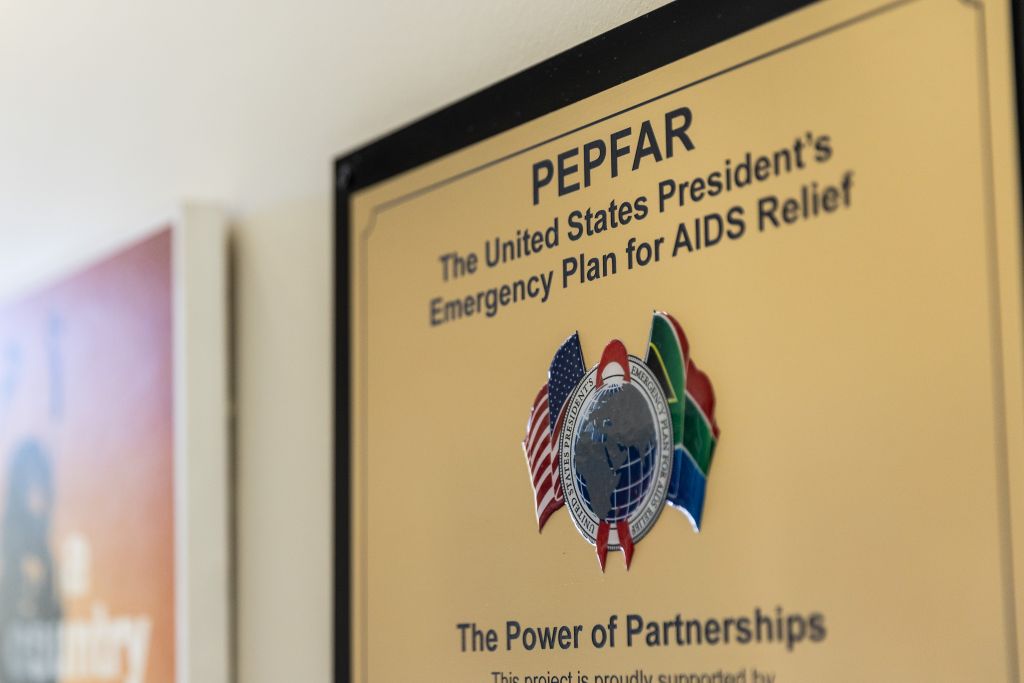
In South Africa, funding cuts from PEPFAR earlier this year have led to clinics closing down, health staff getting retrenched, and people struggling to access HIV medication.

“As you know, the external financing landscape for global health programs is going through significant changes, with substantial impact on lifesaving services for the fight against the three diseases and health and community systems,” the Global Fund said in its letter to South African representatives.

The letter continued that while the Global Fund has “received some significant donor payments in recent days”, prospects to give the full grant cycle 7 (GC7) pledges “remain highly uncertain” and still face a risk of funding shortfalls.

“This is a difficult and unavoidable decision, which may require your country to reconsider how best to use the remaining GC7 grant amounts together with domestic resources and other sources of funds to keep saving lives,” the Global Fund said.

Foster Mohale, Department of Health spokesperson, said that the funding cut did not come as a surprise. Mohale said the department is “working with the provinces” to ensure that “service delivery” is not disrupted, and to apply measures to ensure “efficient use of limited resources”.

Republished from GroundUp under a Creative Commons Attribution-NoDerivatives 4.0 International License.

Read the original article.

Closure of US-funded Cancer Clinic Further Burdens Public Hospitals

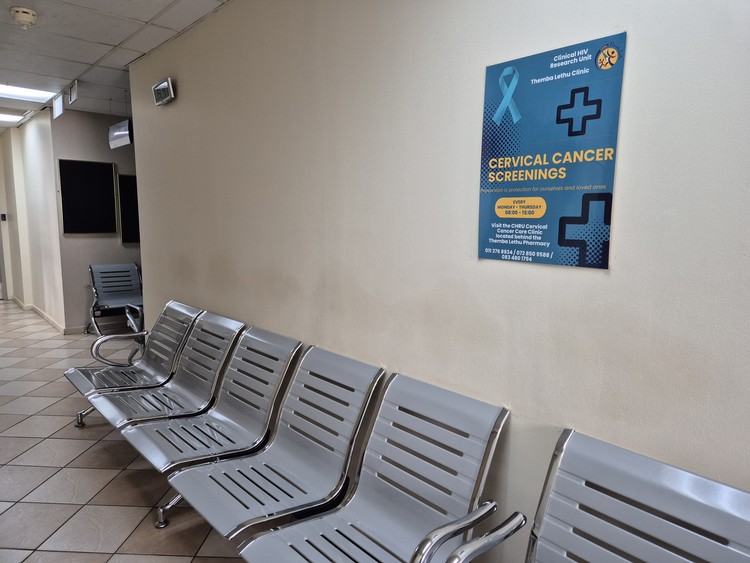
The Cervical Cancer Screening and Prevention Clinic at Helen Joseph Hospital in Johannesburg was forced to shut down in mid-May after losing all its funding from the US President’s Emergency Plan for AIDS Relief (PEPFAR). Photos: Elna Schütz

By Elna Schütz

Hundreds of cervical cancer patients will likely be referred to overburdened hospitals following the closure of the Cervical Cancer Screening and Prevention Clinic at Helen Joseph Hospital in Johannesburg.

Following over 20 years of operations, the clinic was forced to shut down in mid-May after losing all its funding from the US President’s Emergency Plan for AIDS Relief (PEPFAR). It relied on some financial reserves to taper its activities over several months. Most clinic staff have been let go.

The clinic served women who were referred from across Johannesburg and as far as Springs. A significant part of that group lives with HIV.

“Many of these women are from underserved communities with limited access to specialist care,” says Dr Mark Faesen, Specialist Gynaecologist with the Clinical HIV Research Unit (CHRU).

The clinic offered critical cervical cancer screening and follow-up services, including Pap smears and colposcopies – a cervical examination for abnormalities. The clinic was managing around 1,400 patients annually. “It served as a clinical and research hub, preventing many cancers,” Faesen says.

We spoke to Zinhle (name changed) who was screened at the clinic after feeling ill for a year and who sought help at four different hospitals.

“When I got [to this clinic], I was received with a warm welcome,” she says, emphasising that every step of the process was explained to her and she was made to feel comfortable. “Where else are we supposed to go?”

Zinhle says she is deeply upset that she can no longer be treated at the clinic if she needs it again.

Faesen says the clinic’s closure will put immense pressure on other public hospitals offering these services, like Rahima Moosa or Chris Hani Baragwanath. This is likely to lead to longer waiting times for screening, diagnosis and treatments. “Early detection is important,” Faesen says. “Without timely diagnosis, outcomes are far poorer.”

Lorraine Govender, the National Manager of Health Programmes at the Cancer Association of South Africa (CANSA) says they are deeply concerned by the closure, as it is a serious setback in the ongoing fight against the disease.

Cervical cancer is the second most common cancer in women in South Africa, and results in the most deaths. It is curable if diagnosed and treated early. A Human Papillomavirus (HPV) vaccination also reduces the risk of cervical cancer. While low screening rates and backlogs in treatment have been long-standing across the country, Johannesburg appears to be particularly burdened. The shutdown of this clinic adds to a larger shortage of screening and treatment in Gauteng.

The Department of Health has previously stated that while it has improved vaccination efforts against cervical cancer, “screening and treatment are lagging behind”. The national health policy calls for women aged 30 to 50 to be screened at least three times in their lives. Women living with HIV should be screened at least every three years.

Cervical cancer screening services are limited and overwhelmed at most public hospitals, Faesen says. “The funding cuts have a knock-on effect: increasing patient loads at the few remaining colposcopy clinics.”

Lorraine Govender, the National Manager of Health Programmes at the Cancer Association of South Africa (CANSA) says they are deeply concerned by the closure, as it is a serious setback in the ongoing fight against the disease.

“Cervical cancer is both preventable and treatable when detected early, making continued access to screening services vital … The closure of this Johannesburg clinic must be a call to action,” Govender says.

Faesen stresses the urgent need for increased funding for decentralised screening services to fill the gaps created by clinics like the one at Helen Joseph Hospital. “Equipping more public sector sites with colposcopy capability and training personnel is also essential.”

Republished from GroundUp under a Creative Commons Attribution-NoDerivatives 4.0 International License.

Read the original article.

How US Funding Cuts are Forcing Sex Workers to Share HIV Medicines

By Kimberly Mutandiro

Sex workers in Vosloorus, Johannesburg and Springs talked to GroundUp about their struggle to access health services, particularly antiretroviral treatment, since the closures of US funded clinics. Photos: Kimberly Mutandiro

It’s afternoon on Boundary Road in Vosloorus. Sex worker Simangele (not her real name) hopes to secure her next client.

Making enough money to pay rent has always been a concern for Simangele. But now she has a new worry: how to keep up with her antiretroviral treatment.

Two months ago the closure of a mobile clinic — where Simangele and other sex workers in Vosloorus went for checkups and to collect their treatment — left her without access to the life-saving medication.

The mobile clinic was run by the Wits Reproductive Health and HIV Institute (WITS RHI) which heavily relied on US funding. The institute has been providing critical sexual and reproductive health services since 2018. The programme was one of many health facilities forced to halt services at the end of January in the wake of US funding cuts for global aid.

Speaking to GroundUp, Simangele says she ran out of antiretroviral medicines (ARVs) over a month ago and has resorted to borrowing a few tablets from a friend. “I don’t know what I will do because the tablets my friend gets give me side effects,” she says. (Antiretrovirals treat HIV. They have to be taken daily for life.)

She says the clinic closed without any warning or before they could give them transfer letters to public healthcare facilities. She is now dreading having to go to a public facility where she says sex workers are frequently discriminated against, particularly those who are undocumented.

We spoke to a dozen other sex workers in Joburg and in Springs who are worried about defaulting on their antiretroviral treatment following the closure of the Wits RHI clinics. The clinics also provided pre-exposure prophylaxis (PrEP) (to prevent HIV-negative people contracting HIV), and treatments for sexually transmitted infections, TB, sexual reproductive health services, and counselling.

A sex worker shows the last few ARVs she has left.

Another sex worker said, “The minute we go to public clinics, they will need documents, which some of us do not have … Wits made time to listen to our problems as sex workers. Even when we faced challenges with clients, they never judged us.”

Sisi (not her real name), who rents rooms and assists sex workers in Vosloorus, said she’s aware of several sex workers who have defaulted and no longer have access to condoms, lubricants, and treatment for sexually transmitted infections. “The Wits clinic did not discriminate against people without documents and would sometimes provide food, branded T-shirts, caps, and even jobs,” she said.

“Many of us will die”

We visited Zig Zag Road in Springs, where several sex workers said they were out or almost out of ARVs. When asked why they didn’t just go to a local clinic, they told GroundUp about instances where they experienced stigma while trying to access treatment at public clinics.

“I used to receive PrEP to help prevent HIV (from the Wits clinic). We would also receive birth control services. Now I can’t go to a public clinic because we are mocked for being sex workers,” said Siphesihle.

Ntombi, who waits for clients along End Street, attended one of the Wits clinics in Hillbrow which closed down. She said those on PrEP were given transfer letters before the clinic closed.

Other workers nearby told GroundUp that they now pay up to R250 for PrEP, which is more than they can afford.

Sisonke calls for urgent response to crisis

The Sisonke National Movement, which advocates for the rights of sex workers, has been raising the alarm since the closure of US-funded facilities. Before the closures, Sisonke was in talks with National Department of Health through the South African National AIDS Council about the provision of services to sex workers and other vulnerable groups, said the organisation’s spokesperson Yonela Sinqu.

She said that the department never answered activists when they asked what would happen should donor funds no longer be available for these facilities.

She said the plea for assistance without referral letters is made to all provinces, not only Gauteng. However, Gauteng is the only province that has approached us with the crisis of people without referrals, she said.

Department of Health spokesperson Foster Mohale has not responded to requests for comment.

Republished from GroundUp under a Creative Commons Attribution-NoDerivatives 4.0 International License.

Read the original article.

How Much does Our HIV Response Depend on US Funding?

The United States has slashed its HIV funding — through the PEPFAR programme — to African countries. Archive photo: Ashraf Hendricks

By Jesse Copelyn

After the US slashed global aid, the South African government stated that only 17% of its HIV spending relied on US funding. But some experts argue that US health initiatives had more bang for buck than the government’s programmes. Jesse Copelyn looks past the 17% figure, and considers how the health system is being affected by the loss of US money.

In the wake of US funding cuts for global aid, numerous donor-funded health facilities in South Africa have shut down and government clinics have lost thousands of staff members paid for by US-funded organisations. This includes nurses, social workers, clinical associates and HIV counsellors.

Spotlight and GroundUp have obtained documents from a presentation by the National Health Department during a private meeting with PEPFAR in September. The documents show that in 2024, the US funded nearly half of all HIV counsellors working in South Africa’s public primary healthcare system. The data excludes the Northern Cape.

Counsellors test people for HIV and provide information and support to those who test positive. They also follow up with patients who have stopped taking their antiretrovirals (ARVs), so that they can get them back on treatment.

Overall, the US funded 1,931 counselors across the country, the documents show. Now that many of them have been laid off, researchers say the country will test fewer people, meaning that we’ll miss new HIV infections. It also means we’ll see more treatment interruptions, and thus more deaths.

PEPFAR also funded nearly half of all data capturers, according to the documents. This amounted to 2,669 people. Data capturers play an essential role managing and recording patient files. With many of these staff retrenched, researchers say our ability to monitor the national HIV response has been compromised.

These staff members had all been funded by the US President’s Emergency Plan for AIDS Relief (PEPFAR). The funds were distributed to large South African non-government organisations (NGOs), who then hired and deployed the staff in government clinics where there is a high HIV burden. Some NGOs received PEPFAR funds to operate independent health facilities that served high-risk populations, like sex workers and LGBTQ people.

But in late January, the US paused almost all international aid funding pending a review. PEPFAR funds administered by the US Centres for Disease Control (CDC) have since resumed, but those managed by the US Agency for International Development (USAID) have largely been terminated. As a result, many of these staff have lost their jobs.

The national health department has tried to reassure the public that the country’s HIV response is mostly funded by the government, with 17% funded by PEPFAR – currently about R7.5 billion a year. But this statistic glosses over several details and obscures the full impact of the USAID cuts.

Issue 1: Some districts were heavily dependent on US funds

The first issue is that US support isn’t evenly distributed across the country. Instead, PEPFAR funding is targeted at 27 ‘high-burden districts’ – in these areas, the programme almost certainly accounted for much more than 17% of HIV spending. Some of these districts get their PEPFAR funds from the CDC, and have been less affected, but others got them exclusively from USAID. In these areas, the HIV response was heavily dependent on USAID-funded staff, all of whom disappeared overnight.

Johannesburg is one such district. A doctor at a large public hospital in this city told Spotlight and GroundUp that USAID covered a substantial proportion of the doctors, counsellors, clerks, and other administrative personnel in the hospital’s HIV clinic. “All have either had their contracts terminated or are in the process of doing so.”

The hospital’s HIV clinic lost eight counselors, eight data capturers, a clinical manager, and a medical officer (a non-specialised doctor). He said that this represented half of the clinic’s doctors and counselors, and about 80% of the data capturers.

This had been particularly devastating because it was so abrupt, he said. An instruction by the US government in late-January required all grantees to stop their work immediately.

“There was no warning about this, had we had time, we could have made contingency plans and things wouldn’t be so bad,” he explained. “But if it happens literally overnight, it’s extremely unfair on the patients and remaining staff. The loss of capacity is significant.”

He said that nurses have started to take on some of the tasks that were previously performed by counselors, such as HIV testing. But these services haven’t recovered fully and things were still “chaotic”.

He added, “It’s not as if the department has any excess capacity, so [when] nurses are diverted to do the testing and counselling, then other parts of care suffer.”

Issue 2: PEPFAR programmes got bang for buck

Secondly, while PEPFAR may only have contributed 17% of the country’s total HIV spend, some researchers believe that it achieved more per dollar than many of the health department’s programmes.

Professor Francois Venter, who runs the Ezintsha research centre at WITS university, argued that PEPFAR programmes were comparatively efficient because they were run by NGOs that needed to compete for US funding.

“PEPFAR is a monster to work for,” said Venter, who has previously worked for PEPFAR-funded groups. “They put targets in front of these organisations and say: ‘if you don’t meet them in the next month, we’ll just give the money to your competitors’ and you’ll be out on the streets … So there’s no messing around.”

US funding agencies, he said, would closely monitor progress to see if organisations were meeting these targets.

“You don’t see that with the rest of the health system, which just bumbles along with no real metrics,” said Venter.

“The health system in South Africa, like most health systems, is not terribly well monitored or well directed. When you look at what you get with every single health dollar spent on the PEPFAR program, it’s incredibly good value for money,” he said.

Not only were the programmes arguably well managed, but PEPFAR funds were also strategically targeted. Public health specialist Lynne Wilkinson provided the example of the differentiated service delivery programme. This is run by the health department, but supported by PEPFAR in one key way.

Wilkinson explained that once patients are clinically stable and virally suppressed they don’t need to pick up their ARVs from a health facility each month as it’s too time-consuming both for them and the facility. As a result, the health department created a system of “differentiated service delivery”, in which patients instead pick up their medication from external sites (like pharmacies) without going through a clinical evaluation each time. But Wilkinson noted that before someone can be enrolled in that service delivery model, clinicians need to check that patients are eligible.

“Because [the enrollment process] was going very slowly … this was supplemented by PEPFAR-funded clinicians who would go into a clinic and review a lot of clients, and get them into that system”. By doing this, PEPFAR-funded staff successfully resolved a major bottleneck in the system, she said, reducing the number of people in clinics, and thus cutting down on waiting times.

Not everyone is as confident about the overall PEPFAR model. The former deputy director of the national health department, Dr Yogan Pillay, told Spotlight and GroundUp that we don’t have data on how efficient PEPFAR programmes are at the national level. This needs to be investigated before the health department spends its limited resources on trying to revive or replicate the programmes, argued Pillay who is now the director for HIV and TB delivery at the Gates Foundation.

While he said that many PEPFAR-funded initiatives were providing crucial services, Pillay also argued that “the management structure of the [recipient] NGOs is too top-heavy and too expensive” for the government to fund. Ultimately, we need to consider and evaluate a variety of HIV delivery models instead of rushing to replicate the PEPFAR ones, he said.

Issue 3: PEPFAR supported groups that the government doesn’t reach

An additional issue obscured by the 17% figure is that PEPFAR specifically targeted groups of people that are most likely to contract and transmit HIV, like people who inject drugs, sex workers, and the LGBTQ community. These groups, called key populations, require specialised services that the government struggles to provide.

Historically, PEPFAR has given NGOs money so that they could help key populations from drop-in centres and mobile clinics, or via outreach services. All of this operated outside of government clinics, because key populations often face stigma in these settings and are thus unwilling to go there.

For instance, while about 90% of surveyed sex workers say that staff at key populations centres are always friendly and professional, only a quarter feel the same way about staff at government clinics. This is according to a 2024 report, which also found that many key populations are mistreated and discriminated against at public health facilities. (Ironically, health system monitoring organisation Ritshidze, which conducted the survey, has been gutted by US funding cuts.)

While the key populations centres funded by the CDC are still operational, those funded by USAID have closed. The health department has urged patients that were relying on these services to go to government health facilities, but researchers argue that many simply won’t do this.

Venter explained: “For years, I ran the sex worker program [at WITS RHI, which was funded by PEPFAR] … Because sex workers don’t come to [health facilities], you had to provide outreach services at the brothels. This meant … we had to deal with violence issues, we had to deal with the brothel owners, and work out which days of the week, and hours of the day we could provide the care. Logistically, it’s much more complex than sitting on your bum and waiting for them to come and visit you at the clinic.

“So you can put up your hand and say: ‘Oh they can just come to the clinics’ – like the minister said. Well, then you won’t be treating any sex workers.” Venter said this would result in a public health disaster.

He argued that one of the most crucial services that key populations may lose access to is pre-exposure prophylaxis (PrEP), a daily pill that prevents HIV.

While the vast majority of government clinics have PrEP on hand, they often fail to inform people about it. For instance, a survey of people who are at high-risk of contracting HIV in KwaZulu-Natal found that only 15% were even aware that their clinic stocked PrEP.

Another large survey found that at government facilities, only 19% of sex workers had been offered PrEP. By contrast, at the drop-in centres for key populations, the figure was more than double this, at 40%. Without these centres, the health system may lose its ability to create demand for the drug among the most high-risk groups.

One health department official told Spotlight and GroundUp that the bulk of the PrEP rollout would continue despite the US funding cuts. “The majority of the PrEP is offered through the [government] clinics,” she said, 96% of which have the drug.

However, she conceded that specific high-risk groups like sex workers have primarily gotten PrEP from the key populations centres, rather than the clinics. “This is the biggest area where we are going to see a major decline in uptake for [PrEP] services,” she said.

600 000 dead without PEPFAR?

Overall, the USAID funding cuts have severely hindered the HIV testing programmes, data capturing services, PrEP roll-out, and follow-up services for people who interrupt ARV treatment. And the patients who are most affected by this are those that are most likely to further transmit the virus.

So what will the impacts be? According to one modelling study, recently published in the Annals of Medicine, the complete loss of all PEPFAR funds could lead to over 600 000 deaths in South Africa over the next decade.

While South Africa still retains some PEPFAR funding that comes from the CDC, beneficiaries are bracing for this to end. According to Wilkinson, the PEPFAR grants of most CDC-funded organisations end in September and future grants are uncertain. For some organisations, the money stops at the end of this month.

Meanwhile, if the government has any clear plan for how to manage the crisis, it’s certainly not making this public.

In response to our questions about whether the health department would be supporting key populations centres, the department’s spokesperson, Foster Mohale, said: “For now we urge all people living with HIV/AIDS and TB to continue with treatment at public health facilities.”

When pressed for details about the department’s plans for dealing with the US cuts, Mohale simply said that they could not reveal specifics at this stage and that “this is a work in progress”.

In his budget speech in Parliament on Wednesday, Finance Minister Enoch Godongwana did not announce any funding to cover the gap left by the abrupt end of US support for the country’s HIV response. Prior to the speech, Godongwana told reporters in a briefing that the Department of Health would assist with some of the shortfall, but no further information could be provided.

Published by GroundUp and Spotlight.

Republished from GroundUp under a Creative Commons Attribution-NoDerivatives 4.0 International License.

Read the original article.

My Five-hour Wait for Treatment at Mamelodi Hospital

Gauteng Health MEC has said Mamelodi Regional Hospital meets National Health Insurance standards, but my experience was not good

The writer waited five hours for treatment for a broken wrist and head injuries at Mamelodi Regional Hospital in Tshwane. Photo: Warren Mabona.

By Warren Mabona

I waited five hours to get medical treatment at Mamelodi Regional Hospital in Tshwane, with a broken wrist and an injured head.

On 19 February 2025 at about 4pm I was walking in Mamelodi West. I was on a journalism assignment, heading to informal settlements that are prone to flooding.

The street was quiet, but I felt safe because I had walked there before. Suddenly, a car stopped in front of me, and two men got out of it and tried to rob me. I ran away and jumped into the stormwater passage, but slipped and fell, hitting my face against the concrete.

When I managed to stand up, I was dizzy and my vision was blurred. I was drenched in dirty water and my belongings — my cell phone, my wallet and my camera bag — were wet.

The men who attacked me were no longer on the street. My right wrist was swollen and painful, an injury above my eye was bleeding profusely, and my head was aching. But I was relieved that I was still alive and I still had all my belongings.

I decided not to call an ambulance, but to walk about 800 metres to Mamelodi Regional Hospital.

I went to the casualty unit, expecting that I would receive treatment quickly. At the front desk, a clerk took more than 20 minutes to fill in my file. He said the hospital’s computer system was offline and he had to fill in the file with a pen. I then went to sit at the reception area. My head was aching and I repeatedly requested headache tablets from the nurses, who gave me two tablets after 30 minutes. But my pain lingered.

The wound on my face was still bleeding and my wrist was swollen and bent. About 40 minutes after my arrival, a nurse cleaned my wound and wrapped it with a bandage, stopping the bleeding.

At about 8pm, a man sitting next to me said he had arrived at the hospital at 2pm after falling from scaffolding at a construction site. He was still waiting for his X-ray results.

I went for X-rays and long afterwards, at about 10pm, I had a cast put on my wrist. I was given injections which helped with the pain. I was discharged at 11pm and went home.

In September last year, the Gauteng MEC for Health Nomantu Nkomo-Ralehoko said that Mamelodi Regional Hospital was the first hospital in Gauteng ready to meet National Health Insurance (NHI) standards.

In response to GroundUp’s questions, Gauteng Department of Health spokesperson Motalatale Modiba said a triage priority system is followed at the hospital, meaning that four patients with critical wounds that required life-saving emergencies were attended to first. He said this affected my waiting time for wound care and the application of a cast.

“You were classified as Orange P2, that is a person who is in a stable condition and is not in any immediate danger, but requires observation,” said Modiba.

“At the time of your arrival, the casualty unit had 31 other patients to be seen. These include four critical cases in the resuscitation unit, ten trauma cases, 16 medical cases and four pediatric cases,” he said.

Modiba confirmed that the hospital’s computer system was offline when I arrived.

I asked Modiba whether the Gauteng Department of Health can still confidently regard this hospital as NHI-ready despite the slow delivery of medical services I experienced. Modiba said: “Mamelodi Regional Hospital remains committed to provide best healthcare services.”

Republished from GroundUp under a Creative Commons Attribution-NoDerivatives 4.0 International License.

Read the original article.

Over 15 000 South African Health Workers’ Jobs are at Risk as US Cuts Aid

Photo by Scott Graham on Unsplash

By Jesse Copelyn

If the US President’s Emergency Plan for AIDS Relief (PEPFAR) is halted, the South African public health system “will face a severe crisis” that could endanger millions of lives. This is according to a coalition of 17 health service organisations in South Africa, including large ones such as Anova Health, Health Systems Trust, TB HIV Care, The Aurum Institute and Wits RHI.

In a statement, they appealed to private sector donors and “high net-worth individuals” to help fund the shortfall caused by US aid cuts.

Read the statement

PEPFAR is a multi-billion dollar US initiative that supports HIV and TB-related health services around the world. In South Africa alone, over 15 000 staff (mostly health workers) are funded by PEPFAR, according to the national health department.

But a series of executive orders issued by US President Donald Trump has suspended some of this funding and the rest remains precarious. The orders include a 90-day pause on all US foreign development assistance and another that explicitly bars South Africa from aid (with some leeway allowed).

Some health service providers in South Africa continue to receive money from PEPFAR under a limited waiver that allows for the continuation of certain “life-saving HIV services”. But the waiver hasn’t protected all PEPFAR beneficiaries. As a result, some organisations have had to close their doors, while many others have had to curtail what they can provide.

The waiver doesn’t cover all health services, and many health programs that target high-risk groups (such as people who use drugs) have not been protected. This is even if they provide life-saving HIV services.

Services suspended for the most vulnerable

Under the waiver, PEPFAR can continue to fund programs that offer treatment and testing for HIV, including antiretroviral (ARV) services. Projects can also continue to provide condoms and HIV prevention medication, known as PrEP, but only to pregnant and breastfeeding women.

The waiver does not allow for continued funding of PrEP medication or condoms to anyone else. It also doesn’t cover crucial research, like population surveys which tell us how many people have HIV and where they’re located. Additionally, it doesn’t allow for continued funding of methadone maintenance programs for people who use heroin. This is despite the fact that this is the most effective way to help people to stop using heroin and to curb the sharing of drug needles (something which contributes to the spread of HIV).

Dr Gloria Maimela, who represents the coalition of organisations behind the statement, told GroundUp and Spotlight: “The staff who are providing [HIV] testing and treatment [are] back at facilities to provide those services, but staff that are providing other services not included in the waiver have been stopped, and are waiting for further guidance.”

In addition, organisations that help key populations have not been protected by the waiver, according to Maimela. Key populations are groups that are more at risk of becoming infected with HIV, such as people who inject drugs, sex workers, transgender people, and men who have sex with men. South African policy documents and the World Health Organisation recommend that health programs focus on these groups since they’re more likely to acquire and transmit HIV.

Despite this, US-funded organisations that target key populations have been forced to shut their doors in South Africa. Maimela says that this is even in cases where they were offering the kind of life-saving ARV treatment covered in the waiver.

“For us, this is of grave concern,” Maimela says, “because we know that right now that is where most of the [HIV] infections lie”.

So far, organisations which provide HIV treatment and prevention services to LGBTI people have been forced to shut down, including the Ivan Toms Centre and Engage Men’s Health.

Additionally, GroundUp and Spotlight have identified two PEPFAR-supported harm reduction centres that have had to close. These centres provided methadone and clean needles to people who inject drugs (when drug users have access to clean needles, they’re less likely to resort to sharing them, which brings down HIV transmission).

Ricardo Walters, who provides consulting services to health service organisations across Africa, told Spotlight and GroundUp that a similar trend could be seen across the continent.

“Many organisations that were specifically offering services to key populations were not suspended; their project funding was terminated,” he said. “They will not be coming back.”

These organisations were assisting patients “who often could not access services in a general [health] setting”.

Walters says the reasons given for the termination of these programs vary across organisations and countries.

“Where there are reasons, it’s often [stated] that it’s because the program contains components of DEIA [Diversity, Equity, Inclusion and Accessibility] and gender ideology, which is directly from a previous executive order [in which the Trump administration terminated all federal funding for DEIA]. The terms are never defined … no one says don’t treat gay men.”

Appeal to private sector

Beyond the shuttering of existing organisations, providers that are covered under the waiver remain unsure about whether funding will restart after the 90-day period. Also large sections of the US aid establishment have been gutted.

The recent statement by health organisations argues that if this aid is terminated “patients, including children, will lose access to life-saving antiretroviral treatment, while thousands of healthcare workers will be unable to provide essential HIV care. The consequences will be immediate. Fewer people will receive timely testing and treatment, leading to more undiagnosed cases, rising infections, and the spread of drug resistance. Mortality will increase, opportunistic infections will surge, and TB rates will escalate – putting the entire population at risk.”

As such, the statement calls on private corporations, donors and philanthropists to assist in supporting these health services.

“We encourage people to get in touch with us,” says Maimela, “so that even as we hold dialogues with the government, [those people] could be part of [the conversation] and step in and say how they want to help.”

To find out how to support organisations that provide HIV and TB related health services in South Africa contact Gloria Maimela at gloriam@foundation.co.za.

Published jointly by GroundUp and Spotlight.

Republished from GroundUp under a Creative Commons Attribution-NoDerivatives 4.0 International License.