Tag: HIV prophylaxis

Is Aspen Betting on the Right HIV Prevention Product?

The potent antiretroviral medicine alimatravir is being evaluated in two ongoing clinical trials as a potential once-monthly HIV prevention pill. (Photo: Unsplash)

By Catherine Tomlinson for Spotlight

Aspen Pharmacare has announced that it will not be manufacturing the lenacapavir HIV prevention injection, and that it will instead focus on producing alimatravir, an experimental HIV prevention pill.

At the start of 2020, the only medicine approved to prevent HIV infection in people who are not living with HIV in South Africa was tablets containing the antiretroviral drug tenofovir. Apart from the tablets, ideally taken daily, HIV transmission could also be prevented by the correct use of condoms and reduced through medical male circumcision. Treating people living with HIV also helps a lot, since most people who are stable on antiretroviral treatment become non-infectious.

Since 2020, three more HIV prevention medicines have been registered in South Africa. Most prominent of these is the lenacapavir injection, which provides almost complete protection for six months at a time. The cabotegravir injection (CAB-LA) provides two months of protection and the dapivirine vaginal ring a month of partial protection. Several more products are in advanced clinical trials – including a new formulation of lenacapavir that may provide 12 months of protection and a tablet that could protect for a month.

Yet, despite the promise of new HIV prevention medicines, the rollout and uptake of these products in South Africa and globally has been slower than expected. Currently, only around 350 000 people are using HIV prevention tablets in South Africa, while in the region of 60 000 people have started taking the twice-yearly lenacapavir injections. At these levels, the number of people taking HIV prevention medicines in South Africa remains far too low to make a significant dent in the rate of new infections.

Cost has been a barrier 

HIV prevention tablets cost the health department around $40 (roughly R700) per person per year. This price is considered to be affordable and the tablets are currently available at almost all public sector clinics in the country.

But modelling shows that long-acting injections can prevent more HIV infections than daily tablets, because their efficacy is less reliant on people taking the tablets every day. There is also evidence that many people prefer long-acting injections over daily tablets.

The cost of these newer, long-acting products has been a challenge. The health department has not procured CAB-LA injections, which was registered in the country in 2022. This was largely due to the price of around $160 per person per year. It also didn’t help that the current formulation of CAB-LA provides only two months of protection, compared to lenacapavir’s six.

In June, the health department started rolling out lenacapavir injections to around 10% of public sector facilities – for now the potential demand by far outstrips supply. The limited scale of the rollout is due to both supply and affordability challenges. The health department is paying $60 per person per year for lenacapavir through a Global Fund procurement arrangement that is allowing donors to pay an additional confidential top-up amount to Gilead Sciences above what the health department pays. For now, Gilead is the only supplier of the jab.

Supply should however improve over the next 12 months and prices are likely to come down. Gilead has licensed six companies to manufacture generic lenacapavir and is considering granting additional licenses, possibly to South African companies through a process coordinated by the South African National AIDS Council. Deals are in place with Indian pharmaceutical companies Hetero and Dr Reddy’s that should ensure a generic price of $40 per person per year. Hetero has already filed its product for registration with the South African Health Products Regulatory Authority – although it is expected to only get the green light early in 2027.

Is a new highly affordable option on the way?

In light of these pricing and supply concerns, news from the 2026 International AIDS Society Conference about a monthly HIV prevention tablet under development has made waves. Health economists presented research showing that the monthly tablet, alimatravir, could be profitably produced for a price tag as low as $3 per person per year (a $15 price was indicated in a conference abstract and previously quoted by Spotlight, but the price presented in the conference session was $3).

Not only is this a fraction of the cost of long-acting injections, but it is also substantially cheaper than the cost of daily tablets.

“Alimatravir for $3 per year could be the cheapest HIV prevention drug the world has ever seen, affordable worldwide,” Dr Samuel Cross of Christchurch Hospital told delegates.

He told conference delegates that the methodology used to calculate the $3 per person per year price is the same methodology that has previously been used to predict the manufacturing cost of several medicines. He said that “[o]ver the past decade, this methodology has correctly predicted production costs for [several] drugs,” including drugs for HIV, TB, Hepatitis B and C, and other conditions.

Some caution would however be prudent, given that alimatravir’s safety and efficacy hasn’t been definitively proven. The final verdict will come from two ongoing Phase 3 clinical trials, called EXPrESSIVE-10 and EXPrESSIVE-11 – both expected to report in 2027. Regulators typically approve medicines only after positive findings from such phase 3 trials.

Alimatravir is already influencing the market

Despite the absence of phase III data, alimatravir is already making waves and affecting the market for HIV prevention products.

The most stark example of this is the recent announcement by Aspen Pharmacare that it will no longer pursue a license to locally manufacture lenacapavir and focus instead on developing its capacity to manufacture alimatravir.

Aspen, along with six other companies, are already licensed to produce generic versions of alimatravir. The unusually early licensing of these companies by MSD (known as Merck in the US and Canada) is a key factor as to why this product is expected to be affordable right out of the gate, if it is shown to be effective in preventing HIV.

No generic companies have yet indicated what price they will charge for alimatravir – but the $3 reference price will no doubt exert some downward pressure.

Why Aspen is no longer pursuing lenacapavir manufacturing

Stavros Nicolaou, senior executive for strategic trade at Aspen Pharmacare, this week told Spotlight that Aspen halted its pursuit of a license to manufacture generic lenacapavir because the South African government’s current pharmaceutical procurement policies and practices provide insufficient assurance that the company will be able to recoup its investments.

The absence of guaranteed procurement by the health department, the lack of a local preference procurement policy, and the existence of competitive products – such as alimatravir – coming down the pipeline all factored in Aspen’s decision, said Nicolaou.

He said that developing manufacturing capacity for tablets, such as alimatravir, is less costly than developing manufacturing capacity for injectables, such as lenacapavir.

“We need greater certainty before we make these investments,” Nicolaou told Spotlight.

He added that the early licensing of alimatravir to enable accelerated generic registration of the product following Phase III trials also made the product an attractive candidate for the company to pursue. He said it was premature to comment on the price they might charge for alimatravir.

Aspen’s decision comes against a broader debate regarding the obligations of the health department to support local pharmaceutical manufacturers, while also delivering on its obligations to maximise the benefits derived from the country’s constrained health budget.

What’s next?

A cheap monthly HIV prevention pill could be a game changer in the fight against HIV in the coming years. However, while data on alimatravir are awaited, its potential arrival has complicated the investment decisions facing pharmaceutical companies, governments, and donors regarding new HIV prevention medicines. It has also raised questions over how the state is, or is not, incentivising local production and procurement of locally produced pharmaceuticals.

The prospect of a monthly pill costing around $3 per year is undeniably exciting. Yet scientists have repeatedly shown that offering a range of prevention medicines—allowing people to choose the option that best suits their needs and lives—improves overall uptake. Even if alimatravir works as well as hoped, there will still be a role for six-monthly lenacapavir, let alone the potential 12-monthly version of the jab that is currently being evaluated in a phase 3 clinical trial.

Either way, while the health department must keep a close eye on the products in the pipeline as it plans for the future, it cannot afford to slow the rollout of the products already available.

*This article was first published by Spotlight – health journalism in the public interest. Sign up to the Spotlight newsletter.

With over 3 600 Western Cape Users, Lenacapavir is “Cool”

Lenacapavir is administered via two injections of 1.5ml each in the buttocks, thigh, abdomen or upper arm. (Photo: Nasief Manie/Spotlight)

By Biénne Huisman for Spotlight

From counselling about small nodules to overcoming people’s fears of needles, Spotlight takes the pulse of a new HIV prevention injection’s rollout in the Western Cape.

At Cape Town’s Philippi Village, beside a rainbow-emblazoned mobile clinic, Olwam Plaatjie says she switched from the two-monthly cabotegravir HIV prevention injection to the six-monthly injectable lenacapavir. Despite small nodules forming at the two jab sites on her abdomen, the 20-year-old is delighted with the new HIV prevention medicine.

Plaatjie, who is from Crossroads and who started taking cabotegravir injections three years ago, says: “I see many people who are HIV positive. Many of them are girls. Guys often don’t even want to be tested; my boyfriend didn’t want to go for HIV tests. So that’s why I started to have a fear. I was like, you know, maybe there is something he is hiding.”

Plaatjie is one of a stream of young women now taking their health in their own hands as they personally implement HIV prevention strategies, thanks to national government and research campaigns aimed at this vulnerable group.

According to Foster Mohale, spokesperson for the National Department of Health, as of 23 August, there have been 3 641 initiations of lenacapavir, or LEN for short, across the 22 government clinics in the province that are offering the injection. Nationally, the number stood at 47 934.

Due to severely constrained supply, lenacapavir is for now only being rolled out to 360 health facilities across six provinces (Free State, Limpopo, and Northern Cape are not currently included). Gauteng accounts for over a third of facilities and KwaZulu-Natal for around a quarter. The Western Cape’s 22 facilities makes up only around 6% of the total. The selection of facilities was in part informed by how well facilities had been doing in the provision of HIV prevention pills, currently available in almost all the country’s public sector health facilities.

Mohale said the three clinics with the highest administrations in the Western Cape as of August 26, were the Khayelitsha Community Health Centre, Michael Mapongwana Community Health Centre, in Khayelitsha, and Nolungile Community Health Centre, also in Khayelitsha.

Uptake in adolescent girls and young women

Asked about the high uptake in this area, Director of Service Priorities Coordination for the Western Cape Government Department of Health and Wellness, Hilary Goeiman, pointed out the community’s large population of adolescent girls and young women, who are being targeted in the medicine’s roll-out strategy.

“Nolungile Community Day Centre has demonstrated strong clinical leadership and effective implementation of the programme, successfully integrating lenacapavir into routine HIV prevention services,” she said.

On the demographics of the administrations, Goeiman said: “Most recipients are women, in line with the initial rollout focus on adolescent girls and young women, women of reproductive age, and pregnant and breastfeeding women who are at substantial risk of HIV acquisition.”

Mohale said 258 pregnant women had been initiated on lenacapavir at the 22 clinics across the Western Cape, since June.

Science in tandem with government

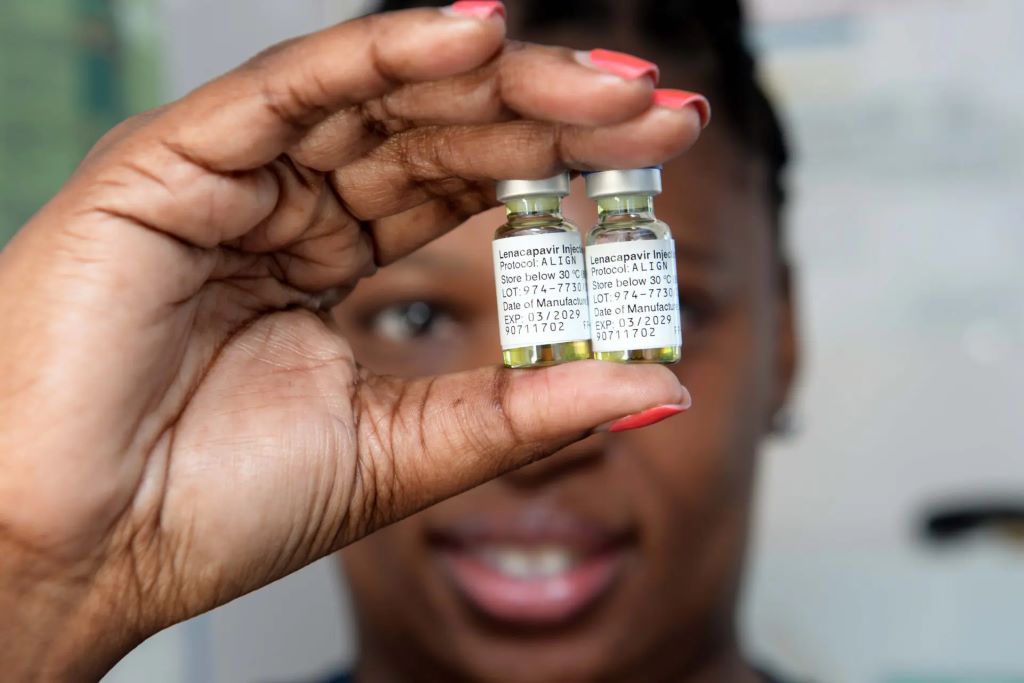
Meanwhile, Plaatjie was part of an initial cohort of 15- to 35-year-olds who received lenacapavir jabs in February, as part of a study spearheaded in the area by the Desmond Tutu Health Foundation. The study, called ALIGN, will evaluate implementation strategies for lenacapavir and how to encourage continued use.

The research is unfolding in collaboration with the Western Cape Department of Health and Wellness and the National Department of Health, but with a separate stock of the drug, independently sourced by the scientists. Social behavioural expert at the foundation, Elzette Rousseau, says their goal is to enrol at least 1 500 people on lenacapavir and to follow them for 18 months. She adds that at this stage, their data is still too limited to have any clear findings.

Cool, but a fear of needles

At Philippi Village, next to Plaatjie, Lutho Windvoel reflects on lenacapavir. He says that to his knowledge, men can be afraid of injections, and thus of HIV prevention through jabs. But, to him the benefit of protection over six months outweighs a fear of needles. “It’s just cool,” says Windvoel, who is wearing a black T-shirt with a pink teddy bear graphic.

At Philippi Village in Cape Town, a rainbow-emblazoned mobile clinic operated by the Desmond Tutu Health Foundation provides Lenacapavir injections. From left to right: Olwam Plaatjie, Sinovuyo Plaatjie, Lutho Windvoel, and Okuhle Trinity Potelwa. (Photo: Nasief Manie/Spotlight)

“LEN makes life easier. People are excited. Before, I took PrEP tablets daily but I worried that I would forget.”

Also in the conversation is Sive Mphambaniso, youth reference engagement facilitator at the Desmond Tutu Health Foundation. On a fear of injections, particularly among men, Mphambaniso agrees: “Most of them [men], when we talk about injections, they’re like, ‘nah.’ Many men are afraid of needles. Especially when we talked about cabotegravir when it arrived. So many of them preferred to take the oral PrEP, actually. Until the six month injection came in. Now people are saying, ‘it’s better for me to just have the guts to take the injection, rather than taking pills every day’. It’s the promise of six months that makes you just say, ‘Now let me have the guts to do this thing’.”

On some men being resistant to HIV testing or prevention, he says: “To be honest, it’s a struggle. And talking to men about HIV prevention, it’s quite a challenge, but it is happening. And I would say it is better for them to come to the mobile clinic rather than to go to a traditional clinic. Sometimes men don’t like people to think that they are sick. So they come here, it’s quite quick and it’s efficient.”

From the researchers’ side, Rousseau pointed out that one in four of their clients for lenacapavir had been men, “similar numbers to those accessing oral PrEP,” she says.

Small nodules that disappear

Speaking to Spotlight, Plaatjie and Windvoel, along with Sinovuyo Plaatjie, 22, and Okuhle Potelwa, 19, who were also in the initial cohort in the study led by the Desmond Tutu Health Foundation, agree that small nodules formed under the skin where the lenacapavir was injected. “It was like small bumps,” said Plaatjie. “It’s not even visible, but you can just feel it when you touch yourself. And it’s not sore.”

Lenacapavir is administered via two injections of 1.5ml each in the buttocks, thigh, abdomen or upper arm. Speaking to Spotlight, the four recipients say the nodules had not been painful, and that the bumps started growing smaller after about a month and eventually disappeared. They did not experience any other side effects.

Inside the “Tutu teen truck” mobile clinic parked at Philippi Village, nurse Zimasa Zwide elaborates on the nodules. “Most of the time they form immediately, especially on the slimmer people,” she says. “So what I normally do when I’m injecting people, I ask them to feel the nodules so that they won’t be surprised at home later. They get smaller with time and they disappear depending on the body of each participant. And most of them are not reporting any pains.”

However, at a workshop hosted by the Bhekisisa Centre for Health Journalism at the end of August, Spotlight heard from two lenacapavir users, who did report initial pain along with “bumps” at the injection sites – for a few weeks following administration. At some facilities, icepacks are used to numb the injection site, either before or after the injection is administered, or both.

Glass vials of pale yellow liquid

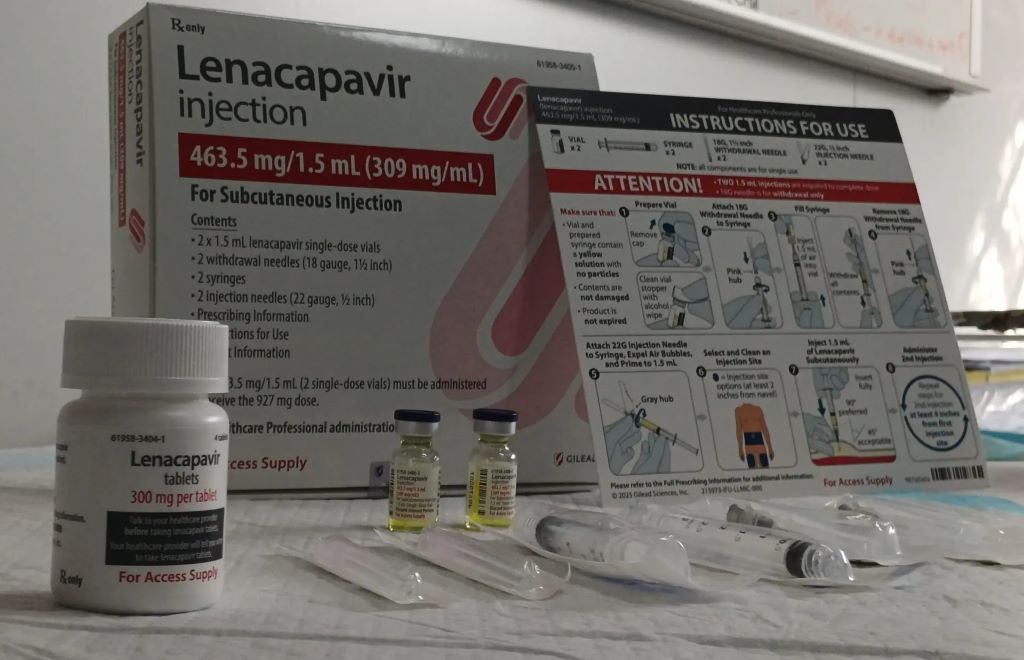
During our conversation, Zwide opens a lenacapavir dosing kit. Inside there are two syringes, two glass vials of pale yellow liquid, and a plastic container with tablets.

She says: “It’s two injections. One on each side of the abdomen, well depending on the injection site that they are choosing. And two tablets which are taken on the day of the injection, plus two tablets that I give them to take home, and which needs to be taken exactly 24 hours later. The tablets, it’s a form of speeding up the absorption process of the lenacapavir.”

If these steps are followed, she says, a recipient is fully protected against HIV three days later. The recipient needs to visit the clinic a month later for an HIV test and follow-up treatment. Zwide says the most patients she have injected with lenacapavir in her mobile clinic in a day were around six or seven people. This is her maximum capacity, she says, as the required administration takes around two hours per person.

Demand for the jab

On demand for the jab, Zwide says: “On a daily basis, there are a lot of people who are interested in lenacapavir. When we started rolling out LEN, there were a couple of participants who were coming in, even ones who were older than 35. Unfortunately, in our service, we take from 15 to 35 years, so we couldn’t give them. But luckily as it was now rolled out at the local clinics, we can refer them to Phumlani Clinic [three kilometres away].” Phumlani Clinic is one of the 22 facilities in the Western Cape offering the injection.

Contents of a Lenacapavir injection kit, including the drug vials, syringes, needles and instruction pamphlet, alongside a plastic pill container holding lenacapavir tablets. (Photo: Elri Voigt/Spotlight)

Responding to Spotlight’s questions around education on lenacapavir and demand creation in South Africa, Rousseau spoke highly of government’s rollout efforts.

“The national launch of lenacapavir in early June has created great demand and awareness of lenacapavir,” she says.

In addition, Mphambaniso points out the value of creating awareness about HIV prevention strategies and lenacapavir on channels that reach young people, specifically social media like TikTok.

Goeiman explained distribution of the medicine around the country. “Lenacapavir is procured centrally by the National Department of Health and distributed to provinces through phased deliveries. The Department continues to actively manage available stock to ensure equitable access throughout the phased rollout.” Technically, the department is procuring the medicines from the pharmaceutical company Gilead Sciences using money from the Global Fund (a large multinational donor).

For now, lenacapavir supply in South Africa remains highly constrained. That is expected to change once generic versions of the drug are registered and marketed in South Africa. Gilead have granted several companies licenses to produce generics. One of those, the Indian pharmaceutical company Hetero, has already filed a lenacapavir generic with the South African Health Products Regulatory Authority.

It seems plausible that the first lenacapavir generics will be approved in the first half of 2027 and indications are that the Department of Health will be quick to move to procuring lenacapavir generics on tender. Once that happens, the programme should expand rapidly with the aim of eventually covering all public healthcare facilities in the country.

This article was first published by Spotlight – health journalism in the public interest. Sign up to the Spotlight newsletter.
Some Pharmacists Can Now Apply for Permits to Provide HIV Prevention Pills Without a Doctor’s Script

Specially trained pharmacists will be allowed to dispense HIV treatment and prevention medicines without a doctor’s script. (Photo: Unsplash)

By Catherine Tomlinson for Spotlight

Ten months after an enabling court judgment, some pharmacists in South Africa can finally start applying for permits that allows them to dispense HIV prevention pills without a script from a doctor.

Specially trained pharmacists can now begin applying for permits to dispense antiretroviral medicines for HIV prevention without a doctor’s prescription. The long-awaited permitting process was announced to pharmacists in a South African Pharmacy Council (SAPC) e-Note on 13 August.

The announcement came 10 months after the Supreme Court of Appeal cleared the way for the implementation of pharmacist-initiated management of antiretroviral treatment (PIMART) in South Africa.

What is PIMART?

PIMART is a form of task-shifting that allows pharmacists to provide some limited HIV services that are currently only provided by doctors and nurses.

It is intended that, under the PIMART programme, pharmacists that have completed a dedicated training programme and have received a special permit from the Director-General of Health will be authorised to provide first-line antiretroviral treatment to people with uncomplicated HIV without a doctor’s script.

They will also be allowed to dispense HIV prevention medicines without a doctor’s script – this includes both pre-exposure prophylaxis (PrEP) and post-exposure prophylaxis (PEP). PrEP is taken prior to sex to prevent potential infection while PEP is taken shortly after a possible HIV exposure to prevent infection.

PIMART’s long road to implementation

The SAPC first proposed PIMART to the health department in 2018. The proposal was in response to a request from the department for pharmacists to take on a larger role in the country’s HIV response.

In 2021, Spotlight reported the imminent launch of PIMART services in South Africa’s pharmacies, but then a court challenge against PIMART by a group of general practitioners blocked the programme’s implementation.

Four years later, in October 2025, a ruling by the Supreme Court of Appeal finally cleared the way for SAPC to launch PIMART. Following the court ruling, Vincent Tlala, CEO and Registrar of the SAPC, told media that the SAPC would issue a memo in November 2025 inviting pharmacists to apply for PIMART permits. But this would in fact only materialise in August 2026.

The SAPC’s 13 August memo to pharmacists, said that certain pharmacists can now begin to apply for temporary PIMART permits to provide PEP, PrEP, and HIV testing services – but not yet HIV treatment services. The temporary permits will be valid for 24 months.

Also, only pharmacists that completed the South African HIV Clinicians Society’s (SAHCS) previous PIMART training course can apply for the limited-scope, temporary PIMART permits.

Pharmacists that have not completed this course will have to wait for a new training course to be accredited and launched before they can apply for permits to provide PIMART services.

How long will it take to get a permit?

Tlala told Spotlight that the granting of the limited-scope, temporary PIMART permits by the Director-General and their recording by the SAPC may take a few months.

“The Department of Health processes applications for permits within 90 days (maximum),” said Tlala, adding that “[t]he PIMART permit recording process with the South African Pharmacy Council then takes between 72 working hours and 14 days, depending on the completeness of the application.”

The permits will only be granted to pharmacists who have already completed the Southern African HIV Clinicians Society’s (SAHCS) continuous professional development (CPD) PIMART course. Pharmacists that did not complete this course will need to wait for an updated PIMART course to become available before they can undertake the required training to be permitted.

Fiona Story, CEO of SAHCS, told Spotlight that nearly 800 pharmacists have completed the course.

Taken together, all of this suggests that toward the end of the year, a few hundred pharmacists in South Africa might be dispensing HIV prevention medicines without doctors’ scripts.

When will the updated training course be available?

Currently, there is no PIMART training course available for pharmacists, as the previous PIMART training course provided by SAHCS is on pause, while the updated course awaits accreditation. Based on dates provided by SAHCS, the updated course might only be available early next year.

However, once the updated course is available, it is anticipated that pharmacists that complete it will be able to apply for full-scope PIMART permits that allow them to dispense first-line antiretrovirals to people with uncomplicated HIV without a doctor’s script, in addition to PEP and PrEP.

“The CPD-accredited PIMART course is no longer available as it was reviewed and updated in line with the requirements for accreditation as a supplementary training course,” Story told Spotlight.

She said that the SAHCS is seeking accreditation of its updated PIMART training course from the SAPC. “SAHCS anticipates the PIMART supplementary training course accreditation process will conclude before the end of 2026,” said Story. She added: “SAHCS has prepared to launch the PIMART supplementary training course as soon as accreditation has been received.”

When will pharmacists be able to dispense HIV treatment without a doctor’s script?

The timeline for when pharmacists will be able to provide the full scope of services intended under PIMART, including HIV treatment for uncomplicated cases, remains unclear. Before this can happen, the SAPC must accredit the SAHCS’ updated supplementary training course and the SAHCS must launch this course.

After this, the permits granted to pharmacists by the Director-General will need to be expanded to include the provision of first-line antiretroviral therapy for treatment of uncomplicated HIV.

In the meantime, the around 800 pharmacists who completed the SAHCS’s previous PIMART training course can now start applying for permits to provide PrEP, PEP, and HIV testing services.

This article was first published by Spotlight – health journalism in the public interest. Sign up to the Spotlight newsletter.

Cipla Announces Voluntary Licensing Agreement Relating to Investigational HIV Prevention Candidate

Photo by Sora Shimazaki

Through Cipla’s voluntary licensing agreement with Merck (MSD), Cipla may support potential future access to generic alimatravir, an investigational medicine being studied for HIV-1 pre-exposure prophylaxis (PrEP).

The announcement underscores Cipla’s role in supporting responsible partnerships at a critical moment for the global HIV response, as global leaders, researchers and healthcare professionals convene in Brazil this week for the world’s largest HIV and AIDS conference.

Through the agreement, Cipla may produce generic alimatravir following completion of development, applicable regulatory approvals, technology-transfer requirements and any other country-specific requirements. The voluntary licensing agreement builds on Cipla’s vertically integrated capabilities across the pharmaceutical value chain, enabling the company to support the development and manufacturing activities, under the terms of the agreement. 

As one of Africa’s leading pharmaceutical companies, Cipla has contributed to improving access to critical HIV medicines and prevention-related public-health programmes across the continent. In the early 2000s, Cipla made quality, affordable antiretrovirals available at less than $1 per day, contributing to wider access to HIV treatment during a critical period in the global HIV response.

Building on this legacy, Cipla continues to strengthen its contribution to public health through the development, manufacture and distribution of high-quality, affordable medicines that support national and regional HIV priorities, where such medicines are appropriately authorised and supplied in accordance with local requirements.

Paul Miller, CEO of Cipla Africa, said: “Cipla’s vision has always been to make quality healthcare more accessible for patients who need it most. This licensing agreement reflects our long-standing commitment to supporting responsible innovation in HIV prevention for the patients and communities we serve. We believe that expanding future access, where permitted by applicable regulatory requirements, requires extensive manufacturing expertise, reliable supply chains and strategic partnerships that can translate scientific innovations into real-world impact.”

Investment in Local Manufacturing, Sustainable Access

Cipla’s manufacturing network and established presence across African markets position the company to support widespread, sustainable access to HIV medicines. Through decades of experience in producing and supplying medicines at scale, Cipla has helped strengthen healthcare systems and HIV treatment programmes.

The company also remains committed to supporting local healthcare priorities by investing in local manufacturing capabilities and working collaboratively with governments and healthcare professionals to improve access to life-saving medicines. Cipla has been supplying the South African government with equitable access to HIV medication for a number of years.  These efforts align with broader ambitions to strengthen pharmaceutical manufacturing capacity on the continent, reinforcing Cipla’s commitment to secure and ensure reliable ARV supply.

Most recently for example, Cipla made significant investments in its local manufacturing facility, upgrading the capacity of the ARV production line with the installation of a new Countec bottle line and increased its tablet filing capacity by 190%. The company is able to locally produce 475 million ARV tablets annually and has upscaled its manufacturing capabilities to ensure sufficient capacity to meet current demand and support near‑term growth, ensuring continuity of supply. Cipla’s overall manufacturing capacity is 1,625 billion tablets annually.

“With a long history of leadership in HIV treatment and prevention, Cipla remains dedicated to helping shape a future where innovative healthcare solutions are accessible, affordable and available to communities across Africa. We want people to live a long and healthy life as part of our ethos of caring for life,” said Paul Miller, CEO of Cipla Africa.

*According to Statistics South Africa, the number of people living with HIV in the country is estimated to be approximately 8 million (12,7% of the population)[1].

Important regulatory notice: Alimatravir is an investigational medicine. It is not registered by the South African Health Products Regulatory Authority (SAHPRA), has not been approved for sale or supply in South Africa, and is not currently available in South Africa. Its safety, quality and efficacy have not been evaluated or approved by SAHPRA. This communication is a corporate announcement about a voluntary licensing agreement and is not intended to promote, recommend or encourage the use of any medicine.

Alimatravir remains investigational and no claims are made regarding its safety, efficacy or suitability. No availability in South Africa is implied by this announcement. Any future availability remains subject to successful completion of development, regulatory approval and applicable local authorization requirements.

[1] Source: https://www.gov.za/faq/health/where-can-i-find-latest-hiv-and-aids-statistics-south-africa

In The Spotlight | All You Need to Know About the Jab that Could Dramatically Reduce New HIV Infections in SA

The long-acting HIV prevention injection, lenacapavir, will become available to around half a million people in South Africa. Photo by Anna Shvets

By Marcus Low and Elri Voigt

On June 5, 2026, an HIV prevention injection will for the first time become available at some of South Africa’s public sector clinics. In this Spotlight special briefing, we pull together all you need to know about this “breakthrough” jab.

We’ve come a long way from the worst days of South Africa’s HIV epidemic, but the virus still claims over 50 000 lives per year and, even in 2026, annual new infections remain stubbornly high at over 140 000. 

Reducing the rate of new infections is not an easy task. The most effective measure is to make as many as possible of the roughly eight million people who are living with the disease non-infectious. The good news is that most people with HIV become non-infectious once they are stable on antiretroviral treatment. The bad news is that the growth of South Africa’s HIV treatment programme has slowed. The pool of infectious people thus seems set to remain relatively large. 

For people who are not living with HIV, the most effective form of protection over the years have been the correct use of condoms. Condoms also have the benefit that they protect against other sexually transmitted infections. 

But condoms aren’t the only game in town. Voluntary medical male circumcision substantially decreases men’s risk of contracting HIV, something that also provides indirect protection for women. 

And then there are antiretrovirals (ARVs) taken to prevent HIV infection. Landmark studies published in the 2010s showed that taking a tablet that contains the antiretroviral medicines tenofovir and emtricitabine could reduce someone’s risk of contracting HIV to near zero. Such tablets are commonly referred to as oral pre-exposure prophylaxis, or oral PrEP. For several years now, these HIV prevention tablets have been widely available in South Africa’s public healthcare system, although uptake has been somewhat muted. Modelling work from Thembisa, the country’s leading mathematical model on HIV and TB, suggests that only a few hundred thousand people are taking the tablets. 

The long-acting revolution 

One challenge with HIV prevention pills is that not everyone can, or wants to, take them every day. For some, taking ARVs, or being seen to take ARVs, still comes with an accompanying dose of stigma. For others, remembering to take a pill every day can be tricky. Ultimately, the incentives for healthy people without HIV to take prevention medicines simply aren’t as compelling and immediate as they are for people who already have the virus in their bodies. 

As in some other areas of medicine, one solution to this treatment adherence challenge is simply to make it more convenient to take the treatment. Many women, for example, prefer three-monthly contraceptive injections or three-yearly implants to a regular pill. There is some evidence that similar preferences apply to HIV prevention medicines. 

So-called long-acting therapies does what the name suggests – act over longer than standard periods. They could take many forms, from slow-release tablets to injections that leave a depot under the skin that slowly releases drugs into the blood stream, to small implantable devices that are typically left in the arm for several years. 

The first long-acting HIV prevention option to take the world by storm was an injection. It made headlines in 2020 when a pivotal study found it to be more effective than the daily prevention pills – the difference being largely due to better adherence, rather than differences in the ARVs used. This jab, containing the antiretroviral drug cabotegravir, provides two months of protection against HIV infection at a time.  

Two years later, the World Health Organization recommended the jab, called CAB-LA, for HIV prevention, and it was registered for use in South Africa. Rollout beyond an implementation science setting stalled however when the prices the drug’s manufacturer ViiV Healthcare was willing to sell it for were deemed unaffordable by the South African government. 

Fortunately, a new prevention jab that provides protection for three times as long as CAB-LA was on the way. In 2024, two large studies, found an injection of the antiretroviral drug lenacapavir given every six months was almost 100% effective in preventing HIV infection. These findings would later be hailed as the journal Science’s 2024 scientific breakthrough of the year. It is this “breakthrough” that is being rolled out in South Africa from June 2026.  

Two often-neglected groups in HIV research, adolescents (aged 16 and 17), and women who become pregnant while in a study, were included in clinical trials of lenacapavir. The jab was found to be safe in both populations, which means it can now be offered to adolescents and pregnant women in the South African rollout. 

Lenacapavir is injected just under the skin, typically in the stomach area, where it forms a small depot that very slowly releases the drug over time. These depots can form small lumps under the skin. Though harmless and usually not visible, it will be important that people getting the jab know to expect these “subcutaneous nodules”. The other most common side effects seen in the two pivotal studies were pain at the injection site and a skin rash. These reactions and the size of the nodules appear to decrease with subsequent injections. 

Prior to their first injection, people will first have to get an HIV test to ensure they aren’t already living with HIV. This is important since treating someone with HIV with just lenacapavir could result in the development of drug resistance. Together with the injection, people starting lenacapavir will also have to take some lenacapavir tablets for two days. Since the depot releases the injected drug very slowly, these tablets are needed to get the drug levels in the body up more quickly so that it can provide full protection as soon as possible. (The Department of Health has published a guideline document setting out how it should all work at the clinic.) 

In addition to the lenacapavir and CAB-LA jabs, there is also a long-acting vaginal ring that contains the ARV dapivirine. The ring provides one-month of protection at a time, with a three-month version also under development. The available evidence however suggests that the dapivirine vaginal ring is not as effective at preventing HIV infection as oral PrEP or the two injectable options. 

The long road to jabs at clinics 

Having the scientific evidence that an injection works is of course only one step in that jab’s long journey to the point where people can get it at clinics. An essential next step was regulatory approval, which lenacapavir received from the South African Health Products Regulatory Authority in October 2025. After regulatory approval was secured, the next question became whether a sufficient supply of the product can be procured in South Africa on acceptable terms. 

Lenacapavir is currently only being produced and marketed by the pharmaceutical company Gilead Sciences, who holds the critical patents on the product. In the US, lenacapavir is sold for around $28 000 per person per year. The Global Fund (the world’s largest multilateral funder of health in low- and middle-income countries) and PEPFAR (the United States President’s Emergency Plan for AIDS Relief) are however procuring limited stocks of lenacapavir at a lower price for use in some low- and middle-income countries. It is some of these Global Fund-procured jabs that will be used in the first phases of the lenacapavir rollout in South Africa. 

For now, largely due to the limited stocks, the local rollout will target only around half a million people at 360 clinics in areas with high HIV rates, but the plan is to scale-up considerably in the next few years. 

The South African government will likely start buying lenacapavir from generic manufacturers in 2027 or 2028. Gilead has so far issued licenses that will allow six different companies to produce lenacapavir and to sell it in 120 different countries, including South Africa.

The Gates Foundation and a partnership including UNITAID, the Clinton Health Access Initiative, and Wits RHI, have concluded separate deals with generic manufacturers that should see these generics sold for a price of no more than $40 (under R800) per person per year. This is lower than what government currently pays for oral PrEP and modelling work suggests it would be affordable for the South African government. Barring any unforeseen hiccups, the pieces are thus in place to facilitate widespread access to lenacapavir in South Africa in the coming years.  

For now, none of the generic versions of lenacapavir will be produced in South Africa. Negotiations are however under way that may eventually see a local company licensed to produce the jab. Such local production is seen as important for ensuring security of supply, although it is not clear that local companies will be able to compete with Indian generic drug-makers on price. 

At the time of writing, neither the lenacapavir or CAB-LA injections can be purchased at private sector pharmacies in South Africa. Oral PrEP can be purchased for around R300 for a month’s supply. The monthly dapivirine vaginal ring should cost in the region of R500 per ring. (These prices are based on the 30 April 2026 Single Exit Price database published by the health department.) 

How many people will want the jabs? 

One of the big unanswered questions about lenacapavir is how many people will come forward to get the jabs. We are hopeful that the Department of Health will routinely provide detailed numbers on uptake in the coming months and years.  

The initial rollout is largely clinic-based, but researchers will also be assessing how well distribution works through mobile clinics. We need not stop there of course. At the height of the COVID-19 pandemic, public sector users could access SARS-CoV-2 vaccines from nurses at private sector pharmacies. With sufficient political will, the same could be done with lenacapavir. No doubt some young people will rather get their jab at the mall than at the clinic. 

Those in control of the rollout will have to think carefully about how they promote and provide the jab. At its core, it is an empowering tool that can help people stay HIV-free, but as often is the case with HIV-linked products, there is a risk of stigma. In addition, even though lenacapavir is not a vaccine, some vaccine scepticism might well transfer over to lenacapavir since it is administered as an injection. As with any large healthcare intervention, one will not have to look far to find lenacapavir-related misinformation on social media. 

Either way, just having the jab at clinics and hoping people will come get it might not be good enough if we’re hoping to see good uptake. Fortunately, we have several research groups and NGOs in South Africa who have world-class expertise on just this type of issue. Hopefully government will draw on this unique reservoir as they adjust and shape the lenacapavir rollout. 

So what’s next 

The rollout of the lenacapavir jab in South Africa will not be the end of our HIV prevention story. Two promising products in the pipeline are a new formulation of lenacapavir that looks like it could provide a full year of protection per shot and a pill containing another antiretroviral that could provide a month of protection at a time. We are keeping a close eye on the ongoing development of these products. There are also still hopes that an effective HIV cure or vaccine might one day be developed, although this is a much longer shot than better long-acting antiretroviral formulations. 

In the meantime, though, twice-yearly lenacapavir is rightly dominating the headlines. 

Modelling suggests that over the next 20 years, an ambitious lenacapavir rollout could reduce new HIV infections by around 20% to 30%. There can be little doubt that, like condoms and antiretroviral treatment for people living with HIV, providing lenacapavir at scale makes public health sense. 

But thinking of lenacapavir mainly in terms of cost-effectiveness and public health benefits risks obscuring its more immediate and transformative human potential. For many people, especially young women, a discreet and convenient form of HIV prevention that they can control may well make the difference between contracting HIV or not. 

As experts often point out, when it comes to products that can prevent HIV, choice – as in the world of contraception – is key. Some products will work for one person, but not for others. As circumstances change, a product that might have once worked may no longer be the best option. Having more than one product in the “toolkit of prevention” makes it easier to find what actually works in people’s lives.

For years, the HIV world has been flush with rhetoric about empowering young women – a group that is profoundly affected by HIV. An ambitious lenacapavir rollout might be the most concrete realisation of those ideals yet. We simply have to get it right.   

Disclosure: The Gates Foundation is mentioned in this article. Spotlight receives funding from the Gates Foundation, but is editorially independent – an independence that the editors guard jealously. Spotlight is a member of the South African Press Council. 

Republished from Spotlight under a Creative Commons licence.

Read the original article.

Spotlight’s Top 9 Health Stories to Watch in 2026

With several important developments on the horizon, 2026 is set to be another eventful year in healthcare. Photo by Anna Shvets

19th January 2026 | By Marcus Low

From the limited rollout of a new HIV prevention jab to developments with new weight loss medicines, to high-stakes court cases relating to National Health Insurance (NHI), 2026 is set to be another tumultuous year in healthcare. Here are nine stories that Spotlight will keep a close eye on.


 1. How will things go with the local rollout of a new HIV prevention jab? 

Given the high rates of HIV in South Africa, the biggest HIV story this year is likely to be the rollout of a new HIV prevention jab at around 360 (roughly 10%) of South Africa’s public sector clinics. The jab, which contains the antiretroviral medicine lenacapavir, provides six months of protection against HIV infection at a time. It could be a gamechanger for people who, for whatever reason, struggle to take daily prevention pills. We will be tracking how and to whom the jab is made available and whether uptake meets expectations. 

As we reported last year, work is also underway on a new lenacapavir formulation that could provide 12 months of protection per shot. We’ll be scouring journals and conference programmes for new data on this formulation. 

2. Will we see better access to weight loss medicines? 

The class of diabetes and weight loss drugs called GLP1-RAs have taken the world by storm in recent years. Until recently, drugs like semaglutide (brand names Ozempic or Wegovy) and tirzepatide (brand names Zepbound or Mounjaro) were only available as injections. The GLP1-RA market is, however, set to be upended by the introduction of some of these medicines in pill form. The United States Food and Drug Administration (FDA) recently registered a semaglutide pill for use for weight loss. Another weight loss pill called orforglipron is also expected to be registered this year. One big question is when these pills will be registered and made available in South Africa and at what price. 

Another important GLP1-RA development this year will be the expiration of a key patent on semaglutide in India. This will open the door to generic manufacturers bringing their own versions of semaglutide to market – something that usually leads to substantial price reductions. We will be keeping a close eye on how this situation plays out and analysing what the implications are for people in South Africa. 

3. Might we see earlier than expected findings from pivotal TB vaccine trials? 

The one TB vaccine we have is over a hundred years old and only provides limited protection for kids. Several experimental vaccines are, however, currently being evaluated in late-stage clinical trials. Arguably, the most notable of these is the M72 vaccine, which is being assessed in a massive phase 3 study, partly conducted in South Africa. 

While timelines suggest most of the key TB vaccine studies will not yet have anything to report this year, it is possible that we might see a surprise or two. Findings are sometimes reported early if it becomes apparent ahead of schedule that a medicine or vaccine is clearly working, or clearly not working, as the case may be. Whether or not we see findings this year, it is important to start thinking about what a rollout might look like in our health system should results be as good as hoped. The M72 vaccine had around 50% efficacy in phase 2 trials, so there is reason for optimism. 

4. Will we see a concrete plan to address public sector healthcare worker shortages? 

Arguably, the most important dynamic in South Africa’s public healthcare system today is that provincial health departments are not employing enough healthcare workers across multiple categories. One reason for this is simply that budgets have generally shrunk over the last decade – obviously corruption and mismanagement in several provincial departments have made things even worse. There was a glimmer of hope in last year’s budget in which we saw a meaningful upturn in health funding for the first time in years, but that was at best a good first step toward recovery. As we enter 2026, our understanding is that all of the nine provinces are still facing severe healthcare worker shortages. 

More money for health in the next budget will certainly help, but there is a broader sense that government doesn’t really have a big picture vision for how to address the crisis. We do have a 2030 Human Resources for Health Strategy, but as with many such strategies, it seems to have so far gone largely unimplemented. 

5. Will enablers be held accountable for corruption such as that at Thembisa Hospital? 

One of last year’s big media moments was a Special Investigating Unit (SIU) press conference in which they described the extensive corruption said to have taken place at Thembisa Hospital. One snag, however, is that while the SIU can recoup funds and take matters to the Special Tribunal, the SIU does not conduct criminal prosecutions – though they can refer matters to the National Prosecuting Authority (NPA) for prosecution. Whether we will see successful NPA prosecutions relating to the Thembisa Hospital corruption is one of the year’s top questions. 

Unfortunately, even when the SIU does sterling work and delivers cases to the NPA on a plate, there is no guarantee that the NPA will do its job. One depressing example is that of Buthelezi EMS. Last year, the Special Tribunal ordered Buthelezi EMS (and other companies with similar names) to pay over half-a-billion Rand back to the state. The SIU also referred a related matter to the NPA in 2024 for prosecution, but Spotlight understands that the NPA has rather mind-bogglingly decided to drop the matter. 

6. Which, if any, senior health leaders will lose their jobs this year? 

While we won’t have national or provincial elections this year, that is no guarantee that we won’t see any health leaders losing their jobs. Over the last two decades, there have after all been many examples of people being ousted between elections, be it for purely political reasons or due to corruption scandals. 

Possibly the political leader in the health sector at greatest risk is KwaZulu-Natal MEC for Health, Nomagugu Simelane. Should the currently governing coalition of political parties in the province crumble, as it seems it might do, chances are several new MECs will be deployed, including for the health portfolio. 

There is also an outside chance that the country’s top health official, Dr Sandile Buthelezi, Director-General for Health in the National Department of Health, might be forced to step down. As reported by AmaBhungane, Buthelezi played a central role in an “irregular” R836-million oxygen procurement process and is also “at the centre of a Hawks investigation into allegations that he solicited a R500 000 bribe”. Our understanding is that Buthelezi has not been charged and that in the absence of charges he will stay in the job. 

7. What will happen in the landmark NHI court cases? 

Despite a new call for dialogue from Finance Minister Enoch Godongwana, chances for a political settlement over National Health Insurance (NHI) remains very low. The bottom line remains that Health Minister Dr Aaron Motsoaledi refuses to yield an inch on the version of NHI described in the Act and President Cyril Ramaphosa is not willing to force the matter. 

Instead, it seems the battle over NHI will this year be fought mainly in the courts. At our count, there are at least eight cases challenging the NHI Act, parts of the Act, or the process resulting in the Act. A first development to look out for is whether or not some of the cases will be combined and heard together. In case you missed it, last year we published a two-part series in which we tried to pin down the issues on which these court cases are likely to turn (see part 1 and part 2). 

While we will cover the NHI court cases in some depth, we will also try to foster constructive discussions on health reforms on our opinion pages and in our analysis. In our view, it is dangerously limiting to reduce the debate over South Africa’s healthcare reforms to a simple binary of whether one is for or against NHI. 

8. What will be left of the FDA, NIH, and CDC by the end of 2026? 

It used to be the case that United States Food and Drug Administration (FDA) decisions and health advice from the United States Centres for Disease Control and Prevention (CDC) carried a lot of weight around the world. In recent months, however, there have been increasing signs of political interference at these institutions and a turn away from evidence-based policy making. It seems inevitable that we will see more of the same in 2026 and the credibility of both the CDC and probably also the FDA will be further diminished. 

Similarly, the US National Institutes for Health (NIH) has been the world’s leading funder of health research for many years. But as with the CDC, the work of the NIH has been overly politicised over the last year and its reputation for rigour and scientific excellence has already been severely degraded. As with the FDA and CDC, the outlook is bleak. 

9. How well will SA and other countries recover from last year’s US aid cuts? 

With the dust settling after last year’s severe and abrupt cuts to US healthcare aid and US funding for medical research, the longer-term impacts of those cuts in South Africa and neighbouring countries should become clearer this year. Among others, we will get the first reliable estimates of key HIV and TB indicators for 2025 (reliable figures for a specific year are typically only published in the subsequent year). New HIV estimates from the Thembisa mathematical model (Spotlight’s preferred source for HIV estimates) should be out around the middle of the year, while new World Health Organization (WHO) TB estimates are usually released in November. 

Last year Motsoaledi was widely criticised by activists for underplaying the seriousness of the cuts for South Africa’s HIV response and the scale of specialised services and capacity that was destroyed here. Eventually some extra funds were made available in response to the cuts, but it amounted to only a small fraction of what was lost. The harsh reality is that in some places the aftermath of the aid cuts will be felt for years to come. 

At an international level, we are also not convinced that a clear roadmap has been set out for building back better after US withdrawal, though we’d be happy to be proven wrong. What is clear though is that entities like the WHO and UNAIDS are facing unprecedented financial and political pressures – it seems possible that UNAIDS will no longer exist a year from now. Much reform has already been undertaken at the WHO. By the end of the year, we should have some sense of whether things have stabilised and whether a coalition of willing nations is truly committed to keeping the WHO and multilateralism in health alive. 

We have outlined only nine health issues in the above, but there are of course many more questions that we could have added to this list. Some of those include: 

  • Whether we will see meaningful improvement in the South African government’s response to non-communicable diseases such as diabetes, cancers, and mental health conditions. 
  • How well implementation of South Africa’s latest TB recovery plan is going, and in particular how we are doing against the target of testing five million people in 12 months. 
  • How climate change will impact people’s health and whether the South African government is prepared for it. 
  • Whether South Africa will see real progress in addressing antimicrobial resistance. After adopting a good policy a few years ago, it appears momentum has been lost. 
  • Whether the state will start taking xenophobia in the healthcare system and around clinics and hospitals more seriously, as a recent court judgment requires it to do. 
  • Whether a serious effort will be made to better regulate private healthcare and to bring down the cost of private healthcare services and medical scheme membership – that after a half-baked effort to create a new tariff-determination framework was launched and then canned last year. 
  • Whether we will see legislation introduced amending the Patents Act in line with a policy adopted by government in 2018 and whether we’ll see progress on the much-delayed State Liability Bill, which should have relevance for the state’s vulnerability to medico-legal claims. 
  • Whether we will see concrete steps forward with the new electronic health records and data systems government is developing. 
  • What progress we might see with the local production of vaccines and pharmaceuticals – one of the areas in which we are quite optimistic, despite the lack of coherent and enabling government policy. 
  • What impact AI will, or will not, have in our healthcare system this year. 

Are there issues not mentioned here that you think Spotlight should cover in 2026? Let us know by commenting below this article or by tagging us on BlueSky. 

*Low is the editor of Spotlight. 

Republished from Spotlight under a Creative Commons licence.

Read the original article.

SAHPRA Registers Lenacapavir

Photo by Elen Sher on Unsplash

Pretoria, 27 October 2025 – The South African Health Products Regulatory Authority (SAHPRA) is pleased to announce the registration of Lenacapavir. Lenacapavir is an antiviral medicine that is recommended, in combination with safer sex practices, for pre-exposure prophylaxis (PrEP) to prevent HIV-1 infection in adults and adolescents weighing at least 35kg.

An application by Gilead was submitted to SAHPRA in March 2025. The SAHPRA review process was done in collaboration with the European Medicines for All Procedure (EU-M4all).  This procedure enables the European Medicines Agency (EMA), together with the participating regulatory authorities, to provide scientific opinions on high-priority medicines, such as Lenacapavir, intended for markets outside the European Union. The benefits of this pathway are to strengthen regulatory systems and accelerate access to essential medicines.

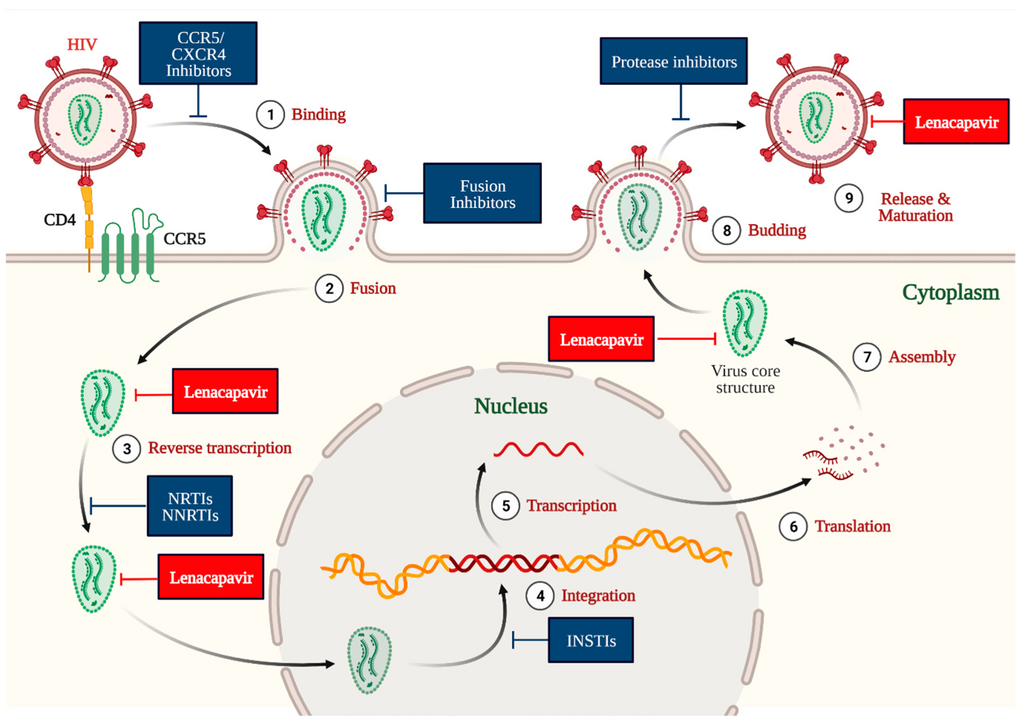
Lenacapavir mechanism. Credit: Dzinamarira, T et al., 2023. CC 4.0

Dosage

This product, developed to prevent new HIV infections, is a six-monthly injection. There is an initiation dose of a subcutaneous injection (administered just under the skin) with tablets (taken on days 1 and 2). It is used to reduce the risk of HIV in adults and adolescents who weigh at least 35kg, are HIV negative, and are at risk of getting HIV. Lenacapavir for PrEP should always be used in combination with safer sex practices, such as using condoms, to reduce the risk of getting other sexually transmitted infections.

“The registration of Lenacapavir is a game-changer, given the high prevalence rate of HIV in South Africa. This product is the most effective HIV prevention measure thus far,” indicated Dr Boitumelo Semete-Makokotlela, CEO: SAHPRA.

Source: SAHPRA

HIV Prevention Jab Rollout a Great Step Forward, but Ongoing Safe Sex Practices Are Crucial

Photo by Sergey Mikheev on Unsplash

Avian Bell, CEO of Quantumed South Africa, has welcomed the announcement that South Africa will begin rolling out the long-acting HIV prevention jab by March 2026. The injectable, which offers six months of protection per dose, is a major step forward in the country’s efforts to curb new HIV infections.

“This is a landmark moment for South Africa’s public healthcare landscape,” says Bell. “We are thrilled that the jab will soon be available to those who need it most. It represents a powerful tool that will help reduce the burden of HIV, especially among adolescent girls, young women, sex workers, and other high-risk communities.”

The jab, which has shown promising results in clinical trials, is expected to be a game-changer in HIV prevention. Its long-acting nature means fewer doses and improved adherence, which has historically been a challenge with daily oral PrEP (pre-exposure prophylaxis). Quantumed applauds the Department of Health’s commitment to making this innovation accessible to the public.

However, Bell cautions that while the jab is a significant advancement, it must not lead to a false sense of security. “The jab is designed to prevent HIV, but it does not offer protection against other sexually transmitted infections (STIs) such as HPV, syphilis, gonorrhoea, or chlamydia, nor does it prevent unintended pregnancies,” he explains. “We must continue to promote safe sex practices, regular STI screenings, and comprehensive sexual health education.”

Quantumed urges the public and healthcare providers to view the jab as part of a broader strategy, not a standalone solution. “We cannot afford to let our guard down,” Bell adds. “Complacency could reverse the gains we’ve made in STI prevention and reproductive health. We must continue to educate communities about the importance of condoms, routine testing, and open conversations about sexual health.”

In addition to the vaccine rollout, South Africa recently secured a $115 million emergency funding package from the United States under the PEPFAR Bridge Plan. This funding is intended to support critical HIV/AIDS services and ensure continuity of care for millions of South Africans.

“This emergency aid is a vital lifeline,” says Bell. “It will help stabilise programmes that have been under immense pressure and allow healthcare providers to continue delivering essential services, from testing and treatment to counselling and community outreach.”

However, Bell also acknowledges the broader context of this funding. Earlier in 2025, significant cuts to US aid disrupted HIV-related initiatives across South Africa. These cuts led to the closure of clinics, the suspension of research trials, and the loss of thousands of healthcare jobs. Vulnerable communities were left without access to life-saving services, and the ripple effects are still being felt.

“We must recognise that while the emergency funds are welcome, they do not undo the damage caused by earlier funding cuts,” Bell says. “We need long-term, sustainable investment in HIV prevention and treatment, not short-term fixes. The fight against HIV/AIDS is ongoing, and it requires consistent support from both local and international partners.”

Quantumed calls on government, civil society, and global stakeholders to remain steadfast in their commitment to ending HIV/AIDS. “We’ve come a long way, but the journey is far from over,” Bell concludes. “Let’s celebrate the progress, but let’s also stay focused. Innovation must be matched with education, access, and accountability. Together, we can build a future where HIV is no longer a threat — but that future depends on our actions today.”

Response to Aid Cuts and HIV Prevention Injections Dominate Discussions at SA AIDS Conference

Photo by Sergey Mikheev on Unsplash

By Ufrieda Ho

A dire picture for HIV/Aids funding emerged at the 12th South African AIDS Conference, raising the call for resilience, adapting and also for government to raise its game.

The what-next of South Africa’s HIV response will have to be centred on getting back to basics, leveraging on advances in treatment options and learning fast about adapting in a world without US aid for health services.

These were among the key takeaways from speakers at a plenary session at the 12th Southern African Aids Conference held in Kempton Park last week.

Professor Linda-Gail Bekker, executive officer of the Desmond Tutu Health Foundation, in her address took stock of “the incredible devastation around the world” from the virtual overnight shutting off of funds and human resources as Donald Trump returned to the US presidency in January 2025.

“It was $460 million into the wood chipper for us. And the worrying thing is that it could take us back to the harrowing scenes of 2000 [the height of Aids deaths in the country],” she said.

This comes against what she called the two largest challenges for South Africa’s HIV response: sub-optimal 12-month retention in care and viral suppression. Meaning the struggle to keep patients on treatment beyond a year and helping them stay on antiretrovirals that reduce the amount of virus in the body to a minimum.

The picture painted by Bekker and others is bleak, with much uncertainty remaining as to how South Africa might plug the funding holes left by the abrupt US aid cuts.

Bekker shared research by the Health Economics and Epidemiology Research Office (HE²RO), a division of the Wits Health Consortium at the University of the Witwatersrand. Their research shows that the fallout in the next three years could see South Africa experience a 29% to 56% increase in new HIV infections, or an additional 150 000 to 295 000 cases by 2028. Unless the South African government is able to take over services, there could be a 33% to 38% increase, or an additional 56 000 to 65 000 AIDS-related deaths in that period. (Spotlight previously reported on the HE²RO modelling in more detail here.)

The modelling also suggests that government will need additional funding of between $620 million and $1.4 billion (roughly R10 billion to R24 billion) between 2025 and 2028 to replace the local services that received US government funding.

In July, Treasury allocated R763 million in emergency funding to fill the gap, a fraction of what the HE²RO researchers estimate is needed. In addition, the Gates Foundation and the Wellcome Trust pledged R100 million each for research to the South African Medical Research Council on condition that the South African government doubled their contributions, which government committed to over three years. This added up to an R600 million bailout for research, also a fraction of the amount of research funding that has been lost.

The shortfall remains massive. Last year, Pepfar (United States President’s Emergency Funds for AIDS Relief) funds flowing to South Africa totalled over R7.5 billion.

Calls for greater transparency

Throughout the conference, there was also strong calls from attendees and speakers for government to be more transparent about its plans to mitigate the funding cuts and to provide credible data and information about monitoring and measuring of the success of their interventions. This includes details on how it plans to provide all stable patients with enough medicines for six months at a time. Such multi-month supplies mean people have to travel less to collect medicines, thus making it easier to stay on them. Rollout of multi-month dispensing has been very uneven across the country.

Questions were also raised over a lack of full transparency regarding the price of lenacapavir, a breakthrough HIV prevention injection that provides six months of protection per shot. As we recently reported, the South African government will be paying $60 per person per year for the jab, with other donors paying the rest – it is not publicly known how much this “rest” is. The deal was setup by the Global Fund to Fight AIDS, Tuberculosis and Malaria, Gilead Sciences – the company that makes lenacapavir – and several private donors. Last week, Spotlight published an op-ed in which activists questioned the lack of full transparency about the price.

Dr Sandile Buthelezi, director-general for the National Department of Health, told attendees about the possibility of bringing forward the rollout date for lenacapavir from April next year, to possibly as soon as November this year. He did not answer questions about the price negotiations. He did however confirm that negotiations with The Global Fund has seen them commit to ringfencing US$29 million for procurement of lenacapavir over the next two and a half years.

Doing more with less

Having to do more with less, Bekker said at the conference, will mean the need to build a “resilience bridge”. For her, this means preserving the “two most important interventions” of providing continued access to antiretroviral treatment and to HIV prevention treatments – both long-acting injections and prevention pills.

She added that it also means better efforts to reach the population of people living with HIV who have been diagnosed but are not on treatment. In February 2025, government launched its ‘Close the Gap’ campaign aimed at placing an additional 1.1 million people on treatment by the end of this year. Bekker said the number of people living with HIV who are not on treatment is closer to 2 million people. According to Thembisa, the leading mathematical model of HIV in the country, of the roughly eight million people living with HIV in South Africa, around 6.2 million are on treatment.

How South Africa is progressing against the 1.1 million target is not clear. Figures previously shared by Health Minister Dr Aaron Motsoaledi indicated that over half a million people had been initiated on treatment in a matter of months. This raised eyebrows since, on the face of it, it means that people had been started on treatment this year more quickly than at any other time in South Africa’s HIV response. It also wasn’t clear whether the number of people who had stopped treatment had been subtracted from the number starting treatment. Questions Spotlight previously sent to the health department seeking clarification of the numbers went unanswered. Similar questions were also raised in an open letter and an op-ed published by Spotlight and GroundUp. As yet, Spotlight has not seen answers to the questions raised about the numbers shared by the Minister.

“We need to make services [more] amenable to retention so it means multi-month dispensing and differentiated care,” Bekker said. Differentiated care refers to treating people differently based on their needs – for example by not requiring healthy people living with HIV to visit the clinic as often as sicker people.

“Bad policies that reflect ideology and bias, mean the most vulnerable are deterred from assessing the services they need, and this includes our key populations,” she added of the challenges that people like sex workers, members of the LGBTQI+ community and people who use drugs face in clinics where they are judged, harassed or discriminated against.

Dr Lise Jamieson, a senior researcher at HE²RO, echoed Bekker’s sentiments and said a first priority remains to arrest any backsliding of care as South Africa restructures its HIV programme to match the money it has currently. “It is clear that the one thing that we absolutely cannot drop is our HIV treatment programme – it saves lives,” she said.

For Yvette Raphael, the co-founder and co-director of Advocacy for the Prevention of HIV and Aids (APHA), the undergirding socio-economic factors that have given HIV its stranglehold in South Africa remain largely unchanged.

She said: “I am one of the people who are ageing with HIV and suffering from other non-communicable diseases that come with this”, highlighting the need to address the evolving nature of HIV in the country and the need to address it alongside conditions such as diabetes and heart disease.

But she added that it is still teen girls and young women who are at a disproportionately high risk of acquiring HIV. Her message was for better youth-targeted responses that are community-level responses not top-down strategies.

“Make HIV a priority sustained by local and district government structures, not up here in our national and province centres,” she said.

“Make HIV prevention harder to ignore and weave HIV intervention services with skills training and income generating programmes. We know that employment in this country is low, so young people cannot be expected to continue a healthy life without spaces where they can generate income for themselves, this will [in turn] reduce their vulnerability and dependency on older men.”

She added that government had to step up to what should always have been their role as Pepfar funding was never meant to substitute the work of government. Raphael said: “Pepfar was here to support the government in the early days of HIV. However, some of our government officials saw that as a way of evading their responsibility, and we are now here.”

Note: The Gates Foundation is mentioned in this article. Spotlight receives funding from the Gates Foundation, but is editorially independent – an independence that the editors guard jealously. Spotlight is a member of the South African Press Council and subject to the South African Press Code.

Republished from Spotlight under a Creative Commons licence.

Read the original article.

A New HIV Prevention Jab Could End AIDS – Unless Secrecy and Greed Get in the Way

Photo by Mufid Majnun on Unsplash

By Fatima Hassan, Leena Menghaney, and Bellinda Nkoana

A new HIV prevention jab has the potential to bring an end to the AIDS epidemic. But a lack of ambition and unjustifiable secrecy over pricing is holding it back, argue three leading health activists.

Imagine a new HIV prevention tool existed that could – if it reached the right people – flick the switch to prevent almost all new HIV cases across the world. You would expect every health system and government to be doing all they can to roll it out to everyone as quickly as possible, regardless of the challenges, right?

The good news is that this scenario is not merely in our imagination because we actually have that tool today. The bad news? The rollout of this breakthrough HIV prevention jab is moving at a glacial pace.

Lenacapavir, a twice-yearly antiretroviral-containing injection, is one of the most promising tools yet in the fight to end AIDS. Data from two major trials released last year showed it offers near-complete protection against HIV infection for some of the most vulnerable groups: young women, men who have sex with men, sex workers, and transgender and gender-diverse people. Trials that test the effectiveness of the jab as prevention in people who inject drugs are also underway. For communities still bearing the brunt of new infections, it could be a game-changer.

Take South Africa as a case in point. Modelling studies suggest the impact could be transformative. If two to four million HIV-negative people here used lenacapavir annually over the next eight years, new infections could dramatically fall, with rates low enough that experts would consider it significant enough to end AIDS.

And yet, the current rollout targets look worryingly timid, particularly for vulnerable communities.

According to the National Department of Health, South Africa’s projected initial target for the first two years of the roll out (April 2026 – March 2028 and subject to registration or interim approval by the South African Health Products Regulatory Authority) of just under 500 000 people, includes the general population and certain vulnerable or key risk population groups – for the latter, the targets are woefully low: 69 799 sex workers, 37 857 transgender people, and 155 946 gay, bisexual, and other men who have sex with men.

This barely scratches the surface of the actual need in vulnerable populations. At this rate, access will be severely rationed, and the epidemic will continue to outpace us.

One reason the roll out cannot be on  a mass scale, is not just due to an absent political will, but also because the company that holds the patent, Gilead Sciences, is rationing access. And until a sufficient number of generics come on to the market, voluntarily or through compulsory measures, Gilead will call the shots.

The Trump administration’s funding cuts earlier this year left ambitious plans to roll out lenacapavir in several countries in the Global South in the dust. In response, South Africa, in consultation with the Global Fund for AIDS, Tuberculosis, and Malaria (Global Fund) and indirectly with Gilead, announced plans to repurpose R520-million from an existing Global Fund grant to buy lenacapavir for HIV prevention.

But despite South Africa being asked by the Global Fund to budget $30 per dose ($60, roughly R1 050, per person per year) as its contribution, no one knows the total price the Global Fund is paying Gilead.

Such pricing secrecy is unacceptable, especially when health ministries in low- and middle-income countries are already squeezed by the massive US government funding cuts and debt crises.

Countries excluded from the Global Fund’s supply agreement and Gilead’s inadequate mechanisms for allowing generic competition (they exclude several countries and only a few companies were licensed) will be left to negotiate directly with Gilead, facing the prospect of unaffordable “tiered” prices designed to maximise profit – eerily similar to the COVID vaccine inequitable access debacle. Millions who need HIV prevention could face rationing, with health providers forced to leave the most vulnerable populations behind.

The Global Fund’s willing decision to shield Gilead’s pricing from public disclosure undermines accountability and risks reversing years of hard-won progress towards transparency in medicine pricing in the Global South and elsewhere. This is a dangerous precedent for the global HIV movement as pharmaceutical multinational companies are finding new ways to normalise price secrecy – and the Global Fund has just approved that tactic. While civil society in Global South countries such as South Africa are defending the right to know how public funds are spent, global institutions like the Global Fund in Geneva, are enabling practices that give pharmaceutical corporations a free pass.

The push to normalise secrecy, particularly when public or donor money is involved, should ring alarm bells. If international actors are serious about equitable access, then price transparency must be non-negotiable. Anything less erodes public trust and hands undue power to pharmaceutical companies at the expense of public health. Transparency is also necessary to ensure that the price we pay is fair and justified, because public money should not subsidise Gilead’s profiteering.

All this comes at a time when global health financing is under severe strain. Deep cuts in HIV/AIDS funding have already cost tens of thousands of lives across multiple countries. But rationing prevention is a false economy because the cost of new infections, in lives and long-term treatment, will far outweigh the investment required to scale up prevention now.

As delegates convene this week at the SA AIDS Conference, they must publicly call out the demand for price secrecy from Gilead and the Global Fund for what it is: bullying. It must also raise the funds, domestically and internationally, to pay for lenacapavir for all who need it. Two million people at minimum should be the national target – four times the glacial rollout pace the Global Fund is proposing at present.

The lesson from history is clear: When lifesaving HIV treatment was delayed, millions died needlessly. We cannot afford the same mistake with HIV prevention.

*Hassan, Menghaney, and Nkoana are all part of the global LEN-LA for All Coalition, a grouping that includes the organisations Health GAP, Health Justice Initiative, Sankalp Rehabilitation Trust, Just Tx, and ABIA.

Note: Spotlight aims to deepen public understanding of important health issues by publishing a variety of views on its opinion pages. The views expressed in this article are not necessarily shared by the Spotlight editors.

Republished from Spotlight under a Creative Commons licence.

Read the original article.