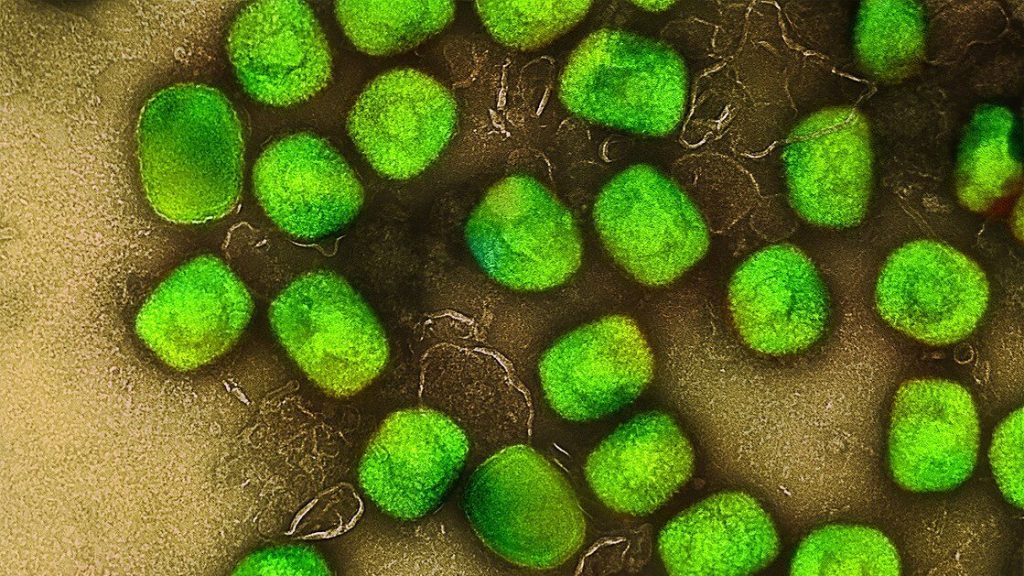
Human colon cancer cells. Credit: National Cancer Institute
In a first, a team in Germany has produced a substance capable of sending cancer cells into ferroptosis, a form of cell death discovered only in recent years. This could pave the way for the development of new drugs.
Conventional cancer drugs work by triggering apoptosis, that is programmed cell death, in tumour cells. However, tumour cells have the ability to develop strategies to escape apoptosis, rendering the drugs ineffective. In the journal Angewandte Chemie, a research team from Ruhr University Bochum, Germany, describes a new mechanism of action that kills cancer cells through ferroptosis. Ferroptosis is another form of programmed cell death that wasn’t discovered until the 2010s. The Bochum group synthesised a metal complex, demonstrated its effectiveness in cell cultures and on microtumours and identified the chemical processes underlying the mechanism of action.
Two types of programmed cell death
In programmed cell death, certain signaling molecules initiate a kind of suicide program to cause cells to die in a controlled manner. This is an essential step to eliminate damaged cells or to control the number of cells in certain tissues, for example. Apoptosis has long been known as a mechanism for programmed cell death. Ferroptosis is another mechanism that has recently been discovered which, in contrast to other cell death mechanisms, is characterised by the accumulation of lipid peroxides. This process is typically catalysed by iron which is where the name ferroptosis derives from.
“Searching for an alternative to the mechanism of action of conventional chemotherapeutic agents, we specifically looked for a substance capable of triggering ferroptosis,” explains Johannes Karges. His group synthesized a cobalt-containing metal complex that accumulates in the mitochondria of cells and generates reactive oxygen species, more precisely hydroxide radicals. These radicals attack polyunsaturated fatty acids, resulting in the formation of large quantities of lipid peroxides, which in turn trigger ferroptosis. The team was thus the first to produce a cobalt complex designed to specifically trigger ferroptosis.
Effectiveness demonstrated on artificial microtumours
The researchers from Bochum used a variety of cancer cell lines to show that the cobalt complex induces ferroptosis in tumour cells. On top of that, the substance slowed down the growth of artificially produced microtumours .
“We are confident that the development of metal complexes that trigger ferroptosis is a promising new approach for cancer treatment,” as Johannes Karges sums up the research, adding: “However, there’s still a long way to go before our studies result in a drug.” The metal complex must first prove effective in animal studies and clinical trials. What’s more, the substance doesn’t currently selectively target tumour cells, but would also attack healthy cells. This means that researchers must first find a way to package the cobalt complex in such a way that it damages nothing but tumour cells.
Living less than 500m from pesticide use prior to conception and during early pregnancy could increase the risk of stillbirths, according to new research published in the American Journal of Epidemiology.
Researchers from the University of Arizona found that during a 90-day pre-conception window and the first trimester of pregnancy, select pesticides, including organophosphates as a class, were associated with stillbirth.
“In this study, some specific ingredients stood out due to their significant associations with stillbirth risk,” said first authorMelissa Furlong, PhD, who studies the chronic health effects of environmental contaminants as an assistant professor and environmental epidemiologist at the Zuckerman College of Public Health. “These findings underscore the importance of considering individual pesticides rather than just the overall pesticide class, as specific chemical compounds may pose unique risks. It also highlights the potential for pre-pregnancy exposures to affect reproductive outcomes.”
To conduct the study, researchers linked Arizona pesticide use records for 27 different pesticides with state birth certificate data that included 1 237 750 births and 2290 stillbirths from 2006 to 2020.
They found that living within 500m of specific pyrethroid, organophosphate or carbamate pesticide applications during a 90-day pre-conception window or the first trimester was associated with an increased risk of stillbirth.
Specifically, the pesticides cyfluthrin, zeta-cypermethrin, organophosphates as a class, malathion, carbaryl and propamocarb hydrochloride were linked to increased stillborn births pre-conception. During the first trimester, fenpropathrin, permethrin, organophosphates as a class, acephate and formetanate hydrochloride were associated with stillbirths.
“Among organophosphates, acephate showed the strongest effect estimates on stillbirth, so that exposure to acephate in the first trimester was associated with a doubling of risk,” said co-author Paloma Beamer, PhD, a professor and interim associate dean at the Zuckerman College of Public Health. “Within the pyrethroid class, cyfluthrin exposure during the 90 days prior to conception almost doubled the risk of stillbirth.”
Pesticides are chemical substances used to control pests in various settings. They are commonly categorized into different classes, such as organophosphates, pyrethroids and carbamates. The primary route of exposure for most people is through diet, but household use, agricultural drift and occupational exposure are also significant pathways.
Researchers say while some pesticides may not have been directly implicated in this study, they could still pose risks to maternal and foetal health.
Pregnant women may be particularly vulnerable to the adverse effects of pesticide exposure due to physiological changes during pregnancy, such as increased metabolic rate, altered hormone levels and changes in the immune system. The developing foetus may be more susceptible to the toxic effects of pesticides during this period of rapid growth and development.
“Further research is essential to fully understand the safety profiles of various pesticides and to understand the underlying mechanisms of pesticide-induced stillbirth,” Furlong said. “This study underscores the need to develop strategies for mitigating exposure to protect maternal and foetal health.”
New research published in the journal iSCIENCE has revealed new insights into early sensorimotor features and cognitive abilities of toddlers who are later diagnosed with Autism Spectrum Disorder (ASD). The research, led by Kristina Denisova, a professor of Psychology and Neuroscience at the CUNY Graduate Center and Queens College, takes an important step toward better understanding ASD so that more precise, individually tailored interventions can be developed.
ASD, typically diagnosed around the ages of 4 to 5 years, is a neurodevelopmental disorder with complex and varied presentations, including atypical communication and restrictive and repetitive patterns of behaviour. Moreover, cognitive abilities are often lower in individuals with ASD. Despite the established link between lower intelligence quotient (IQ) in infancy and a future diagnosis of ASD, not all children with ASD exhibit lower cognitive abilities during infancy. The study addresses the critical gap in knowledge regarding the early features that differentiate children with varying cognitive abilities who later develop ASD.
The research team investigated the relationship between movement and cognitive abilities in toddlers before their ASD diagnosis, both during sleep and wakefulness. The study posed two key questions: Do ASD children with lower IQ exhibit altered movement during sleep compared to children with higher IQ? Additionally, are lower motor skills during wakefulness characteristic of lower-IQ children with ASD compared to those of higher-IQ ASD toddlers?
The research was conducted in two stages. In the first sample, the team examined sensorimotor features obtained from sleep functional magnetic resonance imaging (fMRI) in 111 toddlers with ASD. In the second, independent sample, they analysed sensorimotor functioning during wakefulness in over 1000 toddlers with ASD, categorised by lower vs higher cognitive abilities.
The findings revealed that toddlers with ASD and lower IQs have significantly altered sensorimotor features compared to toddlers with ASD and higher IQs. Interestingly, the sensorimotor features of higher-IQ ASD toddlers were nearly indistinguishable from typically developing (TD) toddlers. This suggests that a higher IQ may confer resilience to atypical sensorimotor functioning, and conversely, that poor sensorimotor functioning may be a key marker for lower IQ in childhood autism.
Moreover, the study found that lower-IQ ASD toddlers consistently exhibited lower gross motor skills across various age milestones (6, 12, 18, 24, and 30 months). This disruption in early sensorimotor learning during critical developmental periods indicates a potential vulnerability in the brain’s motor control circuitry, associated with lower cognitive abilities in toddlers who later receive an ASD diagnosis.
“The implications of these findings are far-reaching,” said Denisova. “They underscore the need for more precise, tailored interventions for children with ASD, particularly those with lower cognitive abilities. Interventions for lower-IQ autistic children may need to focus on enhancing both sensorimotor and cognitive skills, while interventions for higher-IQ autistic children might prioritise leveraging their strengths to mitigate potential mental health consequences.”
Denisova emphasised the importance of future research in this area, particularly involving underserved families who face barriers in accessing early intervention services.
When the NKp46 receptor of the ILCs is blocked (right), the lupus nephritis recedes. Blue: cell nuclei. Credit: Charité | Frauke Schreiber
A Berlin-led research team has uncovered critical regulators of severe kidney damage in patients with the autoimmune disorder lupus. A small, specialised population of immune cells – called innate lymphoid cells (ILCs) – trigger an avalanche of effects that cause harmful kidney inflammation, also known as lupus nephritis.
The research, published this week in Nature, upends conventional wisdom that autoantibodies are primarily responsible for lupus nephritis.
“While autoantibodies are required for tissue damage, they are by themselves not sufficient. Our work reveals that ILCs are required to amplify the organ damage,” says Dr Masatoshi Kanda, a senior paper author who was a Humboldt Fellow at Max Delbrück Center and is now at the Department of Rheumatology and Clinical Immunology, Sapporo Medical University in Japan.
Lupus, or systemic lupus erythematosus, is most often diagnosed between the ages of 15 and 45. Symptoms can range from mild to severe. But what causes kidney damage in some patients – some to the point of requiring dialysis – has been unclear.
“The role of ILCs in lupus or lupus nephritis was entirely unknown,” says Professor Antigoni Triantafyllopoulou, a senior paper author at the German Rheumatology Research Center (DRFZ), an institute of the Leibniz Association, and at the Department of Rheumatology and Clinical Immunology at Charité – Universitätsmedizin Berlin. “We have now identified most of the circuit controlled by ILCs by looking at the whole kidney at single-cell resolution.”
Unusual immune cells
ILCs are a small group of immune cells that – unlike most other immune cells that circulate throughout the body – live in a specific tissue or organ.
“They are in the tissue all the time, from the time of embryonic development, which makes them very different from other immune cells,” says Professor Andreas Diefenbach, a senior paper author and director of the Institute of Microbiology, Infectious Diseases and Immunology at Charité – Universitätsmedizin Berlin.
Diefenbach’s lab was among those that discovered ILCs in the mid-2000s. Most of his research is focused on ILCs in the gut and how they modify tissue function. In this study, Triantafyllopoulou and Kanda teamed up with his group and Dr Mir-Farzin Mashreghi at the DRFZ to find out whether ILCs were present in the kidney and what role they might play in lupus nephritis.
The whole single-cell picture
To unravel this mystery, the team turned to single-cell RNA sequencing, which identifies genes that are active, or “switched on,” in individual cells and helps researchers understand the cell’s identity and function.
Kanda, a rheumatologist who was studying bioinformatics in Professor Norbert Hübner’s lab at the Max Delbrück Center at the time, developed a specialized protocol for single-cell RNA sequencing of mouse and human kidneys. “Masatoshi’s protocol was very good at pulling out and preserving multiple types of kidney cells, which gave us a much more complete overview of how lupus affects the whole kidney,” explains Triantafyllopoulou. The team sequenced nearly 100 000 individual kidney and immune cells of various types and functions.
The key receptor
Through experiments in mice, the team learned that a subgroup of ILCs with a receptor called NKp46 must be present and activated to cause lupus nephritis. When NKp46 is activated, this subgroup of cells ramped up production of a protein called GM-CSF, which stimulates invading macrophages to multiply. In the kidney, a flood of incoming macrophages caused severe tissue damage and fibrosis.
“These ILCs are really amplifiers in this system,” Diefenbach says. “They are small in population, but they seem to fertilise the whole process.”
When the team blocked NKp46 with antibodies or the receptor was genetically removed, kidney tissue damage was minimal. They also blocked GM-CSF with similar anti-inflammatory effects.
“Critically, autoantibody levels did not change when NKp46 was inhibited, but kidney tissue damage was reduced, which shows autoantibodies are not directly responsible for kidney inflammation,” Triantafyllopoulou explains.
The team also compared the results to sequencing data from tissue taken from human patients with lupus and found ILCs present, though more work is required to fully understand how to target ILCs in human kidneys. Nevertheless, the insights gained through these detailed studies point to new antibody therapies for patients with severe forms of lupus. The hope is to prevent the need for kidney dialysis in these patients.
Cheri Nel launched a court case against Vertex to force them to allow their generic cystic fibrosis drug to be imported into South Africa. Credit: Spotlight
By Catherine Tomlinson
Last year a South African woman took a multibillion-dollar United States pharmaceutical company to court with the aim of securing access to life-changing cystic fibrosis medicines. That case has now been dropped following a reduction in the price charged for the medicines in South Africa.
Cheri Nel, a Johannesburg-based investment banker, has dropped a potentially landmark court case against Vertex Pharmaceuticals. Nel was asking the Gauteng Division of the High Court in Pretoria to grant a compulsory licence to allow generic versions of a cystic fibrosis medicine called Trikafta to be imported into South Africa. No such compulsory licences on medicines have ever been granted in South Africa.
Trikafta, which was registered in the United States in 2019, has been hailed as a “miracle” treatment for cystic fibrosis, which causes severe damage to the lungs, digestive system and other organs in the body. The medicine is effective in treating around 90 percent of people living with the condition. It significantly improves the quality of life of people living with cystic fibrosis, eliminating many of its debilitating symptoms, while also slowing the disease’s progression and extending survival.
In February 2023, when Nel launched her lawsuit against the Boston-headquartered pharmaceutical company, the only way people in South Africa could access Trikafta was by travelling to Argentina to buy it from an Argentinian company selling a generic version of the medicine.
This is because Vertex, the company that holds the patents on Trikafta in South Africa, refused to register the medicine with the South African Health Products Regulatory Authority (SAHPRA) or identify a local distributor that could import unregistered Trikafta via Section 21 authorisations – a mechanism allowing importation of unregistered medicines.
The United States list price for Trikafta is currently over $300 000 (around R5.5 million at the current rand/dollar exchange rate) per person per year, which South Africans feared they would also have to pay if or when Vertex finally started supplying its medicine in the country. Researchers in the United Kingdom have estimated that Trikafta can be produced for under $6000 (around R110 000 at the current rand/dollar exchange rate) per person per year.
When Nel filed the case, generic Trikafta from Argentina – called Trixacar – was much cheaper than Vertex’s product (but still prohibitively expensive for many) at around $60 000, or almost R1 million per person per year. But the Argentinian company selling generic Trixacar faced potential patent infringement challenges if it shipped Trixacar to South Africa. Thus, the only way to get the medicine into South Africa at the time was to travel to Argentina to collect it. People living with cystic fibrosis in South Africa learnt how to do this through an informal network or Buyers Club of people around the world that were reliant on the Argentinian product.
Launching a legal case
Nel argued that Vertex was abusing its patents in South Africa by refusing to make Trikafta available in the country on reasonable terms, while also blocking other manufacturers from supplying the medicine in the country. If successful, Nel’s case would have allowed generic Trikafta to be shipped directly to South Africa, removing the need for travel to Argentina to access the medicine.
According to Nel, Vertex argued in the company’s answering documents to her legal filing that, as she was the only named applicant in the case, a compulsory licence for importation could only be considered for her.
Nel then worked with the South African Cystic Fibrosis Association (SACFA) to get other people living with cystic fibrosis admitted as co-applicants in the case. This process of seeking more people to join her case, she said, was time-consuming, difficult, and expensive, but more than 100 people were working towards being admitted as co-applicants before the case was dropped.
Under pressure, Vertex starts providing Trikafta in South Africa
As the case gained momentum and made headlines around the world, Vertex finally opened the door to allow some people living in South Africa to access their product.
In May 2024, Vertex identified Equity Pharmaceuticals as the local company through which Trikafta could be imported into South Africa via Section 21 authorisations. These authorisations are granted by SAHPRA to enable importation of an unregistered medicine and are meant to be used in exceptional circumstances to remedy the need for an unregistered medicine, such as when there is a shortage of the registered product.
While Vertex has not confirmed to Spotlight or stated publicly the price of Trikafta for people living in South Africa, Nel and Doctors Without Borders’ Candice Sehoma told us that the company is charging around R400 000 ($22 000) for a year’s supply of the medicine.
While still unaffordable for many and much higher than the estimated cost of manufacturing, the R400 000 price is drastically lower than the R5.5 million price charged in the United States and originally feared for South Africa.
It seems improbable that Vertex would have offered the much reduced price to people living in South Africa had Nel not launched the court case
Some medical schemes now paying for Trikafta
As emerged in April this year, Vertex reached an agreement with some medical schemes in South Africa to provide the medicine for people on top-end plans.
“Four private healthcare providers are currently funding Trikafta for eligible patients and we are open for conversations with more insurance companies,” Vertex’s spokesperson Daria Munsel confirmed to Spotlight.
The exact nature of the conversations and/or agreements between Vertex and medical schemes in South Africa however remains somewhat unclear.
Discovery Health‘s CEO, Dr Ron Whelan, told Spotlight it has engaged Vertex about the “benefits available” and “affordable access” of the class of medications that Trikafta falls in but there is “no specific commercial agreement in place” in South Africa.
He noted that Discovery Health Medical Scheme members on the comprehensive and executive plans have a suite of benefits available for the treatment of cystic fibrosis with medicines like Trikafta “of up to R400 000 per annum” for eligible people.
According to Vertex, uptake of its product has been swift and is already starting to make a difference in the lives of people living with cystic fibrosis in South Africa. “Over 100 South Africans with CF [cystic fibrosis] have been prescribed our triple combination treatment in just the first two months of the medicine being available,” said Munsel.
The cystic fibrosis registry, an initiative which seeks to identify and collect data on the outcomes of people living with cystic fibrosis in South Africa, identified 525 people living with cystic fibrosis in the country as of December 2020. Experts believe there are many more undiagnosed cases.
Why did Nel drop the case?
Not only is Vertex’s price for people in South Africa now lower than the 2023 price of Argentinian generics, but the cost of a year’s supply of generic Trikafta from Argentina have increased from around $60 000 to around $100 000 due to hyperinflation in that country.
With Vertex now offering a price lower than the cost of Argentinian generics, Nel decided that her legal case was no longer the best avenue to enhance access to the medicine. The aim of the case “was to get access to the medication… to put pills in patients’ mouths”, she told Spotlight.
Nel said it is now probably better to redirect efforts to getting government at national or provincial levels to buy the medicine for patients in the public sector.
“There is a lot of work still to be done… my efforts are still there, it’s just being redirected,” she said.
“The fact that Trikafta will now be available in South Africa at a much lower price compared to generic versions globally, certainly undercuts the legal case for a compulsory license,” said Tendai Mafuma of SECTION27, a public interest law centre. The Treatment Action Campaign and Doctors Without Borders, represented by SECTION27, were admitted as friends of the court in the case.
Why won’t Vertex register its product in SA?
While much has changed because of Nel’s legal action, Vertex has held fast on its refusal to register Trikafta with SAHPRA.
When asked about Vertex’s plans to register Trikafta in South Africa, Munsel said: “We strongly believe that this [Section 21 Authorisation] is the fastest and most efficient route to sustainable access in South Africa, which does not require a regulatory filing.”
While registering medicines can be onerous and time consuming, it is a routine practice required for pharmaceutical companies to operate around the world. Full registration also typically requires that safety, effectiveness and quality is more closely scrutinised than is the case with Section 21 authorisations.
Nel believes that Vertex has chosen not to register Trikafta in South Africa because of the price transparency requirements embedded in South African law. If other countries know what price South Africa is paying then they may also demand a lower price, she said.
The law requires that there is a transparent pricing system for medicines sold in the private sector, but these requirements do not extend to unregistered medicines imported through Section 21 authorisations, explained Mafuma.
Note: SECTION27 was involved in the court case that is the subject of this article. Spotlight is published by SECTION27, but is editorially independent – and independence that the editors guard jealously. Spotlight is a member of the South African Press Council.
The lines on this diagram of the brain represent connections between various areas of the cerebral cortex involved in language processing. When we read, the neurons in these areas fire in precise synchronicity, a phenomenon known as “co-rippling.” Photo credit: UC San Diego Health Sciences
Researchers at University of California San Diego School of Medicine have brought us closer to solving how the brain processes information from specialised areas into a whole. By delving into the brain with intracranial electroencephalography, they observed how neurons synchronise across the human brain while reading. The findings are published in Nature Human Behaviour and are also the basis of a thesis by UC San Diego School of Medicine doctoral candidate Jacob Garrett.
“How the activity of the brain relates to the subjective experience of consciousness is one of the fundamental unanswered questions in modern neuroscience,” said study senior author Eric Halgren, Ph.D., professor in the Departments of Neurosciences and Radiology at UC San Diego School of Medicine. “If you think about what happens when you read text, something in the brain has to turn that series of lines into a word and then associate it with an idea or an object. Our findings support the theory that this is accomplished by many different areas of the brain activating in sync.”
This synchronisation of different brain areas, called “co-rippling” is thought to be essential for binding different pieces of information together to form a coherent whole. In rodents, co-rippling has been observed in the hippocampus, the part of the brain that encodes memories. In humans, Halgren and his colleagues previously observed that co-rippling also occurs across the entire cerebral cortex.
To examine co-rippling at the mechanistic level, Ilya Verzhbinsky, an MD/PhD candidate completing his research in Halgren’s lab, led a study published in PNAS that looked at what happens to single neurons firing in different cortical areas during ripples. The present study looks at the phenomenon with a wider lens, asking how the many billions of neurons in the cortex are able to coordinate this firing to process information.
“There are 16 billion neurons in the cortex – double the number of people on Earth,” said Halgren. “In the same way a large chorus needs to be organised to sound as a single entity, our brain neurons need to be coordinated to produce a single thought or action. Co-rippling is like neurons singing on pitch and in rhythm, allowing us to integrate information and make sense of the world. Unless they’re co-rippling, these neurons have virtually no effect on the other, but once ripples are present about two thirds of neuron pairs in the cortex become synchronised. We were surprised by how powerful the effect was.”
Co-rippling in the cortex has been difficult to observe in humans due to limitations of noninvasive brain scanning. To work around this problem, the researchers used an approach called intracranial electroencephalography (EEG) scanning, which measures the electrical activity of the brain from inside the skull. The team studied a group of 13 patients with drug-resistant epilepsy who were already undergoing EEG monitoring as part of their care.
Participants were shown a series of animal names interspersed with strings of random consonants or nonsense fonts and then asked to press a button to indicate the animal whose name they saw. The researchers observed three stages of cognition during these tests: an initial hierarchical phase in visual areas of the cortex in which the participant could see the word without conscious understanding of it; a second stage in which this information was “seeded” with co-ripples into other areas of the cortex involved in more complex cognitive functions; and a final phase, again with co-ripples, where the information across the cortex is integrated into conscious knowledge and a behavioural response – pressing the button.
The researchers found that throughout the exercise, co-rippling (~100ms-long ~90Hz oscillations) occurred between the various parts of the brain engaged in these cognitive stages, but the rippling was stronger when the participants were reading real words.
The study’s findings have potential long-term implications for the treatment of neurological and psychiatric disorders, such as schizophrenia, which are characterised by disruptions in these information integration processes.
“It will be easier to find ways to reintegrate the mind in people with these disorders if we can better understand how minds are integrated in typical, healthy cases,” added Halgren.
More broadly, the study’s findings have significant implications for our understanding of the link between brain function and human experience.
“This is a fundamental question of human existence and gets at the heart of the relationship between mind and brain,” said Halgren. “By understanding how our brain’s neurons work together, we can gain new insights into the nature of consciousness itself.”
Further action needed, according to a University of Bonn study on child and adolescent nutrition
Photo by Patrick Fore on Unsplash
University of Bonn researchers have analysed data on sugar intake among children and adolescents in a long-term study, finding that intake has been declining steadily since 2010 – but is still above the level recommended by the World Health Organization (WHO). The results, to be published in the European Journal of Nutrition, are already available online.
“Our study concerns the intake of free sugars,” explains Dr Ines Perrar, who is a research associate at the University of Bonn Institute of Nutritional and Food Science (IEL) and lead author of the study. “There is debate on whether sugar, like salt and fats, is linked to the development of chronic diseases.” The WHO defines “free” sugar as any form of sugar, including honey, syrup and fruit juice concentrates, added by a manufacturer or when preparing food and beverages at home. Free sugar also includes sugar naturally occurring in juices.
For their project, IEL researchers analysed data from the “Dortmund Nutritional and Anthropometric Longitudinally Designed” cohort study (DONALD). The DONALD study has been ongoing since 1985, gathering detailed data on nutrition, metabolism, growth and health of children and adolescents. “Study participants weigh and document everything they eat and drink on three consecutive days every year,” relates Dr Ute Nöthlings, Professor of Nutritional Epidemiology at the IEL. “Referring to our Institute’s in-house nutrient database, we are able to estimate intake of certain nutrients, including free sugars.”
Sugar intake too high among adolescents in particular
The authors evaluated 4218 sets of three-day weighing dietary records by 751 children and adolescents between ages three and 18 in the years 2010–2023. “Our finding is that free sugar intake continues to decline,” Dr Perrar notes, “but average daily intake still exceeds the level recommended by the WHO and the German Nutrition Society (Deutsche Gesellschaft für Ernährung, DGE) of a maximum 10% of total daily energy intake.”
An analysis of DONALD back in 2019 already indicated that free sugar intake has been declining since 2005, then in 2016 a median value of approximately 16% of daily energy intake was determined. That value has subsequently declined further to 11.7%. The researchers surmise this trend may be explained by increased awareness of the health consequences of excessive consumption of sugar-sweetened beverages and certain other sugary foods.
While the decline definitely represents good progress, there are noteworthy age group differences, as Professor Nöthlings points out, who is director of the DONALD study, spokesperson for the Transdisciplinary Research Area (TRA) Sustainable Futures and a member of the Life and Health TRA at the University of Bonn: “During the observation period, we saw a relatively high intake of free sugars around 15 percent of the daily energy intake in some cases, particularly among adolescents aged six to 14. The intake then declines significantly with increasing age.”
Actual sugar intake likely higher
The researchers point out that the actual sugar intake is likely higher than the study data suggests, due in part to potential under-reporting by the study participants self-reporting on what they eat. In addition, the study is not broadly representative of society, as the design of this large study favours participation by families of a rather higher socioeconomic status who are generally more aware regarding nutrition and health issues.
The risk was higher for men who were carriers of a gene linked to dementia
Photo by Mari Lezhava on Unsplash
A new study led by investigators from Brigham and Women’s Hospital found that an episode of shingles is associated with about a 20 percent higher long-term risk of subjective cognitive decline. The study’s findings provide additional support for getting the shingles vaccine to decrease risk of developing shingles, according to the researchers. Their results are published in Alzheimer’s Research & Therapy.
“Our findings show long-term implications of shingles and highlight the importance of public health efforts to prevent and promote uptake of the shingles vaccine,” said corresponding author Sharon Curhan, MD, of the Channing Division for Network Medicine at Brigham and Women’s Hospital. “Given the growing number of Americans at risk for this painful and often disabling disease and the availability of a very effective vaccine, shingles vaccination could provide a valuable opportunity to reduce the burden of shingles and possibly reduce the burden of subsequent cognitive decline.”
Shingles, medically known as “herpes zoster,” is a viral infection that often causes a painful rash. Shingles is caused by the varicella zoster virus (VZV), the same virus that causes chickenpox. After a person has chickenpox, the virus stays in their body for the rest of their life. Most of the time, our immune system keeps the virus at bay. Years and even decades later, the virus may reactivate as shingles.
Almost all individuals in the US age 50 years and older have been infected with VZV and are therefore at risk for shingles. There’s a growing body of evidence that herpes viruses, including VZV, can influence cognitive decline. Subjective cognitive decline is an individual’s self-perceived experience of worsening or more frequent confusion or memory loss. It is a form of cognitive impairment and is one of the earliest noticeable symptoms of Alzheimer’s disease and related dementias.
Previous studies of shingles and dementia have been conflicting. Some research indicates that shingles increases the risk of dementia, while others indicate there’s no association or a negative association. In recent studies, the shingles vaccine was associated with a reduced risk of dementia.
To learn more about the link between shingles and cognitive decline, Curhan and her team used data from three large, well-characterized studies of men and women over long periods: The Nurses’ Health Study, the Nurses’ Health Study 2, and the Health Professionals Follow-Up Study. The study included 149,327 participants who completed health status surveys every two years, including questions about shingles episodes and cognitive decline. They compared those who had shingles with those who didn’t.
Curhan designed the study with first author Tian-Shin Yeh, formerly of the Harvard TH Chan School of Public Health. The researchers found that a history of shingles was significantly and independently associated with a higher risk – approximately 20% higher – of subjective cognitive decline in both women and men. That risk was higher among men who were carriers of the gene APOE4, which is linked to cognitive impairment and dementia. That same association wasn’t present in the women.
Researchers don’t know the mechanisms that link the virus to cognitive health, but there are several possible ways it may contribute to cognitive decline. There is growing evidence linking VZV to vascular disease, called VZV vasculopathy, in which the virus causes damage to blood vessels in the brain or body. Curhan’s group previously found that shingles was associated with higher long-term risk of stroke or heart disease.
Other mechanisms that may explain how the virus may lead to cognitive decline include causing inflammation in the brain, directly damaging the nerve and brain cells, and the activation of other herpesviruses.
The limitations of this research include that it was an observational study, information was based on self-report, and included a mostly white, highly educated population. In future studies, the researchers hope to learn more about preventing shingles and its complications.
“We’re evaluating to see if we can identify risk factors that could be modified to help reduce people’s risk of developing shingles,” Curhan said. “We also want to study whether the shingles vaccine can help reduce the risk of adverse health outcomes from shingles, such as cardiovascular disease and cognitive decline.”
WHO Director-General Dr Tedros Adhanom Ghebreyesus has determined that the upsurge of mpox in the Democratic Republic of the Congo (DRC) and a growing number of countries in Africa constitutes a public health emergency of international concern (PHEIC) under the International Health Regulations (2005) (IHR).
Dr Tedros’s declaration came on the advice of an IHR Emergency Committee of independent experts who met earlier in the day to review data presented by experts from WHO and affected countries. The Committee informed the Director-General that it considers the upsurge of mpox to be a PHEIC, with potential to spread further across countries in Africa and possibly outside the continent.
The Director-General will share the report of the Committee’s meeting and, based on the advice of the Committee, issue temporary recommendations to countries.
In declaring the PHEIC, Dr Tedros said, “The emergence of a new clade of mpox, its rapid spread in eastern DRC, and the reporting of cases in several neighbouring countries are very worrying. On top of outbreaks of other mpox clades in DRC and other countries in Africa, it’s clear that a coordinated international response is needed to stop these outbreaks and save lives.”
WHO Regional Director for Africa Dr Matshidiso Moeti said, “Significant efforts are already underway in close collaboration with communities and governments, with our country teams working on the frontlines to help reinforce measures to curb mpox. With the growing spread of the virus, we’re scaling up further through coordinated international action to support countries bring the outbreaks to an end.”
Committee Chair Professor Dimie Ogoina said, “The current upsurge of mpox in parts of Africa, along with the spread of a new sexually transmissible strain of the monkeypox virus, is an emergency, not only for Africa, but for the entire globe. Mpox, originating in Africa, was neglected there, and later caused a global outbreak in 2022. It is time to act decisively to prevent history from repeating itself.”
This PHEIC determination is the second in two years relating to mpox. Caused by an Orthopoxvirus, mpox was first detected in humans in 1970, in the DRC. The disease is considered endemic to countries in central and west Africa.
In July 2022, the multi-country outbreak of mpox was declared a PHEIC as it spread rapidly via sexual contact across a range of countries where the virus had not been seen before. That PHEIC was declared over in May 2023 after there had been a sustained decline in global cases.
Mpox has been reported in the DRC for more than a decade, and the number of cases reported each year has increased steadily over that period. Last year, reported cases increased significantly, and already the number of cases reported so far this year has exceeded last year’s total, with more than 15 600 cases and 537 deaths.
The emergence last year and rapid spread of a new virus strain in DRC, clade 1b, which appears to be spreading mainly through sexual networks, and its detection in countries neighbouring the DRC is especially concerning, and one of the main reasons for the declaration of the PHEIC.
In the past month, over 100 laboratory-confirmed cases of clade 1b have been reported in four countries neighbouring the DRC that have not reported mpox before: Burundi, Kenya, Rwanda and Uganda. Experts believe the true number of cases to be higher as a large proportion of clinically compatible cases have not been tested.
Several outbreaks of different clades of mpox have occurred in different countries, with different modes of transmission and different levels of risk.
The two vaccines currently in use for mpox are recommended by WHO’s Strategic Advisory Group of Experts on Immunization, and are also approved by WHO-listed national regulatory authorities, as well as by individual countries including Nigeria and the DRC.
Last week, the Director-General triggered the process for Emergency Use Listing for mpox vaccines, which will accelerate vaccine access for lower-income countries which have not yet issued their own national regulatory approval. Emergency Use Listing also enables partners including Gavi and UNICEF to procure vaccines for distribution.
WHO is working with countries and vaccine manufacturers on potential vaccine donations, and coordinating with partners through the interim Medical Countermeasures Network to facilitate equitable access to vaccines, therapeutics, diagnostics and other tools.
WHO anticipates an immediate funding requirement of an initial US$ 15 million to support surveillance, preparedness and response activities. A needs assessment is being undertaken across the three levels of the Organization.
To allow for an immediate scale up, WHO has released US$ 1.45 million from the WHO Contingency Fund for Emergencies and may need to release more in the coming days. The Organization appeals to donors to fund the full extent of needs of the mpox response.
By adopting bold, transformative strategies, the healthcare industry can overcome critical challenges and foster innovative collaborations to create a more equitable and sustainable healthcare future for southern Africa, writes Dr Katlego Mothudi, Managing Director at the Board of Healthcare Funders (BHF).
Committed to promoting collaboration and creating actionable insights within southern Africa’s healthcare ecosystem, BHF’s recently published report highlights significant trends, obstacles and breakthrough solutions from key figures in the healthcare sector, and charts the course for a robust, inclusive healthcare future.
By interviewing industry leaders – including funders, hospitals, clinicians, and the pharmaceutical sector – the report presents a strategic path forward that promises to revolutionise the region’s healthcare landscape. As southern Africa grapples with rising healthcare costs, a growing burden of non-communicable diseases (NCDs), and economic instability, this report charts the course for a robust, inclusive healthcare future.
The evolving landscape of southern African healthcare
Healthcare organisations in southern Africa are navigating a complex landscape filled with escalating challenges and promising opportunities. The rapid increase in the burden of non-communicable diseases (NCDs) and economic volatility is driving a critical shift toward more sustainable healthcare models while increasing healthcare costs and reducing affordability.
Concurrently, there is a renewed commitment to achieving health equity, with concerted efforts to ensure healthcare is universally accessible. Universal Health Coverage (UHC) is in various stages of rollout across the region, reflecting varying national priorities and capabilities. In South Africa, the proposed National Health Insurance (NHI), despite its controversies, is being closely watched for its potential impact on other countries if implemented pragmatically.
In the private sector, the health insurance market shows notable growth. This is in contrast to stagnation relating to traditional medical schemes. These schemes face slow or no membership growth and rising utilisation rates, pushing a gradual shift towards value-based care with strategies to strengthen contracting arrangements, control expenditure and improve health outcomes.
High levels of fraud, waste and abuse persist, particularly in southern Africa, where economic conditions have severely limited the growth of private health insurance or medical scheme coverage, highlighting the critical need for innovative healthcare financing solutions.
Additionally, the post-COVID acceleration of digital healthcare is gradually reshaping service delivery. Significant investments in artificial intelligence and predictive analytics are set to strengthen health risk management, boost patient care and enhance operational efficiency.
This era of digital transformation is marked by collaborations with local and global tech innovators and a strategic internal focus on tech integration to overhaul legacy systems and traditional practices. This complex tapestry of trends indicates a critical juncture for the region’s healthcare, laden with challenges, yet rich with opportunities for pioneering change.
Bottlenecks and barriers
Southern Africa’s healthcare systems face significant barriers to sustainability, including inefficient and politicised regulatory environments, inadequate workforce training, economic instability and the growing corporatisation of healthcare, all of which hinder innovation, affordability and access while threatening both public trust and the quality of care.
Reactive responses to emerging challenges
In response to the bottlenecks and challenges facing the sector, healthcare organisations across southern Africa are collaborating with government and business coalitions, such as Business for South Africa, to address fiscal risks and policy uncertainties, and promote private sector participation, regulatory harmonisation and advanced technologies.
They are prioritising integrated healthcare models focused on primary care and value-based approaches, investing in digital innovations such as telemedicine, electronic health records and AI to improve efficiency and outcomes. Efforts to optimise resource allocation and care quality through digitalisation and process reengineering are also underway.
While these actions address immediate challenges, longer-term systemic solutions are necessary to achieve UHC and future-proof their markets.
Proactive systemic responses
To create a sustainable and equitable healthcare environment in southern Africa, long-term strategic solutions are essential, and aimed at broadening healthcare access, enhancing system efficiency and ensuring financial sustainability.
To achieve UHC, access through a multi-payer system that guarantees quality, affordable healthcare for all is instrumental. Implementing UHC principles will promote preventative care, care coordination, and effective management of chronic diseases. Additionally, advancing public-private partnerships (PPPs) can significantly enhance access and care quality, with proactive private sector engagement helping to overcome existing barriers and drive progress.
To improve policy and regulation, it is crucial to enhance the oversight and effectiveness of regulatory institutions while fostering regional inclusivity across the Southern African Development Community (SADC) for better knowledge sharing.
In South Africa, aligning the NHI with a multi-funder framework will integrate private funders and recognise employers’ roles in system sustainability. Updating benefits to reflect current health needs and economic conditions will make healthcare more affordable and less hospital-centric. Introducing Low-Cost Benefit Options (LCBOs) within medical schemes will broaden access, while strengthening competition and optimising private sector performance, will enhance care quality. Additionally, establishing a risk equalisation fund and mandating medical scheme membership is key to stabilising the insurance market and lowering costs.
To advance healthcare, investments in infrastructure and technology are essential, especially in underserved areas, to ensure equitable access. Strengthening healthcare training and updating practice guidelines will improve care quality and expand capabilities, while better workforce planning and collaboration between academia and healthcare providers will align training with industry needs. Additionally, leveraging digital health initiatives, such as telemedicine and electronic health records, will enhance service reach and efficiency.
Furthermore, incorporating Environmental, Social, and Governance (ESG) principles is crucial for promoting resilience and establishing southern African healthcare systems as leaders in sustainable practices. Adopting ESG standards will enhance the sustainability and governance of these healthcare systems.
These strategies are designed not only to address immediate healthcare challenges, but also to establish a robust foundation for a future where high quality healthcare is universally accessible in southern Africa. By implementing these solutions, the region can bridge the current gaps and pave the way for a resilient healthcare system.
Through collaborative efforts, strategic reforms, and innovative solutions, southern Africa’s healthcare sector is not only meeting current needs but also preparing for future demands that are defined by innovation, equity and sustainability.