Study Reveals Diet is the Main Risk Factor for Colon Cancer in Younger Adults

Photo by Alex Haney

A new Cleveland Clinic study has identified diet-derived molecules called metabolites as main drivers of young-onset colorectal cancer risk, especially those associated with red and processed meat. The NPJ Precision Oncology report, which analysed metabolite and microbiome datasets, highlighted that one of the best ways a younger ( < 60 years) adult can prevent colorectal cancer is to discuss their diet with their doctor.

Increased monitoring and screening for colorectal cancer is an extremely helpful tool. Despite the success of these methods, these data indicate physicians can take a different approach with their younger patients, says senior author and gastrointestinal oncologist Suneel Kamath,MD.

“At the end of the day, it’s impractical to apply our care models for those over 60 to younger adults simply because we cannot give everyone in the system yearly colonoscopies,” he explains. “What is much more feasible is to give everyone in the system a simple test to measure a biomarker that determines their colorectal cancer risk. Then we can give the most at-risk individuals appropriate screening.”

Former clinical fellow Thejus Jayakrishnan, MD, and Naseer Sangwan, PhD, director of the Microbial Sequencing & Analytics Resource Core co-led the work. Researchers in Cleveland Clinic’s Center for Young-Onset Colorectal Cancer provided large-scale analyses of patient data from individuals who received care for either young- or average-onset colorectal cancer at Cleveland Clinic.

One previous study from this team identified differences in the metabolites (diet-derived molecules) of young – versus average-onset colorectal cancer, while another identified differences in gut microbiome between younger and older adults with colorectal cancer. These studies provided many potential directions for studying young-onset CRC. However, when more factors are involved in cancer risk, it becomes more complicated to understand what’s going on and plan future research, Dr Sangwan says. Interactions between these factors, like when our gut bacteria consume our metabolites and produce their own, make it even more complex.

Dr Sangwan and his team then developed an AI algorithm to combine and analyse the existing studies’ datasets and clarify what factors are most relevant for future study. Surprisingly, Dr Sangwan’s analysis revealed that differences in diet (identified through analysing metabolites) accounted for a significant proportion of the differences observed between the young-onset and older-onset patients.

“Researchers – ourselves included – have begun to focus on the gut microbiome as a primary contributor to colon cancer risk. But our data clearly shows that the main driver is diet,” Dr Sangwan says. “We already know the main metabolites associated with young-onset risk, so we can now move our research forward in the correct direction.”

The team was excited to see diet play such a large role in cancer risk, because it is much easier to identify at-risk patients by counting the metabolites in their blood than it is to sequence the bacterial DNA in their stool for different microbes.

“It can actually be very complicated and difficult to change your microbiome,” explains Dr Kamath. “While it’s not always easy, it is much simpler to change your diet to prevent colon cancer.”

Addressing factors in our diet to prevent colon cancer

Younger colon cancer patients had higher levels of metabolites associated with the production and metabolism of an amino acid called arginine, and with the urea cycle compared to their older peers. These differences may be tied to long-term consumption of red meat and processed meat. The team is now analyzing national datasets to validate their Cleveland Clinic-specific findings in patients across the country.

After they show that arginine and urea cycle metabolites (and, by proxy, red and processed meat overconsumption) are elevated across younger adults with colon cancer nationwide, they plan to test whether certain diets or commercially available drugs that regulate arginine production and the urea cycle can help prevent or even treat young-onset colorectal cancer.

Dr Kamath says that even though more research is needed to understand exactly how dietary factors cause colon cancer, his current findings have already changed the way he delivers patient care.

“Even though I knew before this study that diet is an important factor in colon cancer risk, I didn’t always discuss it with my patients during their first visit. There is so much going on, it can already be so overwhelming,” says Dr Kamath. “Now, I always make sure to bring it up to my patients, and to any healthy friends or family members they may come in with, to try and equip them with the tools they need to make informed choices about their lifestyle.”

Source: Cleveland Clinic

Groundbreaking Study Discovers Differences in Oxygen Physiology in Down Syndrome

Source: Pixabay CC0

A groundbreaking new study published in Cell Reports by researchers from the University of Colorado Anschutz Medical Campus reports important differences in oxygen physiology and red blood cell function in individuals with Down syndrome. The study is part of the ongoing Human Trisome Project, a large and detailed cohort study of the population with Down syndrome, including deep annotation of clinical data, the largest biobank for the study of Down syndrome to date, and multi-omics datasets.

The Crnic Institute team first analysed hundreds of blood samples to identify physiological differences between research participants with Down syndrome versus controls from the general population. They observed that triplication of chromosome 21, or trisomy 21, the chromosomal abnormality that causes Down syndrome, leads to a physiological state reminiscent of hypoxia. They identified major changes in gene expression indicative of low oxygen availability, including induction of many hypoxia-inducible genes and proteins, as well as increased levels of factors involved in the synthesis of haeme, the molecule that transports oxygen inside red blood cells.

“These results reveal that hypoxia and hypoxic signalling should be front and centre when we talk about the health of people with Down syndrome,” says Dr Joaquín Espinosa, executive director of the Crnic Institute, professor of pharmacology, principal investigator of the Human Trisome Project, and one of the senior authors of the paper. “Given the critical role of oxygen physiology in health and disease, we need to understand the causes and consequences of hypoxia in Down syndrome, which could lead to effective interventions to improve oxygen availability in this deserving population.”

“The results are remarkable, it is safe to say that the blood of people with Down syndrome looks like that of someone who was quickly transported to a high altitude or who was injected with erythropoietin (EPO), the master regulator of erythropoiesis, the process of new red blood cell formation,” explains Dr Micah Donovan, lead author of the paper. “Although it has been known for many years that people with Down syndrome have fewer and bigger red blood cells, this is the first demonstration that they overproduce EPO and that they are undergoing stress erythropoiesis, a phenomenon whereby the liver and the spleen need to start producing red blood cells to supplement those arising from the bone marrow.”

The team discovered that these phenomena are also observed in a mouse model of Down syndrome, thus reinforcing the idea that these important physiological changes arise from triplication of genetic material and overexpression of specific genes.

“The fact that hypoxic signaling and stress erythropoiesis are conserved in the mouse model paves the way for mechanistic investigations that could identify the genes involved and reveal therapeutic interventions to improve oxygen physiology in Down syndrome,” explains Dr. Kelly Sullivan, associate professor of pediatrics, director of the Experimental Models Program at the Crnic Institute and co-author in the study.

The study team also investigated whether the elevated hypoxic signaling and associated stress erythropoiesis was tied to the heightened inflammatory state characteristic of Down syndrome. Although individuals with the stronger hypoxic signatures show more pronounced dysregulation of the immune system and elevated markers of inflammation, their results indicate that lowering inflammation does not suffice to reverse the hypoxic state.

“We will need a lot more data to understand what is causing the hypoxic state and its impacts on the health of people with Down syndrome,” says Dr Matthew Galbraith, assistant research professor of pharmacology, director of the Data Sciences Program at the Crnic Institute, and one of the senior authors of the paper. “The hypoxic state could be caused by obstructive sleep apnoea (which is common in Down syndrome), cardiopulmonary malfunction, or even perhaps defects in red blood cell function. We are very excited about several ongoing clinical trials funded by the NIH INCLUDE Project for obstructive sleep apnea in Down syndrome, which we believe will be very informative.”

The Crnic Institute study team is already planning several follow up studies, with the explicit goal of illuminating strategies to improve oxygen physiology in the population with Down syndrome.

Psychiatric Hospitalisations for Methamphetamine Use on the Increase

Photo by Alex Green on Pexels

A new study on psychiatric hospitalisations, out now in Drug and Alcohol Dependence, found that while most hospitalisations did not involve any substances, methamphetamine-related hospitalisations have increased even as the overall number of psychiatric hospitalisations remained stable.

Additionally, researchers detail that psychiatric hospitalisations caused by methamphetamine use was highest in a region which has higher reported methamphetamine use, but were also shifting geographically.

“Rates of methamphetamine-involved psychiatric hospitalisations were by far the highest in the Mountain West,” said Susan Calcaterra, MD, MPH, professor at the University of Colorado Anschutz Medical Campus and study lead author. “As expected, this mirrors rates of self-reported methamphetamine use and methamphetamine-related overdose deaths in the Mountain West,” Calcaterra said. “Psychiatric hospitalisations involving methamphetamine use is really taking off in the Midwest and Northeast, in particular.”

Study underscores need for clinic-based harm-reduction tactics

While rates of methamphetamine-related psychiatric hospitalisations increased 68% over the study period, opioid-related hospitalizations decreased by 22%. Methamphetamine rate increases may be attributed to methamphetamine’s ubiquity and affordability, as well as the lack of resources available to manage methamphetamine use. Why opioid-involved psychiatric hospitalizations declined is less clear but may be related to the lethality of fentanyl.

“An important takeaway from this study is the need for resources to address the mental and physical treatment of methamphetamine use,” Calcaterra said.

“While the vast majority of psychiatric hospitalisations in this timeframe did not involve substance use, the significant increase in methamphetamine use means we have to better consider harm reduction in clinical settings,” she said.

“Evidence-based interventions such as contingency management, which involves offering incentives for abstinence, harm reduction education, provision of naloxone for overdose reversal and access to expanded mental health treatments are proven to help mitigate dangerous effects from methamphetamine use, especially when contaminated with fentanyl much like the campaigns aimed at public awareness around opioid use.”

Source: University of Colorado Anschutz Medical Campus

Investigating New Diagnostic Tools for Early Diagnosis of Endometriosis

Photo by Andrea Piacquadio on Pexels

Endometriosis is a common, burdensome, chronic disease that affects 190 million women worldwide, and may cause life-altering consequences such as chronic pain, infertility and quality of life. Early diagnosis remains a major clinical and public health challenge. The average time to diagnose endometriosis is seven years after the onset of symptoms, which include abdominal pain and cramping before, during and after menstruation, among others.

In a commentary published in The Journal of Reproductive Medicine, Gynaecology & Obstetrics, researchers from Florida Atlantic University’s Schmidt College of Medicine and collaborators, conducted a PubMed search to identify promising approaches for early diagnosis of endometriosis.

“Currently, diagnosing endometriosis involves a thorough review of the patient’s medical history and physical examination,” said first author Panagiota “Yiota” Kitsantas, PhD, professor and chair of the Department of Population Health and Social Medicine, FAU Schmidt College of Medicine. “The most commonly used and accurate diagnostic methods are pelvic exams, abdominal ultrasound, MRI and laparoscopy. Laparoscopic surgery is considered the gold standard for diagnosing endometriosis by gynaecologists, but it can be expensive and carries potential risks of surgical complications. Moreover, the accuracy of laparoscopy can vary based on the surgeon’s experience and the stage of the disease.”

The authors say the ideal test for early diagnosis of endometriosis would be to use symptom-based criteria to determine who should undergo testing and then set optimal cut-points to maximise sensitivity and specificity. A test with high predictive value would accurately confirm endometriosis if positive and exclude it if negative. Although less ideal tests may not provide definitive results, they can be useful in reducing the number of patients who need to proceed to more invasive procedures, like laparoscopy.

Endometriosis involves hormonal imbalances that trigger angiogenesis, apoptosis, immune responses, and inflammation. Diagnostic tools for endometriosis have been developed to detect biomarkers, such as mRNA fragments in blood and saliva, but these have shown low accuracy.

“Non-invasive methods like MRI and transvaginal ultrasound are only effective for advanced stages of endometriosis,” said co-author Charles H. Hennekens, MD, professor at FAU Schmidt College of Medicine. “Recent research has focused on a novel noninvasive method of detecting myoelectric activity in the gastrointestinal tract as a potential diagnostic tool. Electroviscerography or EVG could detect unique myoelectric patterns associated with endometriosis, though this approach is promising but unproven.”

Currently, there is no FDA-approved non-invasive test for endometriosis, and further analytic studies leading to peer-reviewed publications are needed to refine these emerging technologies and establish effective diagnostic criteria.

“Early diagnosis of endometriosis remains a challenge, with a succession of promising approaches ultimately not bearing fruit thus far,” said Kitsantas. “Once new technologies such as EVG are more fully evaluated, they may give clinicians the post-test certainty they need to transition from symptom-based to diagnosis-based treatment.”

Source: Florida Atlantic University

Nurses Play a Key Role in Addressing Post-stroke Mental Well-being

Credit: American Heart Association

Nurses play a key role in helping patients manage emotional and social health challenges, or psychosocial health, after a stroke, and improved screening and assessment for psychosocial needs are essential to provide optimal patient care. These findings are highlighted in a new statement from the American Stroke Association, a division of the American Heart Association, published in the Association’s peer-reviewed scientific journal Stroke.

While there have been significant advances in stroke prevention and treatment, stroke remains the second leading cause of death globally and a major cause of disability. The latest research indicates that 16% to 85% of stroke survivors experience psychosocial symptoms, such as depression, anxiety, stress, fatigue and/or a decreased quality of life during their recovery.

“Stigma often surrounds discussions about psychosocial health. Therefore, it is crucial for nurses and all health care professionals to create a safe and therapeutic environment for patients and offer hope and comprehensive education on the topic,” said Chair of the scientific statement’s writing group Patricia A. Zrelak, PhD, RN, FAHA, a regional stroke program quality nurse consultant for Kaiser Permanente Northern California and a member of the American Heart Association’s Council on Cardiovascular and Stroke Nursing.  

The scientific statement details a comprehensive review of the latest evidence published from 2018-2023 about psychological health in patients who experienced a stroke. The statement addresses the effects, underlying causes, screening, diagnosis and treatment for five key emotional and social health factors, including depression, stress, anxiety, fatigue and quality of life. The scientific statement aims to establish a guide for nursing care throughout a patient’s recovery after a stroke, from prevention of adverse psychosocial health conditions to identifying and managing symptoms.

“Emotional, cognitive, behavioural and/or personality changes may occur after a stroke,” Zrelak said. “These conditions can emerge immediately after a stroke or have a delayed onset, sometimes occurring more than a year later, and they may also fluctuate in intensity over time. In addition, psychosocial symptoms are interrelated, and patients who experience one are at higher risk of developing other mental health conditions. Effective and regular screening are vital for early detection and treatment.”

Depression

Depression affects about 30% of stroke survivors and is particularly common within the first three months after a stroke. Symptoms of depression may include persistent sadness, anxious or “empty” mood; restlessness and irritability; loss of interest or pleasure in hobbies and activities; difficulty in concentrating and thinking; increased or decreased sleep; changes in appetite; and weight gain or loss. Post-stroke depression worsens cognitive and functional recovery and increases the risks of death and/or another stroke.

The AHA/ASA Guidelines for the Early Management of Patients With Acute Ischemic Stroke recommend routine depression screening for all patients after a stroke. Nurses can help educate stroke survivors and their families on symptom recognition, prevention and treatment options, such as medication management and/or cognitive behavioural therapy.

Stress

A 2022 study found that post-stroke stress and post-traumatic stress disorder (PTSD) affects about one in six (about 16.5%) stroke survivors. These conditions may increase the risk of additional health issues, including anxiety and poor medication adherence. Screening stroke patients for stress and PTSD should occur when they are hospitalised and continue during rehabilitation and outpatient visits after hospital discharge.

Nursing interventions that may help lower patients’ distress include stroke education and self-management strategies, such as mindfulness and meditation. Nurses may also consider stroke survivors’ coping styles. People with high-anxious coping styles face a significantly higher risk of experiencing PTSD after a stroke in comparison to people with low-anxious coping styles.

Anxiety

The frequency of anxiety ranges from 20%-25% in the first months after stroke, increasing to 32% as the year progresses, with a five-year prevalence of 34%. Factors such as younger age at the time of the stroke, lower income, inability to work, social isolation, previous mental health conditions and/or severity of the stroke are factors that increase the risk of developing anxiety. Anxiety is also linked to a higher risk and severity of depression.

Standard screening for anxiety and prompt detection may lead to early treatment, greater patient engagement and improved recovery for stroke survivors. Although established clinical guidelines for treating general anxiety exist, more research is needed on anxiety interventions after different types of strokes.

Fatigue

Post-stroke fatigue may develop anytime, however, it is most common within the first six months after a stroke. Symptoms of fatigue may include reduced physical and mental energy levels that interfere with daily activities and difficulty with self-control, emotions and memory. Women and people with depression, sleep problems, anxiety and/or multiple health conditions are at higher risk for developing post-stroke fatigue.

More research is needed for effective management strategies for post-stroke fatigue, as there are currently no proven treatments. However, interventions focused on improving general physical fitness may help prevent, reduce or treat post-stroke fatigue and other components of psychosocial health.

Quality of life

Returning to the same quality of life after a stroke is challenging and even more so after a severe stroke. Physical strength, speech, depression, anxiety and the ability to return to work and social activities are factors that contribute to a stroke survivor’s quality of life. However, conditions such as chronic pain can negatively impact recovery and return to independent living.

Physical activities that also include interpersonal engagement, such as yoga and tai chi, have shown positive effects on patients’ quality of life. Nurses can help stroke survivors improve their post-stroke quality of life by linking patients to social services in their local area, such as post-stroke support groups and community-based organisations.

 “Mental and emotional well-being are crucial for recovery, and nurses play an important role in supporting patients after a stroke,” Zrelak said. “It’s important to engage stroke survivors and their caregivers so they are aware of these psychosocial conditions and ways they can help. Early detection of symptoms and treatment have the potential to improve post-stroke recovery.”

The statement also highlights existing research that shows stroke outcomes vary significantly among people in different racial and ethnic groups. Social determinants of health, such as structural racism, socioeconomic status, inadequate housing and/or limited access to health care including mental health services, may all influence a stroke survivor’s recovery.

Zrelak added, “The stroke care team is crucial in addressing these health inequities, using targeted interventions and customised treatments to improve mental health support and overall care coordination for those most at risk. More research is needed to help us understand how best to support psychosocial well-being for people after a stroke, so they are better able to return to their routine daily activities and have a better quality of life.”

Source: American Heart Association

Biofilms in Ventilation Tubes Make Pathogens Even More Resistant to Antibiotics


Scientists at The University of Warwick have made a breakthrough which could help find new ways to prevent ventilator-associated pneumonia, which can affect up to 40% of hospital patients on mechanical ventilators.

Ventilator-associated pneumonia (VAP) is a common infection in ventilated patients, particularly for those with existing respiratory conditions. VAP is transmitted by pathogens, often antibiotic resistant, that form stubborn biofilms on the inside of endotracheal tubes. Up to 40% of ventilated patients in intensive care wards will develop VAP, with 10% of those patients dying as a result.

In a study recently published in Microbiology, researchers recreated hospital conditions to improve understanding of the infection. They used the same type of endotracheal tubes and created a special mucus to simulate the conditions inside a human body. Bacteria and fungi formed a biofilm on these tubes.

Dr Dean Walsh, Research Fellow, University of Warwick, said: “Our study found that the biofilms in our model were different and more complex than those usually grown in standard lab conditions, making them more realistic.

“The biofilms formed in this new model were very tough to get rid of, even with strong antibiotics, much like what happens in real patients.

“Significantly, when we combined antibiotics with enzymes that break down the biofilm’s protective slime layer, the biofilms were more successfully removed than with antibiotics alone. With the enzymes, we could halve the concentration of antibiotics needed to kill the biofilms. So, that suggests we can use our model to identify new VAP treatments that attack the slime layer.”

Dr Freya Harrison, School of Life Sciences, University of Warwick, added: “VAP is a killer, and there are currently no cost-effective ways of making the tubes harder for microbes to colonise. Our new model can help scientists develop better therapies and design special tubes that prevent biofilms, which could improve the health of patients on ventilators.”

This project was part of an international research program in antimicrobial resistance that brings together colleagues at the University of Warwick with those at Monash University in Melbourne and is supported by the Monash-Warwick Alliance.

Professor Ana Traven, co-Director of the Monash-Warwick Alliance programme in emerging superbug threats, and co-author of the study, added: “It is exciting that we could join forces with our colleagues at Warwick for this important study.  Many promising new anti-infectives fail because experiments done in the laboratory do not recapitulate very well the more complex infections that occur in patients. As such, the development of laboratory models that mimic disease, such as was done in this study, is important for accelerating the discovery of credible antimicrobial therapies that have a higher chance of clinical success.”

Source: Microbiology Society

Celebrating Aurélien Breton: A Champion of Patient Access to Innovation in South Africa

In a world where healthcare challenges are evolving at an unprecedented pace, innovative leadership has become the cornerstone of transformative progress. 

Visionaries such as Aurélien Breton exemplify this dynamic approach, blending passion with strategic insight to drive meaningful change. By placing patient wellbeing at the heart of their mission, these leaders are not merely navigating the complexities of the healthcare landscape, but redefining it. 

Their commitment to advancing patient access and optimising care underscores a powerful message: that true leadership in healthcare is about more than just responding to current needs, but anticipating future demands and crafting solutions that elevate the quality of life for patients around the globe.

For nearly five years, Aurélien has been a driving force within the Innovative Pharmaceutical Association of South Africa (IPASA), serving as a cornerstone of the Executive Committee and leading the Patient Access to Innovation (PAI) Working Group. 

His journey with IPASA reflects a deep commitment to improving patient access to life-saving medicines, tackling the significant challenges within South Africa’s healthcare system, and advocating for those most in need.

“For me, being a part of IPASA means engaging in a collective effort that extends beyond personal or corporate interests to enhance the broader healthcare landscape in South Africa,” says Aurélien.

A native of France and current Managing Director of Southern and Eastern Africa at Servier, Aurélien’s passion for healthcare brought him to South Africa in 2019 driven by a desire to contribute to something greater than himself and to make a meaningful difference in the lives of all South African patients. 

“I am a firm believer that a true leader is someone who wakes up every morning driven by a deep sense of purpose. For me, that purpose is ensuring access to innovative medicines for those who need them most. Our work in providing medicines transcends mere numbers; it profoundly impacts the lives of patients and their families, enhancing their quality of life and serving a greater purpose beyond business,” he adds.

While Aurélien’s role has evolved since joining IPASA, his mission has remained constant – to address barriers to patient access and help patients benefit from innovative medicines. Under his leadership, the PAI Working Group has engaged key stakeholders, including government bodies, medical schemes, and patient advocacy groups, to improve access to innovative treatments. 

Aurélien admits that despite engaging with all relevant stakeholders, progress has been sluggish. He attributes this to the healthcare environment at large, where excessive processes and regulations dilute responsibilities and hinder effective action. 

“Constructing a path to improvement is challenging due to unresponsiveness and barriers, including a lack of urgency from some stakeholders and uncertainty surrounding the National Health Insurance (NHI) scheme. This has slowed efforts to enhance patient access to life-saving medicines. We must focus on refining the existing system rather than waiting for a complete overhaul.”

Despite these challenges, including others such as infrastructure, access to innovative medicines and their associated high costs, Aurélien and the team have made significant strides. Most notably, the Group has been instrumental in fostering strong engagement between medical schemes, the Council for Medical Schemes, patient advocacy groups, and others; while several prominent medical schemes, such as Discovery Health and Medscheme have entered into agreements that could improve access to innovative medicines in the future. 

Aurélien is quick to credit the collective efforts and dedication of the PAI Working Group for the progress achieved during his tenure, acknowledging their willingness to invest time and energy in something greater than themselves. He recognises the significant long-term commitment required, noting the burdensome and relentless nature of the work, which can lead to discouragement or frustration. Despite facing hurdles, the PAI Working Group has met these with resilience and determination to drive progress and effect meaningful change.

While Aurélien has helped achieve significant strides in improving patient access across the South African healthcare landscape, he is eager to broaden his impact by extending his expertise to other countries where he will continue his work in improving patient access.  

“While I am sad to be moving from South Africa, I believe I have helped set the foundation for change in the country. Even though the registration of innovative medicines has improved, access to these potentially life-saving medicines and increasing the public visibility of patient voices remains a challenge. I implore everyone involved to continue working tirelessly to break down these barriers, ensuring that all patients can benefit from the innovations that have the power to transform their lives. The work is far from over, and we must maintain our commitment to improving healthcare access and outcomes for all,” concludes Aurélien. 

Reflecting on Aurélien’s contributions, Bada Pharasi, CEO at IPASA, adds: “Aurélien’s commitment to improving patient access and healthcare innovation reflects a deep-seated passion for making a tangible difference. As he embarks on this new chapter, we, as IPASA, thank him for his commitment and drive to contribute positively to the healthcare landscape in South Africa. His influence will undoubtedly continue to inspire and impact many in the industry.”

Online ‘FoMO’ can Cause Employees to Burn Out

Photo by Vitaly Gariev on Unsplash

Fear of missing out (FoMO) is a key risk factor for employee mental health and, along with information overload, may increase burnout, according to new research.

Researchers from the University of Nottingham’s Schools of Psychology and Medicine analysed survey data from 142 employees to investigate the ‘dark side’ of digital working and found that employees who are worried about missing out on information and are overloaded by it are more likely to suffer stress and burnout. The results have been published today in SAGE Open.

The digital workplace is now recognised as a key strategic asset in organisations that enables worker productivity and flexibility in context of hybrid working. However, the potential downsides in terms of worker well-being also need to be considered, especially given the proliferation of digital communication channels and tools since Covid.

Elizabeth Marsh, PhD student from the School of Psychology

This new study connects to previous work which revealed that employees who are more mindful in the digital workplace are better protected against stress, anxiety and overload.

In this research FoMO is defined as anxiety about missing out on both important information and updates, as well as opportunities for relationships and interactions. FoMO has long been a term used in relation to social media, and now this new research shows it is an effect that is being felt in the workplace.

The participants in the study were surveyed about their experiences of the dark side effects of the digital workplace which were identified as; stress, overload, anxiety and fear of missing out and how these affected their wellbeing.

The results showed that among the dark side effects, those relating to information – both feeling overloaded by it and fearing missing out on it – proved particularly detrimental for well-being both directly and by elevating overall stress related to digital working.

Elizabeth adds: “The glut of information flowing through channels such as email, intranets or collaboration tools can lead workers to worry about missing out on it as well as succumbing to overload as they strive to keep up. To help people cope with information overwhelm, serious and sustained attention should be given to both optimising information management and supporting information literacy.”

The research makes some practical suggestions for employers which include investing in practices to optimise the amount and flow of information to employees. The findings could also be used by HR departments to consider policy and training options that would support the end-users of the digital workplace to better access, manage and consume information in a way that is conducive to well-being as well as productivity.

Consideration of the digital workplace in work and job design is essential to not only employee productivity but also well-being in modern organisations. Where this is lacking, elevated stress and burnout as well as poorer mental health may result. Our findings indicate the information ecosystem as an important area for attention both inside organisations and among the research community.

Professor Alexa Spence, School of Psychology

Source: University of Nottingham

New Brain–computer Interface Allows Man with ALS to ‘Speak’ Again

A new brain-computer interface (BCI) developed at UC Davis Health translates brain signals into speech with up to 97% accuracy – the most accurate system of its kind. The researchers implanted sensors in the brain of a man with severely impaired speech due to amyotrophic lateral sclerosis (ALS). The man was able to communicate his intended speech within minutes of activating the system.

A study about this work was published in the New England Journal of Medicine.

ALS, also known as Lou Gehrig’s disease, affects the nerve cells that control movement throughout the body. The disease leads to a gradual loss of the ability to stand, walk and use one’s hands. It can also cause a person to lose control of the muscles used to speak, leading to a loss of understandable speech.

The new technology is being developed to restore communication for people who can’t speak due to paralysis or neurological conditions like ALS. It can interpret brain signals when the user tries to speak and turns them into text that is ‘spoken’ aloud by the computer.

“Our BCI technology helped a man with paralysis to communicate with friends, families and caregivers,” said UC Davis neurosurgeon David Brandman. “Our paper demonstrates the most accurate speech neuroprosthesis (device) ever reported.”

Brandman is the co-principal investigator and co-senior author of this study. He is an assistant professor in the UC Davis Department of Neurological Surgery and co-director of the UC Davis Neuroprosthetics Lab.

The new BCI breaks the communication barrier

When someone tries to speak, the new BCI device transforms their brain activity into text on a computer screen. The computer can then read the text out loud.

To develop the system, the team enrolled Casey Harrell, a 45-year-old man with ALS, in the BrainGate clinical trial. At the time of his enrolment, Harrell had weakness in his arms and legs (tetraparesis). His speech was very hard to understand (dysarthria) and required others to help interpret for him.

In July 2023, Brandman implanted the investigational BCI device. He placed four microelectrode arrays into the left precentral gyrus, a brain region responsible for coordinating speech. The arrays are designed to record the brain activity from 256 cortical electrodes.

“We’re really detecting their attempt to move their muscles and talk,” explained neuroscientist Sergey Stavisky. Stavisky is an assistant professor in the Department of Neurological Surgery. He is the co-director of the UC Davis Neuroprosthetics Lab and co-principal investigator of the study. “We are recording from the part of the brain that’s trying to send these commands to the muscles. And we are basically listening into that, and we’re translating those patterns of brain activity into a phoneme – like a syllable or the unit of speech – and then the words they’re trying to say.”

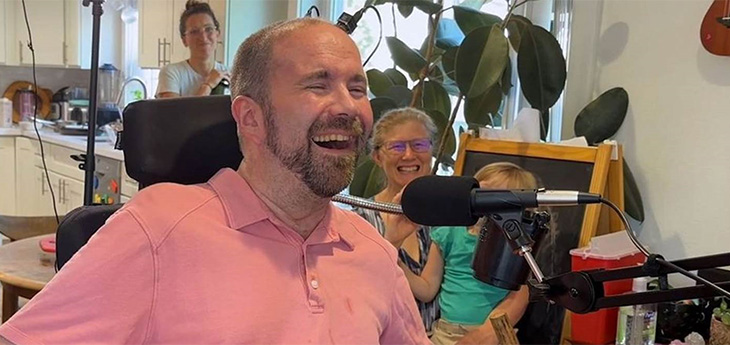
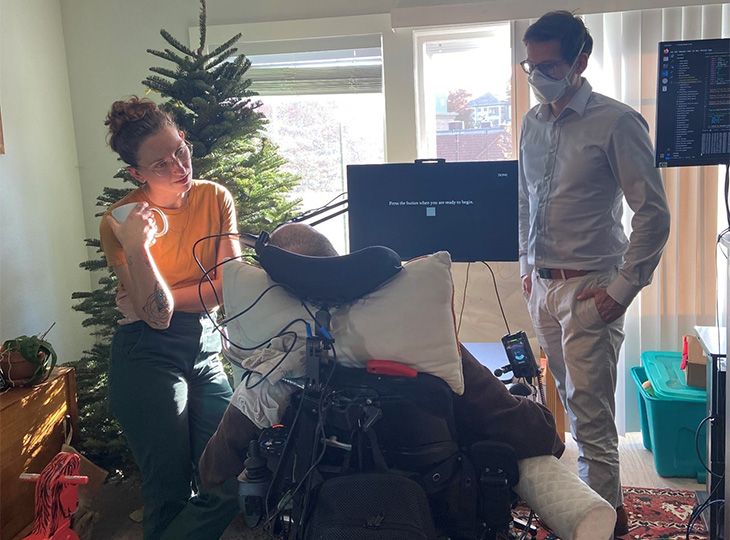
Casey Harrell with his personal assistant Emma Alaimo and UC Davis neuroscientist Sergey Stavisky

Faster training, better results

Despite recent advances in BCI technology, efforts to enable communication have been slow and prone to errors. This is because the machine-learning programs that interpreted brain signals required a large amount of time and data to perform.

“Previous speech BCI systems had frequent word errors. This made it difficult for the user to be understood consistently and was a barrier to communication,” Brandman explained. “Our objective was to develop a system that empowered someone to be understood whenever they wanted to speak.”

Harrell used the system in both prompted and spontaneous conversational settings. In both cases, speech decoding happened in real time, with continuous system updates to keep it working accurately.

The decoded words were shown on a screen. Amazingly, they were read aloud in a voice that sounded like Harrell’s before he had ALS. The voice was composed using software trained with existing audio samples of his pre-ALS voice.

At the first speech data training session, the system took 30 minutes to achieve 99.6% word accuracy with a 50-word vocabulary.

“The first time we tried the system, he cried with joy as the words he was trying to say correctly appeared on-screen. We all did,” Stavisky said.

In the second session, the size of the potential vocabulary increased to 125 000 words. With just an additional 1.4 hours of training data, the BCI achieved a 90.2% word accuracy with this greatly expanded vocabulary. After continued data collection, the BCI has maintained 97.5% accuracy.

“At this point, we can decode what Casey is trying to say correctly about 97% of the time, which is better than many commercially available smartphone applications that try to interpret a person’s voice,” Brandman said. “This technology is transformative because it provides hope for people who want to speak but can’t. I hope that technology like this speech BCI will help future patients speak with their family and friends.”

The study reports on 84 data collection sessions over 32 weeks. In total, Harrell used the speech BCI in self-paced conversations for over 248 hours to communicate in person and over video chat.

“Not being able to communicate is so frustrating and demoralising. It is like you are trapped,” Harrell said. “Something like this technology will help people back into life and society.”

“It has been immensely rewarding to see Casey regain his ability to speak with his family and friends through this technology,” said the study’s lead author, Nicholas Card. Card is a postdoctoral scholar in the UC Davis Department of Neurological Surgery.

“Casey and our other BrainGate participants are truly extraordinary. They deserve tremendous credit for joining these early clinical trials. They do this not because they’re hoping to gain any personal benefit, but to help us develop a system that will restore communication and mobility for other people with paralysis,” said co-author and BrainGate trial sponsor-investigator Leigh Hochberg. Hochberg is a neurologist and neuroscientist at Massachusetts General Hospital, Brown University and the VA Providence Healthcare System.

Brandman is the site-responsible principal investigator of the BrainGate2 clinical trial. The trial is enrolling participants. To learn more about the study, visit braingate.org or contact braingate@ucdavis.edu.

Source: UC Davis Health

Benefits of UV Exposure may Outweigh Risks in Low-sunlight Countries

Photo by Julian Jagtenberg on Pexels

The health benefits of spending time in the sun could outweigh the risks for those living in areas with limited sunshine, a UK study suggests. In low-sunlight locations such as parts of the UK, exposure to higher levels of ultraviolet (UV) radiation was linked to a drop in deaths due to cardiovascular disease and cancer.

Adapting public health advice to reflect both the risks and benefits of UV exposure may help to reduce disease burden and improve life expectancy in low-sunlight countries, the research team says.

Experts caution that measures should still be taken to protect the skin when UV levels are high, to prevent sunburn and the development of skin cancer.

Volunteer data

University of Edinburgh scientists used genetic and health information from the UK BioBank – an anonymised database of health details from volunteers – to examine the UV exposure of 395 000 people across the UK. Participants were restricted to those of white European descent, due to the role skin pigmentation plays in the body’s response to UV exposure.

The team applied two measures to identify those exposed to higher levels of UV. They used the geographical location of participants to calculate their average annual exposure to solar energy and, separately, whether they used sunbeds.

The findings were adjusted for other factors that might influence health – including smoking, exercise, social deprivation and gender – to reduce the chance that these factors were responsible for any of the changes observed.

Health impact

Living in locations with higher UV levels, for example Cornwall, was associated with a lower risk of death from cardiovascular disease and cancer – 19% and 12%, respectively – than living in areas with lower UV levels, such as Edinburgh or Glasgow.

Sunbed use was linked to a 23% lower risk of death from cardiovascular disease and a 14% lower risk of death from cancer, compared to non-users. It is possible that people who use sunbeds may also seek out greater sun exposure and so this result may reflect broader sun seeking behaviour, the team says.

Those with a higher estimated UV exposure had a slightly increased risk of being diagnosed with melanoma, but their risk of dying from the condition was not raised.

As the study is based on UK data from a white European population, the findings are of most relevance to similar groups in low-sunlight countries. Further research into locations with higher UV exposure is needed to build a clearer picture of the potential benefits to health, experts say.

The study, funded by Health Data Research UK, is published in the journal Health and Place.

Our paper adds to a growing body of evidence suggesting that in lower light environments, relatively higher exposure to UV is good for your health. Though there may be an increased risk of skin cancer incidence with higher UV exposure, this risk appears to be outweighed by a larger reduction in the risk of death from cancer and cardiovascular related disease.

Professor Chris Dibben, University of Edinburgh’s School of GeoSciences

Dermatologists have traditionally only considered possible harm to the skin caused by sunlight, much of which dates from the experience of white-skinned individuals in sunny countries such as Australia. When the UV index is very high, protecting skin is important.

However, this research shows that in the UK, the balance of benefit and risk from sunlight exposure is probably very different from that in sunnier countries.

Professor Richard Weller, University of Edinburgh’s Centre for Inflammation Research

Source: The University of Edinburgh