

Trial found that balanced fluids and saline solution are equally effective for treating patients and reducing the risk of major adverse kidney events
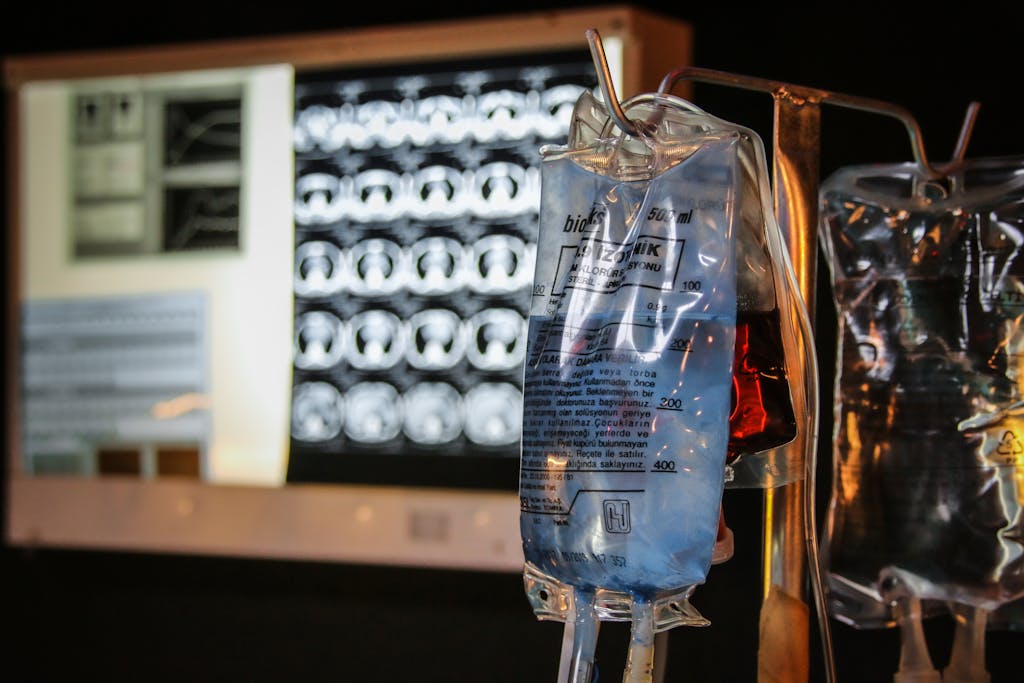
A major study, led by researchers at Children’s Hospital of Philadelphia, Nemours Children’s Health, and Children’s National Hospital, found that different types of crystalloid fluid resuscitation were equally effective for staving off the most serious adverse kidney events after the treatment of paediatric patients with suspected septic shock. The findings of this large clinical trial are detailed in a study published by The New England Journal of Medicine and are being presented at the Pediatric Academic Societies (PAS) Meeting in Boston.
Sepsis is a life-threatening response to infection that causes organ failure. The combination of the body’s immune system and the infection together cause an abnormal response, which can prevent different organ systems from working normally. While many decades of research and improvements in clinical care have significantly improved outcomes for paediatric sepsis patients, about 1 in 10 children in the US with sepsis or septic shock are still at risk of dying.
In some previous multi-centre studies, researchers found that critically ill adults who received balanced crystalloid fluid – an intravenous (IV) treatment meant to exhibit similar properties to human plasma – resulted in lower risk of complications and death compared with a standard 0.9% saline IV solution. This prompted researchers to explore whether a similar study could determine whether one fluid treatment was superior for pediatric sepsis patients.
“We knew we were going to need thousands of patients to answer this question, which we knew would be a challenge,” said co-lead author Fran Balamuth, MD, PhD, an attending physician and Division Chief of Emergency Medicine at CHOP. “Yet we were excited to proceed because these fluids are inexpensive and universally available around the world, meaning that we wouldn’t have decades of waiting to take action once the study was complete; we could be pragmatic and take immediate action based on the results that we found.”
Because suspected cases of sepsis are uncommon among the general population, Balamuth, co-lead author Scott L. Weiss, MD, attending physician and Division Chief of Critical Care at Nemours Children’s Hospital, Delaware, and their colleagues required the collaboration of many hospitals to achieve the data standards needed for meaningful conclusions. For this, they collaborated with Nathan Kuppermann, MD, Executive Vice President and Chief Academic Officer of Children’s National Hospital and Director of the Children’s National Research Institute, who has a history of running successful clinical trials in acutely ill children, and served as the senior author.
“This trial demonstrates the power of large collaborative research networks to answer important clinical questions for children,” Kuppermann said. “By enrolling thousands of patients across multiple countries, we were able to provide the kind of evidence clinicians need to guide care for children with suspected septic shock.”
In the end, a total of 47 emergency departments across five countries were represented in the study, with more than 9000 patients enrolled who received either balanced fluid or 0.9% saline.
The primary outcome of the study was Major Adverse Kidney Events by 30 days (MAKE30), an important outcome for kidney injury that accounts for death, new renal replacement therapy or persistent renal dysfunction. The researchers found that MAKE30 occurred in 3.4% of patients enrolled in the balanced fluid group and 3.0% in the 0.9% saline ground. The study found biochemical differences in children treated with the two fluids, including a higher frequency of elevated blood chloride levels in the 0.9% saline group, and higher lactate levels in the balanced fluid group. Both groups had 23 median hospital-free days of 28, and there were no differences in mortality or other safety outcomes or adverse events.
“This trial confirms that either balanced fluid or 0.9% saline are effective and safe for the initial resuscitation of children with suspected septic shock, and that a fluid strategy that reduces hyperchloraemia does not necessarily translate to improved patient outcomes,” said Weiss, an attending physician and Division Chief of Critical Care at Nemours Children’s Hospital, Delaware. “We also did not identify differences across subgroups. However, despite the large number of participants, it is important to note that we cannot exclude the possibility of benefit of one fluid or the other in a subset of children with the most severe illness.”
“A large trial like this definitively answers a question we’ve had in our field for many, many years,” Balamuth said. “In an emergency department with a child with suspected sepsis, you can treat the child with whichever fluid is readily available. And we think that’s great news for children around the world.”
Source: EurekAlert!
