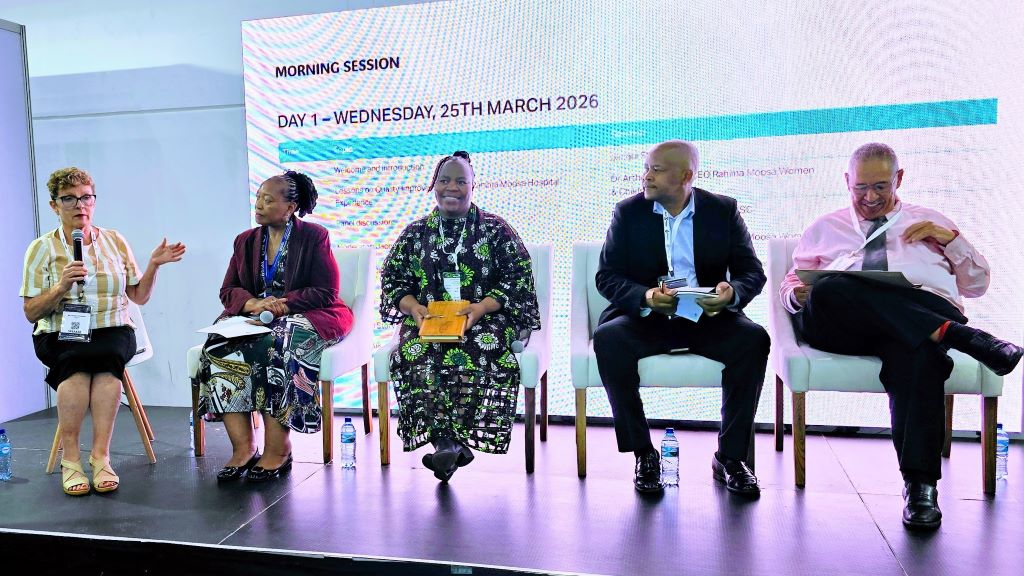
COHSASA CEO, Jacqui Stewart (left), moderates the panel discussing “Quality in the Public Sector”. From left: Dr Siphiwe Mndaweni, CEO of the Office of Health Standards Compliance (OHSC), Professor Sabelile Tenza, Associate Professor, Patient Safety and Healthcare Quality, North-West University, Professor Sibusiso Zuma, Chair of the Department of Health Studies at UNISA and Dr Arthur Manning, CEO of Rahima Moosa Women and Children’s Hospital.
Strong leadership, functional governance and an honest culture of reporting are among the critical factors needed to improve and sustain quality care in South Africa’s public health sector, experts said during a panel discussion at the Hospital Show Conference hosted by COHSASA in Sandton recently.
The session, moderated by COHSASA CEO Jacqui Stewart, brought together senior voices from regulation, academia and hospital management to unpack the persistent gaps – and opportunities – in public sector healthcare delivery.
Professor Sibusiso Zuma of UNISA set the tone, noting that quality varies widely across public hospitals and is often determined by how effectively leadership teams work together.
“In my experience, the level of care depends on how heads of departments—nursing, pharmacy and clinical leadership , function as a team,” he said. “They need to identify problems and address them collectively. Management must also be visible, regularly engaging with what is happening on the ground.”
Dr Siphiwe Mndaweni, CEO of the Office of Health Standards Compliance (OHSC), reinforced the central role of leadership and governance structures, drawing on inspection findings.
“Where leadership is weak or absent, quality suffers,” she said. “Infrastructure is another major challenge. Many facilities are old, and maintenance budgets are often diverted elsewhere, meaning planned upkeep simply does not happen.”
She added that even basic resources remain a concern. “Without essentials like soap, effective infection prevention and control is impossible.”
Dr Mndaweni also highlighted shortcomings in clinical governance, linking these directly to rising litigation. “Facilities may have clinical committees on paper, but if they are not meeting to interrogate lapses in care, the system fails.”
Security risks, poor community engagement and underutilised strategic plans further compound the problem. “Too often, documents are developed and then filed away. Facilities lose sight of their strategy and have no real understanding of patient satisfaction.”
However, she noted that where leadership is engaged – actively interacting with staff and patients – outcomes improve significantly.
Responding to questions on balancing regulatory compliance with quality improvement, Dr Arthur Manning, CEO of Rahima Moosa Mother and Child Hospital, argued that compliance should be seen as a starting point rather than an endpoint.
“Standards are a benchmark, but they are not the ceiling,” he said. “Our experience shows that it is possible to move beyond them.”
Professor Zuma agreed, cautioning against a compliance-driven mindset that fades once certification is achieved. “Facilities often put in intense effort to meet regulatory requirements, then step back afterwards,” he said. “Quality improvement cannot be a once-off exercise or confined to a single ‘quality person’. It must be everyone’s responsibility.”
He advocated for broader training in Total Quality Management and regular six-monthly audits involving all staff. “Quality must be continuous,” he said.
Professor Sabelile Tenza of North-West University pointed to a deeper cultural issue undermining progress: performative compliance.
“There is a tendency to be compliant on paper rather than in practice,” she said, citing research in which hospitals borrowed equipment to pass inspections, only to return it afterwards.
She described a culture of concealment, where staff hesitate to report shortages or failures. “There is fear of exposing the truth, even to boards that could advocate for improvements,” she said. “If we remove that fear, we can move forward.”
Professor Tenza also raised concerns about the reporting of adverse events, stressing the need to protect healthcare workers. “Clinicians ask why they should report incidents when they see no feedback or improvement,” she said.
She criticised the gap between policy and practice around “Just Culture” frameworks. “We talk about it, but confidentiality is not adequately protected. Without anonymity, reporting systems will not work “The focus should be on the incident, not the individual,” she said. “That is how a learning culture is created.”
Although the National Department of Health has developed free online reporting tools, uptake remains low. Professor Tenza said the system needs to be more user-friendly and accessible via mobile devices, with less duplication between paper and digital processes.
“The focus should be on the incident, not the individual,” she said. “That is how systems learn.”
Dr Mndaweni acknowledged that regulation can be perceived as punitive but stressed that enforcement is a last resort. “The OHSC is designed to support compliance and improvement, not punishment,” she said. “But where there is persistent non-compliance, enforcement becomes necessary—even to the point of revoking a facility’s licence to operate.”
She added that the regulator is repositioning itself to play a more active role in quality improvement, rather than acting solely as an enforcer.
Dr Manning rejected the notion that compliance and quality improvement are competing priorities. “Regulatory standards define the minimum acceptable level of care,” he said. “Meeting them should be business as usual. The real goal is to exceed them – there should be no trade-off.”
Some healthcare workers in the public sector are allowed to moonlight in the private sector to earn extra money, subject to certain conditions. Photo by CDC on Unsplash
By Joan van Dyk
The Department of Health allows some public sector doctors and nurses to moonlight in the private sector, but the relevant policy and its implementation caused much controversy over the years. Set against the wider management dysfunction in several provincial health departments, the issue is now coming to a head.
Professional nurse Nomsa Dlamini* has been picking up extra shifts in Gauteng’s private health sector for years, without the required approval from her public sector managers.
The health department has no record of this work, a breach of the rules meant to regulate “moonlighting” among state employees.
She says the benefits of keeping her extra shifts off-book far outweigh the risks of getting caught. If that ever happens, she’s happy to face the consequences, such as disciplinary action. For her, that’s still preferable compared to the cost of following the rules.
Over the course of her 20-year career, Dlamini says she has watched retaliation against her complying colleagues, often in the form of a punishing shift schedule that makes rest unlikely and private sector shifts impossible.
Losing the extra income would be the worst-case scenario, she says.
Dlamini is not the only one bending the rules to avoid backlash.
Moonlighting often not declared
A survey of 1 397 health workers in Gauteng and Mpumalanga found that among public sector employees who were moonlighting, just 20% of professional nurses said they had permission, compared with 85% of doctors and 13% of rehabilitation therapists. The results were published in the South African Medical Journal in 2025.
The fear that managers would refuse permission, or that the act of asking would be met with hostility were high on nurses’ list of reasons for side-stepping the system.
The policy that allows moonlighting – usually called Remunerative Work Outside of the Public Service (RWOPS) – started in the 1990s as a retention strategy with few official rules. The government has gradually layered oversight roles and overtime limits into the system to stem abuse, with mixed success.
The latest policy guideline includes compulsory quarterly reporting to the Department of Public Service and Administration and tighter consequence management. Circulars and job adverts suggest the government is in the process of further beefing up its moonlighting monitoring systems but for now there is little detail about their plans on the public record.
A broader overhaul of South Africa’s health system staffing strategy is on its way too. A ministerial advisory committee (MAC), set up by Health Minister Dr Aaron Motsoaledi in April 2025, hosted an indaba in November 2025 and has sent out questionnaires to gauge health workers’ expectations and concerns about issues including moonlighting, overtime, and community service.
But for some nurses, the details of how their work is regulated has become less important than the everyday task of making a living. Dlamini says she and her colleagues understand why the government needs to make these rules, but they feel the health system no longer has the legitimacy to enforce them. They suggest that years of corruption has gutted the system by draining resources, stripping services, and eroding trust.
Over at Tembisa Hospital, for instance, the Special Investigating Unit (SIU) found that medical supply spending dropped by nearly three-quarters in the year after massive graft was uncovered there. This suggests that money was being spent on ghost stock and overpriced consumables, not the supplies nurses need to do their work. Health workers and patients often flagged medicine shortages at the hospital and were reportedly still borrowing food and drugs from other facilities late in 2025.
Dlamini herself says she has had to push her aching body through understaffed shifts with stretched resources for years, and now she’s being asked to help restore what others have taken.
Worst of all, she says, is an ethics course the higher ups want staff to complete. The request feels alien and disconnected from the realities of a department that has allowed syndicate-linked health workers to siphon millions away from patients. A professional nurse at Tembisa allegedly pocketed nearly R28 million by approving appointments and managing the illicit flow of one of the three syndicates described by the SIU. According to the SIU, a nurse assistant made at least R7.3 million, the equivalent of well over two decades of legitimate salary.
So until Dlamini hears that her pay will be withheld if she doesn’t do the ethics course, she simply refuses. “It’s a slap in the face,” she says.
Standoffs and moonlight mistakes
In 2023, City Press reported that more than 8 700 Gauteng health employees meant to file disclosures had failed to report their financial interests. Nearly two-thirds of the province’s health staff were facing suspension.
The health department’s risk office sent an email saying the rule breakers should “make themselves available at the MEC’s boardroom … to explain themselves”. City Press reported that at least one hospital told its staff not to go.
Whether it is such standoffs between governmental leadership and public servants or the state’s inability to effectively regulate moonlighting, it is patients who ultimately pay the price.
Sometimes, patients aren’t being monitored because their nurse is selling cosmetics for a multi-level marketing scheme in the tea room, Dlamini says. Or a nurse has called in sick when they’re really working in the private sector while still being paid by the government.
There’s also a gruelling cycle that begins after a nurse spends their day at a private facility and then reports for night duty at a public hospital. At some point in the night, they might disappear to get some sleep, leaving an even smaller team to make sure dozens of patients are clean, comfortable and medicated by morning.
Jacky James and Isaac Rabotapi, both Gauteng shop stewards for the Democratic Nursing Organisation of South Africa (Denosa) say they know of many night shift tragedies. The pair regularly represent nurses during disciplinary hearings.
In one instance, they say a six-month-old baby needed a drip. The ward was short staffed and the nurses in attendance were exhausted. Nobody was monitoring the infant once the drip was in. By the time somebody checked up several hours later, the infusion had leaked into the surrounding tissue, causing irreversible damage. Surgeons had to amputate the infant’s entire hand.
The two shop stewards say this is one of many instances they believe are linked to exhaustion and compromised judgement of nurses who work non-stop.
In one nationally representative study from 2015 just over half of surveyed nurses said that they are too tired to work while they’re on duty. This study found no statistically significant link between moonlighting and medico-legal claims but South Africa’s action plan for health sector staffing acknowledges that burnout and clinical mistakes probably contribute to the health department’s sky high malpractice bill.
In a submission to Motsoaledi’s advisory committee, the South African Medical Association (SAMA) describes a health system trapped in a destructive loop in which low base salaries and chronic understaffing feed off each other. Clinicians rely on excessive overtime and side jobs as a financial lifeline. While this keeps services running 24/7, they say extreme burnout and fatigue triggers medical errors and drives overextended staff to quit. When people leave, SAMA says, the staffing gap widens, forcing those who remain to work even more hours. This restarts a cycle that ultimately relies on overworking clinicians to prevent the system from collapsing, SAMA maintains.
The high cost of low salaries
Dlamini, James and Rabotapi are all professional nurses. Among them, they have about 85 years of experience in South Africa’s public hospitals.
“I love my job,” Dlamini says. “For me, it’s about the patients. But the workplace has become unbearable.”
It is worth pointing out here that, even while much of what we describe in this article is negative about the state of nursing in South Africa, we have in the course of our reporting over the years come across scores of nurses who are deeply committed to serving their patients. We have profiled some of these nurses – see here, here, here, and here.
James and Rabotapi say they also used to love nursing, but they both switched to union work in an effort to help patients by improving the system in which they’re treated.
Rabotapi’s view of the system is even worse now that he’s on the road for Denosa because he can see the full extent of poor nursing care. “The lack of empathy is shocking. I’ve seen nurses addressing their patients by conditions instead of their names. That’s a violation of their right to privacy and confidentiality.”
Harsh treatment seems to have become a rite of passage, passed on from older nurses to young recruits, says James. This is especially visible in maternity wards where nurses can be judgemental or cruel towards young mothers, she says.
Obstetric violence, which includes verbal or physical abuse, humiliation or forced medical procedures is widespread. A 2025 report estimates that 1.79 million people who gave birth in KwaZulu-Natal and Gauteng experienced some form of obstetric violence in the past decade.
In February, a coalition of local human rights organisations including Embrace and the Centre for Applied Legal Studies sent Motsoaledi a memorandum demanding change.
By August, they want legal recognition of this abuse and for respectful maternity care to be added to district performance dashboards. They also demand an explicit ban on hiring freezes in sexual and reproductive health services to ensure good staff levels and an adequately funded budget to upgrade dilapidated infrastructure.
“We wouldn’t have any of these problems if nurses were paid well,” Dlamini says.
It’s a sentiment that was repeated by everyone Spotlight interviewed, and in line with the findings of multiple studies conducted over the past decade.
A 2023 study published in BMJ Open found low baseline government pay, the desire for financial freedom, and the need to pay off debts were the biggest drivers of moonlighting among doctors, rehabilitation therapists and professional nurses.
Today, nurses are caught in a financial squeeze. According to our analysis of DSPA data, below-inflation wage increases cumulatively wiped out about 8 percentage points of public sector nurses’ buying power between 2021 and 2023. After three years of losses, their pay has started to recover thanks to lower inflation and wage increases but ultimately, they’re still worse off than they were before the COVID-19 pandemic.
Dlamini says many nurses also earn too much to qualify for government housing subsidies or NSFAS funding for their children’s education, yet they don’t earn enough to afford a bond or expensive university fees on their own.
Professional nurses typically progress through three tiers of seniority as they gain experience. They also get annual salary increases based on performance. The upper limit for the most experienced professional nurse (who isn’t a manager) is about R50 000 per month before tax, according to the DPSA’s latest salary data. This amount includes benefits such as pensions so take-home pay is lower.
Civil servants’ contributions to the state’s medical aid, the Government Employees Medical Scheme (GEMS), are outpacing their earnings. In two years, monthly contributions have jumped 23% in total, and members say they’re paying more for less.
There are reasons for hope. For the first time in two years, Treasury is adjusting tax rules so that inflation doesn’t eat into raises, helping people keep more of their take-home pay.
It’s hard to get a representative picture of what nurses are paid in the private sector. Leading public health researcher Laetitia Rispel, who chaired the process that led to government’s 2030 staffing strategy, explained that private sector partners are not obliged to share this information. They wouldn’t disclose what they paid nurses during the drafting of the staffing plan and withheld this information as confidential during the Competition Commission’s Health Market Inquiry (HMI).
According to the government’s staffing plan, reimbursement data shows that junior nurses tend to have higher salaries in the private sector, while private sector senior nurses may earn less than their counterparts in the public sector.
The coming retirement wave
A retirement crisis now looms over South Africa’s nursing profession, which remains the heart of the public healthcare system.
The latest data from the South African Nursing Council shows nearly half (48%) of the country’s nurses and midwives are aged 50 or older, with about a fifth already in the 60-69 year age bracket.
This exodus will be a massive loss of the nursing expertise and institutional knowledge essential for high-quality care. Their retirement could also exacerbate the existing nurse shortages, which already force nurses to the brink and often, out of public service.
This is more pronounced in rural areas, where exhausted nurses have described stress-related headaches, sleep disturbances and chest pains to researchers. One nurse at a psychiatric hospital in Limpopo told researchers she was responsible for 40 patients on a single night shift. Another collapsed in the ward while she was pregnant. “It’s a prison sentence,” a third nurse told the researchers.
The researchers at the University of Venda argued that low wages could explain why some nurses steal and resell hospital supplies, and why they don’t consider it outright theft.
South Africa is also battling a critical shortage of nurse educators, an unintended consequence of the Occupational Specific Dispensation, which favoured clinical practice over teaching, and thereby created a pay gap that pushed faculty to transition into better paid clinical roles within government hospitals.
The health department’s staffing strategy until 2030 admits that South Africa needs to view nursing as an investment rather than an expense. It describes the many benefits of investing in nursing care which include economic growth and improved health services.
The document, drawn up in 2020, included measurable goals to address workforce issues by 2025, including a plan to meet a shortage of nurse educators and to train and employ up to 34 000 professional nurses and midwives.
The government hasn’t yet tracked progress against these targets, says spokesperson Foster Mohale, but a review by the Department of Planning, Monitoring and Evaluation is in the pipeline to guide the strategy’s remaining period.
In the meantime, the government is building a Human Resources for Health information system and registry and rolling out systems to track workforce indicators, he says. Coordination structures are also being strengthened, and occupational health and safety committees are coming to facilities around the country.
Money isn’t everything
In her 2024 presentation to a panel of experts tasked with getting buy-in from the broader health sector, called the Health Workforce Consultative Advisory Forum, Rispel warned that the 2030 human resource strategy could not be rolled out with an austerity mindset.
Research published in the journal PLOS One in 2025 backs this up. It suggests that professional nurses would give up moonlighting in exchange for a minimum 20% pay increase. That’s much lower than doctors (46%) and rehabilitation specialists (43%).
Modelling suggests however that if the government banned moonlighting, the state would need to bump salaries up by 50% to counteract an exodus among all three cadres.
The study found that a well-resourced environment is worth more than money to many nurses. Nurses would trade a large portion of their pay checks if it means finally having the resources to provide quality care.
Bitter laughter
Dlamini says she became a nurse to continue her mother’s legacy. “I saw how passionate she was. People would come up to her in the streets and say ‘sister, do you remember me, you helped me give birth’, she was so loved.”
She knows that she’s operating in the shadows of the system her mother served and recognises the danger of her own exhaustion. “We really should all be declaring,” she says.
But the feeling fades when she thinks of all the nurses who remain jobless on the one hand, and those who joined syndicates on the other.
It hurts to think about those moonlighting to pay for their children’s education or basic needs while others have opted to “order their skinny jeans through Tembisa hospital”, she says referring to rigged tender contracts that the hospital is mired in.
The two shop stewards laughed when Spotlight relayed Dlamini’s disgust with the hypocrisy of the system. That particularly South African, absurd kind of laughter that sits on the edge of anger and resignation.
“She’s right,” says Rabotapi. “How many more nurses could we have hired with that money?”
*Dlamini is not her real name. Spotlight has agreed to withhold her real name since we believe there is a risk she will be persecuted for speaking to the media.
Despite South Africa’s laws and policies, access to healthcare remains an issue, particularly for non-citizens. Photo by Hush Naidoo on Unsplash
By Teri Brown and Thembi Mahlathi
The media has reported several incidents where people were turned away at public healthcare facilities because they did not possess South African identity documents. As related cases slowly grind through the courts, Teri Brown and Thembi Mahlathi of SECTION27 connect the dots between what the law says and what people are experiencing.
Over the years, many migrants and undocumented people have reached out to SECTION27, where we both work, for assistance. These were often pregnant women, lactating mothers and children under six years, who were denied access to healthcare facilities.
Initially, it was easy to simply write a letter to hospital and clinic personnel where our clients were being denied access. But as time went on, the situation got significantly worse and more migrants were being denied access to public healthcare facilities. Writing letters and asking for meetings clearly wasn’t enough anymore.
We went to court and in April 2023 got an order in which the South Gauteng High Court held that important sections of the National Health Act applies to all pregnant women, lactating women and children under the age of six years, irrespective of their documentation status. This affirmed that in South Africa, they have the right to access free healthcare services at all public health establishments, including hospitals and clinics.
Public sector hospitals and clinics are required to assess the status of migrants and then apply a lawful means test to determine the healthcare services that can be offered to them. However, this does not appear to be done routinely. Instead, particular focus is often placed on South African identity documents, while other forms of documentation held by migrants are disregarded.
There have been incidents where entry to facilities such as Rahima Moosa Mother and Child Hospital in Coronationville and South Rand Hospital in Rosettenville and several clinics across Gauteng have been denied to people, including South African nationals who have the necessary documentation.
Furthermore, we are aware that to avoid being refused healthcare and to demonstrate the urgency of their need for treatment for themselves or their kids, migrants have sometimes been forced to disclose their HIV status – information which they would otherwise have kept private.
In mid-2025, we started receiving a surge of calls from clients complaining about not being able to enter public sector clinics that they were previously assisted at. They informed us that a group of people stationed outside these clinics requested their identity documents, and when they produced their documents confirming either their refugee status or asylum seeker status, they were unlawfully prevented from entering the clinics. These group of people explicitly told them that they should go to a private clinic for treatment or go back to their home country.
Thus, two years after the April 2023 court order, the denial of access to healthcare had worsened, as it was not only women and children who could not access clinics, but anyone who could not provide South African identity documentation. The situation was also exacerbated by the fact that it wasn’t just healthcare staff denying access anymore, but vigilante groups stationed outside healthcare facilities.
Despite the crisis being widely reported, the state failed to address it effectively. We had no choice but to go back to court, and again the court found in our favour.
In December 2025, the South Gauteng High Court ordered the state to take immediate and decisive action to end the obstruction of access to public healthcare facilities in Gauteng. The case was brought by the civil society organisations the Treatment Action Campaign, Doctors Without Borders, and Kopanang Africa Against Xenophobia (the applicants), all represented by SECTION27.
In this landmark judgment, Judge Stuart Wilson concluded that the state entities tasked with upholding the constitutional mandate to safeguard everyone’s right to access healthcare had failed to prevent the obstruction of access to public health facilities. Consequently, this failure was in violation of the constitutional rights of patients seeking care at the Yeoville and Rosettenville clinics.
Despite this court order, our monitoring found ongoing vigilante activity at the two clinics. The applicants then launched an urgent contempt application, heard in March 2026, arguing that the state had failed to fully comply with Judge Wilson’s court order.
Following this, a court ordered settlement agreement was reached with the Gauteng Department of Health and other respondents. Among other things, it required the authorities to take reasonable steps to ensure safe and unhindered access to the Yeoville and Rosettenville clinics, and to report on the implementation by 18 May 2026. It also makes provision to continue legal proceedings if necessary to enforce full compliance with Judge Wilson’s order.
The laws governing healthcare for migrants in South Africa
Taking a step back from this case, and its specific set of facts, it is worth remembering that South African law really does provide extensive protection to migrants who need to access healthcare services.
The right to access healthcare services is guaranteed by section 27 of our Constitution, which states that everyone has the right to have access to healthcare services, and that no one may be refused emergency medical treatment. The term “everyone” is not restricted to South Africans only. It includes everyone within the borders of South Africa, regardless of their nationality.
This right extends to all children living in South Africa under section 28(1)(c) of the Constitution. This guarantees all children access to basic healthcare services dependent on the availability of resources, to which they can never be completely denied.
After the Constitution, the most important piece of healthcare legislation relevant to migrants is the National Health Act (NHA). The NHA assists in giving effect to the constitutional right to basic healthcare services by outlining who can receive services at public clinics free of charge. It obligates the provision of free healthcare services to women who are pregnant or breastfeeding, or children under six. Moreover, the NHA requires that free primary healthcare be provided to those without medical aid. It also makes it clear that those working in healthcare cannot refuse any person emergency medical treatment.
Along similar lines, South Africa’s Refugees Act states that a refugee is entitled to full legal protection, which includes the rights set out in the Bill of Rights, except those reserved for citizens. The Act formally acknowledges that refugees are entitled to the same basic healthcare services and primary education that South African citizens receive. While the Act does not expressly cover undocumented migrants, it is grounded on the principle of non-discrimination, which supports equal access to essential services.
The denial of healthcare services has significant impacts on many aspects of people’s lives. Migrants often become so desperate to receive care that they feel compelled to disclose their HIV status, which infringes on their rights, particularly the constitutional rights to privacy and dignity. It also creates feelings of stigma and discrimination, further marginalising people who are often already vulnerable.
There are also direct health consequences. Denying treatment to a migrant not only negatively impacts that person’s health it can also result in the continued transmission of infectious diseases to both other migrants and South Africans. For example, HIV and TB typically become non-infectious a while after someone starts treatment. Deciding not to treat someone ends up harming everyone. As untreated conditions worsen, it may require emergency medical attention that could have been avoided through early treatment. All of this places extra pressure on an already fragile health system – extra pressure that could be avoided by providing more migrants with healthcare services as soon as they need it.
The failure to provide healthcare services also affects migrants’ livelihoods and well-being. For those who run their own businesses, being unable to access treatment may prevent them from working altogether and could lead to them and other people, possibly South Africans, losing their jobs. Ultimately, this has a ripple effect on the country’s economy, job security, and perpetuates cycles of poverty and vulnerability.
At its heart then, this issue is about who we choose to be as a society. Turning people away at their most vulnerable moments erodes not only their dignity, but also their humanity and ours. In a country built on the values of equality and dignity, we cannot allow this attack on our basic humanity and decency to succeed. We are, and must be, better than that.
*Brown is a legal researcher and Mahlathi is a paralegal with SECTION27. In the court case discussed in this article, SECTION27 represented the Treatment Action Campaign, Médecins Sans Frontiers, and Kopanang Africa Against Xenophobia.
Note: Spotlight is published by SECTION27, but is editorially independent – an independence that the editors guard jealously. Spotlight aims to deepen public understanding of important health issues by publishing a variety of views on its opinion pages. The views expressed in this article are not necessarily shared by the Spotlight editors.
Republished from Spotlight under a Creative Commons licence.
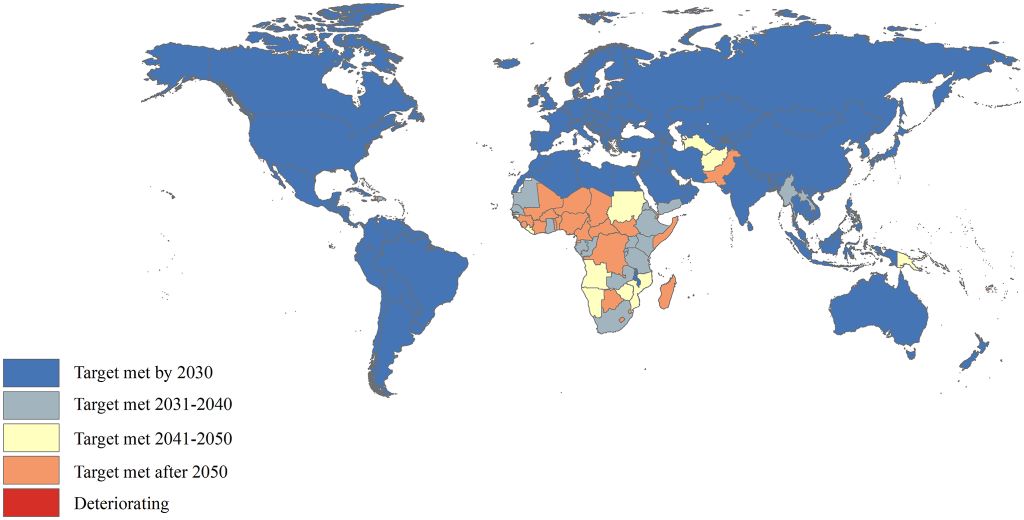
Despite a 63% drop in under-five deaths since 1990, more than a quarter of countries won’t reach the UN’s 2030 child mortality target on time, with sub-Saharan Africa lagging the most
Years in which the U5MR reduction target is expected to be achieved. U5MR: under-5 mortality rate. Image credit: Cao et al., 2026, PLOS One, CC-BY 4.0
A new study tracking global progress on child mortality finds that the world will miss a key United Nations (UN) health target by at least five years at current rates, with the burden falling heavily on Sub-Saharan Africa. The findings are published on April 1, 2026, in the open-access journal PLOS One by Min Liu of Peking University, Beijing, China, and colleagues.
The UN’s Sustainable Development Goal 3.2 calls for all countries to reduce the mortality rate for children under five to fewer than 25 deaths per 1000 live births by 2030. As that deadline approaches, there has been no comprehensive assessment of where countries stand.
In the new study, researchers used data from the UN to analyse annual under-five death counts and mortality rates from 1990 to 2023 across 200 countries and territories. They calculated the rate of change in mortality over time and used those trends to project when those countries still above the target threshold would be expected to reach it.
The researchers found that globally, under-five deaths fell by 63% over the study period – from nearly 13 million in 1990 to 4.78 million in 2023 – and the mortality rate dropped by an average of 3.18% per year. However, the global rate still stands at 36.72 deaths per 1000 live births, well above the SDG target, and is not projected to reach the target until 2035. 133 countries have already met the target and nine more are on track to do so by 2030. However, 58 countries will miss the deadline, including 25 that are not projected to reach the target until after 2050, and Dominica, where under-five deaths have risen. More than four-fifths of all under-five deaths worldwide are concentrated in just two regions: Sub-Saharan Africa, where the mortality rate remains at 68.82 deaths per 1000 live births and is not projected to meet the SDG target until 2055, and Central and Southern Asia.
The study is limited by the assumption that trends over the last two decades will continue unchanged. Data quality was also poor in some conflict-affected regions and low-income countries, the very places where child mortality is highest.
The authors conclude that to meet UN targets, policymakers must focus on scaling up proven interventions – including skilled birth attendance, postnatal care, vaccination, improved nutrition, and treatment for common childhood illnesses – in every community, and especially in Sub-Saharan Africa.
ANC President Cyril Ramaphosa, with Minister of Health, Dr Joe Phaahla and his deputy Dr Sibongiseni Dhlomo, during the signing into law of the National Health Insurance Bill. (Photo: @MYANC/Twitter)
By Thoneshan Naidoo
Healthcare funding is always about trade-offs, writes Thoneshan Naidoo, CEO of the Health Funders Association. The hardest question in healthcare is not what we would like to provide, he argues, but what we can provide sustainably, fairly and at scale.
South Africa’s healthcare debate is shifting and perhaps for the first time in years, it is becoming more honest.
With the National Health Insurance (NHI) Act tied up in legal processes and no credible funding pathway emerging from the 2026 Budget, the conversation is moving away from sweeping promises about the future to a more immediate and uncomfortable question. That is how do we fund healthcare today, and what trade-offs are we willing to accept?
At the centre of that reality is a part of the system that is often misunderstood and frequently criticised – medical schemes.
They are often portrayed as profit driven and exclusionary. In reality, they are not for profit, member owned entities built on a simple but powerful principle, social solidarity. Simply put, members pool their contributions so that those who are healthy today help fund the care of those who are sick.
In practice, around 80% of members claim less than they contribute in any given year. Their contributions help fund the care of the 20% who need it most. That is not exploitation. It is the very definition of risk pooling, and it is the same principle that underpins universal health coverage.
But solidarity comes with trade-offs.
Every Rand paid out in benefits in excess of a member’s monthly contributions is funded by other members. That means decisions about what is covered, how much is paid, and when limits apply are not arbitrary. They are the result of difficult choices about what the overall pool can afford.
These trade-offs become most visible in moments of tension, when a claim is limited, a treatment is excluded, or a dispute arises. To the individual, the system can feel uncaring. But at a system level, the alternative, unlimited funding for every possible intervention, is simply not sustainable.
Even prevention, often presented as an obvious solution, is not as straightforward as it seems.
Take colorectal cancer screening. An inexpensive test such as a faecal immunochemical test can help detect disease early. But many false-positive results lead to follow up procedures like colonoscopies, even when no serious condition is ultimately found. At the same time, some cases are still missed and only diagnosed later, when treatment is more complex and more expensive.
The question is not whether prevention is valuable, it is how to fund it at scale in a way that balances early detection, over treatment and cost.
These are not abstract policy debates but are real world funding decisions that affect millions of people.
And they are taking place in a system under pressure.
Medical scheme membership is voluntary, so younger and healthier individuals often delay joining until they need care. This drives up costs for those already in the system. At the same time, schemes are required to cover a comprehensive set of 270 Prescribed Minimum Benefits, which raises the baseline cost of cover.
The result is a system that works well for those inside it but remains out of reach for many.
This is South Africa’s so-called “missing middle” – millions of working people who earn too much to qualify for public support, but too little to afford private cover. They are left exposed, paying out of pocket, and navigating a fragmented system while waiting for reforms that may still be years away.
As the NHI debate continues, this gap can no longer be treated as a future problem. It is a present reality.
The risk is that the debate remains stuck in ideology. That private healthcare is painted as inherently problematic, or that structural reform alone will resolve access challenges.
Neither is true.
Healthcare funding is always about trade-offs. There are no perfect systems, only different ways of balancing access, quality and affordability within finite resources.
If South Africa is serious about expanding access to healthcare, the debate must move beyond rhetoric and toward practical solutions.
These include using spare capacity in private facilities to treat public patients, and allowing medical schemes, through targeted regulatory reform, to offer affordable primary healthcare cover for people who are currently excluded. Done properly, this could unlock access to private healthcare for more than 10 million uninsured South Africans at a cost of as little as R400 per person per month. Combined with existing tax credits, the impact on a family’s take home pay could be close to negligible. By providing access to preventive and primary care through the private sector, they would reduce pressure on overcrowded public facilities and ease waiting times. Importantly, a strong focus on prevention and early intervention would reduce the need for costly hospitalisation over time.
Medical schemes are well placed to deliver these options, given the principles of social solidarity, community rating and cross-subsidisation that underpin their design. This approach is aligned with the Sustainable Development Goals and the core principles of universal health coverage, and could serve as a practical transitional step as South Africa moves towards the full implementation of National Health Insurance.
After all, the hardest question in healthcare is not what we would like to provide. It is what we can provide sustainably, fairly, and at scale.
*Naidoo is CEO of the Health Funders Association, an industry group that represents several medical schemes and medical scheme administrators in South Africa.
Note: Spotlight aims to deepen public understanding of important health issues by publishing a variety of views on its opinion pages. The views expressed in this article are not necessarily shared by the Spotlight editors.
A University of Pretoria study has revealed troubling ethical and procedural gaps in the way medical schemes conduct forensic audits of physiotherapists, showing how practices intended to prevent billing irregularities are often leaving practitioners fearful, stigmatised and traumatised without proving guilt.
Audits of healthcare professionals are designed to detect billing irregularities and protect medical scheme funds. However, research conducted by Lesley Meyer, an extra-ordinary lecturer at University of Pretoria’s Department of Physiotherapy, explored the lived experiences of physiotherapists who have undergone such audits, and found that the audit practices conducted were experienced as punitive and harmful to practitioners rather than corrective.
Forensic audits in the healthcare sector are, in principle, supposed to protect medical scheme funds and by extension, patients’ contributions. In practice, however, Meyer’s research study, published in the latest edition of The South African Journal of Physiotherapy, found that these audits often extend beyond their legal scope and adversely affect the profession, while pocketing patient’s savings instead of returning these funds to the patients in accordance with the Medical Schemes Act.
Under Section 59(3) of the Medical Schemes Act of 1998, schemes may investigate inconsistencies in claims, but when alleged fraud, waste or abuse exceeds R100 000, the matter should be referred to the Health Professions Council of South Africa (HPCSA) or the South African Police Service. However, the study found that schemes mistrust these authorities, so they bypass that requirement by reclassifying potential fraud as administrative billing errors. This practice allows them to conduct internal investigations without external oversight, creating a loophole that has opened the door to misuse, coercive practices and a lack of accountability.“
Participants reported feeling unfairly targeted and singled out, describing the audit process as unfairly conducted. Many felt they were subjected to a witch hunt,” Meyer says, who is also a physiotherapist and runs a private outpatient practice with a special interest in chronic pain and trauma management. Participants described being treated as suspects rather than professionals and reported severe distress caused by a process that offers no transparency or recourse.
The study found that the problem is exacerbated by South Africa’s outdated billing system. The gazetted tariff codes, last updated by the Competition Commission in 2006, have remained unchanged. Due to the fact that medical aid schemes don’t accept new, unlisted codes, practitioners are forced to use outdated tariffs to describe modern, evidence-based treatments. In some instances, practitioners leave those treatments unbilled altogether.
The study found that practitioners were sometimes accused of overbilling or coding errors without being given access to the evidence used against them. Some described being pressured to sign an Admission of Debt (AOD) to avoid escalation, leading to payments that varied from R54 000 in a solo practice to R4,5 million for one group practice.
As reported in the study, the investigators’ tactics were perceived as coercive and participants were forced to either sign AODs or face continued blockages on payments, effectively turning them into cash practices. Physiotherapists operating as cash-based practices were blacklisted because scheme administrators could not use offset controls to manage claims.
Meyer explains: “For those who sign the AOD it means they’re admitting that they’re guilty, which is against the Health Professions Act, because if you are guilty, it means you’ve committed fraud, and you can lose your licence. But participants felt like they didn’t have a choice, because they weren’t getting any money from the schemes.”
The impact on clinical care
One of the key problems highlighted in the research is the lack of external oversight over medical schemes’ auditing procedures. While the Health Professions Council of South Africa regulates practitioner conduct, schemes are governed by the Council for Medical Schemes (CMS), however, a physiotherapist who participated in the study, who complained to the CMS received no response. This gap leaves practitioners vulnerable to arbitrary decisions and offers no appeal mechanism when they believe they have been treated unfairly.
Meyer says the distress caused by the audits has clear hallmarks of trauma with participants describing the trauma they experience being akin to post-traumatic stress disorder, triggering physical reactions such as going into a cold sweat when encountering reminders of the medical fund and enduring stigma from being blacklisted.
One participant said: “Seven months of watching my father die was easier than this experience.
”Meyer’s research shows that these experiences aren’t isolated incidents but systemic. Interviews revealed a pattern of practitioners who felt coerced into compliance due to their fear of professional ruin.
The study revealed that physiotherapists perceived the audit process as vindictive rather than beneficial. The physiotherapists also felt that the forensic investigators perceived them as being guilty from the start, without considering alternative reasons for irregular billing patterns.
These hostile auditing processes contradict the principle of procedural fairness, Meyer says, which requires fair treatment, transparency, impartiality and an opportunity to be heard.The way forwardThe study recommends teaching undergraduate and registered physiotherapists about forensic literacy. Therefore, Meyer created five lectures based on her findings’ which have been implemented with the fourth-year physiotherapy students as part of the IHL module at the University of Pretoria, to empower students and increase their resilience when faced with forensic audits in private practice.
Moreover, the study recommends a framework that allows practitioners to be heard and protected while ensuring that accountability remains central. Such a framework includes establishing an independent oversight body, standardising investigative procedures and ensuring audited practitioners can access evidence, respond to allegations and appeal decisions. Meyer will continue with this framework through a PhD.
A significant development since Meyer’s study was completed, is the release of the final report by an independent legal panel that reviewed how Section 59(3) of the Medical Schemes Act is applied in forensic audits of healthcare professionals. Meyer says the report confirmed many of the issues raised in her research, including retrospective audits, a lack of transparency and potential misuse of power by medical schemes.“
The release of this report is an important step toward institutional accountability and reform,” Meyer says. “However, the full implementation of its recommendations remains critical to ensure fair audit practices and to restore trust among healthcare providers.”
“The people I interviewed were not trying to avoid accountability. They wanted fairness. They wanted to be heard. If we don’t address the lack of oversight, we risk losing good practitioners and damaging trust in the healthcare system itself.”
Universal health coverage cannot succeed with fragmented systems, weak data, and largely symbolic participation. A recent court-ordered pause to NHI implementation offers a chance to build the foundations properly, argue Dr Haseena Majid and Professor Mogie Subban.
Implementation of the NHI Act has been delayed following a High Court order, by agreement between the parties, prohibiting the proclamation or implementation of its provisions until the Constitutional Court rules on challenges related to public participation.
Beyond the legalities, the pause reveals something more consequential. Universal health coverage cannot succeed on fragile administrative foundations.
If the NHI is to deliver equity, efficiency and quality care, the state must first confront the structural weaknesses that continue to shape large parts of South Africa’s health system. These include fragmented governance across national, provincial and local levels that weakens coordination and accountability; persistent shortages of health professionals that leave facilities understaffed and overburdened; and weak information systems that limit the state’s ability to track performance, allocate resources effectively and plan services based on reliable data.
The NHI Act can mandate pooled financing and new purchasing arrangements, but financing reform alone cannot fix fragmented governance, uneven data systems or inconsistent coordination between stakeholders. When reforms are layered onto unstable administrative systems, the result is not transformation but increased risk.
The eye health example
Eye health illustrates this challenge clearly. This is because it depends on coordination across many parts of the health system including clinics, skilled cadres such as optometrists and ophthalmologists, hospitals, NGOs and screening programmes. When these stakeholders do not work together effectively, patients fall through the gaps.
South Africa’s burden of chronic disease is rising, and with it preventable vision loss. The International Diabetes Federation estimates that around 2.3 million people in South Africa aged 20–79 live with diabetes, a condition that can affect the eyes and lead to vision loss and blindness if not detected early. Studies in South Africa have reported high rates of diabetic eye disease, including prevalence estimates of 39% in a tertiary diabetes clinic in Durban and around 25% in primary care settings in Tshwane.
These figures are not simply about eye disease. They reflect gaps in chronic disease coordination, screening coverage and referral systems. When diabetic eye screening is inconsistent, when referral pathways are unclear and when health data are incomplete, preventable vision loss becomes far more likely.
Cataract surgery, one of the most effective medical procedures available, is rightly prioritised. Yet provincial reporting continues to show significant surgical backlogs. While numbers fluctuate, the pattern remains consistent: demand continues to outpace coordinated capacity.
Vision challenges are also increasing as the population ages. A KwaZulu-Natal study reported presbyopia prevalence of 77% among examined adults. As the population grows older, near-vision impairment becomes not only a clinical concern but also one that affects productivity, mobility and independence.
Taken together, diabetes-related eye disease, cataracts and age-related vision decline illustrate a predictable and growing demand for eye-care services. The burden is clear, but the health system response remains uneven.
Only around 6–7% of optometrists practice in the public sector, while the majority work in private urban settings. Across the country, eye-care services are delivered through a mix of public facilities, private practitioners, NGOs, outreach surgical programmes and school screening initiatives. Yet there is no single national picture showing who is providing which services, where those services are located, and how well they are functioning. Government therefore does not consistently have a clear view of which partnerships are active, which communities are overserved or neglected, what equipment is functioning at facilities, or how the workforce is distributed relative to need. This is not a minor administrative gap, instead it is a governance failure with real consequences.
No clear view
Government cannot plan for what it cannot see. Data gaps and poor system visibility are creating blind spots that will paralyse even the best financing reforms. Without clear stakeholder mapping and infrastructure audits, planning becomes reactive. Procurement decisions become distorted and workforce deployment misaligned. Funding reform under the NHI may change how services are purchased, but if the underlying service network remains fragmented, inefficiencies will simply be redistributed.
The consequences extend beyond clinics. Children with uncorrected vision problems struggle at school. Adults with untreated diabetic eye disease risk losing income and economic stability. Older persons waiting for cataract surgery may lose mobility and independence. When health systems fail to coordinate care, the costs are first absorbed by households and later by the state through disability, preventable complications and lost productivity.
The NHI Act aims to improve equity and purchasing efficiency. But efficiency depends on knowing where services exist and where they are missing. Equitable access depends on understanding how infrastructure and human resources are distributed. Quality oversight depends on reliable data that allows performance to be monitored. What the NHI pause ultimately exposes is unfinished work in health-system governance. South Africa does not lack policy ambition. The country is widely recognised for progressive health policy. The challenge lies in fragmented implementation, limited visibility of service networks and uneven coordination across institutions.
A strategic choice
The Department of Health now faces a strategic choice. It can wait for the courts to resolve the legal process, or it can use this moment to strengthen the operational foundations needed for equitable reform.
Eye health presents a practical place to begin. It may not command the urgency of oncology, emergency medicine or infectious disease management, but that is precisely why it offers an opportunity to test workable solutions. Even under the best financing model, sustainable eye care depends on coordinated collaboration between public facilities, private practitioners, NGOs and community networks. A focused national pilot could map eye care services geographically, combining stakeholder mapping with infrastructure audits and workforce distribution analysis. This would strengthen planning in eye health while providing the system visibility that large-scale purchasing reforms like NHI depend on. The efficiency gaps are already known. What is needed now is coordinated implementation. If government can demonstrate that fragmented service environments can be mapped and coordinated within eye health, it will create a practical reform model for other strained areas of the health system.
Universal health coverage will not be secured simply by moving money differently. It will be secured by making the system visible, coordinated and accountable. The current pause has given us more time. What matters now is whether it is used to build the governance foundations that real reform requires.
*Dr Majid is a Postdoctoral Research Fellow at the College of Law and Management Studies, University of KwaZulu-Natal. Professor Subban is Academic Mentor and Public Governance Expert, at the College of Law and Management Studies, University of KwaZulu-Natal.
Note: Spotlight aims to deepen public understanding of important health issues by publishing a variety of views on its opinion pages. The views expressed in this article are not necessarily shared by the Spotlight editors.
The National Health Insurance (NHI) Act On Friday (20 February), it was reported that President Cyril Ramaphosa had put a halt on putting the NHI Act into effect, amid an array of legal challenges. Four days later, the Pretoria High Court granted an order to the same effect.
The NHI has probably been the most contentious piece of legislation passed in South Africa, and the developments since it was signed into law have been coming thick and fast. The promulgation, that is, putting the law into effect, of the NHI was long predicted to be the hardest part of getting this attempt at universal healthcare to work.
This latest court order restrains President Ramaphosa from any further work in promulgating the NHI Act – something which he had already announced he would do just a few days ago, as reported by BusinessTech. This represents something of a pause in the ongoing legal maelstrom – nothing can be decided until the court cases clear, according to an attorney’s statement on behalf of the President.
Almost as soon as the NHI was signed into law, an array of unions, hospitals, professional organisations and even the Western Cape government launched legal challenges. A ruling compelled the President to provide the records of his decision to sign the NHI into law. One key part governing where healthcare professionals could practice has already been struck down as unconstitutional by a July 2025 High Court ruling.
The lobby group AfriForum last week entered the fray with multiple challenges to the NHI’s constitutionality, aiming to force the government to scrap the NHI completely. A few days later, President Ramaphosa paused the NHI’s promulgation. This all came amidst discussion by the Department of Health into phasing out medical aid tax credits to begin the NHI Fund – which would squeeze many middle-class families out of being able to afford private healthcare. (For now at least, there is good news – just as QuickNews was typing this, it was announced that medical aid tax credits would be increased for 2026).
Experts and even the government itself have acknowledged that these legal challenges will further delay the already decades-long implementation of the NHI, and it appears that this has come to pass. Whether the NHI is modified to a workable version along the lines suggested by industry experts, or whether it is scrapped entirely and South Africa remains stuck with its deeply unequal public/private sector divide remains to be seen.
What is certain is that the NHI as originally envisioned simply isn’t affordable for South Africa – or even a wealthy developed country. The National Treasury seems to be aware of this, as suggested by its minimal allocations to the NHI Fund and medical aid tax credits being updated for this year’s budget.
The District Health Programme Grant is a mechanism for funding the country’s public health efforts, particularly relating to HIV, TB, and other communicable diseases.
By Russell Rensburg
District managers in South Africa’s public healthcare system currently have to juggle funding from multiple government budget lines, each with different strings attached. To improve district health services, we urgently need to simplify and integrate these funding flows, argues Russell Rensburg.
In his State of the Nation Address this year, for the first time in a long time, President Cyril Ramaphosa focused on the broader determinants of health, delivering the strongest message yet around the importance of prevention.
This included signalling reforms around the taxation and regulation of alcohol as well as announcing broad initiatives to improve child health through good nutrition.
And his announcement that government will be rolling out the HIV prevention injection, lenacapavir, means that South Africa stands at the cusp of a massive healthcare transition. The six-monthly injection will be a game-changer in the country’s ongoing fight against HIV.
His efforts must be applauded.
But to deliver on this, Ramaphosa will need a functioning district healthcare system. The challenge, however, is that the district healthcare system often functions in name, but not in practice. This disconnect is mostly due to how district-level services – and healthcare in general – is funded.
In short, we ask for integrated healthcare services in a system built on siloed funding streams. We task district managers with coordinating care, but the budgets they depend on are split across the provincial equitable share, multiple conditional grants, and hospital-level allocations.
Health is funded from national revenue through two streams: the national department of health and the provincial equitable share. The equitable share, which funds healthcare and education, is calculated using several factors including population size, use of services and potential unmet and future needs. The allocations are unconditional allowing provinces to determine all the allocations relative to provincial realities, cost pressures and needs. With national funding, 85% is transferred to provinces through defined use conditional grants to fund strategic priorities. The challenge is that in recent years these grants have become transfers to provinces with poorly managed conditionalities resulted in fragmented healthcare.
One way to fix these challenges is to consolidate all district health funding — including district hospitals — into a single, nationally coordinated expanded District Health Programme Grant. This reform would align the system with the National Health Act, strengthen accountability, and prepare us for the healthcare transitions ahead.
This shift is not about centralising services. It is about aligning authority with responsibility, and aligning money with the legal design of the health system. Provinces would remain responsible for service delivery. But national government — as required by the Act — would finally have a coherent instrument to guide, monitor, and support the district health system.
A fragmented system
Twenty-three years ago, the National Health Act set out a detailed framework for how healthcare should be structured in the country. Health policy norms and standards are set nationally. Provinces are responsible for coordinating and providing technical and operational support to districts. Crucially, the act locates the delivery of health services within the district health system, which is mandated to plan, coordinate and deliver comprehensive primary healthcare services closest to where people live.
Where the National Health Act falls short, is in providing guidance on how these powers and responsibilities would be financed.
Currently, district health services are funded through three streams:
The provincial equitable share, allocated nationally to each province based on population size and demand for health services. This covers most primary healthcare services and all district hospitals.
The District Health Programme Grant, which focuses on HIV, TB, community outreach, and some primary healthcare enablers.
And thirdly, a patchwork of other conditional grants for training, infrastructure, oncology, and digital systems.
The challenge with this approach is that each of these funding streams has its own rules, reporting requirements, and political histories. None of them were designed to work together.
Making the case for consolidation
Twenty odd years ago, the case for split funding streams made more sense. In the early 2000s, South Africa faced an overwhelming HIV epidemic. We needed targeted programmes, ringfenced funds, and rapid scale-up. Conditional grants was an instrument, that in a specific context, helped save millions of lives. But this instrument has now hardened into permanent architecture. And unfortunately, it is not fit for today’s health challenges.
South Africa is at a critical moment. The population is ageing, rates of non-communicable diseases like diabetes and hypertension are rising, HIV and TB require lifelong, coordinated management, and the pace of technology is rapidly reshaping healthcare.
The system that was built 20 years ago simply cannot carry us through the next 20 years.
At the same time, South Africa’s health budget is tightening. Despite a small increase in last year’s budget, the trend over the last decade or so is clearly toward having to do more with less.
We cannot expect the system to meet these growing demands while the foundational governance and funding architecture is no longer fit for purpose.
How it could work
Under an expanded District Health Programme Grant, national government – as the law mandates – would set the healthcare package, standards, indicators, and information requirements. Provinces would continue to run services, hire staff, manage facilities, and account for performance in line with the provisions of the National Health Act. And districts would finally have a budget that reflects their actual responsibilities.
In simple terms, this means that the expanded district health programme will be structured as a conditional grant. It will be informed by a nationally defined package of district health services, developed in consultation with provinces. Provincial allocations will be informed by strategic priorities and service needs such as essential health services, reproductive, maternal and child health services, as well as infectious diseases and non-communicable diseases. The National Department of Health will be responsible for managing the grant conditions with stronger accountability mechanisms to ensure alignment with strategic aims and constitutional responsibilities. Provinces will continue to control human resources, service delivery networks and district variations. This is what the National Health Act intended.
This is the model used by many countries that have successfully strengthened district health systems: national sets the rules and maintains oversight, while provinces or local governments handle delivery.
As already noted, South Africa does have the legal architecture for this. We just don’t have the financial mechanisms in place to match it.
In practical terms, such reforms will mean that for the first time, a district could budget for clinics, ward‑based outreach teams, HIV and TB services, chronic disease management, district hospitals, laboratory and pharmacy systems, emergency medical services linkages, and digital and information systems.
The artificial lines between primary healthcare and district hospitals would disappear. The system would fund itself as the Act intended, as one. District hospitals would no longer be expected to manage pressures created by primary healthcare gaps they have no control over.
There are several other benefits, such as improved accountability, an easier adaptation to demographic and epidemiological transitions, and more efficient use of limited budgets. These ultimately all develop a realistic pathway to universal health coverage.
A governance correction, not a revolution
There may be concerns that consolidating funding into a single grant means taking power away from provinces. The reality, however, is that this reform would restore coherence, not remove authority.
South Africa has spent decades speaking about equity. This is a practical way to make equity real.
When we underfund the district health system in structure, we undercut the very people who rely on it most. These are rural communities, working class households, and people managing chronic and infectious diseases who require continuity of care, not bureaucratic fragmentation.
A unified District Health Programme Grant will not solve every problem in our health system. But without it, we will continue asking a fragmented system to produce cohesive outcomes, and blaming managers and health workers when it inevitably cannot.
It is time to give the district health system the financial foundation it has always needed. Only then can we build the health system people in South Africa deserve.
*Rensburg is director of the Rural Health Advocacy Project and project director for the TB Accountability Consortium.
Note: Spotlight aims to deepen public understanding of important health issues by publishing a variety of views on its opinion pages. The views expressed in this article are not necessarily shared by the Spotlight editors.
As thousands of cancer patients wait months for diagnostic scans, senior clinicians at Charlotte Maxeke Academic Hospital have questioned a decision by the Gauteng Health Department to override their choice of MRI machine.
In a letter to Gauteng Health Department’s acting chief financial officer, the head of supply chain management at the hospital, Solly Mokgoko, expressed a concern that a recommendation by the head of radiology and the acting clinical director to buy a Philips scanner had been overridden by the Gauteng health department’s central office. The letter is dated 31 October 2025.
Mokgoko said the doctors had preferred the Philips MRI scanner – at a cost of about R27.4-million – on the grounds of “technological advancement, operational sustainability, and clinical research potential”.
However, the department had chosen a machine from Mamello Clinical Solutions at R38.5-million, they said. The room in which the machine will be installed is currently being prepared.
The letter said the Philips unit’s cost “offers reduced lifecycle expenditure due to minimal helium dependency and extended operational uptime”. The Philips scanner used low-maintenance technology, “requiring minimal or no helium top-ups, thereby reducing lifecycle costs and mitigating downtime risks”.
The Mamello-proposed model, by contrast, “relies on traditional cryogenic technology, which entails higher running costs and environmental exposure”, they said.
They said the decision is inconsistent with value-for-money principles set out in the Public Finance Management Act (PFMA) and Treasury regulations.
The purchase of a Chinese MRI scanner from Mamello is part of a R304-million roll-out of eight scanners across Gauteng public hospitals, in which roughly R190-million has been awarded to Mamello Clinical Solutions (five machines) and the remainder to Philips SA.
The Gauteng Department of Health rejected any suggestion of irregularity, saying the purchase was made under a lawful, competitively awarded contract and that both suppliers met the required technical standards.
In this case, the original procurement contract was drawn up by the Limpopo Health Department, with the Gauteng department piggybacking on it.
Clinicians at Charlotte Maxeke who spoke to GroundUp say the procurement shift occurred without adequate consultation and against explicit technical recommendations — allegations the department disputes.
Approximately 2,600 oncology patients are awaiting MRI scans at Charlotte Maxeke alone, with outpatient bookings extending to December 2026. Similar waiting lists exist at Chris Hani Baragwanath Academic Hospital.
The letter said that besides the external patient scans waiting list, there are over 50 inpatients awaiting scans.
One department head said: “How can the hospital order an MRI that’s over R10-million more expensive in an environment where it can’t even provide decent food, [and where there is] widespread cost-cutting and a dire shortage of doctors?” Late last year, the hospital made headlines for shortages of adequate patient meals.
Mamello Clinical Solutions, a private company based in Polokwane, was established in December 2014, trading as Mamello Development until 2019 when it changed its name. Robert Makhubedu, its sole director, was appointed in June 2023 after two previous directors resigned, according to official company registration records.
Makhubedu previously worked as chief radiographer at Charlotte Maxeke Hospital in the early 1990s, then spent more than two decades as director of business development at Tecmed, before joining Mamello Clinical Solutions.
A Gauteng Health Department spokesperson “categorically” denied any irregular, inflated or non-compliant procurement.
He said the MRI acquisitions had been made under a lawful, competitively advertised contract which had been evaluated in line with constitutional, PFMA and Treasury requirements.
Philips Healthcare and Mamello Clinical Solutions had both met minimum safety, functional and performance specifications, he said.
While acknowledging that Charlotte Maxeke clinicians preferred the Philips MRI, the spokesperson said procurement decisions could not be driven by “brand preference or proprietary technology.” He said over the life of the machine the price difference between the two was about R1.07-million, not R11.1-million.
Treasury rules, he said, did not permit sole-supplier selection where multiple bidders meet approved specifications. Multi-supplier models were standard public-sector practice.
Makhubedu pointed out that the tender had not called for a “helium-free” scanner. He attributed the doctors’ complaints to a combination of “brand bias” and hostility towards emerging black-owned companies, compared to multinationals.
“Some black companies awarded these contracts in the past could not relate to the business and clinical profile of the projects,” he said. “The legacy of that is that you have to prove yourself all the time.”
Makhubedu said that provinces tried to strike a procurement balance between emerging and established companies. He said his scanner was in fact R300,000 cheaper than the Philips machine over the life of the machine, and Mamello was capturing market share because of scanner quality and price.
“We believe we were fairly, legally and transparently awarded the contract. And we were cheaper.”