

Day: December 16, 2025

Salim Abdool Karim | Transforming Adversity Into Opportunity for the AIDS Response
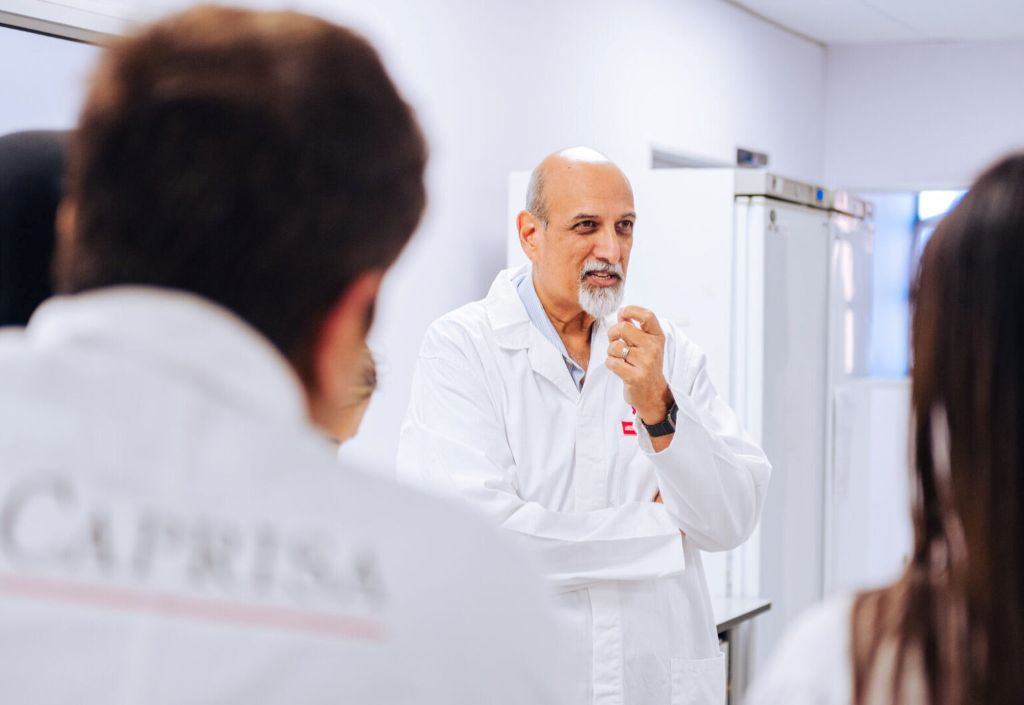
Epidemiologist Professor Salim Abdool Karim is internationally recognised for his significant contributions to research on HIV treatment and prevention. (Photo: Supplied)

By Salim Abdool Karim

As World AIDS Day 2025 swings by, CAPRISA Director Professor Salim Abdool Karim reflects on the frantic days following this year’s unprecedented cuts to health aid and research funding from the US, arguing that the deliberate disruptiveness was designed to be cruel. Nonetheless, he argues, our HIV response must now forge ahead on a path that is more affordable, sustainable and independent.

STOP WORK!

A “STOP WORK” order is immediate.

The Centre for the AIDS Programme of Research in South Africa (CAPRISA) received its first US government “STOP WORK” order from the US Agency for International Development (USAID) on 27 January 2025, imposing a 90-day suspension on a major HIV prevention research project.

A week earlier, on 20 January 2025, incoming US President Donald Trump signed an Executive Order imposing a 90-day freeze on USAID funding. Shortly thereafter, Elon Musk and his Department of Government Efficiency arrived at the USAID headquarters to systematically dismantle it and terminate most of its projects. Within 7 days, the full effect of Trump’s decision was reverberating across the world. The acute US funding cuts disrupted its foreign aid programmes that had for years worked to improve the lives of the most vulnerable communities across the globe.

The impact was instantaneous. Several US-funded projects ground to a halt. Feeding programmes for the hungry, shelter projects for those displaced by war and conflict, daycare for abandoned children and many other programmes in dozens of countries around the world were stopped. The swiftness of the implementation of the USAID dismantling caught the world off-guard.

On 3 February, Secretary of State, Marco Rubio, declared himself to be the new head of USAID, giving Musk carte blanche to destroy it. That day, I was contacted by journalists from The New York Times and from the prestigious magazine Science for information on the impact of US funding cuts on our HIV research.

On 7 February, the New York Times front page headline, “Clinical Trials Left in Lurch By Aid Freeze” informed the world of the impact of the US funding cuts on AIDS research in Africa. It described in graphic detail the impact of the funding cuts on research Dr Leila Mansoor and Dr Disebo Potloane of CAPRISA were undertaking in partnership with world-leading US scientist Dr Sharon Hillier, in developing new HIV prevention technologies for women.

Exactly a month after the initial 90-day “STOP WORK” order, we were notified that this US government funded project had been officially terminated for good. Several other large US-funded projects in South Africa, such as an HIV-vaccine development project led by Professor Glenda Gray, also received termination notices.

While the US government is perfectly entitled – as it sees fit – to stop funding for any of its projects, the deliberate disruptiveness of its implementation was sadly designed to be cruel. Musk relished his destruction of USAID with a chainsaw performance on stage at the Conservative Political Action Conference on 21 February. Ironically, the chainsaw, which he had just received as a gift from Argentine President Javier Milei, was engraved with the phrase “Viva la libertad, carajo”, which is Spanish for “Long live liberty, damn it.”

‘Disownment of science’

The Trump administration effectively dislocated the highly effective partnerships forged by the US and South African scientific communities over the past three decades. It was not simply a withdrawal of funding, but the disownment of science that rocked these research collaborations. A devaluing of science and an era of disinformation set in.

False information from the Trump administration is now rife, from debunked theories regarding autism from vaccines to the supposed dangers of paracetamol during pregnancy to the fictitious “white genocide” in South Africa or “Christian genocide” in Nigeria. This is a threat to democracy and to the decades of progress made in the AIDS pandemic.

Science, in its search for the truth, is under attack, as disinformation-based policies become official.

No time to wallow

Following the initial shock, we realised that we had zero time to wallow in this grief of sorts. CAPRISA went to work mobilising our own resources, reaching out to participants in terminated studies to offer them medical and emotional support. In March and April, our scientists routinely worked late into the night on new grant applications to research funders besides the US government. That hard work is now beginning to bear fruit as new grants begin to fill the gaps in our research funding.

These unprecedented disruptive funding cuts have been a stark reminder to never take donor funding for granted. And certainly, never to be as heavily reliant on a single donor again. While overseas development aid is intended to be altruistic, it has often come with strings attached. Those strings were a rude awakening in 2025 and has left several governments and non-governmental organisations, who were dependent on US foreign aid, in the lurch.

Scientific breakthroughs in HIV, including those by South Africa’s many highly accomplished AIDS researchers, have had widespread global impact benefitting vulnerable groups from all walks of life. Ironically, the funding cuts comes at a time when even greater resources are needed for research to successfully navigate the “last mile” on the way to the Sustainable Development Goal of ending AIDS by 2030.

As this year’s World AIDS Day theme, “Overcoming disruption, transforming the AIDS response” reminds us, this is the time to forge ahead on a path that transforms the response to one that is more affordable, sustainable and independent. As African scientists, we have already begun to take bold steps on the path to greater independence, thereby shifting our focus away from the disruption towards charting a determined path to a world without AIDS.

*Abdool Karim is the Director of CAPRISA and Pro Vice-Chancellor (Research) at the University of KwaZulu-Natal in Durban.

Note: Spotlight aims to deepen public understanding of important health issues by publishing a variety of views on its opinion pages. The views expressed in this article are not necessarily shared by the Spotlight editors.

Republished from Spotlight under a Creative Commons licence.

Read the original article.

A Gentle ‘Immune System Reset’ Cured Type 1 Diabetes in Mice

An “immune system reset” cured autoimmune, or Type 1, diabetes in mice in a Stanford Medicine study. The approach may be useful for other autoimmune conditions as well as organ transplants.

A 3D map of the islet density routes throughout the healthy human pancreas. Source: Wikimedia CC0

A combination of blood stem cell and pancreatic islet cell transplant from an immunologically mismatched donor completely prevented or cured Type 1 diabetes in mice in a study by Stanford Medicine researchers. Type 1 diabetes arises when the immune system mistakenly destroys insulin-producing islet cells in the pancreas.

None of the animals developed graft-versus-host disease – in which the immune system arising from the donated blood stem cells attacks healthy tissue in the recipient – and the destruction of islet cells by the native host immune system was halted. After the transplants, the animals did not require the use of immunosuppressive drugs or insulin for the duration of the six-month experiment.

“The possibility of translating these findings into humans is very exciting,” said Seung K. Kim, MD, PhD, professor of developmental biology, gerontology, endocrinology and metabolism. “The key steps in our study – which result in animals with a hybrid immune system containing cells from both the donor and the recipient – are already being used in the clinic for other conditions. We believe this approach will be transformative for people with Type 1 diabetes or other autoimmune diseases, as well as for those who need solid organ transplants.”

Kim, who directs the Stanford Diabetes Research Center and the Northern California Breakthrough T1D Center of Excellence, is the senior author of the study, which published online Nov. 18 in the Journal of Clinical Investigation. Graduate and medical student Preksha Bhagchandani is the lead author of the research.

Setting the table

The findings in the current report dovetail with those from a 2022 study by Kim and collaborators, in which researchers first induced diabetes in mice by destroying insulin-producing cells in the pancreas with toxins. They then cured them with a gentle pre-transplant treatment of immune-targeting antibodies and low-dose radiation, followed by transplantation of blood stem and islet cells from an unrelated donor.

The current study tackled a more complex problem: curing or preventing diabetes caused by autoimmunity, in which the immune system spontaneously destroys its own islet cells. In people this is called Type 1 diabetes. Unlike in the induced-diabetes study — in which the researchers’ goal was to prevent the recipient’s immune system from rejecting donated islet cells — the transplanted islet cells in the autoimmune mice have two targets on their backs: Not only are they foreign, but they are vulnerable to autoimmune attack by a misguided immune system bent on destroying islet cells regardless of their origin.

“Just like in human Type 1 diabetes, the diabetes that occurs in these mice results from an immune system that spontaneously attacks the insulin-producing beta cells in pancreatic islets,” Kim said. “We need to not only replace the islets that have been lost but also reset the recipient’s immune system to prevent ongoing islet cell destruction. Creating a hybrid immune system accomplishes both goals.”

Unfortunately, the inherent features that lead to autoimmune diabetes in these mice also make them more challenging to prepare for a successful blood stem cell transplant.

The solution the researchers found was relatively simple: Bhagchandani and Stephan Ramos, PhD, a postdoctoral fellow and study co-author, added a drug used to treat autoimmune diseases to the pre-transplant regimen the researchers had discovered in 2022. Doing so, then transplanting blood stem cells, resulted in an immune system made up of cells from both the donor and the recipient and prevented development of Type 1 diabetes in 19 out of 19 animals. Additionally, nine out of nine mice that had developed long-standing Type 1 diabetes were cured of their disease by the combined blood stem cell and islet transplantation.

Because the antibodies, drugs and low-dose radiation the researchers administered to the mice are already used in the clinic for blood stem cell transplantation, the researchers believe that translating the approach to people with Type 1 diabetes is a logical next step.

Where the concept began

The study builds on the work of the late Samuel Strober, MD, PhD, a professor of immunology and rheumatology, and his colleagues, including study co-author and professor of medicine Judith Shizuru, MD, PhD. They and other Stanford researchers had shown that a bone marrow transplant from a partially immunologically matched human donor allowed formation of a hybrid immune system in the recipient, and subsequent long-term acceptance of a kidney transplant from the same donor. In some cases, Strober and colleagues showed that transplanted donor kidney function lasted for decades, without the need for drugs to suppress rejection.

A blood stem cell transplant can be used to treat cancers of the blood and immune system, such as leukemia and lymphoma. But in those settings, high doses of chemotherapy drugs and radiation needed to treat the cancer and replace the recipient blood and immune system often result in severe side effects. Shizuru and colleagues have devised a safer, gentler avenue to prepare recipients with non-cancerous conditions such as Type 1 diabetes for donor blood stem cell transplantation — knocking their bone marrow back just enough to provide a foothold for the donated blood stem cells to settle in and develop.

“Based on many years of basic research by us and others, we know that blood stem cell transplants could also be beneficial for a wide range of autoimmune diseases,” Shizuru said. “The challenge has been to devise a more benign pre-treatment process, diminishing risk to the point that patients suffering from an autoimmune deficiency that may not be immediately life-threatening would feel comfortable undergoing the treatment.” 

Judith Shizuru

Judith Shizuru

“Now we know that the donated blood stem cells re-educate the recipient animal’s immune system to not only accept the donated islets, but also not attack its healthy tissues, including islets,” Kim said. “In turn, the donated blood stem cells and the immune system they produce learn to not attack the recipient’s tissues, and graft-versus-host disease can be avoided.”

What comes next?

Challenges remain using this approach to treat Type 1 diabetes. Pancreatic islets can be obtained only after death of the donor, and the blood stem cells must come from the same person as the islets. It is also unclear whether the number of islet cells typically isolated from one donor would be enough to reverse established Type 1 diabetes.

But the researchers are working on solutions, which could include generating large numbers of islet cells in the laboratory from pluripotent human stem cells, or finding ways to increase the function and survival of transplanted donor islet cells.

In addition to diabetes, Kim, Shizuru and their colleagues expect that the gentler pre-conditioning approach they developed could make stem cell transplants a viable treatment for autoimmune disease such as rheumatoid arthritis and lupus, and non-cancerous blood conditions like sickle cell anemia (for which current blood stem cell transplant methods remain harsh), or for transplants of mismatched solid organs.

“The ability to reset the immune system safely to permit durable organ replacement could rapidly lead to great medical advances,” Kim said.

Source: Stanford Medicine

NHS Doctors Going on Strike just as ‘Superflu’ is Set to Sweep UK

Source: Pixabay CC0

NHS doctors are going on strike just as the UK is facing a surge in cases of “superflu”, which would have by itself placed an even greater burden than the public health service usually faces this time of year as services are stretched thin.

According to The Guardian, this is the 14th such action since disputes over junior doctors’ pay and jobs began in March 2023. Since then, they have won the right to be called “resident doctors” in line with the US because the British Medical Association (BMA) felt that the previous term was demeaning and misleading.

Resentment between government and doctors grows

After the government’s last offer was rejected, BMA members voted in an online ballot 84% in favour of industrial action. UK Prime Minister Keir Starmer called the walkouts “irresponsible” amid a surge in super-flu cases. Meanwhile, the UK’s Secretary of State for Health and Social Care, Wes Streeting, asked junior doctors to ignore the BMA and show up for work.  He dismissed the resident doctors’ 26% pay claim as a “fantasy demand”, and has also said that the strike could be “the Jenga piece” that finally brings about the collapse of the NHS just when it is needed the most.

The strike will begin on Wednesday 17th December at 7am and will continue until the following Monday at 7am.

The magnitude of the problem has echoes of South Africa’s own struggles to find training placements – but at a far larger scale. Some 30 000 newly graduated doctors are having to compete for around 10 000 training posts. Even the government’s best offer could only add 2000 extra jobs.

Dr Jack Fletcher, the chair of the BMA’s resident doctors committee, said: “There are no new jobs in this offer. He has simply cannibalised those jobs which already existed for the sake of ‘new’ jobs on paper. Neither was there anything on what Mr Streeting has said is a journey to restoring our pay – that has clearly hit the buffers.”

Is ‘superflu’ even real?

Experts have however cast doubt on the UK government’s narrative of a dangerous new influenza mutation a “superflu”. Mathematician Christina Pagel, University College London professor, said that the “superflu” term was based on “highly misleading statistics” and that the flu season had merely arrived a few weeks early.

Government spin or not, the strikes have sounded alarm in the NHS, which is struggling to deal cope with a record flu hospitalisations for this time of year, filling 1700 beds. More and more hospitals are unable to contend with these numbers and having to declare a “critical incident”.