Tag: tuberculosis

Janet Giddy | If COVID-19, Why not TB? Mr President, it’s Time for a Family Chat

President Cyril Ramaphosa addresses the nation in 2021 on developments in the country’s response to the COVID-19 pandemic. (Photo: GCIS)

By Janet Giddy

South Africa had several “family chats” in which President Cyril Ramaphosa addressed the nation during the height of the COVID-19 pandemic. He should do the same for tuberculosis, argues Dr Janet Giddy of the advocacy group TB Proof.


Recently, I was flying home and got chatting to the stylishly dressed woman in the window seat next to me. We asked each other the sort of questions that traveller’s often do. Suzie (name changed) was going to Cape Town to facilitate an artist’s workshop. I told her that I worked for an NGO that did tuberculosis (TB) research and advocacy. Suzie nodded pensively, then said: “My dad had TB”. I was just thinking how to respond, when she added: “he died from it”.

I have conversations about TB almost every day, and have previously written about high-altitude chats with fellow travellers. I get into these conversations not because TB work is my “day job” – which it is – but because I am a TB activist, and a survivor of childhood TB.

There are many remarkable things about TB that keep me engaged, enraged and activated. For example, that 29 934 people were diagnosed with TB in 2024 in the Cape Town metro, which was more than the combined number diagnosed with TB in the whole of the United States (10 347), the United Kingdom (5 480), France (4 217), and Canada (1 258). The population of these four countries combined is over 500 million, while Cape Town has a population of just under five million people. If you do the math, the risk of getting TB clearly depends massively on where you live. If these figures do not shock you, they should.

Why are so many people in South Africa unaware and seemingly unconcerned about the extraordinarily high numbers of people infected with TB in our country? Could we take TB more seriously as a country? My answer is yes.

If COVID-19, why not TB?

As expected, South Africa worked up a huge head of steam at every level of society about COVID-19. I think back on President Cyril Ramaphosa’s regular avuncular “family chats” to the nation. In the first COVID-19 “family chat”, our president told us:

“This is a decisive measure to save lives of South Africans from infection and save the lives of hundreds of thousands of our people. While this measure will have a considerable impact on people’s livelihoods, and on the life of our society and on our economy, the human cost of delaying this action would be far, far greater.”

Why has Ramaphosa not ever spoken in this intimate “family style” way to the nation about how important or urgent it is to tackle TB? A disease which continues to cause significantly more suffering and death than COVID-19 did.

In 2018, our president spoke to the international world about TB, when he addressed the President of the General Assembly of the United Nations (UN) and Director-General of the World Health Organization at the first ever UN High-Level Meeting on Tuberculosis. With great gravitas and in oratorial style, Ramaphosa said: “This … is a historic opportunity that we must embrace if we are to effectively respond to a disease that has killed more people than smallpox, malaria, the plague, influenza, HIV and AIDS, and Ebola combined. This meeting is taking place in the year of the centenary of the birth of South Africa’s founding President, Nelson Mandela. President Mandela was a survivor of tuberculosis, which he contracted while in prison, and was firmly committed to the campaign against the disease.”

Ramaphosa went on to highlight the social determinants of TB, including poverty, unemployment, poor nutrition, overcrowding and social stigma that fuel the spread of diseases. He also noted: “In South Africa, TB is the biggest cause of mortality in the general population, especially among men.”

This was an excellent message, but since 2018, our president has not had much to say about TB in public or to South Africans. It would be powerful and impactful if he were to talk about TB as a national emergency that requires a coordinated “family response” as a nation.

In considering the seriousness of TB as compared to COVID-19, let’s look at mortality.

By November 2022, the official number of deaths recorded as being due to COVID-19 in South Africa was around 102 000, approximately 34 000 per year when averaged out. Official numbers are however widely considered to be an underestimate. The Medical Research Council estimated in the region of 300 000 excess deaths relating to COVID-19 from 2020 to 2022, with around 85 000 in 2020, 200 000 in 2021, and around 15 000 a few months into 2022. Not all of these excess deaths would have been directly due to COVID-19, but it is likely that over 80% was (say 240 000 over the three years).

By comparison, TB has in recent years been claiming between 50 000 and 70 000 lives per year, based on estimates from the World Health Organization (WHO) and the Thembisa mathematical model. Thus, while there were many more COVID-19 deaths in 2021 than there were TB deaths, TB deaths almost certainly surpassed COVID-19 deaths in 2022 and subsequent years. The more one zooms out, the more the steady torrent of TB deaths over the last five, 10, 20 years, dwarfs the spike in COVID-19 deaths around 2021.

‘We are all at risk’

Back to my recent high-altitude chat in the plane: somehow, it was a uniquely South African sort of conversation. What is the chance that, while cruising at 10 000 meters over the Atlantic on a flight between the United States and France, that you’d sit next to someone whose parent recently died of TB? An extremely small chance. So, I would contend that all South Africans do need to know about TB, which is a disease that affects families profoundly.

It’s time for South Africa to have family chats about TB. There are many reasons to have these chats, starting with the fact that we are all at risk of getting it, given that we live in a country with a high TB prevalence – it was estimated that 389 people per 100 000 in South Africa fell ill with TB in 2024. We could compare this with the 2024 figures for the United Kingdom, at 9.7 per 100 000, which is higher than the United States’ rate of 3.2 per 100 000. For those who are interested, you can look up the latest numbers for different countries on the WHO’s excellent TB data portal.

The bottom line is that the higher the TB prevalence in the country you live in, the more chance that you or a family member could get TB. This is because it is caused by a bacteria which is transmitted through the air via talking, singing and coughing, so anyone can breathe it in – as was the situation (and therefore, panic) with Covid.  The mode of transmission is the main similarity between TB and COVID-19 – there are lots of differences.

While some people are more at risk of getting TB, anyone can get TB, from any background. As a recent example: in 2024 Anna (name changed), a professional woman who lived in a green leafy suburb, was referred to me by her GP. Anna was shocked and outraged that she had been diagnosed with TB: “Janet, I feel as if I have been infected with a third world plague”. Anna wanted to believe that she had been infected with TB on a visit to India 18 months previously, but together we traced back her potential exposure and worked out she most likely was infected six months earlier, by a family member in a care home. Because Anna and her GP did not think about TB, it took more than a month of her coughing, losing weight and having no energy and taking several courses of antibiotics, before the diagnosis was finally made. By this time, she was very unwell, and her family members and many clients were at risk of getting TB.

Anna’s experience highlights how stigmatised TB still is as a disease. Stigma is a challenge to people from all backgrounds, and there are different reasons for it. Talking about TB more openly is one way to reduce stigma.

As with many other diseases, the earlier TB is diagnosed, the better the chance of full recovery, with no residual lung damage. There is effective medication to treat TB, and although treatment typically takes 6 months, it is not lifelong unlike chronic diseases like diabetes, hypertension and HIV. Young children with uncomplicated lung TB take medication for 4 months only.

Recent TB guidelines recommend that all close contacts of people diagnosed with TB (usually family or household members) should be tested for TB (even if they don’t have symptoms), and if they test negative, they can be offered TB preventive treatment (TPT), which will protect them against getting active TB disease. There is also more “user friendly” TPT now available, which consists of taking medication once a week for 3 months – a total of 12 doses only. Counselling people with TB needs to be family focused, given these new developments.

So, my challenge to readers is to have regular intentional conversations about TB with family and friends, with colleagues, in airplanes, and while waiting in queues.

Keely, a young women who read a previous Spotlight article I wrote, said she was amazed to discover that her colleague was very anxious because her mother was being treated for TB. If Keely had not decided to talk about TB at work, she would not have been able to offer her colleague support.

Try having a conversation about TB in the next week and see what comes of it.

*Giddy is a consultant at the TB advocacy group TB Proof.

Note: Spotlight aims to deepen public understanding of important health issues by publishing a variety of views on its opinion pages. The views expressed in this article are not necessarily shared by the Spotlight editors.

Republished from Spotlight under a Creative Commons licence.

Read the original article.

Trial Suggests Simple Treatment Change for HIV-related Sepsis

Mycobacterium tuberculosis drug susceptibility test. Photo by CDC on Unsplash

A University of Virginia-led team of researchers has made a discovery that may change sepsis treatment for patients in Africa.

Over the course of five years, the researchers studied patients with HIV-related sepsis in eastern Africa, discovering that the most common cause of sepsis was tuberculosis and that treating it immediately, even before a tuberculosis diagnosis was made, significantly improved survival rates. 

Sepsis, or critical illness due to infection, is the leading global cause of death, responsible for an estimated one-fifth of deaths worldwide.

“We designed a trial with colleagues in Tanzania and Uganda to look specifically at people living with HIV, who suffer higher rates of sepsis and are more likely to die when they contract it,” said Dr Scott Heysell, director of the UVA Center for Global Health Equity and the co-lead investigator of the study. “Over half of the people enrolled in this trial were ultimately found to have tuberculosis and, if they immediately received tuberculosis treatment, they were significantly more likely to survive.”

Funded by a grant from the National Institutes of Health, the research, dubbed the “ATLAS study,” was done by a team of nearly 30 doctors, nurses, pharmacists, study coordinators and statisticians, including leading HIV and tuberculosis physician-scientists, Dr Stellah Mpagama from Kibong’oto Infectious Diseases Hospital in Tanzania, and Dr Conrad Muzoora, from the Mbarara University of Science and Technology in Uganda.

“The trial is the culmination of almost 20 years of collaborative work with colleagues in Uganda and Tanzania to better understand, diagnose and manage sepsis,” said co-lead investigator Dr Christopher Moore, professor of medicine and global health equity at the UVA School of Medicine. “The results of ATLAS have broad and significant implications for the treatment of sepsis in Africa, an all too common and deadly illness, which sadly is likely to become even more common with the advent of global public health funding cuts.”

It is often difficult to diagnose tuberculosis, so the team had to use newer and more exhaustive testing, according to Heysell.

“It is a tragedy to be on the front lines and witness the excessive mortality and morbidity from sepsis and tuberculosis, particularly among people with HIV,” said Dr Tania Thomas, a contributing researcher and associate professor of infectious diseases and international health at UVA. “These are treatable conditions, but time is rarely on our side. Until we have more accurate rapid diagnostic tests for tuberculosis, we are pleased to demonstrate that the strategy of immediate tuberculosis treatment can improve survival.”

The team has received additional NIH funding this year to continue its work through a new trial at four hospitals in Tanzania and Uganda to test whether the use of hydrocortisone to reduce inflammation and improve blood pressure, and/or an immediate treatment for tuberculosis and other bacterial pathogens, will improve 28-day mortality from HIV-related sepsis.

“In programmatic settings, tuberculosis treatment was mostly the same as for people without HIV, even though their health needs are more complex,” said Dr Mpagama. “Many of these patients have multiple infections at the same time, which makes their care more challenging.”

The research is part of UVA’s Center for Global Health Equity’s effort to establish meaningful, two-sided research partnerships in Eastern Africa, according to Heysell, who is working to increase educational and research opportunities outside of the US for UVA students. This includes coordinating clinical electives for medical students and other health science students in hospitals and clinics abroad.

To that end, emergency medicine professor Dr Amita Sudhir has been promoted to inaugural director for global health training within the center. Her goal will be to increase abroad opportunities for medical students within existing partnering organisations.

Source: University of Virginia

Six Striking Findings from Major TB Conference

Mycobacterium tuberculosis drug susceptibility test. Photo by CDC on Unsplash

By Elri Voigt

From studies of new medicines and a mask used to diagnose TB, there was no shortage of interesting findings presented at the recent Union World Conference on Lung Health, held in Copenhagen, Denmark. Spotlight rounds up six studies that stood out.

1. People do better if we dispense all TB prevention pills at once

One of the most important questions in TB is how to best prevent people from getting ill if they’ve been exposed to the bug. While effective treatments to prevent TB disease in people who have been exposed exist, uptake has generally been poor.

Now, researchers have found that, dispensing all the pills in a three-month course of TB preventive Therapy (TPT) at once, instead of asking people to collect pills at the clinic every few weeks, led to many more people completing the treatment course.

The study, called ThiPhiSA, was conducted in four clinics and communities in KwaZulu-Natal. 268 households who qualified to receive TPT were enrolled in the trial. 301 participants from these households were randomised to one of two arms, explained Dr Adrienne Shapiro, Assistant Professor of Global Health and Infectious Diseases at the University of Washington.

In the first arm, 159 people were given a two-week supply of the standard of care 3HP (consisting of the drugs isoniazid and rifapentine, taken once a week for 3 months). They then had to go to clinic to receive their refills as per the clinic schedule. They received weekly sms reminders to take their pills and were visited by researchers at month one and two and at the end of the study.

In the second arm, 142 people were given all the pills for the full three-month course of 3HP at once. While no clinic visits were required, they were remotely registered at their clinics just in case they had to visit the clinic. This group also got weekly sms reminders to take their pills and were visited at month one and two and at the end of the study.

Whether people had taken their pills was assessed through self-reporting, as well as a calendar dosing diary, pill count and assessment of urine colour change if the visit was on a day when the participant had recently taken a dose of 3HP.

For those who had to go to the clinic at regular intervals to collect their pills, only 28% completed their treatment course. By contrast, 86% of those who had the full course dispensed at once completed their treatment.

Much of the difference was due to the fact that some people in the prior group simply did not go to the clinic every time to collect pills. There was also a drug stockout at one of the clinics – which somewhat skewed the results in favour of the latter group, but not enough so to change the fact that people were more likely to complete treatment if they got all the pills at once.

Dispensing a full course of TPT at once was safe, according to Shapiro, with no serious adverse events seen in the study.

“Multi-month delivery of TPT is safe, and person-friendly approaches improving the convenience of TPT should be adopted to decompress health facilities and improve TPT coverage to meet TB prevention goals,” she concluded.

2. A new medicine might help shorten TB treatment

Much TB research in recent years have focussed on reducing the duration of TB treatment – it typically takes six months. In addition, researchers have also been looking for medicines that have fewer side effects. Growing resistance to some existing TB drugs is also a concern.

One of the big talking points at this year’s conference was data on an experimental new drug called sorfequiline. It is thought that sorfequiline could be a replacement for bedaquiline, arguably the most important TB drug developed in recent decades. This is because sorfequiline appears to be more potent than bedaquiline and because of worries over TB strains that are resistant to bedaquiline.

The new data is from a phase 2 trial of sorfequiline used in combination with two other TB drugs – pretomanid and linezolid – to treat drug susceptible TB. The regimen is called SpaL for short. 309 participants with newly diagnosed TB were either given the standard of care first-line drugs isoniazid, rifampicin, pyrazinamide, and ethambutol (HRZE) for 26 weeks, the BPaL regimen consisting of the drugs bedaquiline, pretomanid and linezolid for 26 weeks (not all drugs in these first two arms are taken for the entire period), or one of three different doses – 25mg, 50mg or 100mg – of sorfequiline along with linezolid and pretomanid for 8 weeks.

Once those in the sorfequiline arms completed the initial 8-week course, they had to take the drugs isoniazid and rifampicin (HR) for another 7 weeks and were then tested for TB again. Meaning at this point they had gotten treatment for 15 weeks (or around 3 and a half months). If they tested negative and had no TB symptoms, they could stop treatment. But if they tested positive for TB and had symptoms then they’d have to continue taking isoniazid and rifampicin.

Among the participants who got sorfequiline, 64% in the 100mg arm were able to stop treatment after 15 weeks, compared to 46% in the 50mg arm, and 28% in the 25mg arm.

Study participants gave regular sputum samples that were tested for the presence of TB bacteria. The researchers then estimated the probability of a “stable sputum culture conversion at week 8”. In simple terms, this means the researchers wanted to find out what the probability is that all the TB bacteria had been killed by the different regimens after 8 weeks of treatment.

For the 25mg arm, there was 31% stable culture conversion, in the 50mg arm 48%, and in the 100mg arm 59%. For both HRZE and BPaL it was 45%. In other words, 100mg of sorfequiline plus pretomanid and linezolid showed better stable sputum culture conversion after eight weeks than HRZE, the regimen currently used to treat drug-susceptible TB in South Africa and most other countries.

“[W]e believe that SPaL is a promising four-month regimen,” said Dr Morounfolu Olugbosi, the medical lead for the study, which is being conducted by the non-profit TB Alliance.

The regimen was well tolerated at all dose levels, according to Olugbosi, with no difference in safety signals in the sorfequiline arm compared to the other treatment arms. “So that lack of observable difference is what we consider positive news,” he said.

While this trial looked at people with drug susceptible TB, the research team will be investigating how well it works for drug resistant TB in an upcoming phase 3 study, said Dr Maria Beumont, the Chief Medical Officer at TB Alliance, during a press conference.

Indeed, while these phase 2 results are promising, the real test for this drug will be in the larger phase 3 study to come.

3. Co-morbidities are really important when people have TB

A prospective cohort study in South Africa looked at the burden of co-morbidities and the impact it has on TB mortality. The researchers followed around 2 000 adults with pulmonary TB, diagnosed with Gene Xpert (a molecular TB test), and looked at mortality rates for 1 896 of those people after 15 months. Of those, 272 people (14.3%) had passed away during the study duration.

According to the study presenter, Dr Greta Wood, a Clinical Research Fellow in Infectious Diseases at the University of Liverpool, the prevalence of TB multimorbidity among the whole study group was 86%. Meaning most had TB as well as another illness or risk factor.

The researchers looked at five key co-morbidities identified by the World Health Organization (WHO) – HIV, smoking, undernutrition, diabetes and alcohol use. “These five key comorbidities alone explained over half of the mortality that we saw in this cohort,” Wood said.

The researchers found that the more co-morbidities a person had, the higher their risk of dying was when they got ill with TB. The risk of dying for someone with TB was 19% if they had three or more co-morbidities compared to 16% if they had two, and 11% if they had no co-morbidities.

The key conditions driving mortality in this group of people with TB is HIV and undernutrition. Undernutrition in particular was flagged in the study, as in this setting it was responsible for around one in five TB deaths in people under the age of 40, according to Wood.

“[I]n this cohort, we didn’t find an association between diabetes, smoking, alcohol and mortality, but that has been demonstrated in other settings,” she added.

This data should lead to urgent action, concluded Wood, saying that “to reduce the risk of death, we need to urgently start operationalising screening for these key five TB comorbidities and linking people into treatment”.

4. Point-of-care testing leads to people starting treatment faster

As shown in several studies at this year’s conference, the details of how TB services are delivered can make a significant difference to TB outcomes.

One such study, led by researchers from the University of Cape Town (UCT), explored whether it made a difference if someone had a TB test done at a mobile van, or had their sputum sample collected and sent off to a lab. In other words, the study was indirectly testing whether it makes a difference if someone gets a test result right after testing, versus having to wait a day or two to be contacted with a result.

The study, of over 7 000 people, was conducted in South Africa, Zambia, Zimbabwe, and Mozambique. Around half of those screened in the study were at high risk for TB and randomised to either receive point of care testing on a GeneXpert machine in a mobile van or centralised GeneXpert testing at a laboratory.

In the point of care arm, results were available for 1 641 people, and of those 55 (3.3%) had microbiologically confirmed TB. While 67 (4.1%) of the 1 632 tested in the centralised testing arm had microbiologically confirmed TB. Overall, across both arms, 93 of the people diagnosed with TB (76%) were successfully linked to care.

“When compared to those who had their Xpert performed at a central laboratory, those who had their Xpert done at point of care had a 43% lower probability of treatment initiation failure and initiated treatment twice as fast,” said Tahlia Perumal, a researcher at UCT, who presented the results. Participants in the point of care arm on average started treatment four days sooner than those whose TB tests were done in a centralised laboratory.

“[T]here is an argument to be made about the clinical significance of a four-day reduction. We are in the process of doing transmission modelling to be able to provide more granular details about the difference this may make in active case finding models in larger population sizes,” she said.

5. Promising signs for a portable TB test

In the above study, point-of-care testing was done in a relatively large machine in a mobile van. We may however be able to go much smaller.

Tessa Mochizuki, a Research Scientist at University of California in San Francisco, presented results from a multi-country study evaluating how accurate a portable, battery-operated testing device, called MiniDock MTB, was at diagnosing TB from sputum swabs and tongue swabs.

“The test is run on a small device about the size of my hand, and results are available in under 30 minutes, often even faster for positive results,” Mochizuki said.

1 380 people, aged 12 years and older with presumptive TB were enrolled across seven countries – South Africa, India, Nigeria, the Philippines, Uganda, Vietnam, and Zambia. Sputum samples from all participants were tested using two MIDGIT cultures (a test in which the bug will grow if present), smear microscopy (where the bug is looked for under a microscope), and GeneXpert Ultra (a molecular test).

Results from these tests were then compared with results from the MiniDock MTB machine.

For the tongue swab test, a healthcare worker runs a swab over the participants tongue for 30 seconds, then it is put into a buffer liquid, mounted on a testcard which is run through the portable machine. For the sputum swab, a swab is dipped into a test tube that contains sputum for about 15 seconds, put into a buffer liquid and mounted onto a testcard and run through the portable machine.

When comparing sputum swabs results to the Xpert Ultra results there was not a statistically significant difference, according to Mochizuki, as sputum swabs showed 87% sensitivity compared to GeneXpert Ultra’s 89%. Sensitivity is a measure of how likely the test is to detect a bug if the bug is present in the sample.

Tongue swabs performed a bit worse with 81% sensitivity. This was however much better than the 62% with microscopy. Microscopy is rarely used for TB diagnosis in South Africa, but this finding could be important in other countries where health systems haven’t switched as fully over to molecular testing as we’ve done here.

All sample types and tests achieved 98% specificity. Specificity is an indication of how likely a test is to give a negative result if the bug being tested for is not present in the sample.

These findings meet the WHO target product profile requirements – a minimum of 85% sensitivity and 98% specificity for sputum tests and a minimum of 75% sensitivity and 98% specificity for non-sputum tests.

“We submitted this data to the WHO guideline development group that convened last week, and we look forward to news on any official recommendations in the coming year,” Mochizuki said. “These results show that we can achieve high accuracy with a low-complexity platform, bringing molecular testing closer to people seeking care without sacrificing performance.”

6. A mask that can help diagnose TB

An even more interesting idea that some researchers have been working on is to use a diagnostic mask to diagnose TB.

At this year’s conference, Dr Rouxjeane Venter, a researcher based at the Clinical Mycobacteriology and Epidemiology (CLIME) research group at Stellenbosch University, presented a proof-of-concept study testing whether a mask, called the Avelo Mask, can be used to diagnose whether TB bacteria is present in the air a person breathes out.

58 adults, across four clinics in Cape Town, who had TB symptoms and tested positive for TB on a molecular test were given the mask to wear for 45 minutes. The filter in the mask is able to trap tiny particles from .3 micrometers and above – meaning it can trap viruses and bacteria. This filter is then pushed into a buffer tube using a sample stick – where it can be stored or tested directly. The mask as well as the stick and buffer tube are part of the Avelo mask kit developed by Avelo Diagnostics. For this study, the researchers used a qPCR test – a rapid test that looks for TB DNA – to detect TB bacteria.

When the mask filters were tested, 34 people were found to be negative for TB bacteria and 24 were positive. When compared to their Xpert Ultra sputum results, it was found that there were two false positives.

Overall, according to Venter, the mask had a sensitivity of 71% when compared to GeneXpert Ultra and 65% when compared to the Microbiological Reference Standard and a specificity of about 92%.

People with higher bacillary loads – meaning lots of bacteria – in their sputum were more likely to be positive, but there was still a large percentage of participants with low or very low bacillary loads that were picked up by the mask.

These numbers aren’t nearly as good as those for the MiniDock MTB, but it is positive that masks like these are showing promise. A long-standing problem in TB diagnosis is that not everyone can produce sputum samples. The more alternatives we have, be it tongue swabs or masks, the better.

Republished from Spotlight under a Creative Commons licence.

Read the original article

Targeted Steroid Use Might Offer a Universal Complementary Treatment for TB

Tuberculosis bacteria. Credit: CDC

While steroids like dexamethasone are used in certain tuberculosis cases (eg, TB meningitis), their impact on immune cells is not well understood. Given the renewed interest in the steroid dexamethasone, as a host-directed treatment during the COVID-19 pandemic, a Trinity College Dublin team provides evidence that treating patients with steroids may enhance the function of their macrophages to kill the mycobacteria, while diminishing pathways of inflammatory damage. The study is published now in the journal Scientific Reports.

The team’s goal was to determine whether dexamethasone impacts the macrophage’s ability to fight TB. Although glucocorticoids can reactivate TB, they are paradoxically the only adjunctive host-directed therapies that are recommended by the World Health Organization for TB. Steroids are given to patients alongside antimicrobials in certain circumstances, however, scientists don’t fully understand the effect of these drugs on the immune system, especially innate immune cells such as macrophages.

The researchers studied immune cells called macrophages derived from the blood of healthy volunteers or isolated from lung fluid donated by patients undergoing routine bronchoscopies. By treating and infecting these macrophages in the lab with Mycobacterium tuberculosis (Mtb), the scientists could examine and understand how dexamethasone affects the immune response that protects the lungs during infection.

Key findings from the study

  • Dexamethasone a potent glucocorticoid reduces glycolysis in human lung and blood derived macrophages. This reduces the amount of energy available in the cell.
  • Dexamethasone reduced the production of both pro and anti-inflammatory cytokines measured in the study, IL-1β, TNF, IL-6, IL-8 and IL-10. Although helpful for immunity, limiting the production can also limit damage from excessive inflammation.
  • Mtb-infected macrophages have increased survival when they were treated with dexamethasone. This suggests that dexamethasone may protect macrophages from dying due to the harmful effects of infection or detrimental immune responses to infection.
  • Dexamethasone reduces bacterial burden in infected macrophages, and we have identified that this is at least partly mediated by autophagy and phagosomal acidification. Dexamethasone can enhance the macrophages’ ability to degrade and clear bacteria helping to overcome infection with Mtb.

This study identifies that macrophages from different sources have differential responses to glucocorticoids. This highlights that tissue origin can influence how macrophages react to drugs, which may be important for targeting treatment strategies. This is one of the first studies to show that dexamethasone can reduce inflammation while preserving or enhancing antimicrobial function in primary human lung macrophages infected with Mtb.

How could this research change a patient’s life?

The findings support the use of steroids as an extra therapy in conjunction with existing antimicrobial therapies in TB treatment, especially in cases with excessive inflammation. Steroids might also be useful with antimicrobials in TB preventative therapy, to reduce progression from latent TB infection to active TB disease. This study opens avenues for macrophage-targeted steroid therapies that balance inflammation control with antimicrobial defence.

For now, researchers hope this study will hasten the recovery of TB patients who experience debilitating symptoms, often for months into existing therapy.

Dr Donal Cox, Senior Research Fellow, Clinical Medicine, Trinity College Dublin said:

“Our study shows that dexamethasone, which is known to dampen inflammation, can also help macrophages fight tuberculosis more effectively. This challenges the assumption that steroids always suppress immunity and opens the door to smarter, targeted adjunctive therapies that balance inflammation control with antimicrobial defence.”

Prof Joseph Keane, Professor of Medicine, Trinity College Dublin and Consultant Respiratory Physician, St James Hospital said:

“In clinical practice, steroids are the most under-used adjunctive therapy for TB. We often rely on steroids to manage inflammation in tuberculosis, particularly in severe forms like TB meningitis. What’s reassuring from this study, is that dexamethasone not only tempers inflammation but also appears to support the macrophage’s ability to control infection. This study provides new evidence to help us redefine steroid use in TB care—targeting inflammation without compromising antimicrobial defence.”

Next steps for this research

Developing steroid therapies that can be specifically targeted to lung macrophages via mechanisms such as inhaled nanoparticles might be an option to translating this into better therapy. The team also wants to identify how steroids altered different metabolic pathways in human lung macrophages and not in blood derived macrophages so they can exploit this to make steroid therapies better in the future.

Source: Trinity College Dublin

Researchers Identify Promising New Compound to Treat Tuberculosis

As part of the ongoing fight against tuberculosis, scientists within Texas A&M AgriLife Research and Calibr-Skaggs have developed a promising new compound targeting a key bacterial enzyme on M. tuberculosis. The compound, using a novel mechanism, proved effective against even drug-resistant strains of tuberculosis in early studies. (Inna Krieger/Texas A&M AgriLife)

Scientists have developed a new compound that could offer a breakthrough in the global fight against tuberculosis, history’s deadliest infectious disease.

A study recently published in Nature describes the treatment potential of the novel compound known as CMX410. The drug uniquely targets a crucial enzyme in Mycobacterium tuberculosis, the bacterium responsible for tuberculosis. Importantly, this compound even proved effective against drug-resistant infections, which are common globally and pose a significant challenge for controlling the disease’s spread and progression.

The study was led by James Sacchettini, PhD, the Rodger J. Wolfe-Welch Foundation Chair in Science, Texas A&M AgriLife Research scientist and professor in the Texas A&M College of Agriculture and Life Sciences Department of Biochemistry and Biophysics and College of Arts and Sciences Department of Chemistry. He was joined by Case McNamara, PhD, senior director of infectious disease at Calibr-Skaggs Institute for Innovative Medicines, the nonprofit drug development division of Scripps Research dedicated to accelerating next-generation medicines.

The discovery was made possible through collaborations formed by the TB Drug Accelerator program, an initiative funded by The Gates Foundation to support research focused on developing the most promising tuberculosis treatments.

“A lot of people think of tuberculosis as a disease of the past,” Sacchettini said. “But in reality, it remains a major public health issue requiring significant attention, collaboration and innovation to overcome.”

A smarter way to fight back

The new compound identified by AgriLife Research and Calibr-Skaggs works by blocking a crucial enzyme, polyketide synthase 13 or Pks13, that M. tuberculosis needs to build its protective cell wall. Without the functionality of this protein, the bacteria can’t survive to cause infection.

For over a decade, scientists have recognised this protein as a high-value target in the fight against tuberculosis. Yet, despite its potential, drug development efforts have repeatedly fallen short – largely because compounds must clear a high bar for both safety and therapeutic performance.

The unique mechanism of CMX410 makes it highly specific for its target, which translates to a favourable safety profile. By incorporating a reactive chemical group that forms an irreversible bond with a critical site on Pks13, the researchers enhanced the compound’s selectivity, minimising potentially negative off-target effects. This modification also reduces the likelihood of resistance emerging.

The addition of this key chemical group was accomplished with click chemistry, a method that snaps molecules together like puzzle pieces. Click chemistry was developed by co-author Barry Sharpless, Ph.D., W.M. Keck Professor of Chemistry at Scripps Research and two-time Nobel Laureate, and it has led to the development of extensive libraries of chemical compounds.

“This technique represents a new tool for drug design,” said McNamara. “We expect to see its uses expand in the coming years to help address public health concerns with a critical need, including tuberculosis.”

Early results prove safe and effective

The team began by investigating a library of compounds shared by the Sharpless lab to identify molecules that could inhibit bacterial growth of M. tuberculosis.

After intensive optimization to improve compound potency and other pharmacological properties led by Calibr-Skaggs tuberculosis team members and co-first authors Baiyuan Yang, Ph.D., associate director of medicinal chemistry, and Paridhi Sukheja, Ph.D., investigator of infectious diseases, CMX410 was identified as a strong contender.

Yang, who led the chemistry optimisation, said the team explored more than 300 analogues to identify a compound with the right balance of potency, selectivity and safety. The team ultimately tested CMX410 against 66 strains of M. tuberculosis and found that it worked on both laboratory and multidrug-resistant strains collected from real patients.

“Identifying this novel target was an exciting moment,” said Sukheja, who led many early studies showing CMX410 could target a previously unexplored gene. “It opened up a completely new path forward, especially against strains that have learned to evade existing treatments.”

In other early experiments, the researchers determined that CMX410 could be safely combined with other tuberculosis antibiotics. This was an especially important factor for this disease, as treatment regimens require multiple drugs to be taken together for months at a time.

Researchers found no adverse effects in their initial tests in animal models even at the maximum dose level. And because CMX410 is highly specific to its target protein, they see it as unlikely to disrupt other beneficial bacteria or cause broader microbiome imbalances, a common side effect of conventional antibiotics.

Progress toward better treatments

The addition of a specialised chemical group that allows CMX410 to irreversibly bind to its target makes the compound extremely selective. These types of inhibitors remain an exciting and underexplored class of drugs, and further research will be needed to confirm their safety for humans.

Nonetheless, the precision, unique mechanism, good safety profile and other key features all make CMX410 a promising candidate for treating tuberculosis.

“These early results are very encouraging,” said Inna Krieger, Ph.D., senior research scientist in Sacchettini’s lab and co-first author of the study. “Cell wall-targeting antibiotics have long been a cornerstone of tuberculosis treatment. However, after decades of widespread use, their effectiveness is waning due to the rise of drug-resistant strains.

“We are working to discover new drugs that disrupt essential biological processes and identify optimal combinations with existing drugs to enable shorter, safer and more effective treatment regimens. Through these efforts, we hope to help move the world closer to a future free from tuberculosis.”

Source: Scripps Research

Global Fund to Cut R1.4-Billion to SA for HIV, TB and Malaria

Photo by Reynaldo #brigworkz Brigantty

By Liezl Human

The Global Fund to Fight AIDS, TB and malaria (Global Fund) has notified Health Minister Aaron Motsoaledi that it will reduce funding to South Africa by R1.4-billion.

Global Fund said it would be reducing allocations for the seventh grant cycle from R8.5-billion to about R7.1-billion, a 16% reduction. Of this, 55% would be allocated to the National Department of Health and the rest to non-profit organisations such as the Networking HIV & AIDS Community of Southern Africa, Beyond Zero, and the AIDS Foundation of South Africa.

The fund informed recipient countries in May that it would be revising over 200 grants amidst funding shortfalls.

Global Fund was established in 2002 and provides funding for HIV, TB and malaria programmes in over 100 countries. According to its 2024 results report, 72% of its funding from 2021 to 2024 went to sub-Saharan Africa.

Other African countries also received notification of funding cuts. Mozambique’s allocation decreased by 12%, Malawi’s by 8% and Zimbabwe by 11%.

The shortfall in funding is due to Global Fund not having received money pledged by national governments. Over US$4 billion of the shortfall is due to the United States not fulfilling its pledge.

We reported last month how Mozambique’s health system has crumbled amidst USAID funding cuts.

In South Africa, funding cuts from PEPFAR earlier this year have led to clinics closing down, health staff getting retrenched, and people struggling to access HIV medication.

“As you know, the external financing landscape for global health programs is going through significant changes, with substantial impact on lifesaving services for the fight against the three diseases and health and community systems,” the Global Fund said in its letter to South African representatives.

The letter continued that while the Global Fund has “received some significant donor payments in recent days”, prospects to give the full grant cycle 7 (GC7) pledges “remain highly uncertain” and still face a risk of funding shortfalls.

“This is a difficult and unavoidable decision, which may require your country to reconsider how best to use the remaining GC7 grant amounts together with domestic resources and other sources of funds to keep saving lives,” the Global Fund said.

Foster Mohale, Department of Health spokesperson, said that the funding cut did not come as a surprise. Mohale said the department is “working with the provinces” to ensure that “service delivery” is not disrupted, and to apply measures to ensure “efficient use of limited resources”.

Republished from GroundUp under a Creative Commons Attribution-NoDerivatives 4.0 International License.

Read the original article.

Handheld TB Test for Low-cost Diagnosis in HIV Hotspots

A new handheld tuberculosis testing device by Tulane University is the size of a credit card, requires no electricity and significantly improves detection of the disease in those with HIV. (Vincent Postle/Tulane University)

Current tuberculosis infection tests struggle to detect the disease in those with HIV. A common co-infection, HIV can hide TB from traditional tests by eliminating the immune cells relied upon to sound the alarm.

While more than 90% of the 2 billion TB cases worldwide are latent – symptom-free and not contagious – the weakening of the immune system in those with HIV can allow latent TB to turn active, increasing the potential for new infections to spread and often resulting in fatal outcomes. Tuberculosis is the leading cause of death among those with HIV worldwide.

Now, Tulane University researchers have developed a new handheld TB test that significantly improves detection in people with HIV, according to a new study in Nature Biomedical Engineering. Powered by a beetle-inspired chemical reaction, the device requires no electricity and addresses a critical gap in TB infection detection that has long hobbled efforts to eliminate the world’s deadliest infectious disease. 

“The goal was to develop a TB test that could be taken anywhere and provide quicker, more accurate results for anybody.”

Tony Hu, PhD

Dubbed the ASTRA (Antigen-Specific T-cell Response Assay), the credit card-sized device requires only a drop of blood to provide same day diagnoses without need for a laboratory or trained staff. When tested against the traditional IGRA blood test (Interferon-Gamma Release Assay), the ASTRA detected TB in HIV-infected individuals with 87% specificity compared to IGRA’s 60%, while also outperforming in detection of TB without HIV co-infection. 

“The goal was to develop a TB test that could be taken anywhere and provide quicker, more accurate results for anybody,” said senior author Tony Hu, PhD, Chair in Biotechnology Innovation at Tulane University and director of the Tulane Center for Cellular & Molecular Diagnostics. “Current tests such as the IGRA are cost-prohibitive or require access to facilities that resource-limited communities don’t have. If we are going to eliminate TB, we have to diagnose and treat as many infection cases as possible.”

Added Bo Ning, lead author and assistant professor of biochemistry at Tulane University School of Medicine: “If your community has an immunocompromised population, someone may have latent TB.  This can help block the spread of TB and ensure that no one slips through the cracks.” 

To create a test that would not be stymied by HIV, the researchers identified two new biomarkers that could detect TB without relying on the immune cells susceptible to the virus. 

After adding a drop of blood to the device, it must incubate for 4 hours to allow a preloaded reagent to stimulate a response from the immune cells. The reagent acts as a “wanted poster” asking if they’ve seen tuberculosis bacteria before. 

To avoid the use of electricity, the researchers looked to an unlikely source for inspiration: the bombardier beetle. When threatened, these large insects combine two chemicals, and the resulting reaction produces a forceful spray. Similarly, two chemicals in the ASTRA are combined to propel the sample across a chip for final analysis and diagnosis. 

The new device delivers results in about 4 hours, compared to the IGRA, which takes 24 hours, and a common TB skin test, which can take between two and three days for a diagnosis. 

The ASTRA’s performance was validated using samples collected from a cohort in Eswatini, a country with high TB incidence and the highest reported HIV prevalence (27.3%) worldwide.

Increasing testing accuracy, access and speed is even more vital as TB resistance to drugs grows more robust, Hu said. 

“The sooner you have a diagnosis, the sooner you can begin the process of determining proper treatment,” Hu said. “TB is the No. 1 pathogen HIV patients worry about globally. If treatment is available, we should be working to kill these bacteria, latent or not.”

Source: Tulane University

Identifying Inflammation in Tuberculosis Lesions Could Improve Treatment

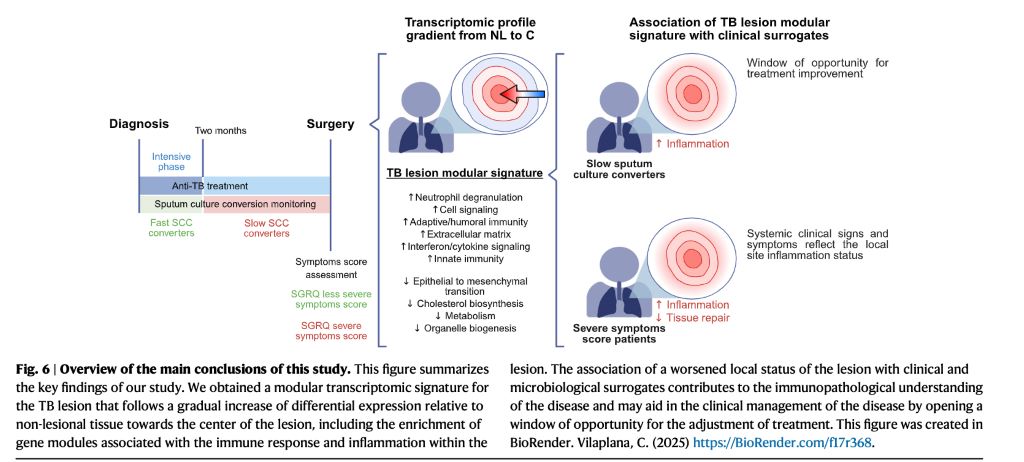
A study in Nature Communications reveals, for the first time, how the transcriptomic profile of human tuberculosis lung lesions is correlated with clinical data from the same patients. The work could potentially lead to improved prognosis by using personalised strategies.

Dr Cristina Vilaplana led researchers from the Experimental Tuberculosis Unit (UTE) at the Germans Trias i Pujol Research Institute (IGTP) and the Germans Trias i Pujol University Hospital.

The study applied RNAseq techniques to 44 fresh tissue samples from lesional and adjacent lung areas of patients with drug-sensitive and multidrug-resistant tuberculosis who underwent therapeutic surgery. The results show a clear separation between lesional and non-lesional tissue, with high expression of pro-inflammatory genes in the lesions.

Weighted gene co-expression network analysis (WGCNA) identified 17 differential transcriptomic modules and revealed a gradient of immune response elements depending on their location within the lesion.

Although lesion transcriptomics has been studied previously, this is the first work to associate these molecular profiles with clinical indicators from the same patients.

“Individuals with more severe forms of the disease present more inflamed lesions, while patients with better clinical outcomes show profiles compatible with tissue repair phases,” explains Dr Vilaplana.

The researchers used two clinical surrogates: a validated respiratory quality of life questionnaire (SGRQ) and sputum culture conversion.

“We confirmed that when a patient says they feel unwell, it is also reflected at the molecular level: their lesions show a stronger inflammatory response,” adds Vilaplana.

Furthermore, patients who take longer to achieve sputum culture conversion, a factor previously linked to worse prognosis, also show higher immune activation at the lesion site.

“These data open the door to personalised strategies: If after two months the patient hasn’t cleared the bacillus, we may need to adapt the treatment to modulate the inflammatory response and avoid a worse clinical outcome,” she concludes.

Source: Germans Trias i Pujol Research Institute

The Global Fund to Fight AIDS, Tuberculosis and Malaria Should Step up Efforts

Photo by Towfiqu barbhuiya on Unsplash

The international community must protect global responses to HIV, tuberculosis (TB), and malaria to serve humanity’s collective interests, according to an opinion article published May 14, 2025, in the open-access journal PLOS Global Public Health by Gorik Ooms from the Institute of Tropical Medicine, Belgium, and colleagues.

Within days of starting his second term as President, Donald Trump ended most United States (US) contributions to global health. Global responses to HIV, TB and malaria are not the only programs affected but were particularly dependent on US support. The US withdrawal from global health could result in 3 million additional HIV deaths and 10 million additional HIV infections, 107 000 additional malaria deaths and 15 million additional malaria infections, and 2 million additional TB deaths, all in 2025.

HIV, TB and malaria are global health security threats that require international collective action. The Global Fund to fight AIDS, TB and Malaria (Global Fund) entered its replenishment cycle for 2027–2029, with a target of $18 billion. A failure of this replenishment would make it impossible for many countries to compensate for decreasing US funding and decreasing Global Fund support.

The abrupt end of most US funding for global health comes at a crucial moment for the fight against the three epidemics. For HIV, funding cuts are disrupting treatment and prevention, and increasing morbidity, mortality and infections especially among marginalised groups. The transmission of TB remains high due to insufficient access to treatment, urbanisation and undernutrition. Control of malaria remains elusive due to emerging resistance to treatments, and insecticides, gaps in prevention, and limited access to healthcare.

According to the authors, the reduction of US bilateral aid calls for re-prioritisation and enhanced coordination of the global fights against HIV, TB and malaria. Currently, the Global Fund is uniquely positioned to undertake this endeavour, as it financially supports HIV, TB and malaria programs in most, if not all, countries affected by US spending cuts. This requires a successful replenishment, which seems improbable given uncertainty about the US position and considering the aid spending cuts announced by other high-income countries. Low- and middle-income countries need to step in, which necessitates an overhaul of the Global Fund governance.

The authors outline four action points. First, all countries, regardless of income level, should support the current replenishment of the Global Fund. Second, the replenishment mechanism should move toward agreed and fair assessed contributions, such as 0.01% of the annual gross domestic product of all countries. Third, the Global Fund should commit to overhauling its governance structures to promote equal representation among geographical constituencies. Fourth, the Global Fund should commit to adhere to the Lusaka Agenda, which captures consensus around five key shifts for the long-term evolution of global health initiatives and the wider health ecosystem.

As noted by the authors, these four actions would save essential elements of the global responses to HIV, TB and malaria and set a central and collaborative mechanism for global health security on a path toward the principles of global public investment.

Dr Gorik Ooms adds: “Richer countries still view global health cooperation primarily as aid, from them to poorer countries. They do not seem to realise how this cooperation also protects their own interests. We must not only find enough funding to sustain it; but also rethink how we work together. Through genuine international cooperation between equal partners.”

Co-author Dr Raffaella Ravinetto concludes: “It is not only a matter of keeping life-saving programs alive. It is also a matter of building and maintaining a solid ecosystem, encompassing health infrastructure, policies and human resources, to make quality health care feasible everywhere. Through solidarity we can serve common interests.”

Provided by PLOS

Freely available article: https://plos.io/4djaJ2H

In your coverage please use this URL to provide access to the freely available article in PLOS Global Public Healthhttps://plos.io/4djaJ2H

Contact: Anna Dams, adams@itg.be, Ph.: +32 477 45 88 38; Gorik Ooms, gooms@itg.be, Ph./WhatsApp: +32 465 829 858   

Image Caption: A person holds medications. Limited access to diagnostics and medicines will worsen treatment quality, inducing resistance to antiretrovirals and medicines for infections.

Image Credit: Institute of Tropical Medicine (ITM), Antwerp, CC-BY 4.0 (https://creativecommons.org/licenses/by/4.0/)

New Research Challenges Thinking on the Places Where TB is Transmitted

Photo by Alex Haney

By Biénne Huisman

For centuries, it was believed that tuberculosis spread primarily when a vulnerable person spends hours in a poorly ventilated space with someone infectious. But new findings suggest that much TB transmission also occurs through casual contact.

Conventional thinking held that enclosed spaces such as households, prisons, and shelters, where people spent long periods of time together, were where most TB transmission took place. But new data suggest that casual contact at social settings like shopping malls, restaurants, bars, and places of worship also account for much TB transmission.

A recent study found that close contact explained only 9% of TB transmission links, while casual contact accounted for 49%. The study, called CONTEXT (Casual Contact and Migration in XDR TB), was conducted in KwaZulu-Natal.

The study’s lead author, Professor Neel Gandhi of Emory University in Atlanta, recently presented the findings at the Conference on Retroviruses and Opportunistic Infections (CROI) in San Francisco. The work has not yet been published in a peer-reviewed medical journal.

The new findings come in the context of other research (much of which was conducted in Cape Town) that suggest TB could be transmitted through breathing, and growing evidence that people with asymptomatic TB can transmit the infection.

Where transmission occurs

Gandhi tells Spotlight that TB transmission has traditionally been linked to prolonged, close contact, with previous studies showing that 9 to 30% of cases could be attributed to this type of contact. A compelling alternative argument, he says, is that the remaining 70% of transmission occurs due to casual contact in community settings – which is what their research sought to explore.

He elaborates: “For much of history, we have thought that most TB transmission occurs through close and prolonged contact, meaning that a susceptible person is spending a lot of time in a poorly ventilated area with somebody who is infectious. And so most often we think of households as places where transmission occurs; or congregate settings, places like prisons or homeless shelters.”

On defining casual contact, he says: “In our research, we wanted to understand less intense forms of contact where transmission can occur. So, we understood where people lived, but we also asked them where they spent time in a typical week. The phrase we used was: ‘where do you spend two hours or more, most weeks?’ To try to identify the places people spend substantial amounts of time; and seeing whether they crossed paths with somebody else to whom their molecular fingerprints (of their TB bacteria infection) match.”

Genotyping, and geomapping

In their study, Gandhi and his colleagues made use of both genotyping and geospatial mapping to figure out where TB transmission likely occurred.

Genotyping, explains Gandhi, is a technology developed about 30 years ago that allows us to examine the genetic code of TB bacteria, and to compare similarity between patients’ bacteria.

“TB is a bacteria that keeps its genetic code similar across many generations of replication. In layman’s terms, we call this molecular fingerprinting. If I were to transmit TB to somebody else; my TB bacteria and that person’s TB bacteria’s genetic codes would look very similar – almost identical – so we could use this fingerprinting technique by sequencing the genomes of the two TB bacteria to try to fully get a sense of what the likelihood of transmission was.”

Commenting on their geospatial methodology, he says: “When our participants told us where they live or where they spend time in the community, or where they get outpatient healthcare; our team went to those sites and captured a GPS coordinates.

“Just like we use GPS for mapping when we’re trying to get around town, we would get specific coordinates… If two people went to the same shop, they might have used different names for that shop, or let’s say they went to a shopping mall, they may have used different names for those places; but we used GPS coordinates allowing us to determine whether they were at the same place or close to one another. And we used the concept of proximity to try to understand the likelihood that they may have crossed paths.”

In the study they used the metric of “community proximity” defined as a radius of 500 metres, or less.

Gandhi illustrates the nuance of geomapping, using his university campus: “So the example I like to give is; I work in a building called the School of Public Health. Across the courtyard is the School of Nursing. If you just asked me, where do you work? I would tell you, I work in this building. If you ask the next person where they work, they may say, I work in the School of Nursing. That wouldn’t match up in terms of place name. But if we used a radius of 100 metres or 500 metres, we can determine that we work very close to one another. And there’s a cafe in yet another building that we may have eaten lunch in at the same time. TB being an airborne disease, I don’t have to sit next to that person or even to know that person; if I’m infectious, I could have transmitted to them if they were sitting and eating in the same room.”

Essentially, the researchers used genotyping, particularly molecular fingerprinting to help understand the likelihood of transmission between people who have drug resistant TB. And once individuals with similar molecular fingerprints were found, they used geomapping to see whether these patients could be connected through close contact – and if not close contact, then through casual contact.

He adds: “The most common place people told us were friends and family members’ homes. Then the next most common was places of shopping so shopping malls.”

At CROI, Gandhi responded to a question from a conference delegate around risk, saying that there appears to be a greater risk of TB transmission in social settings than previously understood.

Symptoms and disease

To Spotlight, he says more work is needed to understand why casual contact transmission is happening. “And it connects to another topic in the TB community that is gaining a lot of attention currently, which is trying to understand what the association is between symptoms and having TB disease,” says Gandhi.

He notes that the challenge for researchers moving forward is understanding the link between infectiousness and symptoms – specifically, understanding when a person becomes infectious, even if they show no symptoms.

Most TB public health interventions are still based on the assumption that people with TB will present at health facilities with classic TB symptoms such as persistent cough, night sweats, fever, weight loss, and chest pain. South Africa has however in recent years been offering TB tests to asymptomatic people thought to be at high risk of TB, as part of its targeted universal testing strategy.

“So you may have heard of this concept of what some people have called subclinical TB or asymptomatic TB.  And that is to say, if you were to test a group of people who didn’t come to a health clinic, but let’s say you were on a street corner and you tested everybody who went by for TB, we’re coming to appreciate that as many as 50% of people may not either have any symptoms or may not have symptoms that are worrisome enough for them to seek healthcare, but are actually testing positive for TB disease,” Gandhi adds.

Gandhi says this reminds him of the early days of COVID-19, when scientists weren’t sure if people only became infectious after showing symptoms.

“Eventually we learned that people were infectious probably for a few days before they developed symptoms. And in the TB world, this may be an area we need to investigate. If there’s the possibility that somebody is infectious when they have absolutely no symptoms, they would go about their regular activities; going to work, going to school, going shopping, going to religious ceremonies, going to restaurants, and they may unknowingly be infectious with TB. So this is the challenge.”

The bigger picture

Commenting on the findings, Robert Wilkinson, Honorary Professor in the Department of Medicine at the University of Cape Town and director of the Centre for Infectious Diseases Research in Africa, says: “It is interesting, and the proportion of transmission estimated to occur outside the household is a low estimate, but not incompatible with other estimates.”

He notes that the phenomenon of transmission occurring after brief casual contact is not novel though, and has been investigated in previous studies.

Asked how the findings presented by Gandhi might affect the outlook on TB interventions, Wilkinson says: “Whilst close household exposure to infectious tuberculosis should prompt clinical evaluation especially if there are symptoms, finding a close contact by conventional contact tracing approaches is far from invariable. Therefore, in high incidence environments like South Africa more attention needs to be placed on mass radiographic (X-ray) and, or microbiological screening of asymptomatic persons.”

In a recent public lecture called ‘Hunting Bosons, Finding the Bummock’, Emeritus Professor in Medicine at the University of Cape Town, Robin Wood, former CEO of the Desmond Tutu Health Foundation, states: “I think we are changing the paradigm of tuberculosis.” He notes that research now targets “hidden reservoirs of TB transmission beyond visible, symptomatic cases… [as] TB silently spreads within communities through carriers who exhibit no symptoms yet contribute to transmission.” Asked about Gandhi’s findings, Wood told Spotlight he would reserve comment until the data is submitted for further peer review and publication.

Study details

The 305 respondents in the CONTEXT study were patients with extensively drug-resistant TB or pre-extensively drug-resistant TB. They were diagnosed between 2019 and 2022 in the eThekwini, Ilembe, Umgungundlovu, and Ugu regions. The average age was 36 years, with 137 (45%) women and 216 (73%) people living with HIV.

The study was conducted in collaboration with the Durban-based Centre for the AIDS Programme of Research in South Africa (CAPRISA).

“CAPRISA played a leadership role in conceptualising the science, development of the protocol and data collection instruments, oversight of all aspects of field work, including screening and enrolling patients, obtaining informed consent from patients or their proxy’s, field and laboratory data collection, data verification and data clean-up activities for all data used in this study,” says CAPRISA’s deputy director, Professor Kogieleum Naidoo.

CONTEXT was funded through the United States National Institutes of Health (NIH), the world’s largest health research funder which has in recent weeks terminated several grants in South Africa and elsewhere. “The funding period has ended,” says Gandhi. “Now we’re analysing all of the data, so it won’t be impacted by any changes happening at NIH.”

Republished from Spotlight under a Creative Commons licence.

Read the original article.