South Africa’s public tender framework has long recognised the importance of ensuring reliable, affordable, and uninterrupted access to essential medicines and vaccines, particularly for national immunisation programmes that protect children and vulnerable populations.
While local pharmaceutical manufacturing remains an important national objective, it is equally critical that public procurement decisions prioritise patient access, programme sustainability, and fiscal responsibility, especially in vaccine supply where scale, complexity, and affordability are decisive factors.
Vaccines require scale, specialisation and reliability
Vaccine manufacturing at national immunisation scale requires highly specialised infrastructure, advanced technical capability, strict regulatory compliance, and sustained capital investment. These requirements differ materially from those of many small‑molecule medicines.
“When it comes to vaccines, the overriding priority of the public tender system must be patient access. Scale, affordability, and uninterrupted supply are essential if South Africa is to expand and sustain its national immunisation programmes,” said Simo Masondo, Chairman of the Generic and Biosimilar Medicines Association of South Africa (GBMSA).
Although South Africa has made meaningful progress in strengthening elements of local pharmaceutical capability, vaccine manufacturing readiness varies significantly across product categories, and certain capacities continue to evolve. In this context, national immunisation programme must be supported by a calibrated combination of local and global manufacturing supply, particularly where programme expansion, continuity and affordability are at stake.
A tender system that prioritises supply reliability and scale is essential to ensuring that immunisation program can reach more patients, more consistently and without interruption.
Competitive pricing and demonstrable value for money remain central to the sustainability of South Africa’s public healthcare system. The National Department of Health has consistently emphasised procurement principles that include value for money, open and effective competition, accountability, and equity.
In vaccine procurement, competitive tender outcomes directly enable:
Broader immunisation coverage
Greater reach to children and underserved populations
More efficient use of limited public healthcare resources
Affordability is not a secondary consideration; it is a core enabler of access.
BRICS partnerships as strategic enablers of vaccine access
Trusted international partnerships, particularly within the BRICS ecosystem, play a critical role in supporting South Africa’s vaccine supply objectives. Long‑standing collaborations with partners in countries such as India have consistently demonstrated scale, reliability, regulatory compliance, and significant cost efficiencies in national tenders.
Indian vaccine manufacturers have historically delivered substantial savings to the South African government, in some cases exceeding R2 billion on a single vaccine programme, while supporting the expansion and sustainability of national immunisation coverage.
These partnerships should be viewed not as alternatives to local capability, but as essential enablers of immediate access, affordability, and programme continuity, particularly in vaccine categories where local scale is still developing.
A pragmatic and patient‑centric path forward
“A pragmatic, balanced approach allows South Africa to meet today’s immunisation needs while continuing to build capability over time. This is not a choice between localisation and access; it is about sequencing decisions responsibly so that patients always come first,” Masondo said.
Such an approach ensures:
Reliable and uninterrupted vaccine supply
Expanded immunisation reach for South African children
Responsible stewardship of public healthcare funds
Long‑term programme sustainability
Strengthened international cooperation within BRICS and other trusted partnerships
By prioritising access, affordability, and scale in vaccine procurement, South Africa can protect its immunisation programmes today while continuing to build manufacturing capability over time, without compromising patient outcomes or fiscal sustainability.
The District Health Programme Grant is a mechanism for funding the country’s public health efforts, particularly relating to HIV, TB, and other communicable diseases.
By Russell Rensburg
District managers in South Africa’s public healthcare system currently have to juggle funding from multiple government budget lines, each with different strings attached. To improve district health services, we urgently need to simplify and integrate these funding flows, argues Russell Rensburg.
In his State of the Nation Address this year, for the first time in a long time, President Cyril Ramaphosa focused on the broader determinants of health, delivering the strongest message yet around the importance of prevention.
This included signalling reforms around the taxation and regulation of alcohol as well as announcing broad initiatives to improve child health through good nutrition.
And his announcement that government will be rolling out the HIV prevention injection, lenacapavir, means that South Africa stands at the cusp of a massive healthcare transition. The six-monthly injection will be a game-changer in the country’s ongoing fight against HIV.
His efforts must be applauded.
But to deliver on this, Ramaphosa will need a functioning district healthcare system. The challenge, however, is that the district healthcare system often functions in name, but not in practice. This disconnect is mostly due to how district-level services – and healthcare in general – is funded.
In short, we ask for integrated healthcare services in a system built on siloed funding streams. We task district managers with coordinating care, but the budgets they depend on are split across the provincial equitable share, multiple conditional grants, and hospital-level allocations.
Health is funded from national revenue through two streams: the national department of health and the provincial equitable share. The equitable share, which funds healthcare and education, is calculated using several factors including population size, use of services and potential unmet and future needs. The allocations are unconditional allowing provinces to determine all the allocations relative to provincial realities, cost pressures and needs. With national funding, 85% is transferred to provinces through defined use conditional grants to fund strategic priorities. The challenge is that in recent years these grants have become transfers to provinces with poorly managed conditionalities resulted in fragmented healthcare.
One way to fix these challenges is to consolidate all district health funding — including district hospitals — into a single, nationally coordinated expanded District Health Programme Grant. This reform would align the system with the National Health Act, strengthen accountability, and prepare us for the healthcare transitions ahead.
This shift is not about centralising services. It is about aligning authority with responsibility, and aligning money with the legal design of the health system. Provinces would remain responsible for service delivery. But national government — as required by the Act — would finally have a coherent instrument to guide, monitor, and support the district health system.
A fragmented system
Twenty-three years ago, the National Health Act set out a detailed framework for how healthcare should be structured in the country. Health policy norms and standards are set nationally. Provinces are responsible for coordinating and providing technical and operational support to districts. Crucially, the act locates the delivery of health services within the district health system, which is mandated to plan, coordinate and deliver comprehensive primary healthcare services closest to where people live.
Where the National Health Act falls short, is in providing guidance on how these powers and responsibilities would be financed.
Currently, district health services are funded through three streams:
The provincial equitable share, allocated nationally to each province based on population size and demand for health services. This covers most primary healthcare services and all district hospitals.
The District Health Programme Grant, which focuses on HIV, TB, community outreach, and some primary healthcare enablers.
And thirdly, a patchwork of other conditional grants for training, infrastructure, oncology, and digital systems.
The challenge with this approach is that each of these funding streams has its own rules, reporting requirements, and political histories. None of them were designed to work together.
Making the case for consolidation
Twenty odd years ago, the case for split funding streams made more sense. In the early 2000s, South Africa faced an overwhelming HIV epidemic. We needed targeted programmes, ringfenced funds, and rapid scale-up. Conditional grants was an instrument, that in a specific context, helped save millions of lives. But this instrument has now hardened into permanent architecture. And unfortunately, it is not fit for today’s health challenges.
South Africa is at a critical moment. The population is ageing, rates of non-communicable diseases like diabetes and hypertension are rising, HIV and TB require lifelong, coordinated management, and the pace of technology is rapidly reshaping healthcare.
The system that was built 20 years ago simply cannot carry us through the next 20 years.
At the same time, South Africa’s health budget is tightening. Despite a small increase in last year’s budget, the trend over the last decade or so is clearly toward having to do more with less.
We cannot expect the system to meet these growing demands while the foundational governance and funding architecture is no longer fit for purpose.
How it could work
Under an expanded District Health Programme Grant, national government – as the law mandates – would set the healthcare package, standards, indicators, and information requirements. Provinces would continue to run services, hire staff, manage facilities, and account for performance in line with the provisions of the National Health Act. And districts would finally have a budget that reflects their actual responsibilities.
In simple terms, this means that the expanded district health programme will be structured as a conditional grant. It will be informed by a nationally defined package of district health services, developed in consultation with provinces. Provincial allocations will be informed by strategic priorities and service needs such as essential health services, reproductive, maternal and child health services, as well as infectious diseases and non-communicable diseases. The National Department of Health will be responsible for managing the grant conditions with stronger accountability mechanisms to ensure alignment with strategic aims and constitutional responsibilities. Provinces will continue to control human resources, service delivery networks and district variations. This is what the National Health Act intended.
This is the model used by many countries that have successfully strengthened district health systems: national sets the rules and maintains oversight, while provinces or local governments handle delivery.
As already noted, South Africa does have the legal architecture for this. We just don’t have the financial mechanisms in place to match it.
In practical terms, such reforms will mean that for the first time, a district could budget for clinics, ward‑based outreach teams, HIV and TB services, chronic disease management, district hospitals, laboratory and pharmacy systems, emergency medical services linkages, and digital and information systems.
The artificial lines between primary healthcare and district hospitals would disappear. The system would fund itself as the Act intended, as one. District hospitals would no longer be expected to manage pressures created by primary healthcare gaps they have no control over.
There are several other benefits, such as improved accountability, an easier adaptation to demographic and epidemiological transitions, and more efficient use of limited budgets. These ultimately all develop a realistic pathway to universal health coverage.
A governance correction, not a revolution
There may be concerns that consolidating funding into a single grant means taking power away from provinces. The reality, however, is that this reform would restore coherence, not remove authority.
South Africa has spent decades speaking about equity. This is a practical way to make equity real.
When we underfund the district health system in structure, we undercut the very people who rely on it most. These are rural communities, working class households, and people managing chronic and infectious diseases who require continuity of care, not bureaucratic fragmentation.
A unified District Health Programme Grant will not solve every problem in our health system. But without it, we will continue asking a fragmented system to produce cohesive outcomes, and blaming managers and health workers when it inevitably cannot.
It is time to give the district health system the financial foundation it has always needed. Only then can we build the health system people in South Africa deserve.
*Rensburg is director of the Rural Health Advocacy Project and project director for the TB Accountability Consortium.
Note: Spotlight aims to deepen public understanding of important health issues by publishing a variety of views on its opinion pages. The views expressed in this article are not necessarily shared by the Spotlight editors.
As thousands of cancer patients wait months for diagnostic scans, senior clinicians at Charlotte Maxeke Academic Hospital have questioned a decision by the Gauteng Health Department to override their choice of MRI machine.
In a letter to Gauteng Health Department’s acting chief financial officer, the head of supply chain management at the hospital, Solly Mokgoko, expressed a concern that a recommendation by the head of radiology and the acting clinical director to buy a Philips scanner had been overridden by the Gauteng health department’s central office. The letter is dated 31 October 2025.
Mokgoko said the doctors had preferred the Philips MRI scanner – at a cost of about R27.4-million – on the grounds of “technological advancement, operational sustainability, and clinical research potential”.
However, the department had chosen a machine from Mamello Clinical Solutions at R38.5-million, they said. The room in which the machine will be installed is currently being prepared.
The letter said the Philips unit’s cost “offers reduced lifecycle expenditure due to minimal helium dependency and extended operational uptime”. The Philips scanner used low-maintenance technology, “requiring minimal or no helium top-ups, thereby reducing lifecycle costs and mitigating downtime risks”.
The Mamello-proposed model, by contrast, “relies on traditional cryogenic technology, which entails higher running costs and environmental exposure”, they said.
They said the decision is inconsistent with value-for-money principles set out in the Public Finance Management Act (PFMA) and Treasury regulations.
The purchase of a Chinese MRI scanner from Mamello is part of a R304-million roll-out of eight scanners across Gauteng public hospitals, in which roughly R190-million has been awarded to Mamello Clinical Solutions (five machines) and the remainder to Philips SA.
The Gauteng Department of Health rejected any suggestion of irregularity, saying the purchase was made under a lawful, competitively awarded contract and that both suppliers met the required technical standards.
In this case, the original procurement contract was drawn up by the Limpopo Health Department, with the Gauteng department piggybacking on it.
Clinicians at Charlotte Maxeke who spoke to GroundUp say the procurement shift occurred without adequate consultation and against explicit technical recommendations — allegations the department disputes.
Approximately 2,600 oncology patients are awaiting MRI scans at Charlotte Maxeke alone, with outpatient bookings extending to December 2026. Similar waiting lists exist at Chris Hani Baragwanath Academic Hospital.
The letter said that besides the external patient scans waiting list, there are over 50 inpatients awaiting scans.
One department head said: “How can the hospital order an MRI that’s over R10-million more expensive in an environment where it can’t even provide decent food, [and where there is] widespread cost-cutting and a dire shortage of doctors?” Late last year, the hospital made headlines for shortages of adequate patient meals.
Mamello Clinical Solutions, a private company based in Polokwane, was established in December 2014, trading as Mamello Development until 2019 when it changed its name. Robert Makhubedu, its sole director, was appointed in June 2023 after two previous directors resigned, according to official company registration records.
Makhubedu previously worked as chief radiographer at Charlotte Maxeke Hospital in the early 1990s, then spent more than two decades as director of business development at Tecmed, before joining Mamello Clinical Solutions.
A Gauteng Health Department spokesperson “categorically” denied any irregular, inflated or non-compliant procurement.
He said the MRI acquisitions had been made under a lawful, competitively advertised contract which had been evaluated in line with constitutional, PFMA and Treasury requirements.
Philips Healthcare and Mamello Clinical Solutions had both met minimum safety, functional and performance specifications, he said.
While acknowledging that Charlotte Maxeke clinicians preferred the Philips MRI, the spokesperson said procurement decisions could not be driven by “brand preference or proprietary technology.” He said over the life of the machine the price difference between the two was about R1.07-million, not R11.1-million.
Treasury rules, he said, did not permit sole-supplier selection where multiple bidders meet approved specifications. Multi-supplier models were standard public-sector practice.
Makhubedu pointed out that the tender had not called for a “helium-free” scanner. He attributed the doctors’ complaints to a combination of “brand bias” and hostility towards emerging black-owned companies, compared to multinationals.
“Some black companies awarded these contracts in the past could not relate to the business and clinical profile of the projects,” he said. “The legacy of that is that you have to prove yourself all the time.”
Makhubedu said that provinces tried to strike a procurement balance between emerging and established companies. He said his scanner was in fact R300,000 cheaper than the Philips machine over the life of the machine, and Mamello was capturing market share because of scanner quality and price.
“We believe we were fairly, legally and transparently awarded the contract. And we were cheaper.”
As HIV, TB and other treatments are updated in our public healthcare system, it is critical that healthcare workers and counsellors stay on top of the latest developments. One innovative programme makes use of short lessons delivered over WhatsApp to provide such training.
Over her years working as an information pharmacist at the University of Cape Town’s Medicines Information Centre (MIC), Briony Chisholm noted that many health workers in rural clinics face difficulties accessing training in crucial aspects of their work.
“The lack of easy access to training was in areas where it was really needed, such as the HIV (treatment) guidelines that are constantly being updated,” says Chisholm. “It’s not enough to have training sessions when new guidelines come out; you ideally should be training all the time.”
Drug-drug interactions
At the end of 2019, government introduced new standard first-line HIV treatment that includes an antiretroviral medicine called dolutegravir. As we previously reported, by 2023 around 4.7 million people in South Africa were taking dolutegravir-based treatment.
But the introduction of a new medicine in the public healthcare system, especially at this scale, is rarely straight-forward.
“Dolutegravir is considered as a ‘wonder child’ in ARV treatment, because it provides a high barrier to resistance, is easier to take, and has far fewer side effects than older ARVs. However, it also has interactions with other key drugs, particularly those used for the treatment of TB, diabetes and some anti-epileptic medications,” she says.
Through numerous queries received on the MIC’s National HIV and TB Healthcare Worker Hotline, Chisholm and her colleagues became aware that some healthcare workers were struggling with managing drug interactions. “Some healthcare workers didn’t know about these interactions; others knew about them but not how to deal with them. For example, if a patient is on the TB drug rifampicin, but also needs to take dolutegravir, there’s a need to adjust the dose of dolutegravir. Similarly, adjustments are needed with the diabetes medicine, metformin.”
Chisholm now lives in the Eastern Cape village of Nieu Bethesda. When dolutegravir was introduced, she had just completed her part-time post-graduate Diploma in HIV and TB management through UCT and signed up for her Masters. She and a colleague had, in 2016, done a road trip to about 200 clinics in seven provinces to promote the MIC’s Hotline.
“We saw that most South African healthcare workers are dedicated and keen to learn. You hear all this terrible news about health and corruption, and then you go to these clinics which are ticking along under sometimes difficult conditions, doing amazing work. It’s inspiring!”
A key realisation was the challenges experienced by health workers at these rural clinics to access much-needed training.
“Getting nurses to a central point for training and the need for transport, accommodation and food, as well as having them absent from the clinic for anything between one and five days, is challenging. It’s expensive and involves a great deal of organising,” says Chisholm.
Doing the research
Chisholm then started conducting research on what healthcare workers know about dolutegravir-related drug interactions. Her study, published in 2022, found that about 70 percent of respondents understood that dolutegravir interacts with other drugs, but there were gaps in people’s knowledge of specific interactions and the dosing changes needed to manage those interactions.
The study found that access to guidelines and training were positively associated with knowledge of drug-drug interactions. “There was a clear indication that we needed more accessible training,” Chisholm says.
“The Department of Health offers online training through live webinars, and recordings of these, but they are often one or two hours long. Nurses in busy clinics don’t necessarily have this time to sit through training sessions.”
Testing the efficacy of short training sessions
Chisholm then designed a project to test the efficacy of short training sessions focusing on teaching one or two learning points from the national guidelines in ten to fifteen-minute live lessons using WhatsApp.
“I thought, ‘we’re in a country where not everyone has access to big computer screens, but they all have a cell phone and use WhatsApp – so let’s go as simple as we can’,” she says. “The idea was not to teach the entire set of guidelines but to pick out important parts of them and ensure that if something changes in the guidelines, you get it out to people, quickly.”
Chisholm tested the feasibility of WhatsApp-based microlearning with health workers and counsellors at 50 clinics around Nieu Bethesda. “I ran a range of short case-based lessons on WhatsApp groups and then measured the changes in knowledge and patient care, as well as other factors like uptake, feasibility and accessibility,” she explains.
She found that WhatsApp-based microlearning for healthcare workers is “effective, feasible and well received” and 98 percent of those who participated said they would take part if training sessions were held weekly throughout the year.
While using WhatsApp for medical interactions is not new, Chisholm says a structured syllabus using microlearning for short, punchy sessions is a first.
“This type of learning is equally accessible to a rural clinic as to one in central Hillbrow. We can access people wherever they are. Nobody has to spend money getting anywhere and clinical services are not disrupted. And it doesn’t matter if they’re not in the live session: when they have a moment, they can go into their WhatsApp and read back on the lesson,” she says.
Working with the department of health on 6MMD
Chisholm has been working with the National Department of Health on their Six-Month Multi-Month Dispensing (6MMD) programme. The programme allows people living with HIV who are doing well on treatment and have suppressed viral loads to get a six-month supply of ARVs in one go. This makes life considerably easier for people, since they only need to go to the clinic twice a year; whilst also reducing workloads in the clinics. The programme started in August 2025 and is still being phased in across the country.
“In the pilot phase, the Department of Health did some really good online training and they used our WhatsApp training as an add-on to the longer form training,” says Chisholm.
“We started with one group and ran an eight-week course of 15-minute lessons once a week on WhatsApp. Sessions were case-based and included which patients are eligible for 6MMD, and which patients are not,” she explains. By the end of 2025, around 2 000 healthcare workers had been reached through these sessions.
Lynne Wilkinson, a technical expert with the International AIDS Society which supports the Department of Health on 6MMD, says the microlearning is “a great way to ensure we get to all the clinicians in the country and explain how the 6MMD programme works”.
She adds: “When a new policy comes out, it takes a long time for implementation to be scaled because ground level clinicians aren’t always aware of the changes or don’t have an opportunity to engage with how to implement the changes.”
Daniel Canham, a professional nurse and facility team lead for the NGO, TB HIV Care, at Idutywa Village Community Health Centre in the Eastern Cape, says they’ve found the microlearning sessions for 6MMD very useful. “It’s no secret that the waiting times in clinics are quite extensive, so we are trying to enrol all those qualified for 6MMD as quickly as possible to ease the burden on the clinic,” he says.
“The microlearning on 6MMD has been very helpful. Our staff don’t have to be out of the facility to attend it. They can run their normal activities and attend sessions of ten minutes maximum,” says Canham.
“Our professional nurses joined the WhatsApp microlearning sessions in September last year,” says Faith Maseko, a nurse lead based at Phola Park Clinic in Thokoza in Gauteng who works for the WITS Research Health Institute (RHI). The RHI supports the health department in the management of HIV and employs more than 30 nurses.
“When nurses are trained virtually, some of the information is forgotten, but when you’re on WhatsApp, you can go back and access the information that was shared. The scenarios provided are very useful. If you see a patient, with a similar scenario you can go back and see what was discussed and apply it to your own situation,” she says.
Department of Health backing
Foster Mohale, spokesperson for the National Department of Health, says the WhatsApp-based microlearning has been “an effective low-cost, high-reach supplement to formal 6MMD training”.
He adds: “Training gaps translate directly into service gaps, affecting quality, retention, and progress toward epidemic control. Microlearning addresses this risk by enabling continuous, bite-sized reinforcement of policy and implementation guidance, rather than relying solely on once-off training events. This approach supports frontline healthcare workers in applying 6MMD consistently under real-world service pressures.”
Mohale says evidence from the department’s broader capacitation strategy shows that lifelong, continuous learning, rather than episodic training, is essential for resilient health systems.
“WhatsApp microlearning aligns with this principle by supporting rapid dissemination of updates, peer learning, and sustained mentorship. When integrated with structured models and aligned to national guidelines, it can be effectively applied across HIV, TB, maternal and child health, non-communicable diseases, and health systems strengthening more broadly,” he says.
NHS doctors are going on strike just as the UK is facing a surge in cases of “superflu”, which would have by itself placed an even greater burden than the public health service usually faces this time of year as services are stretched thin.
According to The Guardian, this is the 14th such action since disputes over junior doctors’ pay and jobs began in March 2023. Since then, they have won the right to be called “resident doctors” in line with the US because the British Medical Association (BMA) felt that the previous term was demeaning and misleading.
Resentment between government and doctors grows
After the government’s last offer was rejected, BMA members voted in an online ballot 84% in favour of industrial action. UK Prime Minister Keir Starmer called the walkouts “irresponsible” amid a surge in super-flu cases. Meanwhile, the UK’s Secretary of State for Health and Social Care, Wes Streeting, asked junior doctors to ignore the BMA and show up for work. He dismissed the resident doctors’ 26% pay claim as a “fantasy demand”, and has also said that the strike could be “the Jenga piece” that finally brings about the collapse of the NHS just when it is needed the most.
The strike will begin on Wednesday 17th December at 7am and will continue until the following Monday at 7am.
The magnitude of the problem has echoes of South Africa’s own struggles to find training placements – but at a far larger scale. Some 30 000 newly graduated doctors are having to compete for around 10 000 training posts. Even the government’s best offer could only add 2000 extra jobs.
Dr Jack Fletcher, the chair of the BMA’s resident doctors committee, said: “There are no new jobs in this offer. He has simply cannibalised those jobs which already existed for the sake of ‘new’ jobs on paper. Neither was there anything on what Mr Streeting has said is a journey to restoring our pay – that has clearly hit the buffers.”
Is ‘superflu’ even real?
Experts have however cast doubt on the UK government’s narrative of a dangerous new influenza mutation a “superflu”. Mathematician Christina Pagel, University College London professor, said that the “superflu” term was based on “highly misleading statistics” and that the flu season had merely arrived a few weeks early.
Government spin or not, the strikes have sounded alarm in the NHS, which is struggling to deal cope with a record flu hospitalisations for this time of year, filling 1700 beds. More and more hospitals are unable to contend with these numbers and having to declare a “critical incident”.
After birth, moms and babies are required to visit healthcare facilities for essential services like immunisations, postnatal care and HIV testing. Photo by William Fortunato on Pexels
By Elri Voigt
In South Africa, many mothers and their babies have to visit the clinic more than 10 times in the first six months of the postnatal period. Early findings from an ongoing implementation science project suggests we can get this down to five. The hope is that the new approach will also help reduce HIV transmission from mothers to their babies.
Over the last two decades, South Africa has taken huge strides in reducing HIV transmission from mothers to their babies (often called vertical transmission).
Maternal deaths from non-pregnancy-related infections have decreased, because more women are taking HIV treatment, and HIV rates among babies at birth have also gone down. This has all been possible largely because of integrating HIV services with our antenatal services, Dr Jeanette Wessels, of the University of Pretoria’s Research Centre for Maternal, Fetal, Newborn and Child Health Care Strategies, told delegates at the recent Southern African HIV Clinicians Society (SAHCS) Conference.
However, a closer look at the data shows us that while vertical transmission at or before birth has come down dramatically, HIV transmission in the months after birth remains alarmingly common. This happens particularly when the mother contracts HIV in this period and the virus is then transmitted to her baby before she is diagnosed, or before the virus can be brought under control with antiretrovirals. As Wessels puts it, “our next frontier to tackle is the breastfeeding period”.
During the antenatal period (before birth), pregnant women are offered HIV tests and prevention pills or HIV treatment when they visit clinics for their pregnancy check-ups. However, during the postnatal period (after birth), HIV services are not integrated in the same way. This fragmentation of care after birth is a key driver of vertical transmissions, suggests specialist paediatrician Dr Nthabiseng Serudu-Nageng. The thinking is that the fragmentation and high number of clinic visits makes it less likely that new HIV infections in mothers will be picked up before the virus can be transmitted to their babies and that it makes it less likely that new mothers will take the HIV prevention pills or HIV treatment they might need.
Spotlight previously reported that, according to the latest estimates from Thembisa – the leading mathematical model of HIV and TB in South Africa – of the roughly 7 200 babies who contracted HIV in the country from mid-2023 to mid-2024, only about 2 500 got HIV before or at birth. This means that about 4 700 babies got HIV in the months after birth, and while some of these mothers were on antiretroviral therapy, according to the Thembisa estimates, the majority of mothers had not been diagnosed with HIV yet. Meaning a contributing factor to some of these infections is likely that many of these mothers got HIV after the birth of their babies and were unaware of it.
Wessels told delegates that around 75% of mother-to-child transmission of HIV is happening during breastfeeding, and just over one third (35%) of those are due to new HIV infections in the mother. She added that about 80% of those new infections in babies after birth happen in the first six months.
It is important to realise that in terms of absolute numbers, HIV transmission during the breastfeeding period has gone down, but proportionally more babies are getting HIV after birth, explained Professor Ute Feucht, the Director for the University of Pretoria’s Research Centre for Maternal, Fetal, Newborn and Child Health Care Strategies. Feucht is also the Community Paediatrician in the Tshwane District Clinical Specialist Team at the Gauteng Department of Health.
Clinic visits can be halved
To improve care in the postnatal period, researchers in Gauteng have launched an ambitious implementation science project called Sihamba Kunye. Their key idea is that clinic visits for mother and baby can be much better integrated and optimised. This could make it more likely that mother and baby will attend all required clinic visits and get all the healthcare services they need. The project is funded by the Gates Foundation.
During the postnatal period, said Wessels, a mother may have to come to the clinic up to 11 or 12 times in the first six months. This can be to get her baby to the necessary visits for immunisations, as well as family planning, to pick up HIV treatment or prevention pills or postnatal care for herself. Wessels was presenting early observations from the study at the SAHCS conference.
Commenting on this, Feucht, who is the study’s principal investigator, told Spotlight: “That is twice a month, and yes, with a newborn baby!”
To make matters worse, throughout these many visits, mothers and babies are often seen separately, which isn’t optimal since, as Serudu-Nageng pointed out, “whatever affects the mother directly impacts her baby, so integrating their care is essential”. She is the study’s consultant paediatrician.
“One of the biggest challenges mothers face is having to come to the clinic many times in the first six months. This has a huge impact: it affects food security, especially for unemployed mothers, its transport costs, its time away from work or home, and long waiting hours at the facility. Each visit comes with an emotional and financial cost,” said Serudu-Nageng.
“Through the Sihamba Kunye project, we are addressing this [challenge] by aligning and coordinating the mother and baby’s visits so they can be seen together, on the same day and ideally at the same service point,” she said. “This reduces the number of visits, saves time and cost for the mother, eases the workload for the facility because it means less feet through the clinic all while maintaining quality care for both mother and baby.”
By coordinating these different visits, the total number of times a mother and baby might need to go the facility is reduced to only five visits.
How it works
The researchers conducted time-and-motion studies – where industrial engineering students from the University of Pretoria followed patients around with stopwatches to time how long it took them to move through the clinic from arrival to exit. They also conducted interviews with mothers and infant pairs, had consultations with facility managers, and conducted workshops with healthcare workers, as well as created curated resources and tools to assist with the transition to offering integrated care.
Integration of services was classified into two levels, depending how much the services could be streamlined, said Serudu-Nageng. Level two integration means that a mom and her baby are seen on the same day, but at different parts of the facility and likely by different nurses. Level three integration means they are seen together, on the same day, by the same nurse.
“We worked closely with facility managers, sub-district programme managers and clinicians to redesign processes and adapt the model to fit each facility’s realities,” she said.
The time-and-motion studies helped identify bottlenecks and improve the flow and efficacy at the clinics, Serudu-Nageng said. One big time waster was that if a mom comes in with her baby and the healthcare staff only draw baby’s file but later see mom also needs care, she’ll have to go back to get her own file. To resolve this, the project recommends drawing both mom and baby’s files when they visit the facility, regardless of the reason for the visit.
One major component of integrating care, Serudu-Nageng said, was task-shifting. This is to ensure that professional nurses have the time to spend doing clinical consultations with mom and baby together, since their consultation time has essentially doubled. This means designating tasks like checking vital signs, weighing, giving immunisations and vitamin A and deworming to support staff, leaving professional nurses to do tasks only they are qualified to do.
“[T]he professional nurses can be used for other things like clinical decision making and we can rather delegate work that doesn’t require clinical decision making to lower cadres of nurses of staff,” she said. “Together, these efforts have helped facilities streamline workflow, strengthen teamwork and deliver this integrated postnatal care package for both mothers and babies.”
Another thing the researchers did was to compile two important tools that pulled together information from all the relevant national guidelines for primary healthcare – like the HIV, TB, ideal clinic and immunisation guidelines – and putting them together in one place called the the First 1000-day Roadmap. This is used alongside an Integration Wheel that helps nurses coordinate the different visits moms might need to come to the clinic for.
Wessels in her presentation explained that the roadmap has different sections categorised according to the type of visit mom and baby are at the clinic for. She gave the example of the 10-week visit, where babies normally receive some of their key childhood immunisations. One section of the roadmap will include “all the care needed for the mom, her general postnatal care, nutrition, VTP [Vertical Transmission Prevention] and screening like TB screening, STIs, mental health, her contraception and extra care”. The other section will cover all the things the baby will need.
The roadmap is used alongside the Integration Wheel, which is designed like a pregnancy wheel. The front of the wheel can spin to the visit the mom and baby are at the clinic for. “It outlines [among other things] what you do for an HIV positive mom, for an HIV negative mom, what contraception do you get every mom,” Wessels said. At the back, the wheel has information on the different visits mom and baby would still need to come to the clinic for and helps nurses align those visits.
The front of the Integration wheel can be spun to the specific visit mom and baby are at the clinic for and help align their next visits to reduce the number of times they have to come to the facility. Source: Screenshot from Professor Ute Feucht’s presentation on the Sihamba Kunye Project at the 2025 SA AIDS conference.The back of the Integration wheel shows nurses everything they need to do for both mom and baby, depending on their HIV status, baby’s age and mom’s family planning needs and postnatal care. Source: Screenshot from Professor Ute Feucht’s presentation on the Sihamba Kunye Project at the 2025 SA AIDS conference.
With these resources, according to Wessels, nurses at the participating facilities are able to align mom and baby’s visits from their six-day postnatal visit and can reduce those visits to only five in the first six months.
What’s next?
The response to the project has been very positive and created a bit of a “snowball effect”, Feucht said. “The district has actually been asking us, when can we go to the rest [of the clinics in Tshwane]?”
The first phase, she added, was to figure out what is possible in terms of integrating care and how can it be done. “[T]he next step is then taking that toolkit out to the other provinces as well.”
The research team hopes to have several publications showcasing their findings ready to present at key health conferences next year. But they also hope to see the model being more widely used in the future.
“It’s got potential to transform the postnatal period and make it as good as the antenatal period,” Serudu-Nageng said. “[I]ntegrating care and putting the patient at the centre will really, really, be great for outcomes, but for mom and baby as well.”
“Based on my experience, this approach is highly feasible within the broader public healthcare system because it builds on existing structures and staff,” she added. “It is practical and scalable, and we are hopeful that it will serve as a proof of concept for future scale-up across South Africa’s public health system.”
Disclosure: The Gates Foundation is mentioned in this article. Spotlight receives funding from the Gates Foundation, but is editorially independent – an independence that the editors guard jealously. Spotlight is a member of the South African Press Council and subject to the Press Code.
Nearly one million babies are stillborn in Africa every year. Behind every stillbirth is a mother, a family and a story left untold. Most of these are preventable, many unrecorded, and too often invisible. Each number hides a moment of heartbreak, and every uncounted loss represents a missed opportunity to learn and to act.
As a public health researcher specialising in maternal and newborn health, I have spent the past two decades working on strengthening health systems and quality of care across Africa. My research has focused on understanding how health systems can prevent stillbirths and provide respectful, people-centred care for women and newborns. Most recently, I was part of the team that led a new report called Improving Stillbirth Data Recording, Collection and Reporting in Africa. It is the first continent-wide assessment of how African countries record and use stillbirth data.
The burden of stillbirths in Africa is staggering. Africa accounts for half of all stillbirths globally, with nearly eight times higher rates than in Europe. Even stillbirths that happen in health facilities may never make it into official statistics despite every maternity registry documenting this birth outcome.
Part of the challenge is that there are multiple data systems for capturing births and deaths, including stillbirths, like routine health information systems, civil registration and other surveillance systems. But these systems often don’t speak to each other either within countries or between countries. This data gap hides both the true burden and the preventable causes.
Despite advances in several countries to prevent stillbirths, large gaps remain, especially on data systems. Only a handful of African countries routinely report stillbirth data to the UN, and many rely on outdated or incomplete records. Without reliable, comparable data, countries cannot fully understand where and why stillbirths occur or which interventions save lives.
Strengthening stillbirth data is not just about numbers; it is about visibility, accountability and change. When countries count every stillbirth and use the data for health system improvement, they can strengthen care at birth for mothers and newborns and give every child a fair start in life.
Findings
The report was based on a regional survey of ministries of health. This was followed by document reviews and expert consultations to assess national systems, policies and practices for stillbirth reporting and review.
The report reveals that 60% of African countries have national and sub-national committees responsible for collecting and using stillbirth data, which produce national reports to respective health ministries. But data use remains limited. Capacity gaps, fragmented systems and insufficient funding prevents many countries from translating information into action.
To guide investment and accountability, the report categorises countries into three readiness levels:
Mature systems needing strengthening, such as Kenya, Rwanda and Uganda. These countries have consistent data flows but need more analysis and use.
Partial systems requiring support, where reporting mechanisms exist but are not systematically implemented, like Ghana, Malawi and Tanzania.
Foundational systems still being built, including fragile or conflict-affected countries like South Sudan and Somalia. Here, policies and structures for data collection and use remain absent.
The findings show both progress and persistent gaps. Two-thirds of African countries now include stillbirths in their national health strategies, and more than half have set reduction targets. Nearly all countries report that they routinely record stillbirths through their health sectors using standard forms and definitions, yet these definitions vary widely. Most systems depend on data reported from health facilities. But the lack of integration between health, civil registration and other data systems means that countless losses never enter national statistics.
For example, if a woman delivers at home alone in Mozambique and the baby is stillborn, the loss is only known to the family and community. Without a facility register entry or civil registration notification, the death never reaches district or national statistics. Even when a stillbirth occurs in a health centre, the health worker may log it in a facility register but not report it to the civil registration system. This means the loss of the baby remains invisible in official data.
What this means
Stillbirths are a sensitive measure of how health systems are performing. They reflect whether women can access timely, quality care during pregnancy and at birth. But unlike maternal deaths, which are often a benchmark for health system strength, stillbirths remain largely absent from accountability frameworks.
Their causes, like untreated infections, complications during labour, or delays in accessing emergency caesarean sections, are often preventable. The same interventions that prevent a stillbirth also reduce maternal deaths. These improve newborn survival, and lay the foundation for better health and development outcomes in early childhood.
Accurate data on stillbirths can guide clinical care and direct scarce resources to where they are needed most. When data systems are strong, leaders can identify where and why stillbirths occur, track progress and make informed decisions to prevent future tragedies.
The analysis also highlights promising signs of momentum. Over two-thirds of countries now reference stillbirths in national health plans, an important marker of growing political attention. Several countries are moving from isolated data collection to more coordinated, system-wide approaches. This progress shows that change is possible when stillbirths are integrated into national health information systems and supported by investment in workforce capacity, supervision and data quality.
What’s needed
Africa has the knowledge, evidence and experience to make change happen.
The report calls for harmonised definitions, national targets and stronger connections and data use between the different data sources within and across African countries. Above all, it calls for collective leadership and investment to turn information into impact, so that every stillbirth is counted, every death review leads to learning and no parent grieves alone.
The author acknowledges and appreciates the partners involved in developing the report and the support from the Global Surgery Division at UCT.
Getting to grips with rising diabetes rates is arguably one of the most urgent tasks for South Africa’s public healthcare system, but the setbacks keep coming. While some communities are facing shortages of blood sugar meters and insulin pens, a smaller wave of insulin vial shortages is now on the horizon.
In August, activist Eksoda Mazibuko was sure that years of community organising had finally yielded tangible results for people with diabetes in Hluvukani, a town in Mpumalanga.
The 35-year-old had just received R50 000 from Good Morning Angels, Jacaranda FM’s community upliftment project. It was more than enough for him to buy blood sugar meters and test strips for the fifty-person support group he runs at Tintswalo Hospital in Acornhoek, where stock had run out.
When the body can’t make or use insulin – the hormone that keeps blood sugar in check – people have to watch their levels, so they know how to eat and medicate themselves. It’s a process held together by medicines and an ecosystem of tools such as meters, strips, pens, lancets, needles, syringes, which unravels when one part is missing. Over time, poorly controlled blood sugar causes cumulative damage to one’s body that can result in severe complications such as amputation, blindness, kidney damage, and stroke.
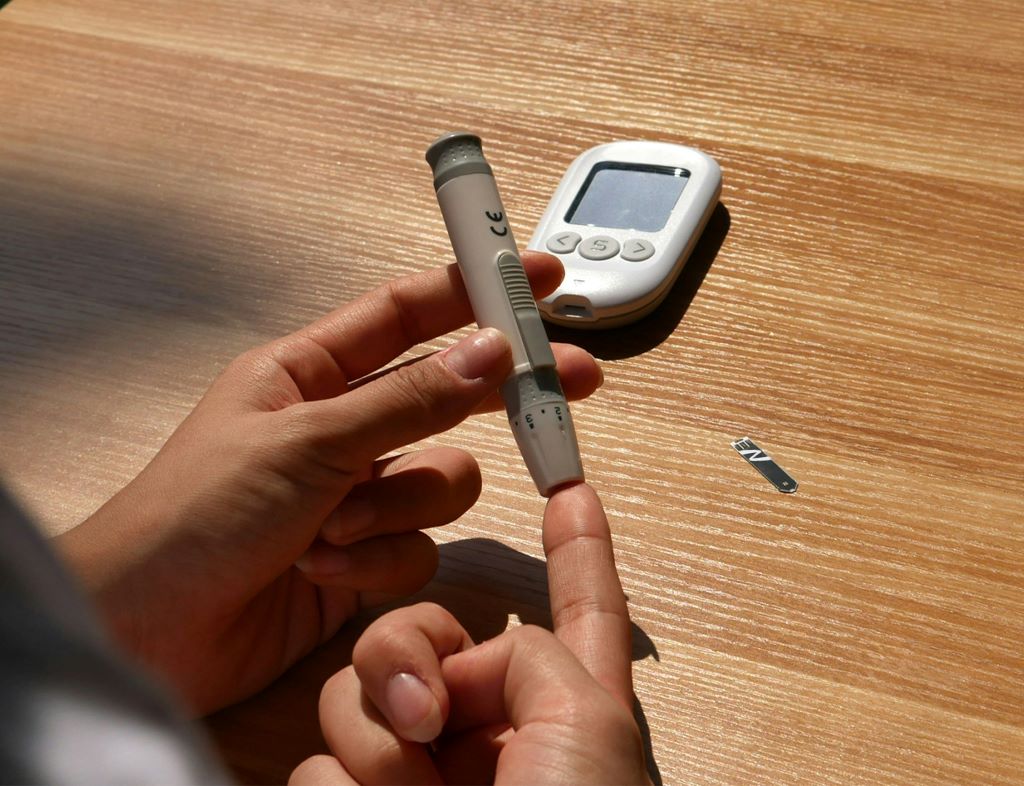
Most people who take pills to treat diabetes need monitoring from time to time, but for the majority of those who are on insulin treatment, it is essential. People with diabetes who are taking insulin must check their blood sugar levels multiple times a day. To do this, they need glucometers – devices that measure the sugar levels in a drop of blood. But access to glucometers is a challenge. Spotlight previously reported that not everyone who needs these home testing devices is given one and those who do receive them rarely get enough test strips and lances to enable proper monitoring of their blood sugar levels.
Without tests and test strips, people in Hluvukani had no way of knowing how to adjust their insulin. Injecting the wrong amount could in extreme cases result in someone going into a coma or dying.
Mazibuko himself, who was diagnosed in 2003 and has always needed insulin, knows how terrifying it can be when monitoring tools are out of reach.
When the devices and test strips finally arrived, he shared a celebratory photo on social media. Excited messages streamed in on WhatsApp, but among them was an upsetting note from a government pharmacist: “You should have asked me before you ordered.”
Unbeknownst to the hospital staff that helped Mazibuko choose the device, the national government’s supplier would be changing, as it does every three years or so when a new tender is awarded. That means state pharmacies would soon stock a different kind of test strip.
Glucometers generally can’t interpret test strips from a different brand or model, so the glucometers that he’d already started to hand out would soon be useless.
“They were already open so I couldn’t send them back. After I worked so hard to get those machines for my community members,” said Mazibuko. “It was heartbreaking.”
According to a report from the Clinton Health Access Initiative, in poorer countries companies make most of their profit on the test strips rather than the glucometers used to read the strips. Spotlight understands that some companies go as far as giving away the devices to lock people into using their specific test strips. According to Cathy Haldane, who leads the non-communicable diseases team at FIND (a global diagnostics alliance), there have been some efforts toward encouraging universal interoperability of test strips, but these efforts haven’t gathered much steam.
Why diabetes is still a national guessing game
South Africa is one of the few countries that buys blood glucose meters and test strips en masse, but there are still lots of people who are treated with insulin who don’t have access to them.
One reason for this is that the national health department buys machines and strips for the public sector but it’s up to provinces to manage stock at pharmacies and clinics, explains Haldane.
A lack of good quality diabetes data could be making harder for health department staff to predict how much they’ll need, she says. Unlike the country’s digital HIV & TB tracking system, there’s no centralised database for diabetes and other chronic diseases such as high blood pressure and cancer. As Spotlight previously reported in-depth, there is a serious lack of reliable diabetes data for South Africa. Haldane says, “that’s how people on insulin treatment who should get a machine and monthly test strips end up going without”.
Not having reliable data leaves national planners, doctors and nurses in the dark about how many people need blood sugar monitors, where the system is failing and how the country is faring against targets outlined in the health department’s action plan for chronic diseases, which lapses in 2027. The plan states that by 2027, the health department wants at least 50% of people receiving care for diabetes to have their blood sugar under control. The available data though, all from pockets of academic research, suggests that we are falling far short of this target.
The diabetes data that is available paints a harrowing picture.
According to a StatsSA report on non-communicable diseases, diabetes was the leading underlying cause of death for women and second biggest underlying cause of death for men in 2018. While other reports suggest that diabetes is lower on the list of top killers, it clearly does claim many lives in the country. The International Diabetes Federation estimates that about half of people with diabetes in South Africa haven’t been diagnosed.
If trends continue, 2018 research suggests the treatment, management and complications of type two diabetes could cost the government as much as R35-billion by 2030.
In rural KZN, insulin pen stockouts persist
Meanwhile, more than 700 kilometers from Hluvukani, in KwaZulu-Natal’s rural King Cetshwayo district, some healthcare staff are using their own money to help keep diabetes services going.
Indira Govender, a doctor affiliated with the Rural Doctors Association of South Africa (Rudasa) who works in the area, says clinic managers are often the ones buying new batteries for blood sugar meters used in the facility and by patients.
The devices use the coin-like batteries also used in some watches, which aren’t easy to find in far flung areas.
Govender worries about the patients on insulin who still have to use a glass vial and syringe to inject themselves. “Not everybody has a fridge to store the insulin in. People struggle to draw up the right amount of insulin, sometimes because they can’t see well,” says Govender.
South Africa ran out of pens in 2024 when the health department’s longtime supplier, Novo Nordisk, stopped manufacturing pens prefilled with the cheapest form of insulin. The news came as global demand surged for one of Novo Nordisk’s long-acting diabetes medicines, semaglutide, because it was shown to also be effective for weight loss. Semaglutide is also provided in pens rather than vials.
In a 2024 letter to Novo Nordisk’s chief executive officer, MSF demanded that the pharma giant either ensure continued supply of the cheapest insulin pens in South Africa or that it offer a newer kind of pen at $1 each. That’s the amount that MSF’s research found would cover production costs, a fair profit margin and an allowance for tax.
The newer pens are filled with a form of insulin that takes effect faster and lasts for longer than previous versions. Novo Nordisk signed a deal in May in which it commits to providing these pens to South Africa until 2027. The department was charged just under $4 (around R75) per pen.
At the government clinic where Govender works in KwaZulu-Natal, however, insulin pens have reportedly not returned to pharmacy shelves.
“We haven’t had pens here since at least 2024,” says Govender.
The KwaZulu-Natal health department did not respond to Spotlight’s queries about the delivery delays.
Local consequences of global disruptions
While some communities are still waiting for insulin pens, a smaller wave of vial shortages is on its way for South Africa, according to an October circular.
Novo Nordisk told the health department to expect six to eight week delays in the delivery of short-acting, medium-acting and longer-acting insulin sold in 10ml vials. The department did not respond to Spotlight’s queries, but the circular listed four alternative prefilled pens that are available and expects stock to stabilise by January 2026.
One of the listed alternatives, Novo Nordisk’s NovoMix30, is also on a list of insulin pens and vials that will be discontinued in 2026, according to a directive issued by the health ministry in New Zealand.
No such directive has been issued by South Africa’s health department. Candice Sehoma, advocacy advisor for MSF Access in Southern Africa, says she would be surprised if the country avoids it.
It’s part of a concerning pattern of shortages of essential medicines worldwide, she says.
“We’re seeing more and more companies deprioritising insulin and discontinuing affordable medicines,” says Sehoma.
When there’s insulin but no food
While his stock of test strips lasts, Mazibuko takes them along when he visits members of his support group in Hluvukani.
They could technically find matching strips in the private sector, but they’re likely to be too expensive. A 2024 study found that for someone earning South Africa’s minimum wage, a single blood-sugar test in the private sector costs more than an hour of work, and a month of basic diabetes supplies can swallow three full days’ wages.
Many of the people on Mazibuko’s route are facing far more serious problems than the loss of glucometers. Those who aren’t working are often not taking their medication well either, Mazibuko says. “They don’t have food so they skip breakfast and also skip their insulin because they’re scared.”
Injecting insulin on an empty stomach can cause a sudden blood sugar crash that could lead to dizziness, confusion or a seizure.
Mazibuko is working on a skills programme to help these people make a living that might also protect them from lapses in basic supplies at government health facilities, which he claims happens often.
“Sometimes you go to the clinic, they tell you that they’ve run out of insulin, or they tell you to buy your own needles and syringes. You will have to do that with borrowed money,” says Mazibuko.
The Mpumalanga health department also did not respond to Spotlight’s requests for comment.
Republished from Spotlight under a Creative Commons licence.
To help tackle the problem, the government has introduced several public health measures targeting key risk factors, including unhealthy eating.
One of the most prominent measures was the introduction of a tax on sugar-sweetened beverages in 2018. The tax targets added sugars, encouraging manufacturers to reformulate products like soft drinks and energy drinks to reduce their sugar content. But beverages containing naturally occurring sugars, such as 100% fruit juices, are exempt.
Often, 100% fruit juices are seen as healthier alternatives to sugar-sweetened or artificially sweetened drinks. But growing research shows this may not be true. A 2023 meta-analysis of 72 published studies involving over 3 million people found that drinking fruit juice does not lower the risk of type 2 diabetes or high blood pressure. It was instead linked to a higher risk of dying from cardiovascular diseases.
The recommendation from that meta-analysis and other studies is that fruit juices should not be considered a healthier alternative to sugar-sweetened beverages. This could be because, although fruit juices contain more vitamins and minerals than soft drinks, they are also high in natural sugars and lack the fibre found in whole fruits, which helps control blood sugar and keeps you feeling full.
In a further move to curb sugar intake in beverages the government has proposed new food labelling regulations. These would require front-of-package warning labels for products high in added sugar, saturated fat, sodium, or artificial sweeteners. The regulations are still under review. But they align with international best practices adopted by countries like Chile, Mexico and Brazil.
If implemented effectively, they could help South African consumers make more informed dietary choices.
But, once again, fruit juices are getting a free ride. This is even though they have the highest energy (calories) and sugar content (8.4%) across a range of soft and energy drinks, according to our recent study.
As researchers in public health nutrition, we are concerned that the regulations had some important gaps. The proposed regulations introduce a simple package warning label system for prepacked foods that contain added sugar, saturated fat, or sodium and exceed specific nutrient thresholds. It also requires warning labels for products containing artificial sweeteners, reflecting growing concerns about their long-term health effects.
But the regulations exclude certain sugar-containing beverages from front-of-pack warning label requirements, particularly those with naturally occurring sugars. Many juices, such as 100% fruit juices, are exempt despite their high sugar content and significant contribution to overall sugar and energy intake. This raises concerns about the consistency of the policy and whether it adequately addresses the health risks associated with excessive sugar consumption across all types of beverages.
To test the scale of the problem, we analysed over 600 non-alcoholic beverages sold in major South African supermarkets. The study found that 21.4% of beverages would require a warning for high sugar, 49.8% for artificial sweeteners, and 58.7% for at least one of these criteria.
Juices were least likely to qualify for warning labels. Only 30% of juices met the criteria , versus 94.1% of soft drinks and 96.9% of energy drinks. Excluding 100% fruit juices from South Africa’s proposed warning label regulations could have serious public health consequences.
We recommend that the health department revise the criteria for warning labels to include beverages that are high in naturally occurring sugars.
Fruit juices
Fruit juices are often seen as a healthier choice because of their natural origin. In South Africa, regular consumption of 100% fruit juice is common, with many consumers perceiving it as beneficial despite its high sugar content.
This is a problem for a number of reasons.
Because of their high sugar content, fruit juices can cause sharp spikes in blood glucose. For more than 2.3 million South Africans living with diabetes regular consumption may interfere with blood glucose control. But this is not only a concern for people with diabetes. Research shows that even among non-diabetics, frequent intake of fruit juice increases weight gain, and the risk of developing type 2 diabetes over time.
Labelling policies that ignore naturally occurring sugars risks misleading consumers. In particular, it misleads those trying to make healthier choices into over-consuming these products. International examples, such as Chile’s approach to food labelling, show that including total sugar content in warning criteria can reduce purchases of high-sugar items and improve public awareness.
Exempting juices also creates an uneven playing field. While soft drink and energy drink manufacturers are pushed to reformulate products to avoid taxes and warning labels, juice producers face no such pressure, despite offering products with comparable health risks.
We also demonstrated that nearly half of the beverages analysed contained artificial sweeteners, which are increasingly used to lower sugar content and bypass the sugar tax. Emerging research suggests these additives may negatively affect gut health and contribute to nutrition-related diseases. Taken together, these factors highlight the need for comprehensive regulation that reflects the full spectrum of health risks posed by sugary beverages.
Next steps
South Africa’s efforts to regulate sugary beverages are commendable and reflect a growing commitment to tackling lifestyle-related diseases. But excluding fruit juices from key policies risks undermining these efforts.
By aligning regulations with scientific evidence and international best practices, the country can take a more comprehensive approach to sugar reduction. This approach will protect all consumers, especially the most vulnerable.
To ensure that South Africa’s food labelling regulations achieve their intended public health outcomes, we recommend the following steps.
Include naturally occurring sugars: Revise the criteria for warning labels to account for total sugar content, not just added sugars. This would ensure that high-sugar juices are appropriately labelled, and consumers are fully informed.
Extend the sugar tax: Consider applying the sugar tax to fruit juices with high sugar content. This would encourage manufacturers to explore lower-sugar formulations.
Public education campaigns: Launch targeted education initiatives to raise awareness about the health risks associated with all types of sugar, including those found in fruit juices.
Ongoing monitoring: Establish systems to monitor the impact of both labelling and taxation policies on consumer behaviour and health outcomes, allowing for evidence-based adjustments over time.
The NHI Act is facing a slew of legal challenges from multiple organisations. For this special series, Spotlight combed through court papers, and spoke with legal experts to pin down what specific arguments litigants are betting on. In part one, we focused on the claim that the scheme is unaffordable and therefore unreasonable. Here, in part two, we discuss the argument that the NHI will unjustifiably compromise people’s right to access healthcare services.
Since the National Health Insurance (NHI) Act was signed into law by President Cyril Ramaphosa in May 2024, eight different groups have challenged it in court, with some filing multiple applications.
One core argument which appears in different ways across many of these submissions is that under the NHI, people will have access to fewer health services, or simply a reduced quality of care, than what they currently have.
If this was true then the NHI could be in violation of Section 27 of the country’s Constitution, according to which government has to do what it can to achieve the “progressive realisation” of the right to healthcare services (along with the right to food, water and social security). Courts have often interpreted this to mean that the government not only has to take active steps to advance people’s access to healthcare, but also that it should avoid doing things that might limit their existing rights.
Sasha Stevenson, who heads the public interest law clinic SECTION27, explained that the Constitution uses the phrase “progressive realisation” because of a “recognition that not everything can be perfect straight away, so the government needs to take steps to move toward full realisation of certain socioeconomic rights”. She added: “What that means logically is that you can’t move backwards.”
There is however some wiggle room, said Stevenson. This is because the Constitution only expects the government to take “reasonable” steps that are “within its available resources”, she said.
Thus, if the government was cash-strapped and able to show that it simply couldn’t afford to maintain its current levels of health expenditure without seriously compromising other core rights, then it may be able to take steps backward without violating the Constitution. Stevenson argued that, at its core, the key idea is simply that the state must fully justify what it is doing.
To show that the NHI Act violates Section 27 of the Constitution, litigants will need to prove that it not only limits people’s right to healthcare, but that the government hasn’t provided good enough reasons for why it is doing this.
But why are litigants arguing that the NHI would limit people’s right to healthcare in the first place? Let’s start with medical scheme members.
Cutting out medical schemes
Section 33 of the NHI Act states that once the scheme is fully implemented, medical schemes will only be allowed to cover top-up health services that aren’t covered by the NHI. In addition, the Act requires “mandatory prepayment”, meaning people will have to pay to be covered by the NHI, whether or not they want to join.
Thus, unless someone was able to afford both the mandatory prepayment for the NHI, and complimentary cover from their medical schemes, they would have to switch to relying solely on the NHI for their medical coverage.
This is an issue for the Board of Healthcare Funders (BHF), which represents the medical insurance industry, and was one of the first groups to challenge the NHI in court.
“When you look at what medical scheme members are entitled to now versus to what they’re entitled to under an NHI scheme, it’s a regressive process,” Neil Kirby, who heads the healthcare and life science practice area at Werksmans Attorneys, which represents BHF, told Spotlight.
“You probably would be entitled to less under an NHI scheme than you would under the current regime,” he said.
Of course, at present we don’t yet know exactly what health services the NHI will cover, as the package of benefits has not yet been detailed. It thus may be difficult for courts to assess this claim.
When asked about this, Kirby said: “The current assessment by various economic experts is that if one were to price the value of the current basket of prescribed minimum benefits [the services which medical schemes have to cover]… and spread that cost over the entire population covered by NHI, the NHI would be entirely unaffordable.”
As a result, he said: “There would have to be some degree of compromise in respect of the benefits to be provided under NHI in order for the state to afford to purchase those benefits”. In other words, they’d need to offer less than what medical schemes currently cover.
In response to this, the National Health Department’s NHI lead, Dr Nicholas Crisp, denied that people’s coverage would be compromised under the NHI. In a conversation with Spotlight, he argued that the NHI would not need to incur the same total payment obligations as medical schemes in order to cover a comprehensive package of health services. This is given that it could purchase services more efficiently, he said.
ANC President Cyril Ramaphosa, with Minister of Health, Dr Joe Phaahla and his deputy Dr Sibongiseni Dhlomo, during the signing into law of the National Health Insurance Bill. (Photo: @MYANC/Twitter)
Crisp justified this on several grounds. One is that private health providers are currently accused of overservicing clients, which he argues could be rectified under the NHI.
For instance, Crisp pointed to the Competition Commission’s Health Market Inquiry report, which found that private health facilities are reimbursed for each consultation, operation or other service that they provide. The report found that this “creates an incentive for providers to over-service patients, to over-invest in generously remunerated services, and under-invest in poorly remunerated services [even if they have a positive impact on patient outcomes]”.
Under the NHI scheme, a different reimbursement model would be used to cover health providers both at private and public health facilities. For instance, in the primary healthcare sector, the NHI would rely on capitation. This means that health providers would be provided a fixed fee for each patient, rather than for each individual service, removing the incentive to overservice, and thus overcharge.
Crisp also argued that the government is able to procure medicines and other health services at lower prices than the private sector partly by buying in bulk. Additionally, he noted that billions of rands are reportedly lost in fraud, waste and abuse within the private health sector, due for instance to fraudulent medical claims.
According to Crisp, the NHI fund would be able to save on all of these unnecessary costs.
Pushing back on this view, Professor Alex van den Heever, from the Wits school of governance, told Spotlight that there was no reason to think the state could purchase cover more efficiently than the private medical schemes.
In the public sector, he said that “whether you have a [national] monopoly like Eskom, or a public monopoly in a province like the Gauteng Department of Health, they hardly spend their money efficiently”. Van den Heever added: “For Tembisa hospital to lose R2 billion and not get a cent back in terms of actual products is an indication of the risk.”
He was referring to a damning report by the Special Investigating Unit which confirmed large-scale looting to the tune of around R2 billion meant for patient care at Tembisa Hospital in Gauteng’s East Rand. Their investigation zoomed in on nine criminal syndicates, with three of them pocketing nearly R1.7 billion. The SIU found that R122 million in kickbacks were paid to at least 15 current and former health department officials.
“So you have to have some real evidence that [the state would] be able to procure services more efficiently, and there’s no evidence. All the historical evidence suggests they’d do worse,” Van den Heever said.
Does the state have good reasons?
If litigants are able to show that the NHI was regressive for people on medical schemes in the sense that it diminished their rights, the courts might still decide that the government had provided a good enough justification for why these limitations are reasonable.
But according to Van den Heever, the government has thus far categorically failed to do this.
“From the green paper to the white paper to the [NHI] bill, there is not a single technical document that provides a clear rationale for Section 33 [the restriction on medical schemes],” said Van den Heever. Overall, the very question about what specific problems the NHI is trying to solve and how it would do this remain elusive.
He added that one public health professor had submitted court papers in support of NHI which argued that the existence of the private health sector undermines the public sector, for instance by hoarding doctors and specialists. Yet according to Van den Heever, “no technical report has ever been produced” which provides evidence for that claim.
Additionally, he noted that doctor shortages at public facilities are evidently not driven by private sector hoarding but by financial constraints emanating from mismanagement and corruption. This prevents public hospitals from hiring people who are available for work. (Previous Spotlight reporting has also suggested that the shortage of doctors in the public sector is driven by a lack of funding, rather than a lack of doctors.)
Similarly, the Hospital Association of South Africa (HASA) argued in court papers that the NHI Act’s restrictions on medical schemes serves “no rational, reasonable or economic purpose”.
The association also argued that there are no examples of health systems that impose these restrictions, aside from a few provinces in Canada, and thus Section 33 of the NHI Act is clearly “not a requirement for a successful national health system aimed at [universal health coverage]”.
Defending the restriction on medical schemes, Crisp said that if two different streams of health financing are allowed to continue, then so will inequity. He also stated that single-payer health systems funded by the state are not unusual, even if their exact form differs across countries.
Limiting the rights of public sector users
In addition to the arguments that the NHI Act will unjustly restrict the rights of medical scheme members, some have also argued that it will be regressive for public sector users.
One organisation making this argument is the Treatment Action Campaign (TAC). It has applied to be a friend of the court in the dispute between the South African Medical Association (SAMA) and the government. The TAC argued that the governance provisions within the NHI are so weak that they threaten the entire health system, including for those relying on government health facilities.
Stevenson, whose organisation SECTION27 is represents the TAC, said that checks and balances within the governance of the NHI fund are deficient, leaving it vulnerable to corruption and mismanagement.
Van den Heever, who is serving as an expert in the SAMA case, seconded this concern. He also said that the NHI ultimately centralises the management and purchasing of healthcare services under national institutions. This introduces inefficiencies that will compromise patient care at government facilities, he argued.
“Healthcare is [a sector] where the purchasing and management [should be] decentralised,” he said, largely because different communities have different health needs.
Even in the United Kingdom, said Van den Heever, the responsibility for the National Health Service, which provides the majority of medical services, is devolved across England, Wales, Scotland and northern Ireland, with semi-autonomous trusts, boards and hospitals in each country having a major say in operational decisions.
Van den Heever argued that not only would the centralisation of health under NHI be highly undesirable, but the actual transition to this system from one in which provinces are responsible for healthcare would be enormously disruptive, impacting patient care.
Asylum seekers compromised by NHI
An additional argument concerns the rights of asylum seekers and undocumented people, a central concern for SAMA and the TAC.
Stevenson explained that under our current system, all people, including asylum seekers and undocumented migrants, have the right to free primary healthcare services in the public sector. Just like ordinary citizens, asylum seekers also have the right to access public hospitals on a means-tested basis (meaning your level of subsidisation is determined by what you can afford).
In addition, pregnant and lactating women, as well as children under six, are entitled to all services regardless of documentation status, and the government is compelled to screen, test and treat anyone with HIV.
Under the NHI Act, all of these rights are compromised for asylum seekers and undocumented migrants. This is because Section 4 of the NHI Act states that these groups are only covered for emergency care and for services related to notifiable conditions. The country’s list of notifiable conditions includes diseases like cholera and pulmonary TB, but excludes HIV, diabetes and many other common diseases.
Stevenson argued that this not only compromises the rights of individual asylum seekers, but makes for terrible public health policy.
“It essentially means dropping part of our population off the HIV programme,” she said.
“It would also mean we’re waiting more and more for emergencies, because people can access care [at the point of emergency] but not at a primary healthcare level. So you can’t go and get yourself checked for diabetes… But when your foot is gangrenous [a symptom of untreated diabetes] and needs amputation then you’re in an emergency situation.”
Overall, the Act in its current form constitutes a clear regression for asylum seekers, said Stevenson, and the government has provided no comprehensive justification for why it is excluding this group. If the government wanted to justify the exclusion of migrants on the basis that it is too costly to cover them under the NHI then they “have to show the numbers”, Stevenson said.
Thus far, they haven’t done so.
“There has been no assessment of the so-called burden of migrants in the health sector, let alone how many people fit into which category or how much money is spent on services for people,” said Stevenson, “Instead, there has just been this persistent scapegoating, and these broad statements about the burden.”
Court documents submitted by SAMA have made similar allegations.
“There is no reliable study which shows the extension of the NHI to foreigners will have a significant effect on the affordability of the NHI,” it argued, noting that in fact the converse may be true, as the contributions of foreigners to the economy may outweigh the costs of providing them healthcare.
Asked about this, Crisp said that they were aware of the issue, and that while it was a complicated matter, the state would ultimately have to ensure healthcare for all people, in line with its domestic laws and international agreements.
Disclosure: SECTION27 is mentioned in this article. Spotlight is published by SECTION27, but is editorially independent – an independence that the editors guard jealously. Spotlight is a member of the South African Press Council and subject to the South African Press Code.