Category: Diseases, Syndromes and Conditions

Selenium Could Help Reverse Cognitive Decline

Photo source: Pixabay

The trace metal selenium could help reverse the cognitive impact of stroke and boost learning and memory in ageing brains, according to a study published in Cell Metabolism.

Previous studies on the impact of exercise on the ageing brain found levels of a protein key to transporting selenium in the blood were elevated by physical activity.

Lead researcher Dr Tara Walker said: “We’ve known for the last 20 years that exercise can create new neurons in the brain, but we didn’t really understand how,” Dr Walker said.

The research team sought to find out whether dietary selenium supplements could replicate the effects of exercise.

“Our models showed that selenium supplementation could increase neuron generation and improve cognition in elderly mice,” Dr Walker said. “The levels of new neuron generation decrease rapidly in aged mice, as they do in humans. When selenium supplements were given to the mice, the production of neurons increased, reversing the cognitive deficits observed in ageing.”

Selenium is an essential trace metal which can play an important role in human health. It is absorbed from soil and water and is found in foods such as grains, meat and nuts, with the highest levels found in Brazil nuts. The researchers also investigated whether selenium would have an impact on post-stroke cognitive decline.

“Young mice are really good at the learning and memory tasks, but after a stroke, they could no longer perform these tasks,” Dr Walker said. “We found that learning and memory deficits of stroke affected mice returned to normal when they were given selenium supplements.”

Dr Walker said the results opened a new therapeutic avenue to boost cognitive function in people who were unable to exercise due to poor health or old age.

“However, selenium supplements shouldn’t be seen as a complete substitute for exercise, and too much can be bad for you,” she said. “A person who is getting a balanced diet of fruits, nuts, veggies and meat usually has good selenium levels. But in older people, particularly those with neurological conditions, selenium supplements could be beneficial.”

Source: University of Queensland

Atopic Dermatitis Linked to Range of Comorbid Conditions

Source: CC0

A comprehensive review has uncovered “clear evidence” of associations between atopic dermatitis (AD) and a range of comorbid conditions, which has informed updated clinical guidelines for AD. 

An expert panel reported on the results of a wide-ranging review in the Journal of the American Academy of Dermatology.  They found evidence linking AD to certain allergic, atopic, and immune-mediated conditions, as well as mental health problems, bone diseases, and skin infections. There is some evidence which supports associations between AD and substance use, attention deficit-hyperactivity disorder (ADHD), and some elements of metabolic syndrome. Less compelling evidence suggests AD has links to some cardiovascular conditions. There is inconclusive evidence for associations between adult AD and autism spectrum disorders, myocardial infarction, stroke, and metabolic syndrome. 

“Atopic dermatitis is one of several atopic diseases, meaning that there are internal sensitivities that can help drive the disease in the organ of choice, including asthma, allergic rhinoconjunctivitis, and food allergies, among others,” Dawn M.R. Davis, MD, co-chair of the guideline panel, told MedPage Today. “We always knew there was an association between atopic dermatitis and the other atopic diseases, but we lacked the evidence. Fortunately, because we’re getting more attention and more research is being performed in these areas, we now have data to back up our suspicions regarding the associations between atopic dermatitis and other atopic diseases.”

“Thanks to research by our colleagues, we discovered several other comorbidities that we did not expect, including skin diseases like alopecia areata and urticaria, as well as mental health conditions, including depression, anxiety, and substance use,” she continued. “We also have some evidence of associations with metabolic conditions, such as disorders of bone metabolism, and cardiovascular diseases.”

This review was conducted in concert with updating the American Academy of Dermatology clinical guideline on AD. The quantity and depth of data also warranted a separate guideline component for recognition of comorbidities associated with AD. The main goal was to increase awareness of the associations.

“The goal of this guideline is to plant a seed in the mind of providers and to empower and validate patients, so they can have a customised, individualised, robust discussion about how their particular circumstances relate to any of the risk factors,” said Dr Davis.

Key findings and statements in the guideline include:

  • The association between AD and asthma is well established, but the “atopic march” explanation remains unproven
  • “Clear evidence” of an association between AD and food allergy, but estimated prevalence of food allergy in adults with AD remains low
  • Epidemiologic studies “consistently show” an association between AD and alopecia areata, but there are limited data on severity of alopecia or treatment response
  • Analysis of four studies showed that AD doubles the odds ratio of depression though reasons for this are unclear
  • A “potential association” between AD and substance use/abuse (limited evidence)
  • Accumulating evidence suggests small associations between AD and hypertension, peripheral and coronary artery disease, congestive heart failure, and acute clinical events
  • A “small association” suggested between adult AD with obesity and dyslipidemia; however, limited data have pointed to a possible inverse association with diabetes
  • Several studies have shown associations with increased risk of osteoporosis and fracture in adults with AD, possibly linked by systemic inflammation.

“To date, research on AD-associated comorbidities has focused on identifying potential associations in epidemiologic studies,” the guideline authors wrote. “There is currently no conclusive evidence demonstrating that screening for comorbid conditions associated with AD improves patient outcomes. For the evidence of AD associations to be put into action, research is required on whether screening or management of these comorbidities among adults with AD beyond what is recommended for the general population is beneficial.”

Besides the comorbidities document, other documents will be published over two years which will address topical therapy, systemic treatment and phototherapy, and paediatric AD.

Source: MedPage Today

Meat, Gut Bacteria and Multiple Sclerosis

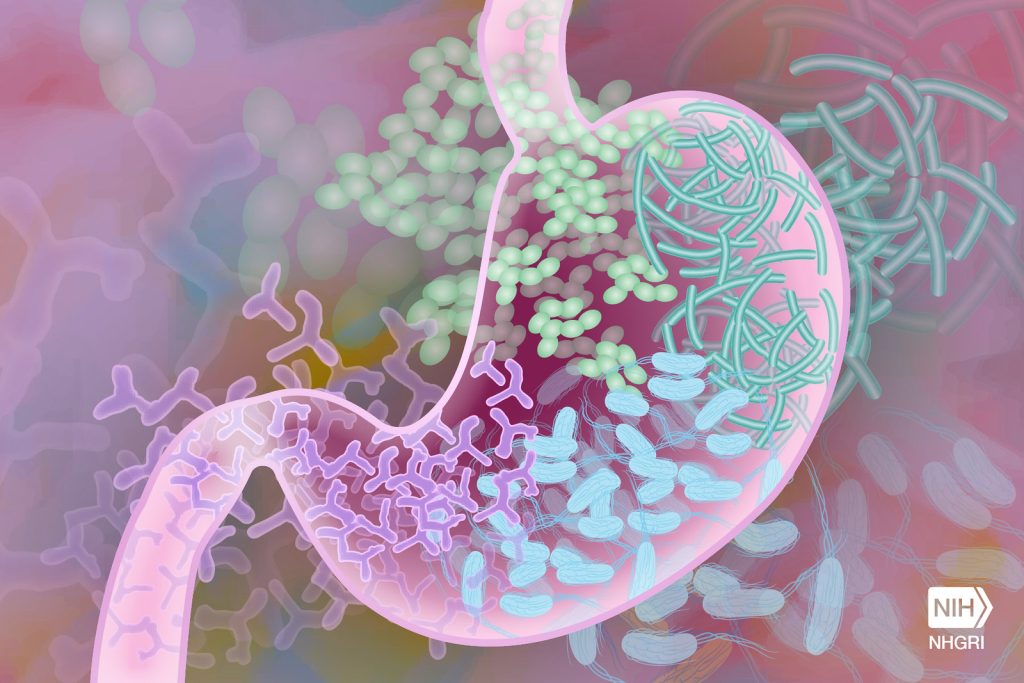
Gut microbiome. Credit: Darryl Leja, NIH

There appears to be a link between eating meat, gut bacteria and multiple sclerosis, according to new research published in EBioMedicine. The study teased out subtle connections that could lead to a better understanding of the causes of the disease.

The autoimmune disease multiple sclerosis (MS) is more prevalent in specific regions, particularly the northern mid-latitudes, suggesting that geography is somehow linked to the disease, perhaps involving diet. However, the exact relationships between diet, immune response, and MS has been a mystery. What exactly triggers the body to attack the myelin sheaths in MS in the first place is unknown.

Growing evidence suggests that bacteria might play a role. Gut bacteria affect the immune system, and diet affects the gut. Researchers studied the gut microbiome, immune systems, diet, and blood metabolites in 25 MS patients and 24 healthy controls to look for any subtle but important correlations.

“We found a number of gut bacteria associated with MS and severity of disability of MS patients,” said Dr Yanjiao Zhou. “We also found increased autoimmune markers and signature metabolites in MS. But what is really interesting is how these systems connect with each other, and how diet is involved in these connections. Using multi-OMICS approaches, we try to close the loop and show the associations between multiple systems.”

Meat eating was the strongest link in their analysis, where higher meat consumption saw a decrease in the population of Bacteroides thetaiotaomicron, a bacteria associated with digesting carbohydrates from vegetables.

Higher meat consumption, seen in the MS patients, was also linked to an increase in T-helper 17 cells in the immune system, and an increase in S-adenosyl-L-methionine (SAM) in their blood.

Meat eating was not a predictor of MS. But the evidence suggested that, in MS, something causes gut bacteria to disassociate with the immune system, leading to heightened T-helper 17 cells and autoimmune attacks on the nervous system. And it tends to be associated with eating meat.

Future research aims to recruit more volunteers, including those with more severe MS. Eventually they hope to understand more of the cause-and-effect between diet, bacterial ecosystems in the gut, and immune response, and potentially help prevent or mitigate MS symptoms in people suffering from the disease.

Source: University of Connecticut

In Chronic Disease, Psychiatric Comorbidity Doubles Mortality Risk

Photo by Sydney Sims on Unsplash

The risk of all-cause mortality among patients with chronic, non-communicable diseases is more than doubled if they also have a psychiatric comorbidity, according to a new study published in PLOS Medicine.

Non-communicable diseases such as diabetes and heart disease are a global public health challenge accounting for an estimated 40 million excess deaths annually. Researchers drew on Swedish health data for 1 million patients born between 1932 and 1995 who had diagnoses of chronic lung disease, cardiovascular disease, and diabetes. More than a quarter of the people in the analysis also had a co-occurring psychiatric disorder during their lives.

Within 5 years of diagnosis, 7% of the people included in the study had died from any cause and 0.3% had died from suicide. Comorbid psychiatric disorders were associated with higher all-cause mortality (15.4% to 21.1%) when compared to those without such conditions (5.5% to 9.1%). When compared with an unaffected sibling to account for familial risk factors, patients with psychiatric comorbidity remained consistently associated with elevated rates of premature mortality and suicide (7.2–8.9 times higher). Different psychiatric diagnoses affected mortality risks; in those with comorbid substance use disorder it was 8.3–9.9 times compared to unaffected siblings, and by 5.3–7.4 times in those with comorbid depression.

“Improving assessment, treatment, and follow-up of people with comorbid psychiatric disorders may reduce the risk of mortality in people with chronic non-communicable diseases,” the authors concluded.

Source: EurekAlert!

Vitamin D Supplements Reduce Autoimmune Disease Risk

A five year-long randomised, placebo-controlled study found that in older adults taking vitamin D supplements, alone or with omega-3 fatty acids, the risk of developing autoimmune disease was reduced.

Autoimmune diseases (AD) such as rheumatoid arthritis, polymyalgia rheumatica, autoimmune thyroid disease and psoriasis, are a leading cause of morbidity and mortality as people age. Few effective treatments are available for AD, but some research has hinted that supplements, including vitamin D and omega-3 fatty acids, could have beneficial effects.

In a new study published in the BMJ, investigators from Brigham and Women’s Hospital evaluated whether taking vitamin D and/or omega fatty acid supplements could affect rates of AD. The large-scale vitamin D and Omega-3 Trial (VITAL), a randomised study which followed participants for approximately five years. Taking vitamin D, or vitamin D and omega-3 fatty acids had a significantly lower rate of AD than placebo.

“It is exciting to have these new and positive results for non-toxic vitamins and supplements preventing potentially highly morbid diseases,” said senior author Karen Costenbader, MD, MPH. “This is the first direct evidence we have that daily supplementation may reduce AD incidence, and what looks like a more pronounced effect after two years of supplementation for vitamin D.”

“Now, when my patients, colleagues, or friends ask me which vitamins or supplements I’d recommend they take to reduce risk of autoimmune disease, I have new evidence-based recommendations for women aged 55 years and older and men 50 years and older,” said Dr Costenbader. “I suggest vitamin D 2000 IU a day and marine omega-3 fatty acids (fish oil), 1000 mg a day – the doses used in VITAL.”

VITAL included 25 871 participants, with men aged 50 and older and women aged 55 and older, conducted to investigate whether taking vitamin D3 and/or omega-3 supplements could reduce the risk for developing cancer, heart disease and stroke in people who do not have a prior history of these illnesses. Prior to the launch of VITAL, investigators determined that they would also look at rates of AD among participants, as part of an ancillary study.

Participants answered questionnaires about new diagnoses of diseases, including rheumatoid arthritis, polymyalgia rheumatica, autoimmune thyroid disease, psoriasis and inflammatory bowel disease, with space to write in all other new onset ADs. Medical records were reviewed to confirm reported diagnoses.

“Autoimmune diseases are common in older adults and negatively affect health and life expectancy. Until now, we have had no proven way of preventing them, and now, for the first time, we do,” said first author Jill Hahn, ScD, post-doctoral fellow at the Brigham.

Among patients randomised to vitamin D, 123 participants in the treatment group and 155 in the placebo group were diagnosed with confirmed AD (22 percent reduction). Among those in the fatty acid arm, confirmed AD occurred in 130 participants in the treatment group and 148 in the placebo group. Omega-3 fatty acids alone did not significantly lower incidence of AD, but there was some evidence of a decrease over long periods.

Source: EurekAlert!

NICD Warns of Malaria Being Misdiagnosed as COVID

Mosquito
Photo by Егор Камелев on Unsplash

The National Institute for Communicable Diseases has warned that, as South Africa enters its peak malaria season, cases of malaria are being misdiagnosed as COVID. Both malaria and COVID have similar non-specific early symptoms such as fever, chills, headaches, fatigue and muscle pain. Undiagnosed and untreated malaria rapidly progresses to severe illness and can be fatal.

Speaking at a media briefing on Wednesday, principal NICD medical scientist Dr Jaishree Raman said that Gauteng has seen a slight increase of malaria cases recently. 

Dr Raman noted that COVID “has pulled resources from the malaria programmes, reducing active surveillance and case investigation, which is reducing the ability [to] classify cases accurately.”

However, the NICD does not know the exact source of the malaria. “Data cleaning and case classification is ongoing, so at the moment, we cannot say whether the uptick in cases is due to locally-acquired or imported malaria,” she said.

The NICD advises that any individual that prevents with fever or ‘flu-like illness, if they reside in a malaria-risk area in Limpopo, KwaZulu-Natal and Mpumalanga or have travelled to a malaria-risk area, especially Mozambique, in the past six weeks, must be tested for malaria by blood smear microscopy or malaria rapid diagnostic test. If they test positive for malaria, the patient must be started on malaria treatment, immediately.

The NICD also advises patients to remember to inform their healthcare provider of their recent travel, especially to neighbouring countries and malaria risk areas in South Africa.  

‘Taxi malaria’, transmitted by hitch-hiking mosquitoes, should be considered in a patient with unexplained fever who has not travelled to a malaria-endemic area, but is getting progressively sicker, with a low platelet count.

Source: NICD

Ozone Therapy in a Complex Periodontal Inflammation Case

Image by Caroline LM on Unsplash

A new treatment approach for tissue inflammation around the dental root and root canal has been implemented, which uses ozone therapy. When used in a complex clinical case, the method helped save a patient’s tooth. 

Inflammation of the dental pulp and the periodontium, if not localised only on the inside or the outside but affects both areas, can be extremely difficult to completely cure a tooth. Such cases are difficult to diagnose, therefore, professional literature contains only a few descriptions of them, and there are no general treatment recommendations. Some dentists prefer to focus on the internal canals first, while others suggest treating the pulp and the periodontium simultaneously. A dentist from RUDN University implemented a single protocol for comprehensive pulp and periodontium treatment.

Explaining the problem, RUDN Associate Professor Maria Makeeva, PhD, said: “Inflammation of periodontal tissues often leads to tooth loss. In some cases, a lost tooth cannot be replaced with an implant, because the consequences of the infection worsen the implantation prognosis. Therefore, keeping the tooth is a more desirable outcome in this scenario.”

As described in described in Clinical, Cosmetic and Investigational Dentistry, the new approach was carried out in a patient (aged 44) with significant inflammation of the right mandibular canine. The patient was initially diagnosed with periodontium inflammation; the tooth was loose, and a flow of pus was seen. The first steps were typical for a periodontal inflammation treatment protocol: the patient was administered an antibiotic and then was instructed to rinse the tooth with chlorhexidine. The dentist also scaled the tooth. After that, the patient remained under observation for six months. Although the bleeding and pyorrhoea stopped, the dentist discovered tissue injury around the root of the tooth, which had caused bone destruction. It turned out that one narrow area had an 8mm deep periodontal pocket, and that the initial inflammation transferred to the internal tissues of the tooth.

A periodontologist and an endodontist together implemented a comprehensive treatment approach. After removing the dead pulp from the dental canals, which were then dried and treated with ozone for 24 seconds for better disinfection. After a week of dressing, the treatment was repeated, and the cavity was covered with a permanent filling made of a light-cured composite material. After cleaning, the periodontal pocket was rinsed, dried, and treated with ozone for 18 seconds. A recall examination in six months showed no inflammation of the tooth. Additionally, the bone tissue was recovering, and the periodontal pocket reduced to 4mm.

“Simultaneous inflammation of the pulp and periodontium tissues is very difficult to treat. It can be caused by several types of pathogens at the same time that migrate between tissues and worsen the prognosis. Our experience shows that such an infected tooth can be saved, but it requires close collaboration of a periodontologist and an endodontist, as well as a patient’s complete compliance with oral hygiene recommendations. One should also take into consideration possible bacterial resistance to antibiotics and therefore use additional antibacterial treatment, such as ozone,” explained Dr Makeeva.

Source: News-Medical.Net

A New Method to Block Listeria Infections

Photo by Drew Hays on Unsplash

University of Queensland researchers have unlocked a way of fighting Listeria infections, which can cause severe and potentially illness in pregnant women and immunocompromised individuals.

Listeria infection does not cause disease in most people, but can be deadly for the immunocompromised and is also a major health concern during pregnancy and can lead to miscarriage, stillbirth and premature birth.

From 2017 to 2018, South Africa suffered the world’s largest listeriosis outbreak, in which there were 216 deaths out of 1060 recorded cases.

During the study, published in the journal PLOS Pathogensresearchers discovered a way to block Listeria from making the proteins that allow bacteria to survive and multiply in immune cells. University of Queensland’s Professor Antje Blumenthal said using a small, drug-like inhibitor has improved their understanding of Listeria’s weak spot.

Listeria is found in the soil and sometimes in raw foods. Once ingested it can hide from the immune system and multiply inside immune cells,” Prof Blumenthal said.

“Instead of killing the bacteria, the immune cells are used by the bacteria to multiply and are often killed by Listeria growing inside them.

“Our study showed the bacteria could be cleared with a small drug-like inhibitor that targets the ‘master regulator’ of the proteins that help Listeria grow in immune cells. The inhibitor helped the immune cells survive infection and kill the bacteria.”

Previously, studies into Listeria’s ‘master regulator’, which controls critical proteins that make the bacteria virulent, have mostly been based on engineered bacteria, or mutated versions of these proteins.

“By using a drug-like inhibitor, we were able to use molecular imaging and infections studies to better understand what happens to Listeria when the bacteria cannot effectively grow inside immune cells and hide from immune defence mechanisms,” Prof Blumenthal said.

“We hope that our discovery, together with recent research into the master proteins’ molecular structure and functions, could guide the development of inhibitors and new drugs to treat Listeria infection.”

“Our findings could also inform design of inhibitors against related proteins that are found in different bacteria,” Prof Blumenthal said.

Source: University of Queensland

New AIRD Therapies Could Cut Side-effects

Source: Pixabay

New therapies for autoimmune rheumatic diseases (AIRDs) that are designed to better regulate lipid metabolism could significantly reduce the harmful side-effects caused by conventional treatments, researchers found in a new large-scale review.

AIRDs include rheumatoid arthritis, lupus and Sjögren’s syndrome – conditions which affect millions and all with high rates of morbidity. The pathogenesis of autoimmune conditions is still ill-defined and delivering targeted therapeutic strategies is challenging.

As a result, current treatments for AIRDs are primarily designed to suppress the symptoms (inflammation), but are ‘low target’, ie may also have unintended side-effects. In this regard, AIRDs drugs often cause changes to cell metabolism (such as lipid metabolism) and function, putting patients at greater risk of co-morbidities such as cardiovascular disease (CVD).

Lead author Dr George Robinson (Centre for Rheumatology Research, UCL Division of Medicine) said: “While the mechanisms that cause rheumatic diseases are ill-defined, some recent research indicates cell metabolism may play an important role in triggering or worsening their onset or affect.

“In this review we therefore sought to understand the effect of both conventional and emerging therapies on lipid metabolism in patients with AIRDs.”

For the study, published in the Journal of Clinical Investigation, researchers reviewed more than 200 studies to assess and interpret what is known regarding the on-target/off-target adverse effects and mechanisms of action of current AIRD therapies on lipid metabolism, immune cell function and CVD risk.

Explaining the findings, Dr Robinson said: “Our review found that current AIRD therapies can both improve or worsen lipid metabolism, and either of these changes could cause inflammation and increased CVD risk.

“Many conventional drugs also require cell metabolism for their conversion into therapeutically beneficial products; however drug metabolism often involves the additional formation of toxic by-products, and rates of drug metabolism can be different between patients.”

The review noted that optimal combinations of immunosuppressive treatments to better control inflammation could lead to an improved metabolic/lipid profile in AIRDs.

However, many studies also showed that lipid lowering drugs such as statins do not sufficiently lower CVD risk in some AIRDs, possibly because they cannot completely restore the anti-inflammatory properties

Dr Robinson added: “The unfavourable off-target adverse effects of current therapies used to treat AIRDs provides an opportunity for optimal combination co-therapies targeting lipid metabolism that could reduce immune complications and potential increased CVD risk in patients.

“New therapeutic technologies and research have also highlighted alternative metabolic pathways that can be more specifically targeted to reduce inflammation but also to prevent undesirable off-target metabolic consequences of conventional anti-inflammatory therapies.”

Source: University College London

AMR Caused Over 1.2 Million Deaths Globally in 2019

Methicillin-resistant Staphylococcus aureus (MRSA) bacteria. Credit: CDC

Globally, infections by antimicrobial-resistant (AMR) bacteria caused more than 1.2 million deaths worldwide in 2019, according to a study published in The Lancet. It is the largest and most comprehensive one to date of this critical issue.

Lower-income countries are worst affected but antimicrobial resistance remains a global threat, the researchers wrote.

The researchers emphasised that investment in new drugs is urgently needed, as well as vaccination and better antimicrobial stewardship.

The estimate of global deaths from AMR, is based on the researchers’ analysis of 204 countries, assuming the counterfactual that the bacteria responsible would be antibiotic-susceptible.

Of the 4.95 million deaths in which AMR played a role, 1.27 million were directly attributable to it. In 2019, 860 000 deaths were estimated from HIV and 640 000 from malaria.

Most of the AMR-related deaths resulted from lower respiratory infections, such as pneumonia, and bloodstream infections, which can lead to sepsis.

Deaths from AMR were estimated to be highest in sub-Saharan Africa at 23.7 deaths per 100 000, and lowest in North Africa and the Middle East at 11.2 per 100 000. Young children are at most risk, with about one in five deaths linked to AMR being among the under-fives.

The researchers also noted that “resistance is high for multiple classes of essential agents, including beta-lactams and fluoroquinolones.”

MRSA (methicillin-resistant Staphylococcus aureus) was particularly deadly, while E. coli, K. pneumoniae, S. pneumoniae, A. baumannii, and P. aeruginosa were associated with high levels of resistance. The researchers wrote that “each of these leading pathogens is a major global health threat that warrants more attention, funding, capacity building, research and development, and pathogen-specific priority setting from the broader global health community.”

They also recommend that immunity to these pathogens be built up by vaccination, and since currently only S. pneumoniae has a vaccine readily available, these will need to be developed and deployed as a matter of urgency. They noted several limitations to their study, the first being the sparsity of data drawn from low- and middle-income countries, which may in fact lead to an underestimate of the prevalence of AMR. Secondly, there is the possibility of multiple sources of bias inherent in combining datasets from different providers. Finally, there may be bias in surveillance, eg if cultures are drawn only if a patient is unresponsive to antibiotics, leading to an overestimate.

Source: The Lancet