Mass General Brigham researchers used real-world data to conduct a head-to-head study to investigate cardioprotective effects, finding both medications reduced risk.
Pexels Photo by Freestocksorg
A new study from Mass General Brigham provides head-to-head evidence comparing the cardioprotective effects of tirzepatide and semaglutide. The researchers found both medications reduced the risk of heart attack, stroke, and death from any cause. The study is published in Nature Medicine, with results simultaneously presented at the American Heart Association Scientific Sessions 2025.
Previous research shows that semaglutide protects against cardiovascular events like heart attack or stroke. But it wasn’t clear if tirzepatide, also commonly prescribed for type 2 diabetes, has the same cardiovascular benefits.
Researchers used US claims databases to compare the cardiovascular outcomes of nearly one million adults taking tirzepatide, semaglutide, or other medications for type 2 diabetes.
“Randomised controlled trials are often considered the reference standard in the medical evidence generation process. However, not all questions can be answered using this time- and resource-intensive method,” said first author Nils Krüger, MD, a research fellow in the Division of Pharmacoepidemiology and Pharmacoeconomics in the Mass General Brigham Department of Medicine. “Data generated in clinical practice and used secondarily for research allow us to address a wide range of clinically relevant questions time- and resource-effectively – when applied correctly. Moreover, we can study patients who reflect the reality of everyday clinical care, in contrast to the highly selected participants of randomized experiments.”
The study demonstrated a cardiovascular benefit for patients at risk for adverse cardiovascular events who had type 2 diabetes. Compared with sitagliptin, a diabetes drug that has shown neutral effects on cardiovascular outcomes, semaglutide reduced the risk of stroke and heart attack by 18 percent. Treatment with tirzepatide lowered the risk of stroke, heart attack, and death by 13 percent compared to dulaglutide, another GLP-1 receptor agonist that has been available for many years.
“Both drugs show strong cardioprotective effects. Our data also indicate that these benefits occur early, suggesting that their protective mechanisms go beyond weight loss alone,” said Krüger. The exact biological mechanisms underlying these protective effects remain unknown.
Because these medications have only recently become available, studies confirming their cardioprotective mechanisms – particularly those directly comparing the two dominant GLP-1 agents, tirzepatide and semaglutide – are still lacking.
“According to recently presented database analyses by the respective manufacturers, each company’s own drug appears to reduce cardiovascular risk much more effectively than the competitor’s,” said Krüger. “However, our study found only small differences between tirzepatide and semaglutide in cardiovascular protection among populations at risk of adverse events, underscoring that both agents provide protective benefit and could be integrated into clinical cardiovascular practice.”
“We hope that our study will help clinicians better understand how these new medications work in clinical practice. Our transparent and open science practices, including pre-registration of a public protocol and shared analytic code, are designed to support scientific discussion,” said last author Shirley Wang, PhD, an associate epidemiologist in the Division of Pharmacoepidemiology and Pharmacoeconomics in the Mass General Brigham Department of Medicine.
This optical measurement could offer an affordable and scalable way to diagnose stroke, brain injury and other conditions
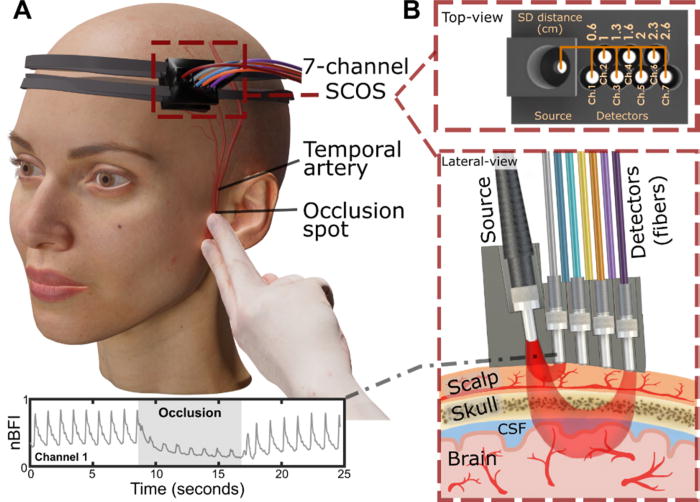
Experimental arrangement of the SCOS system for measuring cerebral blood dynamics during superficial temporal artery (STA) occlusion. (a) 3D visualization of the SCOS device positioned over the temple region and the occlusion site near the ear bone. (b) Top and lateral views of the device, illustrating different detecting channels for sensing the scalp, skull, and brain layers. Credit: Liu et al., APL Bioengineering, 2025
Measuring blood flow in the brain is critical for responding to a range of neurological problems, including stroke, traumatic brain injury (TBI) and vascular dementia. But existing techniques, including magnetic resonance imaging and computed tomography, are expensive and therefore not widely available.
Researchers from the USC Neurorestoration Center and the California Institute of Technology (Caltech) have built a simple, noninvasive alternative. The device takes a technique currently used in animal studies known as speckle contrast optical spectroscopy (SCOS) and adapts it for potential clinical use in humans. It works by capturing images of scattered laser light with an affordable, high-resolution camera.
“It’s really that simple. Tiny blood cells pass through a laser beam, and the way the light scatters allows us to measure blood flow and volume in the brain,” said Charles Liu, MD, PhD, professor of clinical neurological surgery, urology and surgery at the Keck School of Medicine of USC, director of the USC Neurorestoration Center and co-senior author of the new research.
The device has already been tested with humans in small proof of concept studies demonstrating the tool’s utility for assessing stroke risk and detecting brain injury. In the current study, published in APL Bioengineering, Liu and his team sought to confirm that SCOS is truly measuring blood flow in the brain, rather than in the scalp, which also contains many blood vessels. The question has long plagued researchers who use light-based technology to visualize the brain.
Liu’s team took an innovative approach: By temporarily blocking blood flow to the scalp, they confirmed that SCOS readings were indeed measuring signals from blood vessels in the brain. Readings from 20 participants showed that positioning the detector at least 2.3cm away from the laser source provided the clearest measurement of brain blood flow. The study, funded in part by the National Institutes of Health, the Alfred Mann Foundation and the USC Neurorestoration Center, was just published in the journal APL Bioengineering.
“For the first time in humans, this experimental evidence shows that a laser speckle optical device can probe beyond the scalp layers to access cerebral signals,” said Simon Mahler, PhD, who is now an assistant professor in the Department of Biomedical Engineering at the Stevens Institute of Technology and one of the paper’s coauthors. “This is an important step toward using SCOS to non-invasively measure blood flow in the brain.”
Tracking brain blood flow
For years, researchers measuring brain signals with light-based technology, such as lasers and fibre optics, have used statistical simulations to estimate which signals originate in the brain versus the scalp. The USC Neurorestoration Center team found a direct way to test the difference, thanks to a collaboration between surgeons, engineers and neurologists.
“I perform surgeries to increase blood flow in the brain, and many of these involve temporarily stopping blood flow in the scalp,” said Jonathan Russin, MD, now professor and chief of neurosurgery at the University of Vermont, who continues to collaborate with the USC Neurorestoration Center. “That gave us a simple way to test the technology – by creating a change that affected only the scalp’s circulation while leaving the brain’s blood flow untouched.”
In 20 participants, the researchers temporarily stopped blood flow to the scalp, then collected a series of SCOS readings. By gradually moving the detector further from the head, they captured signals reaching progressively deeper towards the brain. They found that positioning the detector 2.3cm from the head allowed them to measure brain blood flow while minimising interference from the scalp.
The findings confirm the utility of SCOS for non-invasively detecting brain blood flow and provide important guidance for other researchers working with light-based technology, Liu said.
Bringing SCOS to patients
Beyond advancing research, the study helps confirm the clinical potential of SCOS for detecting and responding to stroke, brain injury and dementia. Because all of the team’s research has been done with humans, the tool is poised for rapid translation from the lab to the clinic.
“We look directly at humans in essentially the same way the tool will be applied, so there’s nothing lost in translation,” Liu said. “We are never more than one step away from the problem we’re trying to solve.”
The technique is already being used by some of the team’s collaborators to help diagnose stroke and TBI. Next, the researchers will continue to refine the technology and software, working to improve the resolution of images and the quality of data extracted from readings.
“With the knowledge that we’re now measuring exactly what we intend to measure, we’re also going to expand our testing of this technique with patients in clinical settings,” Liu said.
Animals that hibernate are incredibly resilient. They can spend months without food or water, muscles refusing to atrophy, body temperature dropping to near freezing as their metabolism and brain activity slow to a crawl. When they emerge from hibernation, they recover from dangerous health changes similar to those seen in type 2 diabetes, Alzheimer’s disease, and stroke.
New genetic research suggests that hibernating animals’ superpowers could lie hidden in human DNA – with clues on how to unlock them, perhaps one day leading to treatments that could reverse neurodegeneration and diabetes.
A gene cluster called the “fat mass and obesity (FTO) locus” plays an important role in hibernators’ abilities, the researchers found. Intriguingly, humans have these genes too. “What’s striking about this region is that it is the strongest genetic risk factor for human obesity,” says Chris Gregg, PhD, professor in neurobiology and human genetics at University of Utah Health and senior author on the studies. But hibernators seem able to use genes in the FTO locus in new ways to their advantage.
The team identified hibernator-specific DNA regions that are near the FTO locus and that regulate the activity of neighbouring genes, tuning them up or down. The researchers speculate that adjusting the activity of neighbouring genes, including those in or near the FTO locus, allows hibernators to pack on the pounds before settling in for the winter, then slowly use their fat reserves for energy throughout hibernation.
Indeed, the hibernator-specific regulatory regions outside of the FTO locus seem crucial for tweaking metabolism. When the researchers mutated those hibernator-specific regions in mice, they saw changes in the mice’s weight and metabolism. Some mutations sped up or slowed down weight gain under specific dietary conditions; others affected the ability to recover body temperature after a hibernation-like state or tuned overall metabolic rate up or down.
Intriguingly, the hibernator-specific DNA regions the researchers identified weren’t genes themselves. Instead, the regions were DNA sequences that contact nearby genes and turn their expression up or down, like an orchestra conductor fine-tuning the volume of many musicians. This means that mutating a single hibernator-specific region has wide-ranging effects extending far beyond the FTO locus, explains Susan Steinwand, research scientist in neurobiology at U of U Health and first author on one of the studies. “When you knock out one of these elements – this one tiny, seemingly insignificant DNA region – the activity of hundreds of genes changes,” she says. “It’s pretty amazing.”
Understanding hibernators’ metabolic flexibility could lead to better treatments for human metabolic disorders like type 2 diabetes, the researchers say. “If we could regulate our genes a bit more like hibernators, maybe we could overcome type 2 diabetes the same way that a hibernator returns from hibernation back to a normal metabolic state,” says Elliott Ferris, MS, bioinformatician at U of U Health and first author on the other study.
Uncovering the regulation of hibernation
Finding the genetic regions that may enable hibernation is a problem akin to excavating needles from a massive DNA haystack. To narrow down the regions involved, the researchers used multiple independent whole-genome technologies to ask which regions might be relevant for hibernation. Then, they started looking for overlap between the results from each technique.
First, they looked for sequences of DNA that most mammals share but that had recently changed in hibernators. “If a region doesn’t change much from species to species for over 100 million years but then changes rapidly and dramatically in two hibernating mammals, then we think it points us to something that is important for hibernation, specifically,” Ferris says.
To understand the biological processes that underlie hibernation, the researchers tested for and identified genes that turn up or down during fasting in mice, which triggers metabolic changes similar to hibernation. Next, they found the genes that act as central coordinators, or “hubs,” of these fasting-induced changes to gene activity.
Many of the DNA regions that had recently changed in hibernators also appeared to interact with these central coordinating hub genes. Because of this, the researchers expect that the evolution of hibernation requires specific changes to the controls of the hub genes. These controls comprise a shortlist of DNA elements that are avenues for future investigation.
Awakening human potential
Most of the hibernator-associated changes in the genome appeared to “break” the function of specific pieces of DNA, rather than confer a new function. This hints that hibernators may have lost constraints that would otherwise prevent extreme flexibility in the ability to control metabolism. In other words, it’s possible that the human “thermostat” is locked to a narrow range of continuous energy consumption. For hibernators, that lock may be gone.
Hibernators can reverse neurodegeneration, avoid muscle atrophy, stay healthy despite massive weight fluctuations, and show improved aging and longevity. The researchers think their findings show that humans may already have the needed genetic code to have similar hibernator-like superpowers—if we can bypass some of our metabolic switches.
“Humans already have the genetic framework,” Steinwand says. “We just need to identify the control switches for these hibernator traits.” By learning how, researchers could help confer similar resilience to humans.
Findings support use of P2Y12 therapy instead of aspirin for long term prevention
Source: Wikimedia CC0
Giving a P2Y12 inhibitor anti-clotting drug to patients with coronary artery disease is associated with lower rates of cardiovascular death, heart attack and stroke compared with traditional aspirin, with no increased risk of major bleeding, finds a study published by The BMJ.
P2Y12 inhibitors are often given to patients alongside aspirin (“dual therapy”) after percutaneous coronary intervention (PCI) – a procedure to widen or unblock a coronary artery – to help prevent cardiovascular events including heart attack and stroke.
After several months, patients are usually switched from dual therapy to lifelong aspirin, but some trials have suggested that a P2Y12 inhibitor may be more effective for long term prevention than aspirin.
To explore this further, researchers analysed individual patient data from five randomised clinical trials involving 16 117 patients (average age 65; 24% women) who were assigned to a P2Y12 inhibitor (clopidogrel or ticagrelor) or aspirin after completing dual therapy following PCI.
After an average follow-up period of around 4 years, P2Y12 inhibitor therapy was associated with a 23% lower risk of an outcome that combined cardiovascular death, heart attack, or stroke, compared with aspirin, with no significant difference in major bleeding. This means that for every 46 patients taking a P2Y12 inhibitor instead of aspirin after dual therapy, one cardiovascular death, heart attack, or stroke would be prevented.
When considering outcomes individually, P2Y12 inhibitor therapy reduced heart attacks and stroke compared with aspirin. However, all-cause death, cardiovascular death, and stent thrombosis were similar between the treatments.
The researchers acknowledge that some changes in the original design of some trials were needed to create uniform data, and that certain characteristics of individual trial populations may reduce the generalisability of the findings.
But they say no significant difference in major bleeding between groups was seen, and results were consistent after further analyses accounting for factors such as age, sex, geographical region, smoking, previous heart attack or stroke, underlying conditions and medication history, suggesting they are robust.
“Overall, this study supports preferential P2Y12 inhibitor monotherapy prescription over aspirin due to reductions in major adverse cardiac and cerebrovascular events (MACCE) without increasing major bleeding in the medium term,” say researchers in a linked editorial.
However, they note that “medium term efficacy does not necessarily extend lifelong, which is the duration we advise patients to continue these medications.”
As such, they suggest that “a large-scale globally representative trial directly comparing different monotherapy strategies (including discontinuation) with extended follow-up would benefit our understanding of the long-term impact of P2Y12 inhibitor monotherapy across the treatment class for secondary prevention following PCI.”
Despite clinicians recommending that many patients with diabetes take statins, nearly one in five opt to delay treatment. In a new study, researchers from Mass General Brigham found that patients who started statin therapy right away reduced the rate of heart attack and stroke by one third compared to those who chose to delay taking the medication. The results, which can help guide decision-making conversations between clinicians and their patients, are published in the Journal of the American Heart Association.
“I see patients with diabetes on a regular basis, and I recommend statin therapy to everyone who is eligible,” said senior author Alexander Turchin, MD, MS, of the Division of Endocrinology at Brigham and Women’s Hospital, a founding member of the Mass General Brigham healthcare system. “Some people refuse because they want to first try lifestyle interventions or other drugs. But other interventions are not as effective at lowering cholesterol as starting statin therapy as soon as possible. Time is of the essence for your heart and brain health.”
Heart attacks and strokes remain the leading cause of complications and mortality for patients with diabetes. Statin therapy reduces risk of these cardiovascular events by preventing plaque buildup in the blood vessels.
The researchers used an artificial intelligence method called Natural Language Processing to gather data from the electronic health records of 7239 patients at Mass General Brigham who ultimately started statin therapy during the nearly 20-year study period. The median patient age was 55, with 51% being women, 57% white, and a median HbA1c of 6.9.
Nearly one-fifth (17.7%) of the patients in the study declined statin therapy when it was first recommended by their clinicians, then later accepted the therapy (after a median of 1.5 years) upon repeated recommendation by their clinician. Of those who delayed, 8.5% had a heart attack or stroke. But for patients who started statins immediately, the rate of those cardiovascular events was just 6.4%.
“Clinicians should recognize the increased cardiovascular risk associated with delaying statin therapy for patients with diabetes and use this information to guide shared decision-making conversations with their patients,” said Turchin.
Tiny fragments of plastic have become ubiquitous in our environment and our bodies. Higher exposure to these microplastics, which can be inadvertently consumed or inhaled, is associated with a heightened prevalence of chronic noncommunicable diseases, according to new research being presented at the American College of Cardiology’s Annual Scientific Session (ACC.25).
Researchers said the new findings add to a small but growing body of evidence that microplastic pollution represents an emerging health threat. In terms of its relationship with stroke risk, for example, microplastics concentration was comparable to factors such as minority race and lack of health insurance, according to the results.
“This study provides initial evidence that microplastics exposure has an impact on cardiovascular health, especially chronic, noncommunicable conditions like high blood pressure, diabetes and stroke,” said Sai Rahul Ponnana, MA, a research data scientist at Case Western Reserve School of Medicine in Ohio and the study’s lead author. “When we included 154 different socioeconomic and environmental features in our analysis, we didn’t expect microplastics to rank in the top 10 for predicting chronic noncommunicable disease prevalence.”
Microplastics—defined as fragments of plastic between 1 nanometre and 5 millimetres across—are released as larger pieces of plastic break down. They come from many different sources, such as food and beverage packaging, consumer products and building materials. People can be exposed to microplastics in the water they drink, the food they eat and the air they breathe.
The study examines associations between the concentration of microplastics in bodies of water and the prevalence of various health conditions in communities along the East, West and Gulf Coasts, as well as some lakeshores, in the United States between 2015-2019. While inland areas also contain microplastics pollution, researchers focused on lakes and coastlines because microplastics concentrations are better documented in these areas. They used a dataset covering 555 census tracts from the National Centers for Environmental Information that classified microplastics concentration in seafloor sediments as low (zero to 200 particles per square meter) to very high (over 40 000 particles per square metre).
The researchers assessed rates of high blood pressure, diabetes, stroke and cancer in the same census tracts in 2019 using data from the U.S. Centers for Disease Control and Prevention. They also used a machine learning model to predict the prevalence of these conditions based on patterns in the data and to compare the associations observed with microplastics concentration to linkages with 154 other social and environmental factors such as median household income, employment rate and particulate matter air pollution in the same areas.
The results revealed that microplastics concentration was positively correlated with high blood pressure, diabetes and stroke, while cancer was not consistently linked with microplastics pollution. The results also suggested a dose relationship, in which higher concentrations of microplastic pollution are associated with a higher prevalence of disease. However, researchers said that evidence of an association does not necessarily mean that microplastics are causing these health problems. More studies are required to determine whether there is a causal relationship or if this pollution is occurring alongside another factor that leads to health issues, they said.
Further research is also needed to determine the amount of exposure or the length of time it might take for microplastics exposure to have an impact on health, if a causal relationship exists, according to Ponnana. Nevertheless, based on the available evidence, it is reasonable to believe that microplastics may play some role in health and we must take steps to reduce exposures, he said. While it is not feasible to completely avoid ingesting or inhaling microplastics when they are present in the environment, given how ubiquitous and tiny they are, researchers said the best way to minimise microplastics exposure is to curtail the amount of plastic produced and used, and to ensure proper disposal.
“The environment plays a very important role in our health, especially cardiovascular health,” Ponnana said. “As a result, taking care of our environment means taking care of ourselves.”
In a separate study presented at ACC.25, researchers from a different group reviewed the scientific literature and found that studies showed a strong correlation between microplastics in plaques in the heart’s arteries and the risk of adverse cardiovascular events, suggesting that the presence of microplastics could play a role in the onset or exacerbation of serious heart problems.
People whose parents divorced during their childhood may be at a greater risk of stroke later in life, according to a new study published January 22, 2025 in the open-access journal PLOS One by Esme Fuller-Thomson of University of Toronto, Canada, and colleagues.
Each year, approximately 795 000 individuals in the U.S. have a stroke. Previous work has established many sociodemographic risk factors for stroke, as well as connections between adverse childhood events and stroke. In the new study, researchers looked specifically at the impact of childhood parental divorce among adults with no history of childhood abuse. They used data on 13 205 adults aged 65 and over from the 2022 Behavioral Risk Factor Surveillance System.
The study found that people who had experienced parental divorce before they were 18 years old had 1.61 times higher odds of having a stroke when compared to respondents who did not experience parental divorce (AOR=1.61, 95% CI=1.15-2.24). The association did not vary by sex, and remained even after controlling for known risk factors such as diabetes, depression, and small social support networks.
The current study was not designed to analyse the potential mechanism of this association, nor to prove causation. The conclusions may not be generalisable to younger generations, who have experienced overall higher rates of parental divorce. In addition, several potential confounding factors – including blood pressure, cholesterol, contraceptive use, age at parents’ divorce, and types of strokes – were not available in the data.
However, the authors say that their data supports an association between parental divorce during childhood and increased stroke risk, even in the absence of childhood abuse and other trauma.
Senior author Esme Fuller-Thomson adds: “It is extremely concerning that older adults who grew up in divorced families had 60% higher odds of stroke, even after excluding those who had been physically or sexually abused as children. The magnitude of the association between parental divorce and stroke was comparable to well-established risk factors for stroke such as male gender and having diabetes.”
Sickle cell disease. Credit: National Institutes of Health
Individuals with sickle cell disease are at a higher risk for stroke and resulting cognitive disability. But even in the absence of stroke, many such patients struggle with remembering, focusing, learning and problem solving, among other cognitive problems, with many facing challenges in school and in the workplace.
Now a multidisciplinary team of researchers and physicians at Washington University School of Medicine in St. Louis has published a study that helps explain how the illness might affect cognitive performance in sickle cell patients without a history of stroke. The study, appearing in JAMA Network Open, found such participants had brains that appeared older than expected for their age. Individuals experiencing economic deprivation, who struggle to meet basic needs, even in the absence of sickle cell disease, had more-aged appearing brains, the team also found.
“Our study explains how a chronic illness and low socioeconomic status can cause cognitive problems,” said Andria Ford, MD, a professor of neurology and chief of the section of stroke and cerebrovascular diseases at WashU Medicine and corresponding author on the study. “We found that such factors could impact brain development and/or aging, which ultimately affects the mental processes involved in thinking, remembering and problem solving, among others. Understanding the influence that sickle cell disease and economic deprivation have on brain structure may lead to treatments and preventive measures that potentially could preserve cognitive function.”
More than 200 young, Black adults with and without sickle cell disease, living in St. Louis and the surrounding region in eastern Missouri and southwestern Illinois, participated in brain MRI scans and cognitive tests. The researchers – including Yasheng Chen, DSc, an associate professor of neurology at WashU Medicine and senior author on the study – calculated each person’s brain age using a brain-age prediction tool that was developed using MRI brain scans from a diverse group of more than 14 000 healthy people of known ages. The estimated brain age was compared with the individual’s actual age.
The researchers found that participants with sickle cell disease had brains that appeared an average of 14 years older than their actual age. Sickle cell participants with older-looking brains also scored lower on cognitive tests.
The study also found that socioeconomic status correlates with brain age. On average, a seven-year gap was found between the brain age and the participants’ actual age in healthy individuals experiencing poverty. The more severe the economic deprivation, the older the brains of such study subjects appeared.
Healthy brains shrink as people age, while premature shrinking is characteristic of neurological illnesses such as Alzheimer’s disease. But a smaller brain that appears older can also result from stunted growth early in life. Sickle cell disease is congenital, chronically depriving the developing brain of oxygen and possibly affecting its growth from birth. Also, children exposed to long-term economic deprivation and poverty experience cognitive challenges that affect their academic performance, Ford explained.
As a part of the same study, the researchers are again performing cognitive tests and scanning the brains of the same healthy and sickle cell participants three years after their first scan to investigate if the older-looking brains aged prematurely, or if their development was stunted.
“A single brain scan helps measure the participants’ brain age only in that moment,” said Ford, who treats patients at Barnes-Jewish Hospital. “But multiple time points can help us understand if the brain is stable, initially capturing differences that were present since childhood, or prematurely aging and able to predict the trajectory of someone’s cognitive decline. Identifying who is at greatest risk for future cognitive disability with a single MRI scan can be a powerful tool for helping patients with neurological conditions.”
Updated clinical recommendations, including lifestyle changes, prevention strategies and treatment options, to reduce the risk of a first stroke outlined in a new guideline from the American Stroke Association
Credit: American Heart Association
Healthy lifestyle behaviours, such as good nutrition, smoking cessation and being physically active, along with routine health screenings and managing risk factors for cardiovascular disease and stroke with medication, can help prevent individuals from having a first stroke. Screening for stroke risk and educating people on how to lower their chances of having a stroke ideally begin with their primary care professional and include evidence-based recommendations, according to a new clinical guideline from the American Stroke Association, and published in the journal Stroke.
“The most effective way to reduce the occurrence of a stroke and stroke-related death is to prevent the first stroke – referred to as primary prevention,” said Chair of the guideline writing group, Cheryl D. Bushnell, MD, MHS, FAHA, professor and vice chair of research in the department of neurology at Wake Forest University School of Medicine. “Some populations have an elevated risk of stroke, whether it be due to genetics, lifestyle, biological factors and/or social determinants of health, and in some cases, people do not receive appropriate screening to identify their risk.”
The “2024 Guideline for the Primary Prevention of Stroke” replaces the 2014 version and is a resource for clinicians in implementing a variety of prevention strategies for individuals with no prior history of stroke. The new guideline provides evidence-based recommendations for strategies to support brain health and prevent stroke throughout a person’s lifespan by improving healthy lifestyle behaviours and getting preventive care.
“This guideline is important because new discoveries have been made since the last update 10 years ago. Understanding which people are at increased risk of a first stroke and providing support to preserve heart and brain health can help prevent a first stroke,” said Bushnell.
Key stroke prevention recommendations include regular health screenings, identifying risk factors, lifestyle interventions and medications, when indicated.
Identifying and managing risk factors
Unidentified and unmanaged cardiovascular disease risk factors can cause damage to arteries, the brain and the heart years before cardiovascular disease and stroke occur. Primary care health professionals should promote brain health for patients through stroke prevention education, screenings and addressing risk factors from birth to old age.
Modifiable risk factors for stroke, such as high blood pressure, overweight and obesity, elevated cholesterol and elevated blood sugar, can be identified with physical exams and blood tests. These conditions should be addressed with healthy lifestyle and behavioural changes and may include medications for select patients. Antihypertensive medications to reduce blood pressure and statin medications to lower cholesterol can help to reduce the risk of first stroke in adults with increased cardiovascular disease risk and those receiving CVD care. A new recommendation is consideration of glucagon-like protein-1 (GLP-1) receptor agonist medications, which are FDA-approved to reduce the risk of cardiovascular disease in people with overweight or obesity and/or Type 2 diabetes.
Healthy lifestyle behaviours
The most common, treatable lifestyle behaviours that can help reduce stroke risk are detailed in the Association’s Life’s Essential 8 cardiovascular health metrics. They include healthy nutrition, regular physical activity, avoiding tobacco, healthy sleep and weight, controlling cholesterol, and managing blood pressure and blood sugar. The guideline recommends that adults with no prior cardiovascular disease, as well as those with increased risk, follow a Mediterranean dietary pattern. Mediterranean dietary programs have been shown to reduce the risk of stroke, especially when supplemented with nuts and olive oil.
Physical activity is also essential for stroke risk reduction and overall heart health. Physical activity can help to improve important health measures such as blood pressure, cholesterol, inflammatory markers, insulin resistance, endothelial function and weight. The guideline urges health care professionals to routinely screen patients for sedentary behaviour, a confirmed risk factor for stroke, and counsel them to engage in regular physical activity. The Association reinforces the U.S. Department of Health and Human Services Office of Disease Prevention and Health Promotion’s recommendation that adults get at least 150 minutes per week of moderate-intensity aerobic activity or 75 minutes per week of vigorous aerobic activity, or a combination of both, preferably spread throughout the week.
Health equity and stroke risk
New to the guideline is an emphasis on social determinants of health and the impact they have on stroke risk. Social determinants of health are non-medical factors, including education, economic stability, access to care, discrimination, structural racism and neighborhood factors (such as the lack of walkability, lower availability of healthy food and fewer health resources), that contribute to inequities in care and influence overall health. Health care professionals should ensure patient education is available for various educational and language levels, and advocate for their patients by choosing treatments and medications that are effective and affordable.
Health care professionals are also encouraged to connect patients to resources that help address health-related social needs such as food and housing insecurity, refer them to programs that support healthy lifestyle changes and direct them to support programs that may help defray health care costs including medication expenses.
New sex- and gender-specific recommendations
The guideline also includes some new gender- and sex-specific recommendations for women. Health professionals should screen for conditions that can increase a woman’s risk of stroke, including use of oral contraceptives, high blood pressure during pregnancy, other pregnancy complications such as premature birth, endometriosis, premature ovarian failure and early onset menopause. Treatment of elevated blood pressure during pregnancy and within six weeks of delivery is recommended to reduce the risk of maternal intracerebral haemorrhage.
Transgender women and gender-diverse individuals taking oestrogens for gender affirmation may also be at an increased risk of stroke. Evaluation and modification of any existing risk factors are needed to reduce the risk of stroke for these individuals.
“Implementing the recommendations in this guideline would make it possible to significantly reduce the risk of people having a first stroke. Most strategies that we recommend for preventing stroke will also help reduce the risk of dementia, another serious health condition related to vascular issues in the brain,” said Bushnell.
The writing group notes that writing recommendations focused on preventing a first stroke was challenging. There are limitations to some of the evidence that informed the guideline, including that many clinical trials enrolled adults who have already had a cardiovascular event that may include a stroke. The writing group also identified knowledge gaps to help inform topics for future research.
The guideline highlights the need for risk assessment in primary stroke prevention and includes the use of risk prediction tools to estimate risk for atherosclerotic cardiovascular disease so that patients receive timely prevention and treatment strategies. The Association has recently developed a new Predicting Risk of Cardiovascular Disease Events (PREVENT) risk calculator as a screening tool that can help inform preventive treatment decisions. The PREVENT calculator can estimate 10-year and 30-year stroke and heart disease risk in individuals starting at age 30 – a decade earlier than the Pooled Cohort Equations, another CVD risk calculator.
According to the American Stroke Association, learning the warning signs of stroke and preventative measures are the best way to avoid strokes and keep them from happening again. The abbreviation F.A.S.T. – for face drooping, arm weakness, speech difficulty, time to call 911 – is a useful tool to recognise the warning signs of stroke and when to call for help.
This guideline was prepared by the volunteer writing group on behalf of the American Stroke Association and is endorsed by the Preventive Cardiovascular Nurses Association and the Society for Vascular Surgery. The American College of Obstetricians and Gynecologists supports the clinical value of this document as an educational tool.
Since 1990, the American Stroke Association has translated scientific evidence into clinical practice guidelines with recommendations to improve cerebrovascular health. The “2024 Guideline for the Primary Prevention of Stroke” replaces the 2014 “Guidelines for the Primary Prevention of Stroke.” This updated guideline is intended to be a resource for clinicians to use to guide various prevention strategies for individuals with no history of stroke. The Association supports the development and publication of clinical practice guidelines without commercial support, and members volunteer their time to the writing and review efforts.
Initial prescriptions of benzodiazepines, a class of drugs used to treat anxiety and sleep problems after a stroke may include too many pills for adults ages 65 or older, finds new study in the Stroke journal
Photo by Towfiqu Barbhuiya on Unsplash
Although there has been a slight downward trend in the prescription of benzodiazepines (depressants that relieve anxiety, muscle spasms, produce sedation and reduce seizures) among older adults over the last decade, the rate of first-time prescriptions for these medications after an ischaemic stroke is still sizable, according to research published today in Stroke.
After a stroke, benzodiazepines may be used to calm anxiety and improve sleep, but also have a potential for abuse and addiction. When prescribed to older adults, these medications may increase the risk of falls and broken bones, as well as memory problems, confusion and other harmful effects.
Researchers reviewed data from Medicare claims in the US and analysed 10 years of first-time prescriptions for benzodiazepines among more than 120 000 people, ages 65 and older, who were hospitalised for ischaemic stroke. The rate of benzodiazepine prescriptions during the first three months after stroke were examined, and data were adjusted for race, sex and ethnicity. Then year-to-year prescription patterns were reviewed to identify the number of potentially excessive new benzodiazepine prescriptions given to stroke survivors.
“We reviewed stroke survivors at 90 days after a stroke because that window of time is critical for rehabilitation of motor, speech and cognitive function, as well as mental health. It’s often a very difficult time for patients who experience loss of mobility and independence. Benzodiazepines may inhibit recovery and rehabilitation,” said study co-author Julianne Brooks, MPH, a data analytics manager at the Center for Value-based Healthcare and Sciences at Massachusetts General Brigham in Boston. “For this older age group, guidelines recommend that benzodiazepine prescriptions should be avoided if possible. However, there may be cases where benzodiazepines are prescribed to be used as needed. For example, to treat breakthrough anxiety, a provider may prescribe a few pills and counsel the patient that the medication should only be used as needed. The increased risks of dependence, falls and other harmful effects should be discussed with the patient.”
The study found:
Within 90 days of stroke, 6127 (4.9%) people were started on a benzodiazepine for the first time.
Lorazepam (40%) and alprazolam (33%) were the most-prescribed benzodiazepine medications.
Three-quarters of the first-time benzodiazepine prescriptions were for a supply of over seven days, and more than half of the prescriptions were for a supply between 15 to 30 days.
Prescription rates were higher among women (5.5%) than men (3.8%).
Prescription fill rates were also higher in Hispanic adults (5.8%), though this group was limited by the small number of participants – 1.9% of the overall sample.
Overall, prescription rates were highest in the Southeast (5.1%) and lowest in the Midwest (4%) of the US. “The Southeast region is the stroke belt with a higher rate of strokes, so that could explain some differences in care in that region,” Brooks said.
There was an overall modest nationwide decline of initial prescriptions from 2013 to 2021 of 1.6%.
“We found a pattern of potential oversupply with these initial benzodiazepine prescriptions, which would be enough for patients to become long-term users or possibly addicted. The benzodiazepine prescriptions given under these circumstances may lead to dependence,” Brooks said. “Increased awareness and improved recommendations about the risks of these medications for older stroke survivors are needed.
“Although the overall prescription rate decreased slightly over 10 years, this prescription pattern is still a problem. It’s concerning because older adults are vulnerable to overprescribing and adverse outcomes. We know from previous studies that vulnerable and marginalized populations experience worse outcomes after stroke, so we want to understand the factors that may play a role so we can provide better care,” Brooks said.
The 2019 American Geriatrics Society Beers Criteria maintains a list of medications that health care professionals can reference to safely prescribe medications for adults older than 65. Beers criteria recommends avoiding benzodiazepines in all older adults due to the risk of cognitive impairment, delirium, falls, fractures and motor vehicle crashes.
“Other guidelines also suggest behavioural interventions such as cognitive behaviour therapy for insomnia, antidepressant medications for anxiety disorders and trying non-pharmaceutical interventions first,” Brooks said.
Researchers said more studies are needed to understand if there is a safe level for prescribing benzodiazepines that may be most appropriate for older adults. The main limitation was that this study used a large, national dataset that did not include information about why benzodiazepines were prescribed.