Study finds higher risk cannot be attributed entirely to antidepressant exposure
Source: Pixabay CC0
Children of mothers with depression had higher rates of certain neurodevelopmental disorders regardless of whether they were exposed to antidepressants in the womb, reports a new study led by Saraid McIlvride of the University of Glasgow, UK, published September 29th in the open access journal PLOS Medicine.
Antidepressant use during pregnancy is increasing, but currently, the long-term effects of these drugs on child development are unclear. Having untreated depression during pregnancy carries its own risks, however, making it very challenging for someone with depression to make informed decisions about whether to take medication during pregnancy.
In a new study, researchers followed more than 167 000 children born in Wales between 2009 and 2016, until 2022. Using medical and school records, they looked for any links between depression diagnoses or antidepressant use in mothers, and special educational needs in their children, such as diagnoses of autism spectrum disorder or attention deficit hyperactivity disorder, or learning, behavioral, emotional or social difficulties.
They found that children of women who received antidepressant treatment had higher rates of certain neurodevelopmental disorders than women with depression who were untreated. However, these results could be affected by the fact that women with more severe depression are more likely to be prescribed antidepressants. When comparing between treated depression, untreated depression and antidepressant exposure without depression, the analyses showed that antidepressant exposure was associated with an additional 6.3 cases per 100 children in those not exposed to depression, and an additional 2.9 cases per 100 children in those exposed to depression.
The researchers conclude that children of mothers with depression have a higher risk of neurodevelopmental disorders regardless of whether they were exposed to antidepressants, but medication may carry an additional risk. They caution that any potential risk of treatment should be balanced against the risks of untreated depression in mothers, which is associated with a higher risk of postnatal depression.
The authors add, “We showed that if women with depression took antidepressants while pregnant their children were more likely to have special educational needs, but it was only a very slight increase and may have been due to them having more severe depression, rather than an effect of the medicine.
“Among children of mothers with depression, 24 in every 100 children had special educational needs if she was not on treatment, and this increased by just 3 in every 100 children if she was taking antidepressants. This is compared to 20 in every 100 children for those not exposed to depression or antidepressants in the womb.
“Our results don’t suggest that women should automatically stop taking their antidepressants because depression can harm both mother and baby if not treated. Women should always speak to their doctor about what is best in their situation.
“Our study indicates that exposure to antidepressants during pregnancy could serve as a marker for additional support being needed at school.
“Linking mothers’ and babies’ routinely collected data and being able to follow their health and development over time is an amazing resource which can support research into maternal mental health, an area which urgently needs more attention.
“Further studies are needed to empower women with the knowledge they need to make informed decisions, together with their doctor or midwife, about their own health as well as their baby’s.”
Increased brain ageing was associated with dementia, addiction and psychiatric disorders like schizophrenia
Generated with Gencraft AI
People with dementia, mild cognitive impairment, alcohol addiction, or psychiatric disorders such as schizophrenia show increased brain ageing, each in specific patterns within the brain, according to a study published July 21st in the open access journal PLOS Medicine by Shile Qi from the Nanjing University of Aeronautics and Astronautics, China, and colleagues.
Some conditions can make the brain age faster. Scientists calculate how old the brain is relative to the body using the predictive age difference (PAD), the difference between chronological age and the age predicted by brain imaging, where a positive PAD indicates that ageing is accentuated or increased. To better understand how brain disorders and divergences might affect brain ageing, the authors of this study collected structure magnetic resonance imaging (MRI) data from 45 900 controls across several brain imaging banks, and compared them with those of 2698 patients with different brain conditions and differences, including attention-deficit/hyperactivity disorder (ADHD), autism spectrum disorder (ASD), alcohol or tobacco addiction, Alzheimer’s disease (AD), mild cognitive impairment (MCI), schizophrenia, bipolar disorder or major depressive disorder.
The authors found that neurodegenerative disorders of AD and MCI had the largest association with a high PAD. Addiction and psychiatric disorders were also associated with increased PAD. In contrast, there were no differences in PAD between people with ADHD or ASD and controls.
The researchers also looked at PAD values in specific areas of the brain, and examined which genes showed increased expression in people with different brain conditions. The prefrontal cortex showed higher PAD across brain disorders. Higher PAD in the frontal and temporal lobes was associated with psychiatric disorders, while high PAD in the frontal and occipital cortex was associated with dementia. Addiction was connected with high PAD in the default mode network, and in the salience network and the putamen and thalamus. There were also differences in gene transcription that associated with specific conditions and divergences. While the results are correlational, and not causal, and while some conditions such as psychiatric disorders and addiction have high co-occurrence, the author suggest that understanding more about PAD could help provide biomarkers for commonly occurring brain disorders.
The authors add, “Different neurological disorders appear to leave different signatures on the brain ageing clock, which may help researchers better understand the neural and biological pathways involved in these conditions.”
Depression is a complex and deeply personal experience. While almost everyone has periods of sadness, low mood or grief, depression is different. Major depressive disorder is persistent, interferes with day-to-day activities, and can affect work, life and relationships.
One in five people will experience depression in their lifetime. Women are nearly twice as likely as men to develop it – a disparity that emerges around puberty and persists into adulthood.
But what causes it? The short answer is: many different things.
While there are various theories, we know brain chemistry, genes, hormones, stress, lifestyle and personality can all play a role. How these interact can vary greatly from one person to another.
An imbalance of brain chemicals?
The traditional “monoamine hypothesis” of depression was proposed more than half a century ago, in the 1950s. This theory suggests the root cause of depression is a deficiency in certain brain chemicals (or neurotransmitters) called monoamines – serotonin, dopamine and norepinephrine.
Several antidepressants have been developed based on this. They primarily work by increasing levels of monoamines such as serotonin.
However, it has become clear that the “chemical imbalance” explanation is an oversimplification.
Research over the past few decades has not found consistent evidence that individuals with depression always have lower levels of serotonin, or any single neurotransmitter.
Current understanding recognises depression as a complex condition influenced by multiple interacting factors, including genetics, trauma, medications, diet, sleep patterns and social interactions.
Genetic factors can increase your risk
According to one 2021 review, around 30 to 50% of the risk someone will develop depression may be inherited.
No single “depression gene” has been found. But large studies have identified over 100 genetic risk markers on chromosomes.
The genetic risk of depression is also thought to be “polygenic”. This means multiple genetic variants (each carrying a small effect) interact and collectively contribute to someone’s genetic risk.
One important and longstanding research question has been whether there is a genetic reason women are more likely than men to develop depression.
In 2025, a large study revealed substantial overlap between men and women’s genetic risk. However, on average, women with depression tend to carry more of the genetic variants linked to depression.
This suggests that there may be a greater genetic risk for depression in women and perhaps a stronger environmental influence on depression risk in men.
Still, carrying a genetic risk does not mean someone will necessarily develop depression. The interplay between genetic and non-genetic factors is complex.
Hormones and biological sex
Hormones – the body’s chemical messengers – also play an important role in mood and wellbeing.
In women, estrogen and progesterone levels naturally fluctuate across different life stages, including the menstrual cycle, pregnancy, the period after childbirth and menopause.
Our 2025 review found some women are more sensitive to these normal hormonal shifts, and more vulnerable to mood disturbances.
For instance, in the premenstrual phase of their cycle, around 8% of women experience a severe depression, with intense mood swings and irritability, called premenstrual dysphoric disorder.
Similarly, the dramatic hormonal changes during pregnancy and after childbirth (combined with sleep loss and stress) can contribute to postnatal depression.
Later in life, fluctuating and falling estrogen levels during the menopause transition years may also increase the risk of developing depressive symptoms or intensify existing ones.
Hormonal contraceptives – which contain synthetic forms of estrogen and progesterone – have also been linked to mood changes and depression symptoms. In fact, these are some of the most common reasons women stop taking them.
These findings show how hormones can act as biological triggers, and help explain why women are statistically more likely to experience depression at certain stages of life.
The effect of hormones on depression in men has predominantly focused on the protective role of testosterone, but findings remain inconclusive.
When we experience stress, our bodies activate the hypothalamic–pituitary–adrenal (HPA) axis, also known as the “stress-response system”. This helps us cope by maintaining balance in our body – what scientists call physiological homeostasis.
But when stress is constant or overwhelming, this system can become dysregulated. Stressful or traumatic experiences in childhood – such as neglect, abuse or severe adversity – can also disrupt the stress-response system.
As a result, we overproduce the stress hormone cortisol. High or persistent cortisol levels can alter the structure and functioning of key brain areas (the hippocampus and pre-frontal cortex) which are important for regulating mood and memory.
Cortisol can also trigger the release of inflammatory chemicals, which then cross into the brain or influence neural signals, leading to mood changes and depressive symptoms.
Importantly though, not everyone who experiences stressful life events becomes depressed.
Some people may be more vulnerable due to genetic factors, early life adversity or differences in brain chemistry. Others might cope with the same stress without developing depression or other conditions.
Does personality play a role?
Personality traits also influence how people respond to stress and may affect their risk of developing depression.
People who tend to experience anxiety, sadness and self-doubt are more likely to develop depressive symptoms, especially after stressful events. In contrast, traits such as resilience, optimism, and emotional stability seem to protect against depression.
This suggests that personality plays an important role in shaping both vulnerability and resilience to depression.
Lifestyle choices can help lower your risk
These include not smoking, limiting alcohol use, eating a balanced diet, staying physically active, getting enough sleep, maintaining a healthy body weight and having social supports.
Research shows these healthy habits and lifestyle factors can have a protective effect on mental health. They may even reduce the impact of genetic risk factors for depression.
There’s no single cause – and no universal treatment
Depression arises from a mix of factors – biological (genes and hormones), psychological (personality and thoughts) and social (stress and life events).
Treatment options are based on all of these factors, as well as considering how severe the depression is and whether a person has responded to previous treatments.
While science has made some progress in understanding depression, what underpins each person’s experience is unique.
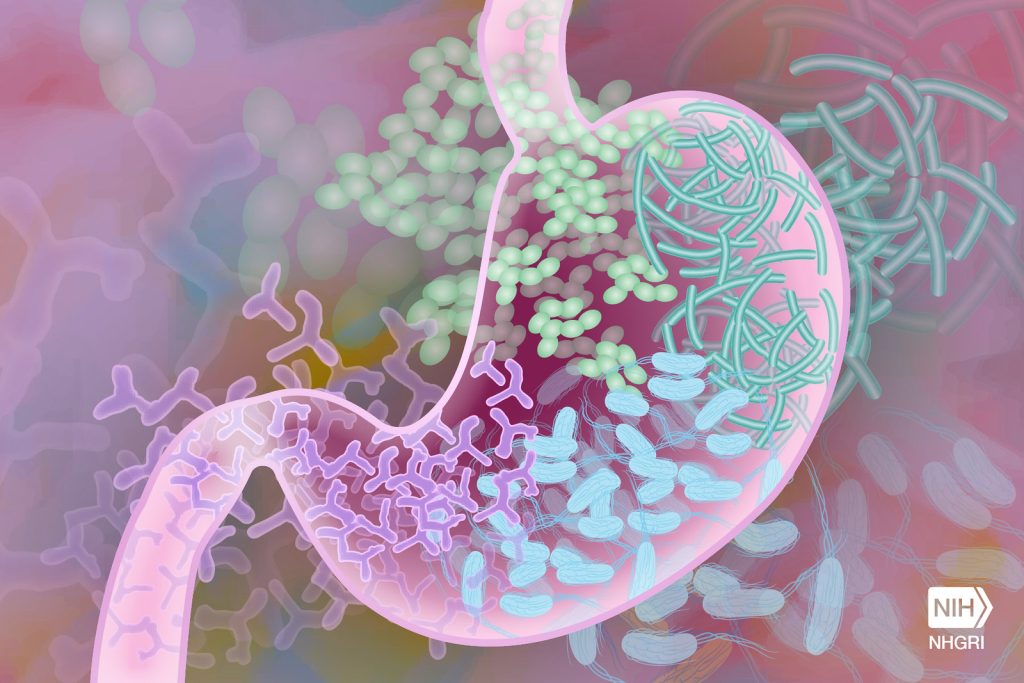
Gut Microbiome. Credit Darryl Leja National Human Genome Research Institute National Institutes Of Health
In a pilot clinical trial published in the Journal of the American Geriatrics Society that included older adults with depression receiving standard care, adding probiotic therapy produced modest but meaningful reductions in depressive and anxiety symptoms compared with adding a placebo. However, both groups demonstrated substantial overall improvements during follow-up.
For the trial, 58 participants in India aged ≥ 60 years with moderate depression were randomised 1:1 to receive daily probiotics or a placebo for 12 weeks, alongside standard antidepressant care. They were followed up for another 12 weeks.
Based on validated psychological scores, biomarker (serum brain-derived neurotropic factor level), and faecal microbiota profiling, investigators found that probiotics helped improve patients’ symptoms but did not confer clear additional gains in quality of life compared with placebo. The findings support probiotics as a safe, biologically plausible adjunct to standard care, but larger trials are needed.
“The results of our study are novel, and we are now planning a follow-up, larger-scale clinical trial due to the encouraging findings,” said co-corresponding author Dr. Saibal Das, MBBS, MD, DM, PhD, of the Indian Council of Medical Research – National Institute for Research in Bacterial Infections, Kolkata. “My vision is to develop affordable healthcare solutions and make them available to the larger population for meaningful public health impact,” added co–corresponding author Abhinaba Ghosh, MBBS, MSc, PhD, a physician-neuroscientist from Tata Medical Center, Kolkata.
For many people who suffer from depression, the condition is not just about feeling down, but also about a loss of motivation and difficulty finding pleasure in activities they used to enjoy. A study conducted in Sweden at Lund University and Region Skåne shows that a medicine used to treat Parkinson’s disease can be used as an add-on therapy to alleviate these symptoms in some patients with treatment-resistant depression.
Researchers at Lund University and the psychiatric services in Region Skåne have identified a potential new therapy for the condition associated with depression that involves a reduced ability to feel joy, pleasure or motivation – known as anhedonia. Those affected may lose interest in things that they previously found meaningful or rewarding.
The study is an example of what is known as drug repurposing, whereby an already approved medicine is used to treat a different condition. In this study, the researchers investigated pramipexole, which has long been used to treat Parkinson’s disease, as an add-on therapy for depression with marked anhedonia.
“Anhedonia is one of the most debilitating symptoms of depression, and something on which current antidepressant therapies often have only a limited effect. Our findings suggest that pramipexole could be an important new therapy option for this patient group,” says Daniel Lindqvist, a researcher at Lund University and senior consultant in psychiatry at Region Skåne.
All participants in the study had marked anhedonia. Patients were given either pramipexole or a placebo as an add-on to their ongoing medication for nine weeks.
“Those treated with pramipexole for anhedonia showed a more pronounced improvement compared with the placebo group. The effect persisted during a six-month follow-up period among those patients who chose to continue treatment,” says Daniel Lindqvist.
The researchers used advanced brain imaging techniques (7 Tesla fMRI) to investigate the possible biological mechanisms underlying the effect, and activity monitors to assess whether the therapy affected patients’ everyday movement and activity levels.
“We found that pramipexole was linked to a positive effect on the brain’s reward system and increased physical activity in everyday life. This supports the theory that the drug affects the dopamine system, which plays a key role in motivation and reward processing,” says Filip Ventorp, a postdoc at Lund University and resident physician at Region Skåne.
Most patients experienced no major issues with the treatment, and few patients dropped out during the randomized controlled trial. Common side effects included sleep problems, nausea and dizziness, but these could usually be managed by adjusting the dose. Even those who chose to continue with the follow-up phase of the study for a further six months generally responded well to the therapy.
“Efficacy and safety were maintained over time during the follow-up phase, which is particularly relevant in cases of long-term and treatment-resistant depression. Although most participants in our study tolerated the drug well, it is important to monitor any side effects, such as impaired impulse control and daytime fatigue,” says Marie Asp, a psychiatric researcher at Lund University and senior consultant in psychiatry at Region Skåne.
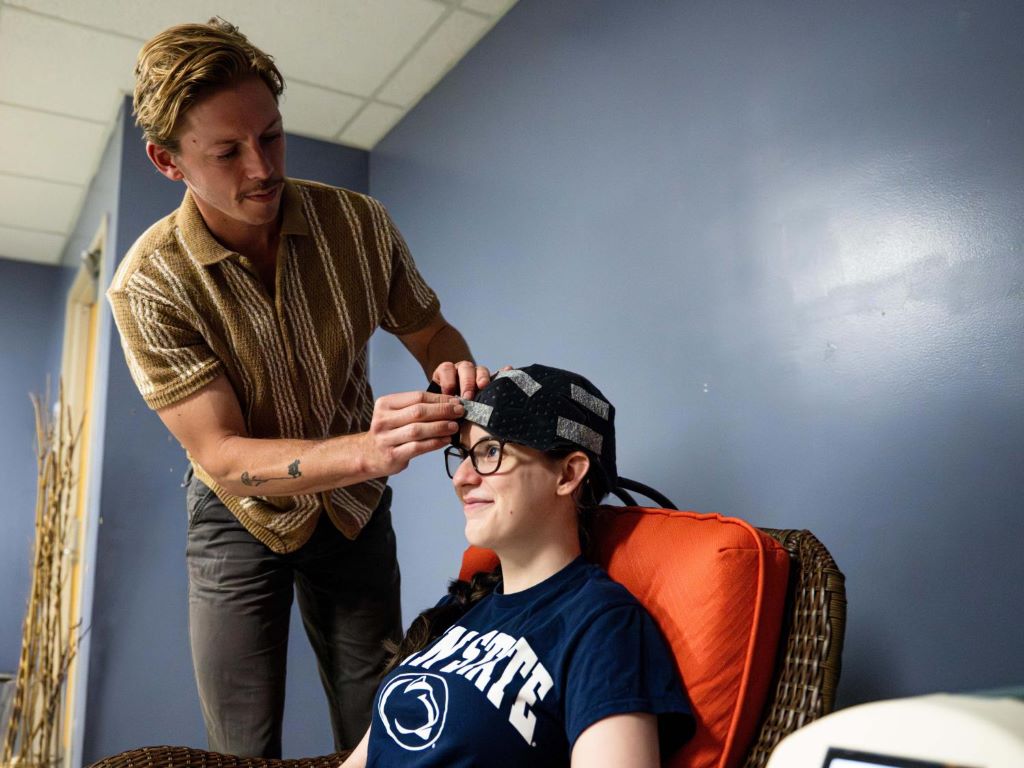
People who wore a cooling cap for 30 minutes experienced multiple changes that could affect their mental health, according to a pilot study by Penn State researchers
Co-authors Owen Griffith, standing, and Maddie McLaughlin demonstrate the head cooling cap used in the study. Credit: Jaydyn Isiminger / Penn State. Creative Commons
Wearing a cooling cap for 30 minutes may improve a person’s sense of well-being, according to a new study by Penn State researchers.
In a recent publication in Acta Psychologica, the researchers demonstrated that head cooling may reduce depressive symptoms and alter the types of brain waves people produce. While no medical recommendations can be derived from this small, exploratory study, the results indicate head cooling may provide mental health benefits for the general population.
The work was inspired by lead author and Penn State Professor of Kinesiology Semyon Slobounov’s prior research, which found that athletes with concussions heal faster and experience fewer symptoms when their head is regularly cooled.
“A person’s mood is tied to their cognition and general brain function,” said Owen Griffith, assistant teaching professor of kinesiology at Penn State and co-author of the study. “In this study, results suggested that people enjoy the sensation of head cooling. This, in turn, improved their mood, which altered their brain activity.”
The researchers recruited 24 college students between the ages of 18 and 26. At the beginning of the study, all participants completed questionnaires that measured their mental health and cognitive abilities and underwent an electroencephalogram (EEG) to measure brain activity.
Following the EEG, participants spent 30 minutes sitting in a dimly lit room listening to ocean sounds. Half of participants wore a fitted cooling cap, which uses liquid circulating close to the head to maintain a temperature of 33 degrees Fahrenheit. The other participants wore nothing on their heads. Immediately after the cooling or sitting session, participants repeated the questionnaires and EEG.
Participants repeated the same sitting or cooling session without testing every day for one week. The day after the last session, participants repeated the questionnaires and EEG again. This design allowed the researchers to observe both the short- and longer-term effects of head cooling.
“The brain produces different types of waves that are associated with different levels of excitement or brain activation,” said Laura Cooney, co-author of the study who graduated from Penn State’s Schreyer Honor College in 2025 and based her undergraduate thesis on the research. “Alpha waves are associated with calmness. More specifically, they are indicative of less brain activity overall, so this finding suggests that there was an immediate calming effect of head cooling.”
People in the head cooling group displayed an increase in alpha brain waves during the EEG immediately following the first cooling session. They experienced a 4% increase in alpha waves while participants whose heads were not cooled displayed a .5% decrease in alpha waves.
In contrast, there was no significant difference in the alpha wave levels of the sitting and cooling groups when measured on the day after the final cooling session, suggesting cooling does not have a longer-term impact on brain wave activity, the researchers said.
Over the course of the week, both groups of participants reported a decrease in depression symptoms, but individuals in the head cooling group reported a larger decrease than those in the sitting group.
“The reduction of depression symptoms among healthy people suggests that this might be a promising treatment,” Griffith said.
The researchers said they had hypothesised head cooling affected people through changes in neural electrical activity, but the EEGs did not show evidence of that. Now, the researchers suspect the effects are psychosomatic, meaning that mental and emotional factors, rather than physiological changes, are causing people’s reduced depression symptoms and increased alpha brain wave activity.
“Anecdotally, most people who come into the lab agree that head cooling is relaxing and enjoyable,” Griffith said. “This may not be surprising. A cold compress or a bag of ice have been home treatments for migraines for many years.”
Overall, the study suggests that widespread head cooling could be useful, the researchers said.
“Head cooling shows some potential as an acute calming therapy,” Cooney said. “Not as a replacement for any current therapy, but as another tool in the toolbox.”
Slobounov, senior author of the study, agreed.
“Our previous research demonstrated that head cooling is useful for athletes recovering from concussions,” Slobounov said. “This research suggests it may be more useful to a wide group of people. It is low risk, does not involve any drugs or chemicals, and people enjoy it.”
Other Penn State researchers who contributed to this work include Zach Napora, graduate student in kinesiology and first author of the publication, Maddie McLaughlin, graduate student in kinesiology, and Elle McNally, 2025 graduate in biobehavioral health and current physician assistant graduate student.
Study finds that physical symptoms may disproportionately inflate depression scores in patients.
Photo by Tima Miroshnichenko on Pexels
In addition to causing mental symptoms such as sadness and despair, depression can cause physical sensations including fatigue, headaches, back pain, gastrointestinal issues, and sleep problems.
New research indicates that individuals with ovarian cancer report more of these physical issues at lower levels of depression than people in the general population. Published by Wiley online in CANCER, a peer-reviewed journal of the American Cancer Society, the findings may reflect misattribution of cancer-related symptoms to depression in patients with ovarian cancer.
Research indicates that more than one-quarter of patients with ovarian cancer develop depressive symptoms. Diagnosis is complicated because physical symptoms of depression overlap with those that can arise from cancer-related causes. Investigators examined how physical symptoms of depression are reported relative to other depression symptoms in patients with ovarian cancer at the time of diagnosis and one-year postdiagnosis, comparing the results with those from people without cancer.
The team found that at diagnosis, patients reported physical symptoms more frequently than people without cancer and at a lower severity of depression (based on cognitive or emotional symptoms). These differences disappeared at the one-year follow-up, when disease processes no longer drove physical sympto “We intend these findings to help guide assessments of depressive symptoms to discriminate between physical symptoms that are related to cancer and cognitive or affective symptoms that may respond to more traditional interventions for depression,” said lead author Rachel Telles, MA, of the University of Iowa. “We hope that more tailored care will improve outcomes for these patients.”
Study shows that income remains lower for up to 10 years after diagnosis
Photo by Sydney Sims on Unsplash
A diagnosis of depression in connection with hospital treatment can have long-term consequences for personal finances. This is shown in a new registry-based study from the Department of Public Health, University of Southern Denmark, which follows nearly five million people in Denmark over time.
The study found that income is around 10% lower 10 years after diagnosis compared with people without depression, and the gap does not disappear. At the same time, the income loss for depression is greater than for several physical illnesses such as stroke and breast cancer.
Mental illness has the greatest financial impact
The study compares depression, alcohol use disorder, stroke and breast cancer. Income falls after illness in all four groups, but the decline is greatest for mental disorders.
“We see that mental disorders affect not only health, but also people’s economic life course to a considerable extent,” says Emily K. Johnson, PhD Student at the Danish Centre for Health Economics, Department of Public Health, University of Southern Denmark.
She is first author of the study, which has been published in JAMA Health Forum.
“The income loss grows over time and can still be measured 10 years later. Even though mental disorders are more common in women, losses are generally greater for men,” Emily K. Johnson explains.
Not just a temporary loss
While earlier studies have often focused on short-term sick leave, the new study shows that income loss persists and in many cases grows over time.
– It is not only about being away from work for a period. We see changes in the entire income trajectory, says Emily K. Johnson.
This may, among other things, reflect reduced ability to keep a job, change jobs or progress in a career.
May reinforce social inequality
Income loss is greatest among people in the middle of working life, when earnings would normally be increasing. At the same time, the loss grows over time for younger people.
“If you are affected early in your career, you may lose your footing in the labour market. That can be difficult to recover later,” says Emily K. Johnson.
People outside the labour market are also hit particularly hard. For them, illness may make it even harder to enter employment. The findings therefore suggest that illness can reinforce existing social inequality.
Income falls before the illness is registered
Income already begins to decline in the years before people receive a diagnosis of depression in hospital care. This suggests that the consequences begin before the illness is formally registered and treated.
The study includes people who had contact with a hospital, either as inpatients or outpatients, including psychiatric hospital care. People treated only by their general practitioner or by private psychologists or psychiatrists are not included.
“This suggests that the course of illness starts earlier and that the consequences for working life emerge gradually,” Emily K. Johnson explains. Job loss, income loss and poor mental health can reinforce one another over time,
The study is based on Danish registry data and includes all non-retired residents aged 18 to 65 between 2000 and 2018. People with illness were compared with similar people without a diagnosis, matched on factors including age, sex, education and income, and baseline health.
Income was measured as disposable income, meaning post-tax income including wages, transfers and capital income.
Can inform health policy priorities
According to the researchers, the findings can help improve decision-making in health and social policy.
“Priority setting should not be based only on how many people become ill, but also on how illness affects people’s working lives and finances, especially for those early in their careers,” says Emily K. Johnson.
The study adds new knowledge by comparing mental and physical illnesses using the same method, making it possible to assess their relative consequences.
Limitations
The study includes only people who had contact with a hospital and therefore does not cover everyone with depression. At the same time, it cannot establish cause and effect with certainty, especially in the case of mental disorders which are difficult to measure. In addition, only people who survive the course of illness are included in the analyses of income over time.
It is estimated that around seven in 10 adults in South Africa have ever had depression at some point in their lifetime. Photo by Alex Green on Pexels
By Marcus Low
Around 3.8 million people in South Africa developed depression in 2024, estimate leading local researchers in a major new modelling study.
The prevalence of depression among people aged 15 and older in South Africa has dropped slightly from an estimated 5.1% in 2002 to 4.5% in 2024. While a decrease, this nevertheless means that over two million people in the country had depression in mid-2024.
When taken as a whole, there were an estimated 3.84 million new episodes of depression in South Africa in 2024. Since some people may have had more than one episode, the number of people who developed depression over the year will be slightly lower.
The estimates are from mathematical modelling published as a preprint earlier in March on medRxiv. While Spotlight doesn’t usually report on studies that haven’t yet been peer-reviewed, we made an exception because the estimates fill an important gap in our understanding of depression in South Africa and because of the stature of the authors. The new modelling drew on several nationally representative surveys of depression conducted in South Africa since 2002.
The researchers estimate that around seven in 10 adults in South Africa have ever had depression at some point in their lifetime.
“Previous studies have suggested that only 10-15% of the population ever experiences depression, but our study suggests a much higher proportion, 70%,” Dr Leigh Johnson, the lead scientist on the study, told Spotlight.
“Most of these people experience a single episode of depression and have no recurrences. The common belief is that depression is a frequently recurring condition, but this is true for only a minority of people who experience depression,” he said. Johnson is from the Centre of Integrated Data and Epidemiological Research at the University of Cape Town (UCT) and is also responsible for Thembisa, the leading mathematical model of HIV in South Africa.
The new modelling also suggests some interesting nuances regarding who is most at risk of depression. In mid-2024, prevalence in women was at 5.3%, well above the estimated 3.6% in men. Older people were significantly more likely to suffer from depression than young people.
Living with HIV has long been known to increase the risk of depression, but the modelling suggests that this effect has weakened over time as HIV treatment became more widely available. In 2010, 7.1% of people with HIV had depression compared to 4.9% in the general population. By 2024, 5.9% of people with HIV had depression, compared to 4.5% of the general population. In other words, the gap decreased from 2.2 percentage points to 1.4.
Increasing, but still very low antidepressant usage
While rates of depression have been relatively stable, the researchers estimate that antidepressant usage rates have almost tripled, from around 1% of the population using antidepressants in 2008, to 2.8% in 2024. In Europe, Australia, Canada, and the United States, rates are between 4% and 16%.
The proportion of women taking antidepressants is more than four times higher than in men – a difference that cannot fully be explained by the higher rates of depression in women. Social factors like stigma are likely playing a role.
The differences between the private and public sectors are stark. Around 11% of medical scheme members are estimated to be taking antidepressants, compared to 0.9% in the rest of the population. “Levels of antidepressant use in the uninsured population are very low, despite a substantially greater prevalence of depression in people of lower socioeconomic status”, the researchers point out.
“Our study shows quite extreme inequality in access to antidepressant treatment in South Africa, with rates of antidepressant use in the private sector being about 12 times those in the public sector. Levels of antidepressant use in the private sector are quite similar to those in high-income countries, but in South Africa’s uninsured population there are major barriers to accessing mental healthcare,” said Johnson.
One such barrier, say the researchers, is regulatory obstacles that prevent nurses from prescribing antidepressants. This problem is made worse by the fact that South Africa has shortages of public sector psychiatrists and medical doctors.
“The study highlights the burden of depression in our country, the vast treatment gap, and stark inequities in access between the public and the private sectors despite on-paper availability of treatments we have known work to mitigate the effects of depression for decades,” the study’s principal investigator Professor Lara Fairall told Spotlight.
“There was a clear call to review regulatory barriers to wider access to antidepressants in the 2023 National Mental Health Policy Framework and Strategic Plan, but it has not been followed by definitive action,” she says.
“Unlocking these barriers requires clarity of mandate by multiple state and para-statal bodies including the National Department of Health, the South African Health Products Regulatory Authority and the South African Nursing Council, but the study is a reminder that failure to do so leaves millions of people vulnerable with desperate consequences for themselves, their families and the economy,” says Fairall who works as a health systems researcher at King’s College London and leads the Knowledge Translation Unit at UCT.
Republished from Spotlight under a Creative Commons licence.
Psychedelic-assisted therapy may be no more effective than traditional antidepressants when patients know what drugs they are actually taking, according to a first-of-its kind analysis that compared how well each type of drug worked for major depression.
Psychedelic-assisted therapy has resisted placebo-controlled testing methods, the gold standard in clinical trial design. Due to their powerful subjective effects, nearly everyone in the trial knows whether they received a psychedelic or the placebo even if they are not told.
But in trials of antidepressants, participants may not figure out whether they have received the drug or a placebo, which makes it hard to compare them with psychedelics.
To get around this problem, researchers from UC San Francisco, UCLA, and Imperial College, London tried a different approach. They compared the results from psychedelic therapy trials to the results from so-called open-label trials of traditional antidepressants, in which the participants all knew they were getting an antidepressant. That way, both treatments benefitted equally from the positive effect of patients knowing that they were being given a drug instead of a placebo.
The findings both surprised and disappointed them: there was virtually no difference.
“Unblinding is the defining methodological problem of psychedelic trials. What I wanted to show is that even if you compare psychedelics to open-label antidepressants, psychedelics are still much better,” said Balázs Szigeti, PhD, a clinical data scientist at UCSF’s Translational Psychedelic Research Program, who led the study. “Unfortunately, what we got is the opposite result – that they are the same, which is very surprising given the enthusiasm around psychedelics and mental health.”
Szigeti is the co-first author of the paper with Zachary J. Williams, MD, PhD, of UCLA; Hannah Barnett, MSc, of Imperial College, London is also an author. The study appeared March 18 in JAMA Psychiatry.
A sobering view
The hype around the use of psychedelics like psilocybin, or “magic mushrooms,” and LSD, to treat such conditions as depression and addiction has grown in recent years as an increasing number of studies have shown promising results, particularly for people who haven’t responded to traditional antidepressants.
The new findings don’t mean that psychedelic therapy does not work – just that it does not work better than traditional antidepressants. Patients improved substantially from both types of treatments, reducing depression scores by about 12 points on a standard scale.
Part of what has made psychedelics seem impressive in trials than antidepressants is how much more those who received the psilocybin or LSD improved than those who did not get it.
But the researchers concluded that this was the result of the lack of blinding in psychedelic trials: those who got the drug improved more because they knew they had gotten it, while those who received a placebo did worse because they knew they did not. Whereas in trials of traditional antidepressants, the difference between the groups was much smaller, making it seem like the drugs weren’t that effective.
When this ‘knowing the treatment’ factor leveled out, the seeming advantage of psychedelics disappeared.
“Psychedelics may still be a valuable treatment option,” Szigeti said. “But if we want to understand their true benefits, we have to compare them fairly – and when we do that, the advantage over standard antidepressants is much smaller than many people, including myself, expected.”