An interdisciplinary study led by researchers at the University of South Florida and Indiana University has uncovered significant findings on the long-term effects of one of the most common forms of chemotherapy on cancer survivors.
Published in JAMA Oncology, the study tracked a cohort of testicular cancer survivors who received cisplatin-based chemotherapy. The team followed the patients for an average of 14 years, revealing that 78% experience significant difficulties in everyday listening situations, negatively impacting their quality of life. This collaborative research is the first to measure real-world listening challenges and hearing loss progression in cancer survivors over a long period of time.
“It’s important that we understand the real-world effects of patients’ sensory problems and if we can understand that, then we can develop better therapeutic strategies and preventive measures to improve the long-term quality of life for cancer survivors,” said Robert Frisina, distinguished university professor and chair of the USF Department of Medical Engineering.
Cisplatin is commonly used in chemotherapy treatments for a variety of cancers, including bladder, lung, neck and testicular. It is administered intravenously and affects various parts of the body. However, the ears are particularly vulnerable as they have little ability to filter out the drug, causing it to become trapped. This leads to inflammation and the destruction of sensory cells that are critical for coding sound, causing permanent hearing loss that can progressively get worse well after cisplatin treatments are completed.
Lead author Victoria Sanchez, associate professor in the USF Health Department of Otolaryngology Head & Neck Surgery, said that despite the known risks, there’s a nationwide lack of routine hearing assessments for patients undergoing chemotherapy. “Most patients still do not get their hearing tested prior to, during or after chemotherapy. Our study highlights the need for regular auditory evaluations to manage and mitigate long-term hearing damage.”
The research team found higher doses of cisplatin led to more severe and progressing hearing loss, especially in patients with risk factors, such as high blood pressure and poor cardiovascular health. They also experienced increased difficulty hearing in common environments, such as a loud restaurant.
“It will be critically important to follow these patients for life. Their current median age is only 48 years, and eventually they will enter the years at which age-related hearing loss also begins to develop,” said Dr. Lois B. Travis, Lawrence H. Einhorn Professor of Cancer Research at Indiana University School of Medicine and a researcher at the IU Melvin and Bren Simon Comprehensive Cancer Center. This research is part of The Platinum Study, an ongoing research effort led by Dr. Travis and funded by the National Cancer Institute to study cisplatin-treated testicular cancer survivors.
The hope is that this study will inspire further investigation into alternative chemotherapeutic protocols and preventive measures, such as FDA-approved drugs to prevent or reduce hearing loss.
“This research gives oncologists the information they need to explore alternative treatment plans that could reduce the long-term side effects, such as altering the dosages and timing of the cisplatin in the treatment, when that could be an appropriate option,” Frisina said.
Innovative solutions, such as Pedmark, a new FDA-approved injection that mitigates cisplatin-induced hearing loss in children, represent promising steps forward, according to Frisina.
“We want to protect our hearing or treat a hearing loss if hearing damage occurs,” Sanchez said. “Hearing allows us to connect to the world we love. Staying connected through conversations with family and friends, enjoyment of music and entertainment, staying safe and finding pleasure in our vibrant surroundings. Promoting optimal hearing for overall wellness is essential for healthy living.”
According to the American Cancer Society, in addition to cisplatin, other platinum chemotherapy drugs, such as carboplatin, cause damage to the cochlea in the inner ear and lead to hearing loss. The risk of damage is greater with higher doses of chemotherapy.
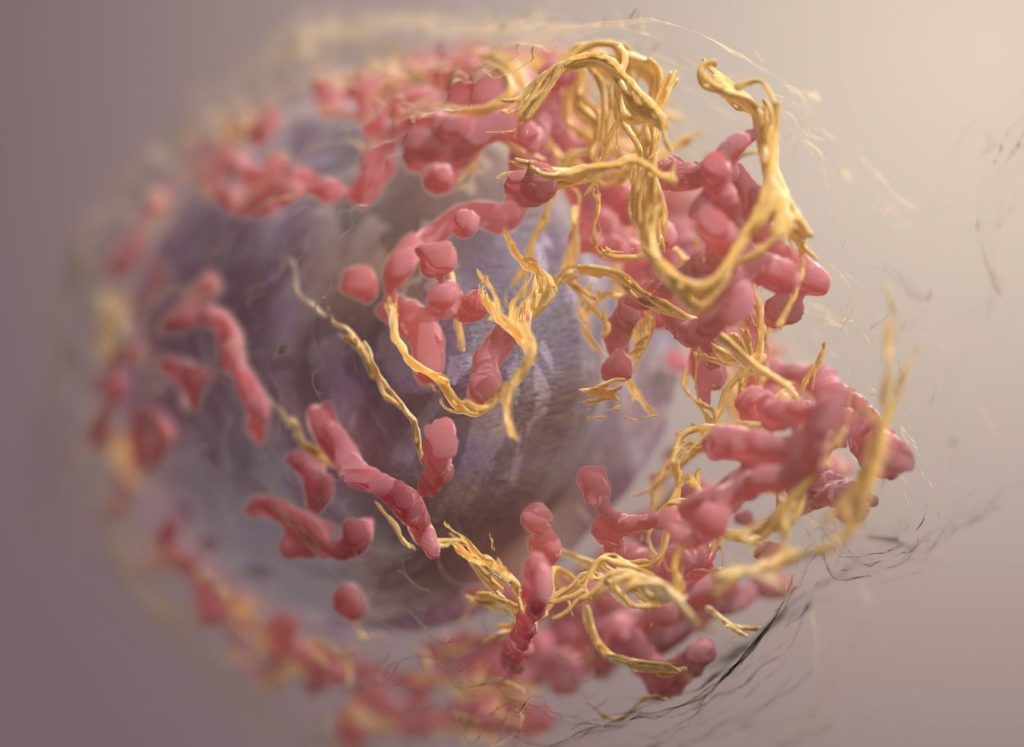
3D structure of a melanoma cell derived by ion abrasion scanning electron microscopy. Credit: Sriram Subramaniam/ National Cancer Institute
Malignant melanoma is one of the most aggressive types of cancer. Despite recent progress in effective therapies, the tumours of many patients are either resistant from the outset or become so during the course of treatment.
A University of Zurich (UZH) study published in Cell Reports Medicine has now identified a mechanism involving subverted immune cells that impedes the effectiveness of therapies. The result provides new ideas for treatments to suppress the development of resistance.
Comparing resistant and non-resistant tumour cells
For the study, the team utilised an innovative fine-needle biopsy to sample tumour cells before and during therapy. This allowed the researchers to analyse each cell individually. The patients providing the samples were undergoing targeted cancer therapy for malignant melanoma, which inhibits signalling pathways for tumour formation.
“It was important that some of the tumours responded to the therapy, while others showed resistance,” says study leader Lukas Sommer, professor of stem cell biology at the Institute of Anatomy at UZH. This allowed the team to compare the metabolism and environment of resistant and non-resistant tumour cells and look for significant differences.
Interaction between tumour factor and immune cells
One of the most relevant findings concerned the POSTN gene: it codes for a secreted factor that plays an important role in resistant tumours. In fact, the tumours of patients with rapidly progressing disease despite treatment showed increased POSTN levels. In addition, the microenvironment of these tumours contained a larger number of a certain type of macrophage – a subtype of immune cell that promotes the development of cancer.
Through a series of further experiments – both with human cancer cells and with mice – the research team was able to show how the interaction of increased POSTN levels and this type of macrophage triggers resistance: the POSTN factor binds to receptors on the surface of the macrophages and polarises them to protect melanoma cells from cell death. “This is why the targeted therapy no longer works,” says Sommer.
No resistance without cancer-promoting macrophages
The team considers this mechanism a promising starting point. “The study highlights the potential of targeting specific types of macrophages within the tumour microenvironment to overcome resistance,” says Sommer. “In combination with already known therapies, this could significantly improve the success of treatment for patients with malignant melanoma.”
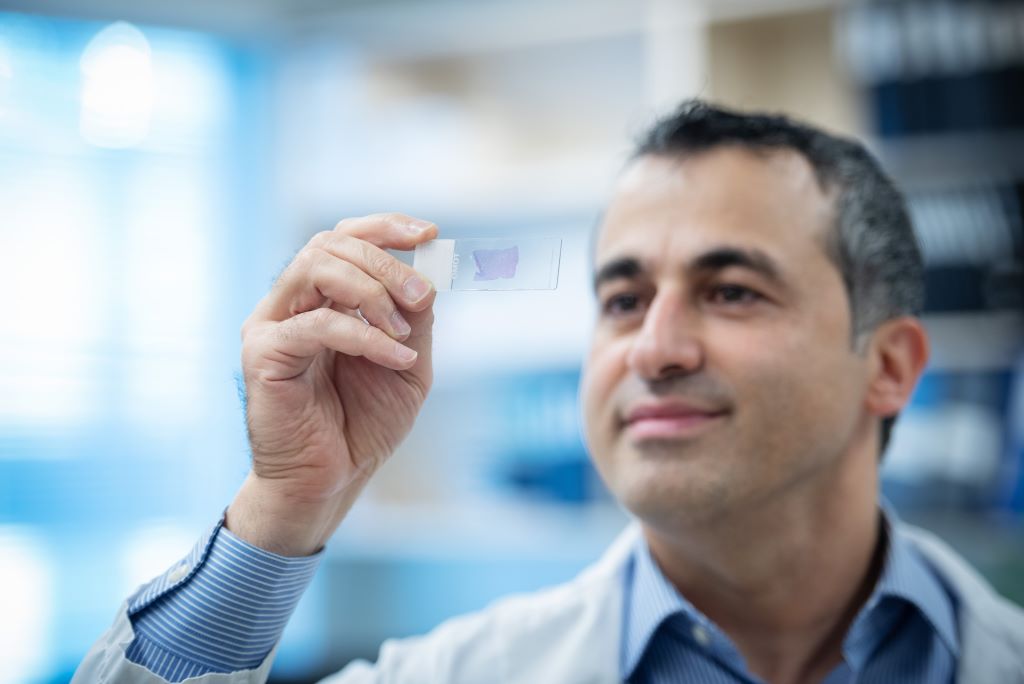
Dr Ali Bashashati observes an endometrial cancer sample on a microscope slide. Credit: University of British Columbia
A discovery by researchers at the University of British Columbia promises to improve care for patients with endometrial cancer, the most common gynaecologic malignancy. Using artificial intelligence (AI) to spot patterns across thousands of cancer cell images, the researchers have pinpointed a distinct subset of more stubborn endometrial cancer that would otherwise go unrecognised by traditional pathology and molecular diagnostics.
The findings, published in Nature Communications, will help doctors identify patients with high-risk disease who could benefit from more comprehensive treatment.
“Endometrial cancer is a diverse disease, with some patients much more likely to see their cancer return than others,” said Dr Jessica McAlpine, professor at UBC. “It’s so important that patients with high-risk disease are identified so we can intervene and hopefully prevent recurrence. This AI-based approach will help ensure no patient misses an opportunity for potentially lifesaving interventions.”
AI-powered precision medicine
The discovery builds on work by Dr McAlpine and colleagues in the Gynaecologic Cancer Initiative, who in 2013 helped show that endometrial cancer can be classified into four subtypes based on the molecular characteristics of cancerous cells, with each posing a different level of risk to patients.
Dr McAlpine and team then went on to develop an innovative molecular diagnostic tool, called ProMiSE, that can accurately discern between the subtypes. The tool is now used across parts of Canada and internationally to guide treatment decisions.
Yet, challenges remain. The most prevalent molecular subtype, encompassing approximately 50% of all cases, is largely a catch-all category for endometrial cancers lacking discernible molecular features.
“There are patients in this very large category who have extremely good outcomes, and others whose cancer outcomes are highly unfavourable. But until now, we have lacked the tools to identify those at-risk so that we can offer them appropriate treatment,” said Dr McAlpine.
Dr McAlpine turned to long-time collaborator and machine learning expert Dr.Ali Bashashati, an assistant professor of biomedical engineering and pathology and laboratory medicine at UBC, to try and further segment the category using advanced AI methods.
Dr Bashashati and his team developed a deep learning AI model that analyses images of tissue samples collected from patients. The AI was trained to differentiate between different subtypes, and after analysing over 2300 cancer tissue images, pinpointed the new subgroup that exhibited markedly inferior survival rates.
“The power of AI is that it can objectively look at large sets of images and identify patterns that elude human pathologists,” said Dr Bashashati. “It’s finding the needle in the haystack. It tells us this group of cancers with these characteristics are the worst offenders and represent a higher risk for patients.”
Bringing the discovery to patients
The team is now exploring how the AI tool could be integrated into clinical practice alongside traditional molecular and pathology diagnostics.
“The two work hand-in-hand, with AI providing an additional layer on top of the testing we’re already doing,” said Dr McAlpine.
One benefit of the AI-based approach is that it’s cost-efficient and easy to deploy across geographies. The AI analyses images that are routinely gathered by pathologists and healthcare providers, even at smaller hospital sites in rural and remote communities, and shared when seeking second opinions on a diagnosis.
The combined use of molecular and AI-based analysis could allow many patients to remain in their home communities for less intensive surgery, while ensuring those who need treatment at a larger cancer centre can do so.
“What is really compelling to us is the opportunity for greater equity and access,” said Dr Bashashati. “The AI doesn’t care if you’re in a large urban centre or rural community, it would just be available, so our hope is that this could really transform how we diagnose and treat endometrial cancer for patients everywhere.”
Life Healthcare through its wholly owned subsidiary Life Molecular Imaging Limited (LMI), has entered into a contract with Lantheus Holdings Inc. (“Lantheus”), to sub-license one of LMI’s early-stage novel radiotherapeutic and radio diagnostic products (RM2).
“As part of Life Healthcare’s strategy to monetise LMI’s product development portfolio, we are delighted to have found a partner for our RM2 product”, said Pete Wharton-Hood, Life Healthcare, CEO. “Through this agreement, LMI has secured a partnership for the development of this early-stage diagnostic and therapeutic product through to commercialisation. This exciting opportunity unlocks some of the value in LMI’”, continued Wharton-Hood.
Lantheus will make an upfront payment of $35 million for the sub-licensing rights to RM2, as per the agreement. In addition, several payments will potentially be paid to LMI on the achievement of development and regulatory milestones as well as royalty payments when the product is sold commercially.
The sub-licensing agreement secures Lantheus’ rights to develop the product and complete the early development in collaboration with LMI. “LMI is uniquely positioned to assist in this area, says Wharton -Hood and we are pleased by this development as it showcases and harnesses the specialised, dedicated and focused talent within LMI”. “With Lantheus’ experience in developing and providing access to radiotheranostics in cancer, we are confident in our decision to hand them the reins for this promising theranostic pair and are honored to work with them toward improving the future of people with prostate and breast cancer,” said Ludger Dinkelborg, CEO, Life Molecular Imaging.
Lantheus Holdings, Inc. is listed on NASDAQ in the United States of America and is the leading radiopharmaceutical-focused company committed to delivering life-changing science to enable clinicians to Find, Fight and Follow disease to deliver better patient outcomes. Lantheus has been providing radiopharmaceutical solutions for more than 65 years and has identified value and commercial opportunity in continuing the development of RM2.
LMI is a wholly owned subsidiary in Life Healthcare and is registered in the United Kingdom. The company has a product Neuraceq® which has been approved in many countries and is used to detect amyloid plaque in the brain through a PET-CT Scan and has multiple products in early clinical development. LMI also provides clinical research services for pharmaceutical companies.
Life Healthcare has retained R1bn to provide for funding requirements of LMI as part of the Alliance Medical Group disposal which was concluded earlier this year “This transaction will reduce the quantum required and Life Healthcare will consider distributing a portion of the surplus to shareholders as part of the full year dividend,” stated Wharton-Hood.
About RM2
RM2 is a 9 amino acid peptide that binds to Gastrin Releasing Peptide receptor (GRPr); and can be used to treat multiple malignant tumors like prostate, breast, lung, glioma, and ovarian tumors.
About Life Molecular Imaging
LMI is a wholly owned subsidiary in Life Healthcare and is registered in the United Kingdom. The company has one globally approved product Neuraceq ® that is used to detect amyloid plaque in the brain through a PET-CT scan and has multiple products in early clinical development as well as providing clinical research services for pharmaceutical companies.
Dr Tim Forgan at the surgeon’s console of the da Vinci robotic system. (Photo: Biénne Huisman/Spotlight)
By Biénne Huisman
Within South Africa’s beleaguered public health sector – unsettled by budget cuts, understaffing, and divisive NHI legislation – cutting edge surgical robots that have been used to perform more than 600 surgeries at two Cape Town public hospitals are beacons of excellence that offer a glimmer of hope. Spotlight’s Biénne Huisman visited Dr Tim Forgan at Tygerberg Hospital to learn more.
Cutting edge robotic surgery might not immediately come to mind when one thinks of public hospitals, but in a first for public healthcare in South Africa, such systems are being used at two hospitals in the Western Cape.
The da Vinci Xi systems enable surgeons to control operations from a console – steering three arms with steel “hands” equipped with tiny surgical instruments; plus a fourth arm bearing a video camera (the laparoscope). The system translates a surgeon’s hand movements in real time, with enhanced precision, range and visuals, compared to manual surgery.
“It really is next level, it feels like you’re inside the patient,” says colorectal specialist Dr Tim Forgan, Tygerberg Hospital’s da Vinci robotics coordinator. “With this technology we can operate so much finer. You can see ten times better with this robot than with the naked eye; you can see tiny, tiny nerves you wouldn’t normally see. And you can manoeuvre surgical instruments so much better. Because of that, people have way better function after the procedure.”
He explains that the technology allows major surgery to be completed through small incisions – instead of larger cuts made by a doctor’s hand – leading to less bleeding and a faster recovery time.
Over 600 surgeries in two years
Lorraine Gys from Phillipstown in the Northern Cape can attest. On 22 February 2022, the 65-year-old pensioner became the first patient to undergo da Vinci robotic surgery in South Africa’s public sector. Forgan was behind the console, at Tygerberg Hospital.
Gys tells Spotlight: “The next day the sisters offered to wash me, I said to them ‘no, I’m not helpless.’ My recovery was very quick. I was up and about in no time, while the other patients had to be assisted. I was discharged on day four, and back at home I could even continue doing my own chores.”
Two years later, Gys is cancer free. The mother of three, who now lives in Eerste River, recalls how she made news headlines: “Before the operation, Dr Forgan explained everything to me. They asked my permission, saying that media will be there and the [provincial health] minister.”
Indeed, on the day Forgan operated on Gys, removing a cancerous rectal tumour, he was joined in theatre by several onlookers including former Western Cape MEC of Health and Wellness Nomafrench Mbombo.
“Yes it was a circus,” says Forgan, laughing. “A whole bunch of people watching me operate, quite bloody nerve-wracking. Fortunately I’m experienced at having lots of students around watching; plus performing surgery is just so immersive, everything else fades out.”
On that day, also in the operating room was colorectal surgeon Dr Roger Gerjy, keeping an eye. “He’s a very well-known robotic surgeon; a Swedish surgeon who works in Dubai,” says Forgan. “And if there was a problem, Roger would’ve taken over. He was also there to impart tips and tricks: move the instrument like this, shape it like a hockey stick; because with the robot it’s like having your whole arm inside [the body]. He’d give me advice on what to do with my extra floating arm – where to place it and how to manipulate it – because remember you’re controlling three arms at a time.”
Since 2022, the da Vinci robots installed at Cape Town’s two tertiary hospitals: Groote Schuur and Tygerberg, have enabled over 600 minimally invasive surgeries – including colorectal operations, prostatectomies, cystectomies (bladder removal surgery), and gynaecological procedures to treat endometriosis.
Groote Schuur Hospital has the other da Vinci Xi system run by Western Cape public healthcare
A spokesperson for the Western Cape Ministry of Health and Wellness, under former MEC Mbombo, Luke Albert explains: “We can see the immense impact it has for patients and the health system. For example, a traditional open cystectomy patient would require three days of ICU stay, as well as two weeks of hospital stay to recuperate. During this time, on average, 42% of patients require blood transfusions and almost 20% need total parenteral nutrition (when a patient is fed intravenously). A patient undergoing robotic surgery for a cystectomy requires no ICU stay and goes straight to a general ward for no more than six days on average, with no blood transfusions needed.”
Where the money came from
Asked how the department was able to afford R40 million per system for these machines in the context of severe budget cuts, Albert says: “The purchase was applicable to 2021/22 and not the current financial year; with all provincial health departments currently managing the effects of budget cuts.”
Asked the same question, Forgan explains the investment derived from surplus budget discovered within the throes of the COVID-19 pandemic: “There was a surplus because certain services just couldn’t be done. I mean, for us, we couldn’t do elective surgery. And how state funding works; if you don’t spend your [provincial] budget within the financial year, it goes back to central government.”
What it looks like
On a Friday afternoon at Tygerberg Hospital, Forgan is guiding Spotlight along corridors and up grey linoleum stairs, to the theatre where the da Vinci system is used. Dressed in black surgical scrubs bearing his name and a cap; on his feet Forgan is wearing bright pink crocs. In passing, he waves hello to fellow healthcare staff.
Inside the small blindingly white room, Forgan points out the three core components of the da Vinci system. There is a console with two control levers similar to refined joysticks – he demonstrates how to delicately hold them between forefingers and thumbs – a patient-side cart with four interactive metal arms (they are disposable; each arm can be used on twelve patients), and another trolley with a television screen. All connected by blue fibre optic cables.
As we speak, nurses arrive in the theatre, preparing it for upcoming gynaecology procedures scheduled for Monday. Forgan greets them, then continues to expand on his passion for colorectal surgery.
“With colorectal surgery, there’s a high rate of complications, but I really enjoy it, I really enjoy my job. When you have a successful outcome, saving a person from their cancer and prolonging their life through your intervention, that is the reward. Colorectal cancer is a very unpleasant disease, and operating like this can make one hell of a difference in a patient’s life.”
Colorectal cancer on the increase
Forgan adds that colorectal cancer is on the increase: “There aren’t many colorectal surgeons in South Africa, with a dire need for people to operate in this subspecialty. I mean, there are so few of us, we’re all on a WhatsApp group.”
Colorectal or colon cancer is the second most common cancer in South African men (following prostate cancer), and the third most common cancer in women (following breast and cervical cancer), according to the Cancer Association of South Africa.
Originally from Johannesburg, Forgan attended medical school at the University of the Witwatersrand. He qualified as a general surgeon at Stellenbosch University, sub-specialising in colorectal surgery at the University of Cape Town, before studying minimally invasive colorectal surgery at the Academic Medical Centre in Amsterdam.
He is also president of the South African Colorectal Society and runs a part-time private practise with his Tygerberg colleague, Dr Imraan Mia, at Cape Town’s Christiaan Barnard Hospital, where he has 32 all five-star Google reviews.
‘Early adopter’
Forgan considers himself an early adopter. But learning to use the da Vinci system did not happen overnight.
“We trained for ages,” he says. “On the surgical console there’s a simulator, so you spend hours and days and days doing procedures, over and over and over again. You have to get over 95% for each one of the procedures, before you can move on to the next skill.
“Then it’s how to use the machine, how to put it together, what to do if there’s an emergency; what if there’s a power failure and the machine stops working? How to safely remove it from the person. Then we went to the University of Lyon [in France] for two days of hands-on robotics training. And then a proctor – an international expert – comes to your theatre and does the procedures with you. So that was Dr Roger Gerjy, and that’s when we did Lorraine…”
First introduced by American biotechnology company Intuitive Surgical in 1999, the da Vinci Xi systems have sparked some liability lawsuits. An article from the Tampa Bay Times in February cites a lawsuit filed at the United States District Court in West Palm Beach, with a man claiming that a stray electrical arc from a surgical robot burned his wife’s small intestine during a colon cancer procedure, causing her death. The article quotes Intuitive Surgical’s 2023 financial report, which notes 8 606 da Vinci systems in use worldwide, having performed 2 286 000 procedures in 2023. The financial report mentions an undisclosed number of pending lawsuits, which the company disputes.
Nevertheless, Forgan remains an advocate.
Exiting via Tygerberg’s maze of corridors, he continues to reflect on his job. After our meeting, he is set to deliver a talk at the Cape Town International Convention Centre. His manner is earnest. Shrugging, he describes himself as a “glorified plumber”.
Pancreatic cancer. Credit: Scientific Animations CC BY-SA 4.0
Patients with pancreatic cancer who received chemotherapy both before and after surgery experienced longer survival rates than would be expected from surgery followed by chemotherapy, according to a new study from researchers at Yale School of Medicine.
The study, published June 20 in JAMA Oncology, included patients with pancreatic ductal adenocarcinoma (PDAC), an aggressive cancer with a high mortality rate which accounts for 90% of pancreatic cancers. The researchers say these findings are encouraging for the 15 to 20% of patients with operable pancreatic cancer.
The single-arm Phase II trial evaluated a modified form of the chemotherapy treatment FOLFIRINOX. This combination treatment consisting of leucovorin calcium, fluorouracil, irinotecan hydrochloride, and oxaliplatin received US Food and Drug Administration approval in 2011 as a first-line treatment for patients with metastatic pancreatic cancer. Patients in the trial received six cycles of the modified FOLFIRINOX before surgery, followed by an additional six cycles of the chemotherapy treatment after surgery. The modified regimen consisted of slightly lower doses of FOLFIRINOX to improve tolerability, which was previously shown in a 2016 publication not to impact outcomes negatively.
Of the 46 patients who started the modified treatment, 37 completed all six cycles of chemotherapy before surgery and 27 had successful tumour removal operations. For all enrolled patients, the 12-month progression-free survival rate was 67%, indicating significant progress in controlling the disease. Furthermore, 59% of all patients lived at least two years after completing the full chemotherapy treatment plan and surgery.
The study was the first of its kind for patients with PDAC when senior author and Yale Cancer Center member Jill Lacy, MD, started it in 2014. The study goal had been a 12-month progression-free survival rate of at least 50% of patients.
“When the study launched, even with operable pancreatic cancers, 90% of patients were still relapsing and dying from their cancer eventually,” said Michael Cecchini, MD, the first author of the study. “We sought to move chemotherapy up in their treatment regimen and give it before surgery to see if we could improve the outcome for our patients.”
The study used advanced techniques to monitor the progress of treatment, including analysing circulating tumour DNA (ctDNA) and using the cancer biomarker keratin 17 to help predict outcomes. For example, patients with detectable ctDNA four weeks post-surgery had significantly worse progression-free survival than those who had no detectable ctDNA.
Cecchini said larger randomised clinical trials are needed to continue to investigate the role of FOLFIRINOX before surgery for patients with operable PDAC.
“I think even though there have been changes in standard of care for patients with this aggressive pancreatic cancer type, we have here very promising data to justify a larger study,” said Cecchini.
A breakthrough study published in The American Journal of Pathology describes a new machine-learning model that may improve accuracy in early diagnosis of hepatocellular carcinoma and monitoring the impact of treatment.
Early diagnosis of hepatocellular carcinoma (HCC) – one of the most fatal malignancies – is crucial to improve patient survival. In this breakthrough study, investigators report on the development of a serum fusion-gene machine-learning model. This important screening tool may increase the five-year survival rate of patients with HCC from 20% to 90% because of its improved accuracy in early diagnosis of HCC and monitoring the impact of treatment.
HCC is the most common form of liver cancer and accounts for around 90% of cases. Currently, the most common screening test for the HCC biomarker, serum alpha-foetal protein, is not always accurate, and up to 60% of liver cancers are only diagnosed in advanced stages, resulting in a survival rate of only around 20%.
Lead investigator Jian-Hua Luo, MD, PhD, Department of Pathology, High Throughput Genome Center, and Pittsburgh Liver Research Center, University of Pittsburgh School of Medicine, explained: “Early diagnosis of liver cancer helps save lives. However, most liver cancers occur insidiously and without many symptoms. This makes early diagnosis challenging. What we need is a cost-effective, accurate, and convenient test to screen early-stage liver cancer in human populations. We wanted to explore if a machine-learning approach could be used to increase the accuracy of screening for HCC based on the status of the fusion genes.”
In the search for a more effective and efficient diagnostic tool to predict non-HCC and HCC cases, investigators analysed a panel of nine fusion transcripts in serum samples from 61 patients with HCC and 75 patients with non-HCC conditions using real-time quantitative reverse transcription PCR (RT-PCR). Seven of the nine fusions were frequently detected in HCC patients. The researchers generated machine-learning models based on serum fusion-gene levels to predict HCC in the training cohort, using the leave-one-out cross-validation approach.
A four fusion gene logistic regression model produced an accuracy of 83% to 91% in predicting the occurrence of HCC. When combined with serum alpha-foetal protein, the two-fusion gene plus alpha-foetal protein logistic regression model produced 95% accuracy for all the cohorts. Furthermore, quantification of fusion gene transcripts in the serum samples accurately assessed the impact of the treatment and was able to monitor for the recurrence of the cancer.
Dr. Luo commented, “The fusion gene machine-learning model significantly improves the early detection rate of HCC over the serum alpha-fetal protein alone. It may serve as an important tool in screening for HCC and in monitoring the impact of HCC treatment. This test will find patients who are likely to have HCC.”
Dr. Luo concluded, “Early treatment of liver cancer has a 90% five-year survival rate, while late treatment has only 20%. The alternative to this test is to subject every individual with some risk of liver cancer to imaging analysis every six months, which is very costly and ineffective. In addition, when imaging results are ambiguous, this test will help to differentiate malignant versus benign lesions.”
Human colon cancer cells. Credit: National Cancer Institute
Results from a new trial indicate that immunotherapy could successfully be used to treat the most common form of colorectal cancer, also known as bowel cancer.
The findings of the new study, a phase 1 trial involving the immunotherapy drugs botensilimab and balstilimab, have been published in the journal Nature Medicine, and it is the first time that consistent and durable responses to immunotherapy have been reported in difficult-to-treat patients.
Co-authored by Professor Justin Stebbing of Anglia Ruskin University (ARU), who describes the results as “potentially game changing”, the study focused on the most common type of colorectal tumours, known as MSS mCRC, or microsatellite stable metastatic colorectal cancer.
Although immunotherapy has previously been shown to work on patients with specific mismatch repair deficient (dMMR) tumours, only a small percentage of colorectal cancer patients have this type of tumour, and immunotherapy has so far been ineffective in patients with more common MSS mCRC tumours.
The new study involved using the immunotherapy drug botensilimab in conjunction with balstilimab on a group of patients in the United States. These drugs are both monoclonal antibodies, which work by triggering the body’s immune system to attack the cancer.
Of the patients in the phase 1 trial, 101 took part in a six-month follow-up and of these, 61% of them saw their tumour shrink or remain stable after receiving a combination of botensilimab (BOT) and balstilimab (BAL). The most common side-effects, or treatment-related adverse events, were diarrhoea and fatigue.
Justin Stebbing, Professor of Biomedical Sciences at Anglia Ruskin University (ARU) and communicating author of the study, said:
“These results are incredibly exciting. Colorectal or bowel cancer is one of the most common forms of cancer worldwide and this is the first time there has been convincing evidence that immunotherapy can work in all forms of colorectal tumours, so this is potentially game changing.
“This is now progressing into later phase clinical trials and we hope the FDA in the United States approve its use very soon. And because this is such an important area, affecting so many people, we hope authorities in the UK are also able to move quickly.” Joint first author Dr Andrea Bullock, Assistant Professor in Medicine at Beth Israel Deaconess Medical Center, said:
“This study sheds light on the potential of the BOT/BAL combination to treat microsatellite stable metastatic colorectal cancer, the most common form of colorectal cancer which has historically not responded to immunotherapy, and we hope our results will offer new hope for those diagnosed.” Joint last author Dr Anthony El-Khoueiry, Associate Director of Clinical Research and Chief of Section of Developmental Therapeutics at the USC Norris Comprehensive Cancer Center, said:
“This phase 1 study of botensilimab highlights its promising anti-tumour activity that encompasses immunologically cold tumours such as MSS colorectal cancer. The efficacy noted highlights the potential of botensilimab through its broader engagement of anti-tumour immunity.”
The full open access paper, published in , is available here
While cancer survivors are increasing in countries like the United States, South Africa faces a different reality, with 4000 people dying from blood cancer every year. Dr Sharlene Parasnath, Head of the Department of Clinical Haematology and Stem Cell Transplant Unit at Inkosi Albert Luthuli Central Hospital and DKMS Africa board member, believes that this discrepancy is largely due to the quality of care provided to patients who rely on the state healthcare system.
Counting the costs
She explains that South Africa’s state sector relies predominantly on conventional chemotherapy to treat patients as opposed to newer targeted immunotherapies. “These may be accessible to some patients in the private sector and standard care in developed countries but are out of reach for public healthcare due to their unaffordability. Countries that use more targeted therapies not only improve overall survival but also decrease the undesirable adverse effects of cancer treatments. These therapies may be given with chemotherapy or on their own and work by attacking specific genetic mutations in cancer cells. Examples include monoclonal antibodies (MABs) and Bispecific T cell engagers (BiTES), which mimic the immune system to destroy cancer cells. There are also tyrosine kinase inhibitors (TKIs) which block the signals that promote cancer cell growth.”
“The prohibitive costs of these treatments are why stem cell transplants are being encouraged in South Africa since they offer those with blood cancers a chance of a cure,” points out Dr Parasnath. “However, this approach comes with challenges. For instance, the state will not pay for a transplant from an unrelated donor, despite two thirds of patients in need of a transplant being unable to find a suitable donor from within their family.”
Fewer nurses, fewer transplants
“Human resource constraints, particularly the shortage of specialist nurses, is another factor hindering more stem cell transplants from being carried out,” she notes. “Currently, there is no formalised training for nurses in haematology in South Africa. So, what tends to happen is that the majority of blood cancer patients end up being cared for either by oncology-trained nurses or registered general nurses with limited practical education and training in the kind of care they require. Important aspects of nursing which can improve patient outcomes include dietary restrictions, visitor guidelines, decreasing bleeding risk, infection control and early detection of potential complications such as graft rejection, graft vs. host disease and veno-occlusive disease that can develop following a stem cell transplant.”
She stresses that human resource constraints in terms of mental health support is also detrimental to patients with blood cancers. “Unfortunately, this tends to be the case both in the public and private sectors, as one out of three people diagnosed with cancer ends up struggling with a mental health disorder such as anxiety or depression as well, yet less than 10% of patients are referred to seek help. The South African Society of Psychiatrists has even warned that if left untreated or undiagnosed, this could impact the patient’s ability to function on a daily basis, including undergoing treatment.”
Dr Parasnath emphasises another glaring gap in mental health support. “NGOs offer on-site social workers for hospitalised children with blood cancer, but adults, especially those who are not members of medical aid schemes, often have no options available to them. Not only do they grapple with the emotional toll of their diagnosis and treatment side effects, but this is further complicated by anxieties around their finances and the wellbeing of their children.”
The Cancer Association of South Africa’s (CANSA) Fact Sheet on Cancer and Mental Health highlights that there remains a huge unmet need for mental health in cancer care, calling for more effective clinical integration of relevant services, which must be informed by patient choice and clinical need, and accessible throughout the patient’s whole cancer journey. It also stresses the need for measurement of patient quality of life as a marker of treatment effectiveness.
“The Department of Health must recognise clinical haematology as a discipline in its own right with its own unique needs. For too long, it has had to feed off of the limited oncology budget. But if we are to up the blood cancer survival rate, funding must be provided for necessities such as more modern treatments, unrelated stem cell transplantation and formalised training of nurses,” says Dr Parasnath.
She also urges South Africans to increase the pool of available stem cell donors either by registering themselves or supporting organisations like DKMS Africa which connects patients with potential matches by providing access to a global registry of over 12 million donors. Financial donations directly address two critical needs: funding the registration of new donors and assisting patients facing financial challenges as a result of the transplant process.”
“With focused efforts, South Africa can join the global trend of increasing blood cancer survival rates, offering a brighter future for patients and their families,” concludes Dr Parasnath.
A number of radiation therapy graduates, who must by law complete the Department of Health’s Internship and Community Service Programme in order to practise medicine, say they have been waiting for nearly six months to be placed in hospitals.
They have finished their four-year studies and now need to complete a year-long internship, referred to as Comserve, in order to register and practice as medical professionals. Their primary role is to administer radiation treatment to patients with cancer.
The community service programme is administered by the National Department of Health.
“We are left in limbo, not sure when we will receive a post,” a graduate from the Western Cape, who wished to be anonymous, told GroundUp. He said that they’ve been told since the beginning of the year by Comserve officials that they are engaging with provinces to secure them placements.
He shared correspondence that said he was not yet allocated a position “due to the unavailability of funded posts”.
He said that it was “frustrating” that they are required by law to do Comserve yet the department cannot find them posts.
“We are all stressed out … We still have bills to pay from university. We are squatting with our parents. We were promised we were going to have a job after studying and now we can’t apply for other jobs. Our hands are cut off. We can’t do anything,” he said.
He said he knew of about nine other radiation therapists also waiting for placements.
Another graduate, from KwaZulu-Natal, said the lack of placement risked creating a backlog when next year’s graduates need to do Comserve.
“At the end of the day, our cancer patients are going to suffer … They need us and we have trained specifically to help them,” she said.
The failure to place graduates is happening despite staff shortages in radiation oncology departments in Gauteng.
On 30 April activists from SECTION27, Cancer Alliance and the Treatment Action Campaign (TAC) as well as cancer patients marched to the offices of the Gauteng department of health demanding that millions of rands set aside for radiation treatment be used.
In an open letter addressed to health MEC Nomantu Nkomo-Ralehoko, the organisations provided a backlog list of about 3000 patients awaiting radiation oncology treatment.
Salomé Meyer of the Cancer Alliance says there are radiation oncology staff shortages in Charlotte Maxeke Johannesburg Academic Hospital and Steve Biko Academic Hospital.
Both graduates GroundUp spoke to had applied to Charlotte Maxeke for their Comserve year.
In December 2023, the national department stated that nearly 10 400 Comserve applications were received. Of these just shy of 9400 applicants “were successfully placed, and this includes medical doctors, nurses, pharmacists and other health professionals at health facilities throughout the country”.
National Department of Health spokesperson Foster Mohale sent GroundUp an incoherent and incomplete WhatsApp response. “We only know those who were placed. We can’t tell those who were not placed because we are not sure of their career plans,” he wrote.
Asked about staff shortages, Mohale wrote that the department “prioritises all critical posts using limited budget”.
The Gauteng Department of Health did not respond to our questions about radiology therapist Comserve placements and staff shortages in its hospitals, despite committing to do so and repeated follow-ups.