Day: September 7, 2026

“This One was Brought by God Himself” – the Doctor Helping People See Again in Rural KZN
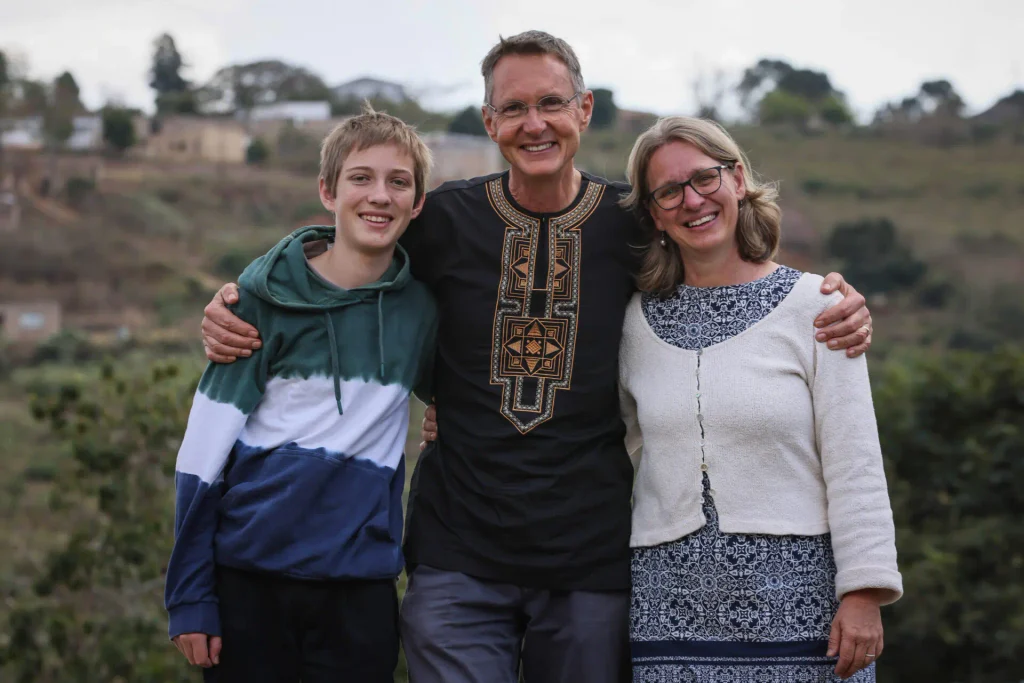
Dr Hennie Hamilton with his wife Sylivia and son near their home in Ingwavuma in northern KwaZulu-Natal. (Photo: Halden Krog/Spotlight)

By Sue Segar for Spotlight

As a young doctor working in rural KwaZulu-Natal, Hennie Hamilton lived with a Zulu family for four years, an experience which, he says, changed him forever. Twenty-three years later, he’s still working in the area as medical manager at Mosvold Hospital and doing cataract surgery on patients from five rural hospitals.

In the corner of a small ward in a rural hospital in northern KwaZulu-Natal, an elderly woman with a plastic shield covering her left eye sits up in bed. Her daughter, seated on a chair beside the bed, is holding her hand.

There’s silence, an air of quiet anticipation as a tall doctor leans over the woman and, in deep concentration, slowly removes the eye shield and the eye pad underneath it.

Next, the doctor gently eases her eye open and looks closely into her face to see her response. “Uya bona, Mama?” (Can you see, Mama?) Dr Hennie Hamilton asks the woman, keeping a hand on her shoulder.

The woman, Duduzile Phakathi from Mthubathuba, flickers her eyes. Her grip tightens on her daughter’s hand. “Yebo,” she answers, almost inaudibly, and her face breaks into a smile as she focuses, incredulously, on the tall man in front of her. “Ngiyabonga,” (Thank you) she says. The room erupts into excited chatter as mother and daughter start praying out loud, pouring blessings onto the doctor.

Eye patients from five hospitals – and further

It’s not yet 07:00, and Hamilton, medical manager at Mosvold Hospital in the mountain town of Ingwavuma, is already walking the wards. Every Monday, this quietly spoken man performs cataract surgery on patients from all over the uMkhanyakude district of KwaZulu-Natal. Besides coming from the area served by Mosvold Hospital, patients are referred to him from the other four hospitals in the district – Manguzi, Bethesda, Mseleni and Hlabisa. Tuesdays are for opening the eyes and checking the surgery has been effective.
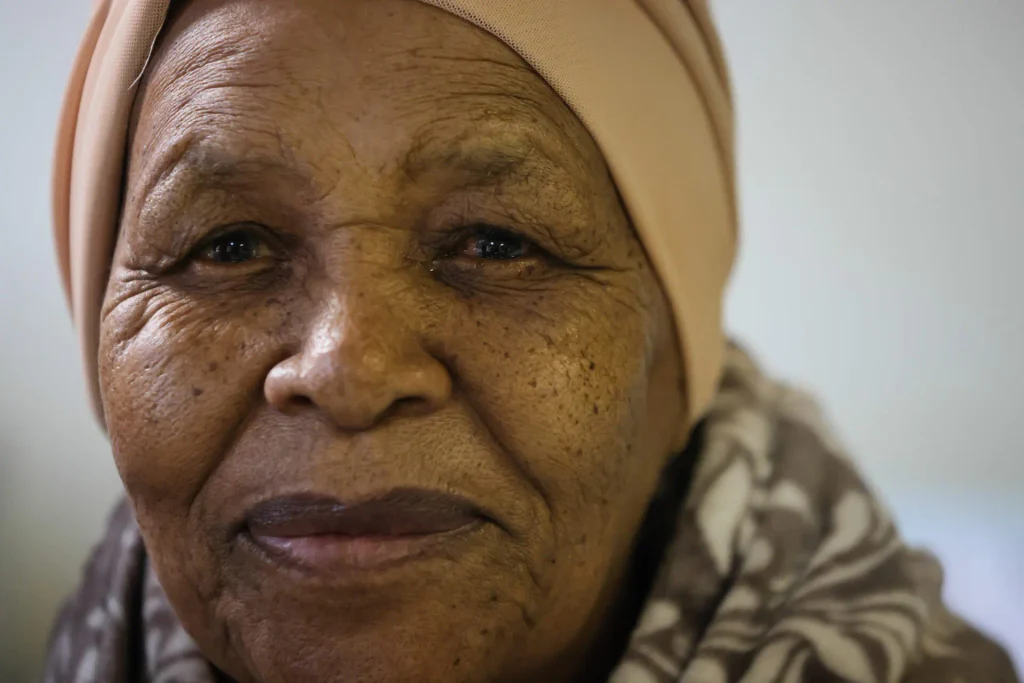
After losing her sight to cataracts, Duduzile Phakati is overjoyed to see again and get back to caring for her chickens. (Photo: Halden Krog/Spotlight)

As a shaft of morning sunlight beams into the room and onto the faces of the two women, Hamilton, dressed in a black embroidered African work tunic called a Dashiki, explains what he’s doing. He speaks with a strong Afrikaans accent, despite his English last name.

“This patient had what is known as a dense cataract and was completely blind. We operated on her right eye in June, and yesterday we did her left eye. Today, we’re opening the eye and checking whether the operation has been a success,” he says.

A cataract, he explains, is an opacity, or cloudiness, of the lens in the eye, which blocks the passage of light and causes a person’s vision to blur or dim. “It normally happens in old age. Sometimes it arises from diabetes or injuries or trauma, or it can be caused by medication. Some people are born with it, but 95 percent of the patients we see have it because of old age.”

He continues: “Most people will eventually get a cataract. The big difference in this area is that people present very late. In rural areas like this, 20 percent of the patients we operate on are already blind in both eyes. People just wait for longer before they finally come for help.”

Cataract surgery, he says, is a short, painless procedure which involves numbing the eye using eyedrops and an injection; making an incision in the cornea; creating a small “tunnel” on the white of the eye; removing the cataract lens through the tunnel; and then, by folding and inserting it through the incision, replacing the inside of the lens with an artificial lens, made from synthetic material. The incision self-seals and needs no stitches and patients experience an improvement in their vision shortly after the procedure.

“Brought by God himself”

Phakathi’s daughter, Dorothy Mbonambo, says her mother who has diabetes, has been struggling with her eyes for some time. “She was a very busy woman, who loved looking after, and selling her chickens.” But she became totally blind in February, and suddenly she couldn’t do anything for herself.

“We had to feed her, bathe her, and dress her at home, where we all live together. We did not anticipate this at all, and we had to adapt. My mother was really struggling,” says Mbonambo.

Translating for her mother, she continues: “My mother is excited that she can see again. She loves to count her money from selling chickens. It has been frustrating not to be able to do that. She can’t wait to get back to her business, to her normal life.”

Mbonambo says the family was determined to get their mother to Mosvold Hospital for the surgery. “We knew about Dr Hamilton because people talk about this man who came here when he was young, and speaks isiZulu and does the eyes and other operations too.”

Still holding her beaming mother’s hand, Mbonambo points to Hamilton, saying: “This one was brought by God himself.”

“Before, everything was blank”

Next, Hamilton walks into another ward, bigger than the last, where seven more women who had cataract surgery the day before, are recovering. Similar scenes play out as he removes the eye shields for each woman.

Primrose Gina who works as a porter at Mseleni Hospital, says she started struggling with her eyes about three years ago. As the condition of her eyes worsened, it became increasingly difficult to see, and she was told it was cataracts.
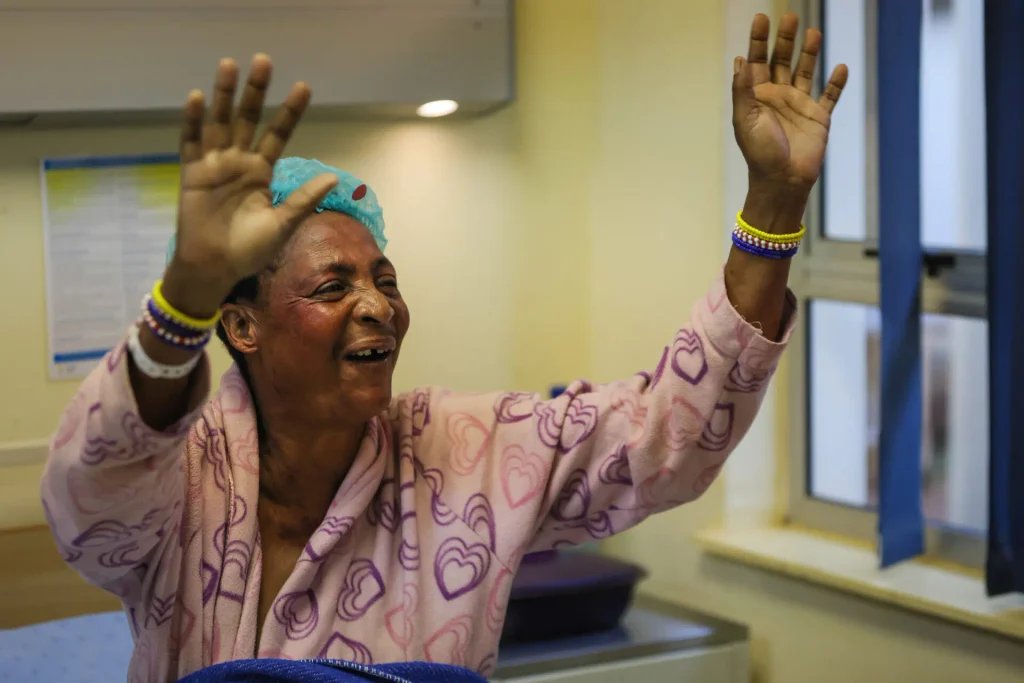
After three years of struggling with her vision, Primrose Gina celebrates a new beginning following cataract surgery. (Photo: Halden Krog/Spotlight)

As Hamilton opens her eyes, she lets out an exhilarated shout and tells him she can see.

Gwendolin Mthethwa, a teacher from Ndumo, says her eyes still feel “cloudy” after her operation. This, Hamilton explains, is because, besides the cataract, she also has glaucoma in both eyes.

“Glaucoma is a disease of the optic nerve at the back of the eye which is caused by a build-up of fluid pressure inside the eye, causing damage to the nerve, often due to natural drainage systems being faulty.

“The difference between glaucoma and cataracts is that, with glaucoma, if the damage has happened to the nerve, we cannot reverse it,” Hamilton explains. “We can only try and prevent it from getting worse. But for a cataract, a patient can go from blindness to normal vision again.”

A busy day in the life of a medical manager

It’s nearly 08:00 and Hamilton has already seen eight eye patients. As he strides through the large female ward, the room erupts into song as nurses and some patients gather in the communal ward. “Every morning, we pray together, to connect with the Lord before we start our duties,” a nurse explains.

Next up is a meeting with the hospital’s CEO, Dr Bernard Mung’omba. As part of the hospital’s senior leadership team, Hamilton is closely involved in audits for the provincial health department and overall hospital decisions. As medical manager, he oversees medical care for patients – supervising the doctors, allied health professionals and all other departments including the pharmacy and the hospital’s social workers.

The 186-bed hospital employs 17 doctors and serves seven clinics and a community health centre in the uMkhanyakhude district. The area is characterised by poverty, with many people relying on grants and government work opportunities and living in mostly rural homesteads. Unemployment, teenage pregnancy and substance abuse are big challenges.

As a rural hospital, Hamilton says, “we do bits of everything”. “Last night, I was on call and at 23:30, was in theatre doing a caesarean section.” As medical manager, he says he plays less of a frontline than an advisory role, helping with emergencies from ectopic pregnancy to premature babies, and appendicitis. “We also deal with many diabetic and hypertensive-related emergencies like heart failure, and see many strokes, among older people,” he says.

“The spectrum is extremely wide. We’re a team of people with different strengths and we all rely on one another,” he says.

But it’s the eye operations which he says he finds most rewarding. “Ag, I love it … it gives me so much joy,” he says. “The patients often bless me. They say, ‘may God bless you’. I’m often in tears in the morning when I open their eyes.”

A long history

Mosvold Hospital was founded in 1908 by Christian missionaries and started out as a small stone rondavel. It was taken over by Scandinavian missionaries in the 1930s. The hospital is named after a Norwegian nurse, Esther Mosvold, who worked there in the 1940s, fell in love with the area, and raised money through her wealthy shipping family to expand the hospital. In 1978, the then Natal provincial government took over the hospital and the mission doctors slowly departed.

Hamilton shows us the original stone clinic next to an old chapel which, he says, resignedly, is now used for storage; and a house once lived in by missionaries, which is now the admin office. He points to a site where the provincial government is building a children’s ward and a lodge for mothers to stay while visiting children in hospital; and, on the other side of the hospital, a complex of 40 bachelor flats being built for staff at a cost of R400 million. The project should be completed next year, he says, adding it will be a “gamechanger” for Mosvold. “Mothers visiting their children in hospital currently sleep on mattresses on the floor.”

On our tour, we visit the ward where Hamilton’s eldest child was born in 2007. “It’s grown so much since then,” he says. Around us, the different departments – therapy, dental, radiography, and the pharmacy – are all bustling. In the children’s ward, manager Noziphe Gumbi says they’re seeing way fewer burn wounds this year. “We’ve really focused on outreaches to educate people on the dangers of burns among children,” she says.

Hamilton says he has seen many changes at Mosvold over the years, the biggest being the number of staff. “We’ve almost doubled the number of doctors, so we can spend much more time with patients. There was a time when there were only four doctors. Now, with 16, sometimes 17 doctors, we don’t have to run, run, run like we used to,” he says. “When I arrived, we were only white doctors, now I’m the only white doctor here which helps a lot in terms of language and knowing the people.”

A life in medicine

Hamilton was born in Johannesburg and studied medicine at Pretoria University. In 1997, he started his internship at McCord Hospital, then a mission hospital, in Durban. In 1998, he moved to Bethesda Hospital where, he learnt how to be “an all-round doctor”. He went on to complete qualifications in obstetrics and orthopaedics and trained to do cataract surgery at Edendale Hospital.

He worked at Bethesda at a time when HIV was “completely overwhelming”, he says. A large part of his work was supporting HIV patients clinically and he started a home-based care programme there. In 2003, he met his wife, Sylvia, a Swiss nurse, who, having previously worked in northern KwaZulu-Natal, had returned to start a home-based care programme at Mosvold. They married four months after meeting, and Hamilton moved to Mosvold in 2003, eventually becoming medical manager in 2015.

Why he stayed

“While I was working at McCord’s Hospital in 1997, I met another doctor, Colin Pfaff, who was working at Manguzi Hospital, who was living with a Zulu family,” Hamilton recalls. “When Colin told me about his experience, something just jumped in me. I believe it was God. I realised this was what I wanted to do.”

Less than a year later, while working at Bethesda Hospital, Hamilton moved in with the Nhlekos. “I lived in a mud hut with no running water or electricity. The house was about six kilometres from Bethesda and I’d cycle up and down the mountain to work every day. I became part of the family. In the evenings, I’d sit in the kitchen with my gogo. I learnt to speak fluent isiZulu.

“It was an amazing time, even though it was only for four years. It was the most beautiful place on earth,” he says.

Hamilton shuts his eyes and says: “This experience changed me forever. I was raised very much in an Afrikaner setting. During my high school, our family moved to a farm in the Free State. We lived completely separate from black people, eating from different plates, using separate toilets. There was always this issue of race which I just accepted.”

He continues: “Living with an isiZulu family completely changed that. They gave me a Zulu name, Sandiso, which means spreading God’s grace. People still call me ‘Mgilitsha’, the clan name for the Nhlekos. I learnt to see all people as people, to trust, and to love. It was a heart thing, the most life-changing part of my life.”

This article was first published by Spotlight – health journalism in the public interest. Sign up to the Spotlight newsletter.

Women with Type 2 Diabetes More Likely to Develop Mental Health Conditions

Men, on the other hand, experience more cardiovascular and renal disease post-diagnosis

Photo by isens usa on Unsplash

In the years following type 2 diabetes diagnosis, women are more likely to develop mental health conditions, while men are more likely to develop cardiovascular and renal complications, according to a study published August 25th in the open access journal PLOS Medicine by Fabiola Eto from Queen Mary University of London, UK, and colleagues.

Type 2 diabetes, a metabolic disorder defined by high blood sugar, results from resistance to or insufficient production of insulin. Globally, type 2 diabetes affects about 536.6 million people between 20 and 79 years old, or 10.5% of the population; by 2045, this number is expected to rise to 700 million. Cardiovascular disease, end-stage renal disease, and mental health disorders like depression and anxiety are all associated with type 2 diabetes. Women and men are known to experience these conditions differently, but research has not yet described the disease trajectories according to sex and age in people with type 2 diabetes.

Eto and colleagues examined anonymized health records from 28,720 men and women in the UK who developed type 2 diabetes between 2010 and 2020. Men constituted 62% of the cohort with a median age of 54 at type 2 diabetes onset; women were on average older at diagnosis.

In the years following diagnosis, 39% of the participants experienced at least one significant health event. The events’ trajectory and timing differed by sex. For example: women were more likely to develop mental health conditions post-diagnosis (8.1% compared to 5.3%) and to experience trajectories culminating in death, while men showed higher proportions of cardiovascular disease (8.4% compared to 5.3%), end-stage renal disease, and hypertension (21.1% compared to 20.2%). The researchers noted that on average, women used more health services and long-term prescriptions than men, which may contribute to the increased diagnoses.

There were several similarities between the sexes as well. Both women and men who had a combination of type 2 diabetes and a mental health condition experienced premature mortality compared to other trajectories. Across all age groups and sexes, hypertension was the most frequent event following type 2 diabetes.

Current UK medical guidelines lack sex-specific prevention strategies and management for type 2 diabetes and comorbidities, especially mental health conditions. This study highlights the need for healthcare interventions differentiated by characteristics like sex and age.

The authors add, “One of the clearest signals in our data was the sex difference. Younger women with type 2 diabetes were showing mental health complications earlier and more often than we expected, which suggests routine psychological screening should be incorporated into standard diabetes care. For men, the pattern looked different: cardiovascular and kidney risks tended to emerge earlier, pointing to a need for earlier monitoring and stronger strategies to support men’s engagement with their treatment over time.”

Provided by PLOS

Survivors of HER2+ Breast Cancer Could Avoid Lifelong Heart Medication

Photo by Danilo Alvesd on Unsplash

Many breast cancer survivors whose treatment caused problems with their heart function can safely stop medication after their heart recovers, finds a new study led by researchers at University College London.

The trial, which was funded by the British Heart Foundation, involved 90 women who had recovered from heart problems caused by a specific type of breast cancer treatment. Most were in their 40s and 50s and would previously have been advised to stay on heart medication for life, due to fears their heart function would decline once the drugs were stopped. 

Researchers found that 98% of the group who stopped taking their heart medication had no change in their heart function after one year, with only one woman experiencing a decline in her heart’s pumping ability.

Women who came off their medication also reported a slightly better quality of life at 12 months than those who continued, based on their scores on questionnaires designed to measure quality of life in people with heart failure. The study is published in the European Heart Journal and was presented at the European Society of Cardiology Congress in Munich.

The women in the trial will continue to be followed up over the next five years to monitor their heart health. But the researchers suggest their findings can start important conversations between survivors and their doctors about whether they need to continue treatment long-term.

Professor Charlotte Manisty (UCL Institute of Cardiovascular Science), who is also a consultant cardiologist at Barts Heart Centre and UCLH, said: “Modern breast cancer treatment is a remarkable success story. But the damaging effects of these drugs on the heart leave survivors and their doctors with difficult questions about ongoing treatment to maintain their heart health. 

“Our study provides the first evidence that heart failure therapies can be safely stopped in survivors whose hearts have recovered, with the support of ongoing close monitoring. We hope these findings will be encouraging for survivors and their doctors, giving hope for a future free from treatment.” 

These patients are usually offered targeted biological treatments such as Trastuzumab (better known as Herceptin), which attach to HER2 receptors to help block the growth and spread of cancer. But in around 10% of patients, this treatment causes problems with heart function, leaving them in need of treatment with multiple medications – such as beta-blockers and ACE inhibitors – to help recovery. Survivors are currently advised to stay on these drugs for life, even after their cancer treatment ends and their heart recovers. 

The trial involved 90 breast cancer survivors at four hospitals in the UK who started taking heart failure medication after a diagnosis of HER2-targeted therapy-related cardiac dysfunction, but whose hearts later recovered following treatment. All study volunteers were women, with an average age of 50.

Everyone in the study was randomly assigned to either gradually withdraw from their heart failure medication (46 women) or to continue taking it (44 women). They were followed closely for one year with blood tests, quality-of-life questionnaires and cardiac MRI scans to check whether their heart function had worsened.

One woman in the group that stopped their medication experienced a decline in her left ventricular ejection fraction (a measure of the heart’s pumping ability). She didn’t report any symptoms, but the decrease was picked up on an MRI scan at 12 months. Her heart function improved when she started taking their heart failure medication again. 

None of the group that continued to take their heart failure treatment saw a decline in their heart function. 

Overall, left ventricular ejection fraction remained stable in both groups (minus one per cent in the withdrawal group and minus 0.2% in the continuation group) with no significant differences between the two groups after one year (withdrawal group 55.2 per cent compared to 55.6% in continuation group). 

None of the women in the trial reported any heart failure symptoms, required hospital treatment or experienced any other heart problems during the trial.

Dr Sonya Babu-Narayan, clinical director at the British Heart Foundation and consultant cardiologist, said: “These findings will be hugely encouraging for the thousands of breast cancer survivors whose heart health has been affected by lifesaving cancer treatment. 

“The study results give hope that many women will be able to safely stop medicines once their heart has recovered. The importance of ongoing monitoring is highlighted by the one study participant whose heart scan showed her heart function deteriorated but then bounced back when her heart treatment was restarted. More research is needed and the women will be followed up for longer, but in the meantime the good news for this group of breast cancer survivors is lifelong medications after heart complications need not be the default.”

Source: University College London

In Vivo CAR-T-Cell Therapy Alleviates Multiple Sclerosis

This is a pseudo-colored image of high-resolution gradient-echo MRI scan of a fixed cerebral hemisphere from a person with multiple sclerosis.

Credit: Govind Bhagavatheeshwaran, Daniel Reich, National Institute of Neurological Disorders and Stroke, National Institutes of Health

A small-scale clinical trial has demonstrated that in vivo CAR-T-cell therapy can effectively alleviate symptoms of multiple sclerosis and other autoimmune disorders by reprogramming the immune system from within. Using a modified virus to deliver genetic instructions directly into the bloodstream, researchers successfully prompted the body to produce specialised cells that eliminate disease-causing B cells.

This in vivo approach promises to be cheaper and faster than current CAR-T-cell therapies. While participants showed significant functional improvements and manageable side effects, the researchers stress the need for long-term monitoring to assess potential risks like tumour development.

This trial, published in The New England Journal of Medicine, used a modified virus to transfer genetic instructions for making chimaeric antigen receptors (CARs) on T cells. The CAR T cells target autoantibodies expressed by B cells, which in autoimmune diseases, attack the body’s own healthy tissue.

“This is a very exciting proof-of-concept study” for in vivo CAR-T-cell therapy, which is made inside the body, says David Simon, a clinician-researcher at the Charité –University Medicine Berlin. In vivo therapy is cheaper and faster to produce than is conventional CAR-T-cell therapies that are made in a laboratory, he adds.

The trial involved people with multiple sclerosis and other autoimmune conditions. The participants received a single injection of the viral cells into their bloodstream and were monitored for about six months.

The team used a virus called a lentivirus, which last year was used for another CAR-T-cell therapy which was shown to effectively treat blood cancer.

The team reported that, following treatment, the participants generated more CAR T cells over time. These helped to deplete the number of B cells and levels of autoantibodies that attack healthy tissue.

The team says the participants’ replacement B cells did not produce such autoantibodies, suggesting that their immune systems had been reset. The people with multiple sclerosis showed improved motor and cognitive function, as well as reductions in fatigue.

Those with other conditions affecting their muscles showed improved scores for muscle strength and decreased inflammation. Simon says the efficacy seems promising and the risk of side effects was manageable.

A mild inflammatory response was experienced by participants, but lasted no longer than two weeks, and three participants had mild to moderately low levels of white blood cells, which later recovered to a typical level. However, it will be necessary to follow participants for ten years to properly assess the risk of long-term side effects.

If these promising results are validated in larger studies, this technique could represent a revolutionary shift in treating chronic autoimmune conditions.

Source: Nature

SANBS Urges Donors to Donate as Blood Stocks Come Under Pressure


The South African National Blood Service (SANBS) is calling on eligible South Africans to donate blood amid declining national blood stocks.

SANBS aims to maintain a five-day blood supply to ensure hospitals have access to blood when patients need it. To meet daily demand, SANBS needs to collect 3500 units of blood each day. However, current collections are falling short of this target, placing continued pressure on the national blood supply.

Several factors are contributing to lower collections, including fewer blood drives at schools and universities during the examination period and competing demands on donors’ time. However, addressing the current need requires more than regular donors alone.

SANBS is calling on three groups to step forward: donors who are due to donate, people who have never donated before, and lapsed donors who are able to return to donating.

While students are understandably focused on their examinations, the need for blood continues every day. Mothers give birth, patients undergo surgery, accident and trauma victims require emergency care, and people receiving ongoing treatment depend on a safe and sufficient supply of blood.

“We are appealing to all eligible South Africans to make time to donate – whether you are a regular donor who is due, considering donating for the first time, or a previous donor who has not donated for some time,” says Monique Schreiner, Senior Manager: Donor Relations at SANBS.

“Whether you’re returning to donate or considering giving blood for the first time, your decision can make a meaningful difference. Every donor helps strengthen our blood supply and gives patients the hope of another tomorrow.”

SANBS is particularly encouraging O and B blood group donors who are due to donate to come forward as these groups contribute significantly to the stability of the national blood supply:

O negative is the universal blood type used in emergencies.

  • Group B contributes significantly to maintaining balanced stock for specific patient groups.
  • However, SANBS emphasises that all blood groups are welcome and needed.

“Blood cannot be manufactured. It can only come from people who choose to give. A single donation takes about 30 minutes and can save up to three lives,” adds Schreiner.

The need continues. Lives cannot wait. If you are eligible to donate, now is the time to step forward and give blood.

Visit your nearest SANBS donor centre or blood drive and donate. For more information or to find your nearest donor centre or mobile blood drive, contact the SANBS toll free line on 0800 11 90 31 or visit www.sanbs.org.za

Be the Lifeline. Donate today.

Stay connected with SANBS on social media:

  • X (@theSANBS)
  • Facebook (@SANBS)
  • Instagram (@thesanbs)
  • TikTok (@thesanbs)