Women who follow vegan diets during pregnancy may face higher risks of developing preeclampsia and of giving birth to newborns with lower birth weight, suggests a recent study published in Acta Obstetricia et Gynecologica Scandinavica.
For the study, 65 872 women identified themselves as omnivorous, 666 as fish/poultry vegetarians, 183 as lacto/ovo vegetarians, and 18 as vegans. Based on a questionnaire completed mid-pregnancy, investigators found that protein intake was lower among lacto/ovo vegetarians (13.3%) and vegans (10.4%) compared with omnivorous participants (15.4%). Micronutrient intake was also much lower among vegans, but when dietary supplements were considered, no major differences were observed.
Compared with omnivorous mothers, vegan mothers had a higher prevalence of preeclampsia (a pregnancy complication characterised by high blood pressure), and their newborns weighed an average of 240 g less.
“Further research is needed regarding possible causality between plant-based diets and pregnancy and birth outcomes, to strengthen the basis for dietary recommendations,” the authors wrote.
Colourised scanning electron micrograph of a breast cancer cell. Credit: NIH
Calcium ions are essential for cells, but can be toxic in higher concentrations. A team of researchers has now designed and prepared a combination drug that kills tumour cells by modulating the calcium influx into the cell. An external calcium source is not necessary because only the calcium ions already present in the tumour tissue are used, according to the study published in the journal Angewandte Chemie.
Biological cells need calcium ions, among other things, for the proper functioning of the mitochondria, the powerhouses of the cells.
However, if there is too much calcium, the mitochondrial processes become unbalanced and the cell suffocates.
A research group led by Juyoung Yoon of Ewha Womens University in Seoul, South Korea, together with teams from China, has now taken advantage of this process and developed a synergistic antitumour drug that can open calcium channels and thus trigger a deadly calcium storm inside the tumour cell.
The researchers targeted two channels, the first one in the outer membrane, and the other was a calcium channel in the endoplasmic reticulum, a cell organelle that also stores calcium ions.
The channel located in the outer membrane opens when it is exposed to a large amount of reactive oxygen species (ROS), while the channel in the endoplasmic reticulum is activated by nitric oxide molecules.
To generate the ROS that open the outer membrane calcium channel, the researchers used the dye indocyanine green.
This bioactive agent can be activated by irradiation with near-infrared light, which not only triggers reactions that lead to ROS, but it also heats up the environment.
The team explains that the high local temperature activates the other active agent, BNN-6, to release nitric oxide molecules that open the channel in the endoplasmic reticulum.
Following successful trials in tumour cell lines, the team tested an injectable formulation in tumour-implanted mice.
To create a biocompatible combined drug, the researchers loaded the active ingredients into tiny modified porous silica beads that are not harmful to the body, but can be recognized by tumour cells and transported into the cell.
After injecting the beads into the bloodstream of the mice, the researchers observed that the drug accumulated in the tumour.
Exposure to near-infrared light successfully triggered the mechanism of action, and the tumour disappeared after a few days in mice that received the preparation.
The authors emphasise that this ion influx approach may also be useful in related biomedical research areas where a similar mechanism could activate ion channels different from calcium in order to find new therapeutic approaches.
A startling number of people – including healthcare workers – conceal an infectious illness to avoid missing work, travel, or social events, new research at the University of Michigan suggests. The findings however, reported in Psychological Science, exclude being ill with COVID.
Across a series of studies involving healthy and sick adults, 75% of the 4110 participants said they had either hidden an infectious illness from others at least once or might do so in the future.
Many participants reported boarding planes, going on dates, and engaging in other social interactions while secretly sick.
More than 61% of healthcare workers participating in the study also said they had concealed an infectious illness.
Interestingly, the researchers found a difference between how people believe they would act when ill and how they actually behave, said Wilson N. Merrell, a doctoral candidate and lead author on the study.
More than 61% of healthcare workers participating in the study also said they had concealed an infectious illness.
Interestingly, the researchers found a difference between how people believe they would act when ill and how they actually behave, said Wilson N. Merrell, a doctoral candidate and lead author on the study.
“Healthy people forecasted that they would be unlikely to hide harmful illnesses – those that spread easily and have severe symptoms – but actively sick people reported high levels of concealment regardless of how harmful their illness was to others,” Merrell said.
In the first study, Merrell and his colleagues, psychology professor Joshua M. Ackerman and PhD student Soyeon Choi, recruited 399 university healthcare employees and 505 students.
The participants reported the number of days they felt symptoms of an infectious illness, starting in March 2020, when the COVID pandemic began.
They then rated how often they actively covered up symptoms from others, came to campus or work without telling others they were feeling ill, or falsified mandatory symptom screeners that the university had required for anyone using campus facilities.
More than 70% of the participants reported covering up their symptoms.
Many said they hid their illness because it would conflict with social plans, while a small percentage of participants cited pressure from institutional policies (eg, lack of paid time off). Only five participants reported hiding a COVID infection.
In a second study, the researchers recruited 946 participants online and randomly assigned them to one of nine conditions in which they imagined being either moderately or severely sick while in a social situation.
In each condition, the risk of spreading the illness was designated as low, medium, or high.
(To control for the special stigma associated with COVID at the time, the researchers asked participants not to imagine being sick with that disease.) Participants were most likely to envision themselves hiding their sickness when symptom severity was low, and least likely to conceal when symptoms were severe and highly communicable.
Sickle cell disease. Credit: National Institutes of Health
A clinical trial in Uganda has revealed that hydroxyurea significantly reduces infections in children with sickle cell anaemia. Their latest findings enhance strong evidence of hydroxyurea’s effectiveness and could ultimately reduce death in children in Africa, the continent most burdened by the disease.
The group’s research, appearing in the journal Blood, revealed that hydroxyurea treatment resulted in a remarkable 60% reduction in severe or invasive infections, including malaria, bacteraemia, respiratory tract infections and gastroenteritis, among Ugandan children with sickle cell anaemia.
“Our investigation provides powerful justifications for hydroxyurea’s use in children with sickle cell anaemia in Africa,” said Dr Chandy John, paediatrics professor at IU School of Medicine and co-lead investigator of the latest study.
“Given the high rates of infection in this region, we hope our evidence will encourage ministries of health to continue supporting and expanding access to hydroxyurea for young patients who can greatly benefit from the treatment.”
Sickle cell anaemia is a genetic blood disorder that alters the structure of red blood cells and affects oxygen distribution throughout the body, increasing susceptibility to serious health complications and life-threatening infections.
According to the World Health Organization, more than 300 000 children worldwide are born with sickle cell disease each year, with a high prevalence found in African countries.
While hydroxyurea has had U.S. Food and Drug Administration approval as a sickle cell disease treatment for children since 2017, its accessibility and acceptance in Africa have been comparatively limited.
As hydroxyurea has become more recognised in African countries for its effectiveness in treating sickle-cell-related complications, John and his colleagues noticed a knowledge gap about the treatment’s effect on infections.
This led the research group to incorporate hydroxyurea treatment and analysis into their established clinical trial, Zinc for Infection Prevention in Sickle Cell Anemia, led by Indiana University School of Medicine and collaborators in Uganda.
During the study, the researchers examined the effects of hydroxyurea on 117 children in Uganda and focused on a range of infections. After hydroxyurea treatment, results showed a substantial decrease in the incidence of these infections.
Additionally, eight of the nine deaths that occurred in the trial were children whose parents declined hydroxyurea treatment. The only death in a child on hydroxyurea treatment occurred four days after starting treatment, providing insufficient time for hydroxyurea to have an effect.
Of the five children for whom a cause of death was known, all five died of infectious causes.
The high death rate in the study, despite expert clinical care by study personnel, provides further evidence of the urgent need for additional interventions to decrease mortality in children with sickle cell disease in Africa.
“Infections commonly precede other complications related to sickle cell anaemia and often result in hospitalizations that can lead to death,” said Dr Ruth Namazzi, site principal investigator, first author and a lecturer in the Department of Pediatrics and Child Health at Makerere University in Uganda.
“We believe incorporating hydroxyurea treatment as the standard of care for sickle cell anaemia across Africa will not only reduce infections but will more importantly save countless lives.”
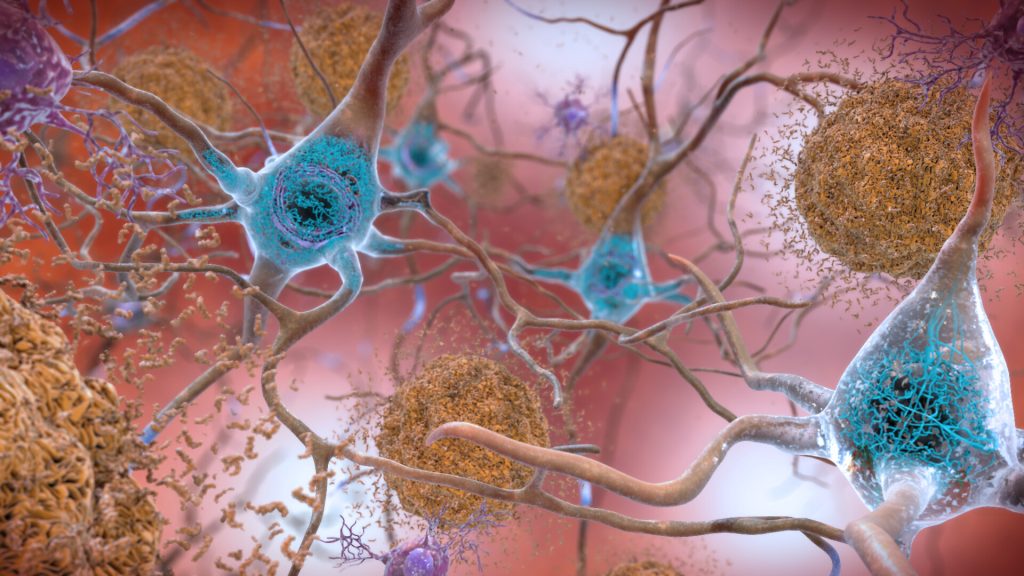
Neurons in the brain of an Alzheimer’s patient, with plaques caused by tau proteins. Credit: NIH
Five cases of Alzheimer’s are believed to have arisen as a result of medical treatments decades earlier, according to a new paper published in Nature Medicine. Alzheimer’s disease is caused by the amyloid-beta protein, and is usually a sporadic condition of late adult life, or more rarely as an inherited condition from a faulty gene.
The study, by a team of UCL and UCLH researchers, provides the first evidence of Alzheimer’s disease in living people that appears to have been medically acquired and due to transmission of the amyloid-beta protein.
The people described in the paper had all been treated as children with a type of human growth hormone extracted from pituitary glands from deceased individuals (cadaver-derived human growth hormone or c-hGH). This was used to treat at least 1848 people in the UK between 1959 and 1985, and used for various causes of short stature.
It was withdrawn in 1985 after it was recognised that some c-hGH batches were contaminated with prions (infectious proteins) which had caused Creutzfeldt-Jakob disease (CJD) in some people.
c-hGH was then replaced with synthetic growth hormone that did not carry the risk of transmitting CJD.
These researchers previously reported that some patients with CJD due to c-hGH treatment (called iatrogenic CJD) also had prematurely developed deposits of the amyloid-beta protein in their brains.* The scientists went on to show in a 2018 paper that archived samples of c-hGH were contaminated with amyloid-beta protein and, despite having been stored for decades, transmitted amyloid-beta pathology to laboratory mice when it was injected.
They suggested that individuals exposed to contaminated c-hGH, who did not succumb to CJD and lived longer, might eventually develop Alzheimer’s disease.
This latest paper reports on eight people referred to UCLH’s National Prion Clinic at the National Hospital for Neurology and Neurosurgery in London, who had all been treated with c-hGH in childhood, often over several years.
Five of these people had symptoms of dementia, and either had already been diagnosed with Alzheimer’s disease or would otherwise meet the diagnostic criteria for this condition; another person met criteria for mild cognitive impairment. These people were between 38 and 55 years old when neurological symptoms started. Biomarker analyses supported the diagnoses of Alzheimer’s disease in two patients with the diagnosis, and was suggestive of Alzheimer’s in one other person; an autopsy analysis showed Alzheimer’s pathology in another patient.
The unusually young age at which these patients developed symptoms suggests they did not have the usual sporadic Alzheimer’s which is associated with old age. In the five patients in whom samples were available for genetic testing, the team ruled out inherited Alzheimer’s disease.
As c-hGH treatment is no longer used, there is no risk of any new transmission via this route. There have been no reported cases of Alzheimer’s acquired from any other medical or surgical procedures. There is no suggestion that amyloid-beta can be passed on in day-to-day life or during routine medical or social care.
However, the researchers caution that their findings highlight the importance of reviewing measures to ensure there is no risk of accidental transmission of amyloid-beta via other medical or surgical procedures which have been implicated in accidental transmission of CJD.
The lead author of the research, Professor John Collinge, Director of the UCL Institute of Prion Diseases and a consultant neurologist at UCLH, said: “There is no suggestion whatsoever that Alzheimer’s disease can be transmitted between individuals during activities of daily life or routine medical care. The patients we have described were given a specific and long-discontinued medical treatment which involved injecting patients with material now known to have been contaminated with disease-related proteins.
“However, the recognition of transmission of amyloid-beta pathology in these rare situations should lead us to review measures to prevent accidental transmission via other medical or surgical procedures, in order to prevent such cases occurring in future.
“Importantly, our findings also suggest that Alzheimer’s and some other neurological conditions share similar disease processes to CJD, and this may have important implications for understanding and treating Alzheimer’s disease in the future.”
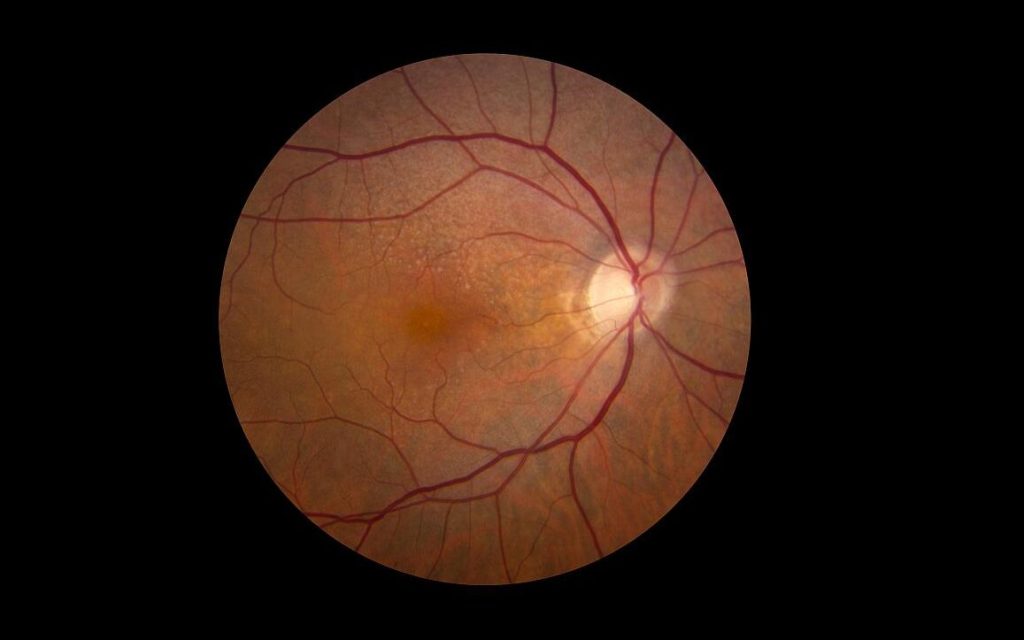
Retina showing reticular pseudodrusen. Although they can infrequently appear in individuals with no other apparent pathology, their highest rates of occurrence are in association with age-related macular degeneration (AMD), for which they hold clinical significance by being highly correlated with end-stage disease sub-types, choroidal neovascularisation and geographic atrophy. Credit: National Eye Institute
A University of Houston optometry researcher is warning against the use of low-level red light (LLRL) therapy as a method to control myopia, or nearsightedness, especially in children. Over the last few years, LLRL has emerged as a viable myopia treatment after studies reported the treatment as effective and responsible for significant reduction in myopia progression. The company behind one of the devices reports that it is already being used to address myopia in over 100 000 paediatric patients.
But the excitement over its results as a myopia treatment may have come too soon, ahead of its proven safety.
“Based on measurements in our laboratory, it is recommended that clinicians strongly reconsider the use of LLRL therapy for myopia in children until safety standards can be confirmed,” reports Lisa Ostrin, associate professor at the UH College of Optometry in The College of Optometrists journal.
Ostrin reports the therapy can put the retina at risk of photochemical and thermal damage.
“The safety profiles of red-light laser devices for myopia have not been fully investigated,” she said.
For LLRL therapy, children are instructed to look into a red light-emitting instrument for three minutes, twice a day, five days a week, for the duration of the treatment period, which could last years.
“We found that the red-light instruments for myopia exceed safety limits,” said Ostrin, whose research characterises the laser output and determines the thermal and photochemical maximum permissible exposure (MPE) of LLRL devices.
“For both LLRL devices evaluated here, three minutes of continuous viewing approached or surpassed the luminance dose MPE, putting the retina at risk of photochemical damage.”
Ostrin examined two different LLRL devices, and while both instruments were confirmed to be Class-1 laser products, as defined by International Electrotechnical Commission standards, according to Ostrin they are unsafe to view continuously for the required treatment duration of three minutes.
Class-1 lasers are low-powered devices that are considered safe from all potential hazards when viewed accidentally and briefly.
Examples of Class-1 lasers are laser printers, CD players and digital video disc (DVD) devices.
Class-1 lasers are not meant to be viewed directly for extended periods.
“Thermal ocular injury from a laser can occur with exposures at any wavelength when the temperature change of the retina is greater than 10°C, resulting in the denaturation of proteins. With thermal damage, the lesion size is typically less than the size of the beam diameter, and the resultant scotomas are permanent.” said Ostrin.
These coloured streaks are mitochondrial networks within fat cells. Researchers from UC San Diego discovered that a high-fat diet dismantles mitochondria, resulting in weight gain. Credit: UC San Diego
While lifestyle factors like diet and exercise play a role in the development and progression of obesity, scientists have come to understand that obesity is also associated with intrinsic metabolic abnormalities. Now, researchers from University of California San Diego School of Medicine have shed new light on how obesity affects our mitochondria, the all-important energy-producing structures of our cells.
In a study published January 29, 2023 in Nature Metabolism, the researchers found that when mice were fed a high-fat diet, mitochondria within their fat cells broke apart into smaller mitochondria with reduced capacity for burning fat. Further, they discovered that this process is controlled by a single gene. By deleting this gene from the mice, they were able to protect them from excess weight gain, even when they ate the same high-fat diet as other mice.
“Caloric overload from overeating can lead to weight gain and also triggers a metabolic cascade that reduces energy burning, making obesity even worse,” said Alan Saltiel, PhD, professor in the Department of Medicine at UC San Diego School of Medicine. “The gene we identified is a critical part of that transition from healthy weight to obesity.”
Obesity occurs when the body accumulates too much fat, which is primarily stored in adipose tissue. Adipose tissue normally provides important mechanical benefits by cushioning vital organs and providing insulation. It also has important metabolic functions, such as releasing hormones and other cellular signaling molecules that instruct other tissues to burn or store energy.
In the case of caloric imbalances like obesity, the ability of fat cells to burn energy starts to fail, which is one reason why it can be difficult for people with obesity to lose weight. How these metabolic abnormalities start is among the biggest mysteries surrounding obesity.
To answer this question, the researchers fed mice a high-fat diet and measured the impact of this diet on their fat cells’ mitochondria, structures within cells that help burn fat. They discovered an unusual phenomenon. After consuming a high-fat diet, mitochondria in parts of the mice’s adipose tissue underwent fragmentation, splitting into many smaller, ineffective mitochondria that burned less fat.
In addition to discovering this metabolic effect, they also discovered that it is driven by the activity of single molecule, called RaIA. RaIA has many functions, including helping break down mitochondria when they malfunction. The new research suggests that when this molecule is overactive, it interferes with the normal functioning of mitochondria, triggering the metabolic issues associated with obesity.
“In essence, chronic activation of RaIA appears to play a critical role in suppressing energy expenditure in obese adipose tissue,” said Saltiel. “By understanding this mechanism, we’re one step closer to developing targeted therapies that could address weight gain and associated metabolic dysfunctions by increasing fat burning.”
By deleting the gene associated with RaIA, the researchers were able to protect the mice against diet-induced weight gain. Delving deeper into the biochemistry at play, the researchers found that some of the proteins affected by RaIA in mice are analogous to human proteins that are associated with obesity and insulin resistance, suggesting that similar mechanisms may be driving human obesity.
“The direct comparison between the fundamental biology we’ve discovered and real clinical outcomes underscores the relevance of the findings to humans and suggests we may be able to help treat or prevent obesity by targeting the RaIA pathway with new therapies,” said Saltiel “We’re only just beginning to understand the complex metabolism of this disease, but the future possibilities are exciting.”
An international study has uncovered a mechanism by which cancer cells prevent the immune system from activating and attacking the cancerous invaders. The study, published in the peer-reviewed journal Cell Reports, sheds light on why immunotherapy treatments don’t work for all people or all diseases.
Certain types of cancers, such as colon, pancreatic, prostate and brain cancers, have stubbornly resisted immunotherapy.
And while breast, oesophageal and head and neck cancers often respond favourably, sometimes the treatments don’t work as planned.
Researchers still don’t understand exactly why, but the study, co-authored by University of Texas at Arlington scientists, may offer a clue.
“Immunotherapy is an incredibly promising new treatment avenue for cancer, but we still have work to do determining why it doesn’t work for all people or types of cancer,” said Jon Weidanz, UTA associate vice president for research and innovation.
He and Soroush Ghaffari, a UTA postdoctoral fellow, were co-authors of the study, along with colleagues at Leiden University in Leiden, Netherlands, and Karolinska University in Solna, Sweden.
The team determined that a key checkpoint in the immune system, called NKG2A, doesn’t engage with its specific binding molecule expressed in cancer cells until the appropriate signal is received.
“The team reasoned that monotherapy agents targeting the NKG2A receptor may not be effective without receiving an inflammatory trigger,” Ghaffari said.
“This might explain why drugs designed to bind to the NKG2A receptor to disrupt this immune checkpoint have been only effective when used in combination with other agents that can induce the necessary inflammatory signal.”
A second major finding of the study revealed how certain cancers can inhibit the immune system from activating its macrophages.
“These data give us a new molecular understanding of why some immunotherapies work and some don’t,” said Weidanz, who also is a professor kinesiology with an appointment in bioengineering and a member of the Multi-Interprofessional Center for Health Informatics.
“These results will help us identify and treat more cancers effectively with immunotherapy, helping more people live longer lives despite a cancer diagnosis.”
These findings have implications for immune system research and the development of more effective immunotherapy drugs, said Kate C. Miller, vice president of research and innovation at UTA.
“These are exciting new research results that have the potential to impact people living with cancer,” Miller said. “This is another great example of the calibre of biomedical research we’re performing both here at UTA and with our partners at other institutions.”
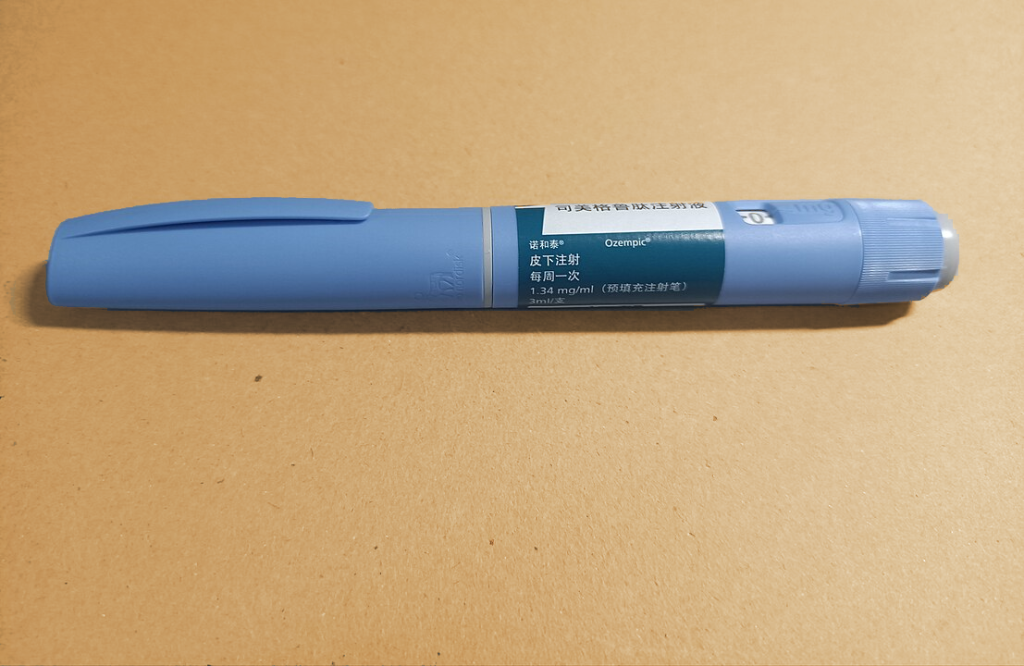
By HualinXMN – Own work, CC BY-SA 4.0, https://commons.wikimedia.org/w/index.php?curid=133759262
GLP1 agonists such as Ozempic (semaglutide) are associated with a reduced risk of developing cirrhosis and liver cancer in people with type 2 diabetes and chronic liver disease, according to a nationwide study from Karolinska Institutet published in the journal Gut.
GLP1 agonists reduce blood sugar levels and are mainly used to treat type 2 diabetes. Since the drug also reduces appetite, it is now increasingly used to treat obesity and has become a popular weight-loss drug.
Reduced risk of liver damage
Results from early clinical trials also suggest that GLP1 agonists may reduce the risk of liver damage. Therefore, researchers at Karolinska Institutet included all people in Sweden with chronic liver disease and type 2 diabetes in a register-based study. They then compared the risk of severe liver damage in those who were treated with GLP1 agonists and those who were not. The results show that those who took the drug for a long period of time had a lower risk of later developing more severe forms of liver disease such as cirrhosis and liver cancer.
According to the researchers, this suggests that GLP1 agonists could be an effective treatment to avoid severe liver disease in people with concurrent type 2 diabetes.
“Fatty liver disease is estimated to affect up to one in five people in Sweden, many of whom have type 2 diabetes, and about one in twenty develop severe liver disease,” says first author Axel Wester, assistant professor at the Department of Medicine, Huddinge, Karolinska Institutet. “Our findings are interesting because there are currently no approved drugs to reduce this risk.”
Many of the people in the study stopped taking GLP1 agonists, resulting in a lack of protective effect. However, those who continued taking their medication over a ten-year period were half as likely to develop severe liver disease.
Clinical trials needed for confirmation
“The results need to be confirmed in clinical trials, but it will take many years for these studies to be completed,” says Axel Wester. “Therefore, we use existing registry data to try to say something about the effect of the drugs before that.”
A limitation of the method is that it is not possible to control for factors for which there is no data, such as blood tests to describe the severity of liver disease in more detail. However, the researchers have recently built a new database called HERALD where they have access to blood samples from patients in Region Stockholm.
“As a next step, we will investigate the effect of GLP1 agonists in this database,” says the study’s last author Hannes Hagström, consultant in hepatology at the Karolinska University Hospital and adjunct professor at the Department of Medicine, Huddinge, Karolinska Institutet. “If we get similar results, it would further strengthen the hypothesis that GLP1 agonists can be used to reduce the risk of severe liver disease.”
The research was mainly funded by Region Stockholm (CIMED), the Swedish Research Council and the Swedish Cancer Society. Hannes Hagström’s research group has received funding from Astra Zeneca, EchoSens, Gilead, Intercept, MSD, Novo Nordisk and Pfizer, although no industry-supported funding was obtained for this specific study.
Researchers have found that swimming in cold water results in a significant improvement in menopause symptoms for women. The research, published inPost Reproductive Health, surveyed 1114 women, 785 of which were going through the menopause, to examine the effects of cold water swimming on their health and wellbeing.
The findings showed that menopausal women experienced a significant improvement in anxiety (as reported by 46.9% of the women), mood swings (34.5%), low mood (31.1%) and hot flushes (30.3%) as a result of cold water swimming.
In addition, a majority of women (63.3%) swam specifically to relieve their symptoms.
Some of the women quoted in the study said that they found the cold water to be “an immediate stress/ anxiety reliever” and described the activity as “healing.”
One 57-year-old woman stated: “Cold water is phenomenal. It has saved my life. In the water, I can do anything. All symptoms (physical and mental) disappear and I feel like me at my best.”
Senior author, Professor Joyce Harper (UCL EGA Institute for Women’s Health), said: “Cold water has previously been found to improve mood and reduce stress in outdoor swimmers, and ice baths have long been used to aid athletes’ muscle repair and recovery.
“Our study supports these claims, meanwhile the anecdotal evidence also highlights how the activity can be used by women to alleviate physical symptoms, such as hot flushes, aches and pains.
“More research still needs to be done into the frequency, duration, temperature and exposure needed to elicit a reduction in symptoms. However, we hope our findings may provide an alternative solution for women struggling with the menopause and encourage more women to take part in sports.”
Most of the women involved in the study were likely to swim in both summer and winter and wear swimming costumes, rather than wet suits.
Alongside aiding menopausal symptoms, the women said their main motivations for cold water swimming were being outside, improving mental health and exercising.
Professor Harper said: “The majority of women swim to relieve symptoms such as anxiety, mood swings and hot flushes. They felt that their symptoms were helped by the physical and mental effects of the cold water, which was more pronounced when it was colder.
“How often they swam, how long for and what they wore were also important. Those that swam for longer had more pronounced effects. The great thing about cold water swimming is it gets people exercising in nature, and often with friends, which can build a great community.”
The researchers also wanted to investigate whether cold water swimming improved women’s menstrual symptoms.
Of the 711 women who experienced menstrual symptoms, nearly half said that cold water swimming improved their anxiety (46.7%), and over a third said that it helped their mood swings (37.7%) and irritability (37.6%).
Yet despite the benefits of cold water swimming, the researchers were also keen to highlight that the sport comes with certain risks.
Professor Harper explained: “Caution must be taken when cold water swimming, as participants could put themselves at risk of hypothermia, cold water shock, cardiac rhythm disturbances or even drowning.
“Depending on where they are swimming, water quality standards may also vary. Raw sewage pollution is an increasingly common concern in UK rivers and seas. And, sadly, this can increase the likelihood of gastroenteritis and other infections.”
Study limitations
The study may contain some bias due to the survey only being taken by women who already cold water swim. And, as the survey was conducted online, it is likely that women were more likely to complete the survey if they noticed an association between menopause symptoms and cold water swimming.