Tag: Alzheimer's disease

Alzheimer’s Risk Gene APOE4 Silently Undermines Bone Quality in Women

Buck Institute researchers discover a surprising connection between a major risk factor for Alzheimer’s

Photo by Karolina Grabowska on Pexels

Scientists at the Buck Institute for Research on Aging, along with collaborators at UC San Francisco, have discovered that APOE4, the most common genetic risk factor for Alzheimer’s disease, causes bone quality deficits specifically in female mice, through a mechanism that is invisible to standard imaging and can emerge as early as midlife.

The findings, published in Advanced Science, reveal an unexpected biological link between Alzheimer’s risk and skeletal health, and identify a new molecular pathway that could one day inform earlier diagnosis of cognitive decline or guide treatment for bone quality loss in women who carry the APOE4 gene.

“What makes this finding so striking is that bone quality is being compromised at a molecular level that a standard bone scan simply will not catch,” says Buck professor Birgit Schilling, PhD, a senior author of the study. “APOE4 is quietly disrupting the very cells responsible for keeping bone strong, and it is doing this specifically in females, which mirrors what we see with Alzheimer’s disease risk.”

Physicians have long observed that people with Alzheimer’s disease suffer bone fractures at higher rates, and that a diagnosis of osteoporosis in women is actually the earliest known predictor for Alzheimer’s. But the underlying mechanism connecting brain and bone health has remained elusive.

To investigate this connection, researchers, led by research scientist and co-first author of the paper Charles Schurman, PhD, first performed a proteomic analysis of aged mouse bone, a comprehensive survey of all the proteins present in the tissue. “The team discovered that bone, and particularly osteocytes, the long-lived cells embedded within it, is unusually rich in proteins associated with neurological disease, including apolipoprotein E [APOE] and amyloid precursor protein,” says Schurman. “Notably, APOE expression in osteocytes was twice as high in aged female mice as in young or male mice.”

The team then turned to a humanised mouse model carrying either APOE2 (associated with reduced Alzheimer’s risk), APOE3 (considered neutral), or APOE4 (the risk variant), and analysed bone and hippocampal tissue from the same animals. APOE4 produced strong, sex-specific effects on both the bone transcriptome and proteome; researchers found the protein-level disruption in bone was actually more pronounced than the corresponding changes in the hippocampus.

Despite the protein level disruption, cortical bone structure appeared normal under imaging. Researchers found that bone quality deficits arose not from changes in bone shape or density, but from APOE4’s suppression of perilacunar/canalicular remodelling, the process by which osteocytes actively maintain the microscopic channels that keep bone mechanically resilient. When this maintenance breaks down, bone quality deteriorates even when it looks intact.

“These results suggest that osteocytes could serve as early biological sentinels for age-related cognitive decline in women carrying APOE4,” says professor Lisa Ellerby, PhD, also a senior author of the paper. The Ellerby lab studies genetic risk factors for Alzheimer’s.  “We think that targeting osteocyte function may open a new front in preserving bone quality in this population.”

Researchers say there is a larger takeaway from this research that links brain and bone science.  “While we think this work is relevant for human patients with Alzheimer’s disease or with osteoporosis, this study also highlights the need for researchers to consider the human body as an entire system without isolating organs and diseases from each other,” says Ellerby.

Source: Buck Institute for Research on Aging

Anti-amyloid Alzheimer’s Drugs Show no Clinically Meaningful Effect

Researchers have found that the absolute effects of anti-amyloid drugs on cognitive decline and dementia severity were absent or trivial

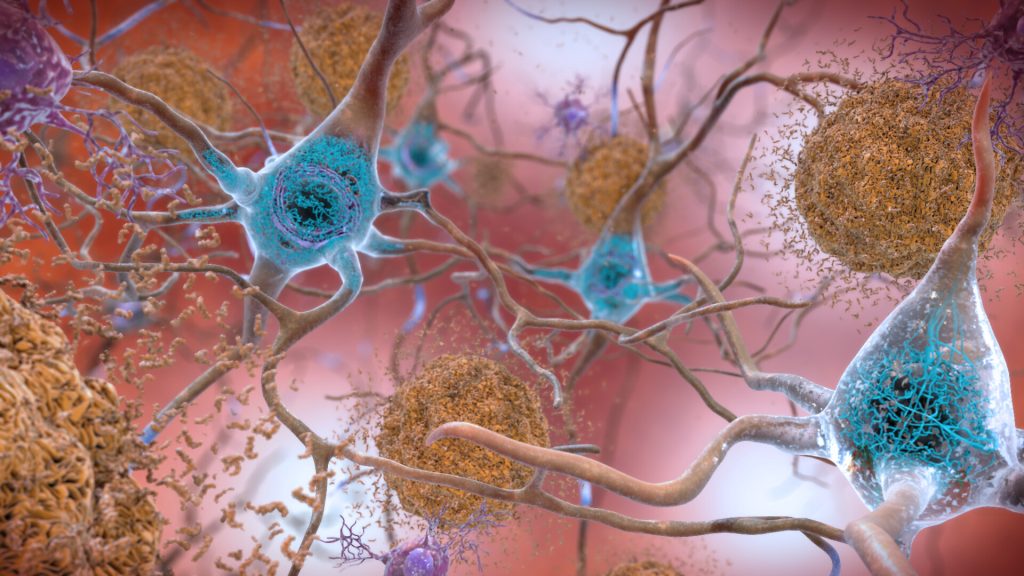
Neurons in the brain of an Alzheimer’s patient, with plaques caused by tau proteins. Credit: NIH

Drugs that target amyloid beta proteins in the brain likely have no clinically meaningful positive effects, while increasing the risk of bleeding and swelling in the brain, a new Cochrane review has found.

People with Alzheimer’s disease have high levels of a protein known as amyloid beta in their brains, detectable before symptoms begin, but its role in disease progression is uncertain. Drugs have been developed to remove these proteins from the brain, under the theory that this would prevent or slow disease progression.

The new review examined data from 17 clinical trials with a total of 20 342 participants, all looking at the impact of anti-amyloid drugs on people with mild cognitive impairment or mild dementia due to Alzheimer’s disease. Proponents of these drugs have theorised that they would be more effective at these earlier stages before the disease has progressed.

Absolute effects “well below clinical threshold”

The research found that the absolute effects of anti-amyloid drugs on cognitive decline and dementia severity were absent or trivial, falling well below established thresholds for the minimum clinically important difference.

“Unfortunately, the evidence suggests that these drugs make no meaningful difference to patients,” said lead author Francesco Nonino, neurologist and epidemiologist at the IRCCS Institute of Neurological Sciences of Bologna, Italy. “There is now a convincing body of evidence converging on the conclusion that there is no clinically meaningful effect. While early trials showed results that were statistically significant, it is important to distinguish between this and clinical relevance. It is common for trials to find statistically significant results that do not translate into a meaningful clinical difference for patients.”

In addition to the absence of clinically meaningful effects, the review found that anti-amyloid drugs likely increase the risk of swelling and bleeding in the brain. This was observed in brain scans without any apparent symptoms for most patients, although any long-term effects remain unclear since reporting of symptoms was inconsistent across trials. 

Future research should focus on other pathways

On the basis of the evidence, the authors conclude that future trials targeting amyloid beta removal are unlikely to provide clear benefit to patients. They found that these drugs do successfully remove amyloid proteins from the brain, but this does not translate into meaningful clinical benefit. They recommend that future research on Alzheimer’s treatment should focus on other mechanisms, with numerous studies ongoing in other directions.

“I see Alzheimer’s patients in my clinic every week and I wish I had an effective treatment to offer them,” said senior author Edo Richard, Professor of Neurology at Radboud University Medical Centre. “Existing approved drugs offer some benefit for some patients, but there remains a high unmet need for more effective treatments. Sadly, anti-amyloid drugs do not offer this and bring additional risks. Given the absence of correlation between amyloid removal and clinical benefit, we need to explore other pathways to help address this devastating disease.”

Read the full review

High Meat Intake Linked to Lower Dementia Risk in APOE4

Photo by Jose Ignacio Pompe on Unsplash

Older people with a genetic risk of Alzheimer’s disease did not experience the expected increase in cognitive decline and dementia risk if they consumed relatively large amounts of meat. This is shown in a new study from Karolinska Institutet published in JAMA Network Open. The results may contribute to the development of more individually tailored dietary advice.

APOE is a gene that affects the risk of Alzheimer’s disease. In Sweden, approximately 30 per cent of the population are carriers of the gene combinations APOE 3/4 or APOE 4/4. Among people with Alzheimer’s disease, those with these genotypes account for nearly 70 per cent.

When the Swedish Food Agency presented an overview of research on the link between diet and dementia last year, more research was requested to assess a possible link between meat consumption and the development of dementia.

‘This study tested the hypothesis that people with APOE 3/4 and 4/4 would have a reduced risk of cognitive decline and dementia with higher meat intake, based on the fact that APOE4 is the evolutionarily oldest variant of the APOE gene and may have arisen during a period when our evolutionary ancestors ate a more animal-based diet,’ says first author Jakob Norgren, researcher at the Department of Neurobiology, Care Sciences and Society, Karolinska Institutet.

The study followed more than 2100 participants in the Swedish National Study on Aging and Care, Kungsholmen (SNAC-K) for up to 15 years. All were aged 60 or older and had no diagnosis of dementia at the start of the study. The association between self-reported diet and cognitive health measures was analysed, adjusting for age, sex, education and lifestyle factors.

Twice the risk of dementia

At lower meat intake, the group with APOE 3/4 and 4/4 had more than twice the risk of dementia than people without these gene variants. However, the increased risk of cognitive decline and dementia in the risk groups was not seen in the fifth of participants who consumed the most meat. Their median consumption is estimated at approximately 870 grams of meat per week, standardised to a daily energy intake of 2,000 calories.

‘Those who ate more meat overall had significantly slower cognitive decline and a lower risk of dementia, but only if they had the APOE 3/4 or 4/4 gene variants,’ says Jakob Norgren. He continues: 

‘There is a lack of dietary research into brain health, and our findings suggest that conventional dietary advice may be unfavourable to a genetically defined subgroup of the population. For those who are aware that they belong to this genetic risk group, the findings offer hope; the risk may be modifiable through lifestyle changes. ‘

The study also shows that the type of meat is important.

‘A lower proportion of processed meat in total meat consumption was associated with a lower risk of dementia regardless of APOE genotype,’ says Sara Garcia-Ptacek, assistant professor at the same department, who together with senior lecturer Erika J Laukka is the study’s last author.

The findings also extend beyond brain health. In a follow-up analysis, the researchers observed a significant reduction in all-cause-mortality in carriers of APOE 3/4 and 4/4 with higher consumption of unprocessed meat.

However, the study is observational and needs to be followed up with intervention studies that can better demonstrate causal relationships.

‘Clinical trials are now needed to develop dietary recommendations tailored to APOE genotype,’ says Jakob Norgren. He continues:

‘Since the prevalence of APOE4 is about twice as high in the Nordic countries as in the Mediterranean countries, we are particularly well suited to conduct research on tailored dietary recommendations for this risk group.’

The research was funded by, among others, the Swedish Alzheimer’s Foundation, the Swedish Dementia Foundation, the Emil and Wera Cornell Foundation, the Leif Lundblad family and other philanthropists, the Swedish Research Council and FORTE. The researchers state that they have no related conflicts of interest.

APOE Gene Facts:

Apolipoprotein E plays a central role in the transport of cholesterol and fats in the brain and blood. The protein is encoded by the APOE gene, which exists in three main variants: epsilon 2, 3 and 4. These variants affect the risk of developing Alzheimer’s disease and cardiovascular disease. Each person inherits two APOE genes, one from each parent, giving six possible combinations (genotypes): 2/2, 2/3, 2/4, 3/3, 3/4 and 4/4.

Compared to the most common genotype 3/3, one 4 variant increases the risk of Alzheimer’s disease by about three to four times and two 4 variants by about ten to fifteen times, while the 2 variant is associated with a lower risk. However, the increase in risk varies between different ethnic groups.

Source: Belloy et al., JAMA Neurology, 2023

Source: Karolinska Institutet

How the Brain’s ‘Memory Replay’ Goes Wrong in Alzheimer’s Disease

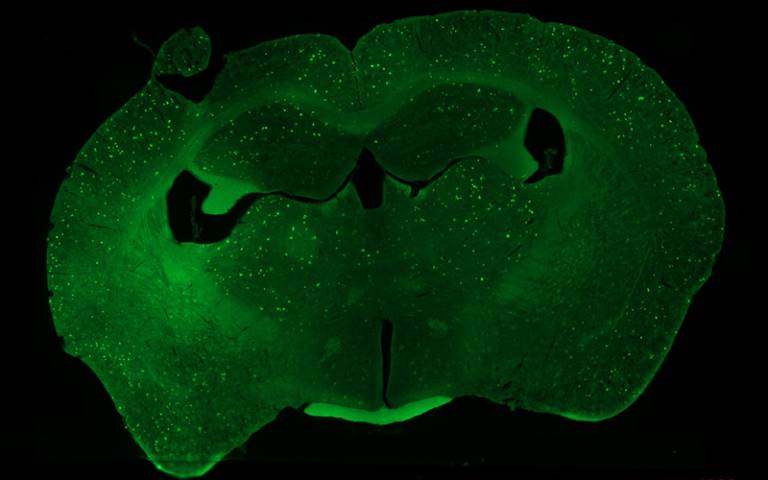
Mouse brain section highlights amyloid plaques, seen as bright green flecks (due to staining). Credit: Shipley et al.

Memory dysfunction in Alzheimer’s disease may be linked to impairment in how the brain replays our recent experiences while we are resting, according to a new study in mice by UCL scientists. The researchers say their findings, published in Current Biology, could help scientists develop drug treatments targeting this impaired brain function, or help design new tests for early diagnosis.

Co-lead author Dr Sarah Shipley (UCL Cell & Developmental Biology) said: “Alzheimer’s disease is caused by the build-up of harmful proteins and plaques in the brain, leading to symptoms such as memory loss and impaired navigation – but it’s not well understood exactly how these plaques disrupt normal brain processes.

“We wanted to understand how the function of brain cells changes as the disease develops, to identify what’s driving these symptoms.

“When we rest, our brains normally replay recent experiences – this is thought to be key to how memories are formed and maintained. We found this replay process is disrupted in mice engineered to develop the amyloid plaques characteristic of Alzheimer’s, and this disruption is associated with how badly animals perform on memory tasks.”

The replay process, which occurs in the brain’s hippocampus, involves place cells firing in rapid sequences during rest. Place cells – discovered by Nobel prize-winning UCL neuroscientist Professor John O’Keefe – are neurons (brain cells) that represent specific locations. When we visit somewhere, particular place cells fire, and as we move the cells fire in a sequence. Later, when we rest, these cells reactivate in the same sequence, helping memories become ingrained.

For the study, the researchers were testing how well mice performed in a simple maze task, while monitoring their brain activity with sets of electrodes that could simultaneously track roughly 100 individual place cells.

In mice with amyloid pathology, the replay process was fundamentally altered. Surprisingly, replay events occurred just as frequently as in healthy mice, but their structure was disorganised. The normal, coordinated patterns of place cell activity that should reinforce memories were scrambled. The researchers also found that place cells in affected mice became less stable over time, with individual neurons no longer reliably coding the same locations, particularly after rest periods – precisely when replay should be strengthening these representations.

This disruption had consequences on memory tasks: affected mice performed worse in the maze, appearing to forget where they had already been and revisiting corridors that led nowhere.

Co-lead author Professor Caswell Barry (UCL Cell & Developmental Biology) said: “We’ve uncovered a breakdown in how the brain consolidates memories, visible at the level of individual neurons. What’s striking is that replay events still occur – but they’ve lost their normal structure. It’s not that the brain stops trying to consolidate memories; the process itself has gone wrong.

“We hope our findings could help develop tests to detect Alzheimer’s early, before extensive damage has occurred, or lead to new treatments targeting this replay process. We’re now investigating whether we can manipulate replay through the neurotransmitter acetylcholine, which is already targeted by drugs used to treat Alzheimer’s symptoms. By understanding the mechanism better, we hope to make such treatments more effective.”

Source: University College London

Empagliflozin and Nasal Insulin Improve Brain Health in Early Alzheimer’s Disease

Created with Gencraft. CC4.0

A clinical trial from Wake Forest University School of Medicine shows that two widely available medications, the diabetes drug empagliflozin (Jardiance) and intranasal insulin, safely improve brain health in people with mild cognitive impairment and early Alzheimer’s disease. The study, published in Alzheimer’s & Dementia, marks the first time empagliflozin has been tested in non-diabetic patients with Alzheimer’s disease. The results show promising effects on memory, brain health and brain blood flow.

The research addresses a critical treatment gap for patients with Alzheimer’s disease. While recently approved anti-amyloid drugs represent progress, their benefits are modest, and they’re unavailable to many patients due to side effects and medical contraindications. They also don’t address the upstream metabolic and vascular problems that drive disease progression or help restore brain function after damage occurs.

“Our study suggests that targeting metabolism can change the course of Alzheimer’s disease,” said Suzanne Craft, PhD, lead investigator and professor of medicine and director of the Wake Forest Alzheimer’s Disease Research Center. “For the first time, we found that empagliflozin, an established diabetes and heart medication, reduced markers of brain injury while restoring blood flow in critical brain regions. We also confirmed that delivering insulin directly to the brain with a newly validated device enhances cognition, neurovascular health and immune function. Together, these findings highlight metabolism as a powerful new frontier in Alzheimer’s treatment.”

The four-week trial enrolled 47 older adults (average age 70) with mild cognitive impairment or early Alzheimer’s disease. Participants were randomly assigned to receive intranasal insulin alone, empagliflozin alone, both medications together or a placebo. 

Both medications were safe and well-tolerated. Treatment-related side effects were mild and similar across all groups. Participants found the nasal insulin device highly feasible to use (4.6 out of 5.0), and compliance rates exceeded 97% for both medications throughout the study.

The results revealed different benefits for each medication. Intranasal insulin improved performance on sensitive cognitive tests that detect early memory and thinking changes. Brain imaging showed insulin treatment increased the structural integrity of white matter connections and changed blood flow patterns in memory-critical regions. The treatment also reduced plasma GFAP, a marker of astrocyte (support cells that maintain healthy connections between blood vessels and brain cells) dysfunction that’s elevated in Alzheimer’s disease. 

Empagliflozin had different effects. The medication significantly lowered cerebrospinal fluid tau, a protein that forms toxic tangles in the brain in patients with Alzheimer’s disease. It also reduced neurogranin and vascular markers linked to disease progression and changed blood flow in key brain regions. Empagliflozin also increased HDL cholesterol, showing its beneficial metabolic effects work even in non-diabetic patients.

Both medications influenced multiple immune and inflammatory proteins in cerebrospinal fluid and blood. The changes suggest the drugs help activate protective immune responses while reducing harmful inflammation. Intranasal insulin particularly affected proteins involved in the nasal-olfactory plexus, a newly discovered pathway that connects the brain’s waste-clearance system to immune systems throughout the body.

The medications work differently but target overlapping problems. Empagliflozin, originally developed for diabetes, improves how the body processes glucose and sodium. That leads to better insulin sensitivity and vascular health throughout the body and brain. The drug also reduces oxidative stress and inflammation while improving how mitochondria produce energy in cells.

Intranasal insulin uses a precision delivery device to send insulin directly into the brain through the nose, bypassing the bloodstream. Once there, insulin activates receptors throughout the brain that keep synapses healthy, support blood vessel function, maintain white matter integrity, and regulate immune responses. Previous studies showed that lower doses of intranasal insulin preserved brain glucose metabolism and slowed white matter damage over 12 months.

The trial used higher insulin doses than previous studies (160 IU daily versus 40-80 IU) delivered through a cartridge pump system developed by Aptar Pharma and validated in earlier brain imaging studies. This device provides precise, reliable delivery to brain regions involved in memory and cognition. Empagliflozin was given at the standard 10 mg daily dose used for cardiovascular conditions in non-diabetic adults.

People with Alzheimer’s disease often have insulin resistance in the brain alongside vascular problems that reduce blood flow and nutrient delivery. These metabolic and vascular disruptions speed up the accumulation of amyloid plaques and tau tangles while preventing the brain from clearing these toxic proteins. Both medications tested in this trial target these upstream problems. 

“We plan to build on these promising results with larger, longer studies in people with early and preclinical Alzheimer’s disease,” Craft said. “Because empagliflozin or intranasal insulin improved tau tangles, cognition, neurovascular health and immune function, we believe these treatments could offer real therapeutic potential, either on their own or in combination with other Alzheimer’s therapies.”

The complementary effects of the two medications could make them valuable additions to combination therapy approaches. Since both drugs are already FDA-approved for other conditions with well-established safety profiles, they could reach patients faster than entirely new medications would.

Source: Wake Forest University School of Medicine

CTE Is Caused by More Than Head Trauma, New Study Suggests

Research reveals Alzheimer’s disease-like DNA damage, hints at immune involvement

Photo by Hermes Rivera on Unsplash

Chronic traumatic encephalopathy (CTE), a neurodegenerative disease diagnosed after death, most often athletes of contact sports and military personnel, is not just caused by repeated head impact but also linked to DNA damage similar to that seen in Alzheimer’s disease, according to a new study led by researchers at Harvard Medical School, Boston Children’s Hospital, Mass General Brigham, and Boston University.

CTE is known to share characteristics with Alzheimer’s disease, namely the buildup of abnormal tau protein in the brain. CTE has also been associated with the development of dementia. The new research, published October 30 in Science, highlights the commonalities between CTE and Alzheimer’s at the genetic level and raises hopes that future treatments could target both diseases.

The findings also support recent work from study co-authors Jonathan Cherry and Ann McKee at Boston University in suggesting that immune system responses could help explain why only some people with repeated head impact go on to develop CTE.

“Our results suggest that CTE develops through some process in addition to head trauma,” said co-senior author Christopher A. Walsh, Professor of Pediatrics and Neurology and chief of the Division of Genetics and Genomics at Boston Children’s. “We suspect it involves immune activation in a way similar to Alzheimer’s disease, happening years after trauma.”

A new approach to studying CTE

The team used two types of single-cell genomic sequencing to identify somatic genetic mutations – non-inherited changes in DNA. This marked the first time scientists took such an approach to studying CTE.

Studying postmortem brain tissue samples, the researchers analysed hundreds of neurons from the prefrontal cortex of 15 individuals diagnosed with CTE after death and 4 individuals with repeated head impact but without CTE and compared them with 19 neurotypical controls and 7 individuals with Alzheimer’s.

The team found that neurons from individuals with postmortem CTE diagnoses had specific abnormal patterns of somatic genome damage that closely resemble those seen in Alzheimer’s. Individuals displaying signs of repeated head impact without postmortem CTE diagnoses didn’t have these changes.

“One of the most significant aspects of our work is the introduction of a new, single-cell genome approach to CTE,” said co-senior author Michael Miller, HMS assistant professor of pathology at Brigham and Women’s Hospital. “Our study provides further evidence that CTE is a bona fide neurodegenerative disease defined by its unique neuropathological features.”

The researchers also observed that the CTE brain samples showed signs of damage equivalent to more than 100 years of excess aging.

Clues to CTE’s origins

Repeated head impact most often occurs during contact sports such as American football, hockey, and rugby or during military service. CTE has been found postmortem in the brains of teenagers and young adults playing amateur sports as well as in older professional athletes.

Recent research in Nature from Cherry and McKee found that repeated head impact causes brain damage in young people even before tau deposition or symptoms indicative of CTE arise. That study also indicated that repeated head trauma induces immune activation in athletes’ brains, said Walsh, who is also an investigator of the Howard Hughes Medical Institute.

The October 30 paper adds to this growing evidence base by linking CTE with Alzheimer’s, which involves inflammation in microglial cells in the brain, despite the diseases’ differing risk factors, Walsh said.

Source: Harvard Medical School

X-Chromosome Gene Behind Greater MS and Alzheimer’s Risk in Women

Mouse study reveals how females’ double X chromosomes drives brain inflammation and identifies diabetes drug as potential treatment

Photo by Karolina Grabowska on Pexels

New research by UCLA Health has identified a sex-chromosome linked gene that drives inflammation in the female brain, offering insight into why women are disproportionately affected by conditions such as Alzheimer’s disease and multiple sclerosis as well as offering a potential target for intervention. 

The study, published in the journal Science Translational Medicine, used a mouse model of multiple sclerosis to identify a gene on the X chromosome that drives inflammation in brain immune cells, known as microglia. Because females have two X chromosomes, as opposed to only one in males, they get a “double dose” of inflammation, which plays a major role in ageing, Alzheimer’s disease and multiple sclerosis.  

When the gene, known as Kdm6a, and its associated protein were deactivated, the multiple sclerosis-like disease and neuropathology were both ameliorated with high significance in female mice.  

“It has long been known that there are sex differences in the brain. These can impact both health and neurological diseases,” said study lead author Dr Rhonda Voskuhl, director of the Multiple Sclerosis Program at UCLA Health and lead neurologist for the UCLA Comprehensive Menopause Program. “Multiple sclerosis and Alzheimer’s disease each affect women more often than men, about two to three times as often. Also, two-thirds of healthy women have ‘brain fog’ during menopause. These new findings explain why and point to a new treatment to target this.”  

When first author Dr Yuichiro Itoh of the Voskuhl lab genetically “knocked out” the gene Kdm6a in brain immune cells, the inflammatory molecules shifted from being activated to a resting state. Additionally, the Voskuhl team performed a pharmacologic “knock down” of the protein made by this gene using metformin. Metformin is widely used as a treatment for diabetes, but is currently being researched for potential anti-ageing properties.  

While these interventions were highly significant in female mice, their effect was almost undetectable in males, Voskuhl said. 

“This is consistent with there being ‘more to block’ in females due to having two copies of the X-linked gene,” said Voskuhl, who is also a professor of neurology at UCLA Health. “It’s also why females are more likely to get MS and AD than males. This has implications for the clinic. Women may respond differently to metformin treatment than men.” 

Voskuhl said the findings may also have implications for explaining a connection to brain fog in healthy women during menopause.  

“Sex chromosomes and sex hormones achieve a balance through evolution,” Voskuhl said. “There is a selection bias to do so. Females have a balance between X chromosome-driven inflammation that can be good to fight infections at child-bearing ages. This is held in check by oestrogen, which is anti-inflammatory and neuroprotective. As women age, menopause causes loss of oestrogen, unleashing the proinflammatory and neurodegenerative effects of this X chromosome the brain immune cell.”  

Voskuhl says together, these findings may support use of oestrogens that target the brain to keep the balance, and thereby protect the brain, during menopause.

Source: UCLA Health

Could a New Way to Restore Lithium Deficiency in Alzheimer’s Really Work?

Neurons in the brain of an Alzheimer’s patient, with plaques caused by tau proteins. Credit: NIH

It has been known that brain lithium (Li) levels are depleted in individuals with mild cognitive impairment, a precursor for Alzheimer’s disease. For years, there have been attempts to restore Li levels to prevent Alzheimer’s disease by administering lithium carbonate. But now, it has been shown that the Li from this compound has been sequestered and not actually restoring the endogenous Li levels. Now, scientists have tried using lithium oxide (LiO) salts instead – and the treatment appears to be effective in prevention and even reversal of a mouse model of Alzheimer’s.

Join our QuickNews podcast as the arguments for and against this lithium-based approach are unpacked and debated.

Investigating Why Memory Circuits Break Down in Alzheimer’s Disease

Created with Gencraft. CC4.0

Scientists are investigating a small region of the brain that plays a major role in memory, spatial navigation, and perhaps Alzheimer’s disease. One of the first parts of the brain affected by Alzheimer’s disease is the entorhinal cortex – a region that plays a big role in memory, spatial navigation, and the brain’s internal mapping system.

With support announced in September from the Commonwealth of Virginia’s Alzheimer’s and Related Diseases Research Award Fund, Virginia Tech scientists Sharon Swanger and Shannon Farris are working to understand why this area is especially vulnerable.

Swanger studies how brain cells communicate across synapses, while Farris focuses on how memory at the molecular level. Their overlapping expertise made the collaboration a natural fit.

“We’ve both been studying for a while,” said Swanger, assistant professor at the Fralin Biomedical Research Institute at VTC. “This new collaborative project brings together my work on synapses and Shannon’s on mitochondria in a way that addresses a big gap in the field.”

“This kind of state-level support is critical,” said Farris, also an assistant professor at the research institute. “It gives researchers in Virginia the chance to ask questions that may eventually make a difference for people living with Alzheimer’s. It’s meaningful to be part of research that could help people facing that journey.”

A key focus of their research is mitochondria – tiny structures inside brain cells that provide the energy needed for a variety of cellular functions in neurons including transmission. In Alzheimer’s disease, mitochondria stop working properly early in the course of the disease.

Farris and Swanger are investigating whether mitochondria in a vulnerable memory-related circuit may become overloaded with calcium, a key signaling chemical for multiple neuronal and synaptic processes. That overload could contribute to the early breakdown of memory.

“The connection between these cells is one of the first to fail in Alzheimer’s,” Farris said. “We found that this synapse has unusually strong calcium signals in nearby mitochondria – so strong we can see them clearly under a light microscope. Those kinds of signals are hard to ignore. It gives us a model where we can really watch what’s happening as things start to go wrong.”

To test their hypothesis, the researchers will study brain tissue from healthy mice and mice with Alzheimer’s. By comparing how mitochondria function and how brain cells communicate across synapses in each group, they hope to find early signs of stress or failure in the entorhinal cortex–hippocampus circuit.

Source: Virginia Tech

Experiments Add to Evidence of Links Between Amyloid Deposits in Brain and Bone Marrow

Neurons in the brain of an Alzheimer’s patient, with plaques caused by tau proteins. Credit: NIH

A recent study led by a team of researchers at The Johns Hopkins University School of Medicine examining aging mice has provided what is believed to be the first evidence that particles of amyloid beta protein, found in people with Alzheimer’s disease (AD), build up in the bone marrow of the animals, although not in the exact same form as the large, dense plaques found in the brains of people with Alzheimer’s disease.

“Although amyloid buildup has been found in organs outside the brain – such as the heart, kidneys, and nerves – it remains unclear whether similar deposits form in bone or bone marrow with aging or in Alzheimer’s disease,” says contributing study author Mei Wan, PhD, professor of the department of Orthopaedic Surgery. While brain amyloid has been extensively studied for its role in memory loss and neurodegeneration, far less is known about amyloid elsewhere in the body. In fact, almost nothing is known about whether amyloid forms in the skeleton or how it might contribute to age-related bone loss.”

AD is primarily associated with excessive amyloid plaques in the brain. Osteoporosis is a bone disease marked by low bone mineral density with an increased risk of fractures. Recent research suggests these two age-related conditions may be connected, and scientists are beginning to uncover common underlying causes.

Funded by the National Institutes of Health, the study findings, published in Nature Aging, advance scientific understanding of long-suspected similar biological processes that may be at work in osteoporosis – a form of bone loss – and Alzheimer’s dementia, the researchers say. The work may also offer potential new targets for preventing or treating bone loss.  

The buildup of amyloid is triggered by fat cells in the bone marrow, known as bone marrow adipocytes (BMAds), and a protein they release called SAP/PTX2 in aged mice and mice with AD. These amyloid deposits impair bone-building cells (osteoblasts) and activate bone-resorbing cells (osteoclasts), leading to bone loss. In previous mouse models, removing senescent BMAds or blocking SAP/PTX2 have shown to significantly reduce amyloid buildup and restored bone health.

In this study, male and female mice ranging from 4 to 24 months were kept in a temperature-controlled room provided with ongoing access to food and water and exposed to a 12-hour light-dark cycle. Researchers put a concentration of 5mg/ml in the drinking water of the mice aged 18 months and examined the effects CPHPC had on their age-related bone loss. CPHPC (also named Miridesap) is a small molecule compound originally designed to treat amyloidosis which is a rare disease marked by the buildup of amyloid proteins. A control group of mice aged 4, 9, 22 and 24 months were given the same dosage of water without the CPHPC drug  

High-resolution imaging of thigh and shin bones revealed amyloid fibrils forming ring-like structures around BMAds in aged mice and mice genetically engineered to have a form of AD. SAP/PTX2-driven amyloid clumps were found to enhance bone loss.

Study results also showed that CPHPC successfully depleted SAP/PTX2 and reversed bone deterioration in the older mice, suggesting a promising new therapeutic strategy for osteoporosis in the elderly, a strategy that would seek to eliminate aging fat cells or amyloid-promoting proteins.  

Wan adds, “Our study is what we believe to be the first to show that harmful amyloid fibres (Aβ fibrils) build up in the bone marrow of aged mice. We also found that fat cells in the bone marrow release a protein called SAP/PTX2, which plays a major role in triggering this amyloid buildup and damaging bone. These findings uncover a new connection between bone loss and dementia risk and may open the door to new research on how protecting bone health could also help protect brain function.”

This discovery provides an opportunity for new treatments targeting bone aging and Alzheimer’s-associated osteoporosis by focusing on the elimination of senescent fat cells or amyloid-promoting proteins.

Source: Johns Hopkins Medicine