Category: Metabolic Disorders

Most Obesity Drugs Do Not Improve Quality of Life or Heart Health

Treatment decisions should be individualised, balancing expected benefits, harms, treatment burden, costs, availability, and patient preferences, say researchers

By HualinXMN – Own work, CC BY-SA 4.0

Despite substantial weight loss, most obesity drugs such as Wegovy and Mounjaro do not meaningfully improve quality of life and few show cardiovascular benefits at one year, finds an analysis of the latest evidence published by The BMJ today.

More weight loss is also generally accompanied by greater harms including stomach and bowel symptoms, fatigue, and loss of lean (muscle) mass – and improvements are not sustained after stopping treatment.

Several drugs for adults with overweight or obesity produce substantial weight loss, but most have not been compared directly in head-to-head trials, leaving uncertainty about the broader balance of benefits and harms.

To address this, researchers searched scientific databases for randomised controlled trials comparing one or more drugs with lifestyle changes, placebo, or another drug.

They found 262 eligible trials involving 99,791 participants (average age 49; 63% female; average BMI 35) that evaluated 19 currently available and emerging obesity drugs with follow-up from 12 to 172 weeks.

Benefits included changes in body weight, fat mass, and quality of life, while potential harms included changes in lean mass, gastrointestinal adverse events, gallbladder related disorders and fatigue.

The trials were of varying quality, but the researchers were able to assess the certainty of evidence using the recognised GRADE system.

Compared with lifestyle changes alone, the largest weight loss after one year was with tirzepatide (14.9%) and CagriSema (14.8%), followed by oral semaglutide (10.9%), orforglipron (9.9%), subcutaneous semaglutide (9.8%), and phentermine-topiramate (8.1%).

Emerging drugs – including retatrutide, ecnoglutide, and mazdutide – showed large effects on weight loss but are supported by low or very low certainty evidence.

Greater weight loss was consistently accompanied by higher rates of side effects and treatment discontinuation, which the authors say indicates a clear benefit-harm trade-off.

Tirzepatide reduced fat mass the most (by 25.7%) but also lean mass the most (8.3%). Subcutaneous semaglutide was the only drug associated with a reduced risk of death from any cause (19%), heart attack (28%), and heart failure (57%). Tirzepatide also reduced heart failure risk by 51%.

No drug convincingly reduced kidney failure or showed clinically important improvements in quality of life.

The authors acknowledge that most trials had relatively short follow-up, limiting conclusions about long term safety, quality of life, and effects on heart and kidney health. In addition, evidence for several newer drugs was sparse and of low certainty, and trial populations may not fully represent real world patients.

However, they say this review provides a comprehensive and up-to-date comparison of currently available and emerging obesity drugs across a broad set of outcomes important to patients, clinicians, and policymakers.

They conclude: “Treatment decisions for obesity should be individualised, balancing expected benefits, harms, treatment burden, costs, availability, and patient preferences.”

This study represents an important step in providing comparative information to inform patient-clinician discussions about obesity drugs in this rapidly evolving landscape of treatment options, say researchers in a linked editorial.

And they suggest future studies that incorporate individual characteristics, as well as long term outcomes, such as mortality, should provide additional data to inform individualised decision making.

Source: The BMJ Group

Popular GLP-1 Drug May Slow Down Biological Aging

By calming inflammation and reducing excess fat, semaglutide may postpone several molecular signs of aging, pointing to the potential of GLP‑1 receptor agonists to help prevent age‑related diseases.

Photo by Haberdoedas on Unsplash

Semaglutide slowed biological aging across multiple epigenetic clocks in a randomised, double-blind, placebo-controlled clinical trial. The strongest signals were seen in epigenetic measures linked to inflammation, brain, heart, blood, kidney, liver and metabolic health, suggesting that the drug may influence aging-related biology across multiple body systems. The findings offer early clinical evidence that GLP-1 receptor agonists may influence aging biology.

Glucagon-like peptide-1 (GLP-1) receptor agonist medications have gained widespread attention for effectively treating obesity, lowering blood sugar and decreasing the risk of cardiovascular disease. Some researchers have proposed that these drugs may also influence the biology of aging, but direct evidence in humans has remained limited. Now, a new study provides the first randomised, placebo-controlled clinical evidence that semaglutide, a widely used GLP-1 drug, slows down the accumulation of biological aging markers in the DNA of adults with HIV. The study is published in Nature Communications.

Researchers at the University of California San Diego and several partner institutions analysed data from a previously published clinical trial of 108 adults with HIV‑associated lipohypertrophy, a condition in which excess fat builds up around the abdomen. About half of the participants received weekly injections of semaglutide, with the rest receiving placebo injections.

The team used a set of biological “epigenetic clocks” to track cellular aging over the 32-week treatment period. These clocks detect DNA methylation, chemical marks on DNA that help regulate how genes are turned on or off without changing the genetic sequence itself. By measuring changes in these marks, the team could assess whether the treatment was associated with a slower or faster biological aging pattern.

People with HIV often experience accelerated aging, even if it is well-controlled with antiretroviral therapy, according to first author Michael Corley, PhD, associate professor at UC San Diego School of Medicine and the Stein Institute for Research on Aging. However, the study found compared to the placebo group:

  • Participants treated with semaglutide exhibited a broad pattern of slower biological aging across epigenetic clocks linked to inflammation and blood, brain, heart, kidney, liver and metabolic health.
  • The drug slowed the pace of biological aging by 9 %, as measured by the DunedinPACE epigenetic clock.
  • The drug significantly slowed biological processes associated with the risk of all‑cause mortality and age-related disease, as measured by the PCGrimAge epigenetic clock.

Research suggests there are several mechanisms by which semaglutide may influence biological aging. By reducing inflammation and metabolic stress, GLP-1 drugs decreased chronic immune activation, a primary driver of accelerated aging in people with HIV. They also reduce visceral and ectopic fat that accumulates around the abdomen and organs, which may help curb the inflammatory and metabolic signals that promote aging.

“Emerging data also suggest that GLP-1 drugs may reprogram certain cells in different organs, which could help explain why we see effects across multiple aging clocks,” said Corley.

While the study focused on people with HIV‑associated lipohypertrophy, Corley says it may also offer lessons for the wider population.

“Many of the biological processes we study in HIV are also central to aging in the general population,” he said. “Because these processes can emerge earlier or be more pronounced in people with HIV, this community can help us identify interventions that may improve healthspan more broadly.”

In a related pilot study published in npj Aging, Corley and another team of researchers found that taking semaglutide for 24 weeks:

  • Reduced the rate of biological aging for 42% of participants with HIV and metabolic dysfunction-associated steatotic liver disease (MASLD) as measured by the DunedinPACE epigenetic clock. Those participants also had a greater reduction in liver fat compared with participants whose pace of aging sped up.
  • Slowed aging associated with the risk of all‑cause mortality in 34% of participants as measured by the PCGrimAge epigenetic clock.
  • Increased the length of telomeres in nearly 49 % of participants as measured by the PCDNAmTL epigenetic clock. Those participants also tended to walk faster after treatment, suggesting better physical function.

Together, these studies add to growing evidence that GLP-1 drugs may influence pathways involved in biological aging.

“We are not saying that semaglutide reverses aging or makes people younger. What we are seeing is a signal that it may slow some of the biological processes associated with aging.”

— Michael Corley, PhD

“We are not saying that semaglutide reverses aging or makes people younger,” said Corley. “What we are seeing is a signal that it may slow some of the biological processes associated with aging. With newer GLP-1–based therapies now emerging, the field has an opportunity to test whether different drugs in this class have distinct effects on aging biology and to identify which patients may benefit most.”

Larger clinical trials are needed to confirm the findings, determine how long treatment effects last, and establish optimal dosing and treatment duration for both people with HIV and the broader population. Future studies will also be needed to test whether the effects of GLP-1 effects on aging biology are enhanced when combined with lifestyle interventions such as diet, exercise and sleep optimization.

The Stein Institute for Research on Aging plans to translate these results into individualized “aging dashboards” to track biological aging with epigenetic clocks, enabling clinicians to design personalised therapies that target the underlying mechanisms of aging and help prevent age‑related diseases.

By Susanne Clara Bard

Source: University of California San Diego

Can the Use of GLP-1RAs Reduce Behaviours Linked to Violent Crime?

Photo by Maxim Hopman on Unsplash

Glucagon-like peptide-1 receptor agonists (GLP-1 RAs) are widely prescribed for diabetes and obesity, but studies have found evidence that the medications may also influence behaviour, such as supporting impulse control and reducing substance use and alcohol consumption by potentially interacting with the brain’s reward and stress systems. New research in Criminology adds to this growing evidence.

When investigators analysed data from a 2025 nationally representative US survey involving 821 adults who had ever used GLP-1 medications, they found that while impulsivity and alcohol use were strongly associated with committing violent crime, these associations were significantly weaker among current GLP-1 RA users compared with former users. So even when a GLP-1 RA user drinks or acts impulsively, the situation is less likely to escalate into engaging in violent criminality. More thorough analyses showed that this finding was especially consistent related to impulsivity, but less so with alcohol use.

The findings suggest that GLP-1 RAs may lessen the extent to which certain established risk factors translate into violent behavior.

“As GLP-1 medications become increasingly widespread, understanding their broader behavioral effects becomes an important public health and criminological question that requires careful study,” said corresponding author Daniel C. Semenza, PhD, of Rutgers University.

Source: Wiley

Link Between Parents’ and Children’s Weight is Mostly Genetic, Study Finds

An analysis of 86 000 Norwegian children found that the association between parental and childhood body weight is largely explained by shared genetics

AI image created with Gencraft

The association between parents’ body mass index (BMI) and their children’s childhood BMI may be primarily due to genetic inheritance rather than to any direct biological effect of parental weight during pregnancy, according to a new study published June 23rdin the open access journal PLOS Medicine by Tom Bond of the University of Bristol, UK, and colleagues from the University of Queensland, Australia and more.

Higher parental BMI is consistently associated with higher childhood BMI. It has been difficult for researchers to disentangle how much of this association is due to genetics and how much is due to biological effects of maternal weight during pregnancy. This may have implications for interventions that aim to control childhood BMI by targeting pre-conception parental weight.

In the new study, researchers analysed data from the Norwegian Mother, Father and Child Cohort Study, a prospective birth cohort of children born between 1999 and 2009. Data on 86 000 children, including their birth weight and BMI from six months to eight years of age, as well as appetite-related eating behaviours at age eight, was available in the dataset. The researchers looked at twin, sibling, and half-sibling relationships across multiple generations to directly quantify how much of the parent-child BMI association could be attributed to genetic confounding.

Maternal BMI was more strongly associated with offspring birth weight than paternal BMI, consistent with an effect of maternal body weight on birthweight through the environment inside the uterus. However, after birth the associations of maternal and paternal BMI with offspring BMI were broadly similar from age two to eight. Models showed that genetic effects explained an estimated 79% of the statistical association between a mother’s BMI and her child’s BMI at age 8, and 94% of the association for fathers. Higher parental BMI was also associated with obesity-related eating behaviours in children, including greater food responsiveness and emotional overeating, although the study was not able to conclusively determine how much of this was genetically driven.

The authors caution that these findings do not support the idea that childhood obesity is inevitable for children of heavier parents. Children who inherit a genetic predisposition to higher BMI may still express those genes differently depending on their environment. The results also do not argue against the importance of maternal health in pregnancy, the authors say. Maternal obesity is well established to increase risk of adverse perinatal outcomes for both mother and child.

“Our results may have important public health implications, when considered alongside prior evidence,” they write. “Maternal BMI may be unlikely to have a large causal effect on child BMI beyond birth… and any causal effect of paternal BMI on offspring childhood BMI is likely to be similar to or smaller than that of maternal BMI. Consequently, reductions in the BMI of either parent before pregnancy may be unlikely to cause large reductions in childhood adiposity.”

Tom Bond states, “Obesity runs in families, but it is difficult to work out why this is. Our results suggest that the link between a mother’s or father’s body mass index (BMI) and their children’s BMI up to age 8 is mostly due to inherited genes. Expectant parents should be encouraged to maintain a healthy weight, but this may not be enough to ensure that their children also have a healthy weight.”

David Evans notes, “We were interested in examining whether obesity in mothers during pregnancy might also have adverse effects on the risk of obesity in their offspring when the children get older. We found that whilst maternal body mass index during pregnancy was likely to adversely affect offspring birthweight, it didn’t appear to have large effects on risk of offspring obesity in later life beyond that explained through the transmission of genes from mothers to their offspring.”

Alexandra Havdahl adds, “Our findings suggest that the link between parents’ and children’s body mass index is driven largely by shared genes rather than by the intrauterine environment or parenting behaviour.”

Provided by PLOS

Genetics Likely Made Some People Extra Susceptible to Obesity as Society Changed

Study finds the link between genetics and BMI has become stronger since the rise in obesity rates 

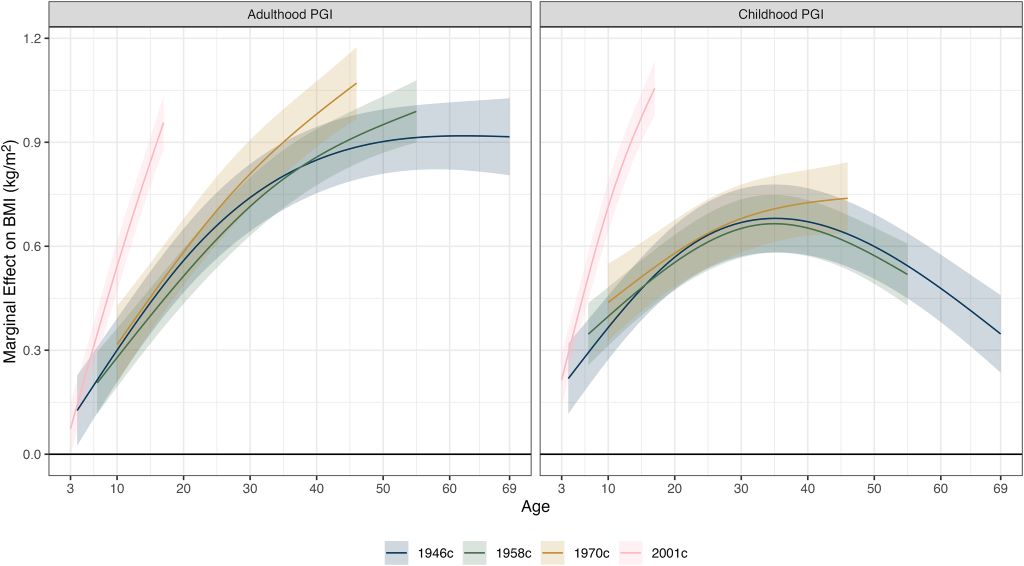
Association (+ 95% CIs) between PGI and BMI (kg/m2) by cohort, age, and PGI (adulthood or childhood). Derived from separate linear mixed effects models with the association between PGI and BMI allowed to vary by age (two natural splines). Adjustment was made for age (two natural splines), sex, first 10 genetic principal components, and a person-specific random intercept. Estimates were weighted using recruitment weights.  
Image Credit: Wright et al., 2026, PLOS Genetics, CC-BY 4.0

People who carry genetic variations linked to obesity are more likely to be heavier now than individuals with the same variants who were born before the recent obesity epidemic. Liam Wright of University College London, and colleagues, report these findings June 19 in the journal PLOS Genetics.

Over the past five decades, obesity rates have risen sharply for both children and adults. But strangely, rates of extreme obesity have increased faster than the overall increase in body mass index (BMI), an estimate of body fat based on a person’s height and weight. This trend suggests that some individuals are especially susceptible to environmental factors that encourage weight gain, such as the increasing availability of processed foods and decreasing amounts of physical activity. One cause of this susceptibility may be genetics.

To investigate this trend, researchers compared the BMIs and the presence or absence of multiple genetic variations previously linked to obesity in people from four British birth cohorts, born before or during the rise in obesity rates. The study included BMI data from early adolescence to adulthood for individuals born in 1946, 1958, 1970 and 2001 in Great Britain. Their analyses showed that these genetic variations were more strongly linked with having a high BMI in the two more recent cohorts, and were even more pronounced as people became older and among individuals with a higher BMI. These findings suggest that people with a genetic predisposition to having a higher BMI are likely more susceptible than others to changes in their environment that encourage obesity.

The researchers point out that the reason for the stronger association between genetics and BMI in the younger cohorts is unclear. However, they suspect that as the environment changed – with a rise in fast food restaurants and processed food – it may have enabled greater expression of genetic variants that encourage higher calorie consumption and, thus, higher BMI. They conclude that further work will be required to identify the specific environmental factors responsible for strengthening the link between genetics and BMI.  

The authors add: “The obesity epidemic has increased BMI regardless of genotype, but it’s those most genetically predisposed to high BMI that have been most affected.”

Provided by PLOS

Common Class of Antihypertensives Linked to Worse Diabetic Kidney Outcomes

Dihydropyridine calcium-channel blockers linked to poorer kidney outcomes in people with type 2 diabetes

Photo by Towfiqu Barbhuiya on Unsplash

Commonly prescribed blood pressure medications known as dihydropyridine calcium-channel blockers (DCCBs) may be associated with poorer kidney outcomes in people with Type 2 diabetes (T2D) and diabetic kidney disease (DKD), according to new research presented at the 63rd European Renal Association (ERA) Congress in Glasgow, Scotland.1

Kidney Outcomes Worse with DCCBs in T2D

The findings suggest that patients receiving DCCBs alongside current standard-of-care kidney-protective therapies face a significantly higher risk of major adverse kidney events compared with those treated with alternative antihypertensive medications.

DKD remains one of the leading causes of kidney failure worldwide and is driven by chronic damage to the kidney’s filtering system caused by prolonged hyperglycaemia.2 Effective blood pressure control is a cornerstone of management, particularly alongside renin-angiotensin system (RAS) inhibitors and sodium-glucose cotransporter-2 (SGLT2) inhibitors, which have transformed outcomes for patients by slowing kidney disease progression and reducing the risk of kidney failure.

Researchers analysed data from 31 031 adults with T2D treated between 2016 and 2021. All participants were receiving both RAS and SGLT2 inhibitors. Of these, 12 172 patients were also prescribed DCCBs, while 18 859 received alternative blood pressure therapies. Participants were followed for a median of approximately 3.5 years.

After adjusting for baseline demographic and clinical differences, DCCB use was associated with a 33% increased risk of major adverse kidney events compared with other antihypertensive treatments. The composite outcome included a decline of at least 40% in estimated glomerular filtration rate (eGFR) or progression to end-stage kidney disease requiring dialysis or kidney transplantation.

Lead author Dr Timna Agur noted that DCCBs are widely used as second-line blood pressure therapies in DKD, making the findings particularly relevant to current clinical practice. The researchers propose that the observed association may stem from the drugs’ effects on kidney haemodynamics. By preferentially dilating blood vessels entering the kidney’s filtering units, DCCBs may increase pressure within these structures, potentially contributing to ongoing damage despite concurrent kidney-protective therapies.

Blood Pressure Treatment Choice May Matter

Although the study was observational and cannot establish causality, the investigators emphasised that the results warrant further investigation. Prospective studies and randomised controlled trials will be needed to determine whether alternative blood pressure treatment strategies could offer greater kidney protection for patients with DKD.

References

Li J et al. Epidemiological status, development trends, and risk factors of disability-adjusted life years due to diabetic kidney disease: a systematic analysis of Global Burden of Disease Study 2021. Chin Med J. 2025;138(5):568-578.

Agur T et al. DCCB therapy and risk of CKD progression in type 2 diabetes on RASi and SGLT2i. Abstract 597. ERA Congress, 3-6 June 2026.

Source: EMJ Reviews

Brain Tumour Removal May Improve Blood Sugar Control in Diabetes Patients

Photo by Anna Shvets on Pexels

A new study published in JAMA Network Open found that removing olfactory groove meningioma, a type of brain tumour located near the base of the brain, may improve blood sugar control in patients with diabetes. 

Researchers followed patients with an olfactory groove meningioma and diabetes over five years after surgery, tracking long-term changes in haemoglobin A1c (HbA1c), which is a standard measure of blood sugar control, and body weight after tumour removal surgery. 

The research team found:

  • Blood sugar control improved after tumour removal in most patients.
  • Improvements often happened soon after surgery and lasted for years.
  • Many patients also lost weight after surgery.
  • Improvements occurred even when diabetes medications stayed the same. 

“This type of brain tumour affects both frontal lobes simultaneously and is usually thought of as causing symptoms like vision problems, personality changes or loss of smell,” said Andrew Venteicher, MD, PhD, an associate professor at the University of Minnesota Medical School and neurosurgeon with M Health Fairview. “What surprised us was how much blood sugar control improved after surgery in many of these patients. The findings may help us better counsel patients before surgery and raise new questions about how the brain influences metabolism throughout the body.”

The findings suggest that some brain tumours may affect the body’s ability to regulate metabolism and blood sugar, and that removing certain brain tumours may improve blood sugar control and weight in some patients with diabetes, in addition to improving neurological symptoms. 

Future studies will explore why these metabolic improvements occur and whether similar effects are seen in patients with other types of brain tumours. Researchers also hope to better understand how brain function, behaviour and metabolism are connected and whether these findings could help guide future treatment decisions.

Source: University of Minnesota

New Study Links GLP-1 Agonists to Reduction of Asthma Exacerbations and Inhaler Use

Photo by Cnordic Nordic

New research presented at this year’s European Congress on Obesity in Istanbul, Turkey (12-15 May) shows the use of the new GLP-1 class of obesity drugs in people with asthma is associated with a 26% fall in the number of asthma exacerbations and a 14% drop in use of asthma inhaler reliever use. The study is by Simon Høj and Dr Kjell Erik Julius Håkansson Copenhagen University Hospital, Copenhagen Denmark and colleagues.

Glucagon-like peptide-1 receptor agonists (GLP-1 RAs) are now widely used to treat overweight, obesity and type 2 diabetes (T2DM), with growing evidence of benefits that extend beyond blood sugar control.

In asthma, where overweight, obesity and metabolic dysfunction can lead to increased severity of symptoms and adverse events such as acute exacerbations, the authors suggest that GLP-1 RAs may improve asthma outcomes through weight loss, modulation of airway inflammation, and improvements in metabolic functions. Reductions in occurrence of asthma exacerbations are likely to reduce systemic corticosteroid exposure (a common treatment for acute asthma exacerbations orally or intravenously) and thus may reduce the risk of corticosteroid exposure-associated adverse events such as osteoporosis or new-onset T2DM. As such, as the clinical use of GLP-1 RAs expands, reliable estimates of their impact on asthma control are needed for individuals living with both asthma and overweight, obesity or T2DM.

The researchers conducted a nationwide self-controlled cohort study using linked Danish health registers. Adult individuals with a prior asthma diagnosis or ≥2 asthma inhaler prescriptions redeemed within 12 months) were included on the date of their first GLP-1 RA dispensing (index date). Eligible individuals had continuous registration data for at least 12 months before and after the index date.

Individuals with COPD or patients with severe asthma treated with new and relatively expensive biologic drugs within 12 months before or after the index date were excluded. Overweight or obesity was defined using ICD-10 codes for those conditions. Those who had no evidence of T2DM – with no diagnosis recorded or no evidence of other first line diabetes drugs prescribed – were also placed in the with obesity/overweight group. Those with a T2DM diagnosis or prescriptions recorded for first line diabetes drugs such as metformin were placed in the T2DM group.

The primary outcome was exacerbations, defined as an inpatient asthma hospital contact(s) and/or systemic oral or intravenous corticosteroid course(s). Secondary outcomes were the use of rescue medication (inhaled short-acting β2-agonists), inhaled corticosteroid exposure, and chest infection events defined as redemption of antibiotics commonly used for lower airway infections

The cohort comprised 27,523 individuals (mean age 54 years, 66% female) with asthma and comorbid overweight or obesity (49%) or T2DM (61%) and 26% recorded as having both conditions. Around 50% of the GLP-1 prescriptions were liraglutide, 48% semaglutide, and 2% others (exenatide, dulaglutide, lixisenatide).

Compared with the year before GLP-1 RA treatment, GLP-1 RA treatment was associated with a 26% lower exacerbation rate overall; and 28% lower in men compared with 23% lower in women. When stratified according to GLP1 RA treatment indication, the analysis showed individuals with asthma and comorbid overweight or obesity and individuals with asthma and comorbid T2DM had similar effect estimates – a 22% reduction in those with overweight or obesity and a 26% reduction in those with T2D.

Reliever medication use fell by 14% overall, suggesting fewer symptoms despite daily inhaled corticosteroid exposure also decreasing by 23% (inhaled corticosteroids are used to prevent exacerbations and treat symptoms in asthma). Furthermore, pneumonia events were reduced by 10%. People also living with allergic rhinitis saw similar decreases (23%) in exacerbations to those living without allergic rhinitis (28%). The authors are also working on updated analyses to show differences between men and women for these specific outcomes.

The authors conclude: “In this nationwide cohort of over 27,000 individuals with asthma and also overweight, obesity or type 2 diabetes, use of GLP-1 drugs  was associated with significant reductions in exacerbation burden as well as reliever use, exposure to inhaled corticosteroids and pneumonia events, irrespective of whether the drugs were being used to treat obesity or type 2 diabetes.”

The authors explain that their study did not have access to clinical records (just if people had used GLP-1 and hospital admissions), so data on BMI and weight loss for participants were not available.

But Dr Håkansson says: “There’s a high chance that the weight loss is a major contributor to these results. A common symptom in both asthma and obesity is shortness of breath, and the presence of excess fatty tissue creates a pro-inflammatory state in the body in general. There’s also evidence from other studies suggesting that the inflammation caused by excess adipose tissue is distinct from the ‘classic’ asthma inflammation which often is driven by allergies or cells called eosinophils.”

And he adds: “As the use of GLP-1 therapies increase, researchers are finding an increasing number of effects outside of weight loss.”

Source: EurekAlert!

Rapid Weight Loss Has Greater Long-term Effectiveness than Gradual Weight Loss

Photo by Andres Ayrton on Pexels

New research presented at this year’s European Congress on Obesity (ECO  2026) in Istanbul, Turkey, shows that rapid weight loss (RWL) is much more effective than gradual weight loss (GWL) in both achieving higher weight loss and also sustained weight loss at one year.

There exist long‑standing beliefs suggesting that rapid weight loss (RWL) is unhealthy and that losing weight very quickly increases the likelihood of weight regain. However, these concerns are largely based on observational data, historical assumptions, or small, methodologically limited studies. Overall, the scientific evidence directly supporting these claims is limited and inconsistent, and high‑quality randomised controlled trial evidence is relatively sparse.

A recent large population-based cohort study, (Busetto et al., 2025), concluded that a body-mass index (BMI) of ≤ 27 kg/m² and a waist-to-height ratio (WHtR) of ≤ 0.53 after weight loss may represent clinically meaningful treatment targets for reducing the 10-year risk of obesity-related complications (type 2 diabetes, hypertension, atherosclerotic cardiovascular disease, and hip/knee osteoarthritis).

In this new study, the authors aimed to assess the comparative effectiveness of a rapid weight loss (RWL) program versus a gradual weight loss (GWL) program in achieving these treatment targets.

This 52-week investigator-initiated, randomised clinical trial randomised (1:1) a total of 284 adults with obesity (BMI ≥30) (257, 90% women) to either a 16-week food-based RWL-program (weeks 1–8: < 1000 kcal/day; weeks 9–12: < 1300kcal/day; weeks 13–16: < 1500kcal/day) or a 16-week food-based GWL-program (800–1000kcal/day below estimated total energy expenditure  (with a mean self-reported intake in this group of approximately 1400kcal/day). Estimated energy expenditure was calculated by estimating the participants’ resting energy expenditure and adjusted based on if they had low, medium or high physical activity.

Following the initial weight loss phase, participants in both groups entered an identical 36-week weight-regain prevention programme. The interventions included weekly in-person weight-loss group sessions from week 1 to week 16, and thereafter, in-person group meetings every 14 days for the first 3 months followed by monthly meetings or individual contacts via webinars, video or telephone for the remaining 5 months of the study. In these sessions, participants were advised to increase their daily energy intake by 100–300 kcal during the first month, until weight stability was achieved. Thereafter, daily energy intake was adjusted as needed in response to any concomitant weight changes throughout the 8‑month weight‑maintenance phase. Participants were free to decide whether they wished to maintain their weight or pursue further weight loss. The majority opted for additional weight reduction following the initial 16‑week period.

The food composition in both programmes was based on current Norwegian dietary recommendations issued by the Norwegian Directorate of Health (https://www.helsedirektoratet.no/faglige-rad/kostradene-og-naeringsstoffer/kostrad-for-befolkningen). Core recommendations included consumption of healthy foods such as vegetables, fruits, whole grains, low‑fat dairy products, fish, eggs, lean meat, and other protein‑rich foods, while limiting the intake of saturated fats and added sugars.

The primary outcome was 1-year percent total body weight loss (%TBWL), and the proportions of participants achieving a BMI of ≤ 27kg/m² or a WHtR ≤ 0.53 after 1 year, were exploratory outcomes. Half of the participants were randomised to the RWL- and 142 to the GWL-programme. At baseline, in the RWL-group, the mean age was 48.5 years, body weight 102.4kg, height 169cm, BMI 35.8kg/m², waist circumference 112.5cm, and WHtR 0.67. Corresponding values in the GWL-group were 47.7 years, 103.0kg, 168cm, 36.5kg/m², 112.8cm, and 0.67.

During the initial 16 weeks, participants in the RWL-group lost significantly more body weight than those in the GWL-group, with mean %TBWL of -12.9% and -8.1%, respectively, corresponding to a between-group difference of -4.8%. At 1 year, the significant difference was maintained, with mean %TBWL of -14.4%in the RWL-group and-10.5 in the GWL-group, corresponding to a between-group difference of -3.9 percentage points. The proportion of participants achieving a BMI ≤ 27 kg/m² was significantly higher in the RWL-group than in the GWL-group at both 16 weeks (13.8% vs 0.8%) and 1 year (28.3% vs 9.7%). Similarly, a higher proportion achieved WHtR ≤ 0.53 in the RWL group at 16 weeks (24.2% vs 8.9%,) and at 1 year (33.0% vs 18.4%).

The authors conclude: “Among adults with obesity, participation in a structured rapid weight loss program resulted in significantly greater weight loss at 1 year, and higher rates of achieving clinically meaningful BMI- and WHtR targets compared with a gradual weight loss approach. These findings indicate that, when provided within a controlled and professionally supervised setting, rapid weight loss may represent a more effective method than gradual weight loss for reaching key body weight targets associated with reduced obesity-related health risks.”

The study is led by Dr Line Kristin Johnson, Department of Endocrinology, Obesity and Nutrition, Vestfold Hospital Trust, Tønsberg, Norway, and colleagues. 

Dr Johnson adds: “Our results clearly challenge the prevailing belief that slow and steady gradual weight loss is necessary to prevent weight regain and reduce obesity-related complications. By contrast, we show that rapid weight loss is not associated with weight regain, and, more importantly, that a larger proportion of participants undergoing rapid weight loss – compared with gradual weight loss – achieved clinically meaningful treatment targets for reducing the 10-year risk of type 2 diabetes, hypertension, atherosclerotic cardiovascular disease, and hip/knee osteoarthritis.

“These findings are particularly relevant given the urgent need for effective weight-loss and weight‑maintenance strategies. As many individuals with obesity cannot access or afford medical or surgical treatments, our results support the potential of effective, commercially available weight‑reduction programs to help reduce the growing burden on public healthcare systems.”

Source: EurekAlert!

‘Yo-yo’ Fluctuations in Weight, Blood Pressure Linked to Kidney Disease in Type 1 Diabetes

Photo by I Yunmai on Unsplash

Fluctuations – known as the ‘yo-yo’ effect – in body mass index (BMI) and blood pressure are associated with the progression of diabetic kidney disease in people with type 1 diabetes, new papers have revealed.

The findings, shown in two studies from Dr Murat Ozdede, Visiting Research Fellow, and Janaka Karalliedde, Professor of Diabetes, both from King’s College London, indicate that only having good average blood pressure and weight may not be enough to prevent progression of the disease. Instead, keeping fluctuations under control may be a better way to keep the kidneys healthy.  

Variability – also known as ‘yo-yo-ing’ – in weight and blood pressure has been shown to be harmful in people with type 2 diabetes with regard risk heart and kidney disease. Our work is the first demonstration of this potential risk in people with type 1 diabetes, many of whom had normal weight, BMI and blood pressure. Future studies will need to explore if reducing variability with treatments can reduce the risk of kidney disease.”

Janaka Karalliedde, Professor of Diabetes, King’s College London

Diabetic Kidney Disease (DKD) affects up to 40% of people with diabetes and is one of the leading causes of kidney failure in the UK and many countries around the world. Individuals with kidney failure require kidney replacement therapy. Doctors already know that DKD is linked to higher blood glucose, higher blood pressure and protein in the urine. However, these biological functions change over time. Therefore, the researchers were interested in exploring whether variation of these risk factors may affect the body in ways that stress the kidneys and contribute to progression of kidney disease.

The first study looked at changes in systolic blood pressure (max pressure) and diastolic blood pressure (when the heart rests in between beats). The researchers measured variation in visit-to-visit changes, taken from test results of 3,079 adults with type 1 diabetes between 2004 and 2018.

They used estimated glomerular filtration rate (eGFR) test results to understand how well the kidneys were filtering the blood. A 50% fall of eGFR, or a final eGFR below 30 – indicating serious kidney damage – were the primary endpoints.

They found that both a higher systolic blood pressure and diastolic blood pressure variability was linked to substantially higher risk of kidney decline. This was independent of average blood pressure, meaning two people could have the same average systolic blood pressure, but the one who has higher variability may be at greater risk of kidney harm.

The second study explored whether BMI fluctuation – also known as metabolic cycling – could add additional stress to the kidneys and lead to the progression of the disease.

The researchers studied 3,270 adults over roughly 9.6 years, taking at least six BMI measurements during that time. They used four different ways of measuring variability to confirm their analyses.

They found that one of the key factors contributing to worsening of the disease was higher BMI variability, even after adjusting for other risk factors. After 12 years, cumulative incidence of the kidney endpoint was 11.9% in the highest variability group, compared with just 2.1% in the most stable group.

Baseline BMI itself was fairly similar between the different groups, suggesting that simply ‘being heavier’ was less of a risk factor than BMI that changed over time.

These findings are of particular importance considering recent trends in weight loss diets and medication, that can cause sudden weight loss caused by weight gain – a phenomenon known as the ‘yo-yo’ effect.

Rapid fluctuations in weight or blood pressure can cause damage to the blood vessels in the kidney. People with diabetes are more susceptible to blood vessel damage and it’s vital to prevent further aggravating factors. Avoiding fluctuations in weight, blood pressure, and blood sugar levels may help reduce to risk of kidney damage.”

Janaka Karalliedde, Professor of Diabetes, King’s College London

Source: King’s College London