Tag: 10/7/26

UP Professor Pioneers Novel Approach to Advance Precision Treatment for Aggressive Breast Cancer
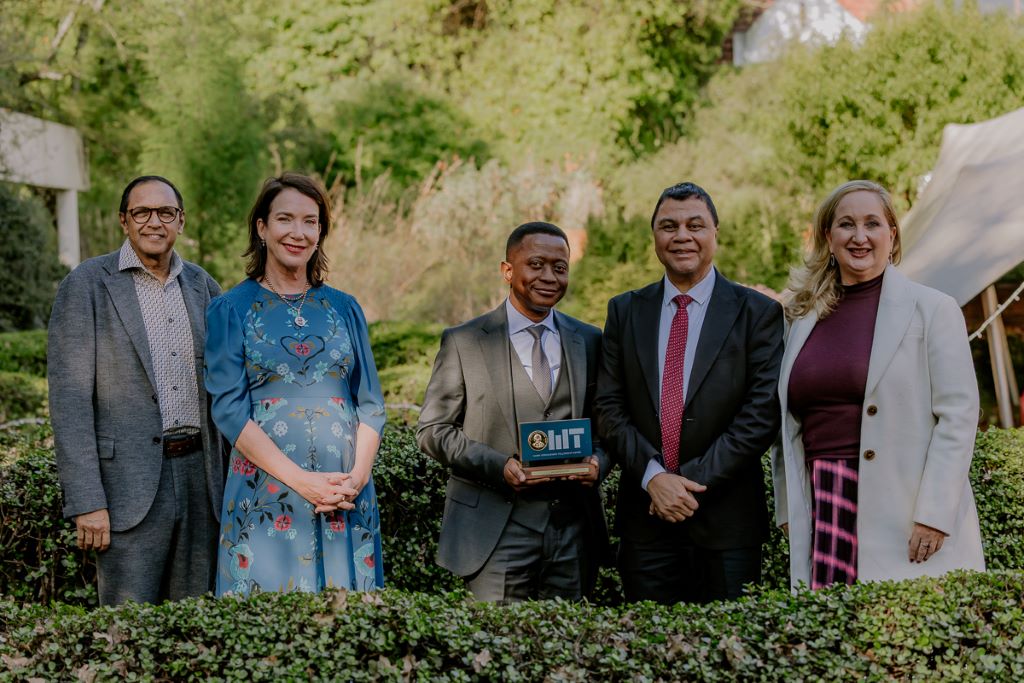
UP Vice-Principal: Research, Innovation and Postgraduate Education Prof Sunil Maharaj, OMT chair Rebecca Oppenheimer, Prof Mike Sathekge, head of the Department of Nuclear Medicine at UP and Steve Biko Academic Hospital, as well as President and CEO of NuMeRI, UP Vice-Chancellor and Principal Prof Francis Petersen and OMT CEO Tracey Webster.

Breast cancer is the leading type of cancer among women in South Africa, and globally. Too often it is discovered too late – but a new approach promises a radical change in survivability for patients.

The solution, called theranostics, stems from the field of nuclear medicine. It holds the potential to turn the tide against breast cancer and, like the fight against HIV/Aids, change it from an outright killer to a manageable disease.

Behind this initiative is world-renowned nuclear medicine specialist Professor Mike Sathekge, head of the Department of Nuclear Medicine at the University of Pretoria and Steve Biko Academic Hospital, and president and CEO of the South African Nuclear Medicine Research Infrastructure (NuMeRI), a globally leading, not-for-profit imaging facility situated at the hospital.

He has been presented the 2025 Harry Oppenheimer Fellowship Award, a R3-million grant from the Oppenheimer Memorial Trust (OMT) to complete his research and develop a way to make it widely available.

“Theranostics, brings diagnosis and treatment together, is a combination of early diagnosis with treatment that is personalised and precise down to mere cells, which allows us to exactly detect and assess tumours, devise specific treatment regimens and assessment of treatment response over time,” says Sathekge.

“The earlier the breast cancer is detected, the more accurately it is assessed and the more precise the treatment, the exponentially better the patient’s prognosis.”

In South Africa, however, this is too often not the outcome. A comprehensive study into the availability of breast cancer services in the public healthcare sector, published recently in the South African Medical Journal, found that 67% of patients had late-stage breast cancer at diagnosis. In other words, their cancer had metastasised and spread to other parts of their bodies, and their prognosis was poor.

The study also noted that South Africa is expected to face a substantial rise in cancer cases over coming decades, driven by population growth, ageing and changing disease patterns. Sathekge’s Harry Oppenheimer Fellowship Award nomination was one of 80 received by OMT, covering a wide range of academic fields. Finalists shortlisted included proposals on a system for measuring the environment, air and our health; frost exposure in tropical Africa; a model for testing modified gravity; conversion of CO2 into useful products (such as fertilisers); and tissue T-cell response profiling of tuberculosis. “There were so many excellent applicants for this year’s award, touching on vital issues impacting the world we live in, and worthy of further research and development,” says OMT chairperson Rebecca Oppenheimer.

“This made our selection panel’s final decision all the more challenging, but I believe we have made an exciting choice that will have far-reaching, positive ramifications for South Africa’s public healthcare system and the people who use it.

“In developing a technology that makes diagnosing and treating cancers more effective, affordable and available, Prof Sathekge and his colleagues hold in their hands the potential for a quantum leap forward in improving South African patients’ health outcomes and human dignity, as well as for beating breast cancer globally. OMT is proud to support his endeavours.”

Sathekge’s solution is, essentially, one whose time has finally come. First conceived around 15 years ago, it capitalises on a protein called trophoblast cell-surface antigen 2, or Trop2. This molecule, found in high levels in breast cancers (and others, including cervical, pancreatic and lung cancers), helps the cancer multiply and makes it stubborn to treat.

Although Trop2 is already recognised as an important target in several cancers, there is still no widely established, clinically scalable way to show exactly where Trop2 is present across a patient’s entire cancer burden.

The answer may lie in nanobodies: tiny, engineered antibody fragments that are designed to bind specifically to Trop2. Their small size allows them to reach tumours rapidly and clear from the bloodstream faster than conventional antibodies, making them particularly attractive for same-day PET imaging.

Through a long-standing collaboration with Prof Frederik Cleeren, assistant professor in the Laboratory for Radiopharmaceutical Research, in the Department of Pharmaceutical and Pharmacological Sciences, and his team at KU Leuven in Belgium and the Joint Research Centre (JRC) in Karlsruhe, who bring expertise in nanobody engineering and radiolabelling, Sathekge’s team is combining these strengths with South Africa’s capabilities in molecular imaging, actinium-225 radiopharmaceutical development and targeted radionuclide therapy.

Together, the collaborators are developing a Trop2-targeted theranostic approach that links diagnosis with treatment. The first step uses a tiny targeting protein, known as a nanobody, designed to bind specifically to Trop2 on cancer cells. This nanobody is labelled with fluorine-18, a short-lived radioactive tracer that allows doctors to visualise Trop2-positive tumours on a PET/CT scan.PET/CT is an advanced imaging method that uses a small amount of radioactive tracer to show biological activity inside the body. In this case, it could help clinicians map Trop2 expression across a patient’s full cancer burden, including disease that may not be accessible for repeated biopsy. It may also allow doctors to monitor changes in the target and treatment response over time.

Where imaging confirms sufficient Trop2 expression, the same targeting strategy can be developed for treatment using actinium-225, a powerful alpha-emitting isotope. Actinium-225 can deliver highly localised radiation over a very short distance, with the aim of concentrating treatment in Trop2-positive cancer cells while limiting radiation exposure to surrounding healthy tissue.

The ambition is to move beyond treating patients based on limited information from a single biopsy, towards a more personalised approach: seeing the target throughout the body, selecting patients more accurately, and laying the foundation for future Trop2-targeted alpha therapy.

Sathekge’s work puts South Africa at the forefront of worldwide research into effective responses to breast cancer, says the University of Pretoria’s Vice-Chancellor and Principal, Prof Francis Petersen.

“South Africa urgently needs better ways to detect, understand and treat aggressive breast cancer. Too many patients still present late, when the disease is more difficult to manage and treatment options are limited.

“Prof Sathekge’s work at NuMeRI brings together advanced imaging, radiopharmaceutical science and targeted treatment in a way that could help doctors make more informed, patient-specific decisions. The research aims to improve how cancer is identified, how treatment is selected and how response is monitored over time.

“It also demonstrates the depth of scientific talent, innovation and academic rigour in South Africa. Through work of this calibre, African researchers are not only responding to local health challenges, but helping to shape the global future of cancer care. We look forward to seeing this research strengthen South African capacity and contribute to better outcomes for patients here and internationally,” says Petersen.

For Sathekge, the most exciting element of his work is how it centres on the patient, giving them dignity and the opportunity to live long and fulfilling lives.

Provided by The University of Pretoria

Incorrect AI Advice is a Blind Spot – Even for Doctors

 New study highlights potential challenges for using automated tools in healthcare

Photo by Accuray on Unsplash

In experiments in which physicians made decisions about treating hypothetical patients, the physicians tended to trust incorrect advice presented as being generated by artificial intelligence (AI), even after given the opportunity to notice that patient recovery data contradicted the recommendations. Aranzazu Vinas of the University of the Basque Country, Spain, and colleagues present these findings in the open-access journal PLOS Digital Health

AI systems can help physicians categorise patients according to their different care needs, such as whether a patient is more or less likely to benefit from a certain treatment. Since these systems are not perfect, they are meant to be used as suggestions, with potential errors caught and corrected by physicians.

 Prior research has shown that, in general, people struggle to notice and correct mistakes made by AI. To explore how this challenge may extend to physicians, Vinas and colleagues analysed data from 223 physicians who anonymously participated in online experiments.

 The physicians were asked to imagine they had the option to treat patients for a rare disease using a not-yet-proven treatment still under development. They were told that an AI system had identified which patients were more or less likely to benefit from the treatment. The physicians then chose which patients to treat, and after being presented with data on patient recovery, rated their perceptions of how reliable the AI was.

 Crucially, the actual effectiveness of the hypothetical treatment did not align with the AI recommendations. In one experiment, the treatment was equally moderately effective for all patients, and in a second experiment, it was equally ineffective for all.

 However, in both experiments, the physicians tended to rate the AI system as reliable and apparently did not use the patient recovery data to conclude that the AI recommendations were incorrect. In the second experiment, the physicians did not realise that the treatment was entirely ineffective.

These findings highlight potential challenges for incorporating AI-based classification into healthcare. Future research could build on this study, such as by developing and testing strategies and protocols that could increase human critical thinking and detection of AI errors, in order to maximize the benefits of the human-AI collaboration while minimising potential errors.”

Lead author Aranzazu Vinas notes: ” In both experiments, physicians mostly trusted the AI’s classifications and had trouble learning from the feedback. Furthermore, in the second experiment, professionals did not notice that the treatment was completely ineffective.”

 Co-author Helena Matute adds, “People tend to say that there is always a human controlling the algorithm, but our experiments show that doctors (as well as anyone else) have problems in learning from the available evidence when it contradicts the suggestions of an algorithm.”

Co-author Fernando Blanco summarizes: “It is important to investigate the errors that humans (including doctors) make when working with algorithms, in order to learn how to minimize the problems that arise from them.”

Press Preview: https://plos.io/4wjPxSs

In your coverage please use this URL to provide access to the freely available article in PLOS Digital Health: https://plos.io/4blGKHA

Contact: Aranzazu Vinas, aranzazu.vinas@ehu.eus

Image Caption: Doctors working on an AI-support system

Image Credit: Photo by Accuray on Unsplash. Free to share under the Unsplash license.

High-Resolution Image Link: https://unsplash.com/photos/a-few-men-looking-at-a-computer-screen-S34fEzWT6eE

Get the Lead out: Lighter X-ray Aprons for Radiology

Researchers develop a flexible polymer shield that provides radiation protection without the health and ergonomic risks associated with lead

Researchers show flexible polymer material
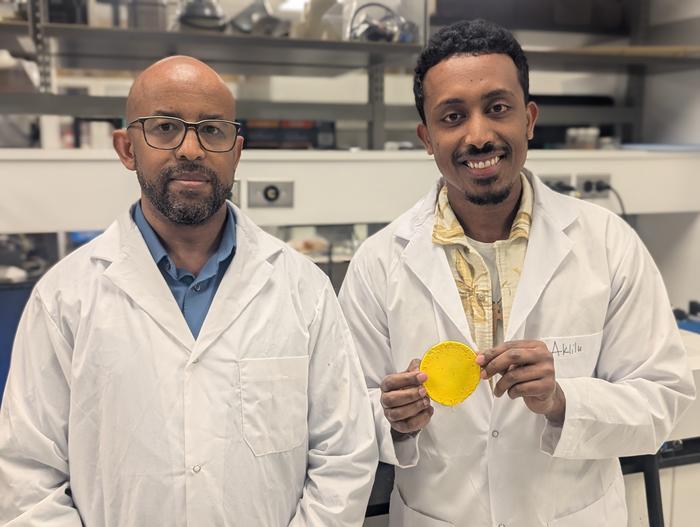
Professor Tizazu Mekonnen (left) and PhD student Aklilu G. Messele holding the flexible polymer material developed to replace the lead in heavy X-ray aprons (University of Waterloo/Nicola Kelly). Credit: University of Waterloo/Nicola Kelly

A light, flexible polymer material developed at the University of Waterloo could replace the lead in heavy X-ray aprons, providing the same protection from harmful radiation while reducing their weight by almost 90%.

“For patients who only get X-rays once in a while, heavy lead aprons might be okay, but technicians who wear them every day often develop back and neck pain,” said Dr Tizazu Mekonnen, a chemical engineering professor at Waterloo. “Some of them have to retire early as a result.”

Most aprons used for long periods of time also shed lead dust that can be inhaled or ingested by workers. Lead affects many areas of the body, including the cardiovascular and neurological systems and no amount of exposure is considered safe by the World Health Organization.

“Our research shows that radiation shielding does not have to rely on toxic, heavy materials such as lead,” Mekonnen said. “By engineering the size, shape, arrangement and distribution of nanoparticles within flexible polymers, we can achieve excellent X-ray protection while dramatically reducing weight. This opens the door to safer, more comfortable shielding materials for health-care workers and others who are routinely exposed to radiation.”

Researchers experimented with several alternatives to lead – including bismuth, gadolinium, barium and other heavy metals – before focusing on tungsten, which is well-suited to blocking X-rays because of its high density at the atomic level.

After first processing tungsten into tiny nanoparticles, they mixed them into a soft, silicone-based plastic to form nanocomposite sheets.

To prevent the nanoparticles from making the new material too stiff, they arranged them in layers called gradients. They also determined rod-shaped nanoparticles work best to block X-rays, a necessary tool in medicine, industrial inspection, security screening and military applications.

Tests and modelling with the flexible, lightweight polymer material for X-ray aprons were conducted at Grand River Hospital in Kitchener with Dr. Ernest Osei. 

PhD student Aklilu G. Messele, who co-authored a paper on the research, is now exploring its use for other types of radiation, including gamma ray emissions in the nuclear energy sector and to block electromagnetic waves from devices such as cellphones and Wi-Fi.

“We carry cellphones every day,” said Mekonnen, a Canada Research Chair in Sustainable Multiphase Polymers. “The impact on our bodies is unknown. What if we can design a cover that protects from the radiation emitted by our phones?”

The study, Tailoring X-ray attenuation in tungsten-based nanocomposites via particle morphology, multilayering, and concentration gradients, was recently published in the journal Materials Today Physics.

Source: EurekAlert!

Most Obesity Drugs Do Not Improve Quality of Life or Heart Health

Treatment decisions should be individualised, balancing expected benefits, harms, treatment burden, costs, availability, and patient preferences, say researchers

By HualinXMN – Own work, CC BY-SA 4.0

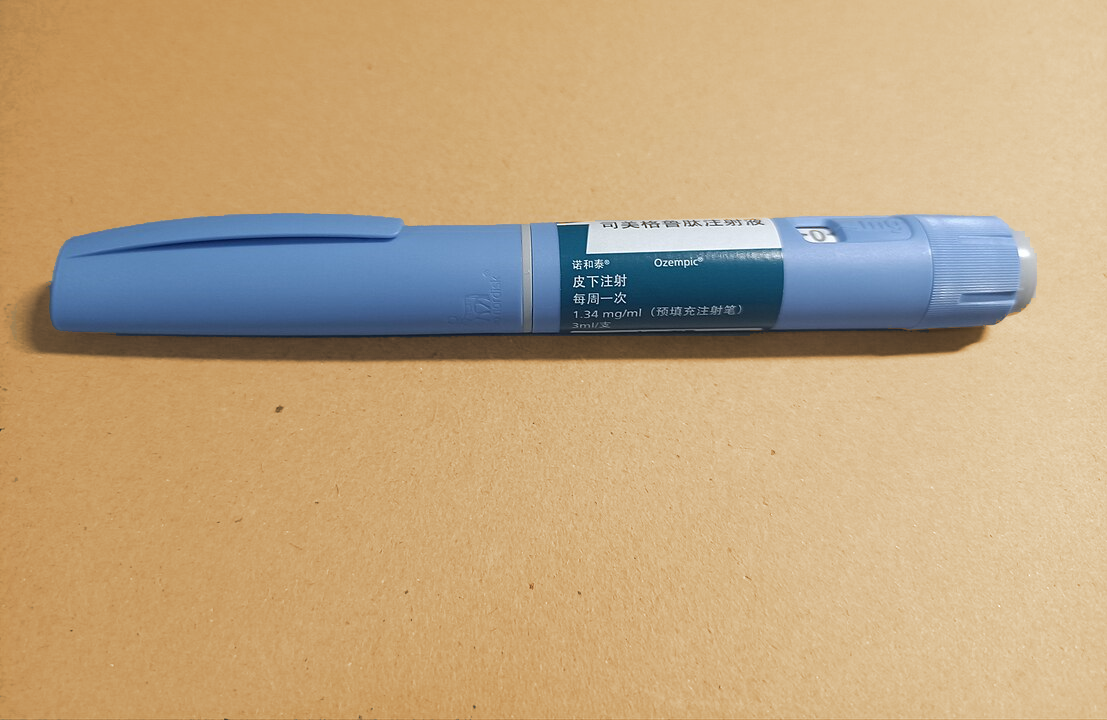
Despite substantial weight loss, most obesity drugs such as Wegovy and Mounjaro do not meaningfully improve quality of life and few show cardiovascular benefits at one year, finds an analysis of the latest evidence published by The BMJ today.

More weight loss is also generally accompanied by greater harms including stomach and bowel symptoms, fatigue, and loss of lean (muscle) mass – and improvements are not sustained after stopping treatment.

Several drugs for adults with overweight or obesity produce substantial weight loss, but most have not been compared directly in head-to-head trials, leaving uncertainty about the broader balance of benefits and harms.

To address this, researchers searched scientific databases for randomised controlled trials comparing one or more drugs with lifestyle changes, placebo, or another drug.

They found 262 eligible trials involving 99,791 participants (average age 49; 63% female; average BMI 35) that evaluated 19 currently available and emerging obesity drugs with follow-up from 12 to 172 weeks.

Benefits included changes in body weight, fat mass, and quality of life, while potential harms included changes in lean mass, gastrointestinal adverse events, gallbladder related disorders and fatigue.

The trials were of varying quality, but the researchers were able to assess the certainty of evidence using the recognised GRADE system.

Compared with lifestyle changes alone, the largest weight loss after one year was with tirzepatide (14.9%) and CagriSema (14.8%), followed by oral semaglutide (10.9%), orforglipron (9.9%), subcutaneous semaglutide (9.8%), and phentermine-topiramate (8.1%).

Emerging drugs – including retatrutide, ecnoglutide, and mazdutide – showed large effects on weight loss but are supported by low or very low certainty evidence.

Greater weight loss was consistently accompanied by higher rates of side effects and treatment discontinuation, which the authors say indicates a clear benefit-harm trade-off.

Tirzepatide reduced fat mass the most (by 25.7%) but also lean mass the most (8.3%). Subcutaneous semaglutide was the only drug associated with a reduced risk of death from any cause (19%), heart attack (28%), and heart failure (57%). Tirzepatide also reduced heart failure risk by 51%.

No drug convincingly reduced kidney failure or showed clinically important improvements in quality of life.

The authors acknowledge that most trials had relatively short follow-up, limiting conclusions about long term safety, quality of life, and effects on heart and kidney health. In addition, evidence for several newer drugs was sparse and of low certainty, and trial populations may not fully represent real world patients.

However, they say this review provides a comprehensive and up-to-date comparison of currently available and emerging obesity drugs across a broad set of outcomes important to patients, clinicians, and policymakers.

They conclude: “Treatment decisions for obesity should be individualised, balancing expected benefits, harms, treatment burden, costs, availability, and patient preferences.”

This study represents an important step in providing comparative information to inform patient-clinician discussions about obesity drugs in this rapidly evolving landscape of treatment options, say researchers in a linked editorial.

And they suggest future studies that incorporate individual characteristics, as well as long term outcomes, such as mortality, should provide additional data to inform individualised decision making.

Source: The BMJ Group

Are Meat Eaters Really More Likely to Live to 100 than Non‑meat Eaters, as a Recent Study Suggests?

Photo by Jose Ignacio Pompe on Unsplash

Chloe Casey, Bournemouth University

People who don’t eat meat may be less likely than meat eaters to reach the age of 100, according to a recent study. But before you reconsider your plant-based diet, there’s more to these findings than meets the eye.

The research tracked over 5,000 Chinese adults aged 80 and older who participated in the Chinese Longitudinal Healthy Longevity Survey, a nationally representative study that began in 1998. By 2018, those following diets that don’t contain meat were less likely to become centenarians compared with meat eaters.

On the surface, this appears to contradict decades of research showing that plant-based diets are good for your health. Vegetarian diets, for example, have been consistently linked to lower risks of heart disease and stroke, type 2 diabetes and obesity. These benefits come partly from higher fibre intake and lower saturated fat consumption.

So what’s going on? Before drawing any firm conclusions, there are several important factors to consider.

Your body’s needs change as you age

This study focused on adults aged 80 and older, whose nutritional needs differ markedly from those of younger people. As we age, physiological changes alter both how much we eat and what nutrients we need. Energy expenditure drops, while muscle mass, bone density and appetite often decline. These shifts increase the risk of malnutrition and frailty.

Most evidence for the health benefits of diets that exclude meat comes from studies of younger adults rather than frail older populations. Some research suggests older non-meat eaters face a higher risk of fractures due to lower calcium and protein intake.

In later life, nutritional priorities shift. Rather than focusing on preventing long-term diseases, the goal becomes maintaining muscle mass, preventing weight loss and ensuring every mouthful delivers plenty of nutrients.

The study’s findings may, therefore, reflect the nutritional challenges of advanced age, rather than any inherent problems with plant-based diets. Crucially, this doesn’t diminish the well-established health benefits of these diets for younger and healthier adults.

Maintaining muscle mass in older age is important, and that requires protein. Photo by Barbara Olsen on Pexels

Here’s a crucial detail: the lower likelihood of reaching 100 among non-meat eaters was only observed in underweight participants. No such association was found in older adults of healthy weight.

Being underweight in older age is already strongly linked with increased risks of frailty and death. Body weight therefore appears to be a key factor in explaining these findings.

It’s also worth remembering that this was an observational study, meaning it shows associations rather than cause and effect. Just because two things occur together doesn’t mean one causes the other.

The findings also align with the so-called “obesity paradox” in ageing, where a slightly higher body weight is often linked to better survival in later life.

Notably, the reduced likelihood of reaching 100 observed among non-meat eaters was not evident in those who included fish, dairy or eggs in their diets. These foods provide nutrients that are essential for maintaining muscle and bone health, including high-quality protein, vitamin B12, calcium and vitamin D.

Older adults following these diets were just as likely to live to 100 as meat eaters. The researchers suggested that including modest amounts of animal-source foods may help prevent undernutrition and loss of lean muscle mass in very old age, compared with strictly plant-based diets.

What this means for healthy ageing

Rather than focusing on whether one diet is universally better than another, the key message is that nutrition should be tailored to your stage of life. Energy needs decline with age (due to decreased resting energy expenditure), but some nutrient requirements increase.

Older adults still require adequate protein, vitamin B12, calcium and vitamin D – especially to preserve muscle mass and prevent frailty. In older adulthood, preventing malnutrition and weight loss often becomes more important than long-term chronic disease prevention.

Plant-based diets can still be healthy choices, but they may require careful planning and, in some cases, supplementation to ensure nutritional adequacy, particularly in later life.

The bottom line is that our nutritional needs at 90 may look very different from those at 50, and dietary advice should reflect these changes across the lifespan. What works for you now might need adjusting as you age – and that’s perfectly normal.

Chloe Casey, Lecturer in Nutrition and Behaviour, Bournemouth University

This article is republished from The Conversation under a Creative Commons license. Read the original article.