Tag: childhood obesity

Link Between Parents’ and Children’s Weight is Mostly Genetic, Study Finds

An analysis of 86 000 Norwegian children found that the association between parental and childhood body weight is largely explained by shared genetics

AI image created with Gencraft

The association between parents’ body mass index (BMI) and their children’s childhood BMI may be primarily due to genetic inheritance rather than to any direct biological effect of parental weight during pregnancy, according to a new study published June 23rdin the open access journal PLOS Medicine by Tom Bond of the University of Bristol, UK, and colleagues from the University of Queensland, Australia and more.

Higher parental BMI is consistently associated with higher childhood BMI. It has been difficult for researchers to disentangle how much of this association is due to genetics and how much is due to biological effects of maternal weight during pregnancy. This may have implications for interventions that aim to control childhood BMI by targeting pre-conception parental weight.

In the new study, researchers analysed data from the Norwegian Mother, Father and Child Cohort Study, a prospective birth cohort of children born between 1999 and 2009. Data on 86 000 children, including their birth weight and BMI from six months to eight years of age, as well as appetite-related eating behaviours at age eight, was available in the dataset. The researchers looked at twin, sibling, and half-sibling relationships across multiple generations to directly quantify how much of the parent-child BMI association could be attributed to genetic confounding.

Maternal BMI was more strongly associated with offspring birth weight than paternal BMI, consistent with an effect of maternal body weight on birthweight through the environment inside the uterus. However, after birth the associations of maternal and paternal BMI with offspring BMI were broadly similar from age two to eight. Models showed that genetic effects explained an estimated 79% of the statistical association between a mother’s BMI and her child’s BMI at age 8, and 94% of the association for fathers. Higher parental BMI was also associated with obesity-related eating behaviours in children, including greater food responsiveness and emotional overeating, although the study was not able to conclusively determine how much of this was genetically driven.

The authors caution that these findings do not support the idea that childhood obesity is inevitable for children of heavier parents. Children who inherit a genetic predisposition to higher BMI may still express those genes differently depending on their environment. The results also do not argue against the importance of maternal health in pregnancy, the authors say. Maternal obesity is well established to increase risk of adverse perinatal outcomes for both mother and child.

“Our results may have important public health implications, when considered alongside prior evidence,” they write. “Maternal BMI may be unlikely to have a large causal effect on child BMI beyond birth… and any causal effect of paternal BMI on offspring childhood BMI is likely to be similar to or smaller than that of maternal BMI. Consequently, reductions in the BMI of either parent before pregnancy may be unlikely to cause large reductions in childhood adiposity.”

Tom Bond states, “Obesity runs in families, but it is difficult to work out why this is. Our results suggest that the link between a mother’s or father’s body mass index (BMI) and their children’s BMI up to age 8 is mostly due to inherited genes. Expectant parents should be encouraged to maintain a healthy weight, but this may not be enough to ensure that their children also have a healthy weight.”

David Evans notes, “We were interested in examining whether obesity in mothers during pregnancy might also have adverse effects on the risk of obesity in their offspring when the children get older. We found that whilst maternal body mass index during pregnancy was likely to adversely affect offspring birthweight, it didn’t appear to have large effects on risk of offspring obesity in later life beyond that explained through the transmission of genes from mothers to their offspring.”

Alexandra Havdahl adds, “Our findings suggest that the link between parents’ and children’s body mass index is driven largely by shared genes rather than by the intrauterine environment or parenting behaviour.”

Provided by PLOS

Ultra-processed Foods Linked with Greater Risk of Overweight or Obesity in Adolescents

The conclusion comes from a systematic review and meta-analysis of 23 studies and 155 000 adolescents across multiple countries and regions.

Photo by Erik Mclean

Adolescents who consume more ultra-processed foods (UPFs) have significantly higher odds of being overweight or obese, according to a new systematic review and meta-analysis published in the open-access journal PLOS One by Mekuriaw Nibret Aweke of the University of Gondar, Ethiopia, and colleagues. In the most recent of the analysed studies, higher UPF consumption was linked with more than twice the odds of overweight or obesity compared to lower UPF consumption.

Being overweight or obese during adolescence raises a person’s likelihood of developing type 2 diabetes, high cholesterol, hypertension, and metabolic syndrome. The increasing consumption of UPFs – defined as industrial products made largely from extracted, modified, or synthetic ingredients, and typically high in added sugars, salt, unhealthy fats, and chemical additives – represents one of the fastest-growing unhealthy eating patterns among young people worldwide.

In the new study, researchers systematically searched multiple databases for observational studies reporting on UPF consumption and weight outcomes in adolescents aged 10 through 19. They identified 23 eligible studies involving a total of 155 000 adolescents, conducted across 16 countries between 2008 and 2025.

In a meta-analysis of all 23 studies, the researchers found that adolescents with higher UPF consumption had 63% greater odds of overweight or obesity compared with those with lower intake (OR = 1.63; 95% CI: 1.36–1.95). The positive association was consistent across all geographic regions studied, including Africa, Asia, Europe, North America, and South America. Subgroup analysis by year of publication showed that the most recent studies, published in 2024 and 2025, reported the highest odds ratio (OR = 2.09), suggesting the association may be growing stronger as UPF consumption rises globally.

Among other aspects, the study is limited by its reliance on observational designs, which cannot establish causation, and by variation across studies in how UPF consumption and obesity were measured.

The authors conclude that public health strategies should prioritize reducing UPF consumption among adolescents through education, policy interventions, and promotion of minimally processed, nutrient-dense foods.

The authors add: “Higher consumption of ultra-processed foods is linked to a substantially increased risk of overweight and obesity among adolescents, emphasising the need for early dietary interventions.”

“Improving adolescent nutrition today is essential to protecting long-term population health and reducing healthcare costs associated with obesity-related conditions.”

Provided by PLOS

Children with Obesity Are at Risk of Illness Despite Normal Test Results

AI image created with Gencraft

Children living with obesity but showing no signs of metabolic complications still have a significantly increased risk of developing type 2 diabetes, high blood pressure, and abnormal blood lipid levels later in life. A new study from the Karolinska Institutet, published in JAMA Pediatrics, also shows that these children benefit greatly from obesity treatment.

“There has been a debate about whether children with normal blood and liver values and normal blood pressure might not need treatment for their obesity. Our study shows that this assumption is incorrect,” says Claude Marcus, professor at the Department of Clinical Science, Intervention and Technology, Karolinska Institutet.

The study included just over 7200 children aged 7–17 who had begun obesity treatment in Sweden and were followed up until age 30. The researchers compared children with so-called metabolically healthy obesity (MHO), children with obesity and impaired cardio-metabolic risk markers (MUO), and peers from the general population.

A clearly increased risk

By age 30, 9% of the children with MHO had developed type 2 diabetes, compared with 17% of those with MUO and 0.5% in the control group. Similar patterns were observed for high blood pressure (11% in the MHO group, 18% in the MUO group, and 4% in the control group) and abnormal blood lipids (5 and 13%, respectively, compared to 1% in the general population).

“Even children with obesity who show no signs of cardiometabolic impact have a clearly increased risk of future diseases. This means that normal blood pressure and the absence of abnormal blood test results are not sufficient protection against future morbidity,” says Emilia Hagman, associate professor at the Department of Clinical Science, Intervention and Technology, Karolinska Institutet, and the paper’s corresponding author.

All children need treatment

All children in the study received support for healthier lifestyle habits, and the researchers also investigated whether the treatment response affected the risk of future illness in the different groups. A good treatment response during childhood was linked to a reduced risk of all the diseases studied. The effect was equally significant in both the MHO and MUO groups.

“Our results suggest that all children with obesity need treatment, even if they appear completely healthy upon examination,” says Claude Marcus.

The study is based on data from the national quality registry BORIS and several Swedish health data registries. The research was funded by, among others, the Center for Innovative Medicine, the Ollie and Elof Ericsson Foundation, and the Freemason Foundation for Children’s Welfare. Several of the researchers report compensation from companies unrelated to this work. See the scientific article for a complete list of conflicts of interest.

Source: Karolinska Institutet

Kids of Obese Parents More Likely to Develop Obesity due to Inheriting Related Genes

Mom’s genes play a larger role than dad’s in determining whether kids will be obese

A new study finds that kids with obesity are more likely to have obese parents because they inherit obesity-related genes, and to a smaller extent, are impacted indirectly by genes carried by the mother – even when those genes aren’t passed down. A new study led by Liam Wright of the University College London, UK, and colleagues, reports these findings August 5th in the open-access journal PLOS Genetics.

Studies commonly show that children with obesity often have parents with obesity, but the cause of this trend has been poorly understood. Children may inherit genes from their parents that increase their risk of obesity, or they could be shaped by conditions in the womb, or by the food and lifestyle choices their parents make.

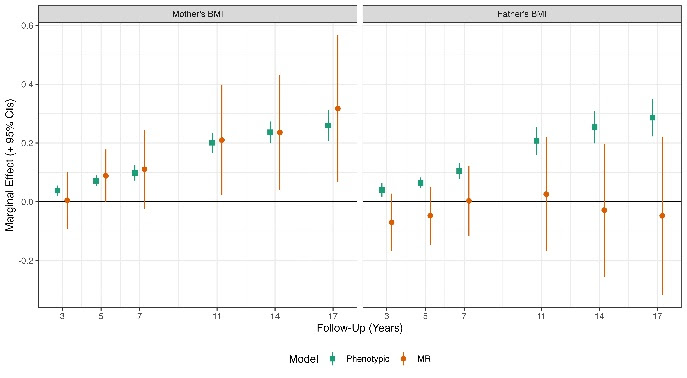
In the new study, researchers investigated the effects of the parents’ genetics on the weight and diet of their children. They looked at a measure of obesity called the body mass index (BMI), along with the diet and genetic data from more than 2500 mother-father-child trios. They focused on obesity related genes in the parents – both the ones that were directly passed down to their children, and the genes that weren’t, but that may indirectly impact weight by shaping the child’s environment, which are called genetic nurture effects. They found that, though mothers’ and fathers’ BMIs were consistently correlated with the child’s BMI, this trend could be mostly explained through the genes that children directly inherit. Genetic nurture effects from obesity-related genes in the mother that were not inherited had a smaller impact, only during the child’s adolescence.

The results suggest that a mother’s BMI may be particularly important for determining a child’s BMI, both due to the effects of genes that children directly inherit, and through indirect nurture effects from genes that weren’t passed down. Meanwhile, fathers had little impact on their child’s BMI, apart from the genes that were directly inherited. The study’s authors suggest that analyses that don’t consider the inherited genes are likely to give misleading estimates of the parents’ influence on a child’s weight.

The authors add, “Our results suggest mother’s weight could affect their children’s weight; policies to reduce obesity could have intergenerational benefits.”

Provided by PLOS

A Third of Children Worldwide Forecast to be Obese or Overweight by 2050

AI image created with Gencraft

Obesity rates are set to skyrocket, with one in six children and adolescents worldwide forecast to be obese by 2050, according to a new study. But with significant increases predicted within the next five years, the researchers stress urgent action now could turn the tide on the public health crisis.

The research, led by Murdoch Children’s Research Institute (MCRI) and published in The Lancet, found a third of children and adolescents will be overweight (385 million) or obese (360 million) within the next 25 years. The forecast equates to 356 million children aged 5–14 years and 390 million aged 15–24 years with one in six facing obesity.

The global obesity rate for those between 5-24 years old tripled from 1990 to 2021, rising by 244 per cent to 174 million, suggesting that current approaches to curbing increases in obesity have failed a generation of young people. As of 2021, 493 million children and adolescents were overweight or obese.

MCRI Dr Jessica Kerr said if immediate five-year action plans were not developed, the future was bleak for our youth. 

“Children and adolescents remain a vulnerable population within the obesity epidemic,” she said, adding that obesity drives a whole range of diseases. Prevention is key as obesity rarely resolves after adolescence.

“Despite these findings indicating monumental societal failures and a lack of coordinated global action across the entire developmental window to reduce obesity, our results provide optimism that this trajectory can be avoided if action comes before 2030.”

The analysis, released on World Obesity Day, used the 2021 Global Burden of Diseases, Injuries, and Risk Factors Study to estimate the latest overweight and obesity levels and forecasts in 204 countries and territories.

The United Arab Emirates, Cook Islands, Nauru and Tonga are forecast to have the highest prevalence while China, Egypt, India and the US will have the greatest number of children and adolescents with obesity by 2050.

In Australia, children and adolescents have experienced some of the fastest transitions to obesity in the world. Girls are already more likely to be obese than overweight. Overall, by 2050 for those aged 5-24 years, 2.2 million are forecasted to be obese and 1.6 million overweight.

Globally, there will be more boys, 5–14 years, with obesity than being overweight by 2050.

“Without urgent policy reform, the transition to obesity will be particularly rapid in north Africa, the Middle East, Latin America and in the Caribbean, where the rise is concurrent with high population numbers and limited resources,” Dr Kerr said.

“Many regions have historically had to focus on preventing undernutrition and stunting in children. To prevent a public health emergency from this newer threat, an immediate imperative should be creating national surveillance surveys of obesity in children and adolescents in every country.”

Dr Kerr said older adolescent girls, aged 15-24 years entering their reproductive years, were a priority population for intervention.

“Adolescent girls who are obese are a main focus if we are to avoid intergenerational transmission of obesity, chronic conditions and the dire financial and societal costs across future generations,” she said.

“With this age group increasingly being out of school and cared for by adult services, we need to focus interventions at the community and commercial level.”

Source: Murdoch Childrens Research Institute

Treatment for Children with Obesity has Lasting Effect

Photo by Patrick Fore on Unsplash

When children with obesity undergo weight-loss treatment, the effects have repercussions later in life and the risk of serious health problems and premature death is lower as they reach young adulthood. However, this is not the case for depression and anxiety, a study from Karolinska Institutet published in JAMA Pediatrics reports.

The study shows that children and adolescents who respond well to obesity treatment are less likely to develop obesity-related diseases, such as type 2 diabetes, hypertension and dyslipidaemia as young adults.  

The treatment studied involved support for children with obesity and their families designed to motivate healthy diets, exercise and sleep habits – what is known as “behavioural lifestyle therapy”.  

“The results are very good news,” says the study’s last author Emilia Hagman, principal researcher at the Department of Clinical Science, Intervention and Technology, Karolinska Institutet. “Whether or not the treatment of obesity in childhood has long-term health benefits have been debated, since weight-loss is hard to maintain.”

Higher risk of dying as young adults

The study shows that children with obesity who respond to treatment also run a lower risk of premature death. A previous study, published in PLOS Medicine by the same research group, has shown that children with obesity have a much higher mortality risk in early adulthood, and were much more likely to die from suicide and somatic conditions. Just over a quarter of deaths were obesity-related.

“This emphasises the importance of providing early treatment, as we know that timely intervention increases the likelihood of success and helps mitigate the long-term health risks associated with obesity,” says Dr Hagman.

Depression and anxiety are not affected

However, the risk of depression and anxiety was not affected by the treatment outcomes in childhood, the JAMA Pediatrics paper shows. No matter the outcome of obesity treatment in childhood, the risk of anxiety and depression was unchanged in young adulthood.

“It has been believed that weight loss could decrease symptoms of depression and anxiety, but we can now show that it’s not the case,” says Dr Hagman. “Even though there’s a link between the two comorbidities, they must be treated in parallel.”

The study included over 6700 individuals who had received treatment for obesity during childhood identified via the BORIS register (the Swedish Childhood Obesity Treatment Register) and who were then followed up as young adults in the Swedish Patient Register, the Prescribed Drugs Register and the Cause of Death Register. A control group from the general population was also used, matched by age, sex and place of residence.

GLP1 analogues, which have become popular obesity drugs in recent years, were not part of the study as they were yet approved when the study participants were being treated for obesity. As Dr Hagman points out, it is still uncommon for this type of drug to be administered to children.

“I’m in favour of their use as these drugs eases feelings of hunger, which is something that some children struggle with” she says. “That said, lifestyle therapy is still the foundation of all treatments for childhood obesity.”

The research group will now be trying to identify therapy options that are most effective for different individuals and the health/risk markers that are significant for future health.

Source: Karolinska Institutet

Outdoor Play Helps Protect Toddlers against Later Childhood Obesity

New research published in Acta Paediatrica suggests that children who engage in outdoor play during their preschool years have a lower risk of developing obesity later in childhood.

The study included children born in Japan during two weeks in January and July 2001. Of 53 575 children born, 42 812 had data on outdoor play habits at age 2.5 years. In a survey, parents were asked, “Where do your children usually play (excluding home residences and daycare centres attended)?” Available options for answers included “in my garden or on the grounds of my apartment complex,” “in parks,” “in natural areas such as fields, forests, and beaches,” “on the street,” “in shrines and temples,” “in playgrounds in department stores and supermarkets,” “other,” and “don’t play anywhere but inside my home.” If one or more of the first five items were chosen, a child was considered to have exposure to outdoor play—this was the case for 91% of the children.

In follow-up surveys when the children were seven years old, 31 743 of 42 812 (74%) children had height and weight data, with 10% classified as overweight or obese.

Compared with children without exposure to outdoor play, children with outdoor play habits had 15% lower odds of being overweight or obese, after adjusting for other influencing factors.

“We suggest that parents and caregivers encourage outdoor play habits in their children at an early age, as this may help prevent obesity later in life,” said corresponding author Takahiro Tsuge, MPH, of Kurashiki Medical Center.

Source: Wiley

Raising Happy Eaters: Unlocking the Secrets of Childhood Appetite

Photo by Vanessa Loring on Pexels

The foundation for healthy eating behaviour starts in infancy. Young children learn to regulate their appetite through a combination of biological, psychological, and sociological factors. In a new paper published in Social Science & Medicine, researchers at the University of Illinois Urbana-Champaign propose a model that explores these factors and their interactions, providing guidelines for better understanding childhood appetite self-regulation.

“When we talk about obesity, the common advice is often to just eat less and exercise more. That’s a simplistic recommendation, which almost makes it seem like an individual’s willpower solely determines their approach to food,” said lead author Sehyun Ju, a doctoral student in the Department of Human Development and Family Studies, part of the College of Agricultural, Consumer and Environmental Sciences at Illinois. 

Appetite self-regulation is related to general self-regulation, but it specifically concerns an individual’s ability to regulate food intake, which affects healthy development and obesity risk. Children are born with a capacity to regulate appetite based on hunger and satiety signals, but with increased exposure to environmental factors, their eating is increasingly guided by psychological reasoning and motivations. Therefore, it is important to take a developmental perspective to trace changes in eating behaviours over time, Ju stated.

Ju and her colleagues provide a comprehensive framework based on the biopsychosocial pathways model, which outlines three interacting categories: Biological factors, including sensory experience, physiological hunger and satiety signals, brain-gut interaction, and the influence of the gut microbiome; psychological factors, including emotional self-regulation, cognitive control, stress regulation, and reward processing; and social factors, such as parental behaviour and feeding practices, culture, geographic location, and food insecurity.

The researchers combine this framework with temperamental theory to explore how the pathways are modified by individual temperament.

Children react differently to stimuli based on their psychological and emotional make up, Ju explained. For example, openness to novelty and positive anticipation can affect whether a child is willing to try new foods. If a parent pressures their child to eat, it could be counter-productive for a child with heightened sensitivity to negative affect, causing the child to consume less.

The model also takes children’s developmental stages into account. Infants have basic appetite regulation based on physiological cues. They gradually become more susceptible to external influences and by age 3-5, children begin to exhibit greater self-control and emotional regulation.

“By analysing the pathways outlined in our model, we can better understand the combined influences of multiple factors on children’s appetite self-regulation and their motivations to approach food,” Ju said. “For example, the presence of palatable food may not generate similar responses in everyone. Children could approach food as a reward, for pleasure-seeking, or to regulate emotions. The underlying motivations can be diverse, and they are influenced by external factors as well as temperamental characteristics.”

Socio-environmental influences include parent-child interactions around food, as well as non-food-related caregiver practices that can impact the child’s emotional regulation. The household food environment, cultural value of food intake, and food availability are also important factors, the researchers stated.

“If we understand the differential susceptibility to various factors, we can identify and modify the environmental influences that are particularly obesogenic based on children’s temperamental characteristics. Then we will be able to provide more refined approaches to support children’s healthy eating behaviour,” Ju explained.

Source: University of Illinois College of Agricultural, Consumer and Environmental Sciences

Exercising during Pregnancy Normalises Eating Behaviours in Offspring from Obese Mice

Source: Pixabay CC0

Maternal obesity impacts the eating behaviours of offspring via long-term overexpression of the microRNA miR-505-5p, according to a study publishing June 4 in the open-access journal PLOS Biology by Laura Dearden and Susan Ozanne from the MRC Metabolic Diseases Unit, Institute of Metabolic Science, University of Cambridge, UK, and colleagues.

Previous studies in both humans and animal models have shown that the offspring of obese mothers have a higher risk of obesity and type 2 diabetes.

While this relationship is likely the result of a complex relationship between genetics and environment, emerging evidence has implicated that maternal obesity can disrupt the hypothalamus – the region of the brain responsible for nutrition sensing and energy homeostasis.

In animal models, offspring exposed to overnutrition during key periods of development eat more, but little is known about the molecular mechanisms that lead to these changes in eating behaviour.

In this study, researchers found that mice born from obese mothers had higher levels of the microRNA miR-505-5p in their hypothalamus – from as early as the foetal stage into adulthood.

The researchers found that the mice ate more and showed a preference for high-fat foods.

Interestingly, the effect of maternal obesity on miR-505-5p and eating behaviours was mitigated if the mothers exercised during pregnancy.

Cell culture experiments showed that miR-505-5p expression could be induced by exposing hypothalamic neurons to long-chain fatty acids and insulin, which are both high in pregnancies complicated by obesity.

The researchers identified miR-505-5p as a novel regulator of pathways involved in fatty acid uptake and metabolism, therefore high levels of the miRNA make the offspring brain unable to sense when eating high fat foods.

Several of the genes that miR-505-5p regulates have been associated with high body mass index in human genetic studies.

The study is one of the first to demonstrate the molecular mechanism linking nutritional exposure in utero to eating behaviour.

The authors add, “Our results show that obesity during pregnancy causes changes to the baby’s brain that makes them eat more high fat food in adulthood and more likely to develop obesity. Importantly we showed that moderate exercise, without weight loss, during pregnancies complicated by obesity prevented the changes to the baby’s brain. This helps us understand why the children of mothers living with obesity are more likely to become obese themselves, with early life exposures, genetics and current environment all being contributing factors.”

Provided by PLOS

Obese and Overweight Children at Risk of Iron Deficiency

Photo by Patrick Fore on Unsplash

Children and young people who are overweight or obese are at significantly higher risk of iron deficiency, according to a study by nutritional scientists at the University of Leeds.

Researchers from the School of Food Science and Nutrition examined thousands of medical studies from 44 countries involving people under the age of 25 where levels of iron and other vitamins and minerals had been recorded alongside weight. They found that iron deficiency was associated with both underweight and overweight children and adolescents.

By contrast, zinc and vitamin A deficiencies were only observed in children who were undernourished, leading researchers to conclude that iron deficiency in overweight children is probably due to inflammation disrupting the mechanisms that regulate iron absorption.

The results of the research appear in the journal BMJ Global Health.

Iron deficiency in children has a negative effect on brain function, including attention, concentration and memory, and can increase the risk of conditions, such as autism and ADHD.

It is already recognised as a problem in adults living with obesity, but this research is the first to look at the association in children.

Lead author Xiaomian Tan, a Doctoral Researcher in the University of Leeds’ School of Food Science and Nutrition said: “The relationship between undernutrition and critical micronutrients for childhood growth and development is well established, but less is known about the risk of deficiencies in iron, vitamin A and zinc in children and adolescents who are overweight or obese, making this a hidden form of malnutrition.

“Our research is hugely important given the high prevalence of obesity in children. We hope it will lead to increased recognition of the problem by healthcare practitioners and improvements in clinical practice and care.”

Hidden hunger

Historically the problem has been linked to malnutrition and is a particular concern for lower- and middle-income countries where hunger may be the leading cause of mortality for young children.

Increasingly though it is being recognised that vitamin and mineral deficiencies can also occur in people who are overweight and obese and who have a nutrient-poor but energy-dense diet, something which has been described as ‘hidden hunger’.

In high-income countries it is associated with ultra-processed foods that are high in fat, sugar, salt, and energy but in lower- and middle-income countries obesity is often associated with poverty and monotonous diets with limited choices of staples such as corn, wheat, rice, and potatoes.

Many developing countries are now facing a double burden of malnutrition alongside overnutrition due to the rapid increase in the global prevalence of obesity in recent decades, especially in children aged between five and 19.

Undernutrition versus overnutrition

The research also highlights differences in focus between higher income countries and developing nations, with most studies in Africa and Asia focusing on undernutrition and those from North America and Europe focusing entirely on overnutrition.

The researchers say this is particularly concerning as both Africa and Asia are experiencing the highest double burden of malnutrition due to economic growth and the transition to a western-style high-sugar, high-fat diet.

Between the years 2000 and 2017, the number of overweight children under the age of five in Africa increased from 6.6 to 9.7 million, and in Asia that figure rose from 13.9 to 17.5 million. At the same time, there was an increase in the number of stunted children under 5, from 50.6 to 58.7 million in Africa.

Research supervisor Bernadette Moore, Professor of Nutritional Sciences in Leeds’ School of Food Science and Nutrition, said: “These stark figures underscore the fact that the investigation of micronutrient deficiencies in relation to the double burden of malnutrition remains critically important for child health.

“By the age of 11 here in the UK, one in three children are living with overweight or obesity, and our data suggests that even in overweight children inflammation leading to iron deficiency can be an issue.

“Iron status may be the canary in the coalmine, but the real issue is that prolonged inflammation leads to heart disease, diabetes and fatty liver.”

Increasing physical activity and improving diet have been shown to reduce inflammation and improve iron status in children and the researchers are now calling for further studies into the effectiveness of these interventions.

They also believe that more research is needed into micronutrient deficiencies and the double burden of malnutrition and overnutrition in countries where there are currently gaps in data.

Source: University of Leeds