Tag: 4/6/26

Proteins in Blood Could Help Predict Retinal Degeneration in Diabetics

A model using 71 proteins associated with retinal degradation could predict risk in diabetics
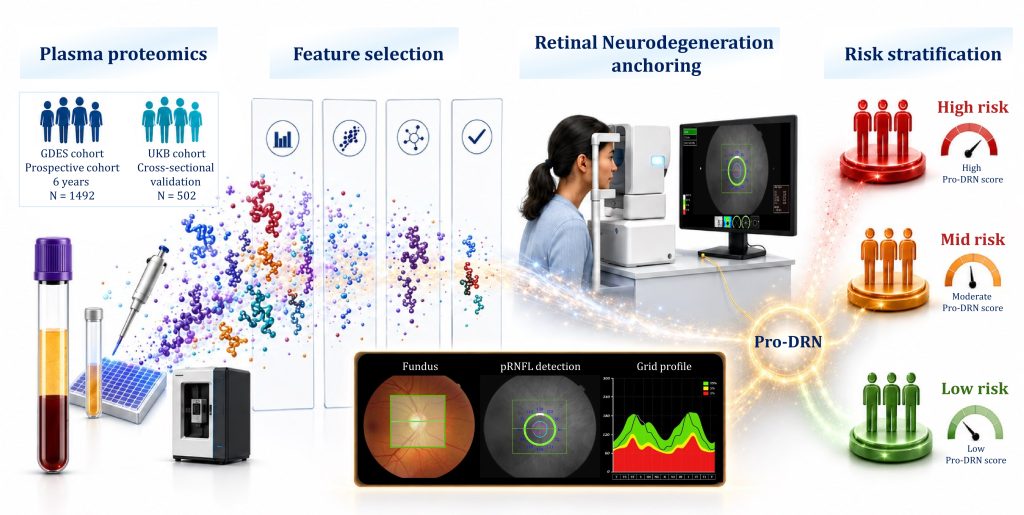
Plasma proteomic signatures for early risk stratification of diabetic retinal neurodegeneration.
Credit: Wei Wang and Huangdong Li / Zhongshan Ophthalmic Center, Sun Yat-sen University (CC-BY 4.0, https://creativecommons.org/licenses/by/4.0/)

An AI-assisted model based on 71 different blood proteins could help doctors better predict retinal degeneration in diabetic patients before symptoms occur, according to a study published June 2nd in the open access journal PLOS Medicine by Huangdong Li from the Guangdong Provincial Clinical Research Center for Ocular Diseases in Guangzhou, China, and colleagues.

More than half a billion people around the world are now affected by diabetes. People with the disease are at risk of different neurodegenerative conditions, including the breakdown of the retina, the part of the eye that detects light, in a condition called diabetic retinal neurodegeneration (DRN). It can cause severe visual impairment and vision loss, and scientists believe that DRN is a “window” into the diabetic degeneration of other parts of the nervous system, including cognitive impairment and dementia, as well as degradation of nerves in peripheral areas like the fingers and toes.

Unfortunately, DRN is only detected after symptoms appear, when damage is already irreversible. To better predict who might suffer from DRN and when, the researchers sampled the blood plasma from 1492 patients in the Guangzhou Diabetic Eye Study with type 2 diabetes who did not yet have DRN, and examined the eyes of 1218 of them through scans over a six-year period. They compared their results with another 502 people with diabetes in the United Kingdom BioBank.

The researchers identified 71 different plasma proteins associated with DRN. The proteins were part of cell pathways for processes like inflammation and cellular maintenance. Using machine learning, the scientists used the protein levels in plasma to develop a predictive model called Pro-DRN which was able to improve on the best-performing model by 26 percent. The scientists have already put the model online to allow doctors to assess the risk. While Pro-DRN is based on plasma protein levels and relies on associations between protein levels and DRN and not direct causes, the authors hope that it could help doctors predict and potentially prevent neurodegeneration, using a simple blood test analysed by AI.

The authors add, “Our study suggests that early retinal nerve damage in diabetes leaves measurable signals in the blood. By combining plasma proteomics, longitudinal retinal imaging, and explainable AI, Pro-DRN may help move diabetic eye care from detecting established damage toward earlier, molecularly informed risk stratification, so that closer monitoring and future neuroprotective interventions can be directed to the people most likely to benefit.”

Provided by PLOS

Good Vibes. Great Music. Real Impact. Join the One Day x SANBS Community Blood Drive

The South African National Blood Service (SANBS) and J’Something Bring Blood Donation into the Culture

What if saving a life was part of your weekend plans?

On 6 June 2026, music, culture, community and purpose will come together at Artistry JHB as the South African National Blood Service (SANBS), musician and entrepreneur J’Something host One Day x SANBS Community Blood Drive a unique event designed to make giving blood more accessible, engaging and relevant to a new generation of South Africans.

Every day, blood donors help create more tomorrows for patients across the country. They make it possible for someone to celebrate another birthday, return home to their family, pursue their dreams, or simply get a second chance at life. Yet many South Africans who are eligible to donate have never taken that first step.

Through this purpose-driven partnership, SANBS and J’Something are bringing blood donation into spaces where people naturally connect, create and inspire one another. By blending culture, creativity and community impact, the One Day x SANBS Community BloodDrive aims to show that donating blood is not only life-saving it’s something everyone can be part of.

The result is more than a blood drive. It’s a day party with purpose, where every donation has the potential to save up to three lives.

Blood Drive Details:

Venue: Artistry JHB

Date: 6 June 2026

Time: 09:00 – 15:00

RSVP: tshilidzim@meropa.co.za or 076 306 1197

Please RSVP by Friday,05 June 2026

Secure your spot at the blood drive by completing the quick eligibility screening below.

Whether you’re donating blood or simply coming through to support the movement, expect good music, great energy and a community united for a meaningful cause.

Click here for the quick eligibility screening.

Be the lifeline. Give Blood. Give A Tomorrow.

Breakthrough Drug Nearly Doubles Survival with Advanced Pancreatic Cancer

– an Oncologist Explains how Daraxonrasib Overcame an ‘Undruggable’ Disease

Pancreatic cancer. Credit: Scientific Animations CC BY-SA 4.0

Christopher Lieu, University of Colorado Anschutz

For a long time, the likelihood of surviving pancreatic cancer has been extremely low. For patients who were diagnosed with metastatic pancreatic cancer between 2015 and 2021, about 97% died within five years of their diagnosis.

Pancreatic cancer is so deadly in part because there are no effective screening tests, and it rarely causes noticeable symptoms in its earliest stages. By the time a patient experiences signs, such as jaundice – a yellowing of the skin – or abdominal pain, the cancer has often already spread to other organs.

As a gastrointestinal oncologist and researcher specialising in early-phase clinical trials, I have seen the critical need for more effective therapies for patients with pancreatic cancer. For decades, successfully targeting the central mechanism that causes the vast majority of pancreatic cancers was considered impossible.

However, that narrative is rapidly changing with a new drug that can shut down the key protein that drives pancreatic cancer, nearly doubling survival rates for patients with advanced stages of the disease.

‘Undruggable’ tumours

The standard treatment for advanced pancreatic cancer has historically relied on chemotherapy, potent drugs designed to kill rapidly dividing cells. While chemotherapy can slow the progression of the disease, its effectiveness is often limited by the ability of pancreatic cancer cells to develop resistance against these drugs.

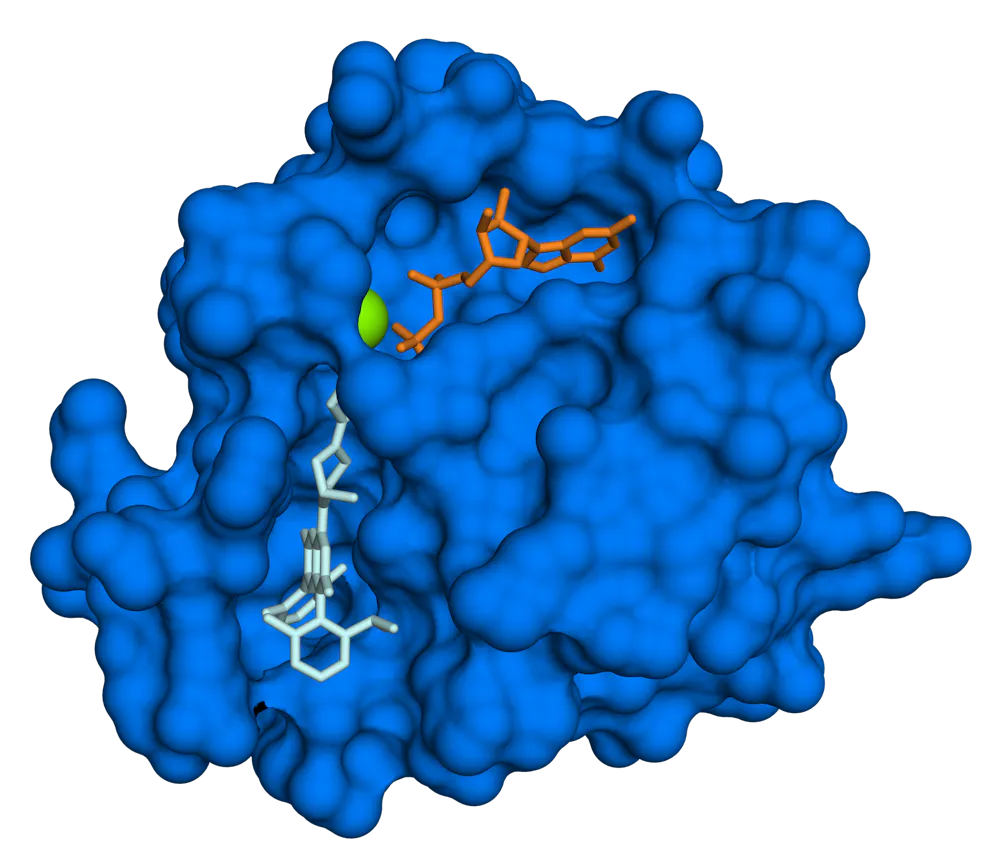
Model of the 3D structure of KRAS, resembling a rough-looking blob with a molecule tucked inside
KRAS (blue) has been difficult for drugs to target. Fvasconcellos/Wikimedia Commons

Pancreatic cancer’s success lies in its genetics. More than 90% of pancreatic tumours are driven by mutations in a gene called KRAS. This gene codes for proteins that function as switches that turn cell growth on and off. When the KRAS gene is mutated, the switch becomes permanently stuck in the “on” position, commanding cancer cells to multiply endlessly.

For decades, scientists considered KRAS to be “undruggable.” The surface of the protein is exceptionally smooth, lacking the molecular pockets that standard drugs require to bind to and turn the switch off.

Because existing drugs haven’t been able to target this protein, treatment for pancreatic cancer has primarily relied on toxic drugs that act more like blunt instruments than precise tools. Chemotherapy attempts to control the disease through widespread cell destruction, causing significant collateral damage to healthy tissues that lead to side effects.

What is daraxonrasib?

A new drug called daraxonrasib offers a critical advance in treating metastatic pancreatic cancer.

Daraxonrasib is taken daily by mouth. Instead of binding to KRAS directly, it attaches to a molecule called cyclophilin A in cells that helps fold proteins into their final 3D structures. This protein complex is then able to bind to the active KRAS protein and shut down its ability to signal cancer cells to multiply.

The company developing the drug, Revolution Medicines, presented results on May 31, 2026, from its Phase 3 clinical trial of 500 patients with metastatic pancreatic cancer who had received prior treatment. Compared to standard chemotherapy, daraxonrasib nearly doubled overall survival from 6.7 months to 13.2 months after diagnosis. Overall, daraxonrasib reduced the risk of death for metastatic pancreatic cancer patients by 60%. https://www.youtube.com/embed/sIspXSWQn1w?wmode=transparent&start=0 Daraxonrasib nearly doubled survival for patients with advanced pancreatic cancer compared to chemotherapy.

The most common side effect is a prominent skin rash, which affected more than 86% of patients in the study. Patients also frequently dealt with stomatitis – painful swelling and sores inside the mouth – as well as diarrhoea, nausea and vomiting. However, patients taking daraxonrasib were far less likely to stop treatment due to severe side effects compared to chemotherapy, and they had improved quality of life with reduced pain.

Next steps for daraxonrasib

By successfully targeting the specific genetic mutation that drives the vast majority of pancreatic cancers, researchers have demonstrated that this “undruggable” disease is treatable with targeted therapy.

The immediate next step is regulatory review of the drug’s readiness for the clinic. With data now officially published, Revolution Medicines will use these findings to seek formal approval from the Food and Drug Administration and other global regulatory bodies.

Because advanced pancreatic cancer is notoriously difficult to treat, breakthrough therapies that demonstrate this kind of significant survival benefit are often granted expedited or priority review. When daroxonrasib becomes available to patients will depend on the review timeline. Should the drug obtain approval, it could be available in clinics within months.

For the broader landscape of drug development, this milestone represents a likely shift in pancreatic cancer treatment. I expect more clinical trials exploring combination therapies pairing KRAS inhibitors with other drugs to prevent tumours from developing resistance to treatment.

Should daraxonrasib succeed, it could help set the stage for more precise, personalised and effective treatments for pancreatic cancer in the years to come.

Christopher Lieu, Professor of Medical Oncology, University of Colorado Anschutz

This article is republished from The Conversation under a Creative Commons license. Read the original article.

Brain Tumour Removal May Improve Blood Sugar Control in Diabetes Patients

Photo by Anna Shvets on Pexels

A new study published in JAMA Network Open found that removing olfactory groove meningioma, a type of brain tumour located near the base of the brain, may improve blood sugar control in patients with diabetes. 

Researchers followed patients with an olfactory groove meningioma and diabetes over five years after surgery, tracking long-term changes in haemoglobin A1c (HbA1c), which is a standard measure of blood sugar control, and body weight after tumour removal surgery. 

The research team found:

  • Blood sugar control improved after tumour removal in most patients.
  • Improvements often happened soon after surgery and lasted for years.
  • Many patients also lost weight after surgery.
  • Improvements occurred even when diabetes medications stayed the same. 

“This type of brain tumour affects both frontal lobes simultaneously and is usually thought of as causing symptoms like vision problems, personality changes or loss of smell,” said Andrew Venteicher, MD, PhD, an associate professor at the University of Minnesota Medical School and neurosurgeon with M Health Fairview. “What surprised us was how much blood sugar control improved after surgery in many of these patients. The findings may help us better counsel patients before surgery and raise new questions about how the brain influences metabolism throughout the body.”

The findings suggest that some brain tumours may affect the body’s ability to regulate metabolism and blood sugar, and that removing certain brain tumours may improve blood sugar control and weight in some patients with diabetes, in addition to improving neurological symptoms. 

Future studies will explore why these metabolic improvements occur and whether similar effects are seen in patients with other types of brain tumours. Researchers also hope to better understand how brain function, behaviour and metabolism are connected and whether these findings could help guide future treatment decisions.

Source: University of Minnesota

AI Language Models Struggle with Basic Hospital Data Tasks, Study Finds

Nine leading AI models were tested on simple administrative queries drawn from real-world emergency department records—and most failed unless paired with code-generation tools.

A new study finds that large language models (LLMs), used with straightforward prompting, perform poorly on routine number-crunching tasks that hospital administrators depend on every day to track patients and allocate resources. The findings were published this week in the open-access journal PLOS Digital Health by Eyal Klang of the Icahn School of Medicine at Mount Sinai, New York, USA, and colleagues.

Hospitals rely on structured electronic health record (EHR) data to monitor patient counts and resources and to generate administrative reports. These tasks are currently handled by data analysts using programming languages, creating delays when staff need fast answers. AI tools known as large language models, such as GPT-4o and Llama, have been proposed to simplify that process.

In the new study, researchers evaluated nine leading LLMs on two basic administrative tasks—counting patients meeting a condition and filtering records based on multiple criteria—using data drawn from 50 000 real emergency department visits at the Mount Sinai Health System.

The researchers found that straightforward prompting—asking the model a plain question like “how many patients in this table were admitted?”—produced uniformly poor results across all models. Chain-of-thought reasoning, in which the model is prompted to show step-by-step work before giving an answer, offered only modest improvements that degraded sharply as table size increased. Even GPT-4o, the top-performing model, saw accuracy drop from roughly 95% on the smallest datasets to below 60% on larger ones under chain-of-thought conditions.

A tool-based approach—where models were asked to generate code that was then executed—substantially improved accuracy for the most capable models, with GPT-4o and Qwen-2.5-72B achieving near-perfect performance. However, distilled DeepSeek models, optimised for speed and efficiency, struggled even with this approach. One model, Llama-3.1-8B, failed to produce usable output in the majority of trials and was excluded from further analysis.

“Our findings indicate that without using a tool-based strategy, current LLMs are unsuitable for standalone use even on minimally complex administrative tasks in clinical settings,” says Benjamin Glicksberg. “Structured data tasks in clinical workflows will require agentic approaches that combine LLMs with code execution to ensure accuracy and consistency.”

Provided by PLOS