

Tag: meningioma

Brain Tumour Removal May Improve Blood Sugar Control in Diabetes Patients
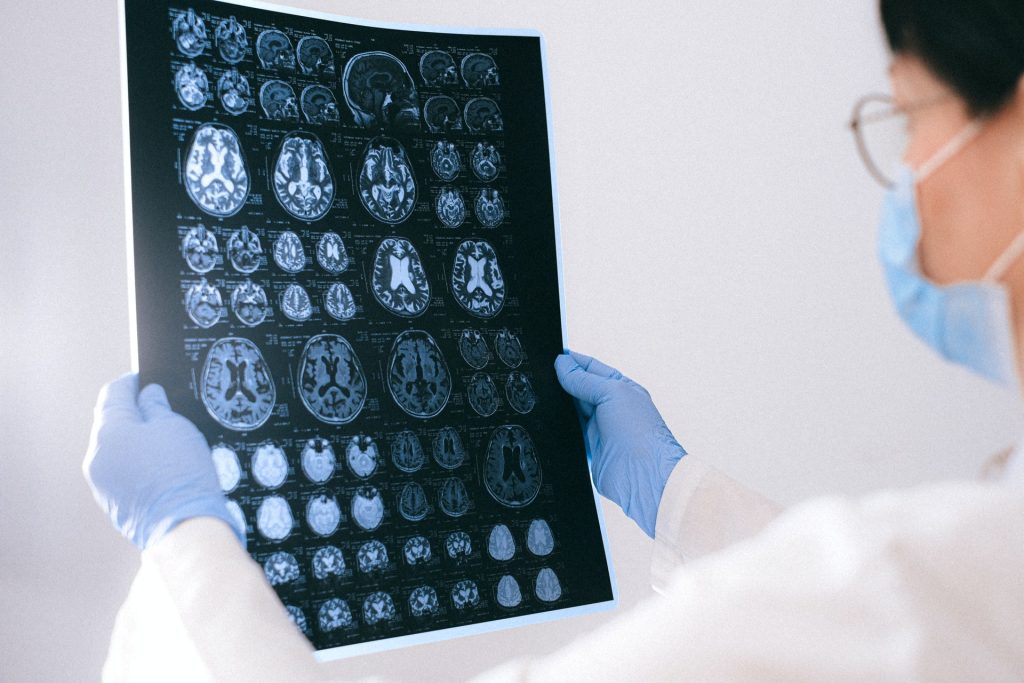
Photo by Anna Shvets on Pexels

A new study published in JAMA Network Open found that removing olfactory groove meningioma, a type of brain tumour located near the base of the brain, may improve blood sugar control in patients with diabetes. 

Researchers followed patients with an olfactory groove meningioma and diabetes over five years after surgery, tracking long-term changes in haemoglobin A1c (HbA1c), which is a standard measure of blood sugar control, and body weight after tumour removal surgery. 

The research team found:

  • Blood sugar control improved after tumour removal in most patients.
  • Improvements often happened soon after surgery and lasted for years.
  • Many patients also lost weight after surgery.
  • Improvements occurred even when diabetes medications stayed the same. 

“This type of brain tumour affects both frontal lobes simultaneously and is usually thought of as causing symptoms like vision problems, personality changes or loss of smell,” said Andrew Venteicher, MD, PhD, an associate professor at the University of Minnesota Medical School and neurosurgeon with M Health Fairview. “What surprised us was how much blood sugar control improved after surgery in many of these patients. The findings may help us better counsel patients before surgery and raise new questions about how the brain influences metabolism throughout the body.”

The findings suggest that some brain tumours may affect the body’s ability to regulate metabolism and blood sugar, and that removing certain brain tumours may improve blood sugar control and weight in some patients with diabetes, in addition to improving neurological symptoms. 

Future studies will explore why these metabolic improvements occur and whether similar effects are seen in patients with other types of brain tumours. Researchers also hope to better understand how brain function, behaviour and metabolism are connected and whether these findings could help guide future treatment decisions.

Source: University of Minnesota

Man’s Best Friend Shares Similarities in Genetics of Meningiomas

Photo by Pauline Loroy on Unsplash

Researchers have discovered that meningiomas – the most common type of brain tumour in humans and dogs – are extremely similar genetically. These newly discovered similarities will allow doctors to use a classification system that identifies aggressive tumours in both humans and dogs, while also opening the door for new and exciting collaborations between human and animal medicine. The researchers, from Texas A&M School of Veterinary Medicine & Biomedical Sciences (VMBS), Baylor College of Medicine and Texas Children’s Hospital, published their findings in the scientific journal Acta Neuropathologica.

Until now, the lack of reliable and viable experimental models has been a barrier to understanding the biology of and developing effective treatments for these brain tumours.

“The discovery that naturally occurring canine tumours closely resemble their human counterparts opens numerous avenues for exploring the biology of these challenging tumors,” said Dr. Akash Patel, an associate professor of neurosurgery at Baylor College of Medicine and principal investigator at the Jan and Dan Duncan Neurological Research Institute (Duncan NRI) at Texas Children’s Hospital.

“It also provides opportunities for developing and studying novel treatments applicable to both humans and dogs.”

The study was led by Patel; Dr Jonathan Levine, a VMBS professor and head of the Department of Small Animal Clinical Sciences (VSCS); and Dr Tiemo Klisch, assistant professor at Baylor College of Medicine and principal investigator at Duncan NRI. VSCS assistant professor Dr Beth Boudreau was a key collaborator.

For the project, the team analysed 62 canine meningiomas from 27 dog breeds and discovered that the tumours shared remarkable similarities to the same kinds of tumours when they occur in humans.

This is the largest study to date of the gene expression profiles of canine meningiomas.

Watching the signs

The new discovery was made possible by building on recent work conducted by Patel’s team, as well as previous work by Levine and Boudreau that explored gliomas, another type of brain tumour.

In 2019, Patel and others at Baylor College of Medicine and Texas Children’s Hospital found that they could classify meningiomas in humans into three biologically distinct subtypes – MenG A, B, and C – by analysing their RNA.

The new classification system can predict patient outcomes with greater accuracy than the standard tissue sample analysis.

“Because RNA shows how a tumour’s genes activate, it allows researchers to accurately predict how a tumour will behave – whether it will be aggressive or if it’s going to respond to certain therapies,” Levine said.

“We ended up agreeing to provide Patel with canine tumor samples we had worked years and years to archive, to see if he could isolate the RNA, which is not always easy to do,” Levine said.

“He was able to produce this very robust dataset that showed a similar pattern structure to human tumours. Our team also provided Dr Patel with key clinical outcome data, including responses to certain treatments.”

Onward to clinical trials

Now that the researchers have established a connection between tumors across the two species, they can begin preparations for clinical trials, which can take several years to plan and fund.

“We’re really interested in creating wins for both human and animal medicine,” Levine said.

“For example, we hope to give dog owners access to therapy that’s not available anywhere else in the world through clinical trials. At the same time, that information will also inform the next step of human trials.”

Incidentally, a separate group of researchers from the University of California, Davis, conducted a similar study with matching conclusions about meningiomas in dogs and people and published its work in the same journal.

The two research groups look forward to collaborating in the future to develop tumour treatments for both species.

Source: Texas A&M University