Using female zebrafish as a model, researchers have found that aerobic exercise may influence various connections in the body to lessen the damaging health impacts of environmental nanoplastics. In the study, which is published in The FASEB Journal, adult female zebrafish were exposed to polystyrene nanoplastics for 21 days, with or without moderate aerobic exercise.
“Once ingested, nanoplastics may cross epithelial barriers and accumulate in multiple organs, including the liver, heart, brain, and ovary, eliciting oxidative stress, inflammation, and endocrine disruption,” the authors wrote. “Among these targets, the ovary appears particularly susceptible, yet the mechanisms underlying nanoplastic-induced ovarian accumulation and toxicity remain poorly characterized.”
Exposure to nanoplastics alone caused significant ovarian accumulation of particle-like structures, elevated oxidative stress, increased follicular cell death, and disrupted reproductive hormones. It also induced anxiety‑ and depression-like behaviors in tank and shoaling tests, accompanied by elevated stress hormone levels. In contrast, concurrent aerobic exercise lessened these effects.
Investigators also found that aerobic exercise counteracted gut microbe imbalances caused by nanoplastics. Analyses linked these microbial shifts to enhanced fatty acid and tryptophan metabolism, which correlated with improved neuroendocrine health.
The findings indicate that aerobic exercise may mitigate nanoplastic-induced neuroendocrine dysfunction via gut–ovary–brain connections.
New research findings from the University Medical Center Göttingen (UMG) show that both atria undergo profound changes in cases of persistent atrial fibrillation. Until now, the left atrium was considered the primary site of the disease. The results of the international study were published in the journal Cardiovascular Research.
Atrial fibrillation is the most common persistent heart rhythm disorder worldwide, and is caused by chaotic electrical activity in the atria. As a result, the heart beats irregularly and often too fast. Many patients suffer from palpitations, shortness of breath, reduced physical performance, or exhaustion. The so-called persistent form of atrial fibrillation is particularly problematic, as the arrhythmia no longer resolves on its own. Over time, this leads to structural and functional changes in the heart tissue. The condition significantly increases the risk of stroke, heart failure, and premature mortality. Until now, research and treatment have focused primarily on the left atrium and the pulmonary veins that drain into it, which are considered major triggers of atrial fibrillation.
A research team at the University Medical Center Göttingen (UMG) investigated whether and to what extent the right atrium is also affected by long-term atrial fibrillation. The study shows that the right atrium also undergoes profound remodelling processes and increasingly resembles the left atrium.
“The results suggest that persistent atrial fibrillation must be understood as a disease of both atria,” says Dr Aiste Liutkute, the study’s first author. “This could also explain why established therapies are often not permanently successful in cases of long-standing atrial fibrillation.”
The Approach
The research team analysed tissue samples from the right and left atria of patients with persistent atrial fibrillation, which had been collected during heart surgery. Samples from non-transplanted donor hearts with no known cardiac arrhythmias served as the control group.
Using state-of-the-art mass spectrometry techniques, the scientists examined thousands of proteins simultaneously to identify disease-related changes in heart tissue. Mass spectrometry is a high-resolution analytical method that allows molecules to be precisely identified and quantified based on their mass. This makes it possible to determine which proteins are present in heart muscle cells and how their composition changes in the presence of disease. For the study, the researchers first created a comprehensive reference library of the human heart proteome. The proteome refers to the totality of all proteins in a tissue or cell. Proteins perform central functions in the body and provide insight into which biological processes are active in the cells. In addition to the proteome analyses, the team examined the scarring of heart tissue under a microscope, confirmed notable protein changes using biochemical methods, and identified blood markers that indicate stress on the heart.
The Results
The analyses show that, in cases of persistent atrial fibrillation, the right atrium exhibits pathological changes similar to those in the left atrium. In both atria, the researchers found increased tissue scarring, a breakdown of important heart muscle structures, and clear signs of cellular stress and remodeling processes. These changes impair normal electrical signal transmission in the heart and may contribute to the persistence of atrial fibrillation. At the same time, many of the molecular differences that normally exist between the right and left atria disappeared. For instance, the right atrium lost typical protein markers that normally characterize its specific function and increasingly took on features of the left atrium, including proteins associated with altered energy metabolism and structural remodeling of heart muscle cells.
Fake and substandard medicines, along with bogus healthcare practitioners, pose a growing threat to patient safety in South Africa.
The sale of fake and substandard medicines is a significant threat to patient safety around the world. In South Africa, the main affected products are painkillers, antibiotics, weight-loss and sexual enhancement products, skin-lightening products, and some chronic medicines.
In pealing back the different layers of this problem, it is essential to get the definitions right.
Substandard products are those that do not meet quality standards and specifications.
Falsified products deliberately misrepresent their identity, composition or source.
Neither of these should be confused with generic medicines, which have the medicines regulator’s green light for being safe, effective, and of good quality.
People are often duped into purchasing substandard and falsified products, especially when the real thing is not available or too expensive. But, as Elna Schütz this week reports for Spotlight, there are also people who buy these medicines fully aware of the risks.
These unregulated medicines are mostly distributed through informal channels, unregulated outlets, online platforms, and cross-border smuggling networks. It is also possible that some substandard and falsified medicines have been infiltrated into otherwise reputable medicines distribution channels.
Data on the scale of the problem is scant, but there is agreement that the problem is substantial. The WHO estimates that around 1 in 10 medicines in low- and middle-income countries are substandard or falsified.
The South African Health Products Regulatory Authority (SAHPRA) is the main body responsible for regulating substandard and falsified medicines. It does this through post-market surveillance and inspections, a whistleblower reporting system, product recalls, and monitoring illegal advertising and online sales. A new National Action Plan and comments from the Minister of Health suggests there is some intent to step up these efforts.
The good news is that we can generally trust that the medicines we buy at pharmacies contain what they are supposed to and that they were manufactured according to good quality standards. As regulatory entities go in South Africa, SAHPRA is generally one of the better-functioning ones.
But, outdated legislation means that SAHPRA doesn’t have all the tools it needs to stamp out the sale of unauthorised medicines. For instance, it has limited powers in relation to advertising and marketing, cannot block a web site, and cannot issue infringement notices, or impose sanctions on entities or individuals whose actions potentially place the public at risk of harm.
The misrepresentation may include using fraudulent certificates, using another practitioner’s registration, or still offering healthcare services while being suspended or erased from the register.
From early 2024 through late 2025, 66 bogus practitioners were caught and arrested, with the majority operating in the economic hubs of the Western Cape, Gauteng, and KwaZulu-Natal.
You can help curb these problems. Suspicious practitioners can be reported to the HPCSA, and suspicious products or sellers can be reported to SAHPRA. People are also advised to buy only from licensed and authorised pharmacies and checking if healthcare providers are registered.
And then there is fake news
In some areas, as with bogus health professionals and falsified medicines, the solution to misrepresentation is clearly to have legally empowered regulators with enough muscle to consistently enforce the law.
But when it comes to misinformation and disinformation – call it fake news if you will – the way forward is much less obvious. In recent years, we’ve seen a toxic mix of political polarisation, conspiracy theories, disinformation campaigns, and twisted social media algorithms – often fuelling a rejection of science and evidence-based policy-making. Beyond just our screens, these trends have unfortunately started to distort the real world, as we’ve seen at various critical health institutions in the United States.
In our view, regulators should have a role in preventing misinformation and disinformation about medicines. But how exactly to make such regulation work in an age of largely unaccountable social media networks is not at all clear.
What we think is clear, is that much of the solution to the problem of health misinformation and disinformation, is simply to keep creating its opposite, high-quality, rigorous, and evidence-based journalism.
This is the core of what we try to do at Spotlight. It is also why we have made our journalism subject to the South African Press Code, work hard to stick to our Editorial Policy and Style Guide, and why we urge you to hold us accountable when we get things wrong, as we will inevitably do from time to time.
New research presented at this year’s European Congress on Obesity in Istanbul, Turkey (12-15 May) shows the use of the new GLP-1 class of obesity drugs in people with asthma is associated with a 26% fall in the number of asthma exacerbations and a 14% drop in use of asthma inhaler reliever use. The study is by Simon Høj and Dr Kjell Erik Julius Håkansson Copenhagen University Hospital, Copenhagen Denmark and colleagues.
Glucagon-like peptide-1 receptor agonists (GLP-1 RAs) are now widely used to treat overweight, obesity and type 2 diabetes (T2DM), with growing evidence of benefits that extend beyond blood sugar control.
In asthma, where overweight, obesity and metabolic dysfunction can lead to increased severity of symptoms and adverse events such as acute exacerbations, the authors suggest that GLP-1 RAs may improve asthma outcomes through weight loss, modulation of airway inflammation, and improvements in metabolic functions. Reductions in occurrence of asthma exacerbations are likely to reduce systemic corticosteroid exposure (a common treatment for acute asthma exacerbations orally or intravenously) and thus may reduce the risk of corticosteroid exposure-associated adverse events such as osteoporosis or new-onset T2DM. As such, as the clinical use of GLP-1 RAs expands, reliable estimates of their impact on asthma control are needed for individuals living with both asthma and overweight, obesity or T2DM.
The researchers conducted a nationwide self-controlled cohort study using linked Danish health registers. Adult individuals with a prior asthma diagnosis or ≥2 asthma inhaler prescriptions redeemed within 12 months) were included on the date of their first GLP-1 RA dispensing (index date). Eligible individuals had continuous registration data for at least 12 months before and after the index date.
Individuals with COPD or patients with severe asthma treated with new and relatively expensive biologic drugs within 12 months before or after the index date were excluded. Overweight or obesity was defined using ICD-10 codes for those conditions. Those who had no evidence of T2DM – with no diagnosis recorded or no evidence of other first line diabetes drugs prescribed – were also placed in the with obesity/overweight group. Those with a T2DM diagnosis or prescriptions recorded for first line diabetes drugs such as metformin were placed in the T2DM group.
The primary outcome was exacerbations, defined as an inpatient asthma hospital contact(s) and/or systemic oral or intravenous corticosteroid course(s). Secondary outcomes were the use of rescue medication (inhaled short-acting β2-agonists), inhaled corticosteroid exposure, and chest infection events defined as redemption of antibiotics commonly used for lower airway infections
The cohort comprised 27,523 individuals (mean age 54 years, 66% female) with asthma and comorbid overweight or obesity (49%) or T2DM (61%) and 26% recorded as having both conditions. Around 50% of the GLP-1 prescriptions were liraglutide, 48% semaglutide, and 2% others (exenatide, dulaglutide, lixisenatide).
Compared with the year before GLP-1 RA treatment, GLP-1 RA treatment was associated with a 26% lower exacerbation rate overall; and 28% lower in men compared with 23% lower in women. When stratified according to GLP1 RA treatment indication, the analysis showed individuals with asthma and comorbid overweight or obesity and individuals with asthma and comorbid T2DM had similar effect estimates – a 22% reduction in those with overweight or obesity and a 26% reduction in those with T2D.
Reliever medication use fell by 14% overall, suggesting fewer symptoms despite daily inhaled corticosteroid exposure also decreasing by 23% (inhaled corticosteroids are used to prevent exacerbations and treat symptoms in asthma). Furthermore, pneumonia events were reduced by 10%. People also living with allergic rhinitis saw similar decreases (23%) in exacerbations to those living without allergic rhinitis (28%). The authors are also working on updated analyses to show differences between men and women for these specific outcomes.
The authors conclude: “In this nationwide cohort of over 27,000 individuals with asthma and also overweight, obesity or type 2 diabetes, use of GLP-1 drugs was associated with significant reductions in exacerbation burden as well as reliever use, exposure to inhaled corticosteroids and pneumonia events, irrespective of whether the drugs were being used to treat obesity or type 2 diabetes.”
The authors explain that their study did not have access to clinical records (just if people had used GLP-1 and hospital admissions), so data on BMI and weight loss for participants were not available.
But Dr Håkansson says: “There’s a high chance that the weight loss is a major contributor to these results. A common symptom in both asthma and obesity is shortness of breath, and the presence of excess fatty tissue creates a pro-inflammatory state in the body in general. There’s also evidence from other studies suggesting that the inflammation caused by excess adipose tissue is distinct from the ‘classic’ asthma inflammation which often is driven by allergies or cells called eosinophils.”
And he adds: “As the use of GLP-1 therapies increase, researchers are finding an increasing number of effects outside of weight loss.”
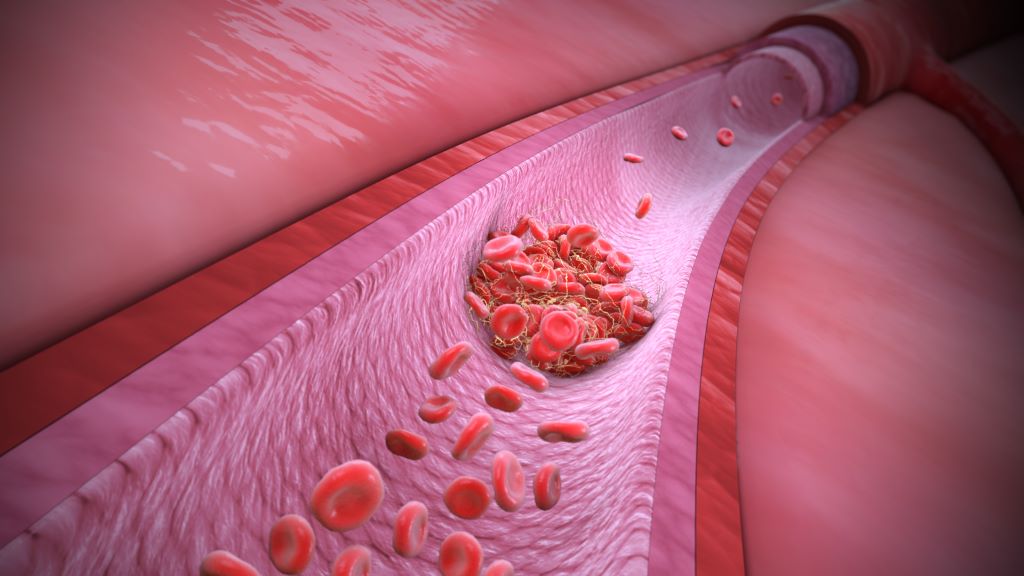
Researchers at McGill University have developed a rapid way to engineer blood clots that stop severe bleeding and support tissue healing more effectively. Their technique, called “click clotting,” links red blood cell surface proteins through a chemical reaction, resulting in a biocompatible clot that is 13 times more resistant to fracturing and four times more adhesive than natural blood clots. The team said the method, described in Nature, could be used to develop life-saving biomaterials to help control severe bleeding, as well as benefit people with clotting disorders.
“Natural blood clots can be slow to form and mechanically fragile, which limits their ability to stop severe bleeding and can compromise healing,” said Jianyu Li, senior author and Professor of Mechanical Engineering and Canada Research Chair in Tissue Repair and Regeneration. “Our work shows that, when engineered appropriately, red blood cells can play a central structural role, enabling the design of stronger and more functional biomaterials.”
Shuaibing Jiang led the research during his PhD studies at McGill. He is now a Postdoctoral Associate at Mass General Brigham and Women’s Hospital, Harvard Medical School.
Researchers at the University of British Columbia, the Medical College of Wisconsin, the University of Colorado Boulder, the University of Toronto, and the Versiti Blood Research Institute also contributed.
Connected by chemical reaction
Previous efforts to crosslink red blood cells used chitosan, a polymer derived from crustacean shells, but these led to brittle clots, ruptured cells and inconsistent clotting. In “click clotting,” the clot structure is fundamentally strengthened through a fast, bio-safe chemical reaction that connects proteins on the red blood cell surface, forming a solid gel in just five seconds.
Because the “click” reaction doesn’t interfere with normal blood chemistry, it can work alongside the body’s natural clotting process. As a result, the artificial cell‑based gel, called a “cytogel,” can be added to whole blood, where it becomes embedded within the body’s own fibrin clot.
“The technology enables both autologous clots (using the patient’s own blood) and allogeneic clots (using type-matched donor blood). Autologous clots can be prepared in approximately 20 minutes, while allogeneic clots can be prepared within about 10 minutes. Given typical clinical time constraints, this approach has strong potential for in-patient emergency care, wound management and related settings,” Li said.
The results were confirmed through in vitro testing, as well as by testing on rodents. A highlight was the effective healing and regeneration observed in the injured liver, with performance exceeding that of the clinically used product tested in this study. Analysis showed minimal evidence of immune reactivity and no toxicity in major organs.
Further research required
The researchers say that while further study is required before the cytogel can be used in clinical settings, the research establishes a foundation for its design and application.
“Engineered blood clots have strong potential for broad clinical use and could improve outcomes across many medical situations,” Li said.