Category: Cancer

Faecal Transplant Pills Show Promise in Clinical Trials for Multiple Types of Cancer

Two Canadian clinical trials show poop pills could help patients respond to immunotherapy while also reducing toxic side effects of cancer drugs

Faecal microbiota transplants (FMT), can dramatically improve cancer treatment, suggest two groundbreaking studies published in the prestigious Nature Medicine journal. The first study shows that the toxic side effects of drugs to treat kidney cancer could be eliminated with FMT. The second study suggests FMT is effective in improving the response to immunotherapy in patients with lung cancer and melanoma.

The findings represent a giant step forward in using FMT capsules – developed at Lawson Research Institute (Lawson) of St. Joseph’s Health Care London and used in clinical trials at London Health Sciences Centre Research Institute (LHSCRI) and Centre de recherche du Centre hospitalier de l’Université de Montréal (CRCHUM) – for safe and effective cancer treatment.

A Phase I clinical trial was conducted by scientists at LHSCRI and Lawson to determine if FMT is safe when combined with an immunotherapy drug to treat kidney cancer. The team found that customised FMT may help reduce toxic side effects from immunotherapy. The clinical trial involved 20 patients at the Verspeeten Family Cancer Centre at London Health Sciences Centre (LHSC).

“Standard treatment for advanced kidney cancer often includes an immunotherapy drug that helps the patient’s immune system tackle cancer cells,” says Saman Maleki, PhD, Scientist at LHSCRI. “But, unfortunately, the treatment frequently leads to colitis and diarrhoea, sometimes so severe that a patient must stop life-sustaining treatment early. If we can reduce toxic side effects and help patients complete their treatment, that will be a gamechanger.”

Separate Phase II lung and skin cancer studies were led by researchers at CRCHUM in collaboration with Lawson and LHSCRI. The studies found that 80 per cent of patients with lung cancer responded to immunotherapy after FMT, compared to only 39-45 per cent typically benefiting from immunotherapy alone. Similarly, 75 per cent of patients with melanoma who received FMT experienced a positive response to treatment, compared to only 50-58 per cent response in patients who receive immunotherapy alone. Twenty patients participated in the lung cancer clinical trial and 20 patients participated in the skin cancer clinical trial.

“Our clinical trial demonstrated that faecal microbiota transplantation could improve the efficacy of immunotherapy in patients with lung cancer and melanoma,” says Dr Arielle Elkrief, co-principal investigator and Physician Scientist, Université de Montréal-affiliated hospital research centre (CRCHUM). “The results also uncovered one possible mechanism of action of faecal transplantation – through the elimination of harmful bacteria following the transplant. Our results open up a novel avenue for personalised microbiome therapies, and faecal transplant is now being tested as part of the large pan-Canadian Canbiome2 randomised controlled trial.”

“Faecal microbiota transplantation in melanoma and lung cancer opens an entirely new therapeutic avenue, made possible by the exceptional commitment of our patients and the teamwork,” adds Dr. Rahima Jamal, Director of the Unit for Innovative Therapies (UIT) at CRCHUM. “At the Unit for Innovative Therapies (UIT) of the CRCHUM, we have had the privilege of translating laboratory discoveries into early phase clinical trials and witnessing their concrete impact on people living with cancer.”

Both studies use advanced, world-leading FMT capsules, also known as LND101, produced by Lawson in London, Ont. The research reinforces London’s place as a global leader in FMT innovation and treatment. The capsules are processed from healthy donor stools and ingested to help restore a patient’s healthy gut microbiome and treat different types of cancer.

“To use FMT to reduce drug toxicity and improve patients’ quality of life while possibly enhancing their clinical response to cancer treatment is tremendous, and it had never been done in treating kidney cancer before this,” says Dr Michael Silverman, Scientist at Lawson and Head of St. Joseph’s Infectious Diseases Program. “And none of this would be possible if not for this close collaboration: innovating the FMT capsules in Lawson labs and introducing them at LHSCRI and CHUM to advance vital research initiatives. Also, because LND101 comes from healthy donors, production can be scaled up to eventually help large numbers of cancer patients.”

The studies build on earlier London and CHUM-generated Phase I research showing FMT can safely augment treatment for people with melanoma. FMT is also being studied in people with pancreatic cancer and triple-negative breast cancer, and is already a well-established treatment for serious gut infections such as C. difficile, which can cause severe diarrhoea.

“Our hope is that our research will one day help people with cancer live longer while reducing the harmful side effects of treatment,” adds Dr Ricardo Fernandes, Scientist at LHSCRI and Medical Oncologist at LHSC. “We are world leaders in FMT research and we’re excited about its potential.”

Source: London Health Sciences Centre Research Institute

Chemotherapy’s Gut Side Effects Unexpectedly Block Metastasis

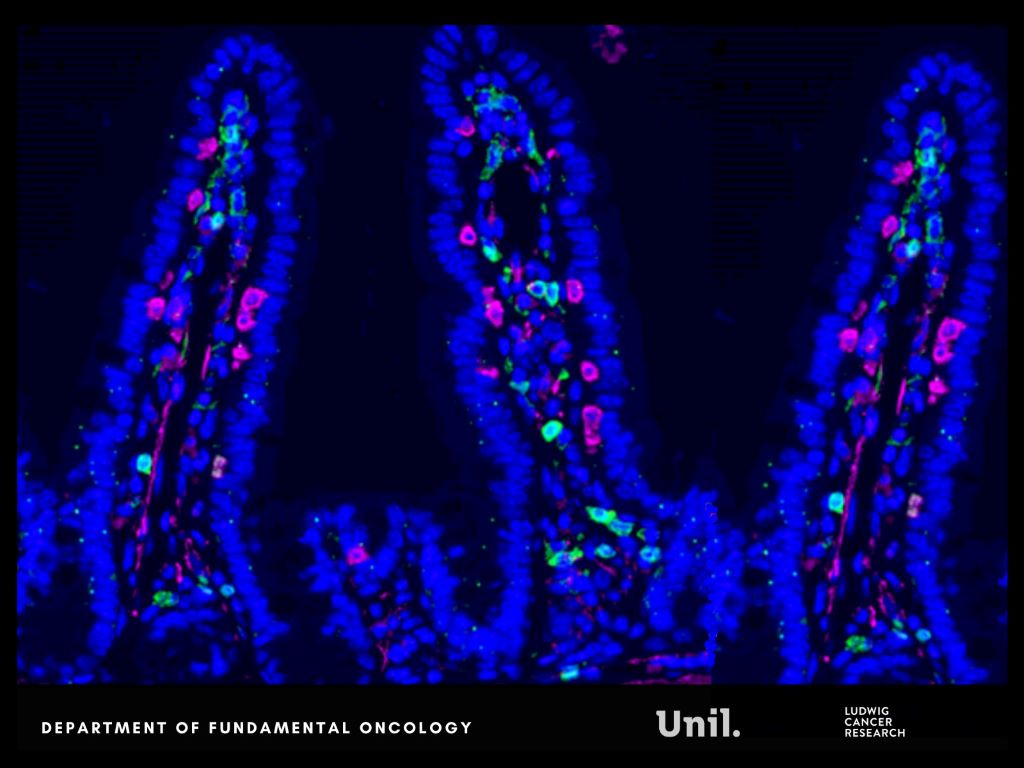
Microscopy image of intestinal lining in mice, shows CD4 (green), CD8 (magenta) and DAPI (blue).
Ludivine Bersier 2025

In Nature Communications, researchers from Lusanne University reveal that chemotherapy alters gut microbes and bone marrow immune cell development, unexpectedly reprogramming systemic immunity in ways that help restrict metastatic progression.

Chemotherapy commonly damages the intestinal lining, a well-known side effect. But this injury does not remain confined to the gut. It reshapes nutrient availability for intestinal bacteria, forcing the microbiota to adapt.

The researchers report that chemotherapy-induced damage to the intestinal lining alters nutrient availability for gut bacteria, reshaping the microbiota and increasing the production of indole-3-propionic acid (IPA), a tryptophan-derived microbial metabolite.

Rather than acting locally, IPA functions as a systemic messenger. It travels from the gut to the bone marrow, where it rewires immune cell production. Elevated IPA levels reprogram myelopoiesis, reducing the generation of immunosuppressive monocytes that facilitate immune evasion and metastatic growth.

“We were surprised by how a side effect often seen as collateral damage of chemotherapy can trigger such a structured systemic response. By reshaping the gut microbiota, chemotherapy sets off a cascade of events that rewires immunity and makes the body less permissive to metastasis.” says Ludivine Bersier, first author of the study.

This immune reconfiguration enhances T-cell activity and remodels immune interactions within metastatic niches, particularly in the liver, resulting in a metastasis-refractory state in preclinical models.

Experimental findings are mirrored in patients. Clinical relevance is supported by patient data obtained in collaboration with Dr Thibaud Koessler (Geneva University Hospitals, HUG). In patients with colorectal cancer, higher circulating IPA levels following chemotherapy are associated with reduced monocyte levels, a feature of improved survival outcomes.

“This work shows that the effects of chemotherapy extend far beyond the tumor itself. By uncovering a functional axis linking the gut, the bone marrow and metastatic sites, we highlight systemic mechanisms that could be harnessed to durably limit metastatic progression.” says Tatiana Petrova, corresponding author of the study.

This research was supported by multiple funders, including the Swiss National Science Foundation and Swiss Cancer League. An ISREC Foundation Tandem Grant supported close collaboration between clinical and fundamental research, led at Unil by Professor Tatiana Petrova and Dr Thibaud Koessler at HUG. The project posits that chemotherapy can induce a form of biological “memory”, mediated by gut microbiome–derived metabolites that durably inhibit metastatic growth.

Together, these findings reveal a previously underappreciated gut–bone marrow–liver metastasis axis through which chemotherapy can exert durable systemic effects, opening new avenues to harness microbiota-derived metabolites as adjuvant strategies to limit metastasis.

Source: EurekAlert!, University of Lusanne

No Increased Risk of Stomach Cancer with PPIs for Heartburn

Photo by Danilo Alvesd on Unsplash

Long-term use of medications for heartburn and acid reflux, known as proton pump inhibitors, does not appear to increase the risk of stomach cancer, according to a new study published in The BMJ. The results are based on extensive Nordic health data and may provide reassurance to patients who need long-term treatment, according to researchers at Karolinska Institutet.

The possibility that proton pump inhibitors could cause stomach cancer has been discussed since the 1980s. Overall, studies have shown a doubled risk, but the studies have had methodological shortcomings. To investigate the association, taking into account a number of possible sources of error in previous literature in the field, researchers analysed registry data from the five Nordic countries – Denmark, Finland, Iceland, Norway, and Sweden – over a period of up to 26 years.

The study included 17 232 people with stomach cancer and compared them with over 172 000 control subjects matched for age, sex, year, and country. The researchers investigated the use of proton pump inhibitors and another type of acid-suppressing drug, histamine-2 receptor blockers. 

To avoid methodological errors, drug use in the last year before diagnosis was excluded, as were patients who had cancer in the upper part of the stomach, where heartburn is a risk factor. The results were also adjusted for factors such as Helicobacter pylori infection, stomach ulcers, smoking, alcohol-related diseases, obesity, diabetes, and certain medications. 

By using this methodological approach, the researchers found no association between long-term use of these drugs and the risk of stomach cancer.

“Our results contradict the hypothesis that proton pump inhibitors cause stomach cancer,” says the lead researcher responsible for the study, Professor Jesper Lagergren at the Department of Molecular Medicine and Surgery, Karolinska Institutet. He continues:

“This provides reassurance for patients who need long-term treatment and is important for clinical decisions.”

The researchers emphasise that the study is observational, which means that no definitive conclusions can be drawn about cause and effect. Nor can it be completely ruled out that confounding factors that could not be adjusted for have influenced the results. However, the study design allows for more reliable results than previous research.

Source: Karolinska Institutet

Repurposed Cancer Drug may Aid Recovery from Severe Malaria

Red Blood Cell Infected with Malaria Parasites
Colourised scanning electron micrograph of red blood cell infected with malaria parasites (teal). The small bumps on the infected cell show how the parasite remodels its host cell by forming protrusions called ‘knobs’ on the surface, enabling it to avoid destruction and cause inflammation. Uninfected cells (red) have smoother surfaces. Credit: NIAID

A new clinical trial led by QIMR Berghofer, in collaboration with University of Sunshine Coast Clinical Trials Network has found a medication currently used for some blood disorders could help the body fight malaria more effectively.

The findings mean the drug, ruxolitinib, could potentially be used alongside standard treatment to boost recovery and strengthen people’s immune systems against future infections.

Malaria kills more than 600 000 people each year and three quarters of those deaths are in children under the age of five.

Current treatments for malaria work by killing the parasite that causes most malaria deaths, Plasmodium falciparum. However, even with these treatments, fatality rates from severe malaria remain high.

Furthermore, while patients develop some immunity after infection, this protection is often incomplete, leaving many vulnerable to reinfection.

Head of QIMR Berghofer’s Clinical Malaria Group Associate Professor Bridget Barber says the research overcomes a key hurdle.

“While antimalarial treatments are effective at killing the parasite, they don’t directly address the inflammation that contributes to severe illness and death. These findings suggest that we may be able to improve clinical outcomes by targeting the host inflammatory response as well as the parasite itself,” she said.

The research, published in Science Translational Medicine, looked at how the immune system responds to malaria via the body’s ‘early warning system’ known as type 1 interferon signalling.

To do this, researchers enrolled 20 healthy adult volunteers who had never been exposed to malaria. Participants were deliberately infected with Plasmodium falciparum under closely monitored conditions. Eight days later, all participants received standard malaria treatment (artemether-lumefantrine), while 11 were also given ruxolitinib. Three months later, participants were re-infected with malaria to test how their immune systems responded to a second infection.

The research revealed ruxolitinib was safe and well-tolerated, compared with the placebo group, and participants who received ruxolitinib showed a lower inflammatory response, and favourable changes in markers linked to disease severity.

QIMR Berghofer’s Program Director of Infection and Inflammation Professor Christian Engwerda says the results are encouraging.

“One of the biggest challenges in efforts to eliminate malaria is the limited efficacy and duration of protection provided by current vaccines. By boosting the immune system without causing detrimental inflammation with drugs like ruxolitinib, we may be able to overcome these challenges,” he said.

The researchers say it’s important to note that the study was conducted in healthy volunteers who did not live in malaria-endemic regions. Further studies in malaria-endemic regions will be needed to determine whether these findings translate into improved outcomes for patients most affected by the disease.

Read the scientific paper here: www.science.org/doi/10.1126/scitranslmed.aea2531

Source: QIMR Berghofer Medical Research Institute

Hot Flush Treatment has Anti-breast Cancer Activity, Study Finds

Photo by engin akyurt on Unsplash

A drug mimicking the hormone progesterone has anti-cancer activity when used together with conventional anti-oestrogen treatment for women with breast cancer, a new Cambridge-led trial has found.

In the two-week window that we looked at, adding a progestin made the anti-oestrogen treatment more effective at slowing tumour growth. What was particularly pleasing to see was that even the lower dose had the desired effectRebecca Burrell

A low dose of megestrol acetate (a synthetic version of progesterone) has already been proven as a treatment to help patients manage hot flushes associated with anti-oestrogen breast cancer therapies, and so could help them continue taking their treatment. The PIONEER trial has now shown that the addition of low dose megestrol to such treatment may also have a direct anti-cancer effect.

Around three-quarters of all breast cancers are ER-positive. This means the tumours are abundant in a molecule known as an oestrogen receptor, ‘feeding’ on the oestrogen circulating in the body. These women are usually offered anti-oestrogens, medication that reduces level of oestrogen and hence deprives the cancer of oestrogen and inhibits its growth. However, reducing oestrogen levels can bring on menopause-like symptoms, including hot flushes, joint and muscle pain, and potential bone loss.

In the PIONEER trial, post-menopausal women with ER-positive cancers were treated with an anti-oestrogen with or without the progesterone mimic, megestrol. After two weeks of treatment, those that received the combination saw a greater decrease in tumour growth rates compared to those treated with an anti-oestrogen only.

Although further work is required in larger patient cohorts and over a longer period of time to confirm the findings, researchers at the University of Cambridge say the trial suggests that megestrol could help improve the lives of thousands of women for whom anti-oestrogen medication causes uncomfortable side-effects and can lead to some women stopping taking the medication.

PIONEER was led by Dr Richard Baird from the Department of Oncology at the University of Cambridge and Honorary Consultant Medical Oncologist at Cambridge University Hospitals NHS Foundation Trust (CUH). He said: “On the whole, anti-oestrogens are very good treatments compared to some chemotherapies. They’re gentler and are well tolerated, so patients often take them for many years. But some patients experience side effects that affect their quality of life. If you’re taking something long term, even seemingly relatively minor side effects can have a big impact.”

Some ER-positive breast cancer patients also have high levels of another molecule, known as progesterone receptor (PR). This group of patients also respond better to the anti-oestrogen hormone therapy.

To explain why, Professor Jason Carroll and colleagues at the Cancer Research UK Cambridge Institute used cell cultures and mouse models to show that the hormone progesterone stops ER-positive cancer cells from dividing by indirectly blocking ER. This results in slower growth of the tumour. When mice treated with anti-oestrogen hormone therapy were also given progesterone, the tumours grew even more slowly.

Professor Carroll, who co-leads the Precision Breast Cancer Institute and is a Fellow of Clare College, Cambridge, said: “These were very promising lab-based results, but we needed to show that this was also the case in patients. There’s been concern that taking hormone replacement therapy – which primarily consists of oestrogen and synthetic versions of progesterone (called progestins) – might encourage tumour growth. Although we no longer think this is the case, there’s still been residual concern around the use of progesterone and progestins in breast cancer.”

To see whether targeting the progesterone receptor in combination with an anti-oestrogen could slow tumour growth in patients, Dr Baird and Professor Carroll designed the PIONEER trial, which tested adding megestrol, a progestin, to the standard anti-oestrogen treatment letrozole.

A total of 198 patients were recruited at ten UK hospitals, including Addenbrooke’s Hospital in Cambridge, and randomised into one of three groups: one group received only letrozole; one group received letrozole alongside 40mg of megestrol daily; and the third group received letrozole plus a much higher daily dose of megestrol, 160mg. In this ‘window of opportunity’ trial, treatment was given for two weeks prior to surgery to remove the tumour. The percentage of actively growing tumour cells was assessed at the start of the trial and then again before surgery.

In findings published today in Nature Cancer, the team showed that adding megestrol boosted the ability of letrozole to block tumour growth, with comparable effects at both the 40mg and 160mg doses.

Joint first author Dr Rebecca Burrell from the Cancer Research UK Cambridge Institute and CUH said: “In the two-week window that we looked at, adding a progestin made the anti-oestrogen treatment more effective at slowing tumour growth. What was particularly pleasing to see was that even the lower dose had the desired effect.

“Although the higher dose of progesterone is licenced as an anti-cancer treatment, over the long term it can have side effects including weight gain and high blood pressure. But just a quarter of the dose was as effective, and this would come with fewer side effects. We know from previous trials that a low dose of progesterone is effective at treating hot flushes for patients on anti-oestrogen therapy. This could reduce the likelihood of patients stopping their medication, and so help improve breast cancer outcomes. Megestrol – the drug we used – is off-patent, making it a cost-effective option.”

Because women in the trial were only given megestrol for a short period of time, follow-up studies will be needed to confirm whether the drug would have the same beneficial effects with reduced side-effects over a longer period of time.

The research was funded by Anticancer Fund, with additional support from Cancer Research UK, Addenbrooke’s Charitable Trust and the National Institute for Health and Care Research Cambridge Biomedical Research Centre.

Personalised and precise cancer treatments underpin the focus of care at the future Cambridge Cancer Research Hospital. The specialist facility planned for the Cambridge Biomedical Campus will bring together world-leading researchers from the University of Cambridge and its Cancer Research UK Cambridge Centre and clinical excellence from Addenbrooke’s Hospital under one roof in a brand-new NHS hospital.

Reference

Burrell, RA & Kumar, S, et al. Evaluating progesterone receptor agonist megestrol plus letrozole for women with early-stage estrogen-receptor-positive breast cancer: the window-of-opportunity, randomized, phase 2b, PIONEER trial. Nature Cancer; 5 Jan 2026: DOI: 10.1038/s43018-025-01087-X

Republished from University of Cambridge under a Creative Commons licence.

Read the original article.

Cipla Partners with ImmunoACT to Launch New CAR-T Cell Therapy for Blood Cancers in Africa

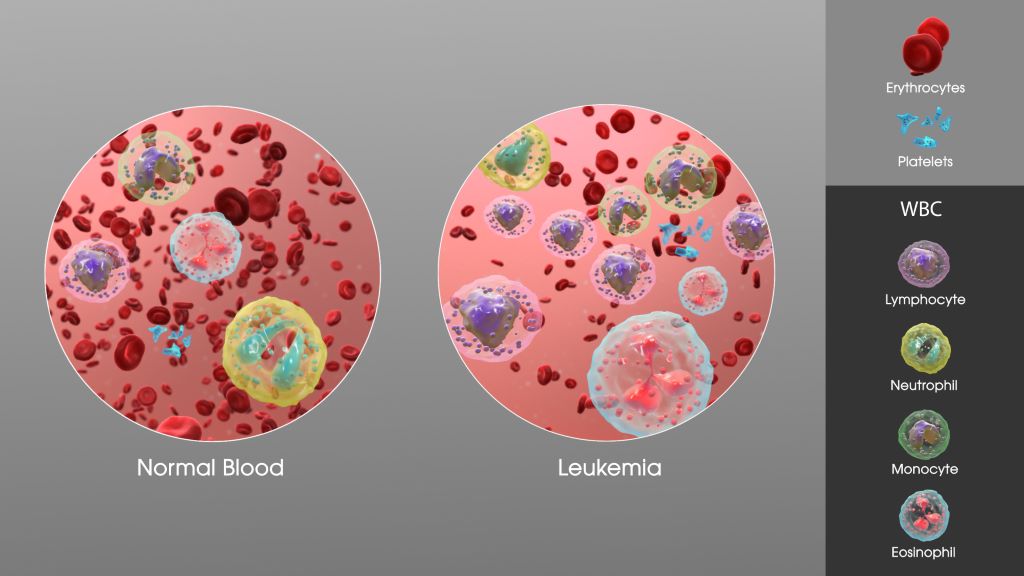
SAG Leukaemia. Credit: Scientific Animations CC0

Cipla Limited (BSE: 500087; NSE: CIPLA; and hereafter referred to as “Cipla”), through its subsidiary Medpro Pharmaceutica, has entered into an exclusive license and supply agreement with Immunoadoptive Cell Therapy Private Limited (ImmunoACT). Under this partnership, Cipla will commercialise talicabtagene autoleucel, India’s first indigenously developed CAR-T cell therapy, in the Republic of South Africa, Algeria, and Morocco.

Talicabtagene autoleucel (the product) is an autologous (of a patient’s own blood sample) anti-CD19 CAR-T indicated for the treatment of patients with relapsed or refractory B-cell Non-Hodgkin’s Lymphoma (B-NHL) and B-cell Acute Lymphoblastic Leukaemia (B-ALL) who have failed standard lines of therapy. Administered to over 500 patients in India, the therapy has demonstrated high efficacy, durable responses, and a well‑tolerated safety profile, leading to reduced ancillary healthcare costs.

As part of this collaboration, ImmunoACT will manufacture the product and Cipla will commercialise in the licensed African territories, thereby expanding access of this revolutionary new treatment to markets currently with unmet needs. 

Commenting on the partnership, Achin Gupta, Managing Director and Global CEO Designate, Cipla Limited, said, “Our collaboration with ImmunoACT reinforces Cipla’s vision of leveraging cutting-edge science to deliver transformative and affordable treatments, especially for patients with critical healthcare needs. By introducing CAR-T therapy in Africa, we aim to bring world-class innovation closer to patients and strengthen our commitment to accessible healthcare in the region.”

Adding on, Paul Miller, Chief Executive Officer of Cipla Africa, said, “We are proud to be at the forefront of efforts to bring CAR-T cell therapy to Africa. This collaboration not only advances our oncology portfolio but also reinforces Cipla’s mission of making next-generation therapies accessible to patients worldwide.”

Dr. Rahul Purwar, ImmunoACT’s Founder & Chairman and a professor of the Indian Institute of Technology (IIT), Bombay, said, “Our mission has always been to innovate and make cell & gene therapies accessible and affordable, addressing the significant unmet medical needs across the globe. This strategic partnership with Cipla seeks to accelerate our endeavours; ensuring that patients with B-cell cancers have a fighting chance at a durable remission, with our CAR-T platform.”   

About CAR-T cell therapy:

CAR T-cell therapy is a groundbreaking form of immunotherapy that uses a patient’s own immune cells to fight the disease. Doctors collect immune cells (T cells) from the patient, reprogram them to identify and destroy cancer cells, and then return them to the body, enabling a targeted and personalized approach to treatment.

About Cipla

Established in 1935, Cipla is a global pharmaceutical company focused on agile and sustainable growth, complex generics, and deepening portfolio in our home markets of India, South Africa, North America, and key regulated and emerging markets. Our strengths in the respiratory, antiretroviral, urology, cardiology, anti-infective and CNS segments are well-known. Our 46 manufacturing sites around the world produce 50+ dosage forms and 1500+ products using cutting-edge technology platforms to cater to our 80+ markets. Cipla is ranked 3rd largest in pharma in India (IQVIA MAT Sep’25), 2nd Largest in the pharma prescription market in South Africa (IQVIA MAT Aug’25), and 4th largest by prescription in the US Gx (Repulses + MDI) products (IQVIA MAT Aug’25). For over nine decades, making a difference to patients has inspired every aspect of Cipla’s work. Our paradigm-changing offer of a triple anti-retroviral therapy in HIV/AIDS at less than a dollar a day in Africa in 2001 is widely acknowledged as having contributed to bringing inclusiveness, accessibility and affordability to the centre of the HIV movement. A responsible corporate citizen, Cipla’s humanitarian approach to healthcare in pursuit of its purpose of ‘Caring for Life’ and deep-rooted community links wherever it is present make it a partner of choice to global health bodies, peers and all stakeholders. For more, please visit www.cipla.com, or click on Twitter, Facebook, LinkedIn.

About ImmunoACT

As pioneers of India’s first fully integrated CAR-T cell therapy platform, ImmunoACT (Immunoadoptive Cell Therapy Private Limited), develops and manufactures accessible, affordable cutting-edge gene-modified cell therapies for blood cancers and solid tumours. With NexCAR19™, India’s first CAR_T cell therapy (developed in collaboration with the Indian Institute of Technology, Bombay and Tata Memorial Centre) commercially approved in India having unprecedentedly transformed the treatment landscape in refractory/relapsed B-cell malignancies, ImmunoACT also has a robust pipeline including a clinical-stage BCMA-directed CAR-T for multiple myeloma, and solid tumour CAR-Ts under development. The company is accelerating its mission to expand global access to life-saving cell and gene therapies through strategic partnerships.

Electrotherapy may be a Promising New Glioblastoma Treatment

Photo by Anna Shvets

Electrotherapy using injectable nanoparticles delivered directly into the tumour could pave the way for new treatment options for glioblastoma, according to a new study from Lund University in Sweden.

Glioblastoma is the most common and most aggressive form of brain tumour among adults. Even with intensive treatment, the average survival period is 15 months. The tumour has a high genetic variation with multiple mutations, which often makes it resistant to radiation therapy, chemotherapy and many targeted drugs. The prognosis for glioblastoma has not improved over the past few decades despite extensive research.

Electrotherapy – a new treatment method

Electrotherapy offers another strategy to combat solid tumours. Using short, strong electric pulses (irreversible electroporation), non-reversible pores are created in the cancer cells leading to their death. The body’s immune system is simultaneously stimulated. The problem is that surgery is required to place the stiff metal electrodes that are necessary for the treatment. In sensitive tissue, in the brain for example, this often entails a very difficult procedure, which has led to strict criteria regarding which patients can be treated. Johan Bengzon is a researcher in glioblastoma and adjunct professor at Lund University, and consultant in neurosurgery at the Skåne University Hospital. He regularly treats patients with glioblastoma and is frustrated by the limited treatment options.

“The short distance between the hospital and the University in Lund facilitates cooperation and that’s why I contacted research colleagues to find out if injectable electrodes could be an alternative solution in electrotherapy,” says Johan Bengzon.

Said and done. The research team, with Amit Singh Yadav, Martin Hjort, and Roger Olsson at the helm, had previously used nanoparticles to form injectable and electrically conductive hydrogels to control brain signalling and heart contractions. It is aminimally invasive method in which the particles are injected using a thin syringe directly into the body. The particles break down after the treatment and thus do not need to be surgically removed. Perhaps the same technology could be used to destroy tumour cells in glioblastoma. 

“After surgical treatment, unfortunately the glioblastoma tumour often returns on the outer edge of the area operated on. By drop casting the nanoparticles into the tumour cavity after an operation, we could electrify the edges while the immune system is also activated. In animal models the procedure, due to this irreversible electroporation, led to tumours being wiped out within three days,” says Roger Olsson, professor of chemical biology and drug development at Lund University, who led the study. 

Promising results – but a long way to the patient

The prospects are good and the researchers are very hopeful for the future, even though there is a long way to go before it becomes a clinical reality. The challenge is now to test the method on larger tumours. 

“We have seen that the electrode is well received in the brain. We have not noted any problems relating to side effects and after 12 weeks the electrode disappeared by itself as it’s biodegradable. The technology combines direct tumour destruction with activation of the immune system and can be an important step towards more effective treatment of glioblastoma,” concludes Amit Singh Yadav, researcher at Lund University and first author of the study. 

Source: Lund University

Childhood Leukaemia Aggressiveness Depends on Timing of Genetic Mutation

Credit: National Cancer Institute

A team of researchers at the Icahn School of Medicine at Mount Sinai has uncovered why children with the same leukaemia-causing gene mutation can have dramatically different outcomes: it depends on when in development the mutation first occurs.  

The study, led by Elvin Wagenblast, PhD, Assistant Professor of Oncological Sciences, and Pediatrics, at the Icahn School of Medicine at Mount Sinai, was published in Cancer Discovery. It shows that leukemia beginning before birth is often more aggressive, grows faster, and is harder to treat. This adds a missing dimension to precision medicine for childhood leukaemia. 

Dr. Wagenblast and his team at the Wagenblast Lab set out to answer a central question about how a normal blood stem cell can become cancerous. They applied cutting-edge CRISPR/Cas9 genome-editing approaches in human primary blood stem cells to model different developmental stages of acute myeloid leukaemia, one of the most aggressive types of blood cancer. 

Using CRISPR technology, the team induced the NUP98::NSD1 fusion oncoprotein, a cancer-promoting protein created when two genes abnormally fuse, into human blood stem cells from multiple developmental stages, ranging from prenatal to postnatal, adolescence, and adulthood. This approach created the first humanised experimental model that tracks how the same mutation behaves differently depending on when in life it arises. 

The results were striking: stem cells produced during prenatal development transformed easily into leukaemia, creating a highly aggressive and more primitive form of leukaemia. Stem cells produced postnatally became increasingly resistant to transformation and required additional mutations to become cancerous. Prenatal-origin leukaemia stem cells, which are abnormal blood stem cells that arise before birth and can cause certain childhood leukaemias, were more dormant (quiescent) and relied heavily on certain energy sources specific to the cancer state, which were not seen in the leukaemias that originated later in life. Although these prenatal leukaemia stem cells were more dormant, this quiescent state makes them harder to eliminate with standard treatments, helping explain why prenatal-origin leukaemias behave more aggressively, despite identical genetics. 

By analysing single-cell gene expression data from their models, the investigators identified a prenatal gene signature that predicts whether a child’s leukaemia likely began before birth. In patients, this signature strongly correlated with significantly worse clinical outcomes. 

“This work tells us that age matters at the cellular level,” said Dr Wagenblast. “The same mutation behaves very differently depending on when it happens. Understanding this gives us a new way to identify the highest-risk patients and to tailor therapies that go beyond standard genetic classifications.” 

The team tested therapies against the most aggressive leukaemia stem cells and discovered that these cells were especially vulnerable to venetoclax, a Food and Drug Administration-approved drug already used in the clinic. Venetoclax-based combinations, including with standard chemotherapy, significantly reduced aggressiveness in the experimental models. 

“These findings give clinicians mechanistic support to use venetoclax combinations in NUP98-rearranged acute myeloid leukaemia, particularly in younger patients whose disease likely started before birth,” said Dr Wagenblast. 

Understanding when leukaemia begins may help doctors choose more effective therapies earlier, reducing trial-and-error approaches and preventing resistance and relapse later on. 

Conceptually, the study shifts how scientists understand childhood cancer. The developmental timing of the first mutation is not a minor detail. It fundamentally shapes disease biology, treatment resistance, and relapse risk. 

The research opens the door to new diagnostic tools that can identify prenatal-origin leukaemias, venetoclax-based combination therapies that more precisely target vulnerable leukaemia stem cells, and clinical trials that incorporate developmental timing into risk assessment. 

Next, the team plans to develop therapies that more directly target the metabolic program unique to prenatal-origin leukaemias, with the goal of selectively eliminating leukaemia stem cells while sparing healthy blood stem cells. 

Source: Mount Sinai

Tec-Dara Combo More Effective for Relapsed or Refractory Multiple Myeloma

Depiction of multiple myeloma. Credit: Scientific Animations

Patients with relapsed or refractory (R/R) multiple myeloma who received a combination of teclistamab, a bispecific monoclonal antibody, and daratumumab, a CD38-directed monoclonal antibody, were 83% more likely to be alive without disease progression compared with those who received standard second-line therapies at a median of nearly 35 months of follow-up, according to the results of a new trial presented at the 67th American Society of Hematology (ASH) Annual Meeting and Exposition.

The trial is the first to test a bispecific monoclonal antibody as early as the first relapse after initial treatment for multiple myeloma. Based on the findings, researchers suggest the combination of teclistamab and daratumumab, known as Tec-Dara, could represent a new standard of care for R/R multiple myeloma.

“We were surprised by the efficacy data because we didn’t expect such a magnitude of benefit,” said lead study author María-Victoria Mateos, MD, PhD, physician in the haematology department and professor of medicine at the University of Salamanca in Spain. “These are the best data we’ve seen in patients with R/R multiple myeloma after one line of therapy. Patients will live longer overall and with no worsening of quality of life.”

Multiple myeloma is a cancer that causes excessive production of plasma cells, crowding out the production of other types of blood cells and harming the body’s ability to fight infections. It is most common in older adults. Patients who relapse or experience an incomplete response to initial treatment often have their cancer return after subsequent therapies, pointing to a need for improved second-line treatments.

Teclistamab is approved by the U.S. Food and Drug Administration for R/R multiple myeloma after at least four prior lines of therapy. Daratumumab is a therapy targeting the CD38 protein that has been approved for use in combination with other therapies for newly diagnosed and R/R multiple myeloma. Laboratory studies have suggested that teclistamab and daratumumab may work synergistically to eradicate cancer to a greater extent than either agent individually.

To test this hypothesis, researchers randomized 587 patients with R/R multiple myeloma to receive either Tec-Dara or standard second-line therapies. For patients in the control arm, treating physicians chose between two standard three-agent combination therapies which included daratumumab with dexamethasone plus either pomalidomide or bortezomib (known as DPd or DVd, respectively).

Study participants had a median age of 64 with a range of 25-88, and all patients were R/R after one to three prior lines of therapy. Participants remained on their assigned treatment regimen unless they experienced intolerable adverse events, and were followed for a median of nearly 35 months.

The 36-month rate of progression-free survival, the study’s primary endpoint, was achieved in 83.4% of participants who received Tec-Dara and 29.7% of those receiving DPd/DVd, a substantial improvement in favor of Tec-Dara. This benefit was consistent across subgroups of patients by age, prior treatment, tumor genetics, and other factors.

In addition to being a highly efficacious treatment for R/R multiple myeloma as early as the first relapse, researchers noted that the Tec-Dara combination could be more accessible than other second-line therapies for multiple myeloma as it could be delivered in community settings, not just academic centers.

Tec-Dara outperformed DPd/DVd in terms of the trial’s secondary efficacy endpoints as well as quality of life outcomes and had a safety profile comparable to the control arm. Patients receiving Tec-Dara were significantly more likely to achieve a complete response or better, which occurred in 81.8% of patients receiving Tec-Dara and 32.1% among the control arm. They were also more likely to test negative for minimal residual disease (MRD), a sensitive test for remaining cancer cells, with 58.4% of those in the Tec-Dara arm achieving MRD-negativity compared with 17.1% in the control arm. Overall survival was also higher in the Tec-Dara arm, with 83.3% of patients in this group being alive at 36 months compared with 65.0% in the control arm.

The results showed comparable rates of treatment-emergent adverse events, with 95.1% of patients in the Tec-Dara arm and 96.6% of those in the control arm experiencing grade 3-4 adverse events. Rates of serious adverse events and discontinuations due to adverse events were also comparable between groups, researchers reported.

The rate of infections was higher among those receiving Tec-Dara, with 96.5% of patients in this group experiencing infections compared with 84.1% in the control group. The onset of higher-grade infections decreased over time, and researchers noted that strategies for managing infections also improved over the course of the study. Low-grade cytokine release syndrome (CRS) was also common, with grade 1-2 CRS occurring in 60.1% of those receiving Tec-Dara.

One limitation of the study is that patients refractory to daratumumab were not included in the trial. However, some patients (5%) had received daratumumab as part of their first-line therapy and benefited equally from the Tec-Dara combination.

Dr. Mateos noted that future studies could help clarify how doctors might select which patients would benefit most from the Tec-Dara combination in comparison to other therapies. Trials involving other bispecific antibody combinations are also underway and could shed additional light on the optimal use of such combinations as early as the first relapse.

Source: American Society of Hematology

Why are Men More Likely to Develop Multiple Myeloma than Women?

Study identifies several clinical features involved.

Photo by Daniil Onischenko on Unsplash

Rates of multiple myeloma (MM), the second most common blood cancer in the United States, are increasing and are twice as high in men than in women. A new study published by Wiley online in CANCER, a peer-reviewed journal of the American Cancer Society, provides insights that may help to explain this disparity.

To investigate the sex difference in MM, researchers analyzed data on 850 patients with newly diagnosed MM enrolled in the Integrative Molecular And Genetic Epidemiology (IMAGE) study at the University of Alabama at Birmingham.

Compared with female patients, male patients were more likely to have advanced (International Staging System stage III) disease at the time of diagnosis. Males were also more likely to have high myeloma load—serum monoclonal protein (an abnormal protein produced by cancerous blood cells), more organ failure (especially kidney failure), and bone damage. Men were less likely than women to have low bone mineral density, and myeloma-defining features tended to differ between the two sexes. These differences were apparent even after taking numerous factors into account – including race, age, body mass index, education, income, smoking, and alcohol use.

Analyses suggested that certain chromosomal abnormalities that lead to initiation of myeloma occurring more often in younger males may help to explain some of the differences seen in this study.

“This research suggests that sex-specific mechanisms promote multiple myeloma pathogenesis, which may account for the excess risk seen in men,” said lead author Krystle L. Ong, PhD, of the O’Neal Comprehensive Cancer Center at the University of Alabama at Birmingham. “These findings may be used to improve risk stratification, diagnosis, and tailored treatments for both men and women with newly diagnosed multiple myeloma or related early precursor conditions.”

Source: Wiley