Pregnant women with a severe form of nausea face increased risks for several pregnancy and birth complications, according to a new Stanford Medicine study of 2.5 million California births.
The research, published in the American Journal of Epidemiology, is the first large, US population-based study of the dangers of severe pregnancy nausea and vomiting, a condition formally known as hyperemesis gravidarum, or HG.
While most pregnant women – 70% to 80% – experience some nausea, it usually leaves no lasting effects. In contrast, as the new research shows, HG puts a major strain on the 1% to 3% of the pregnancies affected.
“Hyperemesis gravidarum is not just bad morning sickness; it’s severe enough to cause dehydration and significant weight loss,” said lead study author Rebecca Gardner, a Stanford Medicine graduate student in epidemiology and clinical research.
The study’s senior authors are Julia Fridman Simard, ScD, associate professor of epidemiology and population health and of immunology and rheumatology, and Gary Shaw, DrPH, the Rosemarie Hess Professor and a professor of pediatrics.
The research team looked at complications in pregnancies in which the mother was hospitalised for HG, compared with pregnancies without such hospitalisations.
“We found hyperemesis gravidarum was linked to higher risk for preterm birth, anaemia, smaller-than-expected babies, preeclampsia, gestational hypertension and placental abruption,” Gardner said. “Hospitalization for HG really does flag a pregnancy as being at higher risk for a range of serious complications.”
Struggling to get nourishment
Pregnant women with HG experience severe, sustained nausea and vomiting, often continuing throughout their pregnancies. They struggle to eat; stay hydrated; and absorb enough nutrients that play key roles in early pregnancy, such as folate. (Adequate folate intake reduces the risk of certain birth defects.) Women with HG can lose a lot of weight at a time when they should be gaining; one study found that about a quarter of HG patients lost more than 15% of their pre-pregnancy weight.
“We know from other studies that women with HG don’t get as many nutrients,” Gardner said. “This could impair placental development, which we think leads to higher risk for some of the outcomes we looked for, such as preeclampsia and babies being smaller than expected at birth.”
But previous studies examining potential links between HG and poor pregnancy outcomes had weaknesses, Gardner said: Many were small, and nearly all used data from European countries with populations that are less diverse than the U.S. population and that have medical systems structured differently from the U.S. system.
The study examined records for single-baby California births from 2007 to 2011. The researchers had access to demographic information about mothers, pre-pregnancy body mass index and census tract data that was used to calculate each patient’s level of social vulnerability. The researchers also had access to diagnostic codes from patients’ pregnancy and birth medical records.
Of the 2 476 492 births included in the final analysis, 53,681, or 2.2%, were to mothers with HG, meaning they received emergency department or hospital inpatient care for hyperemesis gravidarum.
Compared with those who were never hospitalised for HG, women with HG had higher risk for preeclampsia, a pregnancy complication that can cause seizures if untreated; gestational hypertension, or high blood pressure in pregnancy; preterm birth, meaning delivery three or more weeks before the due date; babies that were small for their gestational age, meaning they had grown less than expected during foetal development, anaemia, and placental abruption, in which the placenta becomes partly or completely detached from the uterus before delivery.
The increase in relative risk for each complication varied. For instance, after adjusting for possible confounding factors, women with HG were about 18% more likely to have preeclampsia, about 25% more likely to deliver early, about 37% more likely to be anaemic and about 14% more likely to experience a placental abruption than women without HG.
Women who were first hospitalised for HG during the second trimester of pregnancy were more likely to experience complications than those hospitalised during the first trimester, the study found.
A flag for closer monitoring
Guidelines from the American College of Obstetricians and Gynecologists for treating HG changed in 2018, after the data used for this study was collected, Gardner noted. The guidelines now encourage treating pregnancy nausea faster and more aggressively, and two medications are now approved by the US Food and Drug Administration for nausea and vomiting in pregnancy. More research could help clarify the effects of these newer guidelines, Gardner said.
More research could also show whether HG should prompt physicians to offer additional preventive care, such as low-dose aspirin, which is already used to prevent preeclampsia in patients who are at risk for other reasons.
The research team hopes that its findings will motivate physicians and pregnant women to pay closer attention to HG.
“For physicians, I think this data means that pregnancies with HG hospitalisation may warrant closer monitoring for certain complications,” Gardner said.
“Pregnant women need to know that most HG pregnancies still result in healthy outcomes for the mom and baby, but HG does need to be taken seriously,” she said. It’s important to advocate for yourself by asking your doctor if you need more monitoring or anti-nausea medication, Gardner said, adding, “This is not just something to push through.”
Mayo Clinic researchers and collaborators have shown that an artificial intelligence (AI) tool can analyse routine pathology slides to help clinicians classify meningiomas, the most common primary brain tumour in adults, and better understand a patient’s risk of tumour recurrence.
The study, published in The Lancet Digital Health, demonstrates that deep learning models can support the extraction of molecular and prognostic information from standard haematoxylin and eosin, or H&E, slides – the same type of tissue images already used in routine clinical care. These insights are typically obtained through DNA methylation profiling, an advanced genetic test which provides valuable diagnostic and prognostic information but can be costly, time-consuming and is unavailable in many hospitals.
“This is one of the many studies where we can harness the strength of digital pathology by capturing the last two decades of genomic and molecular knowledge into AI algorithms,” says Gelareh Zadeh, MD, PhD, chair of the Department of Neurologic Surgery at Mayo Clinic in Rochester and Chief Medical Officer for Mayo Clinic Platform.
Making advanced tumor insights more accessible
Meningiomas can vary widely in behaviour. Some grow slowly and may never return after treatment, while others are more aggressive and more likely to recur. Understanding that risk is critical for patients and care teams deciding whether additional treatment, such as radiation therapy, may be needed after surgery.
Molecular testing can help identify which tumours are more likely to recur and which may respond differently to treatment. But these tests require specialized technology and expertise, limiting access for many patients.
Using tissue samples, pathology images and clinical data from 672 patients, researchers developed and tested AI models designed to help identify patterns linked to a tumour’s biology. Drawing on multiple de-identified datasets, including data resources from Mayo Clinic Platform, the models supported classification of meningioma subtypes and recurrence risk prediction using standard pathology slides that are already part of routine patient care.
The findings suggest that, with further validation, AI-based tools could one day help clinicians obtain more detailed tumour information to inform patient care, without requiring every patient to undergo advanced genetic testing.
Helping guide treatment decisions
For patients with meningiomas, recurrence risk can influence follow-up care, imaging frequency and whether radiation therapy should be considered. The study found that AI-based predictions remained useful even after accounting for traditional clinical factors such as tumour grade, the extent to which surgery was able to remove the tumour and patient age.
Researchers also found that the AI models could identify patterns of tumour heterogeneity – differences within the same tumour – that may help explain why some tumours behave more aggressively or respond differently to treatment.
The researchers note that additional prospective studies are needed before the AI models can be used routinely in clinical care. Still, they say the findings lay the groundwork for more accessible, personalised care for patients with meningiomas – and potentially for similar AI approaches in other cancers.
As with any clinical decision-support tool, the researchers emphasise that these models would require rigorous evaluation, validation and ongoing physician oversight before being considered for routine care. “The aim is to make these algorithms readily and simply accessible for use globally, improving patient care across many healthcare settings,” says Dr Zadeh.
For a complete list of authors, disclosures and funding, review the publication.
Children’s Research Institute scientists discover that DNA transferred between cells can be inherited, remain biologically active
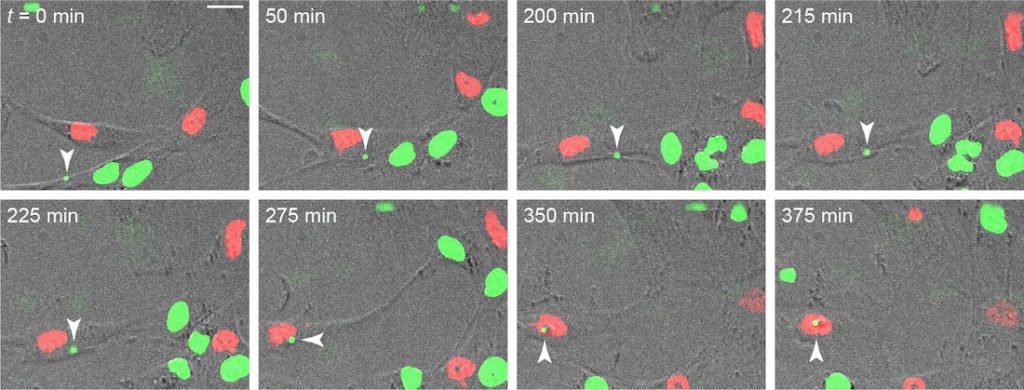
Live-cell microscopy shows a DNA-containing micronucleus (green) moving directly from one human cell into a nearby cell (red).
Scientists at Children’s Medical Center Research Institute at UT Southwestern (CRI) have discovered that large pieces of DNA can transfer directly between human cells, and the DNA can persist and change how the recipient cell functions. The findings, published in Cell, challenge a long-standing view that the genomes of individual human cells evolve independently from one another.
The study shows DNA damage and errors in cell division can cause pieces of genomic DNA to escape from the nucleus and move into nearby cells through nanotubes – thin, tubelike structures that briefly form when some cells come into contact.
Once inside a recipient cell, transferred DNA can enter the nucleus and become incorporated into the cell’s genome. Researchers found that transferred DNA persisted through multiple rounds of cell division, remained biologically active, and conferred new traits to recipient cells.
Study first author Elizabeth Maurais, PhD, a recent graduate of the Genetics, Development and Disease Program at UT Southwestern, and other Ly Lab researchers uncovered this process while studying how cells respond to genomic instability, including DNA damage caused by chemotherapy and radiation treatment.
Using advanced live-cell microscopy, the team observed DNA moving from one cell to another. In one experiment, pieces of the Y chromosome transferred from male cells into female cells. The transferred DNA carried male-specific genes that became active in the female cells, indicating the transferred DNA remained functional after entering the recipient cell.
“There are many open questions. We now want to understand how widespread this process is, how it is regulated at the cellular and molecular levels, and what role it may play in human health and disease, including cancer,” Dr. Ly said. “These findings may have important implications for understanding how cancer genomes evolve and acquire large-scale chromosomal alterations.”
Researchers also observed DNA transfer between different types of human cells, which Dr. Ly said suggests the findings may be a general feature of human cell biology.
Access to oxygen is an essential component of any healthcare system. Yet, more than half of the global population still lacks access to an oxygen source1. To address this public health challenge, which is supported by the World Health Organization, Air Liquide is launching its social impact programme, Access Oxygen, in Madagascar. Relying on a local ecosystem, this program, already deployed in Senegal, Kenya, Mali, and South Africa, mobilises the Group’s longstanding expertise in medical gases to provide reliable, affordable and sustainable access to oxygen for populations in low- and middle-income countries. This initiative fully aligns with Air Liquide’s societal commitment.
In Madagascar, the initiative is being inaugurated in eight primary healthcare centres in the Antsirabe region, south of Antananarivo. These small, community-based facilities (2 to 6 beds), serving a population of 215 000, are particularly isolated and far from hospital infrastructure. They often represent the first point of access to healthcare for patients living in rural areas.
Until now, these centres lacked access to oxygen, despite its vital role in combating maternal and infant mortality. The introduction of this solution will allow for the care and stabilisation of patients experiencing respiratory distress in premature infants, complications related to childbirth, and conditions requiring temporary respiratory support, such as pneumonia or acute and chronic respiratory crises. Once stabilised, patients could be transferred to hospitals for long-term treatment.
Access Oxygen provides a comprehensive, frugal, and autonomous oxygen therapy solution. It includes the supply of equipment (in this case, high-flow oxygen concentrators, pulse oximeters, and consumables necessary for care), as well as training for healthcare staff and technicians. For the first time, the project integrates photovoltaic panels and batteries, ensuring continuity of care even in the absence of a stable power supply. In addition, training for healthcare professionals is delivered by an Air Liquide expert. In Madagascar, Hospiteq will handle the distribution, technical maintenance, and monitoring of the medical devices. The healthcare centres are part of the Ekar Santé network.
Diana Schillag, Executive Committee Member, overseeing Sustainability, stated: ”Making oxygen more accessible where it is most needed is essential to help build sustainable healthcare systems. This is why I am particularly proud of the roll-out of Access Oxygen in Madagascar. Since its launch in 2017, this social impact program has already covered areas with a total population of more than 3.4 million people in low- and middle-income countries. This initiative perfectly illustrates Air Liquide’s societal commitment and gives it its full meaning: leveraging our historical expertise in healthcare to make a real difference for local communities.”
1 Lancet Global Health Commission on medical oxygen security Graham H, King C, Rahman A et al. “Reducing global inequities in medical oxygen access: the Lancet Global Health Commission on medical oxygen security”. The Lancet Global Health, 2025; 13, e528-e584
QIMR Berghofer scientists have uncovered hundreds of genes that play a role in the growth of both moles and melanoma, in a discovery that could lead to new ways of preventing and treating the deadliest form of skin cancer.
The world’s largest genetics study of ‘moliness’, published in Nature Communications, is unravelling the complex causes of both moles and melanomas that are not related to well-known risks caused by sun exposure, skin colour, and pigmentation.
The team found risk genes linked to biological pathways that could lead to the development of a mole or melanoma. These include an immune response pathway that may be failing to control cell growth, and genes implicated in harmful cell proliferation in other types of cancer, such as breast cancer, prostate, and brain cancers.
Working out how to stop these risk pathways could lead to new melanoma drug targets and prevention strategies that go beyond sun protection.
“We know how to reduce sun exposure and risk through SunSmart behaviours, and new immunotherapies have greatly improved survival rates. But people still get melanoma and people still die from melanoma,” A/Prof Law said.
“Existing immunotherapies fail to work for half of all patients with late-stage melanoma, so we need to find other ways to target the disease. By studying moles, we’re learning more about the biology of melanoma so we can find new ways of controlling it.”
Moles and melanomas share the same cellular origin, forming from a pigment-producing cell called a melanocyte that gives skin its colour. In moles, the cell multiplies to form a cluster then stops growing, leaving a harmless spot. In melanoma, the cell growth continues aggressively.
Moliness is strongly influenced by your genes and having a high mole count is a major risk factor for melanoma. Around a third of melanomas develop from a mole.
The QIMR Berghofer research analysed data from more than 85000 participants of European ancestry discovering 24 new genetic regions that determine the number of moles someone has. This is a five-fold increase on the five areas found in an earlier 2018 study also led by QIMR Berghofer researchers.
All but one of the genetic regions for mole count also play a role in melanoma. The team pinpointed more than 250 key genes in these regions to prioritise for further research.
One of the new genes, SIKE1, regulates immune responses to viral infections. The researchers think it could enable the development of melanomas by malfunctioning and affecting the immune system’s ability to detect and destroy melanocytes that are multiplying abnormally. This could be a promising target for a potential immunotherapy that could possibly prevent early stage melanoma growth.
“I’m really proud to be continuing this long legacy of research. Our study increases understanding of why some people have a lot of moles and why some people develop melanoma so we can better treat and prevent this skin cancer,” Ms Jayasinghe said.
The researchers used the study insights to create a Polygenic Risk Score (PRS) for moliness to predict those who are genetically more likely to have a large number of moles, which could be integrated into melanoma screening tools in future to improve their accuracy in finding those at high risk so they can receive extra monitoring.
The next step is to analyse even larger data sets to find more genetic regions involved in moliness and melanoma. The researchers are also searching for existing drugs that could potentially target the newly identified biological pathways.
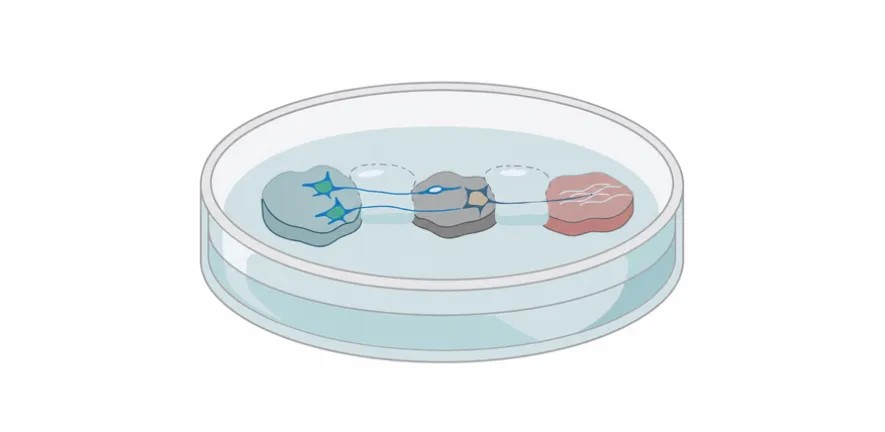
Illustration of the model, with the brain organoid, spinal organoid, and muscle tissue (left to right). Credit: András Lakatos lab
Cambridge scientists have grown miniature circuits in the lab that mimic how the brain and spinal cord connect up, which underlies our movements. They used this model to show how damage to these connections previously considered ‘irreversible’ could, in fact, be reversible.
Our sophisticated organoid models help bridge the knowledge gap from animal models to what we see in patients.
András Lakatos
As we develop and grow from embryo to foetus to infant, our nerve cells (neurons) form connections, allowing information to be transmitted between the brain and the spinal cord. A key component of each neuron is the axon – the nerve fibre ‘cable’ that transmits information to other neurons to activate muscle contractions.
At some point, we lose the ability to grow axons in the central nervous system, or this ability is at least greatly impaired or slowed down. This means that damage to the brain and spinal cord becomes permanent, leading to devastating disabilities, such as the inability to grasp or walk. This is often the case for traumatic spinal cord injury and can be a feature of many neurological diseases, including motor neurone disease or multiple sclerosis.
In 2021, Dr András Lakatos and colleagues at the University of Cambridge developed ‘mini brains’ using human patient-derived stem cells – special cells that have the potential to develop into most human cell types – which they guided to grow into pea-sized brain ‘organoids’. These organoids were 3D models that resemble parts of the human cerebral cortex. The team used these to demonstrate molecular problems in motor neurone disease and potential ways to prevent them.
Now, in research published in Cell Reports, Dr Lakatos’s team has taken its research a step further, building a mini version of the connected human brain and spinal cord system in the lab by recreating these tissues using organoids.
In the human body, the brain and spinal cord tissues are distinct but connected by axons, so the researchers kept the brain and spinal cord organoids apart. They saw that nerve fibres from the brain tissue grew across the gap to connect to the spinal cord, forming a working circuit that could even cause tiny muscle clusters to contract.
By growing this human system in the dish for more than a year, they found that up until around day 150 – which corresponds to the mid-trimester of pregnancy – the axons were able to regrow after damage, but after this time, their growth was greatly impaired.
George Gibbons from the Department of Clinical Neurosciences at the University of Cambridge, the study’s first author, said: “Neurons taken from less mature organoids regrew long fibres after injury, but those from more mature organoids showed a sharp drop in their ability to regrow. In other words, poor regeneration is built into human neurons as they mature in the central nervous system.”
By analysing the gene expression – a sign of how active the genes are – in neurons that connect the brain and the spinal cord, they were able to identify a network of genes that acts as a ‘switch’ restricting the axon growth ability while the neurons mature to form connections (synapses). Amazingly, blocking key regulators of this network switched back on the ability of axons to grow.
The team then scanned a database of drug compounds to search for those that act on the genes in this network and identified as a candidate lynestrenol, a hormone drug licensed for managing certain menstrual disorders and as a contraceptive. When they tried this drug on damaged neurons, they found that it significantly boosted axon regrowth.
While scar tissue and inflammation may also restrict axon repair, exploring and tackling neuron-specific causes – the subject of this study – is very important. This is supported by evidence that axons of less mature neurons can grow through non-permissive environments that characterise injury sites.
Senior author Dr András Lakatos, who led the project at the Department of Clinical Neurosciences, said: “When the brain and spinal cord are damaged, the nerve fibres that carry movement signals from the brain to the spinal cord rarely grow back. That’s why paralysis is usually permanent. But we didn’t know exactly when the ability of axons to regenerate becomes limited. Our model provides a good indication that this block happens during development, and it can still be reversed after this point.
“Lynestrenol itself may not be the answer to spinal cord repair, but it shows us that, in principle, it should be possible to directly target human neurons and regenerate their axons. Although we still need to show that this strategy will also help to re-establish appropriate connections between the brain and spinal cord cells, this gives us hope that one day we may be able to treat conditions previously thought untreatable.”
Organoid models are an important way of understanding human biology. While animal models – for example, mice and rats – are useful for studying our biology as they share some similarities with humans, their differences ultimately limit what we can learn. Organoids grown from human stem cells can more closely mimic human biology.
Dr Lakatos added: “Much of what we know about nerve regeneration comes from rodents, whose neurons behave differently from human neurons. Our sophisticated organoid models help bridge the knowledge gap from animal models to what we see in patients. They are also an important contribution to efforts to reduce the use of animals in research.”
The research was funded by the UK Research and Innovation Medical Research Council and Spinal Research. Dr Lakatos has a long association with Spinal Research, from being a funded PhD student to now sitting on the charity’s Grant Advisory Board Committee.
Spinal Research Chief Executive Louisa McGinn said: “Today, we are entering a new era of hope and possibility for the 15million people worldwide living with a spinal cord injury.
“The next five years present an unprecedented opportunity to change what’s possible for people living with spinal cord injuries. Breakthrough therapies are nearing clinical reality and frontier technologies are creating bold new pathways toward repair and recovery.
“Spinal Research is committed to funding the most promising research and the best researchers around the world. The incredible work that Andras and his Group are doing at Cambridge shines a powerful light on what that can achieve and we’re delighted to support it.”
The South African Health Products Regulatory Authority, with the South African Pharmacy Council, recently announced what was described as a crackdown on a compounding pharmacy. They allege “critical regulatory non-compliance” in relation to the compounding of unregistered medicines. In his latest Inside The Box column, Dr Andy Gray provides some background to the issues at stake, while recognising that some key elements remain contested.
Until the 20th century, medicines dispensed by pharmacists were all compounded (mixed) from raw ingredients, most of which were inorganic chemicals and herbal products. The gilded majolica jars displayed in pharmacies and museums depict the names of those common ingredients, often in Latin. Hence, a jar labelled as “Paraf mol alb” would contain “paraffinum molle album”, or white soft paraffin (white petroleum jelly), more commonly known as Vaseline.
The market for finished pharmaceutical products, in the form of modern tablets, capsules and the like, has grown dramatically over the last century. Even so, the need for the preparation of medicines in a pharmacy, from either raw ingredients or existing products, has not entirely disappeared.
#InsideTheBox is a column by Dr Andy Gray, a pharmaceutical sciences expert at the University of KwaZulu-Natal and Co-Director of the WHO Collaborating Centre on Pharmaceutical Policy and Evidence Based Practice. (Photo: Supplied)
There has always been a need for the preparation of particular products for individual patients in cases where a commercial product does not exist or is not suitable. For example, a pharmacist may be asked to produce an eye drop when no commercial products exist, using an injection as the starting material. Similarly, where a patient is unable to swallow tablets or capsules, an oral liquid preparation may be compounded. In many cases, the preparation is done extemporaneously, meaning that it is done specifically for that patient at a point in time. Such medicines are compounded by pharmacists as part of their usual professional practice in community and hospital pharmacies.
Exceptions, limitations and contestation
Modern medicines regulatory practice is based on the concept of registration or marketing authorisation. This is where a manufacturer is required to provide evidence to the national medicines regulatory authority of the quality, safety and efficacy of a medicine, before it can be sold. However, an exception has been created, allowing for compounding of medicines. In the South African medicines legislation, this is provided by section 14(4) of the Medicines and Related Substances Act (Act 101 of 1965).
The usual approach is described in section 14(1) of the Act, which states that “no person shall sell any medicine … which is subject to registration by virtue of a declaration published in terms of subsection (2) unless it is registered”. The declaration in this regard refers to the call-up notices issued for different pharmacological classifications of medicines since 1967, when the Act came into operation. All pharmacological classifications have now been made subject to registration.
The exception is provided by section 14(4), which states that subsection 14(1) will not apply when a medicine is “compounded in the course of carrying on his or her professional activities by a pharmacist”. A similar exception applies to licensed dispensing and compounding practitioners and veterinarians. Two scenarios are envisaged: compounding a preparation in accordance with a prescription for a particular patient, or compounding by a pharmacist for the retail trade.
However, there are three critical additional restrictions: a compounded medicines shall “not contain any component the sale of which is prohibited by this Act or any component in respect of which an application for registration has been rejected”, the compounded medicine “is not or has not been advertised”, and the “the active components of such medicine appear in another medicine which has been registered”. Thus, unless declared undesirable or never before registered, an active ingredient may be compounded and sold without being registered. A compounded medicine may also not be advertised to the public or to health professionals.
Further details were provided by the General Regulations to the Medicines and Related Substances Act, which were published in 2017. The initial version of those regulations added some additional restrictions, for example restricting the quantity to be compounded to the “quantity that is intended to be used by a patient for not more than 30 consecutive days from the date of compounding”. More importantly, sub-regulation 3(3)(a) prohibited compounding that was intended “to circumvent the provisions of section 14 of the Act”, the requirement for registration.
Legal challenge
In December 2021, the North Gauteng High Court in Pretoria ruled in a case brought by The Association of Compounding Pharmacists of South Africa, challenging the regulations. While noting that “[w]hat constitutes pharmacy compounding is not well defined”, Judge Norman Manoim ordered that the regulations be redrafted and that a draft guideline on good compounding practice be published. In particular, the judgment recognised the need to clarify what was needed for “anticipatory compounding”, where medicines were compounded in anticipation of a prescription or for sale by a pharmacist.
In accordance with the court judgment, amended regulations were published for comment and finalised in 2022, deleting sub-regulation 3(3)(a), and recognising that a pharmacist could “based on the amount of medicine compounded previously for a particular period, compound such medicine in anticipation of supply thereof within such particular period”. Lastly, the regulations required that draft guidelines on good compounding practice be published within 6 months, for public comment. These draft guidelines were published for comment in June 2023, but have not been issued in final form. The draft guidelines are no longer accessible on the South African Health Products Regulatory Authority (SAHPRA) website.
Compounding pharmacies
While the extemporaneous compounding of medicines for individual patients is routinely performed in most community and hospital pharmacies, “anticipatory compounding” has emerged as a speciality practice.
Compounding pharmacies are not recognised as a specific category of pharmacies licensed by the Department of Health and recorded as such by the South African Pharmacy Council (SAPC). The current regulations to the Pharmacy Act only recognise community, institutional (hospital), wholesale, manufacturing and consultant pharmacies. The services that each category of pharmacy can deliver are regulated, with both community and institutional pharmacies enabled to perform “compounding, manipulation or preparation of any medicine or scheduled substance”. Specialist compounding pharmacies are thus licensed as community pharmacies.
SAHPRA licenses manufacturers and wholesalers of medicines, not community pharmacies. Section 22C(1)(b) of the Medicines and Related Substances Act states that the Authority “may … issue to a … manufacturer, wholesaler or distributor of a medicine … a licence to manufacture, import, export, act as a wholesaler of or distribute, as the case may be, such medicine … upon such conditions as to the application of such acceptable quality assurance principles and good manufacturing and distribution practices as the Authority may determine”.
Whether a compounding pharmacy, licensed as a community pharmacy, can import active pharmaceutical ingredients (APIs) for the purposes of compounding, is contested. It is the API which is responsible for the desired medicinal effect but can also be the cause of adverse events. Inactive excipients are added to produce the final dosage form administered to patients.
The question of quality
As was outlined in a previous column in this series, patients are assured of the quality of medicines on the South African market by virtue of their registration by SAHPRA and compliance with Good Manufacturing Practice (GMP) standards by licensed manufacturers. Compounded medicines are an exception to the rule – they are unregistered, and their preparation is not subject to GMP.
In the case of medicines compounded for individual patients, the risk is more manageable. Where larger quantities are prepared in anticipation of demand, and in particular where sterile preparations such as injections are made, the risks may be greater.
Equally, there is a need to ensure that APIs used for manufacturing or compounding medicines are of acceptable quality. A draft guideline on post-importation testing, published by SAHPRA for comment in May 2026, applies to all imported APIs.
Following a major incident in the United States, where contaminated compounded corticosteroid injections resulted in a number of serious fungal infections, US law was amended in 2013 to create a new category of outsourcing facilities regulated by the Food and Drug Administration (FDA), not by state pharmacy boards. State pharmacy boards were not considered to have the capacity to effectively regulate large scale compounding, especially for higher risk sterile preparations.
In South Africa, while the Good Pharmacy Practice standards issued by the SAPC cover the usual services delivered by community and hospital pharmacies, they are insufficient to cover larger scale anticipatory compounding or outsourcing services.
Ongoing contestation
Existing South African law may well be deficient in the way in which it regulates compounding pharmacies. How the current legal provisions are applied and interpreted is contested and will be the subject of a number of court challenges.
Patient safety must remain the key animating feature of any future regulatory process that is fit for purpose and effective.
*Dr Gray is a Senior Lecturer at the University of KwaZulu-Natal and Co-Director of the WHO Collaborating Centre on Pharmaceutical Policy and Evidence Based Practice. This is part of a series of columns he is writing for Spotlight.
Disclosure: Gray serves on three technical advisory committees at the South African Health Products Regulatory Authority.
Note: Spotlight aims to deepen public understanding of important health issues by publishing a variety of views on its opinion pages. The views expressed in this article are not necessarily shared by the Spotlight editors.
The ASCERTAIN V clinical trial demonstrated that an all-oral drug combination for older patients with acute myeloid leukaemia (AML) is an effective alternative to the current standard, which requires repeated hospital or office visits for intravenous treatment. In the international phase 1/phase 2 trial, patients took a regimen of two pills, decitabine-cedazuridine and venetoclax, with strong response rates and survival outcomes. The study results were published in the New England Journal of Medicine.
Nearly half of patients (46.5%) achieved complete response, while 63% experienced either complete response or complete response with incomplete haematologic recovery, meaning cancer cells were undetectable, but the patient’s healthy blood cell counts had not yet returned to normal. The median overall survival reached 15.5 months – comparable to existing intravenous therapies.
The oral combination of decitabine-cedazuridine and venetoclax received U.S. Food and Drug Administration approval on May 13 for the treatment of AML in newly diagnosed adults 75 years or older and patients clinically unable to undergo traditional, intensive chemotherapy.
“Having received approval, we anticipate that this oral AML regimen will become the standard of care for patients who are older or more frail,” said lead author Dr Gail J. Roboz, professor of medicine and director of the Clinical and Translational Leukemia Program at Weill Cornell and a haematologist oncologist at NewYork-Presbyterian/Weill Cornell Medical Center. “We hope these results point to a future for AML patients where the treatment journey is less disruptive and less burdensome without sacrificing outcomes.”
Turning a Standard into an Oral Treatment
AML is an aggressive blood cancer that can be diagnosed at any age and is especially difficult to treat in older adults and patients with other serious health conditions. For these individuals, the current standard treatment combines venetoclax with a class of drugs known as hypomethylating agents, such as decitabine. Venetoclax inhibits Bcl-2, a protein that leukaemia cells overproduce to avoid cell death, while hypomethylating agents restore the activity of genes involved in cell growth and survival, helping slow leukaemia progression.
However, this regimen requires monthly treatment cycles that combine oral venetoclax with five to seven days of an injectable hypomethylating agent delivered in a clinic or hospital. These frequent visits create significant physical, logistical and emotional challenges for patients and families.
More recently, pharmacologists developed a pill version of decitabine by pairing it with another drug called cedazuridine that prevents decitabine from being broken down when ingested.
With the ASCERTAIN V trial, Dr Roboz and her colleagues tested whether decitabine’s oral version, combined with venetoclax, could match the efficacy of intravenous AML treatment.
The nonrandomised phase 1/phase 2 study enrolled 189 newly diagnosed AML patients at centres across the United States, Canada and Spain. The patients took a month of venetoclax, along with five days of decitabine-cedazuridine at the start of each treatment cycle.
The oral regimen demonstrated a safety profile consistent with what doctors already expect from standard AML therapies, which commonly deplete healthy blood cells alongside leukaemia cells. The most common serious side effects included anaemia, neutropenia and fever associated with low white blood cell numbers.
Tailoring Treatment to Reduce Side Effects
During the trial, researchers also investigated how to fine-tune the treatment schedule to optimise leukaemia control, while minimising side effects related to low blood counts.
The paper offers recommendations for physicians, including careful monitoring of leukaemia cells until they reach a certain threshold and then strategically pausing venetoclax to allow the body to replenish normal white blood cells, red blood cells and platelets.
“The goal of the all-oral therapy is to keep people out of the hospital, especially once they have achieved remission,” said Dr Roboz, who is also a member of the Sandra and Edward Meyer Cancer Center at Weill Cornell. “Patients are thrilled not to have to deal with monthly chemotherapy injections or infusions.”
Looking Ahead
For now, most patients taking the oral regimen must continue treatment to maintain remission, much like a chronic condition. “AML patients taking ongoing cycles of treatment require close monitoring but can still have an excellent quality of life,” Dr Roboz said.
In the future, the researchers hope that increasingly sensitive blood monitoring tests may identify when patients can safely stop treatment.
Dr Roboz and AML researchers worldwide are also exploring “triplet therapies,” which add additional targeted drugs to the decitabine-cedazuridine and venetoclax combination.
“The goal is to get away from treatment cycles that go on indefinitely,” said Dr Roboz. “We want to drive the leukaemic cells to such low levels that patients can discontinue therapy and be cured.”
A new study published in the journal Neuron shows for the first time that targeted control of human breathing rhythm can influence decision behaviour by modulating heart and brain function. The research team was able to demonstrate that prolonged exhalation increases heartrate variability and the brain’s reward sensitivity, thus enabling us to make bolder decisions.
Accelerated breathing and rapid heart rate often lead to quick decision–making. Judgements under these circumstances, can lead to a more cautious decisions to minimise potential loss – whether it is making investments under time pressure, during a critical employee meeting, or when quickly selecting a meal. In contrast, slow breathing and a calmer heart could presumably lead to assessing the situation more positively and making bolder decisions.
New Perspective: Body, Brain, and Decision in Harmony
Traditional theories assume that decisions arise in the brain. The present study investigated how the interplay of different organs can influence brain function and thereby control our decisions. It was spearheaded by Prof Soyoung Q Park in cooperation with institutions such as Neuroscience Research Center at Charité – Universitätsmedizin Berlin, Freie Universität Berlin, and German Naval Institute of Maritime Medicine.
“Our decisions are rarely determined solely by external information. Rather, our judgment emerges from the interplay between cognitive processes and our current bodily state. It was previously unknown how the conscious regulation of our body, for example through targeted breathing, could actively control our decision–making process. We wanted to create a physiological shift using slow breathing pattern to change the quality of our decisions,” explains Soyoung Q Park, head of the Department of Decision Neuroscience and Nutrition at DIfE, summarising the research question.
In the study, 41 healthy participants were observed in a state-of-the-art multi-methods research setting as they made risky decisions while adhering to specified breathing protocols. The participants followed visual breathing cues and breathed either in their individual natural rhythm or slower with an extended exhalation (2:8 inhale-exhale ratio). While they breathed, they were asked to make several risk decisions. Meanwhile, the researchers captured brain function using functional magnetic resonance imaging and simultaneously monitored breathing parameters, heart activity, skin conductance, and pupillary reactions. By combining these measurements, the researchers were able to investigate whether extended exhalation not only lowers heart rate but also leads causally to modulated reward processing in the brain.
The Body’s State Influences Our Decisions
The scientists found that extended exhalation led to riskier decisions by slowing down heart rate. Notably, the risky decisions were more guided by potential rewards, while the consideration of potential losses remained unchanged. Furthermore, there was increased activity in the ventromedial prefrontal cortex and the precuneus area. These two key brain regions influence both the time intervals between heartbeats – known as heart rate variability – and reward sensitivity. “Our study thus underscores the transformative role of breath–based interventions. The interplay between breathing and cardiac dynamics makes the brain more receptive to rewards,” explains lead author Wenhao Huang, interpreting the results.
The Practical Benefits of Breathing Techniques
The findings expand the field of body-brain interaction research and support so-called neurovisceral models, which posit that physical condition strongly influences cognitive processes. Park explains: “Breathing techniques have accompanied humanity for millennia across various religions and cultures. With this study, we provide scientific proof that it is a reliable and targeted method capable of controlling our decisions.”
Thus, breathing techniques represent a simple, inexpensive, and easy-to-learn option for everyday self-regulation. Moreover, they have immense potential value in clinical settings as an adjunctive, non-pharmacological strategy – for example, for conditions such as anxiety disorders or depression, which are characterised by autonomic dysregulation and altered reward perception.
The next step should be to investigate whether the observed effects can be generalised to a broader clinical population, such as people with overweight. “Since dietary decisions are strongly influenced by reward assessment and physical state, targeted breath regulation could also play a role in consciously perceiving and more effectively managing eating behavior,” Park summarises for future research activities.
Lenacapavir is injected just under the skin, typically in the stomach area, where it forms a small depot that very slowly releases the drug over time. Photo by Elen Sher on Unsplash
By Amy Green
With a new six-monthly injection, South Africa last week launched the most promising new HIV prevention tool in years, but much of the infrastructure that made HIV prevention services accessible to high-risk groups has been dismantled over the last year. Spotlight asks whether we can successfully deliver this breakthrough technology without the trusted pathways decimated by cuts to aid from the United States.
When 29-year-old Keegan Daniels* visited a public hospital outside Cape Town earlier this year to be placed on medication to prevent HIV infection, he says he wasn’t sure what to expect, but it definitely wasn’t to be reprimanded, lectured and told that anal sex “is abnormal”.
Oral pre-exposure prophylaxis (oral PrEP) refers to antiretroviral tablets taken to prevent HIV infection. When used as prescribed, oral PrEP has been shown to reduce the risk of HIV infection from sex, including in men who have sex with men (MSM), by approximately 99%, according to a 2022 meta-analysis.
During the short consultation, Keegan claims the doctor, who appeared unfamiliar with prescribing PrEP, chastised him for addressing him as “sir” rather than “doctor”, and made assumptions about his sexual orientation.
“I am gay, but when he told me I was ‘homosexual’ instead of asking me, I felt as if I was there to be shamed instead of helped,” says Keegan, who identifies as a gay man.
Keegan tells Spotlight that he sought out oral PrEP after an experience that left him worried about his HIV risk. As a man who has sex with other men, he is also part of a population disproportionately affected by HIV. According to the World Health Organisation (WHO), men who have sex with one another are up to 26 times more likely to acquire HIV than the general population. This is largely driven by biological risk factors associated with anal sex combined with other social and structural vulnerabilities faced by this group.
The consultation became increasingly uncomfortable, Keegan says, when the doctor began discussing the importance of marriage as a method to prevent HIV and the risks associated with anal sex.
“He may not have meant it that way, but it felt like a judgement,” Keegan says.
His experience highlights long-standing concerns from activists, researchers and healthcare providers about discrimination experienced by members of marginal groups at public sector clinics. One solution to such discrimination has been to create special clinics for groups like men who have sex with men where they could access HIV treatment, prevention, and other services without judgment. But this alternative was dealt a major blow last year with the closure of many such specialised programmes funded through the United States President’s Emergency Plan for AIDS Relief (PEPFAR).
There are now concerns that the destruction of such specialised services could limit the reach and impact of the latest addition to South Africa’s HIV prevention toolkit. Last Friday, South Africa officially launched its public sector rollout of an injection that provides six months of protection against HIV infection at a time. The jab, a form of injectable PrEP, contains the antiretroviral drug lenacapavir. (See Spotlight’s special briefing on lenacapavir for more detail.)
PrEP in South Africa
The recent history is worth revisiting. South Africa became the first country in Africa to start rolling out oral PrEP back in 2016. Initially, the strategic focus of the programme was on “key populations”, groups that bear a disproportionate burden of HIV infection and who are at the highest risk of new infections. Key populations include sex workers, men who have sex with men, transgender persons, people who inject drugs and people in prisons or other similarly closed settings.
UNAIDS estimates that in Sub-Saharan Africa, key populations and their sexual partners accounted for roughly 39% of new HIV infections in 2020, despite representing a much smaller proportion of the population.
“PrEP is central to South Africa’s HIV response because treatment alone will not end the epidemic,” says National Department of Health spokesperson Foster Mohale.
“South Africa still has a very large HIV burden, with millions living with HIV and substantial ongoing new infections, especially among adolescent girls and young women, key populations, and pregnant and postpartum women,” he adds.
“After a decade, South Africa is home to the largest and most successful PrEP programme in the world, even though it has not delivered the impact we wanted,” says Mitchell Warren. He is the executive director of AVAC, a US-based advocacy organisation, largely focussed on HIV prevention, that does extensive work in South Africa. Warren’s point about the impact not being what we wanted, refers to the fact that, comparatively large as our PrEP programme is, uptake has been much lower than what was hoped.
He says that the oral PrEP programme started to gain more traction around the time of the COVID-19 pandemic. “A lot of that was thanks to PEPFAR, through the support around programmatic delivery of PrEP and most notably the initiatives designed for key populations,” Warren says.
Making sense of the numbers
The most recent figures show that over 2.1 million individuals have been initiated on oral PrEP in South Africa, Mohale tells Spotlight.
However, most of these are considered to be people restarting PrEP and not new users, according to Professor Francois Venter, Executive Director of Ezintsha at Wits. He says that the real figure for overall PrEP users is closer to 500 000.
This view is roughly in line with estimates from Thembisa, the leading mathematical model of HIV in South Africa. The two types of indicators here are important to distinguish. Since many people start and then stop taking PrEP, looking just at PrEP initiations provides a very limited view. This is why Thembisa also includes estimates of the total number of people taking PrEP at specific points in time (technically the middle of each calendar year).
According to Thembisa, just over 350 000 people were taking PrEP as of mid-2025 – a slight decline compared to the 2024 number. Prior to this decline, the programme had been showing solid year-on-year growth.
Aid setback
When trying to understand why PrEP numbers stopped growing, and instead declined slightly in 2025, one very likely culprit stands out – aid cuts.
Venter argues that the relative success of South Africa’s PrEP programme was underpinned by an ecosystem of specialised key population services, most of which were funded by the United States Agency for International Development (USAID) under PEPFAR.
“Most of these 500 000 estimated PrEP users in South Africa started in these key populations programmes,” says Venter.
“But one sudden decision by the Trump administration essentially destroyed PrEP in South Africa, and because South Africa is so significant in terms of HIV incidence and prevalence, it also threw the global PrEP response into chaos.”
In February 2025, the Trump administration terminated large numbers of USAID-funded health projects and massively reduced funding for many HIV programmes. While a limited waiver allowed some treatment services to continue, HIV prevention activities were largely excluded. Programmes focussed on helping people avoid HIV infection, including many PrEP services, were among the hardest hit.
The cuts all but decimated specialised clinics and services for key populations in the country, according to Venter.
“The dismantling of the key population programme is an absolute disaster for PrEP. Clinics gone, just shut down. About 80% of the specialised key population services were funded by USAID,” says Venter.
Despite the health department’s assurances that these PrEP users from key populations will be integrated into the normal existing services in our healthcare system, he says “there is absolutely no evidence that this has happened”. Venter adds: “I suspect the vast majority stopped taking PrEP.”
Over 8 000 PEPFAR-funded staff involved in HIV programmes lost their jobs, important HIV prevention research projects were halted, civil society organisations were forced to retrench staff and attenuate their outreach programmes and, most alarmingly, thousands of PrEP users were lost in the system, according to Eugene van Rooyen, who is the Legal and Policy Advisor for the Sex Workers Education and Advocacy Taskforce (SWEAT).
“It is impossible to know exactly how many of these clients stopped taking PrEP. We did a survey late last year [2025] that showed that less than half of the former users of key populations services in Cape Town were still on treatment,” he says.
The SWEAT survey aimed to find out what happened to these individuals after the services stopped but did not disaggregate PrEP users from people on antiretroviral treatment.
“Regardless, the results are a tragedy. All those years of gaining trust in these communities, and all the millions invested in the PrEP programme, all down the drain,” Van Rooyen says.
The concerns raised by activists are echoed in findings from Ritshidze, South Africa’s largest community-led monitoring programme. Ritshidze, which surveys thousands of public healthcare users annually and monitors more than 400 healthcare facilities across the country, was established to track the quality of HIV and TB services from the perspective of people using them.
Its most recent report found early signs that the PEPFAR funding cuts may already be affecting access to HIV services. Approximately, 56% (189 out of 340) of facility staff surveyed reported reduced capacity after the PEPFAR withdrawal while reports of stigma and discrimination remained common.
Vertical services vs integration
While Keegan says he experienced stigma and challenges accessing PrEP through the general public sector, his older cousin Jason* describes an entirely different experience when he first started PrEP.
“I started PrEP three years ago at the Wits RHI Transgender Clinic in Bellville [Cape Town], it was easy, comfortable, safe. I felt empowered and had zero problems getting onto PrEP there,” says Jason, who is also a part of the MSM community. Although he doesn’t identify as a transgender person, he says the clinic staff welcomed him and his peers. It was a space that removed many of the barriers key populations face when accessing healthcare. But it was also one of the many clinics that ceased to exist after the funding cuts.
The National Department of Health maintains that “the PrEP programme has not collapsed, because it is anchored in the public health system”. Their argument has broadly been that people who went to specialist clinics should be redirected to public sector clinics. To address discrimination, provincial health departments have run several programmes aimed at sensitising clinic staff to the needs of key populations. This has included staff involved in administering the lenacapavir injection.
As for PrEP, Mohale says South Africa made “a deliberate decision to move PrEP out of the early pilots that commenced in 2016 into the broader public health system at scale”. Today, he says, “approximately 99% of public primary healthcare facilities offer oral PrEP”.
“The key success factor is that PrEP is not a vertical programme, it is integrated into primary healthcare and combination prevention,” says Mohale.
What all this means for lenacapavir
“This is not merely a medical advance. It is a practical intervention that can transform lives. It reduces barriers to adherence. It expands choice. It strengthens dignity. And it empowers people to take control of their health and their future,” President Cyril Ramaphosa said in a prepared speech at the launch of South Africa’s lenacapavir rollout last Friday.
The first phase of the rollout will see lenacapavir available in 360 health facilities across the country. This is roughly 10% of the country’s public sector clinics. While it remains to be seen how high demand will be, there are clearly limits to what level of demand can be accommodated. Initially, South Africa will only have enough lenacapavir for around half-a-million people. This is partly why specific groups like young women and girls, MSM, and sex workers are being prioritised.
Thus, in the fact that there is some prioritisation of specific groups the lenacapavir rollout partially mirrors the rollout of oral PrEP a decade ago. But unlike the initial oral PrEP rollout, specialised key population clinics will play little part.
Mohale explains that the integration of services is the philosophy underlining the rollout of the lenacapavir programme, a philosophy he says is fundamental to the success of PrEP in South Africa.
Venter disagrees: “Key population programmes exist for a reason – they work. People need verticalised services.”
Meanwhile, a statement released by a coalition of several civil society groups criticised the rollout plan of being “unambitious, low-scale, and in danger of being more about pomp than public health impact”.
“A programme that does not adequately prioritise key and vulnerable populations such as sex workers, outside of clinics, will leave those most in need of HIV prevention services, even more vulnerable,” Katlego Rasebitse, from SISONKE Movement, says in the statement.
A rollout beyond clinics?
The introduction of lenacapavir has mostly been received with resounding optimism. But some have also raised concerns and have cautioned that the rollout won’t be without obstacles.
“Getting hundreds of thousands of otherwise healthy individuals to come to public health facilities to get lenacapavir is not a likely pathway to scale. We have got to be very clear, dropping lenacapavir into clinics is not a pathway to success,” says Warren, who has also praised South Africa and the National Department of Health for launching the national injectable PrEP programme.
“There are many innovative ways to deliver PrEP outside of facilities, like mobile clinics, outreach services, among others. There is a lot of work around implementation science being done in South Africa that can be used to make this programme ambitious enough to be a global PrEP success story,” he says.
There are several implementation science research projects underway looking at innovative ways of delivering PrEP, including lenacapavir, outside of traditional settings.
Unitaid has launched a project, valued at US$22.5 million, that “will support South Africa to expand access to lenacapavir through innovative, community-based delivery and demand-generation approaches that complement national rollout through public health facilities”.
Largely focussed on reaching key populations, the project aims to generate real-word evidence on these innovative delivery models, evidence that “will help inform national scale-up”. It is exploring a range of delivery settings including pharmacies, mobile clinics and even hair salons.
‘I was trying to do the right thing’
When Keegan walked out of the doctor’s consultation room that day in April, he says that he felt angry, self-conscious and deeply uncomfortable. Instead of continuing the process to get onto PrEP, he left the hospital.
“I have been through a lot of trauma in my life, a lot of stigma because of my orientation. It took a lot for me to start healing. This experience brought me back to that space of self-doubt. I left there feeling like I’m nothing. I’m a piece of dirt,” he says.
His cousin, Jason, had an appointment the next day, at the same place for the same reason. Since the closure of the clinic in Belville, Jason had chosen to pay for his monthly PrEP pills himself, instead of facing the challenges anticipated in a regular public health facility, but he says this route had stopped being financially feasible.
“By that time, I had cooled down and Jason convinced me to go back to the hospital with him,” says Keegan.
After the mandatory blood draws and HIV testing, he filled his prescription at the hospital pharmacy.
As Keegan sat down, he says he showed Jason the box.
“That isn’t PrEP Keegan, those are pills for HIV positive people,” said Jason. He had experience with oral PrEP and recognised the ARVs by the packaging. His partner, living with HIV, uses the same medication.
After a protracted process, several conversations with nurses and the doctor. Keegan says he eventually received the correct medication. He told Spotlight that, even though he is educated and informed, he only started PrEP “through luck”. There are many other people from marginalised groups “who probably won’t have my luck”.
“What will they do?” he asked.
“I was trying to do the right thing. The responsible thing for my health. In the end, I didn’t feel like I was doing the right thing. I felt like I was being punished.”
Despite this experience, both Keegan and Jason are excited at the prospect of the twice-yearly injectable PrEP.
“You won’t catch me coming back to this hospital, but I would find a clinic that treats people well. Even if I have to drive for hours, I would, just to have this injection every six months, instead of drinking pills every day,” Keegan says.
* Names have been changed to protect the identity of sources
Republished from Spotlight under a Creative Commons licence.