Schematic diagram of the alveolar chip (upper left), photograph of the chip (upper middle), CAD drawing of the multi-generation alveolar structure (upper right), and two typical flow patterns in the alveolar chip (bottom). CREDIT: Yonggang Zhu
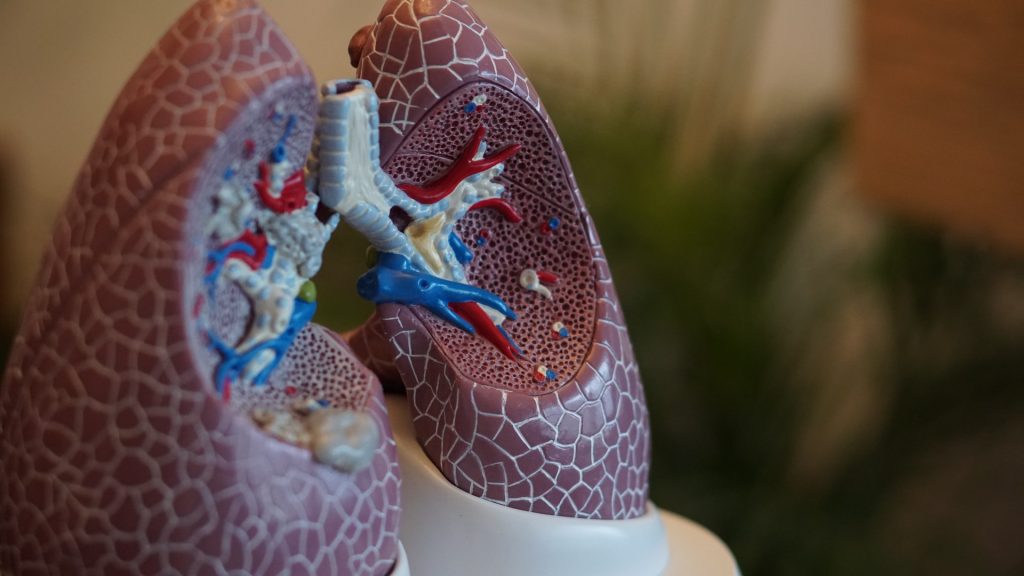
Understanding how air and particulates through the alveoli is important to better treat respiratory disease. In Biomicrofluidics, researchers detail a model alveolar system that they built to mimic the breathing action of the human lung and allows visualisation of flow patterns within the alveoli. They observed that flow changes after the 20th branching of the alveoli.
The scientists, from Harbin Institute of Technology in China, designed a chip that includes tubes arranged like the structure of a bifurcation point in the bronchial network. The upper layer of the chip is made of a flexible polymer moulded into small tubes that mimic the alveolar structure. The lower layer is glass, which allows the authors to visualise fluid flow through the tubes.
To mimic inhalation and exhalation, the scientists devised a system in which gas was pressurised in a sinusoidal fashion and pumped around the flexible tubes. Small red polystyrene spheres were added to the fluid flowing through tubes. These spheres allowed them to photograph movement of the fluid as it was pushed through the tubes by the artificial breathing apparatus.
Subsequent branches in the bronchial network are termed ‘generations’, and the team found different flow patterns for different generations. In the human lung, alveoli appear at the 15th generation and remain present for generations up to 23. The researchers found a change in flow pattern between the 19th–20th and the 21st–22nd generations.
“The alveolar flow pattern of the 19th generation is dominated by vortex flow,” author Yonggang Zhu said. “Alveolar flow patterns in the 20th generation are similar to those in the 19th, but somewhat compressed.”
The investigators observed a change in the next generation.
“The alveolar flow pattern in the 21st generation has both vortex flow and radial flow. The vortex region is much smaller than the radial flow region. By the time the flow reaches the 22nd generation, vortex flow disappears completely, and we observe only radial flow,” Zhu said.
The authors also found evidence of chaotic behaviour near the vortex centre. They said more research is needed to fully understand this, but they felt the current study provides a good baseline for deeper investigations.
With the model, researchers will be able to study changes in flow patterns in the alveoli due to diseases such as emphysema and COPD.
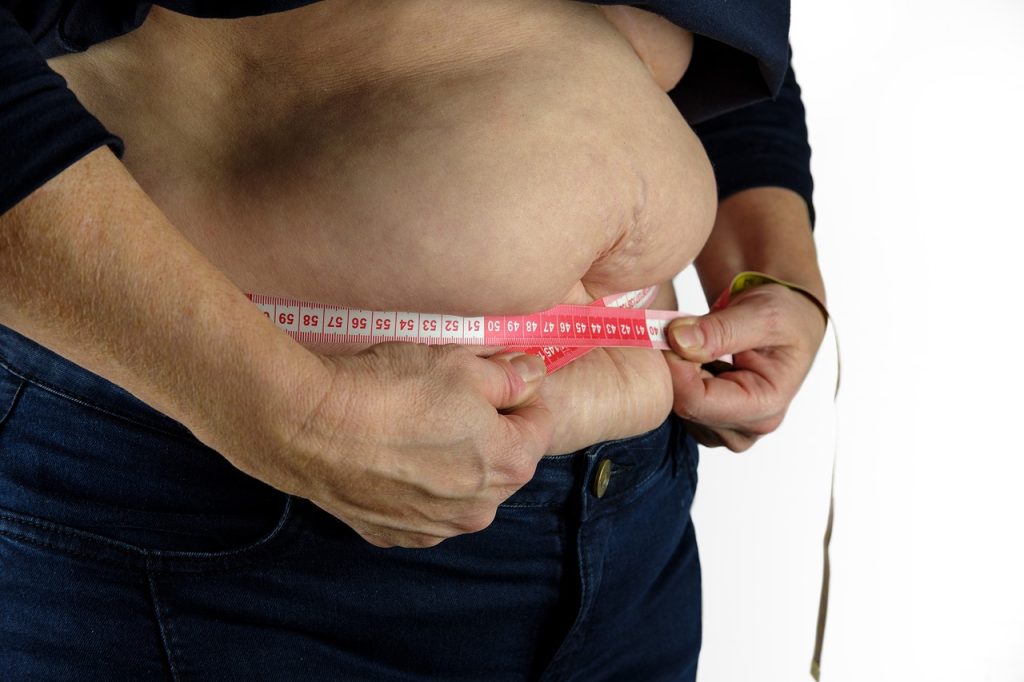
Lifestyle leading to overweight increases the risk of metabolic diseases such as diabetes – but the relationship also works in reverse, according to a new study. If insulin production is compromised, as is the case in the early stages of type 2 diabetes, this can contribute to overweight. The researchers report their findings in the journal Nature Communications.
When hormone activation goes awry
The research group, led by Dr Daniel Zeman-Meier of the University Hospital of Basel, focused on protease PC1/3 – a key enzyme in the body that transforms various inactive hormone precursors into the final, active forms. Sever endocrine disorders can result if PC1/3 does not function properly. The consequences include a feeling of uncontrollable hunger and severe overweight.
“Until now, it was assumed that this dysregulation is caused by a lack of activation of satiety hormones,” explained Dr Zeman-Meier. “But when we turned off PC1/3 in the brains of mice, the animals’ body weight did not change significantly.” The researchers concluded from this that something other than a brain malfunction must be responsible.
Incorrect activation of insulin leads to hunger and overweight
In their next step, they tested whether overweight could be caused by incorrect activation of other hormones. Among other things, PC1/3 activates insulin. “Investigating the role of insulin production as a cause of overweight was obvious,” said Dr Zeman-Meier. The researchers shut off PC1/3 specifically in the insulin-producing beta cells of the pancreas in mice. The animals consumed significantly more calories and soon became overweight and diabetic.
An important mechanism in humans
“These results are also interesting because PC1/3 is reduced in the pancreas of patients with prediabetes,” says Professor Marc Donath, research leader and final author of the study. This indicates that incorrect insulin activation could cause overweight as well as result from it.
But PC1/3 is also important in the weight regulation of healthy individuals, Prof Donath stressed. The researchers were able to show that the gene expression of PC1/3 in the pancreas is negatively correlated with body weight in the general population — meaning that sufficient PC1/3 promotes a healthy body weight.
The finding that a defect in the beta cells is a trigger of overweight promises new therapeutic possibilities. For example, it is conceivable that medications could be used to reduce the production of immature insulin precursors, creating a new tool in the fight against overweight and diabetes.
There is a view being promoted that COVID didn’t hit Africa as badly as the rest of the world. The reason for this, as recently expressed in an article by Boniface Oyugi in The Conversation, was the effective and well-coordinated response of African governments.
We understand the desire to find good news on the continent. But, on balance, the very little evidence available shows that COVID has hit Africa hard. The continent is highly diverse with over 50 states, so broad generalisations should be treated cautiously but, with an exception or two, there is little evidence of an effective response to the COVID pandemic. For one thing, Africa has the lowest vaccination rate of any continent.
Oyugi uses the WHO’s official COVID infection and death statistics to claim that the continent fared better than elsewhere. These state that as of late July, less than 2% of global cases and less than 3% of global deaths occurred in Africa, which has about 17% of the world’s population. (Oyugi also cites a study which pretty much says the same thing.)
COVID test statistics and confirmed COVID deaths don’t paint an accurate picture of how seriously the pandemic has hit a country (see here). If you don’t measure something properly, you can’t conclude that it’s a small problem. COVID tests are typically only administered with any regularity to a small, predominantly better off, part of a country’s population, and countries that test more tend to find more cases. Official COVID death tolls typically count people who have died in hospital with a confirmed positive test result. But it often doesn’t happen this way, especially on a continent with large rural populations and under-resourced hospitals.
Excess deaths: a vital measure
This is why the most important measure of how hard COVID has hit a country is the excess death toll. By excess deaths, we mean the number of deaths that occurred above what you’d expect given recent historical mortality. In sub-Saharan Africa, the only country that has a system capable of reliably estimating this is South Africa. Every week since the beginning of the epidemic, the Medical Research Council (MRC), using death certificate data provided by Home Affairs, has diligently analysed excess deaths. (Many countries wealthier than South Africa do not have as good a system, so it’s something to be proud of.)
The MRC researchers calculate that there have been over 320 000 excess deaths in South Africa since May 2020 (as of July 2022). As they’ve explained, conservatively 85% of these are COVID deaths. It may be as high as 95%. We can conclude that close to 300 000 people have died of COVID in South Africa. Over the past two years about 1 in 200 people in the country have died of this new infection.
The Economist has been reporting excess deaths by country. It states: “Among developing countries that do produce regular mortality statistics, South Africa shows the grimmest picture, after recording three large spikes of fatalities.”
Official deaths are much lower than excess deaths
But if you look at South Africa’s official, and much less accurate, COVID death toll you get a very different picture: Then we’re only 65th worst in the world (source: Worldometer deaths per million people). Lesotho is in 167th place, suggesting it has had a very small epidemic. Is it plausible that an area with a porous border entirely surrounded by South Africa has a completely different epidemic? (See this set of tweets – by one of the authors of South Africa’s weekly mortality report – that explains how the little mortality data we have from Lesotho suggests it had a serious pandemic.)
What about Namibia at position 74 in the Worldometer list, Botswana at 89, Zimbabwe at position 143 and Mozambique at position 190? Is it plausible that this ordering, almost in reverse order of industrial development, accurately reflects how these countries were affected by COVID?
Depending on your bias, you can approach these statistics in two ways. You can be very optimistic and see this as evidence of a smaller epidemic in sub-Saharan Africa. Or you can be realistic and acknowledge that the official numbers are likely very badly undercounted.
We can’t know for sure though because nearly all African governments did not have the systems in place to count excess deaths.
Most African countries need much better death registration systems
Attempts to estimate excess mortality in most African countries are based on almost no data. To the extent that there is data, it supports the view that the numbers have been badly undercounted. For example, a study published in the British Medical Journal, albeit with many caveats, found death rates in developing countries were twice those of rich countries.
During the height of the AIDS pandemic in the 2000s there was much optimism that the massive influx of foreign aid in response could be used to build better health systems. Bits and pieces of evidence do suggest health on the continent has improved. But it’s very disappointing that most countries on the continent still do not have the vital registration systems in place to measure mortality with decent accuracy. This is one of the most important measures of how a population is doing.
By claiming that African governments have responded well to COVID, when there’s no proper evidence to support this, we fail to hold politicians accountable. We also create the impression that institutions like the World Health Organisation and the African Union’s African Centre for Disease Control are more successful than they’ve actually been. This is a disservice to the vast majority of people living in Africa.
Geffen is GroundUp’s editor. Professor Venter is an infectious diseases clinician and head of Ezintsha at Wits University.
Blood type may be associated with early-onset stroke risk, according to a new meta-analysis, which was published in the journal Neurology. The meta-analysis included all available data from genetic studies focusing on ischaemic strokes in adults under age 60.
“The number of people with early strokes is rising. These people are more likely to die from the life-threatening event, and survivors potentially face decades with disability. Despite this, there is little research on the causes of early strokes,” said study co-principal investigator Steven J. Kittner, MD, MPH, Professor of Neurology at University of Maryland School of Medicine (UMSOM).
He and his colleagues performed a meta-analysis of 48 studies on genetics and ischaemic stroke that included 17 000 stroke patients and nearly 600 000 healthy controls. They looked for genetic variants associated with a stroke and found a link between early-onset stroke (before age 60) and the area of the chromosome that includes the gene that determines whether a blood type is A, AB, B, or O.
The study found that people with early stroke were more likely to have blood type A and less likely to have blood type O, compared to people with late stroke and people who never had a stroke. Both early and late stroke were also more likely to have blood type B compared to controls. After adjusting for sex and other factors, researchers found that, compared to those with other blood types, blood type A had a 16% higher risk while blood type O had a 12% lower risk.
“Our meta-analysis looked at people’s genetic profiles and found associations between blood type and risk of early-onset stroke. The association of blood type with later-onset stroke was much weaker than what we found with early stroke,” said study co-principal investigator Braxton D. Mitchell, PhD, MPH, Professor of Medicine at UMSOM.
The researchers emphasised that the increased risk was very modest and that those with type A blood should not worry about having an early-onset stroke or engage in extra screening or medical testing based on this finding.
“We still don’t know why blood type A would confer a higher risk, but it likely has something to do with blood-clotting factors like platelets and cells that line the blood vessels as well as other circulating proteins, all of which play a role in the development of blood clots,” said Dr Kittner. Previous studies suggest that those with an A blood type have a slightly higher risk of developing blood clots in the legs known as deep vein thrombosis. “We clearly need more follow-up studies to clarify the mechanisms of increased stroke risk,” he added.
A limitation of the study was the relative lack of diversity among participants, with only 35% of the participants having non-European ancestry.
Colourised scanning electron micrograph of red blood cell infected with malaria parasites, which are colourised in blue. The infected cell is in the centre of the image area. To the left are uninfected cells with a smooth red surface.
Credit: National Institute of Allergy and Infectious Diseases, NIH
A recent study published in PNAS revealed that endothelial cells in the brain are able to sense the infection by the malaria parasite at an early phase, triggering the inflammation underlying cerebral malaria. This discovery identified new targets for adjuvant therapies that could restrain brain damage in initial phases of the disease and avoid neurological sequelae.
Cerebral malaria is a severe complication of infection with Plasmodium falciparum, the most lethal of the parasites causing malaria. This form of the disease manifests through impaired consciousness and coma and affects mainly children under 5, being one of the main causes of death in this age group in countries of Sub-Saharan Africa. Survivors are frequently affected by debilitating neurological sequelae, such as motor deficits, paralysis, and speech, hearing, and visual impairment.
To prevent certain molecules and cells from reaching the brain, which would disturb its normal functioning, endothelial cells forming a tight barrier between the blood and this organ. Cerebral malaria results from an unrestrained inflammatory response to infection which leads to significant alterations in this barrier and, consequently, neurological complications.
Over the last years, specialists in this field have turned their attention to a molecule, named interferon-β, which seems to be associated with this pathological process. So called for interfering with viral replication, this highly inflammatory molecule has two sides: it can either be protecting or cause tissue destruction. It is known, for example, that despite its antiviral role in COVID-19, at a given concentration and phase of infection, it can cause lung damage. A similar dynamic is thought to occur in cerebral malaria. However, we still don’t know what leads to the secretion of interferon-β, nor the main cells involved.
The present study revealed that endothelial cells in the brain play a crucial role, being able to sense the infection by the malaria parasite at an early phase. These detect the infection through an internal sensor which triggers a cascade of events, starting with the production of interferon-β. Next, they release a signalling molecule that attracts cells of the immune system to the brain, initiating the inflammatory process.
To reach these conclusions, researchers used mice that mimic several symptoms described in human malaria and a genetic manipulation system that allowed them to delete this sensor in several types of cells. When they deleted this sensor in brain endothelial cells, the animals’ symptoms were not as severe with lower mortality. They then realised these brain cells contributed greatly to the pathology of cerebral malaria. “We thought brain endothelial cells acted in a later phase, but we ended up realising that they are participants from the very beginning”, explained Teresa Pais, a post-doctoral researcher at the IGC and first author of the study. “Normally we associate this initial phase of the response to infection with cells of the immune system. These are already known to respond, but cells of the brain, and maybe other organs, also have this ability to sense the infection because they have the same sensors.”
But what really surprised the researchers was the factor activating the sensor and triggering this cell response. This factor is nothing more nothing less than a by-product of the activity of the parasite. Once in the blood, the parasite invades the host’s red blood cells, where it multiplies. Here, it digests haemoglobin, a protein that transports oxygen, to get nutrients. During this process, a molecule named haeme is formed and it can be transported in tiny particles in the blood that are internalised by endothelial cells. When this happens, haeme acts as an alarm for the immune system. “We weren’t expecting that haeme could enter cells this way and activate this response involving interferon-β in endothelial cells”, the researcher confessed.
This six-year project allowed the researchers to identify a molecular mechanism that is critical for the destruction of brain tissue during infection with the malaria parasite and, with that, new therapeutic targets. “The next step will be to try to inhibit the activity of this sensor inside the endothelial cells and understand if we can act on the host’s response and stop brain pathology in an initial phase,” explained principal investigator Carlos Penha Gonçalves. “If we could use inhibitors of the sensor in parallel with antiparasitic drugs maybe we could stop the loss of neuronal function and avoid sequelae which are a major problem for children surviving cerebral malaria.”
Model of a testosterone molecule. Source: Wikimedia CC0
Among men with COVID, those with low testosterone levels are more likely to become seriously ill and be hospitalised than men with normal levels of the hormone, according to a study which appears in JAMA Network Open.
Analysis of data for 723 men who tested positive for COVID, mostly in 2020 before vaccines were available, indicated that low testosterone is an independent risk factor for COVID hospitalisation, similar to diabetes, heart disease and chronic lung disease.
They found that men with low testosterone who developed COVID were 2.4 times more likely to require hospitalisation than men with hormone levels in the normal range. Further, men who were once diagnosed with low testosterone but successfully treated with hormone replacement therapy were no more likely to be hospitalised for COVID than men whose testosterone levels had always tested in the normal range.
The findings, by researchers from the Washington University School of Medicine in St. Louis and Saint Louis University School of Medicine, suggest that treating men with low testosterone may help protect them against severe disease and reduce the burden on hospitals during COVID waves.
“It is very likely that COVID is here to stay,” said co-senior author Abhinav Diwan, MD, a professor of medicine at Washington University. “Hospitalizations with COVID are still a problem and will continue to be a problem because the virus keeps evolving new variants that escape immunization-based immunity. Low testosterone is very common; up to a third of men over 30 have it. Our study draws attention to this important risk factor and the need to address it as a strategy to lower hospitalisations.”
Prof Diwan and co-senior author Sandeep Dhindsa, MD, an endocrinologist at Saint Louis University, had previously shown that men hospitalised with COVID have abnormally low testosterone levels. However, severe illness or traumatic injury can cause a temporary drop in hormone levels, so causation cannot be proved in data from men already hospitalised with COVID. Data were needed for men with chronically low testosterone before COVID infection.
Profs Diwan, Dhindsa and colleagues identified 723 men whose testosterone levels had been measured between Jan. 1, 2017, and Dec. 31, 2021, and who had documented cases of COVID in 2020 or 2021. In some cases, testosterone levels were measured after the patient recovered from COVID. Since low testosterone is a chronic condition, men who tested low a few months after recovering from COVID probably had low levels before as well, Prof Dhindsa said.
The researchers identified 427 men with normal testosterone levels, 116 with low levels, and 180 who previously had low levels but were being successfully treated, meaning that they were on hormone replacement therapy and their testosterone levels were in the normal range at the time they developed COVID.
“Low testosterone turned out to be a risk factor for hospitalisation from COVID, and treatment of low testosterone helped to negate that risk,” Prof Dhindsa said. “The risk really takes off below a level of 200 nanograms per decilitre, with the normal range being 300 to 1000 nanograms per decilitre. This is independent of all other risk factors that we looked at: age, obesity or other health conditions. But those people who were on therapy, their risk was normal.”
Men with low testosterone levels can experience sexual dysfunction, depressed mood, irritability, difficulty with concentration and memory, fatigue, loss of muscular strength and a reduced sense of well-being overall. When a man’s quality of life is clearly diminished, he is typically treated with testosterone replacement therapy. When the symptoms are mild, though, doctors and patients may hesitate to treat.
The two main concerns related to testosterone therapy are an increased risk of prostate cancer and heart disease. Testosterone is well known to boost prostate cancer, but for heart disease, the evidence for risk is more ambiguous. A large clinical trial on the relationship between heart health and testosterone supplementation is expected to be completed soon.
“In the meantime, our study would suggest that it would be prudent to look at testosterone levels, especially in people who have symptoms of low testosterone, and then individualise care,” said Prof Diwan, whose specialty is cardiology. “If they are at really high risk of cardiovascular events, then the doctor could engage the patient in a discussion of the pros and cons of hormone replacement therapy, and perhaps lowering the risk of COVID hospitalisation could be on the list of potential benefits.”
Since this study is observational, it only suggests that boosting testosterone levels may help men avoid severe COVID, Diwan cautioned. A clinical trial would be needed to demonstrate conclusively whether such a strategy works.
Dolutegravir-based antiretroviral therapies (ART) for HIV-1 are more effective for pregnant individuals than some other ART regimens commonly used in the US and Europe, according to a study available online in NEJM.
The study, led by Harvard T.H. Chan School of Public Health researchers, showed that pregnant individuals who took dolutegravir-based regimens had a high probability of being virally suppressed at delivery. No differences were seen in adverse birth outcome risks (preterm birth, low birth weight, small for gestational age, or neonatal death) between dolutegravir-based regimens and the other contemporary regimens.
“Globally, a dolutegravir-based regimen is currently recommended for treating HIV, and this is the first study to directly compare regimens including dolutegravir to other antiretroviral regimens, such as raltegravir-based regimens, that are also listed as ‘Preferred’ in US perinatal guidelines,” said senior research scientistKunjal Patel, lead author of the study.
Dolutegravir, is a newer antiretroviral part of a once-a-day regimen that has been shown to be more effective, easier to tolerate, and less likely to create new drug resistance in people with HIV-1. However, limited data have been available about its effectiveness and safety in pregnancy compared with regimens that commonly have been used during pregnancy in the US and Europe.
In the current observational study, the researchers compared dolutegravir use in pregnancy with atazanavir/ritonavir, darunavir/ritonavir, and raltegravir antiviral regimens that are currently classified as “Preferred” for use in pregnancy in the US About half of the participants started ART before conception. At delivery, 96.7% of pregnancies of participants who received dolutegravir were virally suppressed, whereas those of participants who took atazanavir/ritonavir or raltegravir had viral suppression of 84.0% and 89.2%, respectively.
“We think the observed differences are due to dolutegravir’s ability to rapidly decrease viral loads and its ease of use as part of a once-daily regimen that’s available as a fixed-dose combination,” said Patel. “Our results highlight the continual need for systematic studies that compare new antiretroviral regimens with those already in clinical practice to help inform the evolution of guidelines and clinical practice over time.”
A study published in the New England Journal of Medicine have found that dual bronchodilators do little to help people who do not have chronic obstructive pulmonary disease (COPD), but who do have respiratory symptoms and a history of smoking.
Millions of people who smoke or used to smoke and have some symptoms of COPD have been prescribed bronchodilators.
“We’ve assumed these medications worked in patients who don’t meet lung function criteria for COPD, but we never checked,” said MeiLan K. Han, MD, a principal investigator and first author of the study. “We now know these existing medications don’t work for these patients.”
According to scientists, the implications are significant. First, they show the importance of diagnosing lung conditions through spirometry, a lung function test Dr Han noted is underutilised in clinical practice. Second, they show the need for new, effective therapies for patients without COPD.
Inhalers have long been the primary go-to treatment for these patients, she explained, because doctors either assume a patient has COPD, or else that their smoking-related symptoms could be helped by the inhalers. But while tobacco smoking causes a large spectrum of lung damage, the study showed bronchodilator therapy only helps patients with enough lung damage that would result in abnormal spirometry readings.
In the 12-week, randomised, double-blinded study, which was part of the Redefining Therapy in Early COPD for the Pulmonary Trials Cooperative (RETHINC), researchers enrolled 535 adults with symptoms of COPD, ages 40–80. Participants used an inhaler twice daily that contained either medication or a placebo.
By the end of the trial, some adults in the medication and placebo groups saw slight respiratory improvements, eg coughed less, produced less phlegm, or felt less winded, which was assessed through the St. George’s Respiratory Questionnaire. However, the researchers found no significant differences between those receiving medication or placebo. They reported 56% (128 of 227) of participants who received the medication saw respiratory symptom improvements, compared to 59% (144 of 244) of those who took the placebo.
According to Dr Han, these data underscore the need to change the standard practice, which is not doing spirometry and just treating patients with the same COPD medications and expecting to see improvement.
Antonello Punturieri, MD, PhD, program director of NHLBI’s Chronic Obstructive Pulmonary Disease/Environment Program, said spirometry testing should be used for any patient who shows signs of COPD, airflow obstruction, or who has a history of cigarette smoking. Though spirometry readings are used during about one-third of medical visits related to COPD, roughly half of patients who would meet criteria for COPD go undiagnosed.
Promoting smoking cessation a primary way to prevent COPD or COPD-like symptoms, the study noted. About one in four current or former smokers without COPD have reported having shortness of breath. In addition to encouraging smoking cessation, doctors can help patients who do not meet lung-function criteria of COPD by working with them to address any other underlying issues, such as overweight and obesity, heart failure, or other lung issues.
“In the meantime, research should be focused on finding new treatments for them,” Dr Han explained. “The next question is, can we develop more targeted therapies for these patients who are on the milder end of the spectrum?”
“Because cough and mucus production show up prominently among these patients, we believe therapies that target mucus production in the airways may be effective,” said Prescott G. Woodruff, MD, a principal investigator and senior author of the study.
Some of these therapies are already in development, and data from other studies may offer insight into the biological causes of excessive airway mucus, which could help point to additional therapies.
New research has found that private equity firms that acquire physician-owned medical practices seem to be imposing measures to squeeze out more profits.After their acquisition by private equity firms, the clinics saw more patients and billed more for visits among a large, commercially insured population, according to a study published in JAMA Health Forum.
Researchers from Oregon Health & Science University and other institutions examined a total of 578 US physician practices specialising in dermatology, gastroenterology and ophthalmology that were acquired by private equity firms from 2016 to 2020.
“The reason this is of concern to patients and policymakers is that private equity is often driven by profit margins of 20% or more,” said senior author Jane M. Zhu, MD, assistant professor of medicine in the OHSU School of Medicine. “To do that, they have to generate higher revenues or reduce costs. Increasing private equity in these physician practices may be a symptom of the continuing corporatisation of health care.”
While it is unclear whether these practices hurt clinical outcomes for patients, the findings raise concerning parallels with the rapid growth of private equity acquisition of nursing homes and hospital systems.
“Private equity investment in nursing homes has been associated with an increase in short-term mortality and changes to staffing,” the authors wrote, citing previous research.
In the new study, researchers found an increase in the overall number of patients seen in these clinics. The study also reviewed commercial insurance claims data that showed an increased share of visits longer than 30 minutes, even though the complexity of cases remained similar to cases prior to being bought out.
“These billing patterns could mean more efficient documentation of services provided, or it could mean upcoding or up-charging insurance companies to make more money,” Asst Prof Zhu said.
She believes more evidence is needed about how private equity impacts practice patterns.
“Private equity ownership of physician practices has added a distinctly private and market-driven influence to the broader trends in corporate consolidation of physicians by health systems and insurers,” they concluded. “This study contributes evidence for potential overutilisation and higher spending of care that will be important for policymakers to monitor.”
An international research effort has developed a new strategy to treat Huntington disease, which demonstrated that converting the disease-causing protein to its disease-free form results in it still retaining its original function. This discovery, published in the Journal of Clinical Investigation Insight, provides new avenues to approach Huntington disease.
Huntington disease is a rare neurodegenerative disorder with a worldwide prevalence of 2.7 per 100 000. Huntington’s disease is a dominantly inherited neurodegenerative disease and is caused by a mutation in a protein called ‘huntingtin’, which adds a distinctive feature of an expanded stretch of glutamine amino acids called polyglutamine to the protein. The patients would suffer a decade of regression before death, and, thus far, there is no known cure for the disease.
The cleavage near the stretched polyglutamine in mutated huntingtin is known to be the cause of the Huntington disease. However, as huntingtin protein is required for the development and normal function of the brain, it is critical to specifically eliminate the disease-causing protein while maintaining the ones that are still normally functioning. The research team showed that huntingtin delta 12 – the converted form of huntingtin that is resistant to developing cleavages at the ends of the protein, known to be the cause of Huntington disease – alleviated the disease’s symptoms while maintaining the functions of normal huntingtin.