Day: June 12, 2026

Irradiation May Help CAR-T Cell Therapy Work Better Against Solid Tumours

New study shows focused irradiation helps immune cells keep cancer-fighting CAR T cells active and contained inside tumours
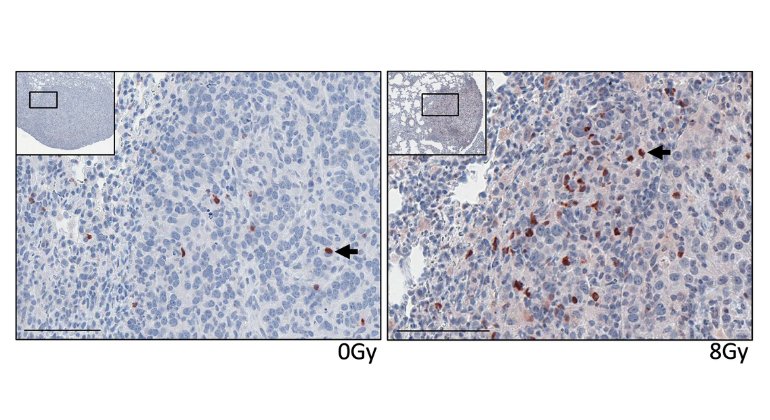
CAR-T cells (brown, arrowheads) infiltrating solid tumours. Left: unirradiated (0 Gy). Right: after focal irradiation (8 Gy).

Researchers from the Icahn School of Medicine at Mount Sinai have discovered a promising new way to improve CAR-T cell therapy for solid tumours such as lung cancer and melanoma. The study, published in Nature Cancer, found that focused irradiation, a targeted therapy that delivers high-energy beams to stun rapidly growing cells such as cancer, can help CAR-T cells survive longer and work more effectively inside tumours. 

CAR-T cell therapy involves removing the patient’s T cells (a type of immune cell), reprogramming them in the lab to fight cancer, and then infusing them back into the patient. It has transformed treatment for some blood cancers, but has not worked as well for solid tumours such as lung cancer and melanoma. Patients with solid tumours typically have bulky, treatment-resistant disease, and one of the central reasons CAR-T cells fail in this setting is that they do not persist or expand at the tumour long enough to eliminate it. Even when CAR-T cells initially reach the tumour, their numbers dwindle before they can finish the job. 

The research team discovered that tumour irradiation does something unexpected: it turns dendritic cells, the immune system’s most powerful antigen-presenting cells, into a local source of stimulation for CAR-T cells inside the tumour.  

In mouse models of advanced lung cancer and melanoma, irradiation promoted dendritic cells to capture intact tumour surface proteins and display them on their own membranes, a process called “antigen dressing.” These antigen-dressed dendritic cells then engaged the chimeric receptor on the CAR-T cells – the laboratory-engineered protein that gives these cells the ability to target specific proteins – keeping them alive and multiplying within the tumour over several weeks.  

The result was durable control of advanced lung tumors that CAR-T cells alone could not eliminate.  

“This study shows that irradiation can do more than kill cancer cells; it can enhance cell therapy,” said corresponding author Jalal Ahmed, MD, PhD, who led the study and is Assistant Professor of Immunology and Immunotherapy, and Radiation Oncology, at the Icahn School of Medicine at Mount Sinai. “We found that dendritic cells can dress themselves in tumor proteins and use them to directly expand CAR-T cells through the engineered receptor. This was completely unexpected – dendritic cells normally engage T cells through an entirely different mechanism.” 

A second finding addresses one of the most pressing safety challenges in the field. The researchers found that the CAR-T cell response stayed largely confined to the irradiated tumour. CAR-T cells expanded within the tumour but did not become more active in nearby healthy tissues, even when those tissues expressed the same protein targeted by the CAR-T cells. On-target activity against healthy organs has been one of the most serious safety barriers in solid tumour CAR-T cell therapy and has led to the termination of clinical trials. By selectively concentrating CAR-T cell activity at the tumour, focused irradiation may allow treatment of advanced tumours at lower and safer CAR-T cell doses.  

“What is striking is that irradiation does not just amplify the immune response – it tells the immune system where to act,” said study co-author Miriam Merad, MD, PhD, Robin Chemers Neustein Professor of Immunology and Chair of Immunology and Immunotherapy at the Icahn School of Medicine at Mount Sinai. “Confining CAR-T cell expansion to the tumour could open up a new generation of safer cell therapies for solid cancers.” 

This approach is particularly relevant for patients with metastatic solid tumours, who currently have few options. The irradiation treatment used in the study is available in cancer care centres around the world. This means the strategy could be tested in clinical trials without requiring new equipment, new drugs, or new infrastructure.  

“This work suggests that preparing the tumour environment is important to optimise the efficacy of CAR-T cells,” said study co-author Michel Sadelain, MD, PhD, who was previously at Memorial Sloan Kettering Cancer Center and is currently the founding director of Columbia University’s Institute for Cell Engineering and Therapy. “Irradiation may provide a practical way to help CAR-T cells succeed in solid tumours.” 

The researchers caution that the findings are still preclinical and must be tested in human clinical trials. The team is now working to define the molecular mechanism of antigen dressing, identify the signals dendritic cells use to sustain CAR-T cells, and translate the approach into trials for patients with advanced solid tumours. 

Source: Mount Sinai

Brain Region Linked to Transcranial Magnetic Stimulation’s Antidepressant Effects

Source: Pixabay

A circuit that runs from the prefrontal cortex near the front of the brain to a deeper brain structure called the insular cortex appears to mediate the antidepressant effects of a newer form of transcranial magnetic stimulation (TMS), according to a study led by Weill Cornell Medicine investigators. The discovery could lead to more effective TMS treatment of depression.

In the study, published May 7 in Cell, the researchers developed mice whose brains can be stimulated artificially in a prefrontal region to mimic the antidepressant effect of a widely used—but not well understood—TMS technique. The researchers showed that this antidepressant effect in the mice depends heavily on the indirect stimulation of a connected region, the insular cortex.

“We’re excited about this work because it advances our understanding of the antidepressant effects of TMS, and points to more effective ways of delivering this therapy,” said study senior author Dr. Conor Liston, the Robert Michels, M.D. Professor of Psychiatry in the Department of Psychiatry and a professor of neuroscience in the Feil Family Brain and Mind Research Institute at Weill Cornell Medicine. Dr. Shane B. Johnson, Dr. Devin Rocks and Dr. Laura Chalencon, postdoctoral associates in psychiatry at the time of the study, were co-first authors of the study.

Depression is one of the most commonly diagnosed illnesses in the modern world, and its prevalence has been increasing in recent decades. In the United States alone, tens of millions of people are treated for depression annually, according to the National Institute of Mental Health. Antidepressant drugs called selective serotonin reuptake inhibitors are the most common treatments but can take weeks to work and frequently have side effects.

TMS treatments, though they involve clinic visits, have the advantage of being more targeted, with few if any side effects, and are increasingly used for patients who do not respond to drug therapy. One new TMS protocol called accelerated intermittent theta-burst stimulation (aiTBS) has been found to reduce or abolish depression symptoms in many patients after only a few days of treatment. But exactly how TMS works and how it could be optimized have been notoriously difficult to study.

“There’s a lot of variation in how you can deliver TMS, which makes it very hard to test systematically in humans,” said Dr. Liston, who is also a psychiatrist at NewYork-Presbyterian/Weill Cornell Medical Center. “The variables include the duration of treatment in each session, the specific pulse rhythm, the interval between sessions and the specific brain area targeted, among others.”

The researchers developed a mouse model to explore and optimize aiTBS. The optogenetic mouse model allows the researchers to use light pulses to stimulate specific groups of neurons, with the same rhythms used in aiTBS. The team showed that stimulating the same prefrontal region targeted by aiTBS reverses stress-induced, depression-like behaviors in the mice.

Next, the scientists identified the specific prefrontal neurons that mediate this effect, and revealed changes that occur in these neurons, including denser growths of connections between brain cells in response to the stimulation. They then traced these neurons’ connections, finding that a connection to the insular cortex is necessary for the antidepressant effect.

The functions of the insular cortex, or ‘insula’, are complex and not completely understood; but they include processing bodily sensations – such as hunger and pain – and integrating them with emotion-related signals.

“The insula hasn’t been covered much in TMS research, in part because it is too deep in the brain to reach with ordinary TMS protocols, but it is one of the most consistently altered brain regions in studies of patients with depression,” Dr. Liston said.

Experiments in mice don’t always translate to humans. So, the researchers used functional magnetic resonance imaging to map brain connections and electroencephalography to measure neuronal responses in consented patients receiving TMS. They found that TMS stimulation of the prefrontal cortex does have a downstream effect on the insula in these patients.

The results overall suggest that aiTBS’s antidepressant effect might be improved by maximising its downstream stimulation of the insula – a prospect that Dr Liston and his colleagues now plan to investigate further using their mouse model and in future clinical trials.

The identification of the neurons that are important for aiTBS’s effects and the changes that occur in them could also lead to new drug therapies targeting those neurons, Dr Liston said.

“In the meantime, another exciting strategy with great potential is to pair drug treatment with TMS to accelerate the antidepressant response,” he said.

Source: Weill Cornell Medicine

Can an Organ Transplant Really Change Someone’s Personality?

Photo by Seb [ P34K ] Hamel on Unsplash

Adam Taylor, Lancaster University

Changes in personality following a heart transplant have been noted pretty much ever since transplants began. In one case, a person who hated classical music developed a passion for the genre after receiving a musician’s heart. The recipient later died holding a violin case.

In another case, a 45-year-old man remarked how, since receiving the heart of a 17-year-old boy, he loves to put on headphones and listen to loud music – something he had never done before the transplant.

A recent study suggests that heart transplant recipients may not be unique in experiencing personality changes. These changes can occur following the transplantation of any organ.

What might explain this? One suggestion could be that this is a placebo effect where the overwhelming joy of receiving a new lease on life gives the person a sunnier disposition. Other transplant recipients suffer from guilt and bouts of depression and other psychological issues that might also be seen as personality changes.

However, there is some evidence to suggest that these personality changes aren’t all psychological. Biology may play a role, too.

The cells of the transplanted organ will perform their expected function – heart cells will beat, kidney cells will filter and liver cells will metabolise – but they also play a role elsewhere in the body. Many organs and their cells release hormones or signalling molecules that have an effect locally and elsewhere in the body.

The heart seems to be most commonly associated with personality changes. The chambers release peptide hormones, including “atrial natriuretic peptide” and “brain natriuretic peptide”, which help regulate the balance of fluid in the body by affecting the kidneys.

Around two hundred heart transplants are performed in the UK each year. VesnaArt/Shutterstock

They also play a role in electrolyte balance and inhibiting the activity of the part of our nervous system responsible for the fight-or-flight response. The cells in charge of this are in the hypothalamus – a part of the brain that plays a role in everything from homeostasis (balancing biological systems) to mood.

So the donor organ, which may have a different base level of hormones and peptide production from the original organ, could change the recipient’s mood and personality through the substances it releases.

It has been shown that natriuretic peptide levels are higher following transplantation – and never return to normal. Although some of the elevation is probably a response to the trauma of surgery, it may not account for everything.

Memories stored outside the brain

The body stores memories in the brain. We access them when thinking or they can be triggered by sight or smell. But memories are basically neurochemical processes where nerves convey impulses to each other and exchange specialised chemicals (neurotransmitters) at the interface between them.

While in transplant surgery, many of the nerves that govern the function of the organ are cut and are not able to be reattached, this doesn’t mean that the nerves within the organ do not still function. In fact, there is evidence that they may be partially restored a year after surgery.

These neurochemical actions and interactions could feed into the nervous system of the recipient, enacting a physiological response that then affects the recipient’s personality according to memories from the donor.

We know that cells from the donor are found circulating in the recipient’s body and donor DNA is seen in the recipient’s body two years after the transplant. This again poses the question of where the DNA goes and what actions it may have.

One thing it does is stimulate immune responses. These immune responses may be enough to trigger personality changes as long-term, low-level inflammation is known to be able to change personality traits, such as extroversion and conscientiousness.

Whichever mechanism, or combination of mechanisms, is responsible, this area of research warrants further investigation so that recipients can understand the physical and psychological changes that could occur following surgery.

Adam Taylor, Professor and Director of the Clinical Anatomy Learning Centre, Lancaster University

This article is republished from The Conversation under a Creative Commons license. Read the original article.

Different Liquids Can Impact the Effectiveness of Certain Drugs

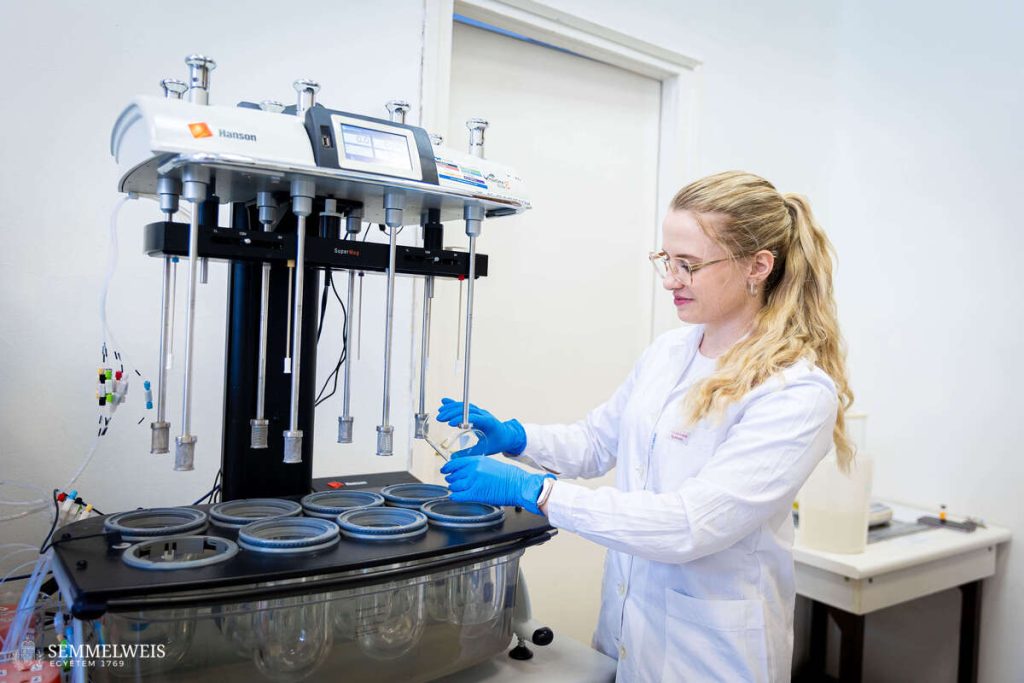
Adrienn Demeter (r), Ph.D. student at the Faculty of Pharmaceutical Sciences of Semmelweis University and first author of the study. Photo: Boglárka Zellei – Semmelweis University

Some alkaline mineral and medicinal waters may weaken the enteric coating of medications within just a few minutes, potentially reducing their effectiveness, according to a new study by Semmelweis University. The study, published in Pharmaceutics, found that if the active ingredient is released too early in the stomach rather than in the intestinal tract, it may reduce – and, in extreme cases, even eliminate – the effectiveness of certain anti-reflux, gastroprotective, psychiatric, or anti-inflammatory pain-relief medications. 

Researchers at Semmelweis University studied how different liquids could affect enteric-coated medications. The study analysed 22 commonly consumed beverages, seven of which – including several mineral and medicinal waters, tap water, filtered water, and apple juice – were examined in detail under laboratory conditions. 

Alkaline bottled waters with high mineral content caused the greatest changes in the protective coating surrounding the active ingredient-loaded particles. According to the researchers, not only the water’s alkalinity but also its high mineral and ion content may have contributed to the faster dissolution of the protective coating, an effect that was particularly pronounced in some medicinal waters. In some cases, the enteric coating began to deteriorate after just five minutes, and after 15–30 minutes of pre-soaking, more than 90 percent of the active ingredient had been released prematurely. 

Enteric-coated medications are designed so that the active ingredient is not released in the stomach but later in the intestines. This is important because some active ingredients are broken down by stomach acid, while others may irritate the stomach lining. Such coatings are commonly used on certain reflux medications, anti-inflammatory pain relievers, and digestive enzyme products.

Acidic liquids are less impactful

By contrast, more acidic liquids caused less damage to the enteric coating of the medications. In apple juice, for example, almost no premature release of the active ingredient was observed at the start of the tests, indicating that the coating remained far more stable than in alkaline waters. 

“The small drug particle does not know whether it is already in the intestine or still sitting in a glass. If the pH of the surrounding environment is similar, the coating may begin to dissolve in the same way. Healthcare professionals generally assume that medications are swallowed with plain tap water, but that is not always obvious to patients today, given the wide variety of mineral and medicinal waters available on the market,” said Dr Nikolett Kállai-Szabó, Associate Professor at the Faculty of Pharmaceutical Sciences of Semmelweis University and senior author of the study. 

The researchers also analysed the Summary of Product Characteristics (SmPCs) of 103 enteric-coated medications. In 42 cases, the instructions did not specify what liquid should be used to take the medication. Another 31 mentioned only “liquid,” while 21 referred simply to “water” without further clarification. Only nine SmPCs provided specific guidance on what beverage to take or mix the medication with, such as apple juice or another mildly acidic liquid. 

This may be particularly important for people who open hard capsules because of swallowing difficulties and mix the capsule contents with liquids, yogurt, or applesauce. Older adults, children, and patients with a temporary sore throat or swallowing difficulties are more likely to find themselves in this situation. 

“In the pharmacy, we regularly see that many patients are unaware of how much it matters what they take their medication with. This can also affect whether the treatment works as intended,” said Adrienn Demeter, PhD student at the Faculty of Pharmaceutical Sciences of Semmelweis University and first author of the study. 

The researchers emphasize that the findings do not mean mineral or medicinal waters are inherently problematic. The key takeaway is that enteric-coated medications should preferably be taken with plain tap water, and patients should consult a pharmacist or physician before opening a capsule or splitting a tablet. 

Source: Semmelweis University

Africa CDC update on the Bundibugyo Virus Disease Outbreak

The Bundibugyo ebolavirus outbreak is currently affecting 27 health zones in the Democratic Republic of the Congo and one district in Uganda. A cumulative total of 681 confirmed cases and 126 deaths among confirmed cases have been reported across the Democratic Republic of the Congo and Uganda, representing a case fatality ratio of 18.5%.

The Democratic Republic of the Congo remains the main focus of the outbreak, with 662 confirmed cases and 124 deaths reported to date. Ituri Province continues to account for the majority of reported cases. In the last 24 hours, 29 new confirmed cases and five deaths among confirmed cases were reported in Ituri Province. Seven additional confirmed cases from North Kivu were also reported as part of a backlog from 8 June.

Uganda has reported 19 confirmed cases and two deaths to date. No new confirmed cases, deaths, suspected cases or recoveries were reported in Uganda in the last 24 hours. Uganda has now reported no new confirmed cases or deaths for five consecutive days.

Across both countries, 25 recoveries have been reported, and 6,525 contacts have been listed for follow-up. Thirty-four healthcare workers have been infected, including 29 in the Democratic Republic of the Congo and five in Uganda.The outbreak is currently affecting 27 health zones in the Democratic Republic of the Congo and one district in Uganda.

Africa CDC continues to work closely with national authorities and partners to support surveillance, contact tracing, case management, infection prevention and control, risk communication and cross-border coordination.

Africa CDC and WHO continue to advise against unnecessary restrictions on travel and trade. Public health measures should remain evidence-based and aligned with the International Health Regulations.

Africa CDC urges communities in affected and at-risk areas to remain vigilant, follow guidance from health authorities, report symptoms early and cooperate with trained response teams.

Further updates will be shared as the situation evolves.

Distributed by APO Group on behalf of Africa Centres for Disease Control and World Health Organization