The South African healthcare system is currently facing a period of intense pressure. Between staffing shortages and a rise in medical legal claims, the gap between basic nursing education and the actual demands of patient care is a major concern. To improve patient safety and support our healthcare workers, we must focus on practical, hands-on experience and constant skill building.
Why nursing challenges matter in South Africa
Nursing errors are rarely the fault of one person. In South Africa, they are usually the result of a system under strain. Nurses are dealing with overcrowded wards, long shifts, and a very high number of patients with complex conditions like HIV and TB. When staff are exhausted and overworked, the risk of making a mistake increases.
These errors have a massive impact. For patients and their families, it leads to a loss of trust. For hospitals, it leads to expensive legal battles. South Africa is currently dealing with billions of Rands in medical claims, but this is money that should be spent on better equipment and hiring more people. If we want a stronger healthcare system, we must reduce the risks that lead to these errors in the first place.
Hands-on training makes the difference
Nursing education has traditionally leaned heavily on theoretical learning, but knowing the theory of a procedure is very different from doing it in a busy hospital. Practical, skills-based training is what helps a nurse transition safely from the classroom to the ward.
Donald McMillan, MD at Allmed
One of the most effective tools for this is simulation-based training. This involves using specialised training rooms that look like real hospital wards, complete with advanced mannequins that can mimic medical emergencies. Here, nurses can practice critical skills like inserting drips, reading ECGs, or managing emergency care in a safe environment. This allows them to build confidence and “muscle memory” before they ever treat a real patient. This type of training is essential for preparing nurses for the high-pressure reality of South African clinics.
Continuous professional development builds confidence
Medicine is always changing. New treatment guidelines, technologies, and medicines are introduced all the time, changing the way care is delivered. Continuous Professional Development (CPD) helps nurses keep pace with these changes, ensuring their skills remain relevant, their knowledge up to date, and their patients receive the best possible care throughout every stage of their careers.
However, CPD is about more than just following rules; it is about building professional confidence. When nurses have the chance to learn new things and specialise in areas like intensive care or pharmacology, they feel more capable and valued. In a country where many nurses choose to work overseas, providing these opportunities for growth at home is a great way to keep our best talent in South Africa.
A systemic approach for better care
Enhancing the quality of nursing care in South Africa requires a coordinated, multi-stakeholder approach. Training institutions, hospital administrators, and regulatory bodies must collaborate to create an ecosystem that supports the nurse at every career stage. This systemic approach should focus on three specific areas:
Integrated mentorship: Establishing formal programmes where expert clinicians provide real-time bedside teaching to new graduates.
Accredited upskilling: Providing accessible pathways for nurses to specialise in critical areas such as ICU, neonatal care, and oncology.
Technological alignment: Utilising digital tools to track competency levels and identify specific areas where additional training is required.
By making practical training and ongoing learning a priority, we do more than just prevent mistakes. We empower our nurses to be the skilled professionals they want to be. When nurses are competent and confident, they provide better care, which helps rebuild public trust and makes the South African healthcare system stronger for everyone.
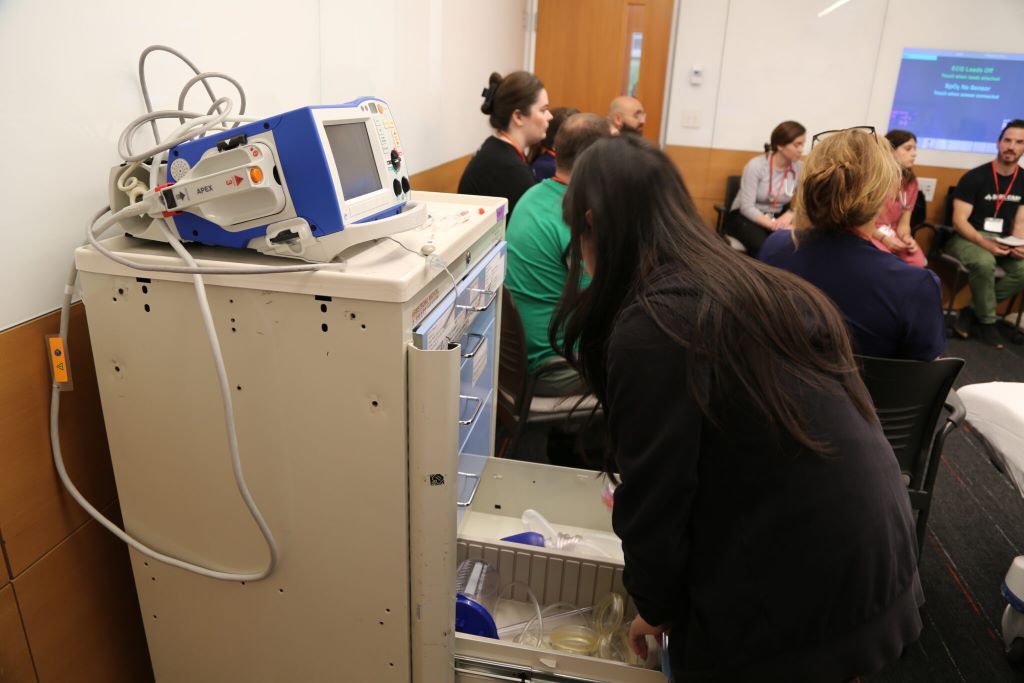
Researcher demo-ing an early prototype of the robotic medical crash cart. Credit: Cornell Tech
Healthcare workers have an intense workload and often experience mental distress during resuscitation and other critical care procedures. Although researchers have studied whether robots can support human teams in other high-stakes, high-risk settings such as disaster response and military operations, the role of robots in emergency medicine has not been explored.
Enter Angelique Taylor, the Andrew H. and Ann R. Tisch Assistant Professor at Cornell Tech and the Cornell Ann S. Bowers College of Computing and Information Science. She is also an assistant professor in emergency medicine at Weill Cornell Medicine and director of the Artificial Intelligence and Robotics Lab (AIRLab) at Cornell Tech.
In a pair of articles published at the Institute of Electrical and Electronics Engineers (IEEE) conference on Robot and Human Interactive Communication (RO-MAN) in August 2025, Taylor and her collaborators at Weill Cornell Medicine, associate professor Kevin Ching and assistant professor Jonathan St. George, described research on their new robotic crash cart (RCC) — a robotic version of the mobile drawer unit that holds supplies and equipment needed for a range of medical procedures.
“Healthcare workers may not know or may forget where all the various supplies are located in the cart drawers, and often they’re kind of shuffling through the cart,” Taylor said. This can cause delays during emergency procedures that require iterative tasks with precise timing, exacerbating medical errors and putting patients at risk, she noted.
To create the RCC, Taylor and her team outfitted a standard cart with LED light strips, a speaker, and a touchscreen tablet integrated with the Robot Operating System. This middleware connects computer programs to robot hardware, enabling them to work together to provide users with verbal and nonverbal cues.
During an emergency procedure, a user can request the location of a supply on the tablet. Then the lights around the drawer with that supply blink, or a spoken instruction plays through the speaker. Users can also receive prompts to remind them about necessary medications and recommend supplies.
In their article, “Help or Hindrance: Understanding the Impact of Robot Communication in Action Teams,” Taylor’s team conducted pilot studies of the RCC. One pilot involved 84 participants, aged 21 to 79, about half of whom had a clinical background. Working in groups of 3 to 4, they conducted a series of simulated resuscitation procedures with a manikin patient using three different carts: a RCC with blinking lights for object search and spoken task reminders, a RCC with blinking lights for task reminders and spoken language for object search, or a standard cart.
The team found that participants preferred the RCC that provided verbal and nonverbal cues over no cues with the standard cart — rating it lower in terms of workload and higher in usefulness and ease of use.
“These results were exciting and achieved statistical significance, suggesting that the use of a robot is beneficial,” said Taylor. The article, by Taylor, Ph.D. student Tauhid Tanjim, and colleagues at Weill Cornell, was a Kazuo-Tanie Paper Award finalist, an honor given to the top three papers in their category at the conference.
Similar to the pilot studies, Taylor, along with colleagues at Cornell and Michigan State University, found that the RCC reduced participant workload, depending on whether the robot provided verbal or non-verbal cues. However, they evaluated robots with only one type of cue, not both, and identified room for improvement, particularly in the robot’s visual cues. They are now studying healthcare workers’ impressions of an RCC with multimodal communication.
Taylor hopes that other research teams will start exploring how robots can support healthcare teams in critical care settings. To that end, Taylor and her colleague presented an article at the February 2025 Association for Computing Machinery/IEEE International Conference that offers a toolkit for researchers to build their own RCC.
By Carina Storrs, freelance writer for Cornell Tech.
Mark Bishop, Deputy Chairperson of the Hospital Association of South Africa (HASA) and Chief Commercial Officer at Lenmed Health Group, is a prominent voice in South Africa’s private healthcare sector. With more than three decades of experience, he brings deep insight into hospital management, healthcare systems and patient-centred care. Known for his strategic leadership and operational expertise, Bishop has played a key role in driving sustainable growth and innovation within Lenmed and the broader healthcare industry.
In this Q&A, Mark shares his perspectives on HASA’s role, sector priorities and the future of healthcare in South Africa.
Q: As HASA Deputy Chairperson, what do you see as the organisation’s core contribution to strengthening South Africa’s health system?
A: The private hospital sector plays a vital role by providing essential facilities and capacity for healthcare professionals to deliver quality care. Over the past four decades, private hospitals have expanded bed capacity while public sector capacity has not kept pace with population growth. This helps meet rising demand and relieves pressure on an already overburdened public system. All industry players, providers and funders, will need to consider the best collaborative approach, and the impact this would have for all and not just concentrate on the impact on their own organisations.
Q: What are HASA’s priorities for long-term sustainability of the healthcare sector?
A: Sustainability depends on affordability across both public and private healthcare. Cost drivers are the same, staffing, infrastructure and medical equipment. Improving the utilisation of limited resources across the system is critical to meeting growing healthcare needs.
Q: How do you view the current medical schemes landscape?
A: Medical schemes operate in a challenging environment characterised by stagnant membership, an ageing population, increasing chronic disease and rising costs driven by advances in medical technology. This is a consequence of a raft of incomplete reforms over the years that together have placed a heavy burden on medical scheme members. Rectifying this could take considerable expense off them.
Q: What reforms could improve affordability while maintaining quality?
A: Increasing medical scheme membership would reduce unit costs. Mandatory medical scheme covers for employed individuals, as recommended by, would expand access to care, reduces pressure on public hospitals and support progress towards universal healthcare. This would need to be done with changes to the reimbursement processes for private care, reducing the impact of fee for service and aligning with quality improvements.
Q: Your career spans 30+ years in private healthcare. What have been the most significant shifts?
Over the years, we have seen patients become more informed about their healthcare needs, medical scheme requirements have evolved and the private healthcare landscape change significantly through consolidation in medical aids.
Q: Where do you see the greatest opportunities for collaboration?
A: The private sector has spare capacity that could be used to treat publicly funded patients. Public-private partnerships, shared infrastructure and co-located facilities offer opportunities to reduce waiting times, lower costs and improve access to care. The caution, is that this needs to align with a national strategy to increase the rate at which nurses are trained, the reality is that both public and private sectors struggle to do the limited professional nurse resources.
Q: What motivates you about your role at Lenmed?
A: Lenmed’s vision of building healthier, more prosperous communities resonates with me. Our hospitals maintain a strong community focus, rooted in the founding of Lenmed Ahmed Kathrada Private Hospital over 40 years ago. Private healthcare is at a tipping point and collaboration across the sector will be essential to grow access and create a sustainable, high-quality healthcare system.
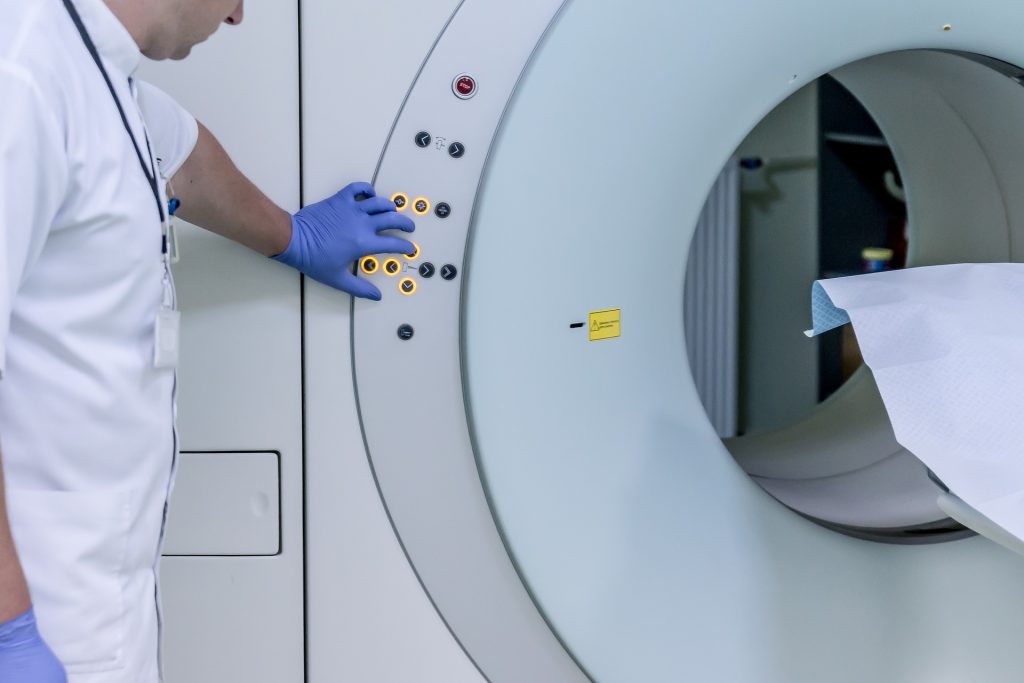
As thousands of cancer patients wait months for diagnostic scans, senior clinicians at Charlotte Maxeke Academic Hospital have questioned a decision by the Gauteng Health Department to override their choice of MRI machine.
In a letter to Gauteng Health Department’s acting chief financial officer, the head of supply chain management at the hospital, Solly Mokgoko, expressed a concern that a recommendation by the head of radiology and the acting clinical director to buy a Philips scanner had been overridden by the Gauteng health department’s central office. The letter is dated 31 October 2025.
Mokgoko said the doctors had preferred the Philips MRI scanner – at a cost of about R27.4-million – on the grounds of “technological advancement, operational sustainability, and clinical research potential”.
However, the department had chosen a machine from Mamello Clinical Solutions at R38.5-million, they said. The room in which the machine will be installed is currently being prepared.
The letter said the Philips unit’s cost “offers reduced lifecycle expenditure due to minimal helium dependency and extended operational uptime”. The Philips scanner used low-maintenance technology, “requiring minimal or no helium top-ups, thereby reducing lifecycle costs and mitigating downtime risks”.
The Mamello-proposed model, by contrast, “relies on traditional cryogenic technology, which entails higher running costs and environmental exposure”, they said.
They said the decision is inconsistent with value-for-money principles set out in the Public Finance Management Act (PFMA) and Treasury regulations.
The purchase of a Chinese MRI scanner from Mamello is part of a R304-million roll-out of eight scanners across Gauteng public hospitals, in which roughly R190-million has been awarded to Mamello Clinical Solutions (five machines) and the remainder to Philips SA.
The Gauteng Department of Health rejected any suggestion of irregularity, saying the purchase was made under a lawful, competitively awarded contract and that both suppliers met the required technical standards.
In this case, the original procurement contract was drawn up by the Limpopo Health Department, with the Gauteng department piggybacking on it.
Clinicians at Charlotte Maxeke who spoke to GroundUp say the procurement shift occurred without adequate consultation and against explicit technical recommendations — allegations the department disputes.
Approximately 2,600 oncology patients are awaiting MRI scans at Charlotte Maxeke alone, with outpatient bookings extending to December 2026. Similar waiting lists exist at Chris Hani Baragwanath Academic Hospital.
The letter said that besides the external patient scans waiting list, there are over 50 inpatients awaiting scans.
One department head said: “How can the hospital order an MRI that’s over R10-million more expensive in an environment where it can’t even provide decent food, [and where there is] widespread cost-cutting and a dire shortage of doctors?” Late last year, the hospital made headlines for shortages of adequate patient meals.
Mamello Clinical Solutions, a private company based in Polokwane, was established in December 2014, trading as Mamello Development until 2019 when it changed its name. Robert Makhubedu, its sole director, was appointed in June 2023 after two previous directors resigned, according to official company registration records.
Makhubedu previously worked as chief radiographer at Charlotte Maxeke Hospital in the early 1990s, then spent more than two decades as director of business development at Tecmed, before joining Mamello Clinical Solutions.
A Gauteng Health Department spokesperson “categorically” denied any irregular, inflated or non-compliant procurement.
He said the MRI acquisitions had been made under a lawful, competitively advertised contract which had been evaluated in line with constitutional, PFMA and Treasury requirements.
Philips Healthcare and Mamello Clinical Solutions had both met minimum safety, functional and performance specifications, he said.
While acknowledging that Charlotte Maxeke clinicians preferred the Philips MRI, the spokesperson said procurement decisions could not be driven by “brand preference or proprietary technology.” He said over the life of the machine the price difference between the two was about R1.07-million, not R11.1-million.
Treasury rules, he said, did not permit sole-supplier selection where multiple bidders meet approved specifications. Multi-supplier models were standard public-sector practice.
Makhubedu pointed out that the tender had not called for a “helium-free” scanner. He attributed the doctors’ complaints to a combination of “brand bias” and hostility towards emerging black-owned companies, compared to multinationals.
“Some black companies awarded these contracts in the past could not relate to the business and clinical profile of the projects,” he said. “The legacy of that is that you have to prove yourself all the time.”
Makhubedu said that provinces tried to strike a procurement balance between emerging and established companies. He said his scanner was in fact R300,000 cheaper than the Philips machine over the life of the machine, and Mamello was capturing market share because of scanner quality and price.
“We believe we were fairly, legally and transparently awarded the contract. And we were cheaper.”
Nurse-led hospital care matches doctor-led care for safety and effectiveness
Photo by Hush Naidoo on Unsplash
Nurses can safely deliver many services traditionally performed by doctors, with little to no difference in deaths, safety events, or how patients felt about their health, according to a new Cochrane review. In some cases, nurse-led care even outperformed doctor-led care.
Healthcare services are facing pressure due to an ageing population, complex health needs, long waiting lists, and doctor shortages. Receiving care from nurses, rather than doctors has been proposed as one way to improve access to hospital services for patients who may otherwise face long waits.
A group of researchers from Ireland, United Kingdom, and Australia evaluated nurse-doctor substitution in inpatient units and outpatient clinics, analysing 82 randomised studies involving over 28 000 patients across 20 countries. Studies included advanced nurse practitioners, clinical nurse specialists and registered nurses substituting for junior or senior doctors across specialties such as cardiology, diabetes, cancer, obstetrics/gynaecology, and rheumatology.
Nurse-led hospital care matches doctor-led care for safety and effectiveness
The review found little to no difference between nurse-led and doctor-led care for critical outcomes, including mortality, quality of life, self-efficacy, and patient safety events. While most clinical outcomes showed no difference between groups, nurses may achieve better outcomes in some areas, including diabetes control, cancer follow-up, and dermatology. Doctor-led care performed slightly better in a small number of sexual health and medical abortion follow-up services.
Our findings show that nurse-led services provide care that is just as safe and effective as doctor-led services for many patients. In some areas, patients actually experienced better outcomes when nurses led their care.
— Professor Michelle Butler,lead author from Dublin City University
The models of substitution varied widely, with different grades of nurses operating autonomously, under supervision, or following specialized protocols. There were also differences in training, level of responsibility, and mode of substitution, all of which may influence outcomes.
Butler added:
In some cases, patients had earlier, more frequent, or on-demand appointments with nurses, or had an additional educational component to their care, which may have helped to improve their outcomes.
Evidence on direct costs was limited and varied across studies, partly due to differences in reporting methods, currencies and time periods. Seventeen studies reported reduced costs for nurse-led care, while nine suggested higher costs due to longer consultations, referrals, or prescription differences.
Not a one-size-fits-all solution
However, nurse-doctor substitution is not a one-size-fits-all approach. The authors caution that these interventions should always be interpreted within context.
Nurse substitution isn’t simply a one-for-one replacement. To work well, these services need the right training, support and models of care, but the evidence shows patients are not disadvantaged and can benefit in meaningful ways.
— Timothy Schultz, senior author and researcher from Flinders Health and Medical Research Institute
Expanding nurse-led services may help address doctor shortages, but the authors urge that policymakers should consider the impact of these interventions on the nursing workforce, including training and organization.
While the evidence base was substantial, the authors note important gaps. Most studies were from high-income countries, with the majority (39%) conducted in the United Kingdom. The authors call for more studies across specialties, nurse roles and patient types not yet evaluated, as well as stronger consistency in how outcomes are measured. They also highlight the need for more research in low- and middle-income countries, where nurse-led roles could potentially improve access to care in regions facing doctor shortages.
As HIV, TB and other treatments are updated in our public healthcare system, it is critical that healthcare workers and counsellors stay on top of the latest developments. One innovative programme makes use of short lessons delivered over WhatsApp to provide such training.
Over her years working as an information pharmacist at the University of Cape Town’s Medicines Information Centre (MIC), Briony Chisholm noted that many health workers in rural clinics face difficulties accessing training in crucial aspects of their work.
“The lack of easy access to training was in areas where it was really needed, such as the HIV (treatment) guidelines that are constantly being updated,” says Chisholm. “It’s not enough to have training sessions when new guidelines come out; you ideally should be training all the time.”
Drug-drug interactions
At the end of 2019, government introduced new standard first-line HIV treatment that includes an antiretroviral medicine called dolutegravir. As we previously reported, by 2023 around 4.7 million people in South Africa were taking dolutegravir-based treatment.
But the introduction of a new medicine in the public healthcare system, especially at this scale, is rarely straight-forward.
“Dolutegravir is considered as a ‘wonder child’ in ARV treatment, because it provides a high barrier to resistance, is easier to take, and has far fewer side effects than older ARVs. However, it also has interactions with other key drugs, particularly those used for the treatment of TB, diabetes and some anti-epileptic medications,” she says.
Through numerous queries received on the MIC’s National HIV and TB Healthcare Worker Hotline, Chisholm and her colleagues became aware that some healthcare workers were struggling with managing drug interactions. “Some healthcare workers didn’t know about these interactions; others knew about them but not how to deal with them. For example, if a patient is on the TB drug rifampicin, but also needs to take dolutegravir, there’s a need to adjust the dose of dolutegravir. Similarly, adjustments are needed with the diabetes medicine, metformin.”
Chisholm now lives in the Eastern Cape village of Nieu Bethesda. When dolutegravir was introduced, she had just completed her part-time post-graduate Diploma in HIV and TB management through UCT and signed up for her Masters. She and a colleague had, in 2016, done a road trip to about 200 clinics in seven provinces to promote the MIC’s Hotline.
“We saw that most South African healthcare workers are dedicated and keen to learn. You hear all this terrible news about health and corruption, and then you go to these clinics which are ticking along under sometimes difficult conditions, doing amazing work. It’s inspiring!”
A key realisation was the challenges experienced by health workers at these rural clinics to access much-needed training.
“Getting nurses to a central point for training and the need for transport, accommodation and food, as well as having them absent from the clinic for anything between one and five days, is challenging. It’s expensive and involves a great deal of organising,” says Chisholm.
Doing the research
Chisholm then started conducting research on what healthcare workers know about dolutegravir-related drug interactions. Her study, published in 2022, found that about 70 percent of respondents understood that dolutegravir interacts with other drugs, but there were gaps in people’s knowledge of specific interactions and the dosing changes needed to manage those interactions.
The study found that access to guidelines and training were positively associated with knowledge of drug-drug interactions. “There was a clear indication that we needed more accessible training,” Chisholm says.
“The Department of Health offers online training through live webinars, and recordings of these, but they are often one or two hours long. Nurses in busy clinics don’t necessarily have this time to sit through training sessions.”
Testing the efficacy of short training sessions
Chisholm then designed a project to test the efficacy of short training sessions focusing on teaching one or two learning points from the national guidelines in ten to fifteen-minute live lessons using WhatsApp.
“I thought, ‘we’re in a country where not everyone has access to big computer screens, but they all have a cell phone and use WhatsApp – so let’s go as simple as we can’,” she says. “The idea was not to teach the entire set of guidelines but to pick out important parts of them and ensure that if something changes in the guidelines, you get it out to people, quickly.”
Chisholm tested the feasibility of WhatsApp-based microlearning with health workers and counsellors at 50 clinics around Nieu Bethesda. “I ran a range of short case-based lessons on WhatsApp groups and then measured the changes in knowledge and patient care, as well as other factors like uptake, feasibility and accessibility,” she explains.
She found that WhatsApp-based microlearning for healthcare workers is “effective, feasible and well received” and 98 percent of those who participated said they would take part if training sessions were held weekly throughout the year.
While using WhatsApp for medical interactions is not new, Chisholm says a structured syllabus using microlearning for short, punchy sessions is a first.
“This type of learning is equally accessible to a rural clinic as to one in central Hillbrow. We can access people wherever they are. Nobody has to spend money getting anywhere and clinical services are not disrupted. And it doesn’t matter if they’re not in the live session: when they have a moment, they can go into their WhatsApp and read back on the lesson,” she says.
Working with the department of health on 6MMD
Chisholm has been working with the National Department of Health on their Six-Month Multi-Month Dispensing (6MMD) programme. The programme allows people living with HIV who are doing well on treatment and have suppressed viral loads to get a six-month supply of ARVs in one go. This makes life considerably easier for people, since they only need to go to the clinic twice a year; whilst also reducing workloads in the clinics. The programme started in August 2025 and is still being phased in across the country.
“In the pilot phase, the Department of Health did some really good online training and they used our WhatsApp training as an add-on to the longer form training,” says Chisholm.
“We started with one group and ran an eight-week course of 15-minute lessons once a week on WhatsApp. Sessions were case-based and included which patients are eligible for 6MMD, and which patients are not,” she explains. By the end of 2025, around 2 000 healthcare workers had been reached through these sessions.
Lynne Wilkinson, a technical expert with the International AIDS Society which supports the Department of Health on 6MMD, says the microlearning is “a great way to ensure we get to all the clinicians in the country and explain how the 6MMD programme works”.
She adds: “When a new policy comes out, it takes a long time for implementation to be scaled because ground level clinicians aren’t always aware of the changes or don’t have an opportunity to engage with how to implement the changes.”
Daniel Canham, a professional nurse and facility team lead for the NGO, TB HIV Care, at Idutywa Village Community Health Centre in the Eastern Cape, says they’ve found the microlearning sessions for 6MMD very useful. “It’s no secret that the waiting times in clinics are quite extensive, so we are trying to enrol all those qualified for 6MMD as quickly as possible to ease the burden on the clinic,” he says.
“The microlearning on 6MMD has been very helpful. Our staff don’t have to be out of the facility to attend it. They can run their normal activities and attend sessions of ten minutes maximum,” says Canham.
“Our professional nurses joined the WhatsApp microlearning sessions in September last year,” says Faith Maseko, a nurse lead based at Phola Park Clinic in Thokoza in Gauteng who works for the WITS Research Health Institute (RHI). The RHI supports the health department in the management of HIV and employs more than 30 nurses.
“When nurses are trained virtually, some of the information is forgotten, but when you’re on WhatsApp, you can go back and access the information that was shared. The scenarios provided are very useful. If you see a patient, with a similar scenario you can go back and see what was discussed and apply it to your own situation,” she says.
Department of Health backing
Foster Mohale, spokesperson for the National Department of Health, says the WhatsApp-based microlearning has been “an effective low-cost, high-reach supplement to formal 6MMD training”.
He adds: “Training gaps translate directly into service gaps, affecting quality, retention, and progress toward epidemic control. Microlearning addresses this risk by enabling continuous, bite-sized reinforcement of policy and implementation guidance, rather than relying solely on once-off training events. This approach supports frontline healthcare workers in applying 6MMD consistently under real-world service pressures.”
Mohale says evidence from the department’s broader capacitation strategy shows that lifelong, continuous learning, rather than episodic training, is essential for resilient health systems.
“WhatsApp microlearning aligns with this principle by supporting rapid dissemination of updates, peer learning, and sustained mentorship. When integrated with structured models and aligned to national guidelines, it can be effectively applied across HIV, TB, maternal and child health, non-communicable diseases, and health systems strengthening more broadly,” he says.
The computer model improves on traditional methods like contact tracing by inferring asymptomatic carriers in the spread of antibiotic-resistant infections
A new analytical tool can improve a hospital’s ability to limit the spread of antibiotic-resistant infections over traditional methods like contact tracing, according to a new study led by researchers at Columbia University Mailman School of Public Health and published in the peer-reviewed journal Nature Communications. The method infers the presence of asymptomatic carriers of drug-resistant pathogens in the hospital setting, which are otherwise invisible.
Antimicrobial resistance (AMR) is an urgent threat to human health. In 2019, 5 million deaths were associated with an AMR infection globally.
The inference framework developed by Columbia Mailman School researchers is the first to combine several data sources – patient mobility data, clinical culture tests, electronic health records, and whole-genome sequence data – to predict the spread of an AMR infection in the hospital setting. In the study, the researchers used five years of real-world data from a New York City hospital. They focused on carbapenem-resistant Klebsiella pneumoniae (CRKP), an AMR bacterium with a high mortality rate. The framework draws on the four data sources to model the spread of CRKP infections, from individual to individual over time.
Levels of CRKP colonisation in healthcare facilities vary by location but can reach up to 22 percent of patients. However, hospitals do not routinely screen for CRKP, and surveillance relies on testing patients who are either symptomatic or suspected of coming into contact with symptomatic patients, overlooking asymptomatic colonisers.
“Many antimicrobial-resistant organisms colonise people without causing disease for long periods of time, during which these agents can spread unnoticed to other patients, healthcare workers, and even the general community,” says the study’s first author, Sen Pei, PhD, assistant professor of environmental health sciences at Columbia Mailman School. “Our inference framework better accounts for these hidden carriers.”
The researchers used the inference framework to estimate CRKP infection probabilities despite limited data on infections. They found that combining the four data sources led to more accurate carrier identification. Furthermore, using data simulations, they found that the framework was more successful at preventing the spread of infections after isolating carriers than traditional approaches based on an individual’s time in the hospital, the number of people they came in contact with, and/or whether the people they came in contact with were identified as having infections.
Using the inference model, isolating 1% of patients on the first day of each week (10–13 patients per week) reduces 16% of positive cases and 15% of colonisation; isolating 5% of patients on the first day of each week (50–65 patients per week) reduces 28% of positive cases and 23% of colonisation. For comparison, using contact tracing – a typical approach in clinical settings (ie, screening close contacts of positive patients) – isolating 1% of patients reduces 10% of positive cases and 8% of colonisation; isolating 5 percent of patients reduces 20% of positive cases and 16% of colonisation.
The new study builds on a study in PNAS that introduced a method that more accurately predicts the likelihood that individuals in hospital settings are colonised with methicillin-resistant Staphylococcus aureus (MRSA) than existing approaches. The new study is a significant advance over the previous study because it now includes patient-level electronic health records and whole-genome sequence data, which allows more precise identification of silent spreaders. While the inference model improves on traditional methods, it remains challenging to eliminate AMR pathogens in hospitals due to their widespread community circulation, limited hospital surveillance, and high false-negative rates in clinical culture tests. However, there is room for improvement; a future study aims to look at the spread of AMR using ultra-dense sequencing.
The indiscriminate use of non-sterile gloves in hospitals and clinics is significantly adding to environmental pollution, with little evidence to prove that there are substantial benefits.
New research from Edith Cowan University (ECU) has highlighted the lack of evidenced-based guidelines in the use of non-sterile gloves in healthcare nursing and other medical fields, which could be impacting patient outcomes, healthcare costs, and environmental sustainability in healthcare.
Lead author Dr Natasya Raja Azlan noted while non-sterile gloves are necessary when there is a risk of touching body fluids that could carry viruses or bacteria or hazardous medications, there is no evidence to support the use of gloves for activities like moving patients, feeding, or basic washing or preparing many medications.
In fact, unnecessary glove use can be harmful. Staff are less likely to wash their hands, even though handwashing remains the best way to stop infections spreading. The result can be increased spread of harmful disease between vulnerable patients as well as healthcare staff.
Dr Raja Azlan
Co-author Dr Lesley Andrew added that the abundant use of non-sterile gloves was also contributing to the cost of healthcare, pointing out that one New South Wales hospital’s decision to cut-back on the use of these gloves had saved $155 000 in a single year and reduced medical waste by 8 tonnes.
“The disposal of healthcare products represents 7% of Australia’s national total carbon emissions, only slightly less than the 10% attributed to all road vehicles. Manufacturing these gloves consumes fossil fuels, water, and energy, while their disposal if through incineration can degrade air quality and release harmful chemicals. If sent to landfill, they may leach microparticles and heavy metals into soil and water systems, posing risks to both human health and the environment,” she added.
Dr Raja Azlan noted that, despite non-sterile glove use being a common and routinely taught practice during intravenous antimicrobial preparation and administration, there are currently no evidence-based guidelines or protocols in place to support or standardise this aspect of nursing care.
This lack of evidence-based protocols has resulted in co-author Dr Carol Crevacore calling for a review into this practice.
A new review of existing practice and policy, led by experts at the University of Nottingham, has highlighted the need to improve hospital doctors’ understanding of how GPs operate as ‘expert generalists’ as the key to tackling long-term issues around communication at hospital discharge.
When patients leave hospital, their GP receives a discharge summary to assist with their ongoing care. Missing information can affect the safety and quality of future care that the GP can provide and even lead to avoidable harm. Over 40 million summaries are produced every year in the English NHS, meaning that even small improvements could have significant effects.
Since the mid 2000’s, UK hospitals have been encouraged to use summary templates with standard headings to improve their quality. This has helped in many ways, but research shows that a ‘one-template-fits-all’ approach does not always work well for the GPs who receive and use the summaries.
The development paper, led by Dr Nicholas Boddy in the School of Medicine – and supported by the National Institute for Health and Care Research Greater Manchester Patient Safety Research Collaboration (NIHR GM PSRC) – acknowledges that although standard templates have improved discharge summaries, communication needs to become more orientated to the patient’s future care to achieve further progress.
The article, published in the journal Primary Health Care Research & Development this week, describes some of the key foundations for advancements, which need to be built upon with new research and later developed with patients, hospital and community staff.
Dr Boddy, who is a NIHR In-Practice Fellow in the Centre for Academic Primary Care at the University of Nottingham’s School of Medicine, and a practicing GP, said:
Standardised templates can lead to important details being left out, especially for patients with more complex health needs. For example, GPs often need to know not just what happened in hospital, but why certain decisions were made, what the patient’s views were, and how treatments are expected to work in future.”
Dr Nicholas Boddy, School of Medicine
The paper – written with co-authors Anthony Avery, Professor of Primary Health Care in the School of Medicine, and colleagues from the Universities of Hull and Warwick – argues for a more future-focussed, ‘purpose-driven’ approach to writing discharge summaries. This means considering what the summary will be used for and tailoring the content to the patient’s future care.
Dr Boddy adds: “Too little information can put patients at risk, while too much irrelevant detail can also be unhelpful: the GP may have very limited time to read the summary. To find the right balance of information, hospital doctors writing the summaries will need a strong understanding of what GPs (and other community-based clinicians) will want to know, and how generalist care differs from specialist hospital care.
“Improving this understanding can be difficult, and so more feedback, new training sessions, and placements that combine community and hospital work could help. New guidance that helps authors to look beyond the standard headings will also be very important.
“The overall picture shows that standardised templates have improved discharge summaries, but the next step is to encourage communication to become more tailored to the patient’s future care. Hospital teams will need to understand the GP’s perspective better to do this effectively.”
The Hospital Association of South Africa (HASA) has announced the appointment of a new Board of Directors following its Annual General Meeting held on Monday, 6 October 2025, in Sandton.
Gale Shabangu from Mediclinic Southern Africa has been elected Chairperson, succeeding Melanie Da Costa from Netcare. Mark Bishop from Lenmed will serve as Deputy Chairperson.
Shabangu is widely recognised for her leadership in advancing inclusive, values-driven corporate cultures across South Africa’s private sector.
The newly elected Board represents a broad cross-section of the private hospital industry, from day hospitals, large hospital groups and smaller hospital operators, bringing together strategic insight, operational experience to strengthen HASA’s role in advancing the country’s healthcare priorities.
HASA Chief Executive Officer, Dr Dumisani Bomela, welcomed the new Board and extended appreciation to the outgoing Chairperson and Board members, and said: “I am pleased to share that HASA has elected a new Board of Directors for 2025/2026 to help steer the Association through the next phase of its journey. We also wish to extend our sincere gratitude to Melanie Da Costa, our outgoing Chairperson, for her dedicated leadership over many years, and for her invaluable insights and contributions, in particular on health policy matters, during her tenure.”
This new Board marks a moment of renewal for HASA, with several young professionals taking their place at the Board table, ensuring the Association plays an even more constructive role in advancing South Africa’s healthcare reform agenda. The collective expertise and insight of our members will ensure that the private hospital sector continues to be a strong partner in building an inclusive, resilient and high-performing health system.”