Category: HIV

Why HIV Still Lingers in Patients’ Bodies

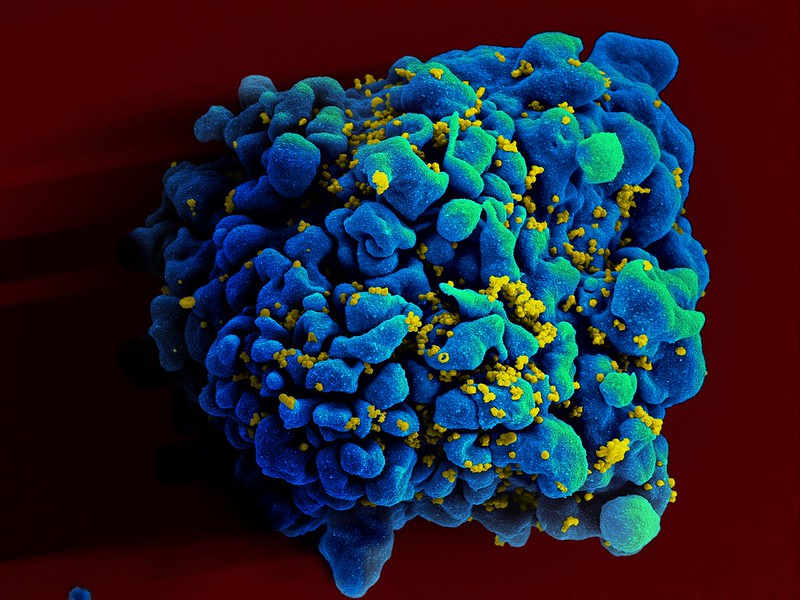
HIV invading a human cell
HIV invading a human cell: Credit NIH

Even with antiretroviral therapy, HIV still lingers in the body, preventing complete cure. Now, new research published in PLOS Pathogens, revealed a possible answer to why HIV persists in the body: a lack of a certain protein in HIV patients’ killer T cells. The discovery also explained why people with HIV have less risk of developing multiple sclerosis (MS).

Because this protein, CD73 is responsible for migration and cell movement into the tissue, the lack of the protein compromises the ability of killer T cells to find and eliminate HIV-infected cells, explained immunologist Shokrollah Elahi, lead researcher of the study.

“This mechanism explains one potential reason for why HIV stays in human tissues forever,” he said, adding that the research also shows the complexity of HIV infection.

“This provides us the opportunity to come up with potential new treatments that would help killer T cells migrate better to gain access to the infected cells in different tissues.”

After spending three years identifying the role of CD73, Elahi turned his focus to understanding potential causes for the drastic reduction. He found it is partly due to the chronic inflammation that is common among people living with HIV.

“Following extensive studies, we discovered that chronic inflammation results in increased levels of a type of RNA found in cells and in blood, called microRNAs,” he explained. “These are very small types of RNA that can bind to messenger RNAs to block them from making CD73 protein. We found this was causing the CD73 gene to be suppressed.”

This discovery also helps explain why people with HIV have a lower risk of developing MS, Elahi noted.

“Our findings suggest that reduced or eliminated CD73 can be beneficial in HIV-infected individuals to protect them against MS. Therefore, targeting CD73 could be a novel potential therapeutic marker for MS patients.”

Elahi said the research could next look into seeing how to turn on the CD73 gene in patients with HIV and off in those with MS.

Source: University of Alberta

Generic Options for HIV Prophylactic Cabotegravir Locked Out, MSF Warns

Image of a syring for vaccination
Photo by Mika Baumeister on Unsplash

Médecins Sans Frontières (MSF) has warned that pharmaceutical company ViiV’s recent decision not to pursue voluntary licensing for the long-acting HIV prophylactic cabotegravir (CAB-LA) means that lower cost generic production in low- and middle-income countries (LMICs) is effectively locked out for countries like South Africa.

CAB-LA was approved for the prevention of HIV infection by the USFDA in December 2021, and ViiV currently charges $3700 (R55 000) per vial in the US ($22 200/R333 000 annually per person). The Clinton Health Access Initiative (CHAI) has shown that generic manufacturers could produce this drug for around $2.60 (R39) per vial (less than $20/R3000 per person per year). Although ViiV has publicly said they would provide CAB-LA for their at-cost price in many LMICs, they have yet to announce what that price is.

According to MSF, generic manufacturer prices are often much lower than the patented drug – and they can even produce complicated formulations like CAB-LA.  The generic equivalent [PDF] of ViiV’s paediatric formulation of the HIV drug dolutegravir costs 22 times less.

Amanda Banda, Infectious Diseases Policy and Advocacy Advisor of the MSF Access Campaign, said: “What good is HIV prevention if the people who need it can’t afford it? This is the most effective form of HIV prevention for vulnerable and marginalised communities and yet ViiV is delaying the ability of generic manufacturers to supply the drug, meaning that many people across low- and middle-income countries who would benefit from the medicine to prevent HIV infection won’t be able to access it. CAB-LA will need to be available at a price that is comparable to currently available oral PrEP if country treatment programs and donors are expected to scale up its use to the levels needed – and it’s hard to imagine that ViiV will make CAB-LA available at less than $40 (R600) per year.  ViiV needs to immediately sign a licensing deal with the Medicines Patent Pool so that more affordable generics can be produced, and more lives can be saved.”

Dr Tom Ellman, Head of MSF’s South African Medical Unit said: “We want to urgently make this drug available for people at high risk of HIV infection in our programs in sub-Saharan Africa – we don’t want a donation with many strings attached from the corporation; it is not the role of ViiV to control the use of a drug that is approved by the USFDA. We want ViiV to sell us this drug at an affordable price.”

Source: MSF

HIV Co-discover Dies

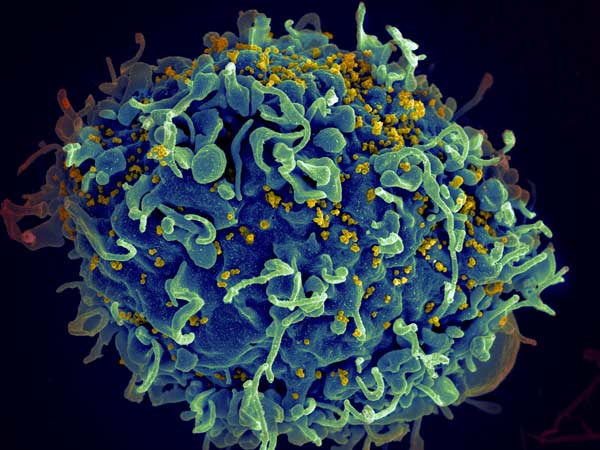
HIV Infecting a T9 Cell. Credit: NIH

Luc Montagnier, the French virologist credited as being a co-discoverer of the human immunodeficiency virus (HIV), has died aged 89. He jointly received the 2008 Nobel Prize was jointly awarded to Montagnier for his work in isolating the virus.

He was lauded for his crucial research, but in later life he was criticised for unscientific claims about autism and COVID.

Local news site FranceSoir reported that he died on Tuesday in Neuilly-sur-Seine “surrounded by his children”.

The virologist first began working on the virus in the early 1980s while at the Pasteur Institute in France. Montagnier and his team examined tissue samples from patients who had the mysterious new syndrome.

In 1983, Luc Montagnier’s team at the Pasteur Institute in Paris discovered HIV‑1. They cultured T cells from a lymph node biopsy from a 33-year-old homosexual French patient with symptoms that can precede AIDS (subsequently called pre-AIDS), such as lymphadenopathy. 
Finding that they had isolated a retrovirus, they were able to infect T cells from a healthy donor, but were unable to infect other cell types, including B cells and fibroblasts. 

The group concluded that this patient at risk for AIDS was infected with a T cell–tropic retrovirus; however they could only tentatively associate it with AIDS. In 2008, Luc Montagnier and Françoise Barré-Sinoussi from his team were awarded the Nobel Prize for the isolation and characterisation of HIV-1.

However, US scientist Robert Gallo published similar findings in the same edition of Science in which the Pasteur team had announced theirs. He later concluded that the virus caused Aids. This led to years of heated debate over who actually discovered HIV.

Gallo revealed in 1991 that the virus he found came from the Pasteur Institute the year before, and the two men publicly agreed in 2002 that Montagnier’s team discovered HIV, but that Gallo first showed its role in causing Aids.

However, when Montagnier and Barré-Sinoussi were awarded the Nobel Prize in 2008 for their work – alongside Harald zur Hausen for his work on cervical cancer – the committee made no mention of Gallo, which provoked controversy.

Later on, Montagnier attracted great criticism for a series of unscientific claims, including over the causes of autism and later over the origins of COVID.

French media first reported that he had died at the American hospital in Neuilly-sur-Seine on 8 February, and his death was officially declared by authorities some time later.

Source: BBC News

Highly Virulent HIV Variant Discovered

HIV invading a human cell
HIV invading a human cell: Credit NIH

A new, more virulent and more damaging HIV variant has been discovered in the Netherlands.

Viral mutations are a source of concern because they can affect transmissibility and other factors. There have been fears of this happening in HIV-1, and now a new, highly virulent HIV strain in the Netherlands has been identified in a study. The results are published today in Science.

Prior to antiretroviral treatment, individuals infected with the new “VB variant” (for virulent subtype B) showed significant differences compared with individuals infected with other HIV variants:

  • A viral load between 3.5 and 5.5 times higher.
  • A doubled rate of CD4 cell decline (the hallmark of immune system damage by HIV), placing them at risk of developing AIDS much more rapidly.
  • Increased risk of transmitting the virus to others.

Fortunately, individuals with the VB variant had similar immune system recovery and survival to individuals with other HIV variants. However, because the VB variant causes a faster drop in immune system strength, early diagnosis and treatment is critical.

Researching the mechanism that causes the VB variant to be more transmissible and damaging to the immune system could lead to new targets for next-generation antiretroviral drugs. The VB variant is characterised by many mutations spread throughout the genome, meaning that a single genetic cause cannot currently be identified

Lead author Dr Chris Wymant said: ‘Before this study, the genetics of the HIV virus were known to be relevant for virulence, implying that the evolution of a new variant could change its impact on health. Discovery of the VB variant demonstrated this, providing a rare example of the risk posed by viral virulence evolution.’

Senior author Professor Christophe Fraser added: ‘Our findings emphasise the importance of World Health Organization guidance that individuals at risk of acquiring HIV have access to regular testing to allow early diagnosis, followed by immediate treatment. This limits the amount of time HIV can damage an individual’s immune system and jeopardise their health. It also ensures that HIV is suppressed as quickly as possible, which prevents transmission to other individuals.’

The VB variant was first identified in 17 HIV positive individuals from the BEEHIVE project, an ongoing study which collects samples from across Europe and Uganda. Since 15 of these people came from the Netherlands, the researchers then analysed data from a cohort of over 6700 HIV positive individuals in the Netherlands. This identified an additional 92 individuals with the variant, from all regions of the Netherlands, bringing the total to 109.

The researchers estimate that the VB variant first arose during the late 1980s and 1990s in the Netherlands, spreading more quickly than other HIV variants during the 2000s. However its spread has been declining since around 2010. The research team believe that the VB variant arose in spite of widespread treatment in the Netherlands, not because of it, since effective treatment can suppress transmission.

Since individuals with the VB variant are demographically similar, the spread is likely due to the properties of the virus itself.

Source: University of Oxford

SA Doctors Report SARS-CoV-2 Mutations in a Patient with HIV

HIV Infecting a T9 Cell. Credit: NIH

In an article awaiting peer review, doctors in South Africa report on the case of a 22-year-old female with uncontrolled advanced HIV infection and a SARS-CoV-2 infection that lasted 9 months, during which time the virus accumulated more than 20 additional mutations. Antiretroviral therapy suppressed HIV and cleared the coronavirus within 6–9 weeks. 

One hypothesis for novel variants is that they arise in severely immunocompromised individuals. Being unable to clear the virus because of a weakened immune response results in a persistent infection, letting mutations accumulate – some of which may allow immune evasion. In one case, SARS-CoV-2 in a female leukaemia patient developed seven mutations over three months of infection.

The authors describe a case of persistent SARS-CoV-2 infection, lasting for at least 9 months, in a severely immunocompromised woman with HIV that had challenges with adherence to antiretroviral therapy.

In mid-September 2021, a female in her 20s was admitted to a tertiary hospital in Cape Town with a one-week history of sore throat, malaise, poor appetite and dysphagia. The patient was infected with HIV at birth. In January 2021, her antiretroviral therapy (ART) regimen had been changed to tenofovir, emtricitabine and efavirenz, but she had difficulty adhering. In August 2021 she moved from rural KwaZulu-Natal to Cape Town. She stated that she had not received a COVID vaccination.

“On physical examination, the patient was wasted but had no palpable lymph nodes,” the authors report. “She was awake and lucid, with no focal neurological deficits. She was not in respiratory distress with an oxygen saturation of 98% on room air. The cardiovascular and abdominal examinations, renal function, white cell count and liver enzymes were without abnormalities. Her CD4 count was 9 cells/μL and her plasma HIV viral load 4.60 log10 viral RNA copies/mL, indicating advanced HIV infection, poorly controlled by ART.

“During a prolonged hospital stay the patient experienced multiple complications requiring treatment. Following adherence counselling, antiretroviral therapy was reinitiated with a new regimen of tenofovir/efavirenz/dolutegravir a week after admission.” 

The patient tested positive for COVID on 25 September 2021, with genomic sequencing indicating the Beta variant. However, in October, the patient later revealed that she had tested positive for COVID in January 2021. On 25 November 2021, the patient’s HIV viral load was <50 copies/ml and a PCR test was negative for COVID. While there was no CD4 count performed, suppressed HIV replication and clearance of the SARS-CoV-2 infection suggest her immune system had recovered to some degree.

Phylogenetic analysis showed that the samples indicated an ongoing infection instead of re-infections. During the 9 months of infection, the virus acquired at least 10 mutations in the spike glycoprotein and 11 other mutations over and above the lineage-defining mutations for Beta.

The authors consider it unlikely that the novel variant described spread into the general population, and stress that it does not prove that any of the other novel variants originated from an immunocompromised host in this fashion.

Increased vigilance is warranted to benefit affected individuals and prevent the emergence of novel SARS-CoV-2 variants. They ascribed the detection of the case to good connections between sequencing laboratories, routine diagnostic laboratories and frontline clinicians.

The authors concluded that their experience “reinforces previous reports that effective ART is the key to controlling such events. Once HIV replication is brought under control and immune reconstitution commences, rapid clearance of SARS-CoV-2 is achieved, probably even before full immune reconstitution occurs. This underscores the broader point that gaps in the HIV care cascade need to be closed which will benefit other conditions and public health problems, too, including COVID.”

Vaccine Trial Will Determine Moderna Efficacy in People with HIV

Image by Sergey Mikheev on Unsplash

A highly anticipated clinical trial in eight sub-Saharan countries is the first to specifically evaluate the efficacy of a COVID vaccine in people living with HIV, including those with poorly controlled infections. It also is the first study to evaluate the efficacy of vaccines – in this case, Moderna mRNA-1273 – against the Omicron variant of SARS-CoV-2.

In addition to examining the efficacy of COVID mRNA vaccines in people living with HIV, the study investigators seek to identify the optimal regimen for this population and how it might vary based on whether an individual has previously had COVID-19 or not.

The trial will be conducted in East and Southern Africa – regions of the world that have been highly impacted by HIV. It is expected to enrol about 14,000 volunteers at 54 clinical research sites in South Africa, Botswana, Zimbabwe, Eswatini, Malawi, Zambia, Uganda and Kenya, where adult HIV prevalence ranges from 4.5% to 27%.

“Sub-Saharan Africa has been hit hard by the COVID pandemic, but access to effective vaccines, especially mRNA technology, has been very limited,” said Dr. Nigel Garrett, co-chair of the study and head of Vaccine and HIV Pathogenesis Research at the Center for the AIDS Program of Research in South Africa (CAPRISA). “The Ubuntu trial will provide safety data to regulators and assess correlates of protection from COVID-19, and it will answer important questions on mRNA vaccine dosage regimens among people living with HIV.”

About 12 600 people living with HIV and about 1400 who are HIV-negative are expected to be enrolled in the study. About 5000 will have previously had COVID, confirmed by an antibody blood test done at initial enrollment. All participants will receive the Moderna vaccine, but dosages and schedules will vary depending on previous SARS-CoV-2 infection. Participants living with HIV will get access to optimal HIV treatment throughout the trial.

“This region faces a huge HIV burden,” said Dr Glenda Gray, Ubuntu study protocol lead adviser and president of the South African Medical Research Council (SAMRC). “Although safe and effective vaccines have been developed for COVID-, HIV and COVID are on a collision course,” she added. “The impact of COVID-19 on people living with HIV is a concern for the continent, particularly in light of the recently-sequenced omicron variant set to drive South Africa’s fourth wave and further infections globally.”

Dr Philip Kotzé, one of the lead study investigators, said the Ubuntu study would not be possible without the crucial participation of rural communities across Southern and East Africa. “These communities have been disproportionately impacted by the twin pandemics of HIV and COVID-19, and they now have an unprecedented opportunity to help advance science and improve our understanding of the immune response to SARS-CoV-2 in the context of HIV.”

Dr Larry Corey, principal investigator of both the HIV Vaccine Trials Network (HVTN) and the COVID-19 Prevention Network (CoVPN), and co-leader of the network’s vaccine testing pipeline, said this study seeks to address the knowledge gap around HIV status and COVID vaccination.

“Vaccination and treatment are critical for those who face the dual threat of HIV and COVID, as they remain at high risk of acquisition and transmission and potentially can be the origin of future variants,” Dr Corey said. “It is imperative that we as scientists and as society double-down on global efforts to find and make available effective vaccines and treatments. This study represents an important step forward in our efforts to reduce the burden of COVID among HIV-infected persons and understand whether current dosage regimens are adequate.”

Source: HIV Vaccine Trials Network

HIV Prevalence Among Transgender People Remains High

HIV Infecting a T9 Cell. Credit: NIH

A new analysis published in PLOS ONE highlights the worldwide prevalence of HIV among transgender people, demonstrating the need for continued prevention efforts. 

Transgender individuals have an increased risk of HIV infection,  due to factors which are numerous, complex, and dynamic. Recent years have seen updates in HIV prevention measures and so it is important to update knowledge of HIV among transgender individuals in order to inform further prevention efforts.

Applying a statistical method called random-effects modeling, the researchers conducted a meta-analysis of all 98 peer-reviewed publications on HIV prevalence among transgender individuals that appeared between January 2000 and January 2019.

The researchers found that, during the study period, 19.9% (confidence interval [CI] 14.7–25.1%) of trans feminine individuals were HIV positive, as were 2.56% (CI 0.0–5.9%) of trans masculine individuals. Compared with other individuals aged 15 and over, trans feminine people were 66 times more likely (51.4– 84.4) to have HIV, and trans masculine people were 6.8 times more likely (3.6–13.1).

The authors note that their findings counter presumptions that trans masculine individuals are not at risk for HIV. Meanwhile, they found, prevalence varied in different geographic regions, with Africa and Latin America appearing to be more impacted.

Overall, these findings reaffirm that transgender individuals face a disproportionate burden of HIV. The researchers call for increased efforts to meet the unique HIV prevention and care needs of this population.

Continued monitoring will require more data and research, especially to determine how prevalence is influenced by pre-exposure prophylaxis (PrEP)—medications that prevent HIV infection. Such research will be especially important considering that the new study only included data up to 2019, and PrEP treatment has expanded since then.

Source: MedicalXpress

Too Few Children with HIV are Virally Suppressed

Photo by sergey mikheev on Unsplash

Globally, less than two thirds of children and adolescents living with HIV who are receiving treatment are virally suppressed, according to new research published in The Lancet HIV.

Viral suppression [PDF] for HIV means that treatments are protecting health and preventing the transmission of HIV to others. UNAIDS has set a target of achieving 95% viral suppression among all people living with HIV on treatment by 2030.

“We estimate viral suppression one, two and three years after people start taking antiviral treatment, so that we can understand how well the treatments are working over time,” said Professor Matthew Law from the Kirby Institute.

“The data among adults on treatment in our studies show that viral suppression was achieved in an estimated 79% of adults at one year, and 65% at three years. However, viral suppression is poorer among children, at an estimated 64% at one year and 59% at three years.”

Senior study author, Dr Azar Kariminia from the Kirby Institute, said there are unique barriers to achieving viral suppression for children and adolescents. “It can be challenging for them to take treatment regularly, and children rely on caregivers who are often having to manage their own medical needs. There are also a range of factors that stem from stigma and discrimination, including a fear of disclosing the child’s HIV status.”

For this study, the researchers analysed data from 21 594 children/adolescents and 255 662 adults from 148 sites in 31 countries who initiated treatment between 2010 and 2019.

Dr Annette Sohn, from amfAR’s TREAT Asia program, is Co Principal Investigator for IeDEA Asia-Pacific (along with Prof. Law). She says that “while there has been substantial progress in the global response to HIV, the needs of children and adolescents often fall behind those of adults. Our efforts must extend beyond ensuring access to paediatric medicines to address the social and developmental challenges they face in growing up with HIV if we are to achieve the WHO targets by 2030.”

Viral load testing is essential to find out whether HIV treatments are working effectively. It is recommended by WHO at six and 12 months following the initiation of treatment, and then every 12 months thereafter. While viral load testing is common in high-income countries, scaling up accessible viral load testing in resource-limited settings remains a challenge.

With Australian government funding, the Kirby Institute and the Papua New Guinea Institute of Medical Research (PNGIMR) are partnering with the PNG government and a consortium of partners are implementing a program called ‘ACT-UP PNG’ which will scale up HIV viral load testing in two provinces with high HIV rates.

“Our work is ensuring that infants and children are afforded the same access to testing and treatment as other people with HIV,” says Dr Janet Gare from the PNGIMR and a Co-Principal Investigator on ACT-UP-PNG.

Instead of doing viral load testing in distant laboratories, ACT-UP PNG provides same-day molecular point-of-care testing in HIV clinics.

“This brings HIV viral load testing closer to patients, which currently includes children aged 10 and older, and adolescents,” says Dr Gare. “However, we are also pioneering the implementation of a diagnostic platform that will allow the same access to timely HIV viral load testing and results for infants six to eight weeks of age, and children up to nine years, who are currently unable to be included in point-of-care methods.”

Scientia Associate Professor Angela Kelly-Hanku says that these technologies will make testing for viral suppression in infants and children easier.

“We cannot end AIDS without addressing the inequalities that exist between paediatric and adult HIV programs. Projects like ACT-UP make a real difference and bring us closer to achieving the UNAIDS targets.”

Source: University of New South Wales

Differences in Drug Onset Explain Development of Resistance

HIV invading a human cell
HIV invading a human cell: Credit NIH

Researchers examining the development of resistance to HIV drugs have uncovered a mechanism of drug resistance development in combination therapy, where ‘windows’ open up for resistance to develop.

In the late 1980s, when HIV treatments were first introduced, patients would often develop resistance to those treatments within six months. The introduction of triple-drug treatment regimens in the 1990s was intended to rectify that. Even if the virus developed resistance to one drug, two others would still knock it out – in theory. Unfortunately, some patients still develop resistance, leaving scientists with a critical question to answer: Why?

“There’s all these things that we still don’t understand, like why do we even get resistance when treating with three drugs,” said San Francisco State University Associate Professor of Biology Pleuni Pennings. “We understand why it is becoming less common, but it should have been zero all along.”

Prof Pennings and her colleagues offer explanations for this phenomenon in a study published in eLife.

Several interesting observations were noted from analysis of HIV patient records. Drug resistance can evolve years after successful therapy, often the result of sequential mutations that occur in a predictable order. Current models could not explain these observations, and while some studies identify mutations that confer drug resistance, they don’t address how and where they arise.

Drawing on two computational models, the researchers suggest that these observations may result from drug heterogeneity over time and throughout the body. While patients receive three HIV therapies simultaneously, drugs have different half-lives and patients do not always adhere to therapy regimens. This could create opportunities for drug resistance evolution, during a window when only one drug is active. Drugs also don’t uniformly penetrate the entire body, meaning that in some locations in a patient’s body, only one of the drugs might be active, creating another evolution and escape opportunity.

“I think one main reason why we should care is actually not because of HIV but because of drug resistance in other situations,” Prof Pennings explained.

Although drug resistance among patients with HIV is fairly low, drug resistance to multidrug therapies is a big problem for diseases such as malaria and tuberculosis. In addition, the COVID pandemic and the rise of variants show how our understanding of evolving pathogens is still lacking.

“In a way, HIV is the poster child of how we solved drug resistance. … [But] if we don’t understand how we did it, then it’s really hard to take these lessons to other situations,” Prof Pennings said.

Source: San Francisco State University

Scientists Find Second HIV Patient Achieved a ‘Sterilising Cure’

HIV infecting a human T9 cell. Credit: NIH

In a study published in the Annals of Internal Medicinescientists have reported the identification of a second HIV patient who appears to have completely eliminated HIV from their systems in a ‘sterilising cure’. 

During infection, HIV creates a viral reservoir by inserting copies of its genome into a cell’s DNA. This allows the virus to escape from anti-HIV drugs and the body’s immune response. In most people, new viral particles are constantly made from this reservoir. Antiretroviral therapy (ART) can prevent new viruses from being made but cannot eliminate the reservoir, necessitating daily treatment to suppress the virus.

Some, known as ‘elite controllers’, have immune systems that are able to suppress HIV without the need for medication. Though they still have viral reservoirs that can produce more HIV virus, a type of immune cell called a killer T cell keeps the virus suppressed without the need for medication.

Xu Yu, MD, a physician investigator at Massachusetts General Hospital, led a research group that identified one patient with no intact HIV viral sequence in her genome, indicating that her immune system may have eliminated the HIV reservoir: a sterilising cure. When they sequenced billions of cells from this patient, known as the San Francisco Patient, searching for any HIV sequence that could be used to create new virus, they found no sign. This extraordinary finding, the first known incidence of a sterilising cure without a stem cell transplant, was reported in Nature in 2020.  

Now, Dr Yu’s group reports a second untreated HIV-infected patient, known as the Esperanza Patient who also has no intact HIV genomes found in more than 1.19 billion blood cells and 500 million tissue cells sequenced. This may represent a second instance of a sterilising cure.

“These findings, especially with the identification of a second case, indicate there may be an actionable path to a sterilizing cure for people who are not able to do this on their own,” said Dr Yu.

She further explains that these findings may suggest a specific killer T cell response common to both patients driving this response, with the possibility that other people with HIV have also achieved a sterilising cure. If researchers can figure out the immune mechanisms behind this response, they could develop treatments that teach others’ immune systems to mimic these responses in cases of HIV infection.  

Yu adds: “We are now looking toward the possibility of inducing this kind of immunity in persons on ART through vaccination, with the goal of educating their immune systems to be able to control the virus without ART.”

Source: EurekAlert!