

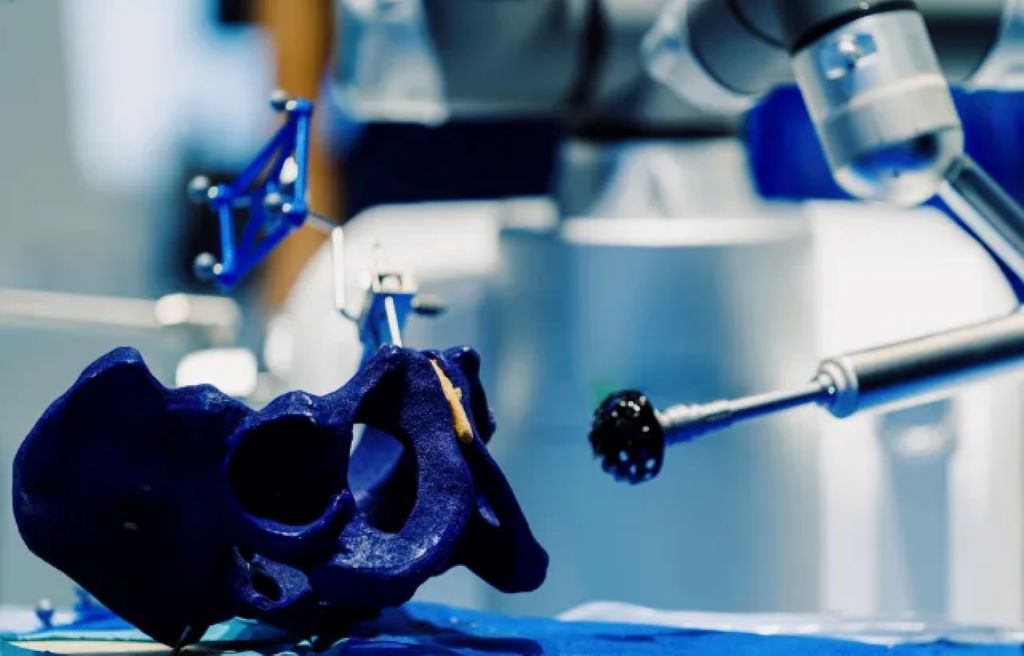
Two major studies involving researchers at Queen Mary University of London have found that robotic-assisted hip and knee replacement does not reduce the overall early risk of repeat surgery compared with conventional surgery.
Published in The BMJ, the studies analysed more than one million joint replacements recorded in the National Joint Registry between 2018 and 2024. Together, they provide the largest real-world evaluation to date of whether the greater technical precision offered by robotic-assisted surgery translates into better outcomes for patients.
Researchers from Queen Mary, the University of Oxford and the University of Bristol found that, although robotic technology is designed to help surgeons position joint implants more accurately, this did not translate into a lower overall early risk of repeat surgery following either hip or knee replacement.
In robotic-assisted joint replacement, the surgeon remains in control of the operation, using computer and robotic technology to help plan and guide the placement of the implant.
The findings come as the NHS plans a major expansion of robotic surgery, aiming to increase the number of robotic-assisted procedures sevenfold by 2035. Robotic systems require substantial investment, costing around £1 million to introduce and adding approximately £1,000 to £2,500 to the cost of each procedure.
In the hip replacement study, researchers found no overall reduction in repeat surgery or mortality associated with robotic surgery. However, robotic hip replacement was associated with a lower risk of further surgery for problems related to implant positioning. This specific benefit did not translate into an overall reduction in the need for repeat surgery.
For knee replacement, researchers found no difference in the risk of repeat surgery between robotic-assisted and conventional procedures.
The studies examined early outcomes, and the researchers say longer-term follow-up will be needed to establish whether differences in implant survival emerge over time.
The team used a method known as target trial emulation to analyse large-scale real-world registry data. The statistical approach aims to make comparisons between groups more closely resemble those of a clinical trial by balancing patients according to known differences in their characteristics.
Dr Hasan Mohammad, Academic Clinical Lecturer in Trauma and Orthopaedics at Queen Mary University of London and lead author, said:
“This study, which uses novel methodology and represents the largest real-world analysis of its kind worldwide, provides important independent evidence for patients, surgeons and policymakers at a time when robotic hip and knee replacement surgery is being adopted rapidly.
“New technology should deliver meaningful benefit for patients and represent good value for a publicly funded health service.”
Source: Queen Mary University London
