An international randomised multicentre study has shown that targeted physical training can improve the quality of life of patients with metastatic breast cancer and alleviate fatigue. In the course of the training programme, which included two sessions per week over nine months, disease- and therapy-related symptoms were markedly reduced, which was associated with a improved quality of life compared to the control group.
The German Cancer Research Center (DKFZ) was significantly involved in the study, together with the National Center for Tumor Diseases (NCT) Heidelberg and Heidelberg University Hospital.
Maintaining or improving quality of life and alleviating fatigue are important goals in the care of cancer patients. Not only the disease itself, but also the necessary therapies can severely impair quality of life. Many patients suffer from fatigue syndrome, which is characterised by persistent physical, emotional and mental exhaustion.
“Especially women with advanced cancers such as metastatic breast cancer, who usually receive long-term therapy, can benefit greatly from good management of disease- and therapy-related symptoms,” says Karen Steindorf, head of a research division at the DKFZ and NCT Heidelberg. “We hope that the encouraging results of our PREFERABLE-EFFECT study will help to ensure that as many patients as possible are offered the opportunity to take part in a targeted training programme.”
Targeted activation, rather than rest, is the appropriate measure to counter fatigue and other stressful symptoms. This has already been proven in studies for patients in the early stages of breast cancer, but there is still no evidence of a corresponding benefit for advanced disease. The PREFERABLE-EFFECT study has now provided this proof.
A total of 355 women and 2 men with metastatic breast cancer were included in the randomized controlled trial. All study participants received basic exercise recommendations and were fitted with an activity tracker to record the amount of exercise they did in everyday life. “The training group of 178 participants also took part in an individually adapted and therapeutically supervised training programme twice a week, which included exercises to strengthen balance, muscle strength and endurance. In the last three months, one of the two training sessions was also carried out with the help of an app,” explains Joachim Wiskemann from Heidelberg University Hospital, whose working group examined and supervised the Heidelberg study participants in terms of sports therapy.
At the start of the study and after 3, 6 and 9 months, the participants were asked about their quality of life using a standardised questionnaire that took into account physical, mental and emotional aspects of quality of life. In addition, a standardised questionnaire was used to objectify fatigue symptoms. Physical fitness was tested at the beginning and at three-month intervals on the bicycle ergometer.
The structured training programme led to a statistically significant improvement in quality of life and a significant reduction in fatigue. Complaints such as pain and shortness of breath decreased significantly over the course of the study. The fitness test was also better in the training group than in the control group.
“These are very encouraging training effects that the patients can feel in their everyday lives,” comments Karen Steindorf. “Structured training improves quality of life in a relevant way and enables women with advanced breast cancer to lead a more active life. We were also able to demonstrate greater participation in social life. Based on the PREFERABLE-EFFECT data, there is now good evidence to recommend that people in advanced stages of the disease should also take part in a targeted training programme.”
The “OnkoAktiv” network founded at the NCT Heidelberg supports cancer patients with training programmes close to home.
Why do new comorbidities arise because of ischaemic stroke? A study from Germany recently published in the journal Cell has discovered why this can happen – and ways in which it might be countered. The findings from the study show that the immune system is involved in damage to other organs, including the heart.
Besides the early mortality and morbidity resulting from the ischaemic brain injury itself, long-term morbidity after stroke is also due to the high prevalence of secondary comorbidities and complications, such as cognitive impairment and dementia, post-stroke depression, cardiac events, persistent vascular inflammation, and stroke-induced metabolic disturbances.
Liesz is the principal investigator of this new study. The researchers worked on the hypothesis that the high rate of comorbidities that develop after a stroke could have a common immunological cause. And they actually managed to find it: the origin of the dysfunctions in other parts of the body lies in the immunological memory of the blood-forming cells in bone marrow.
Using single-cell sequencing techniques, Liesz and his team demonstrated the presence of permanent proinflammatory changes in the transcriptome of certain immune cells (monocytes/macrophages) in several organs. In other words, certain gene segments are transcribed differently there after the stroke, which unbalances the proteome. These epigenetic modifications occur most frequently in the heart, where they can cause scarring and impair pumping function. “We managed to identify the protein IL-1b as the main culprit for the epigenetic modifications that affect immunological memory after a stroke,” says Liesz.
Promising therapeutic approaches on the horizon
The researchers demonstrated in a mouse model the connection between modified blood formation in bone marrow through overexpressed IL-1b and cardiac dysfunctions. Moreover, they showed that blocking IL-1b and inhibiting migration of the proinflammatory cells to the heart both successfully prevented cardiac problems after a stroke.
“These findings are hugely significant, as they open up the promise of effective therapeutic approaches for the prevention of secondary cardiac conditions after a stroke,” reckons Liesz.
The authors of the study believe that the epigenetic mechanisms they described for the reprogramming of the immune system in the brain-heart axis will create a new framework for explaining the development of various IL-1b-mediated comorbidities.
In the US, nearly 40 million adults have sleep apnoea, and more than 30 million of them use a continuous positive airway pressure (CPAP) machine while sleeping. But the machines tend to be expensive, clunky and uncomfortable – resulting in many users giving up on using them.
Hypertension is often linked with sleep apnoea because the brain works harder to regulate blood flow and breathing during sleep. A recent study at the University of Missouri (Mizzou) offers new insight into the underlying mechanisms within the brain contributing to hypertension for those with sleep apnoea.
The findings, which are published in the Journal of Physiology, can help pave the way for new drugs that target the brainstem to bring blood pressure back down to normal levels for those with sleep apnoea.
The study took place in the lab of David Kline, a professor in Mizzou’s College of Veterinary Medicine and researcher at the Dalton Cardiovascular Research Center.
“When oxygen levels in the blood drop during sleep apnoea, the forebrain sends warning signals to the brainstem area that controls heart and lung functions,” Kline said. “By studying these signals, we found that two neurochemicals, oxytocin and corticotropin-releasing hormone (CRH), cause the brainstem to become overactive. Over time, this leads to hypertension.”
Hypertension leads to an increased risk of stroke, complications in the metabolism and a variety of other health issues.
“Not only do those with sleep apnoea often have high blood pressure, but they also lose a lot of sleep, they have more cognitive and memory issues, and they are more prone to injury at work due to sleepiness,” Kline said.
By being the first to identify the role that oxytocin and CRH play in strengthening and overexciting the pathways and mechanisms involved in sleep apnoea, Kline and his fellow researchers hope to pave the way for the design of better therapeutic approaches for humans and animals.
“Our ultimate goal is to eventually help clinicians develop specific drugs to target either these neurochemicals or the proteins they bind to in a way that reduces high blood pressure,” Kline said. “This discovery opens the door for future research to block the pathways these neurochemicals use, ultimately helping to bring blood pressure back to normal levels.”
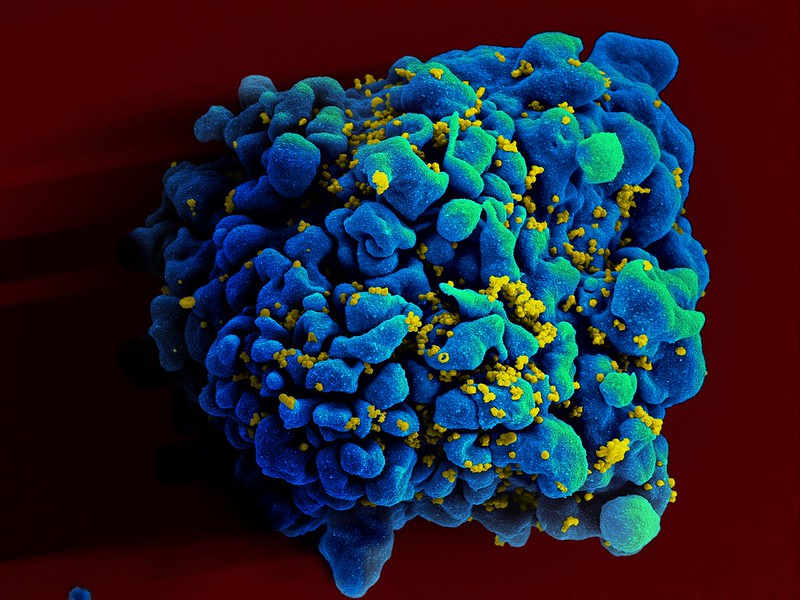
Colourised scanning electron micrograph of HIV (yellow) infecting a human T9 cell (blue). Credit: NIH
An experimental drug originally developed to treat cancer may help clear HIV from infected cells in the brain, according to a new study published in the journal Brain. For the first time, researchers at Tulane University found that a cancer drug significantly reduced levels of SIV, the nonhuman primate equivalent of HIV, in the brain by targeting and depleting certain immune cells that harbour the virus.
This discovery marks a significant step toward eliminating HIV from hard-to-reach reservoirs where the virus evades otherwise effective treatment.
“This research is an important step in tackling brain-related issues caused by HIV, which still affect people even when they are on effective HIV medication,” said lead study author Woong-Ki Kim, PhD, associate director for research at Tulane National Primate Research Center. “By specifically targeting the infected cells in the brain, we may be able to clear the virus from these hidden areas, which has been a major challenge in HIV treatment.”
Antiretroviral therapy (ART) is an essential component of successful HIV treatment, but the virus persists in “viral reservoirs” in the brain, liver, and lymph nodes, where it remains out of reach of ART.
The brain has been a particularly challenging area for treatment due to the blood-brain barrier preventing treatments from reaching the virus. In addition, macrophages are extremely long-lived, making them difficult to eradicate once they become infected.
Infection of macrophages is thought to contribute to neurocognitive dysfunction, experienced by nearly half of those living with HIV. Eradicating the virus from the brain is critical for comprehensive HIV treatment and could significantly improve the quality of life for those with HIV-related neurocognitive problems.
Researchers focused on macrophages, a type of white blood cell that harbours HIV in the brain. By using a small molecule inhibitor to block a receptor that increases in HIV-infected macrophages, the team successfully reduced the viral load in the brain. This approach essentially cleared the virus from brain tissue, providing a potential new treatment avenue for HIV.
The small molecule inhibitor used, BLZ945, has previously been studied for therapeutic use in amyotrophic lateral sclerosis (ALS) and brain cancer, but never before in the context of clearing HIV from the brain.
The study, which took place at the Tulane National Primate Research Center, utilised three groups to model human HIV infection and treatment: an untreated control group, and two groups treated with either a low or high dose of the small molecule inhibitor for 30 days. The high-dose treatment lead to a notable reduction in cells expressing HIV receptor sites, as well as a 95-99% decrease in viral DNA loads in the brain .
In addition to reducing viral loads, the treatment did not significantly impact microglia, the brain’s resident immune cells, which are essential for maintaining a healthy neuroimmune environment. It also did not show signs of liver toxicity at the doses tested.
The next step for the research team is to test this therapy in conjunction with ART to assess its efficacy in a combined treatment approach. This could pave the way for more comprehensive strategies to eradicate HIV from the body entirely.
A key part of the National Health Insurance Act is the requirement of private healthcare facilities to obtain a Certificate of Need (CON) in order to practise. Now it, this component has been struck down by a Pretoria High Court judge. Judge Anthony Millar struck down the Act’s key section, saying that it was “akin to an attempt to indenture the private medical service in the service of the state”.
The case had been brought by the Solidarity Trade Union, the Alliance of South African Practitioner Associations, the South African Private Practitioner Forum, the Hospitals Association of South Africa (HASA) and a number of healthcare providers and owners of healthcare establishments.
Sections 36 to 40 of the NHI Act would introduce a Certificate of Need (CON) scheme, essentially tying down doctors to a specified geographical location, which would be the only location where they could render their services.
It is declared that sections 36 to 40 of the National Health Insurance Act 61 of 2003 are invalid in their entirety and are consequently severed from the Act.
Judge Anthony Millar’s ruling
Any new healthcare facility would have to apply for a CON, which would be valid for 20 years. Existing facilities would have two years’ grace period to apply. This would applicable to hospitals, clinics, pharmacies and even to private rooms set up within the home of the practitioner. Operating without one would be a criminal offence – punishable with a fine, five years in prison or both.
It had been argued that because the regulations for CON had not been promulgated, the applicants’ argument was “hypothetical” and not “crystallized”. In Tuesday’s ruling, Judge Millar cited previous rulings and the constitutionality of the matter was still worth testing.
The CON scheme was extensive, Judge Millar noted, and would impact not only healthcare practitioners who worked in healthcare facilities and their employees, but also “juristic persons“, ie corporations or other organisations that can be legally liable.
In terms of its constitutionality, the applicants’ argument was that, “at least six constitutional rights are infringed. They say it tramples on their rights including where they want to reside, send their children to school and the communities they belong to.”
Judge Millar noted, would mean that setting up a hospital was a hefty investment of R500 million or so, and there was no provision any support. Taken together with the 20-year CON validity, would serve to discourage private investment and became a “blunt instrument” with which the Director-General of Health could control private healthcare in the country.
Even though this provision was ostensibly to serve many, this could not come at the cost of individual freedoms, among them Section 22 of the Constitution which provided for the freedom to choose an occupation within the rule of law.
“The scheme is silent on the extant rights of both the owners of private health establishments, private healthcare service providers and private healthcare workers. Such extant right include their integration and professional reputations in the communities which they presently serve together with the significant financial investments and commitments made by them to be able to render the services that they do.”
Since health establishments are purpose-built and hard to convert for other use, this constitutes a de facto deprivation, he wrote.
“It does not behove government in pursuing transformation, to trample upon the rights of some ostensibly for the benefit of the many.”
‘Effective indenture’ of private healthcare
While the legal teams for President Cyril Ramaphosa, the minister of health, Dr Aaron Motsoaledi, and the director-general of health, Dr Sandile Buthelezi, argued that the public healthcare sector was overburdened, Judge Millar replied that this amounted to the effective indenture of the private healthcare system.
Among other problems, contesting CON issuance was without recourse and by turning down a certificate the DG could essentially deprive the affected parties of income, as doing so would see them prosecuted under Section 40.
The ruling was welcomed by healthcare professional associations.
As reported in the Daily Maverick, Solidarity chief executive Dr Dirk Hermann said, “This judgment is a major blow to the total NHI [National Health Insurance] idea, as the principle of central management is a core pillar of the NHI Act itself. A more extensive consequence of this ruling with regard to the certificate of need is that parts of the NHI Act are now probably also illegal in principle.
“The NHI in its current format cannot be implemented as the essence of the NHI is central planning – and this has now been found unconstitutional.”
In a statement, HASA said that it regretted that the matter had to come to court. “We would have preferred achieving the objective of a stronger health system through a negotiated and collaborative effort to increase the number of medical students and nurses in medical training facilities to address the healthcare system’s needs,” the association stated.
In a study published in the journal PNAS, a research team led by the University of Minnesota Medical School have shown that the socioeconomic status (SES) of cell donors affects the health outcomes of blood cancer patients who underwent haematopoietic cell transplantation (HCT).
The study examined the health outcomes of 2005 blood cancer patients treated with HCT in the United States. The research team found cancer patients who were transplanted with cells from donors of greatest socioeconomic disadvantage experienced a 9.7% reduction in overall survival and 6.6% increase in transplant-related mortality at three years compared to those transplanted from donors of high socioeconomic status – regardless of the cancer patient’s socioeconomic status.
“Our findings are quite remarkable. We have shown that social disadvantage penetrates so deeply that it is actually transplantable into a new host, and its effects persist over time,” said Lucie Turcotte, MD, MPH, MS, an associate professor at the University of Minnesota Medical School.
The results show the striking biological impact of social disadvantage and how it can alter health outcomes, specifically in the setting of cancer and hematopoietic cell transplantation.
The research team plans to conduct further research to investigate the underlying biological and physiologic drivers of these findings in order to develop interventions to mitigate the adverse health outcomes introduced by socioeconomic disadvantage.
“The importance of these findings reach far beyond cancer and bone marrow transplant care – they demonstrate the profound health effects of social inequality and highlight the critical need for public health interventions,” said Dr Turcotte.
A world-first study has found low-dose aspirin may treat flu-induced blood vessel inflammation, creating better blood flow to the placenta during pregnancy. Animal studies examined whether the treatment for preeclampsia could be applied to flu infections – and the results, published in Frontiers in Immunology, were very promising.
Lead researcher and RMIT Post-Doctoral Research Fellow, Dr Stella Liong, said that flu infections during pregnancy can resemble preeclampsia, a pregnancy complication that causes inflammation to the aorta and blood vessels. Low-dose aspirin is commonly taken to prevent preeclampsia, as it stops the body from creating chemicals that cause inflammation.
“When the vascular system is inflamed, it leads to poor blood flow and affects the aorta’s function,” she said. “This is especially a problem during pregnancy where good blood flow to the placenta is crucial to the development of the foetus.”
The research, led by RMIT University in collaboration with Trinity College Dublin, Ireland Professor John O’Leary and University of South Australia Professor Doug Brooks, found foetuses and placenta from mice with influenza A were smaller than those from uninfected mice.
Markers of low blood oxygenation and poor blood vessel development were also evident in the foetuses. The mice treated daily with low-dose aspirin had less inflammation and improved foetal development and offspring survival.
While the research was still awaiting human clinical trials, Liong said low-dose aspirin was already recognised as safe to take during pregnancy. The research team however recommended pregnant people seek medical advice before taking new medications.
Brooks said influenza A infections during pregnancy was a big concern as every pregnancy overlaps with part of a flu season.
“There are long term implications for both the mother and the foetus, and aspirin might provide a simple solution for preventing this influenza associated pathology,” Brooks said.
Why flu infection is dangerous during pregnancy
O’Leary said the research findings had huge implications for pregnancy and seasonal influenza virus infections for pregnant people.
“This study shines a light, for the first time, on the role of vascular inflammation associated with influenza virus and the potential dramatic effect of the disease-modifying drug aspirin, in low dosage, in pregnant women with co-morbid influenza,” O’Leary said.
While there weren’t many studies of the impacts of flu infections during pregnancy, project lead and RMIT Professor Stavros Selemidis said it was clear that pregnancy changed how the body responded to the virus.
Liong and Selemidis’ earlier breakthrough research found the flu virus during pregnancy could trigger a damaging hyperactive immune response, causing the virus to spread around the body from the lungs through the blood vessels.
“We used to think the flu virus just stayed in the lungs, but during pregnancy it escapes from the lungs to the rest of the body,” Selemidis said.
“This infection could set you up for cardiovascular disease later in life, but also set up cardiovascular disease in the offspring later in life.”
While vaccination was still the considered the best way to prevent flu infection during pregnancy, Selemidis pointed out vaccination rates were generally low in the pregnant population.
“Low vaccination rates aside, the flu shot may not generate the perfect immune response, especially if someone is pregnant or has an underlying medical condition,” he said.
“That’s why it’s useful to have a potential back up in low-dose aspirin to help prevent vascular dysfunction during pregnancy and improve foetal development.”
Targeting oligodendrocytes could help reduce amyloid beta production
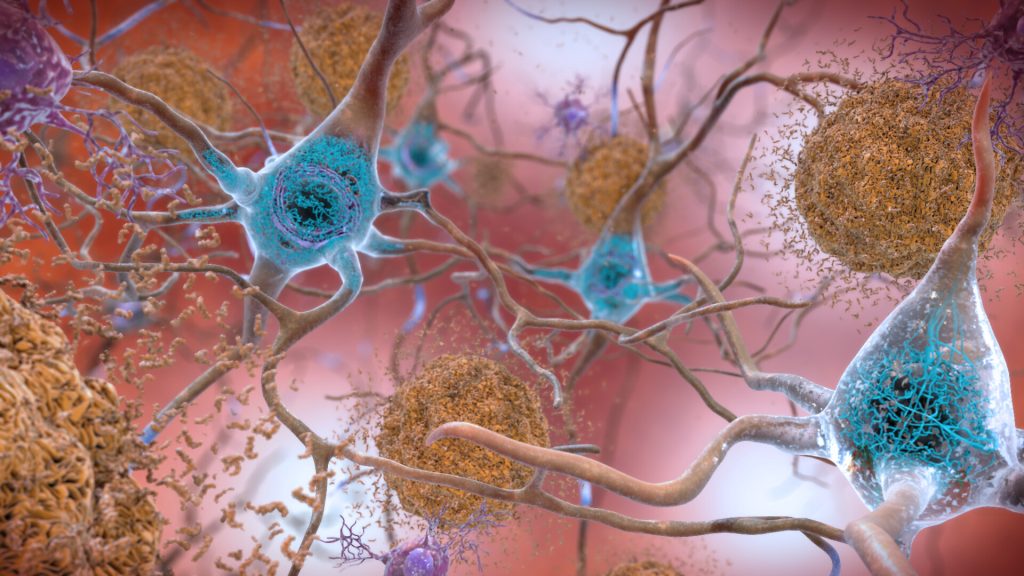
Neurons in the brain of an Alzheimer’s patient, with plaques caused by tau proteins. Credit: NIH
Oligodendrocytes are an important source of amyloid beta (Aβ) and play a key role in promoting neuronal dysfunction in Alzheimer’s disease (AD), according to a study published July 23, 2024 in the open-access journal PLOS Biology by Rikesh Rajani and Marc Aurel Busche from the UK Dementia Research Institute at University College London, and colleagues.
AD is a devastating neurodegenerative disorder affecting millions of people worldwide. Accumulation of Aβ – peptides consisting of 36 to 43 amino acids – is an early critical hallmark of the disease. Recent clinical trials demonstrating a slowing of cognitive and functional decline in individuals with AD who are treated with anti-Aβ antibodies reinforce the important role of Aβ in the disease process. Despite the key cellular effects of Aβ and its essential role in AD, the traditional assumption that neurons are the primary source of toxic Aβ in the brain has remained untested.
In the study, Rajani and Busche showed that non-neuronal brain cells called oligodendrocytes produce Aβ. They further demonstrated that selectively suppressing Aβ production in oligodendrocytes in an AD mouse model is sufficient to rescue abnormal neuronal hyperactivity. The results provide evidence for a critical role of oligodendrocyte-derived Aβ for early neuronal dysfunction in AD. Collectively, the findings suggest that targeting oligodendrocyte Aβ production could be a promising therapeutic strategy for treating AD.
According to the authors, the functional rescue is remarkable given the relatively modest reduction in plaque load that results from blocking oligodendrocyte Aβ production, while blocking neuronal Aβ production leads to a near elimination of plaques – another hallmark of the disease. This small contribution of oligodendrocytes to plaque load could suggest that a main effect of oligodendrocyte-derived Aβ is to promote neuronal dysfunction.
Together with the data showing an increased number of Aβ-producing oligodendrocytes in deeper cortical layers of the brains of individuals with AD, these results indicate that oligodendrocyte-derived Aβ plays a pivotal role in the early impairment of neuronal circuits in AD, which has important implications for how the disease progresses and is treated. The increased number of oligodendrocytes in human AD brains also raises the intriguing possibility that these cells could potentially offset reduced Aβ production due to neuronal loss as the disease progresses.
The authors add, “Our study challenges the long-held belief that neurons are the exclusive source of amyloid beta in the brain, one of the key toxic proteins that builds up in Alzheimer’s Disease. In fact, we show that oligodendrocytes, the myelinating cells of the central nervous system, can also produce significant amounts of amyloid beta which impairs neuronal function, and suggests that targeting these cells may be a promising new strategy to treat Alzheimer’s Disease.”
Study analyzed 7 major health themes across 185 countries before and after the COVID-19 pandemic
The COVID-19 pandemic significantly widened existing economic and health disparities between wealthy and low-income countries and slowed progress toward health-related Sustainable Development Goals (SDGs), according to a new study published July 24, 2024, in the open-access journal PLOS ONE by Wanessa Miranda of Federal University of Minas Gerais, Brazil, and colleagues.
The global SDGs were established in 2015 as a wide and integrated agenda with themes ranging from eradicating poverty and promoting well-being to addressing socioeconomic inequalities. However, the COVID-19 pandemic is known to have delivered a devastating blow to global health, with large economic repercussions.
The new study investigated the potential impact of these economic disruptions on progress toward health-related SDGs. The research team used data from the official United Nations SDG database and analysed the associations between well-being, income levels, and other key socioeconomic health determinants. A yearly model was extrapolated to predict trends between 2020 and 2030 using a baseline projection as well as a post-COVID-19 scenario.
The study estimated average economic growth losses in the wake of the COVID-19 pandemic as 42% and 28% for low and lower middle-income countries and 15% and 7% in high- and upper middle-income countries. These economic disparities are projected to drive global health inequalities in the themes of infectious disease, injuries and violence, maternal and reproductive health, health systems coverage and neonatal and infant health. Overall, low-income countries can expect an average progress loss of 16.5% across all health indicators, whereas high-income countries can expect losses as low as 3%. Individual countries, such as Turkmenistan and Myanmar, have estimated a loss of progress which is as much as nine times worse than the average loss of 8%. The most significant losses are seen in Africa, the Middle East, Southern Asia, and Latin America.
The authors conclude that the impact of the pandemic has been highly uneven across global economies and led to heightened inequalities globally, particularly impacting the health-related targets of the 2030 SDG Agenda.
The authors add: “The COVID-19 pandemic significantly widened existing economic and health disparities between wealthy and low-income countries and slowed progress toward health-related Sustainable Development Goals (SDGs). Overall, low-income countries can expect an average progress loss of 16.5% across all health indicators, whereas high-income countries can expect losses as low as 3%.”
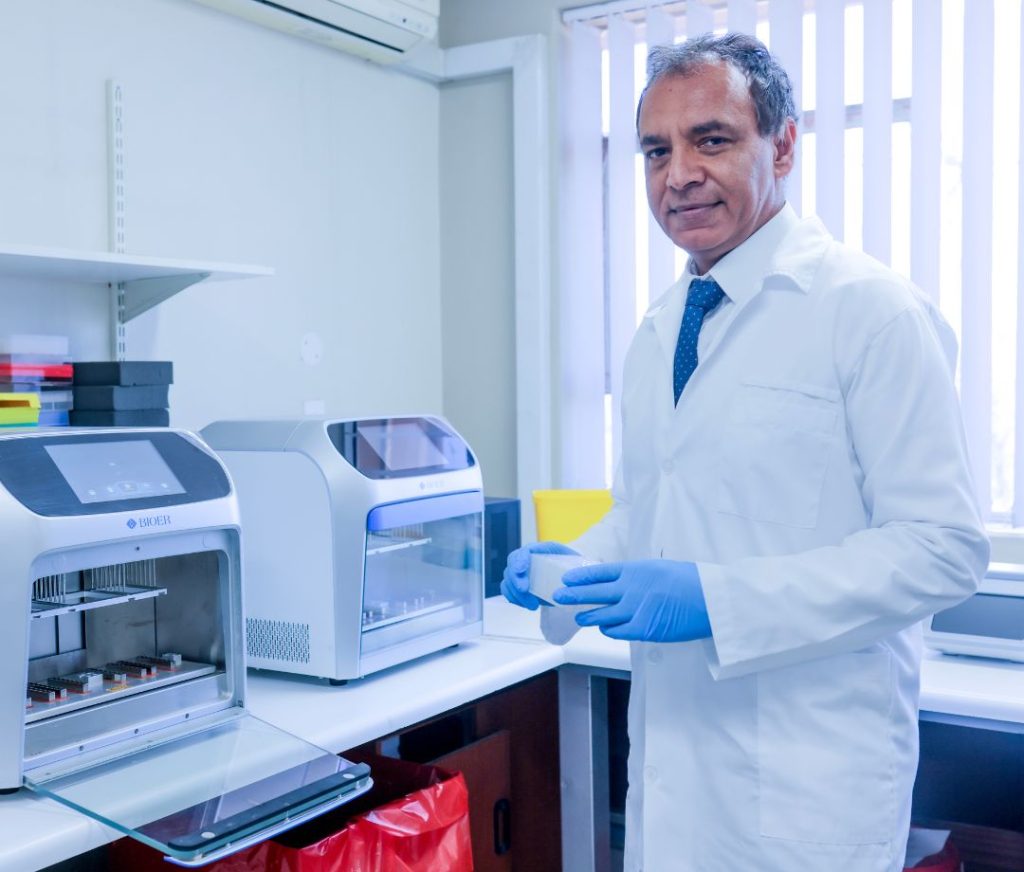
Professor Shabir Madhi of Wits University. Photo: supplied.
By Biénne Huisman
Amid the uncertainty of the early days of the COVID-19 pandemic, Professor Shabir Madhi often stood out for his clarity of thought in making sense of rapidly evolving scientific evidence. Biénne Huisman chatted to Madhi about vaccines, ongoing challenges with the Gauteng health department, and being outspoken about issues such as the war in Gaza.
Professor Shabir Madhi became known to many in South Africa for leading the charge in two of the first COVID-19 vaccine clinical trials conducted in Africa – those for the AstraZeneca and Novavax vaccines. At a time of much scientific uncertainty, he was often quoted in the press – gaining a reputation for keeping his cool and calling things as he saw them based on available evidence.
He spoke out against the politicisation of science and was a staunch advocate for access to vaccines, especially for older people at higher risk of severe illness and death. He wasn’t afraid to ruffle feathers, openly criticising government’s COVID-19 vaccine communication efforts and arguing that government should take vaccines to the people, rather than the other way around. He called for the ending of strict lockdowns, before many others did so. Reflecting on his reputation for not holding back on his beliefs, he admits to “having a short fuse, especially when people are talking nonsense – or what I consider to be entirely off the mark”.
What may be less obvious to the public, is that Madhi’s healthcare impact precedes COVID by decades.
Internationally respected for his research into paediatric infectious diseases, his work has helped to save the lives of hundreds of thousands of children and informed World Health Organization policy (WHO) – notably relating to the pneumococcal conjugate vaccine (to prevent pneumonia and meningitis) and the rotavirus vaccine (to prevent diarrhoeal disease in young children).
His work continues. Just last year a landmark study, led in South Africa by Madhi’s Vaccines and Infectious Diseases Analytics Research Unit at the University of the Witwatersrand (Wits), found that immunisation of pregnant women safely protected their unborn babies from respiratory syncytial virus (RSV). As Spotlight reported at the time, researchers estimate the vaccine can save thousands of young lives.
Speaking to Spotlight over Zoom from Wits in Johannesburg, where he is Dean of Health Sciences, Madhi relays his love of treating kids – who “most importantly, don’t lie, and who are the most vulnerable”.
“Accidental vaccinologist”
Madhi has been described as an “accidental vaccinologist”. Shrugging inside a navy suit, he says he never intended to become a physician, let alone a professor in vaccinology. At medical school at Wits, he nearly dropped out after a month.
As a child, growing up in Lenasia, Madhi wanted to become an engineer. But born to a mathematics teacher father and a stay at home mum, money was tight. His only opportunity to attend university presented itself via a bursary in medicine.
“I only really started to enjoy medicine once I specialised in paediatrics,” he says. “But more importantly, that’s when I realised the huge potential that existed in medicine to make a difference, particularly the potential for vaccines to make a big difference over a short period of time – not on an individual level, but at a community level. And that’s what really drove me into the space of research.”
While doing his peadiatric training at Chris Hani Baragwanath Academic Hospital (he obtained a master’s degree in paediatrics from Wits in 1998), it struck him that the leading causes of death among children were entirely preventable.
“Back then, close to 750 000 children were dying of measles globally; half of those deaths were happening in Africa, despite the vaccine for measles being available since the 1970s. South Africa was one of the countries with a poor public immunisation programme; up until 1992 South Africa didn’t have a public immunisation programme.”
In 2009, in a first on the African continent, pneumococcal and rotavirus vaccines were finally officially rolled out in South Africa.
“While I was training at Baragwanath, there was a ward just for children with gastroenteritis or diarrhoea,” he recalls. “But six months after we introduced the rotavirus vaccine in South Africa [in 2009], we shut down the diarrhoea ward at Baragwanath and probably every other diarrhoea ward in the country.”
Contributing internationally
Today Madhi’s CV is long. He sits on scores of scientific advisory committees, attending conferences and delivering talks around the world.
Since 2019, he has served on a global panel of experts convened by the WHO, the Strategic Advisory Group of Experts on Immunization (SAGE), of which he now is deputy chair. He also chairs the SAGE working group on polio.
“I’m really enjoying SAGE at the moment,” he says. “This is where I think I am making a meaningful contribution. It really is an eye opener to the different types of research that’s taking place globally; but also the type of challenges we face in terms of ensuring that children are adequately immunised.
“It’s great to be working on new vaccines, coming up with new vaccines; but that’s a meaningless exercise unless you can ensure that those vaccines are getting into the arms of children – because that is what saves lives. So yes, dealing with issues around implementation and advocacy.”
SAGE requires frequent trips to Geneva, where the WHO is based.
Our discussion turns to business travel – the amount required for a researcher to remain “relevant and competitive”. With typical candour, Madhi outlines challenges faced by researchers from the global south.
“I think coming from South Africa, coming from the African continent, it’s more of a challenge for researchers to establish themselves, for a number of reasons. Firstly to become known in the international space, you probably need to deliver so much more than what is expected from our northern hemisphere counterparts.
“Then in addition to the inconvenience of needing to travel so often, there are subtle things which people in the northern hemisphere don’t have to deal with. Needing to get visas and dealing with customs officials when entering countries.
“It can become an extremely unpleasant experience, and you really need to swallow your pride given what is blatant racism at times. For example, nowadays I refuse to fly through Germany because the customs office in Frankfurt is probably the worst I have encountered. All of a sudden, they would keep me and question me for both arrival, as well as departure…”
Local challenges
The discussion turns back to South Africa, and health challenges in his home province of Gauteng. Here also Madhi has tried to make a difference, but it hasn’t been plain sailing.
Commenting on a floundered memorandum of agreement (MOA) signed between Wits and the Gauteng Department of Health in June 2022, Madhi says: “The bottom line unfortunately; the Gauteng Department of Health simply doesn’t have stability of leadership. At the level of the MEC in particular; I mean since I’ve been dean, there’s been about four or five heads of department. And it becomes difficult to follow through with any of these programmes.”
Madhi adds that Wits university executives had worked on the memorandum for seven years. The agreement set out a plan to combine university and government resources in “academic health complexes” for enhanced service delivery. But the Department of Health put it on hold three months later, following a related Public Service Commission inquiry.
He explains: “They convened this big workshop, spending probably a mini fortune, to basically facilitate the establishment of an MOA, not just between Wits and the Department of Health, but between the Department of Health and many other academic hospitals in the province. Because of the intervention, the Department of Health indicated that they weren’t going to implement our MOA until that particular commission concluded their work. But since then, there’s been absolutely no report from that meeting.”
Not afraid to speak out
On social media, Madhi speaks out about atrocities being committed in Gaza.
To Spotlight, he says leadership holds no place for neutrality.
“As part of leadership, and I do consider myself a leader in the different roles that I play – either in my research unit or currently as university dean – you need to be prepared to take a stance. You can’t remain neutral on positions. You need to interrogate facts. And once having interrogated the facts, you need to reach a conclusion; then follow through with what is required, if there’s anything that needs to be implemented.”
Madhi says his leadership style was honed during childhood. “Not being afraid to speak out, it does get me into trouble quite often,” he says, laughing. “I think that’s just part of my upbringing, being an activist during apartheid in the Lenasia Youth League and other activist organisations. My upbringing was, when things are not what it’s meant to be, you speak out; you champion the right cause.”
These days Madhi lives in Northcliff with his wife, with whom he has two children. His favourite football team is Arsenal and a book he says he recently enjoyed was The Covenant of Water – a three generation family account set in India, by physician and author Abraham Verghese.