Month: July 2022

New Treatment for Toxoplasmosis Could Target Parasite Cysts

Toxoplasma gondii. Source: Wikimedia CC0

Findings from a new University of Kentucky College of Medicine study published in the Journal of Biological Chemistry could lead to a new treatment for Toxoplasma gondii, the parasite that causes toxoplasmosis.

An estimated 40 million people in the US carry the parasite T. gondii, according to the Centers for Disease Control and Prevention, but most are asymptomatic because the immune system usually keeps the parasite from causing illness. However, for women newly infected during pregnancy and anyone with a compromised immune system, toxoplasmosis can cause severe illness or even death.

In individuals with severe toxoplasmosis, cyst version of the parasite may be present within brain and muscle tissue. These cysts are responsible for causing serious disease, especially in people who are immunocompromised. While there are FDA-approved drugs to treat the symptoms of toxoplasmosis, no current therapeutics target the cyst form of the parasite.

The labs of Matthew Gentry, PhD, and Craig Vander Kooi, PhD, at UKCM and Zhong-Yin Zhang, PhD, at the Purdue Institute for Drug Discovery, collaborated to develop a drug that targets the cyst form of the parasite.

In previous research, Dr Gentry identified an enzyme in T. gondii called TgLaforin, which he hypothesised was critical in allowing the parasite to access energy from a carbohydrate storage molecule. The team developed a new drug that inhibits TgLaforin with the goal of preventing enzymes from accessing and providing energy to the parasite.

The new discovery was made possible thanks to the multidisciplinary collaboration of experts from the four labs, said Dr Gentry.

Robert Murphy, PhD, a member of the Gentry and Sinai labs, conducted initial experiments that characterised TgLaforin and provided a baseline for understanding the enzyme’s function.

Tiantian Chen, a graduate student in Vander Kooi’s lab, generated models of TgLaforin using a new program called AlphaFold2, an AI algorithm that provides valuable insights into research. Chen generated models that provided a picture of the enzyme that demonstrated TgLaforin was a unique and possible drug target.

Jianping Lin, PhD, a postdoc in Dr Zhang’s lab, then used information generated by Dr Murphy and Chen in combination with novel techniques in chemistry to generate the first version of a future anti-Toxoplasma drug.

“I was excited to find that the drug was effective against TgLaforin in test tubes and that it prevented TgLaforin from performing its normal activity against a variety of substrates, including carbohydrates,” said Dr Murphy.

The labs will next test the drug on parasites, and try to increase its potency and selectivity and adapt its chemical properties to allow for animal studies.

“This study is a great example of what Provost DiPaola consistently promotes regarding transdisciplinary research,” Dr Gentry said. “This work was a true team effort and it is very exciting to see where we take it next.”


Source: University of Kentucky College of Medicine

A Nose for COVID: Sniffer Dogs Outperform Antigen Tests

Source: Pixabay CC0

Since the start of the COVID pandemic, dogs have been found to be able to sniff out signs of the virus in infected individuals, with some countries deploying the dogs at border posts to quickly check incoming travellers. Now, a new study published in PLOS One shows that they can be faster than rapid antigen tests, and in some instances even more sensitive than PCR testing.

Applications for medical sniffer dogs have been increasingly studied in recent years, and with the arrival of the COVID pandemic, they provided a quick, efficient way to test for SARS-CoV-2 infection. A number of studies demonstrated their effectiveness, with one study reporting a 94% accuracy. Now, this new study shows that can be as accurate as antigen tests, especially in asymptomatic individuals.

The researchers conducted a prospective cohort study in two community COVID screening centres, with 143 symptomatic and 192 asymptomatic adults. Participants were tested with two nasopharyngeal swabs (NPS), one saliva and one sweat sample. The dog handlers (and the dogs…) were blinded to the individuals’ COVID status. The dogs’ sniff tests were compared to nasopharyngeal RT-PCR as the reference standard, saliva RT-PCR and nasopharyngeal antigen testing.

Overall, 109 of the 335 participants tested positive on nasopharyngeal RT-PCR, 78 symptomatic and 31 asymptomatic. The overall sensitivity of canine detection was 97% and even reached 100% in asymptomatic individuals compared to NPS RT-PCR. The specificity was 91%, reaching 94% for asymptomatic individuals. The sensitivity of canine detection was higher than that of nasopharyngeal antigen testing (97%), but the specificity was lower (90% versus 97%).

The researchers concluded that using dogs’ sense of smell to detect SARS-CoV-2 infection could be a speedy alternative to NPS RT-PCR when rapid testing is necessary when antigenic tests are the standard for mass screening.

Teens Have Triple the Risk of Developing Cannabis Addiction

Cannabis plants
Photo by Harrison Haines on Pexels

Adolescents have more than three times the risk of developing a cannabis addiction than adults, although they may only have the same risk of other mental health problems related to the drug, according to a new study published in the Journal of Psychopharmacology.

The study, led by King’s College London and University College London, found that adolescent cannabis users had the same odds for higher levels of subclinical depression or anxiety than adults cannabis users, nor were they more vulnerable than adult users to cannabis’s associations with psychotic-like symptoms.

These findings build on a separate study by the same team that found adolescents were not more vulnerable to associations between chronic cannabis use and cognitive impairment.

Lead author Dr Will Lawn said: “There is a lot of concern about how the developing teenage brain might be more vulnerable to the long-term effects of cannabis, but we did not find evidence to support this general claim.

“Cannabis addiction is a real issue that teenagers should be aware of, as they appear to be much more vulnerable to it than adults.

“On the other hand, the impact that cannabis use has during adolescence on cognitive performance or on depression and anxiety may be weaker than hypothesised.

“But we also replicated previous work that if someone becomes addicted to cannabis, that may increase the severity of subclinical mental health symptoms. Given adolescents are also at a greater risk of experiencing difficulties with mental health than adults, they should be proactively discouraged from regular cannabis use.”

The findings in both papers come from the CannTeen study, which is comparing the effects of regular cannabis use among adolescents and adults, while also comparing to age-matched controls (non-users of cannabis), a completely novel design.

The study involved 274 participants, including 76 adolescents (aged 16–17) who used cannabis one to seven days per week, alongside similar numbers of adult (aged 26–29) users, and teenage and adult control (comparison) participants, who all reported their cannabis use over the last 12 weeks and responded to mental health questionnaires. The cannabis users in the study, on average, used it four times per week. The adolescent and adult users were also carefully matched on gender, ethnicity, and type and strength of cannabis.

The researchers found that adolescent cannabis users were three and a half times as likely to develop severe ‘cannabis use disorder’ (ie addiction) than adult users, a finding which is in line with previous studies. Cannabis use disorder is defined by symptoms such as cravings; cannabis use contributing to failures in school or work; heightened tolerance; withdrawal; interpersonal problems caused by or exacerbated by cannabis use; or intending to cut back without success. Oof the teenage cannabis users studied, 50% had six or more cannabis use disorder symptoms, qualifying as severe cannabis use disorder.

Among people of any age, previous studies have found that roughly 9–22% of people who try the drug develop cannabis use disorder, and that risk is higher for people who tried it at a younger age, a finding which has now been robustly replicated.

The researchers say that adolescents might be more vulnerable to cannabis addiction because of factors such as increased disruption to relationships with parents and teachers, a hyper-plastic (malleable) brain and developing endocannabinoid system (the part of the nervous system that THC in cannabis acts upon), and an evolving sense of identity and shifting social life.

Adolescent users had greater odds than adult users or adolescent non-users of developing psychotic-like symptoms, but analysis showed that this is because all adolescents, and all cannabis users, are more likely to newly develop psychotic-like symptoms, rather than a different effect of cannabis for teenagers than adults. Thus, there was no interaction between cannabis use and being an adolescent. The researchers say this fits in with prior evidence that cannabis use may increase the likelihood of developing a psychotic disorder such as schizophrenia, but they warn their study did not investigate the risk of clinical psychosis or schizophrenia.

The researchers found that neither teenage nor adult cannabis users were more likely to develop depressive or anxiety symptoms than non-users. Only the adolescents that have severe cannabis use disorder had worse mental health symptoms, but the researchers caution that the small sample size for this group limits their confidence in this finding.

The separate study found that cannabis users were no more likely to have impaired working memory or impulsivity. Cannabis users were more likely to have poor verbal memory (remembering things said to you); this effect was the same in adults and teenagers, so again there was no adolescent vulnerability. However, the researchers caution that cannabis use could impact school performance during a key developmental stage of life.

The researchers caution that these findings were cross-sectional (only looking at one time point), and that longitudinal analyses of how their participants changed over time are ongoing.

Senior author Professor Val Curran (UCL Clinical Psychopharmacology Unit, UCL Psychology & Language Sciences) said: “Our findings suggest that schools should be teaching pupils more about the risk of addiction to cannabis, which has been neglected in drugs education. Becoming addicted to cannabis is a serious problem in itself, but it can also increase the likelihood of other mental health problems. Teenagers should therefore be informed of their greater risk of addiction.”

Source: King’s College London

Anti-Ligands: New Antibiotics Targeting Bacterial Adhesion

Female scientist in laboratory
Photo by Gustavo Fring on Pexels

In a study published in Microbiology Spectrum, researchers detail how they have turned to attacking one of the critical proteins bacteria use to create an infection – adhesins, which confer the ability to adhere to cells. They also suggest that targeting adhesins with ‘anti-ligands’ could form a new class of antibiotics.

As their first decisive step in establishing a foothold in an organism, bacteria adhere to host cells. Infection pathogens use this adhesion to first colonise the host organism, and then to trigger an infection, which as a worst case scenario can end being fatal. Precise understanding of the bacteria’s adhesion to host cells is a key to finding therapeutic alternatives that block this critical interaction in the earliest possible stage of an infection.

The international collaborative effort has now explained the exact bacterial adhesion mechanism using the human-pathogenic bacterium Bartonella henselae. This pathogen causes ‘cat-scratch disease‘, which affects the lymph nodes draining the area where a cat scratch or bite occurs, causing regional lymphadenopathy. The bacterial adhesion mechanism was deciphered with the help of a combination of in-vitro adhesion tests and high-throughput proteomics. Proteomics is the study of all the proteins present in a cell or a complex organism.

The research group, led by University Hospital Frankfurt and Goethe University Frankfurt, shed light on a key mechanism: the bacterial adhesion to the host cells can be traced back to the interaction of a certain class of adhesins, trimeric autotransporter adhesins, with fibronectin, a common protein in human tissue. Adhesins are components on the surface of bacteria which enable the pathogen to adhere to the host’s biological structures. Homologues of the adhesin identified here as critical are also present in many other human-pathogenic bacteria, such as the multi-resistant Acinetobacter baumannii, which the World Health Organization (WHO) has classified as the top priority for research into new antibiotics.

The researchers visualised the exact points of interaction between the proteins using cutting-edge protein analytics. They also demonstrated that experimental blocking of these processes almost entirely prevents bacterial adhesion. Therapeutic approaches that aim to prevent bacterial adhesion in this way could represent a promising treatment alternative as a new class of antibiotics (known as ‘anti-ligands’) to treat the constantly growing array of multi-resistant bacteria.

Source: Goethe University Frankfurt

Understanding the Basic Steps to Obtaining Informed Consent

Taking the time to obtain proper informed consent is one of the most effective ways to avoid medico-legal challenges. Other than building the doctor-patient relationship, it ensures that patients do not encounter unpleasant surprises on their care journey which may result in unnecessary anger and blame. 

Informed consent is a process where you provide information sufficient to enable the patient to make an informed decision relating to their healthcare. Although the signature of a consent form often constitutes completion of the consent process, a signature on a consent form without a balanced discussion does not constitute informed consent.

Informed consent is both a legal and ethical requirement. The National Health Act gives patients the right to be informed of the various treatment options available, and the benefits, risks and costs of each treatment option. It also gives patients the right to participate in decisions regarding their treatment and the right to consent before any treatment is given unless it is an emergency and they aren’t able to consent. From an ethical perspective, informed consent has two main objectives, firstly to respect and promote patients’ autonomy and secondly, to protect patients from potential harm. Medical intervention with a patient’s body is potentially an infringement of the constitutional right to bodily integrity and is legally wrongful unless there is a ground of justification. One such ground of justification is patient consent.

  • Knowing your patient will help focus the discussion during the informed consent process. Enquire about your patient’s personal circumstances, expectations and fears, and assess their understanding of medical concepts and ability to make decisions.  
  • Use simple language and avoid technical terminology when discussing medical facts.
  • Ensure your patient understands their medical condition and its natural history before discussing treatment options. This lets them know what to expect without treatment.
  • List the range of diagnostic procedures and treatment options generally available.  For each, highlight potential benefits and risks, including recognised complications and any potential follow-up treatment.
  • Explain the possible need for emergency management of unforeseen conditions that may emerge.
  • Discuss cost implications and payment responsibility. This considers medical aid coverage, any out-of-pocket costs, the cost of the different procedures, as well as any complications.
  • Allow an opportunity for questions and answers.  Encourage your patient to ask questions. Test your patient’s understanding. Let patients contact you prior to the planned procedure, if they have more questions or concerns.

If a patient has specified that they would rather a procedure didn’t go ahead in the event of certain clinical findings, the patient’s decision must be recorded and respected.

If the patient decides to consent to an intervention, obtain their signed written consent. The patient’s details, health status, the treatment options discussed and the procedure to be performed must be entered into your consent form.

Document complications that have a reasonable likelihood of occurring and/or which are likely to be of importance to your patient, considering personal circumstances.

For example, an abnormal sense of touch after carpal tunnel syndrome surgery may affect a practising dentist more significantly than a retired librarian. 

  • Ensure that your consent form documents that no guarantees or promises have been made regarding the outcomes of the procedure and the patient has a right to refuse the procedure.
  • Your consent form must include any discussions relating to financial consent, the use of anaesthesia and blood products and the need for emergency management in the event of unforeseen complications.
  • Check that the patient initials the document and signs with the correct date. Countersign and date the consent form. Attach any relevant patient information sheet to the informed consent form and allow the patient to take a copy and keep one for the practice.

Consent remains valid until it is withdrawn by the patient or until their circumstances change in a meaningful way. However, if significant time has passed since the original consent was obtained, you may need to update and document your discussion with the patient. Additions or corrections to the consent form must be dated, timed and signed by both parties.

Trust EthiQal to provide you with local legal advice and professional support when you need it most.

EthiQal is a division of Constantia Insurance Company Limited, a licenced non-life insurer and an authorised Financial Services Provider (FSP 31111).

Junior Doctors Get the Chance to Train with ‘Holographic’ Patients

From left to right: Junior doctor Aniket Bharadwaj with trainers Dr Ruby Woodard and Dr Jonny Martin, diagnosing a hologram patient. Credit: University of Cambridge

A new effort from Cambridge University brings medical training in ‘mixed reality’ one step closer with modules that allow student doctors to interact with a ‘holographic’ patient.

Traditional simulation has numerous costs including maintaining simulation centres, their equipment and the faculty and staff hours to operate the labs and hire and train patient actors. This new technology could provide more flexible, cost-effective training that can be accessed all over the world.

HoloScenarios is a new training application based on life-like holographic patient scenarios, is being developed by Cambridge University Hospitals NHS Foundation Trust (CUH), in partnership with the University of Cambridge and US tech company GigXR. The first module focuses on common respiratory conditions and emergencies.

Mixed reality is increasingly recognised as a useful method of simulator training,” said project leader Dr Arun Gupta, consultant anaesthetist at CUH and director of postgraduate education at CUH.

“As institutions scale procurement, the demand for platforms that offer utility and ease of mixed reality learning management is rapidly expanding,” he said. 

Learners wearing mixed-reality headsets can interact with each other and a multi-layered, medically accurate ‘holographic’ patient. This creates a unique environment to learn and practice vital, real-time decision making and treatment choices.

Medical instructors with their own headsets can make changes on the fly, by changing patient responses or introducing complications – whether in person in a teaching group or over the internet.

Learners can also watch, contribute to and assess the holographic patient scenarios from Android, iOS smartphone or tablet. This means true-to-life, safe-to-fail immersive learning can be accessed, delivered and shared across the world, with the technology now available for license to learning institutions everywhere.

Professor Riikka Hofmann at Cambridge’s Faculty of Education is leading an analysis of the technology as a teaching method.

“Our research is aimed at uncovering how such simulations can best support learning and accelerate the adoption of effective mixed reality training while informing ongoing development,” said Prof Hofmann.

“We hope that it will help guide institutions in implementing mixed reality into their curricula, in the same way institutions evaluate conventional resources, such as textbooks, manikins, models or computer software, and, ultimately, improve patient outcomes.”

Junior doctor Aniket Bharadwaj is one of the first to try out the new technology. “Throughout medical school we would have situations where actors would come in an act as patients. With the pandemic a lot of that changed to tablet based interactions because of the risk to people of the virus,” he said.

“Having a hologram patient you can see, hear and interact with is really exciting and will really make a difference to student learning.”

The first module features a hologram patient with asthma, followed by anaphylaxis, pulmonary embolism and pneumonia. Further modules in cardiology and neurology are in development.

Delivered by the Gig Immersive Learning Platform, HoloScenarios aims to centralise and streamline access and management of mixed reality learning, and encapsulate the medical experience of world-leading doctors at CUH and across the University of Cambridge.

Source: University of Cambridge

Just Looking at a Meal Triggers Inflammation

A hamburger
Photo by Ilya Mashkov on Unsplash

Insulin is released just by the sight and smell of a meal, but now, researchers report in Cell Metabolism that this insulin release depends on a short-term inflammatory response that takes place in these circumstances. In overweight individuals, however, this inflammatory response is so excessive that it can impair insulin secretion.

Even the anticipation of a forthcoming meal triggers a series of responses in the body. Insulin is released in this neurally mediated (or cephalic) phase of insulin secretion.

Meal stimulates immune defence

Until now, it was unclear how the sensory perception of a meal generated a signal to the pancreas to ramp up insulin production. Now, researchers from the University of Basel and University Hospital Basel have identified an important piece of the puzzle: an inflammatory factor known as interleukin 1 beta (IL1B), which is also involved in the immune response to pathogens or in tissue damage.

“The fact that this inflammatory factor is responsible for a considerable proportion of normal insulin secretion in healthy individuals is surprising, because it’s also involved in the development of type 2 diabetes,” explained study leader Professor Marc Donath from the Department of Biomedicine and the Clinic of Endocrinology.

Chronic inflammation damaging the insulin-producing cells of the pancreas is one of the causes of type 2 diabetes. This is another situation in which IL1B plays a key role – in this case, it is produced and secreted in excessively large quantities. Thus, researchers are investigating whether inhibiting IL1B could be a treatment for diabetes.

Short-lived inflammatory response

Circumstances are different when it comes to neurally mediated insulin secretion: “The smell and sight of a meal stimulate specific immune cells in the brain known as the microglia,” said study author Dr Sophia Wiedemann, resident physician for internal medicine. “These cells briefly secrete IL1B, which in turn affects the autonomic nervous system via the vagus nerve.” This system then relays the signal to the pancreas.

In the case of morbid obesity, however, this neurally mediated phase of insulin secretion is disrupted. Specifically, by the initial excessive inflammatory response, as explained by doctoral candidate Kelly Trimigliozzi, who carried out the main part of the study in collaboration with Dr Wiedemann.

“Our results indicate that IL1B plays an important role in linking up sensory information such as the sight and smell of a meal with subsequent neurally mediated insulin secretion – and in regulating this connection,” Prof Marc Donath said.

Source: EurekAlert!

Long COVID Risk only Slightly Lower after Vaccination

Man wearing mask with headache
Source: Usman Yousaf on Unsplash

Vaccination only reduces the risk of long COVID after infection by only about 15%, according to a study of more than 13 million people published in Nature Medicine. That’s the largest cohort that has yet been used to examine how much vaccines protect against the condition, but it is unlikely to end the uncertainty as other studies have produced conflicting results.

Studying long COVID has been challenging not least because of how hard it is to define from its constellation of symptoms. Even its prevalence has been hard to determine, with some studies suggesting it occurs in 30% of people after COVID infections. But nephrologist Ziyad Al-Aly and colleagues conducted a study of about 4.5 million people treated at US Department of Veterans Affairs (VA) hospitals, and the findings suggested that the number is 7% overall and lower than that for those who were not hospitalised.

Another mystery has been whether long COVID is less likely to occur after a breakthrough infection. But Al-Aly’s team now looked at VA health records from January to December 2021, including those of about 34 000 vaccinated people who had breakthrough SARS-CoV-2 infections, 113 000 people who had been infected but not vaccinated and more than 13 million people who had not been infected.

These results indicated only 15% a reduction of Long COVID in vaccinated individuals, a marked contrast to previous, smaller studies which suggested much higher protection rates. It’s also a departure from another large study, which used self-reported data from 1.2 million UK smartphone users and found that vaccination halved the risk of long COVID.

The authors of the latest study also compared symptoms such as brain fog and fatigue in vaccinated and unvaccinated people for up to six months after they tested positive for SARS-CoV-2. The team found no difference in type or severity of symptoms between those who had been vaccinated and those who had not. “Those same fingerprints we see in people who have breakthrough infections,” Al-Aly said.

In the US alone there have been over 83 million COVID infections, he noted. If even a small percentage of those turn into long COVID, “that’s a staggeringly high number of people affected by a disease that remains mysterious”.

Such limited protection means putting vulnerable people such as the immunocompromised at risk if measures such as masking are withdrawn. “We’re literally solely reliant, now almost exclusively, on the vaccine to protect us and to protect the public,” said Al-Aly. “Now we’re saying it’s only going to protect you 15%. You remain vulnerable, and extraordinarily so.”

“Generally speaking, this is horrifying,” said David Putrino, a physical therapist at Mount Sinai Health System in New York City who studies long COVID. While he praises the study, he notes that it is limited because it does not break the data down by key factors, such as medical history. “These are very important questions we need answers to,” Putrino says. “We don’t have any really well constructed studies just yet.”

Steven Deeks, an HIV researcher at the University of California, San Francisco, points out that the study includes no data from people infected during the period when the Omicron variant was causing the majority of infections. “We have no data on whether Omicron causes long COVID,” he says. The findings, he adds, “apply to a pandemic that has changed dramatically”.

Deeks added, that the results do highlight the need for more research on long COVID, and for accelerated development of therapies. “We don’t have a definition, we don’t have a biomarker, we don’t have an imaging test, a mechanism or a treatment,” he said. “We just have questions.”

Source: Nature

HIV Infection Found to Accelerate Ageing Process

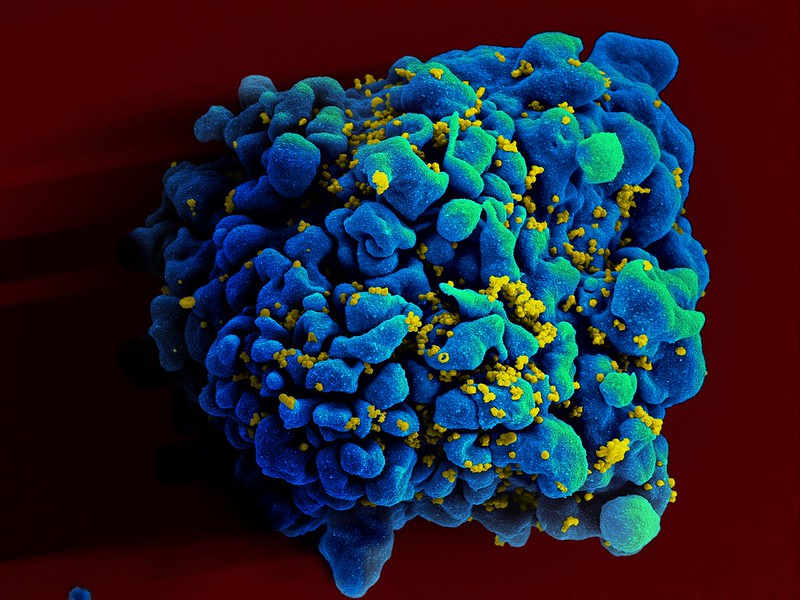
HIV Infecting a T9 Cell. Credit: NIH

Within just two to three years of infection, HIV causes an “early and substantial” impact on ageing in infected people, accelerating epigenetic changes and telomere shortening associated with normal ageing, according to a study in iScience.

The findings suggest that new HIV infection may act to reduce an individual’s life span by five years compared to an uninfected person.

“Our work demonstrates that even in the early months and years of living with HIV, the virus has already set into motion an accelerated ageing process at the DNA level,” said lead author Elizabeth Crabb Breen, a professor emerita at UCLA. “This emphasises the critical importance of early HIV diagnosis and an awareness of ageing-related problems, as well as the value of preventing HIV infection in the first place.”

In previous studies, HIV and antiretroviral treatment has been observed to accelerate age-related conditions such as cardiovascular and renal disease, grail and cognitive impairment.

Researchers analysed stored blood samples from 102 men collected six months or less before they became infected with HIV and again two to three years after infection. They compared these with matching samples from 102 non-infected age-matched men taken over the same time period. All the men were participants in the Multicenter AIDS Cohort Study, an ongoing US study initiated in 1984.

The study examined how HIV affects epigenetic DNA methylation. Epigenetic changes are those made in response to the influence of outside factors such as disease that affect how genes behave without changing the genes themselves.

Five epigenetic measures of ageing were analysed – four of them are epigenetic ‘ clocks’, each of which uses a slightly different approach to estimate biological age acceleration in years, relative to chronologic age. The fifth measure assessed telomere length, which shorten with age and cell divisions.

Compared to non-infected controls, HIV-infected individuals showed significant age acceleration in each of the four epigenetic clock measurements – ranging from 1.9 to 4.8 years – as well as telomere shortening over the period beginning just before infection and ending two to three years after, in the absence of highly active antiretroviral treatment.

“Our access to rare, well-characterised samples allowed us to design this study in a way that leaves little doubt about the role of HIV in eliciting biological signatures of early ageing,” said senior author Professor Beth Jamieson. “Our long-term goal is to determine whether we can use any of these signatures to predict whether an individual is at increased risk for specific ageing-related disease outcomes, thus exposing new targets for intervention therapeutics.”

Study limitations included having only men as participants, with few non-white participants. The sample size was also too small to take into consideration later effects of highly active antiretroviral treatment or to predict clinical outcomes. Additionally, there presently is no consensus on what is normal ageing or how to define it, the researchers wrote.

Source: UCLA

Court Action to Stop Immigrants Being Denied Life-saving Healthcare

Gavel
Photo by Bill Oxford on Unsplash

The rights of immigrant and undocumented women and children to access free healthcare in South Africa will be put to the test in a court challenge launched by SECTION27 in the Gauteng High Court in Johannesburg.

In December 2019, two-year-old Sibusiso Ncube died of poisoning after he was refused treatment at Charlotte Maxeke Hospital because his Zimbabwean mother could not instantly produce his birth certificate or pay R5000, says an affidavit in the court case.

This was not an isolated incident according to Umunyana Rugege, executive director of SECTION27.

“Since 2013, SECTION27 has been repeatedly approached by pregnant migrant women and children under six, who have been denied access to free health services. This is perpetuated through discriminatory subordinate laws and practices,” Rugege says in her affidavit.

“They have routinely been denied access to the health care services, or they are pressured into signing acknowledgements of debt and undertakings to pay for services.”

SECTION27 wants all the relevant ordinances and regulations scrapped. It also seeks an an order that the Minister of Health issue a circular to all provincial health departments recording that all pregnant or lactating women, and children under six, who are not members of medical aid schemes and who have not come to South Africa to obtain health care, be entitled to free health services at any public health establishment, irrespective of their nationality and documentation status.

Rugege says that while the National Health Act does not place any limitation on the right to free health services, there are a range of subordinate laws and practices implemented at hospitals that impose conditions requiring proof of nationality and financial means.

“These laws and practices are unlawful,” she says.

Rugege cited other examples, such as a pregnant asylum seeker who was denied treatment after she was injured in a robbery. She was told she had to pay R2000 before a “file could be opened” at Steve Biko Academic Hospital.

Two months later, when she was eight months pregnant and went to Charlotte Maxeke, she was told she had to pay R20 000 if she wanted treatment and give birth at the hospital. Only after SECTION27 intervened, was she given an appointment, but the night before it she lost her baby.

Another Zimbabwean woman whose child needed emergency surgery was forced to sign an admission of debt for more than R34 000 at the same hospital. Then when he needed further surgery, it was denied because of the outstanding debt. The woman was further told that she would have to pay R5000 for admission and R50 000 for the second surgery.

Again SECTION27 intervened. But in March, when the mother took him back for a checkup, a nurse addressed everyone in the queue and told them that foreign nationals would not be attended to if they did not have money to pay. The mother, and others, left without being seen.

The application is supported by the Jesuit Refugee Service, The Southern African HIV Clinicians Society, and Doctors Without Borders; all are expected to file affidavits soon. Rugege says these will highlight discriminatory institutional policies and systematic xenophobic practices and attitudes that have “detrimental and sometimes fatal consequences”.

“There is simply no coherent approach at different public health establishments … even within a single establishment, different officials treat patients differently,” she said. Access to health care depends on who is on duty that day. On “lucky days” people will gain access without any trouble.

The respondents – the MEC and Gauteng health department head, the Minister and Director-General of Health – have 15 days to file notices of opposition.

By Tania Broughton

This article is republished from GroundUp under a Creative Commons Attribution-NoDerivatives 4.0 International License.

Source: GroundUp