Month: July 2022

Modelling Suggests COVID Will Reach Endemic Stage by 2024

COVID heat map. Photo by Giacomo Carra on Unsplash

A new study on coronavirus transmission in rats suggests that COVID will enter the endemic stage in about two years. The study also suggested that infections from high-risk conditions such as close contact with infected individuals produced more robust immunity than by exposure in low-risk settings.

The study, published in PNAS Nexus, made use of rats to determine when and how SARS-CoV-2 would eventually become endemic. Rats, like humans, are susceptible to coronaviruses. By collecting data on coronaviral reinfection rates among rats, the researchers were able to model the potential trajectory of COVID.

SARS-CoV-2 is just one of many coronaviruses, and there are several that cause the common cold. Many livestock animals live with endemic coronaviruses, too, and a key factor identified in the spread of animal and human coronaviruses alike is their tendency to evoke non-sterilising immunity.

“It means that initially there is fairly good immunity, but relatively quickly that wanes,” explained the study’s senior author, Caroline Zeiss, a professor of comparative medicine at Yale School of Medicine. “And so even if an animal or a person has been vaccinated or infected, they will likely become susceptible again.”

Over the past two years, scientists have come to see that SARS-CoV-2 yields non-sterilising immunity as people become re-infected.

The strong similarities between animal and human coronaviruses, animal data helps improve the understanding of SARS-CoV-2, said Prof Zeiss.

“There are many lessons to be learned from animal coronaviruses,” she said.

In this study, Prof Zeiss and her colleagues observed how a coronavirus similar to one that causes the common cold in humans was transmitted through rat populations. The team modelled the exposure scenario to resemble human exposures in the US, where a portion of the population is vaccinated against COVID and where people continue to face natural exposure to SARS-CoV-2. They also reproduced the different types of exposure experienced by people in the US, with some animals exposed through close contact with an infected rat (high risk of infection) and others exposed by being placed in a cage once inhabited by an infected rat (low risk of infection).

Infected animals contracted an upper respiratory tract infection and then recovered. Three to four months later, the rats were then reorganised and re-exposed to the virus. The rates of reinfection showed that natural exposure yielded a mix of immunity levels, with those exposed to more virus through close contact having stronger immunity, while those exposed to lower virus levels by (being placed in a contaminated cage) having higher rates of reinfection.

The takeaway, said Prof Zeiss, is that with natural infection, some individuals will develop better immunity than others. People also need vaccination, which is offered through a set dose and generates predictable immunity. But with both vaccination and natural exposure, the population accumulates broad immunity that pushes the virus toward endemic stability, the study showed.

Mathematical models using the data predicted that the median time for SARS-CoV-2 to become endemic in the United States is 1437 days, or just under four years from the start of the pandemic in March 2020.

In this model’s scenario, 15.4% of the population would be susceptible to infection at any given time after it reaches endemic phrase.

“The virus is constantly going to be circulating,” said Prof Zeiss. So it will be important to keep more vulnerable groups in mind. “We can’t assume that once we reach the endemic state that everybody is safe.”

Four years is the median time predicted by the model, she said, so it could take even longer to reach the endemic stage. And this doesn’t take into account mutations that could make SARS-CoV-2 more harmful.

“Coronaviruses are very unpredictable, so there could be a mutation that makes it more pathogenic,” said Prof Zeiss. “The more likely scenario, though, is that we see an increase in transmissibility and probable decrease in pathogenicity.” That means the virus would be easily transmitted between people but less likely to cause severe illness, much like the common cold.

There is precedent for this trajectory. In the late 1800s, the ‘Russian flu’ killed approximately one million people around the world. Researchers now think that virus was a coronavirus that originated in cattle, which eventually evolved into one of the common cold viruses still in circulation. Reduced pathogenicity associated with the transition from epidemic to endemic status has also been observed in pig coronaviruses. And almost all commercial chicken flocks across the globe are vaccinated for an endemic respiratory coronavirus that has been present since the 1930s.

Longstanding experience with coronaviral infections in other animals can help navigate a pathway to living with SARS-CoV-2.

However, endemic stability in the United States also depends on what happens to the virus elsewhere.

“We are one global community,” Zeiss said. “We don’t know where else these mutations are going to arise. Until we reach endemic stability around the entire globe, we are vulnerable here to having our US endemic stability disrupted by introduction of a new variant.

“But I think overall the picture’s hopeful. I think we will be in endemic stability within the next year or two.”

Source: Yale University

Good Vaginal Microbiota Makeup for IVF can Happen without Probiotics

Pregnant with ultrasound image
Source: Pixabay

The vaginal microbiota makeup can affect IVF success, and probiotics have attracted interest as a means of improving it. However, a new study presented at the 38th Annual Meeting of ESHRE shows that probiotics failed to make an impact in the microbiota composition – but a third of patients spontaneously improved within three months anyway.

Previous studies have shown that pregnancy and live birth rates are higher among women whose vaginal microbiota is dominated by lactobacillus. Conversely, those with an imbalance, or dysbiosis, where lactobacillus concentration is too low may have a lesser chance of an embryo implanting in the uterus.

Now, a new study has concluded that probiotics do not improve unhealthy vaginal flora when administered vaginally in a daily capsule to patients for 10 days before fertility treatment. No significant difference was observed between these women and those taking a placebo.

However, more than a third (34%) of all women who took part in the trial showed an improvement between a month to three months later, regardless of whether they took a probiotic or not.

On this basis, the authors suggest that it may be worthwhile to postpone fertility treatment among patients with an ‘unfavourable’ vaginal microbiome until a normal balance is achieved.

Principal investigator Ida Engberg Jepsen from The Fertility Clinic at Zealand University Hospital, Denmark, presented the findings at the 38th Annual Meeting of ESHRE. She said that the “spontaneous” improvement rate observed among patients may provide grounds for a change in approach towards IVF timing.

She added: “The study indicates that administering vaginal lactobacilli probiotics may not improve a suboptimal vaginal microbiome.

“However, a spontaneous improvement rate over a period of one to three months may provide the basis for an alternative therapeutic approach. The strategy would involve postponing fertility treatment until spontaneous improvement occurs, but further research is needed. The specific vaginal probiotic tested in this study had no effect on the favourability of the vaginal microbiome before IVF. But probiotics in general should not yet be discounted.”

The study recruited a total of 74 women with abnormal lactobacillus profile referred for IVF treatment. The women were randomised either to receive vaginal probiotic capsules (n = 38) or a placebo (n = 36). Samples were taken to determine the effect on the vaginal microbiome following the 10-day course of probiotics, and again in the subsequent menstrual cycle (on cycle day 21 to 25). Improvement in the vaginal microbiome was defined as a shift in receptivity profile from low to medium; low to high; and from medium to high.

Results showed that the vaginal microbiome improved by 40% in the placebo group and by 29% in those taking the lactobacillus probiotic. This did not represent a significant difference. Similar outcomes were observed in the menstrual cycle after intervention.

The authors advise that only two strains of lactobacilli were contained in the probiotic samples. In addition, they say the broad categorisation of the vaginal microbiome profile may not capture ‘more subtle changes’ that could affect fertility.

Source: European Society of Human Reproduction and Embryology

Ulcerative Colitis Treatment Fixes Inflammation in Gut Microbiota

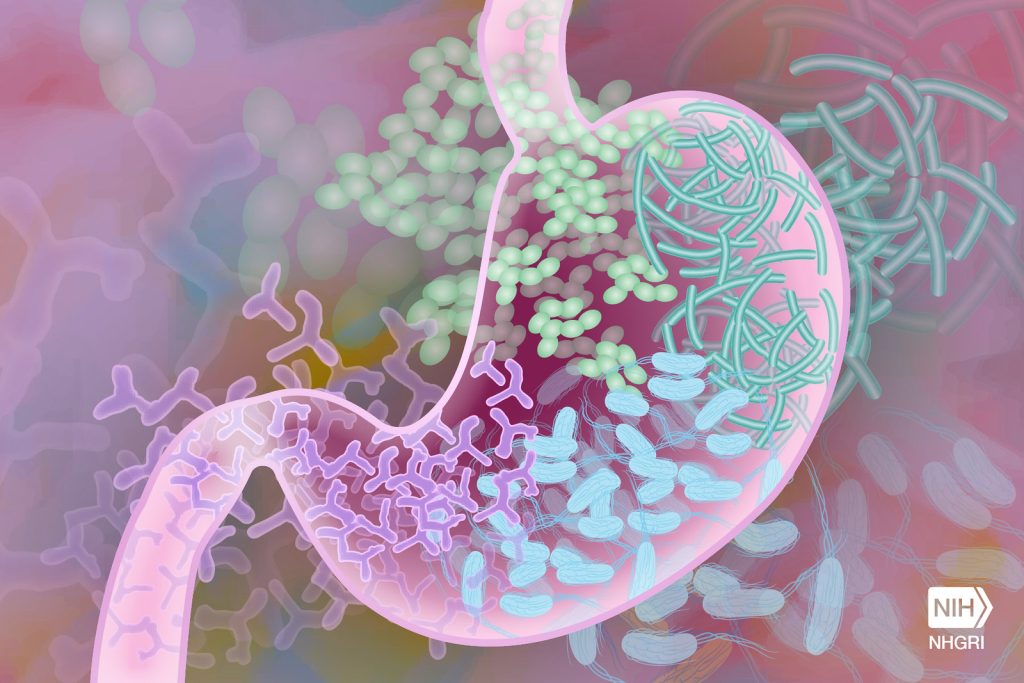
Gut microbiome. Credit: Darryl Leja, NIH

Researchers have developed a new oral treatment for ulcerative colitis that takes the innovative approach of focusing on reducing inflammation in gut microbiota.

Published in Pharmaceutics, the study comprised a two-step approach to fighting ulcerative colitis. First, the researchers reduced inflammation in gut microbiota from a mouse using an anti-inflammatory drug candidate delivered by lipid nanoparticles. Then, they orally administered the end products of these treated microbiota to the same mouse, resulting in a new, effective way to prevent ulcerative colitis.

Studies have shown that irregular gut microbiota composition is linked to ulcerative colitis, and altering this composition can effectively treat a variety of chronic diseases, including ulcerative colitis. However, current methods such as faecal microbiota transplants carry a serious infection risk because they involve the transmission of drug-resistant organisms.

In this study, the researchers developed an organism-free strategy in which gut microbiota were altered in test tubes, and then microbiota-secreted metabolites were transferred back to the host. Analysis of faeces from mice with ulcerative colitis, researchers found that a natural lipid nanoparticle-encapsulated drug candidate modified the composition of inflamed gut microbiota, which were cultured outside of the host, and the secreted metabolites.

The researchers found that their M13/nLNP nano formulation shifted the inflamed microbiota composition toward being non-inflamed. This altered microbiota composition induced significant changes in secreted metabolites, and when these metabolites were fed to mice, they established strong protection against the formation of chronic inflammation.

“Our study demonstrates that modifying microbiota outside of the host using M13/nLNP effectively reshaped the microbial secreted metabolites,” commented Dr Didier Merlin, a professor at Georgia State University. “Oral transfer of these metabolites might be an effective and safe therapeutic approach for preventing chronic ulcerative colitis.”

“Our strategy to tackle the progression of ulcerative colitis might offer an alternative and complementary approach for better managing this disease,” said Dr Chunhua Yang, a research assistant professor at the Institute for Biomedical Sciences at Georgia State. “Although this study demonstrates the anti-inflammatory effects of metabolites modified outside of the organism, further investigations are required to characterise the specific bacteria that contribute to the anti-inflammatory metabolites and to identify anti-inflammatory metabolite structures.”

Source: Georgia State University

Another Fire Breaks Out at Charlotte Maxeke

Source: Pixabay CC0

In what is becoming something of a regular occurrence for Gauteng hospitals, another fire has broken at beleaguered Charlotte Maxeke Academic Hospital on Tuesday night. Fortunately, the fire was contained to a currently unused parking area in a damaged section of the hospital. The situation was deemed not to be serious enough to warrant a patient evacuation.

A fire in April 2021 caused the closure of seven wards, with some 200 beds. Reopening had long been delayed, and there have been complaints of thefts of equipment and construction material. Alleged corruption has continued to dog the full reopening of the 1088-bed academic hospital, overloading other hospitals and also impacting the training of student doctors.

An investigation by Spotlight revealed a number of factors for the 2021 fire including ageing infrastructure, essential equipment such as fire doors not working, low water pressure and incompatible fire hydrants (due to theft), a lack of evacuation plans and a fire service that was woefully underequipped.

Gauteng department of health spokesperson Motalatale Modiba gave a report on the latest fire: “Late on Tuesday night, security personnel reported that there was smoke that seemed to be coming from one of the structures. Firefighters for the City of Joburg immediately responded to the situation and managed to contain the fire which was confined to a small section of the level two parking.”

“The level two parking is one of the areas that was affected by the April 2021 fire and is currently under props and not accessible to the public or staff except for construction people,” Modiba said.

“Upon assessment of the situation clinicians on site together with the facility’s head of disaster made a call that the situation did not warrant for patients to be evacuated as the smoke from the fire was not too thick or high risk for inhalation.”

This comes after two fires broke out within weeks of one another at Steve Biko Academic Hospital.

PET/CT Scans Fail to Beat MRI for Prostate Cancer Detection

Credit: Darryl Leja / National-Human-Genome Research Institute / National Institutes of Health

Researchers found that MRI scans, the current gold standard, can still detect prostate cancer more accurately than the newer, prostate-specific -PSMA PET/CT scanning technique.

The findings were presented at the European Association of Urology’s annual congress (EAU22).

Prostate-specific membrane antigen (PSMA) PET/CT scans, approved by the US FDA in 2020, use a radioactive dye to highlight areas of PSMA, which is overexpressed on the surface of prostate cancer cells. Presently, these scans are used to manage prostate cancer, as they can accurately measure the progression or recurrence of the disease. The researchers set out to find if they could be used to diagnose prostate cancer as well.

The PEDAL trial recruited 240 patients at risk of prostate cancer, with each patient given both an MRI scan and a PSMA PET/CT scan. If imaging suggested the presence of prostate cancer, a biopsy was performed by the patient’s urologist.

The MRI scans picked up abnormalities in 141 patients, while the PSMA PET/CT scans picked up abnormalities in 198 patients. A total of 181 patients (75%) underwent a prostate biopsy, and subsequently 82 of those patients were found to have clinically significant prostate cancer.

The MRI scans were significantly more accurate at detecting any grade of prostate cancer than the PSMA PET scans.

The research team was led by Associate Professor Lih-Ming Wong, who explained: “Our analysis found that MRI scans were better than PSMA-PET for detecting any grade of prostate cancer. When we looked only at clinically significant prostate cancers, there was no difference in accuracy.  As this study is one of the first to explore using PSMA-PET to diagnose cancer within the prostate, we are still learning and adjusting how to improve using PSMA-PET in this setting.

Although detection thresholds will be  fine-tuned as diagnostic use develops,  Prof Wong believes the trial has important lessons for clinicians. 

He said: “This study confirms that the existing ‘gold standard’ of pre-biopsy detection – the MRI – is indeed a high benchmark. Even with fine-tuning, we suspect PSMA PET/CT won’t replace the MRI as the main method of prostate cancer detection. But it will likely have application in the future as an adjunct to the MRI, or for people for whom an MRI is unsuitable, or as a single combined “diagnostic and staging” scan for appropriately selected patients.”

Source: EurekAlert!

Urine Metabolites Yield Clues on Severe Asthma

Asthma inhaler
Source: PIxabay/CC0

A study published in the European Respiratory Journal found severe asthmatics have a distinct metabolite profile detectable in their urine, compared to healthy individuals and those with milder asthma.

Researchers analysed urine samples from more than 600 participants as part of the U-BIOPRED study, a Europe-wide initiative to identify and better understand different sub-types of severe asthma.

The research team discovered a specific type of metabolite, called carnitines, decreased in severe asthmatics. Carnitines play an important role in cellular energy generation and immune responses. Further analyses found carnitine metabolism was lower in severe asthmatics.

These new findings will help enable researchers work towards new, more effective therapies for asthmatics.

Study leader Dr Stacey Reinke said it is vital that asthma treatment is improved.

“To identify and develop new treatment options, we first need to better understand the underlying mechanisms of the disease,” she said.

Examining the body’s chemical profile, or ‘metabolome’, provides a snapshot of a person’s current physiological state and gives useful insight into disease processes.

“In this case, we were able to use the urinary metabolome of asthmatics to identify fundamental differences in energy metabolism that may represent a target for new interventions in asthma control,” Dr Reinke said.

Dr Reinke said it can be difficult and invasive to investigate the lungs directly – but fortunately they contain a lot of blood vessels.

“Therefore, any biochemical changes in the lungs can enter the blood stream, and then be excreted through the urine,” she said.

“These are preliminary results, but we will continue to investigate carnitine metabolism to evaluate its potential as a new asthma treatment target.”

‘Urinary metabotype of severe asthma evidences decreased carnitine metabolism independent of oral corticosteroid treatment in the U-BIOPRED study’ was published in the .

Source: Edith Cowan University

The Mental Health Benefits of Going on Holiday

Photo by Daniel Eledut on Unsplash

For better mental health, music and other forms of relaxation have been shown to have positive benefits. Now, researchers have identified a previously overlooked way to improve mental health – going on holiday, a luxury many have abandoned since COVID.

In a new cross-disciplinary paper, researchers from Edith Cowan University (ECU) propose that we view tourism, as not just as a recreational experience but as an industry that can provide real health benefits.

The interdisciplinary collaboration found that many aspects of going on holiday could have a positive impact on those with mental health issues or conditions.

Led by researcher Dr Jun Wen, a diverse team of tourism, public health and marketing experts investigated how tourism could benefit those living with dementia.

“Medical experts can recommend dementia treatments such as music therapy, exercise, cognitive stimulation, reminiscence therapy, sensory stimulation and adaptations to a patient’s mealtimes and environment,” Dr Wen said.

“These are all also often found when on holidays. This research is among the first to conceptually discuss how these tourism experiences could potentially work as dementia interventions.”

According to Dr Wen, the varied nature of tourism meant there were many opportunities to incorporate treatments for conditions such as dementia. Being in new environments and having new experiences could provide cognitive and sensory stimulation, for example.

“Exercise has been linked to mental wellbeing and travelling often involves enhanced physical activity, such as more walking,” Dr Wen said.

“Mealtimes are often different on holiday: they’re usually more social affairs with multiple people and family-style meals have been found to positively influence dementia patients’ eating behaviour.

“And then there’s the basics like fresh air and sunshine increasing vitamin D and serotonin levels. Everything that comes together to represent a holistic tourism experience, makes it easy to see how patients with dementia may benefit from tourism as an intervention.”

Dr Wen said COVID’s impact on travel in recent years had raised questions about tourism’s value beyond lifestyle and economic factors.

“Tourism has been found to boost physical and psychological wellbeing,” he said. So, after COVID, it’s a good time to identify tourism’s place in public health — and not just for healthy tourists, but vulnerable groups.”

Dr Wen said he hoped that new research could begin to examine how tourism can enhance the lives of people with various conditions.

“We’re trying to do something new in bridging tourism and health science,” he said. “There will have to be more empirical research and evidence to see if tourism can become one of the medical interventions for different diseases like dementia or depression.

“So, tourism is not just about travelling and having fun; we need to rethink the role tourism plays in modern society.”

The article ‘Tourism as a dementia treatment based on positive psychology’ was published in Tourism Management.

Source: Edith Cowan University

Slight Safety Edge for Ringer’s Lactate over Standard Saline

Intravenous IV drip
Source: Marcelo Leal on Unsplash

A new US study has found that Ringer’s lactate may be a better and safer treatment option for emergency department and hospital patients than saline solution, especially in sepsis.

According to the study of nearly 150 000 hospital patients, which was published in JAMA Network Open, Intermountain Healthcare researchers found that patients who received Ringer’s lactate solution instead of normal saline for IV fluids had a lower risk of kidney injury and death than when they were given saline.

Saline solution has long been the standard for IV solution with more than 200 million litres administered to hospital patients annually in the US.

Intermountain researchers found that patients who were given Ringer’s lactate as an alternative to saline solution had a 2.2% reduced risk of kidney injury and death.

Joseph Bledsoe MD, principal investigator of the study, said: “That might not sound like a big difference but considering how many patients receive IV fluids every day, it could lead to a major improvement in health outcomes. For our health system alone, that’s 3000 people every year who may avoid complications from normal saline, at no additional cost.”

For this large-scale, study researchers encouraged clinicians, through education and electronic order entry alerts, to use Ringer’s lactate solution rather than saline solution for IV fluid treatment.

Saline solution is a combination of sodium chloride and water at a concentration of 9g of salt per litre (0.9%) which are levels higher than blood, commonly called normal saline.

Mounting evidence points to intravenous normal saline solution increasing the risk of metabolic acidosis, acute kidney injury, and death. This could be due to normal saline having higher levels of chloride and being slightly more acidic than fluids in the human body.

Though they have different ingredients, both Ringer’s lactate and normal saline are used for replacing fluids and electrolytes in hospital patients who have low blood volume or low blood pressure.

Ringer’s lactate contains electrolytes more similar to blood plasma than saline solution. Ringer’s lactate, which is a type of balanced crystalloid, is also much closer to human fluid pH and did not show the same related risk of kidney injury, in line with previous smaller studies.

The study included 148 423 adult patients admitted to the emergency department or inpatient units at 22 Intermountain Healthcare hospitals in Utah and Idaho between November 1, 2018, and February 29, 2020.

At 30 days post treatment, researchers found a 2.2% reduction in major adverse kidney events, including persistent kidney dysfunction, new initiation of dialysis, and death in patients who were given Ringer’s lactate rather than normal saline solution during their emergency department or hospital treatment course.

The impact was even greater on patients with sepsis and on patients who received more fluids as part of their treatment. Not all patients benefit from Ringer’s lactate – patients with brain injury may still benefit from normal saline, but further studies are needed.

Researchers determined that before the study, approximately 25% of patients received Ringer’s lactate, and 75% received normal saline solution. Afterward, the percentages flipped to 25% receiving normal saline and 75% Ringer’s lactate.

Researchers found that nudges in the Intermountain electronic order system were more effective in changing clinician habits than relying on education.

“Given the success of nudges in making this change, our success could be replicated in other health systems and allows for sustained improvement,” said Dr. Bledsoe. “Given the scope of this study, and its success in addition to previous studies, hospitals around the country should consider what they use for IV fluids, too.”

In an editorial about these findings published in the same issue of JAMA Network Open, Matthew W. Semler, MD, MSc, assistant professor of medicine at Vanderbilt University Medical Center, wrote that the study “raises important questions about the choice between Ringer’s lactate solution and saline and, more broadly, how we should make evidence-based choices between widely available, commonly used treatment alternatives in acute care.”

Source: News-Medical.Net

New Universal Flu Vaccine Offers Broad Protection, Study Finds

Source: Pixabay CC0

By focusing on key parts which remain stable over time, scientists have created a universal flu vaccine that offers broad cross protection against different strains and subtypes of influenza A viruses in both young and old populations, according to a new study reported in npj Vaccines.

The researchers developed the universal flu vaccine by genetically linking two highly conserved portions of the virus: the extracellular domain of matrix 2 (M2e) and the stalk protein found in influenza A H3N2 viruses. The findings show that vaccinating against M2e-stalk protein induced broad protection against different influenza virus strains and subtypes by universal vaccine-mediated immunity in adult and aged mice.

Developing effective influenza vaccines has been a challenge because the head portion of the influenza virus is constantly mutating. When comparing the H1N1 and H3N2 influenza A viruses, particular challenges exist in H3N2 subtypes because of stalk mutations in circulating strains and the unstable structure of stalk proteins for H3N2 viruses. These drawbacks have been difficult to overcome in developing effective H3 stalk-based vaccines.

In the past decade, vaccine effectiveness against H3N2 hovered around 33%, and during the 2014–2015 flu season, it dropped to 6%. New mutations of H3N2 variants emerged with increased virulence. Also, the outbreak of H7N9, another influenza A subtype, caused concern for potential pandemics. Therefore, developing an effective vaccine to protect against these viruses is a high priority.

“The M2e-stalk protein, for the first time, could be easily produced in bacterial cell cultures at high yields and was found to confer protection against heterologous and heterosubtypic cross-group subtype viruses (H1N1, H5N1, H9N2, H3N2 and H7N9) at similar levels in adult and aged mice,” said Dr Sang-Moo Kang, senior author of the study and a professor in the Institute for Biomedical Sciences at Georgia State. “These results provide evidence that M2e-stalk genetic fusion proteins can be produced in a large scale at low cost and developed as a universal influenza A virus vaccine candidate for young and aged populations.”

The study found this novel M2e-stalk protein vaccine induced M2e and stalk-specific Immunoglobulin G (IgG) antibodies that recognised antigenically diverse influenza viral antigens on virus particles and on the infected cell surface. The vaccine also stimulated protective cellular T cell immunity and effective lung influenza viral clearance in mice.

Source: Georgia State University

Airway Immune Risks of Fourth Generation e-Cigarettes

Photo by Nery Zarat on Unsplash

Fourth-generation e-cigarettes, such as Juul devices, are associated with unique changes in markers of immune responses inside our airways, according to a new peer-reviewed paper in the American Journal of Respiratory and Critical Care Medicine.

Third-generation e-cigarettes include vape pens and box mods. Fourth generation include nicotine-salt-containing e-cigarettes, such as Juul products, and disposable e-cigarettes, which have become increasingly popular, especially after the recent FDA ban on the sale of Juul products.

Researchers in the lab of Professor Ilona Jaspers at the UNC School of Medicine found that users of fourth-generation nicotine-salt-containing devices display a unique mix of cellular biomarkers indicative of immune suppression.

“Our work demonstrates the importance of considering device type in future clinical, epidemiological, and mechanistic studies on the health effects of e-cigarettes,” said Prof Jasper, who led the study. “We also think this research can help regulators determine which products cause the most severe types of biological changes in airway cells important for maintaining proper health.”

E-cigarettes have become popular in the last decade. Some started used them to quit smoking, believing vaping was a safer alternative, both in the short-term and long-term. Also, because electronic cigarettes don’t contain tar, consumers assumed vaping decreased their risk of cancer down the road.

“It’s impossible to know if vaping decreases cancer risk or many other long-term conditions,” Prof Jaspers said. “It took 60 years of research to show that smoking causes cancer.” In contrast, e-cigarettes have only been around for about 15 years. “Still, the research from our lab and many others has shown many of the same acute biological effects in the airways that we have documented in smokers,” she said. “And we’ve seen some changes to cells and immune defences in people who vape that, frankly, we’ve never seen before, which is very concerning.”

A major concern for researchers, doctors, and public health officials is the fact that teenagers who would not have otherwise tried cigarettes began using e-cigarettes, which contain nicotine – with its attendant health implications – and thousands of chemicals, many of which are FDA-approved for eating but not inhaling.

Several studies have documented that inhaling chemical-laden nicotine aerosols suppresses the immune responses in the respiratory tracts of smokers and e-cigarette users. Some studies, including some at UNC, have detailed how different chemicals in various e-cigarettes, including chemicals that make up thousands of different flavours, have adverse effects on airway cells. The Jaspers lab, which has been at the forefront of such research, set out to study the effects of different varieties of e-cigarette devices. For this study, her team collected central airway (sputum) samples from non-smokers, smokers, and users of both third-generation and fourth-generation e-cigarette devices.

They found that users of fourth-generation e-cigarettes had significantly more bronchial epithelial cells in their sputum, suggestive of airway injury because normally, bronchial epithelial cells make up an intact barrier in the airways and are not found in sputum samples. Levels of two proteins, sICAM1 and sVCAM1, were significantly lower in fourth-generation e-cigarette users compared to all other groups. These proteins are important in fighting infections and other disease.

In addition, proteins are important for overall immune defence were significantly lower in fourth versus third generation e-cigarette users. Lower of these proteins – CRP, IFN-g, MCP-1, uteroglobin, MMP-2, and VEGF – indications immune system depression. “Another key finding of the study was that, when examining the mixture of immune markers overall rather than one by one, fourth generation e-cigarette users had the most distinguishable changes out of all of the groups, indicating a shift away from immune homeostasis,” said the study’s lead author, Elise Hickman, PhD.

The study did not demonstrate that e-cigarettes cause cancer, emphysema, COPD, or other long-term diseases associated with long-term cigarette smoking. But researchers think that altering immune responses in the respiratory tract over the course of many years, especially for teens, could play a major role in the development of long-term health conditions and in susceptibility to inhaled pathogens.

Source: University of North Carolina