Tag: stroke

COVID Infection Linked to MI & Stroke Risk Increases up to 3 Years Later

Photo: CC0

An analysis of data in the UK Biobank has found that COVID infection may increase the risk of myocardial infarction (MI), stroke and death from any cause for up to three years for people with and without cardiovascular disease, according to new research published in the American Heart Association’s peer-reviewed journal Arteriosclerosis, Thrombosis and Vascular Biology (ATVB).

“We found a long-term cardiovascular health risk associated with COVID, especially among people with more severe COVID cases that required hospitalisation,” said lead study author James Hilser, M.P.H., Ph.D.-candidate at the University of Southern California Keck School of Medicine in Los Angeles. “This increased risk of heart attack and stroke continued three years after COVID infection. Remarkably, in some cases, the increased risk was almost as high as having a known cardiovascular risk factor such as Type 2 diabetes or peripheral artery disease.”

Previous research has shown that COVID increases the risk of serious cardiovascular complications within the first month after infection. This study examined how long the increased risk lasted and whether it subsided after recovering from COVID infection.

Researchers reviewed health and genetic data in the UK Biobank for more than 10 000 adults, including approximately 8000 who had tested positive for SARS-CoV-2 from February 1 to December 31, 2020 and about 2000 who tested positive for the virus in a hospital setting in 2020. A group of more than 200,000 adults who had no history of COVID infection during the same time frame in the UK Biobank were also reviewed for comparison. None of the participants were vaccinated at the time of infection because COVID vaccines were not yet available in 2020.

The analysis found:

  • During the nearly 3-year follow-up period, the risk of heart attack, stroke and death was more than two times higher among adults who had COVID, and nearly four times greater among adults hospitalized with COVID, compared with the group with no history of COVID infection.
  • People hospitalized with COVID, without cardiovascular disease or without Type 2 diabetes, had a 21% greater risk of heart attack, stroke and death compared to people with cardiovascular disease and without COVID infection.
  • There was a significant genetic interaction among the non-O blood types and hospitalisation for COVID. People with severe COVID infections had an increased risk of heart attack and stroke, however, that risk was even higher in people who had non-O blood types (those with blood types A, B or AB).
  • The risk of heart attack and stroke was about 65% higher in adults with non-O blood types compared to those who had type O blood. A preliminary analysis did not show that Rh (positive or negative) blood type interacted with severe COVID, the authors noted.

“Worldwide, over a billion people have already experienced COVID infection. The findings reported are not a small effect in a small subgroup,” said co-senior study author Stanley Hazen, M.D., Ph.D., chair of cardiovascular and metabolic sciences in Cleveland Clinic’s Lerner Research Institute and co-section head of preventive cardiology. “The results included nearly a quarter million people and point to a finding of global health care importance that may translate into an explanation for a rise in cardiovascular disease around the world.” 

Study details, background and design:

  • Health data was from the UK Biobank, a large-scale study of 503,325 adults living in the United Kingdom who were 40 to 69 years of age at enrollment between 2006 and 2010. The in-depth health and biomedical information was collected for participants registered in the UK National Health Service with a UK general practitioner (similar to a primary care physician in the U.S.).
  • This analysis included health data for 10,005 adults who tested positive for the COVID virus or were hospitalized with COVID between February 1, 2020, and December 31, 2020. An additional 217,730 peers enrolled in the UK Biobank who did not have COVID during the same time period were included. In the analysis, all participants were matched as closely as possible for demographics and similar health conditions.
  • Major adverse cardiovascular events (heart attack, stroke and all-cause death) were evaluated for long-term risk, through October 31, 2022, approximately 3 years later.

“This interesting paper is really two studies in one,” said Sandeep R. Das, M.D., M.P.H., MBA, FAHA, co-chair of the American Heart Association’s COVID-19 CVD Registry committee and director for quality and value in the cardiology division for UT Southwestern Medical Center in Dallas. “First, the authors show that having been hospitalized with COVID is a marker of increased cardiovascular risk, on par with having a pre-existing diagnosis of cardiovascular disease. Although proving direct cause and effect is very difficult to tease out in a study that only analyses past data collected for other purposes, this finding is important because it suggests a history of prior COVID hospitalization, even without a history of CVD, should be considered to initiate and possibly accelerate CVD prevention efforts. Whether severe COVID infection has a direct impact on the vascular system is an interesting area for study as well,” Das said.

“The second ‘study’ in this paper looks at the relationship between ABO blood type and COVID outcomes. They show that something located close to the genetic home of ABO blood type is associated with different degrees of susceptibility to COVID. This is really fascinating, and I look forward to seeing scientists tease out what the specific pathway may be.”

The study had several limitations, including that the data was from patients who had the original strain of the COVID virus before vaccines were widely available in 2021. Additionally, the researchers noted that UK Biobank information on medication use was not specific to the beginning of the pandemic in 2020 or the date that patients were infected with SARS-CoV-2. Also, because the majority of participants in the UK Biobank are white, additional research is needed to confirm that these results apply to people with diverse racial and ethnic backgrounds.

“The results of our study highlight the long-term cardiovascular effects of COVID infection. Given the increased risk of heart attack, stroke and death, the question is whether or not severe COVID should be considered as another risk factor for CVD, much like Type 2 diabetes or peripheral artery disease, where treatment focused on CVD prevention may be valuable,” said co-senior study author Hooman Allayee, Ph.D., a professor of population and public health sciences at the University of Southern California Keck School of Medicine in Los Angeles. “The results suggest that people with prior COVID infection may benefit from preventive care for cardiovascular disease.”

Source: American Heart Association
Stroke Associated with a Change in Sleep Length

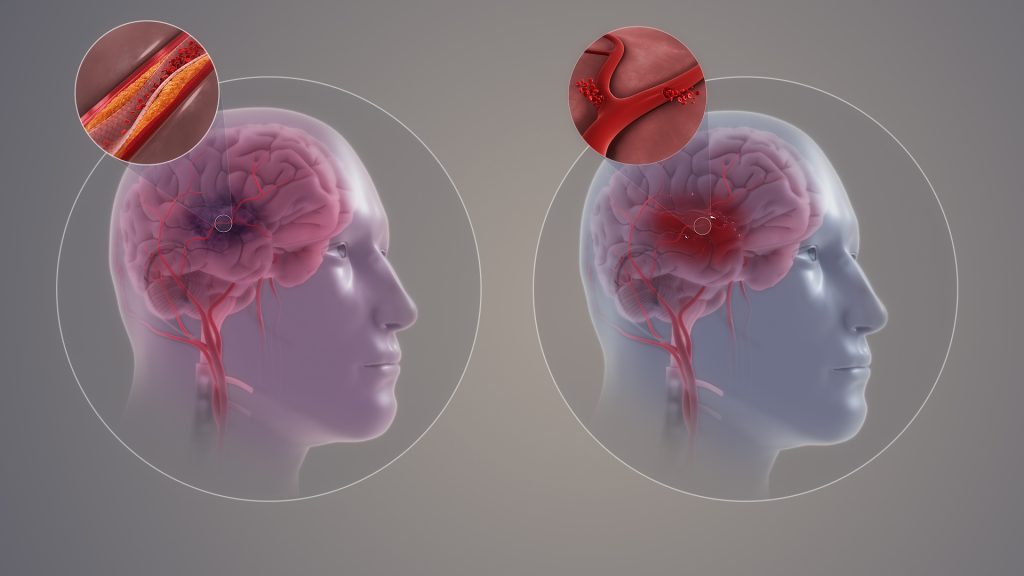
Ischaemic and haemorrhagic stroke. Credit: Scientific Animations CC4.0

People who have had a stroke may be more likely to sleep too much or too little compared to those without prior stroke, according to a study published in Neurology®, the medical journal of the American Academy of Neurology. The study does not prove that stroke causes abnormal sleep; it only shows an association.

“Sleeping the right amount is considered essential for ideal brain and heart health,” said study author Sara Hassani, MD, of Duke University School of Medicine in Durham, North Carolina, and member of the American Academy of Neurology. “We know that abnormally long or short sleep after stroke can affect recovery and deteriorate quality of life, so these results should prompt us to screen for these issues and look at how we can help people improve their sleep habits.”

The study involved 39 559 participants, of whom 1572 had a stroke and 37 987 without stroke history. Every two years, participants were asked how much sleep they usually get at night on weekdays or workdays. Sleep duration was divided into three categories: short, less than six hours; normal, six to eight hours; and long, eight or more hours of sleep.

Researchers looked at how often participants had normal sleep, defined as six to eight hours. Normal sleep duration was less common for people who had a stroke than for those with no prior stroke for all age groups with 32% vs 54% for people age 18-44; 47% vs 55% for people age 45-64; and 45% vs. 54% for people over age 65.

After adjusting for factors that could affect sleep such as age, weight and high blood pressure, researchers found people who had a stroke were 54% more likely to report more than eight hours of sleep per night compared to those without stroke. Those with stroke were 50% more likely to get less than six hours of sleep per night when compared to those without stroke.

“In previous research, stroke has been linked to abnormal sleep, in particular sleep apnea,” said Hassani. “Conditions like insomnia and excessive sleepiness are common in stroke patients and may occur as a direct or indirect consequence of stroke itself. Future research should explore the links between stroke and duration of sleep and determine the effect of sleep duration on outcomes after stroke.”

One limitation of the study was that hours of sleep were self-reported, so participants may not have remembered accurately how much they slept.

Source: American Academy of Neurology

Daily Physical Activity not Sufficient to Protect Against Stroke

Photo by Emmanuel Ikwuegbe on Unsplash

Research conducted at the University of Gothenburg shows that daily physical activities, at work or in the home, are not sufficient to protect against stroke. Fortunately, the findings, published in JAMA Network Open, suggest that exercising in free time and using active modes of transport are associated with a decreased risk of stroke.

“Physical activity during leisure time and as transportation is becoming increasingly important now that many jobs and domestic activities are becoming more sedentary,” says lead author of the study Adam Viktorisson, researcher at Sahlgrenska Academy at the University of Gothenburg, Sweden.

Twenty year follow-up

The research study covers 3614 people from the region of Västra Götaland, 269 of whom suffered a stroke in the twenty years spanned by the study. Three months after the stroke, 120 of these had died or were dependent on help to carry out activities of daily living.

Physical activity data was gathered from surveys. Some participants were also given a pedometer to wear. Physical activity during leisure time or for transportation showed a link to the objective measurements from the pedometers, while physical activity at work did not.

Occupational physical activity not protective

The health benefits of physical activity are well known, but earlier studies tend to mainly focus on physical activity during leisure time. Research in recent years has shown that physical activity at work can instead have negative health impacts, increasing the risk of cardiovascular disease.

“How and when we carry out physical activity seems to play a crucial role in determining its health benefits. In our study leisure time and transport related physical activities were associated with a lower risk of stroke, whereas activities during work time or in the household were not” Adam Viktorisson points out.

“Physically demanding jobs are often linked to stress, little opportunity for recovery, air pollution and generally poorer socioeconomic conditions, which can counteract the positive effects of physical activity.”

Promote public health

The study used data from the INTERGENE cohort at the University of Gothenburg. Study participants were surveyed and data was collected from 2001 to 2004, consisting of both clinical and questionnaire data. The researchers hope that these results will bring greater awareness and lead to changes in public health policy to encourage physical activity in society.

“Encouraging people to be physically active in their daily lives, for example by walking, cycling and doing other types of exercise, can be an important strategy in reducing the number of strokes and improving the prognosis of people who suffer a stroke,” says Adam Viktorisson.

Source: University of Gothenburg

Study Discovers Immune System Changes from Stroke Impact the Heart

Human heart. Credit: Scientific Animations CC4.0

Why do new comorbidities arise because of ischaemic stroke? A study from Germany recently published in the journal Cell has discovered why this can happen – and ways in which it might be countered. The findings from the study show that the immune system is involved in damage to other organs, including the heart.

Besides the early mortality and morbidity resulting from the ischaemic brain injury itself, long-term morbidity after stroke is also due to the high prevalence of secondary comorbidities and complications, such as cognitive impairment and dementia, post-stroke depression, cardiac events, persistent vascular inflammation, and stroke-induced metabolic disturbances.

“However, there has been little research to date on the effects of brain injuries on systemic immunity,” says Professor Arthur Liesz from the Institute for Stroke and Dementia Research (ISD) at LMU University Hospital and principal investigator in the cluster of excellence SyNergy.

Liesz is the principal investigator of this new study. The researchers worked on the hypothesis that the high rate of comorbidities that develop after a stroke could have a common immunological cause. And they actually managed to find it: the origin of the dysfunctions in other parts of the body lies in the immunological memory of the blood-forming cells in bone marrow.

Using single-cell sequencing techniques, Liesz and his team demonstrated the presence of permanent proinflammatory changes in the transcriptome of certain immune cells (monocytes/macrophages) in several organs. In other words, certain gene segments are transcribed differently there after the stroke, which unbalances the proteome. These epigenetic modifications occur most frequently in the heart, where they can cause scarring and impair pumping function. “We managed to identify the protein IL-1b as the main culprit for the epigenetic modifications that affect immunological memory after a stroke,” says Liesz.

Promising therapeutic approaches on the horizon

The researchers demonstrated in a mouse model the connection between modified blood formation in bone marrow through overexpressed IL-1b and cardiac dysfunctions. Moreover, they showed that blocking IL-1b and inhibiting migration of the proinflammatory cells to the heart both successfully prevented cardiac problems after a stroke.

“These findings are hugely significant, as they open up the promise of effective therapeutic approaches for the prevention of secondary cardiac conditions after a stroke,” reckons Liesz.

The authors of the study believe that the epigenetic mechanisms they described for the reprogramming of the immune system in the brain-heart axis will create a new framework for explaining the development of various IL-1b-mediated comorbidities.

Source: Ludwig-Maximilians-Universität München

Standardised Protocols Help Speed up Stroke Treatment

Photo by Mat Napo o Unsplash

Research by West Virginia University has demonstrated that American Heart Association and American Stroke Association guidelines are effective at speeding up hospitals’ response times for stroke treatment and can be mastered even by members of ‘ad hoc‘ medical teams that assemble rapidly on the fly.

When a stroke patient arrives at an emergency room, specialists from across hospital departments – emergency medical services, neurologists, pharmacists, physicians, nurses, radiologists and technicians – rush to coordinate a team response. AHA and ASA guidelines put specific limits on how much time can optimally elapse between the onset of ischaemic stroke, in which blood flow to the brain is blocked, and subsequent events like arrival at the hospital and delivery of an infusion.

But experts have questioned whether the communication of those best practices helps medical teams that assemble temporarily and whose members don’t typically collaborate. In a Journal of Operations Management article, WVU associate professor Bernardo Quiroga and coauthors answer that question using data about more than 8000 patients who received stroke care at a large hospital between 2009 and 2017.

“‘Time is brain’ for stroke victims,” Quiroga explained. “Blocked blood flow to the brain kills almost two million neurons a minute, so your life or ability to walk or talk hinges on how quickly multiple professionals coordinate to restore blood flow. If you’re lucky, you’re treated within the first hour of symptom onset. Better yet, you receive a shot of Tissue Plasminogen Activator, which dissolves clots. TPA works better the earlier it’s given and usually isn’t effective after 4.5 hours.”

In 2010, the AHA and ASA launched Target: Stroke, a program that identifies stroke care best practices and standardises each step in the process. Participating hospitals reduced median treatment times from 79 minutes in 2009 to 51 minutes in 2017, but it wasn’t clear if that improvement was driven by adherence to best practices or by clinicians learning through repetition as they handled more stroke cases.

To figure that out, the researchers investigated whether repeated ‘learning by doing’ decreased the hospital’s stroke care time. Then, they evaluated whether deliberate, ‘induced’ learning and implementation of AHA/ASA best practices decreased the time further.

Learning through repetition worked. The more strokes the hospital treated, the faster it responded. For each doubling of cumulative stroke alerts, ‘door-to-needle time’ – the time to get patients from the hospital door to a TPA infusion – decreased by 10.2%.

Best practices also worked. Specifically, the researchers examined two best practices: the Helsinki Model protocol, which directs that EMS staff keep stroke patients on the stretcher for transport to the CT room rather than transferring them to ER beds; and the Rapid Administration of TPA protocol, which requires the pharmacist to be in the CT room with TPA before completion of the CT scan. Those protocols significantly reduced the hospital’s door-to-needle time beyond improvements from repetition-based learning.

According to Quiroga’s coauthor and former PhD student Brandon Lee, that matters because it demonstrates the efficacy of best practices and shows ad hoc teams learning guidelines and implementing them long-term.

However, Lee emphasised the importance of the presence of the hospital’s stroke advisory committee, which set targets, evaluated stroke teams’ performances and gave feedback.

Without similar “countermeasures to organisational forgetting,” Quiroga acknowledged that best practices aren’t always sustainable, especially on ad hoc teams.

“In the case of the best practice indicated by the Helsinki Model, compliance is difficult because the hospital needs to coordinate with multiple independent EMS systems. Some EMS providers may be reluctant to commit resources to extended time in the CT room, and EMS staff turnover may lead to forgetting,” Quiroga said.

Lee added, “Overall, because ad hoc teams are fluid, information sharing is harder. And when a group of people don’t know each other well, group learning slows. But although ad hoc teams learn more slowly, we determined they still learn.”

The research also assessed whether neurologists’ abilities to meet time goals were affected by their recent experiences treating prior stroke patients.

“As team leaders, neurologists can have an outsized influence on performance,” Quiroga said. “Because other members of the ad hoc team aren’t familiar with each other, they lean on their leader.”

But data showed stroke teams improving response times regardless of how many stroke cases the neurologist had treated individually or what the neurologist’s recent success rate was. Quiroga said that’s good news.

“The implication is that learning and sustaining best practices ensures an even quality of care for patients, regardless of individual neurologists’ experience levels.”

Source: West Virginia University

Age-related Brain Changes Affect Stroke Recovery, Study Finds

Photo by Kampus Production on Pexels

A new study by a global team of researchers has revealed that areas of age-related damage in the brain relate to motor outcomes after a stroke – a potentially under-recognised phenomenon in stroke research. The study was published in Neurology.

A stroke often leads to motor impairment, which is traditionally linked to the extent of damage to the corticospinal tract (CST), a crucial brain pathway for motor control. Signaling along the CST is involved in a variety of movements, including walking, reaching, and fine finger movements like writing and typing. However, stroke recovery outcomes aren’t fully predicted by damage to the CST, suggesting other factors are at play.

The new observational from the Enhancing Neuroimaging Genetics through Meta-Analysis (ENIGMA) Stroke Recovery working group. It examines how one such factor could be white matter hyperintensities (WMHs) – areas of age-related damage in the brain’s white matter, which represent vascular dysfunction and are known to impact cognitive functions. The goal of the ENIGMA Stroke Recovery working group is to understand how changes in the brain after stroke relate to functional outcomes and recovery. ENIGMA Stroke Recovery has data from over 2100 stroke patients collected across 65 research studies and 10 countries, comprising the most extensive multisite retrospective stroke data collaboration to date.

Study leader Sook-Lei Liew, PhD, said: “We are grateful for our many collaborators around the world who lead independent stroke research programs and who are willing to come together and enable large-scale investigations into these critical questions about the role of overall brain health in stroke recovery and rehabilitation.” Dr Liew is an associate professor at the Keck School of Medicine of USC.

The study analysed data from 223 stroke patients across four countries and found that larger WMH volumes were associated with more severe motor impairment after a stroke (e.g., difficulty moving or using their arm for daily tasks), independent of CST damage. WMHs are related to chronic hypertension, diabetes, high cholesterol, and smoking, among other factors and conditions, and have been strongly related to cognitive impairment, but not extensively studied in the context of motor impairment. Interestingly, the relationship between CST damage and motor impairment varied based on WMH severity. Patients with mild WMHs showed a typical relationship between CST damage and motor impairment, while patients with moderate to severe WMHs did not have this relationship. Instead, motor impairment was related to WMH volume, not CST damage.

These findings suggest that WMHs, indicative of cerebrovascular damage from a variety of sources, could provide additional context to understand an individual’s potential for recovery post-stroke. Therefore, assessing WMH volume could improve predictive models for stroke recovery.

“WMHs are related to overall cardiovascular and brain health as we age. By integrating assessments of age-related brain health, we may be better able to predict stroke recovery and tailor rehabilitation to individual needs. This personalised approach could open avenues to improve outcomes after stroke,” says lead author Jennifer K. Ferris, PhD, of Simon Fraser University.

The researchers’ next step is to pursue longitudinal studies to confirm their findings. This insight lays the groundwork for developing more accurate markers for recovery, which could transform post-stroke care and rehabilitation.

Source: Keck School of Medicine of USC

High Prevalence of Hidden Brain Changes in People with Heart Disease

Source: CC0

A new analysis involving over 13 000 people has found changes to blood vessels in the brain that can increase the risk of stroke and dementia are common in people with a range of heart conditions, regardless of whether they have experienced a stroke.

The new research, published in Neurology®, the medical journal of the American Academy of Neurology, is the most comprehensive systematic review of ‘hidden’ brain changes in people with a range of heart conditions to date.

Lead author Dr Zien Zhou from The George Institute for Global Health said that identifying these changes could play an important role in choosing treatments for these patients.

“Although people with heart disease are two to three times more likely than the general population to have changes in their brain’s vascular system, they’re often overlooked, because these patients don’t routinely undergo brain imaging unless they have suffered a stroke,” he said.

“But it can make them more susceptible to the risk of brain bleeds from medications commonly used to treat or prevent blood clots – intracranial haemorrhage is a life-threatening complication with no proven treatment and a survival rate of less than 50 percent.”

Changes to blood vessels in the brain that can only be detected by brain imaging such as silent brain infarction (SBI) and cerebral small vessel disease (CSVD) are known to occur more commonly in older people or those who have hypertension.

While not sufficient to cause obvious neurological symptoms, they can result in subtle neurological deficits and increase the longer-term risk of stroke or dementia.

To determine the prevalence of these hidden or covert cerebrovascular changes in adults with atrial fibrillation, coronary artery disease, heart failure or cardiomyopathy, heart valve disease, and patent foramen ovale (a hole in the heart), George Institute researchers conducted a meta-analysis of 221 observational studies published between 1988 and 2022.

The findings showed that in people with heart disease:

  • approximately one third had any form of SBI
  • a quarter had lacune (small cavities where neural tissue has died after a previous blockage or leakage from small arteries)
  • two-thirds had white matter lesions (damage to the protective coating around nerve fibres)
  • a quarter had evidence of asymptomatic microbleeds in the brain tissue, and
  • over one half had brain atrophy (a shrinking of the brain due to loss of neurons or connections between neurons).

The prevalence of these brain changes was generally the same between those with and without a recent stroke and there were no apparent sex differences in the results.

Dr Zhou said the study also confirmed that heart disease is one of the main causes of these changes that reflect brain ‘frailty’.

“While several potential mechanisms of the association between heart disease and hidden cerebrovascular injury have been proposed, the two conditions share common risk factors such as ageing, hypertension, type 2 diabetes, hyperlipidaemia, and smoking,” said Dr Zhou.

“It’s possible that a gradual decline in cardiac output in some patients with heart disease might affect how much blood is reaching the brain tissue, contributing to vascular changes and cognitive dysfunction in these patients,” he added.

“It’s also possible that hidden brain changes and cognitive dysfunction are a consequence of tiny blood clots traveling to the brain through the arterial circulation after forming in the heart.”

Dr Zhou said that more research was needed to look at the exact causes of these brain changes and the implications for managing these patients.

“We need to know whether performing an additional MRI in those considered for anticoagulation therapy – which is required for most people with heart disease – would be cost-effective in terms of preventing unwanted side effects,” he said.

“But refining the risks of brain clots and bleeds from anticoagulants and using this information to make the best treatment choice could improve treatment safety for people with heart disease.”

Source: George Institute for Global Health

Heart Disease Research Challenges ‘One Size Fits All’ Aspirin Guidelines

Analysis of results from international trials question whether current aspirin recommendations apply to all patients

Photo by cottonbro studio

Heart disease researchers have identified a group of patients in whom international guidelines on aspirin use for heart health may not apply. In a study published in the medical journal Circulation, the findings of a review of data from three clinical trials challenge current best practice for use of the drug for primary prevention of heart disease or stroke – otherwise known as atherosclerotic cardiovascular disease.

The research examined the results from clinical trials involving more than 47 000 patients in 10 countries, including the US, the UK and Australia, which were published in 2018.

The analysis focused on findings for a subgroup of 7222 patients who were already taking aspirin before the three trials commenced. Those studied were at increased risk for cardiovascular disease and were taking aspirin to prevent the first occurrence of a heart attack or stroke.

The data showed a higher risk of heart disease or stroke – 12.5% versus 10.4% – for patients who were on aspirin before the trials and who then stopped, compared to those who stayed on the drug.

Analyses also found no significant statistical difference in the risk for major bleeding between the two groups of patients.

The research was led by Professor J. William McEvoy, Established Professor of Preventive Cardiology at University of Galway and Consultant Cardiologist at Saolta University Health Care Group, in collaboration with researchers in University of Tasmania and Monash University, Melbourne.

Professor McEvoy said: “We challenged the notion that aspirin discontinuation is a one-size-fits-all approach.”

The research team noted results from observational studies which suggest a 28% higher risk of heart disease or stroke among adults who were prescribed aspirin to reduce the risk for a first heart attack or stroke, but who subsequently chose to stop taking the aspirin without being told to do so by their doctor.

Based in large part on three major clinical trials published in 2018, international guidelines no longer recommend the routine use of aspirin to prevent the first occurrence of heart attack or stroke.

Importantly, aspirin remains recommended for high-risk adults who have already had a heart disease or stroke event, to reduce the risk of a second event.

The move away from primary prevention aspirin in recent guidelines is motivated by the increased risk of major bleeding seen with this common medication in the three trials, albeit major bleeding is relatively uncommon on aspirin and was most obvious only among trial participants who were started on aspirin during the trial, rather than those who were previously taking aspirin safely.

These trials primarily tested the effect of starting aspirin among adults who have not previously been treated with the drug to reduce the risk of atherosclerotic cardiovascular disease. Less is known about what to do in the common scenario of adults who are already safely taking aspirin for primary prevention.

Professor McEvoy said: “Our findings of the benefit of aspirin in reducing heart disease or stroke without an excess risk of bleeding in some patients could be due to the fact that adults already taking aspirin without a prior bleeding problem are inherently lower risk for a future bleeding problem from the medication. Therefore, they seem to get more of the benefits of aspirin with less of the risks.

“These results are hypothesis-generating, but at present are the best available data. Until further evidence becomes available, it seems reasonable that persons already safely treated with low-dose aspirin for primary prevention may continue to do so, unless new risk factors for aspirin-related bleeding develop.”

Source: University of Galway

Cannabis Use Linked to Increase in Heart Attack and Stroke Risk

Photo by Thought Catalog on Unsplash

An analysis of 430 000 adults in the U.S. found that using cannabis, most commonly through smoking, eating or vaporising it, was significantly associated with a higher risk of heart attack and stroke, even after controlling for tobacco use (combustible cigarettes and other tobacco products) and other cardiovascular risk factors, according to new research published today in the Journal of the American Heart Association.

Although cannabis, or marijuana, is illegal at the federal level, 24 states and Washington, D.C., have legalized the use of recreational cannabis. Additionally, the number of people in the U.S. who use cannabis has increased significantly in recent decades, according to the 2019 National Survey on Drug Use and Health from the Substance Abuse and Mental Health Services Administration of the U.S. Department of Health and Human Services.

The annual survey found that in 2019, 48.2 million people ages 12 or older reported using cannabis at least once, compared to 25.8 million people ages 12 or older in 2002, an increase to 17% from 11%.

“Despite common use, little is known about the risks of cannabis use and, in particular, the cardiovascular disease risks,” said lead study author Abra Jeffers, PhD, a data analyst at Massachusetts General Hospital in Boston. “The perceptions of the harmfulness of smoking cannabis are decreasing, and people have not considered cannabis use dangerous to their health. However, previous research suggested that cannabis could be associated with cardiovascular disease. In addition, smoking cannabis – the predominant method of use – may pose additional risks because particulate matter is inhaled.”

In this study, researchers reviewed survey data collected for 430 000 adults from 2016 through 2020 to examine the association between cannabis use and adverse cardiovascular outcomes including heart disease, heart attack and stroke. The survey data was collected through the Behavioral Risk Factor Surveillance System, a national, cross-sectional survey performed annually by the U.S. Centers for Disease Control and Prevention.

The researchers specifically investigated whether cannabis use was associated with adverse cardiovascular outcomes among the general adult population, among people who had never smoked tobacco or used e-cigarettes, and among younger adults (defined as men under age 55 and women under age 65) at risk for heart disease. They also factored in the number of days per month that people used cannabis.

The analyses of found:

  • Any cannabis use (smoked, eaten or vaporized) was independently associated with a higher number of adverse cardiovascular outcomes (coronary heart disease, myocardial infarction and stroke) and with more frequent use (more days per month), the odds of adverse outcomes were even higher. The results were similar after controlling for other cardiovascular risk factors, including tobacco and/or e-cigarette use, alcohol consumption, body mass index, Type 2 diabetes and physical activity.
  • Both daily and non-daily cannabis users had an increased risk of heart attack compared to non-users; daily cannabis users had 25% higher odds of heart attack compared to non-users.
  • The odds of stroke for daily cannabis users were 42% higher compared to non-users, with lower risk among those who used cannabis less than daily.
  • Among younger adults at risk for premature cardiovascular disease (defined as men younger than 55 years old and women younger than 65 years old) cannabis use was significantly associated with 36% higher combined odds of coronary heart disease, heart attack and stroke, regardless of whether or not they also used traditional tobacco products. A separate analysis of a smaller subgroup of these adults who had never smoked tobacco cigarettes or used nicotine e-cigarettes also found a significant association between cannabis use and an increase in the combined odds of coronary heart disease, heart attack and stroke.

“Our sample was large enough that we could investigate the association of cannabis use with cardiovascular outcomes among adults who had never used tobacco cigarettes or e-cigarettes,” Jeffers said. “Cannabis smoke is not all that different from tobacco smoke, except for the psychoactive drug: THC vs. nicotine. Our study shows that smoking cannabis has significant cardiovascular risk risks, just like smoking tobacco. This is particularly important because cannabis use is increasing, and conventional tobacco use is decreasing.”

Study background and details:

  • Survey participants were ages 18-74, with an average age of 45 years.
  • About half of the participants self-identified as female. 60.2% self-identified as white adults, 11.6 self-identified as Black adults, 19.3 self-identified as Hispanic adults and 8.9% self-identified as other.
  • Nearly 90% of adults did not use cannabis at all; 7% used it less than daily; and 4% were daily users. Among current cannabis users, 73.8% reported smoking as the most common form of cannabis consumption. More than 60% of total respondents had never used tobacco cigarettes; 28.6% of daily cannabis users had never used tobacco cigarettes; 44.6% of non-daily cannabis users had never used tobacco cigarettes and 63.9% of participants who did not use cannabis had never used tobacco cigarettes.

The study had several limitations, including that cardiovascular conditions and cannabis use were self-reported, making them potentially subject to recall bias (potential errors in memory); that the authors did not have health data measuring participants’ baseline lipid profile or blood pressure; and the study captured data for only a single point in time for the participants. The authors note that there is a need for prospective cohort studies to examine the association of cannabis use and cardiovascular outcomes while accounting for frequency of cannabis use.

“The findings of this study have very important implications for population health and should be a call to action for all practitioners, as this study adds to the growing literature that cannabis use and cardiovascular disease may be a potentially hazardous combination,” said Robert L. Page II, PharmD, MSPH, FAHA, chair of the volunteer writing group for the 2020 American Heart Association Scientific Statement: Medical Marijuana, Recreational Cannabis, and Cardiovascular Health. Page is professor of clinical pharmacy, medicine and physical medicine at the Skaggs School of Pharmacy and Pharmaceutical Sciences at the University of Colorado School of Medicine in Aurora, Colorado. Page was not involved in this study.

“In the overall population, the study findings are consistent with other studies indicating that daily cannabis use was associated with an increase in heart attack, stroke and the combined endpoint of coronary heart disease, heart attack and stroke,” he said. “As cannabis use continues to grow in legality and access across the U.S., practitioners and clinicians need to remember to assess cannabis use at each patient encounter in order to have a non-judgmental, shared decision conversation about potential cardiovascular risks and ways to reduce those risks.”

Source: American Heart Association

New Findings on Cardiovascular Risk, Menopause and Migraines Ease Concerns

Photo by Karolina Grabowska on Pexels

Research suggesting a link between migraines and menopause symptoms and cardiovascular disease has gotten a lot of attention. But a pair of new studies in the journal Menopause suggest that most women experiencing these symptoms can rest easier, especially if they don’t have both migraines and long-term hot flashes and night sweats.

Instead, they should focus on tackling the other factors that can raise their cardiovascular risk by getting more sleep, exercise and healthy foods, quitting tobacco, and minding their blood pressure, blood sugar, cholesterol and weight.

For women who have experienced both migraines and hot flashes or night sweats over many years, one of the new studies does suggest an extra level of cardiovascular risk.

That makes heart disease and stroke prevention even more important in this group, says study leader Catherine Kim, MD, MPH, of the University of Michigan.

And for women currently in their 20s and 30s who experience migraines, the new research suggests that they might be heading for a higher risk of long-term menopause-related symptoms when they get older.

Long-term study yields important insights

Kim and her colleagues at Michigan Medicine, U-M’s academic medical centre, published the new pair of studies based on an in-depth analysis of data from a long-term study of more than 1900 women who volunteered to have regular physical exams and blood tests, and to take yearly health surveys, when they were in their late teens to early 30s.

Those women, now in their 50s and 60s, have provided researchers with a priceless view of what factors shape health in the years leading up to menopause and beyond, through their continued participation in the CARDIA study.

“The anxiety and dread that women with migraines and menopausal symptoms feel about cardiovascular risk is real – but these findings suggest that focusing on prevention, and correcting unhealthy habits and risk factors, could help most women,” said Kim, who is an associate professor of internal medicine at U-M and a primary care physician.

“For the subgroup with both migraines and early persistent hot flashes and night sweats, and for those currently experiencing migraines in their early adulthood, these findings point to an added need to control risks, and address symptoms early,” she adds.

Just over 30% of the middle-aged women in the study reported they had persistent hot flashes and night sweats, which together are called vasomotor symptoms or VMS because they relate to changes in the diameter of blood vessels.

Of them, 23% had reported also having migraines. This was the only group for whom Kim and her colleagues found extra risk of stroke, heart attack or other cardiovascular events that couldn’t be explained by other risk factors that have long been known to be linked to cardiovascular problems.

In addition to those with persistent vasomotor symptoms starting in their 40s or before, 43% of the women in the study had minimal levels of such symptoms in their 50s, and 27% experienced an increase in VMS over time into their 50s and early 60s.

The latter two groups had no excess cardiovascular risk once their other risk factors were taken into account, whether or not they had migraines.

Use of hormone-based birth control and estrogen to address medical issues did not affect this risk.

Controlling destiny

In the study of data from the same women in their earlier stages of life, the researchers found that the biggest factors in predicting which ones would go on to have persistent hot flashes and night sweats were having migraines, having depression, and smoking cigarettes, as well as being Black or having less than a high school education.

“These two studies, taken together, underscore that not all women have the same experiences as they grow older, and that many can control the risk factors that might raise their chances of heart disease and stroke later in life,” said Kim.

“In other words, women can do a lot to control their destiny when it comes to both menopause symptoms and cardiovascular diseases.”

She notes that the American Heart Association calls these risk factors the “Essential 8” and offers guides for what women, men and even children and teens can do to address them.

Evolving knowledge and treatment

The long-term study that the two new findings come from was specifically designed to look at cardiovascular risks when it launched in the mid-1980s. CARDIA stands for Coronary Artery Risk Development in Young Adults.

Back in the 80s, knowledge about the biology of blood vessels, down to the cellular and molecular level, was nowhere near where it is today. Both vasomotor symptoms in menopause and migraines have to do with blood vessel contraction and dilation.

But decades of research has shown the microscopic impacts on blood vessels of years of smoking, poor sleep, poor eating habits and lack of activity, as well as a person’s genetic inheritance, life experiences and hormonal history.

Newer injectable migraine medications called calcitonin gene-related peptide (CGRP) antagonists have reached the market in recent years. Using monoclonal antibodies, they target a key receptor on the surface of blood vessel cells to prevent migraines and cluster headaches. But they are expensive and not covered by insurance for all people with migraines.

While the new study is based on data from years before these medications became available, Kim said she recommends them to her patients with persistent migraines, as well as working with them to understand what triggers their migraines and how to use other medications including pain relievers and antiseizure medications to prevent them.

She also notes that the paper on future risk of persistent hot flashes and night sweats echoes the recent trend of using antidepressant medications to try to ease these menopause effects.

Kim also says that evidence has grown about the importance of healthy sleep habits for reducing hot flashes, as well the short-term use of oestradiol-based hormone therapy patches, which have not been shown to have a link to cardiovascular risk. And, she notes that research has not shown any over-the-counter supplement or herbal remedy to be effective, and that these are far less regulated than medications.

Source: Michigan Medicine – University of Michigan